Plug-in hybrid electric vehicles (PHEVs) offer a compelling middle ground: electric-only driving for daily commutes and a gas engine for longer trips. But extracting the maximum hybrid car range from a PHEV requires understanding how charging works, what equipment you need, and where the hidden costs lie. Whether you own a Toyota RAV4 Prime, a Jeep Wrangler 4xe, or a Chrysler Pacifica Hybrid, this guide covers everything from home charger installation to public charging economics — all with the exact numbers you need to make smart decisions.
How Fast Will Each Charging Level Add Range?
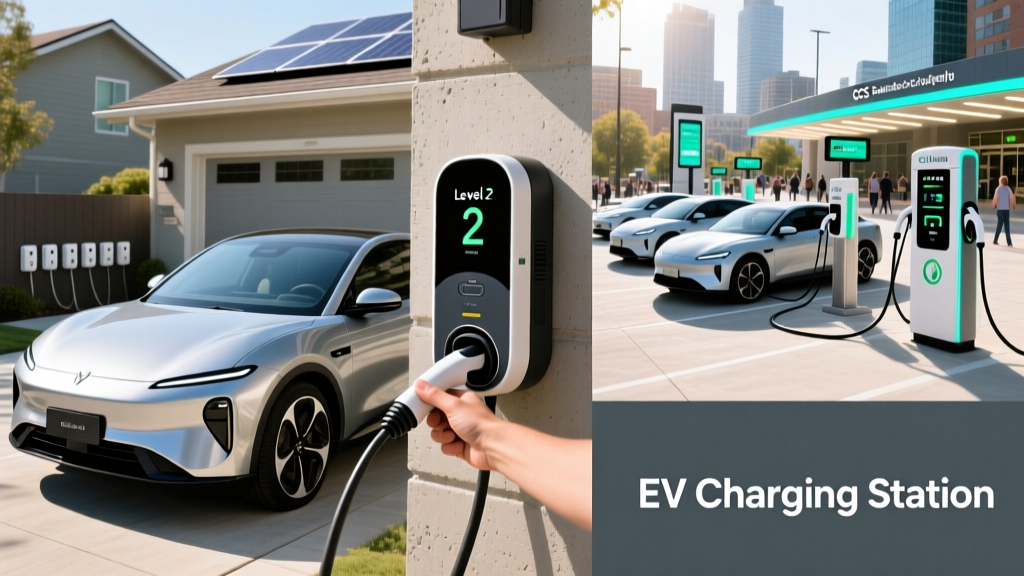
PHEVs typically carry smaller batteries than full EVs — usually between 12 kWh and 22 kWh usable — which means they charge faster but also benefit enormously from faster Level 2 speeds. Here's how each level breaks down in real-world terms:
| Level | Power (kW) | Voltage | Miles of Range Added/Hour | Typical Use Case |
|---|---|---|---|---|
| Level 1 | 1.2–1.9 kW | 120V (standard outlet) | 3–5 miles/hour | Overnight top-ups; no install needed |
| Level 2 | 3.3–7.2 kW | 240V (dryer-style outlet) | 12–25 miles/hour | Daily home charging; fully replenishes most PHEVs in 2–4 hours |
| DC Fast | 25–50+ kW | 400–800V DC | 60–150 miles/hour | Road-trip replenishment (limited PHEV support) |
The distinction between kW (power — the rate of energy flow) and kWh (energy — the battery's total capacity) is critical. A 7.2 kW charger delivers 7.2 kilowatts of power; running it for one hour adds 7.2 kWh of energy to your battery. A PHEV with a 16 kWh battery charging at 6.6 kW will take roughly 2.5 hours from empty to full.
Which Connector Is Compatible with My PHEV?
Connector compatibility depends on your vehicle's make, model year, and whether you're charging at home or using public DC fast chargers. Most PHEVs sold in the US through 2025 use either the J1772 connector (Level 1/2 AC charging) or CCS1 (DC fast charging). Starting in 2025–2026, manufacturers are transitioning to the NACS (North American Charging Standard) — the Tesla-style connector — but adoption for PHEVs lags behind full BEVs.
| Connector | Type | Common PHEVs | Adapter Needed? |
|---|---|---|---|
| J1772 | AC Level 1/2 | Toyota RAV4 Prime, Chrysler Pacifica Hybrid, Jeep Wrangler 4xe, Hyundai Tucson PHEV, most pre-2026 PHEVs | No — native for AC charging |
| NACS (Tesla) | AC/DC | 2026+ Ford Escape PHEV (announced), future GM/ Stellantis PHEVs | J1772-to-NACS adapter (~$150–250) for older cars at NACS stations |
| CCS1 | DC Fast | BMW X5 xDrive50e, Porsche Cayenne E-Hybrid (some), VW models | NACS-to-CCS adapter for Tesla Supercharger access |
| CHAdeMO | DC Fast | Legacy Nissan/Mitsubishi PHEVs (largely discontinued) | Increasingly rare; adapter availability limited |
DC fast charging caveat: Many mainstream PHEVs — including the popular RAV4 Prime and Pacifica Hybrid — do not support DC fast charging at all. They're limited to Level 2 AC charging. This is a major differentiator from full EVs and affects road-trip practicality. Always verify DC fast-charge capability before relying on public fast chargers.
How Much Does It Cost to Install a Home EV Charger?
Home Level 2 installation is the single biggest ownership variable for PHEV charging. Costs range from straightforward to complex depending on your home's electrical panel, the distance from panel to garage or driveway, and local permit requirements.
| Component | Low End | High End | Notes |
|---|---|---|---|
| Level 2 charger (hardware) | $250 | $650 | Smart Wi-Fi chargers (e.g., ChargePoint Home Flex, Emporia Level 2) |
| Electrician labor | $400 | $1,500 | Varies by run distance; longer conduit runs = higher cost |
| Electrical permit | $50 | $200 | Required in most jurisdictions; varies by municipality |
| Panel upgrade (if needed) | $1,500 | $4,000+ | Older homes with 100A service may need 200A upgrade |
| Total (no panel upgrade) | $700 | $2,350 | Most common scenario for modern homes |
| Total (with panel upgrade) | $2,200 | $6,500+ | Common in pre-1990 homes |
Electrical Requirements for PHEV Home Charging
For a standard Level 2 installation targeting a PHEV:
- Circuit: Dedicated 40-amp, 240V circuit (NEMA 14-50 outlet or hardwired)
- Wire gauge: 6 AWG copper (for runs under 50 feet); 4 AWG for longer runs
- GFCI protection: Required by NEC 2020+ for outdoor receptacles; hardwired units may not require external GFCI
- Outdoor rating: If mounting outside, ensure NEMA 4 (weather-resistant) rated charger and enclosure
Most PHEVs will fully charge overnight on even a 20A/240V circuit (providing ~3.8 kW), but a 40A circuit future-proofs for a full EV if you upgrade later.
How Much Does Charging Cost Per Mile vs Gas?
This is where PHEVs shine for daily driving — if you can charge at home. The cost-per-mile advantage depends heavily on your local electricity rates and how much of your driving falls within the electric-only range.
| Scenario | Cost/kWh | Efficiency | Cost Per Mile | Notes |
|---|---|---|---|---|
| Home off-peak (overnight) | $0.08–0.12 | 3.5 mi/kWh | $0.023–0.034 | Best-case daily driving |
| Home standard rate | $0.14–0.18 | 3.5 mi/kWh | $0.040–0.051 | Average US residential rate |
| Public Level 2 | $0.25–0.40 | 3.5 mi/kWh | $0.071–0.114 | Varies widely; networks like ChargePoint, EVgo |
| DC fast charger (public) | $0.35–0.55 | 3.5 mi/kWh | $0.100–0.157 | Electrify America, Tesla Supercharger; PHEV DC support rare |
| Gas engine (PHEV) | $3.30/gal | 35 MPG combined | $0.094 | When battery is depleted |
| Gas-only comparison car | $3.30/gal | 28 MPG combined | $0.118 | Typical compact SUV baseline |
The bottom line: Charging at home on off-peak rates costs roughly $0.03/mile — about one-third the cost of running a PHEV on gas ($0.09/mile) and one-quarter the cost of a comparable gas-only vehicle ($0.12/mile). If your daily commute is 25 miles round-trip and your PHEV offers 30–42 miles of electric range, you may rarely visit a gas station. According to fueleconomy.gov, the RAV4 Prime achieves 94 MPGe in electric mode and 38 MPG combined once the battery depletes.
Charging Time Examples for Popular PHEVs
Because PHEV batteries are smaller, charging times are significantly shorter than full EVs. Here's what to expect from common models:
| Vehicle (2025–2026) | Battery (usable kWh) | EPA Electric Range | Onboard Charger | Level 2 Time (Full) | DC Fast (10–80%) |
|---|---|---|---|---|---|
| Toyota RAV4 Prime | 14.9 kWh | 42 miles | 6.6 kW | ~2.5 hours | Not supported |
| Jeep Wrangler 4xe | 14.9 kWh | 22 miles | 7.2 kW | ~2.0 hours | Not supported |
| Chrysler Pacifica Hybrid | 13.0 kWh | 32 miles | 6.6 kW | ~2.0 hours | Not supported |
| BMW X5 xDrive50e | 22.0 kWh | 38 miles | 7.4 kW | ~3.0 hours | ~30 min (50 kW) |
| Hyundai Tucson PHEV | 10.5 kWh | 33 miles | 7.2 kW | ~1.5 hours | Not supported |
For context, a Level 1 (120V) trickle charge on these same vehicles would take 8–14 hours — fine for overnight replenishment if your daily electric-range use is under 20 miles, but inadequate if you need a full battery daily.
Recommended Home Charging Equipment for PHEVs
Since most PHEVs cap at 6.6–7.4 kW onboard charging, you don't need a 48-amp charger to get maximum speed. A 32-amp or 40-amp unit is sufficient, but going to 40A on a 50A circuit provides headroom for a future BEV. Here are three proven picks:
ChargePoint Home Flex
- Power: Up to 12 kW (50A circuit) / adjustable down to 16A
- Connector: J1772 (NACS adapter available)
- Cable length: 23 feet
- Smart features: Wi-Fi, scheduling, Alexa integration, energy tracking
- Price: ~$549
- Best for: Flexibility across current PHEV and future EV
Emporia Level 2 EV Charger
- Power: Up to 11.5 kW (48A on 60A circuit)
- Connector: J1772
- Cable length: 24 feet
- Smart features: Wi-Fi, real-time energy monitoring, solar integration
- Price: ~$399
- Best for: Budget-conscious buyers who want smart features
Tesla Wall Connector (Universal)
- Power: Up to 11.5 kW (48A on 60A circuit)
- Connector: NACS with J1772 adapter included
- Cable length: 24 feet
- Smart features: Wi-Fi, OTA updates, load sharing with multiple units
- Price: ~$599
- Best for: Tesla households or NACS-transition planning
Per IRS guidelines, you may qualify for the Alternative Fuel Vehicle Refueling Property Credit (Form 8911), which covers up to 30% of home charger installation costs (max $1,000) if you live in an eligible census tract. This is separate from the §30D vehicle purchase credit.
Safety and Code Considerations
EV charging equipment must comply with the National Electrical Code (NEC) and local amendments. Key requirements include:
- Dedicated circuit: Your Level 2 charger must be on its own dedicated circuit — no sharing with other appliances.
- NEC 80% rule: Continuous loads (like EV charging, which can run 4+ hours) must not exceed 80% of the circuit rating. A 40A circuit supports a 32A continuous charge; a 50A circuit supports 40A continuous.
- GFCI protection: Required for outdoor NEMA 14-50 receptacles since NEC 2020. Hardwired chargers with internal GFCI may satisfy this requirement — check with your inspector.
- Outdoor installation: Must use a NEMA 4-rated (weatherproof) enclosure and charger rated for outdoor use. Most major chargers (ChargePoint, Emporia, Tesla) carry this rating.
- Permit and inspection: Virtually all jurisdictions require an electrical permit and post-installation inspection. Skipping this can void homeowner's insurance coverage for electrical fires.
Public Charging for PHEVs: Is It Worth It?
Public charging economics rarely favor PHEV owners. With batteries holding only 10–22 kWh, the session fees and per-kWh rates at public DC fast chargers can erase the cost advantage over gas. Consider this:
- Charging a 15 kWh PHEV battery at a public DC fast charger ($0.48/kWh + $1.50 session fee) costs roughly $8.70 — for about 30–40 miles of electric range.
- That same 35 miles on gas (at 35 MPG, $3.30/gal) costs about $3.30.
- Public Level 2 chargers ($0.25–0.35/kWh) are more reasonable — roughly $5.25 for a full charge — but still more expensive than home charging.
The verdict: Public charging makes sense for PHEVs only when free Level 2 charging is available (workplaces, shopping centers, hotels) or when you're extending electric range on a trip where gas prices spike. For daily use, home charging is the economic engine that makes PHEV ownership pay off.
Frequently Asked Questions
Can I charge my PHEV on a regular 120V outlet?
Yes. Every PHEV ships with a Level 1 charging cord that plugs into a standard 120V household outlet. At 1.2–1.4 kW, you'll add roughly 3–5 miles of range per hour. For a 15 kWh battery, a full charge takes 10–12 hours. This works for light daily use (under 20 miles) but can't keep up with heavier electric-range driving.
What electrical upgrades might I need for Level 2 charging?
The most common upgrade is a panel capacity increase. Homes built before 1990 often have 100-amp main panels that are already near capacity with existing loads (HVAC, electric range, dryer). Adding a 40A EV circuit may push you over, requiring a 200A panel upgrade ($1,500–$4,000). A licensed electrician will perform a NEC Article 220 load calculation to determine if your panel has headroom. Homes with 200A service rarely need an upgrade.
Do all PHEVs support DC fast charging?
No — and this surprises many buyers. Toyota, Jeep, Chrysler, and Hyundai PHEVs generally do not include DC fast-charge capability. BMW and Porsche are among the few offering it. If road-trip electric-range replenishment matters to you, verify DC fast-charge support before purchasing. Otherwise, plan to run on the gas engine for highway stretches beyond your electric range.
How much does charging cost per mile vs gas for a PHEV?
At home on off-peak electricity ($0.10/kWh), a typical PHEV costs about $0.03/mile in electric mode. On gas (35 MPG at $3.30/gal), it costs about $0.09/mile. That's a 3:1 savings ratio — but only if you charge regularly. Drivers who rarely plug in effectively own a slightly heavier (and slightly less efficient) hybrid.
Is a smart charger worth the extra cost for a PHEV?
For PHEV owners, smart charger features like scheduling and energy monitoring are useful but not essential. The main advantage is off-peak scheduling — setting your charger to start at 11 PM when utility rates drop. If your utility offers time-of-use (TOU) rates, a smart charger can save $100–$200/year versus charging at peak rates. Wi-Fi monitoring also helps track your electricity spend and diagnose charging issues.