The Real Cost of Charging an EV: What You'll Actually Pay
If you're transitioning from a gas car, the biggest mental shift isn't range — it's the payment model. Gas stations have one price per gallon. EV charging has dozens of pricing structures depending on where you plug in, what time of day it is, and which network you use. Understanding how to pay for electric car charging means understanding the three distinct charging environments: your home outlet, public Level 2 destinations, and DC fast-charging corridors.
The short version: home charging is dramatically cheaper than gas (often $0.04–$0.06 per mile equivalent), public Level 2 varies wildly ($0.10–$0.25/mile), and DC fast charging can approach or exceed gas costs ($0.15–$0.35/mile) depending on the network. Your payment method also changes by location — from your utility bill at home to RFID cards, network apps, and credit cards on the road.
Before we break down costs, you need to understand the critical distinction between kW (kilowatts) and kWh (kilowatt-hours). kW measures power — how fast electricity flows into your battery, like water pressure from a hose. kWh measures energy — the total amount stored, like gallons in a tank. You pay per kWh consumed. Your charger's kW rating determines how quickly you accumulate those kWh.
Charging Levels Explained: Speed, Cost, and Range Added
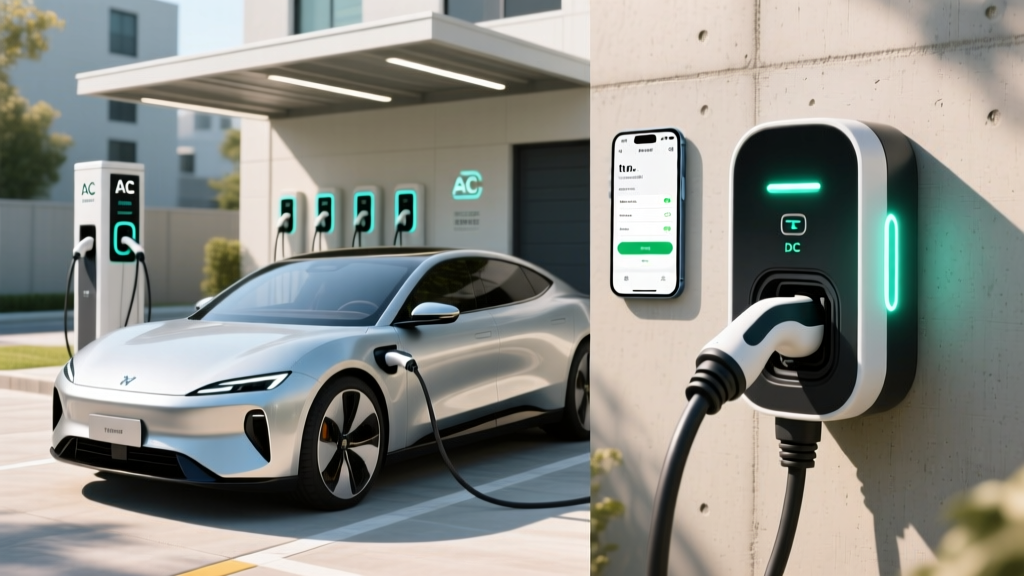
Every EV charging scenario falls into one of three levels. Here's what each delivers in real-world terms:
| Level | Voltage | Power (kW) | Miles of Range per Hour | Typical Use Case | Cost per kWh |
|---|---|---|---|---|---|
| Level 1 | 120V AC | 1.0–1.9 kW | 3–5 mi/hr | Overnight trickle, PHEVs | $0.12–$0.18 (home utility rate) |
| Level 2 | 240V AC | 3.3–19.2 kW | 12–75 mi/hr | Home daily, workplace, destinations | $0.12–$0.18 home / $0.25–$0.49 public |
| DC Fast | 400–800V DC | 50–350 kW | 150–1,200+ mi/hr (peak) | Road trips, highway corridors | $0.30–$0.65+ per kWh |
A few real-world notes on these figures. Level 1 from a standard 120V household outlet delivers roughly 1.4 kW continuously — enough for plug-in hybrids with 20–40 miles of electric range, but painfully slow for a 75+ kWh BEV battery (a full charge could take 50+ hours). Level 2 at 240V is the home-charging sweet spot; a 48-amp (11.5 kW) station adds roughly 44 miles of range per hour, meaning an 8-hour overnight session yields ~350 miles — more than enough for any daily commute. DC fast charging peaks at high kW but tapers significantly above 80% state of charge (SoC), which is why we measure 10–80% times rather than 0–100%.
Real-World Charging Time Examples
Here's what 10–80% charging looks like for common battery sizes at each level:
- 60 kWh battery (e.g., base Tesla Model 3 RWD): Level 2 at 11.5 kW = ~4.5 hours; 150 kW DC fast charger = ~25 minutes (peak, with taper)
- 77 kWh battery (e.g., Hyundai Ioniq 5 Long Range): Level 2 at 11.5 kW = ~5.5 hours; 350 kW DC fast charger = ~18 minutes (800V architecture sustains high rates longer)
- 100 kWh battery (e.g., Ford F-150 Lightning Extended Range): Level 2 at 11.5 kW = ~7 hours; 150 kW DC fast charger = ~40 minutes
The charging curve matters: most EVs pull peak kW only between roughly 10–50% SoC, then taper. A "250 kW" charger may average 130 kW over a full 10–80% session. This is why manufacturer-stated peak kW figures overstate real-world throughput.
Home Charger Installation: Electrical Requirements and Costs
Installing a Level 2 home charger is the single best investment for EV ownership — it's where 80%+ of all charging happens for most owners. But the total cost depends heavily on your home's electrical infrastructure.
Electrical Requirements
A Level 2 charger requires a dedicated 240V circuit, identical in concept to what powers your electric dryer or oven. Common configurations:
- 40-amp circuit / 32-amp continuous (7.7 kW): Minimum practical for most BEVs. Requires a NEMA 14-50 outlet or hardwired connection.
- 50-amp circuit / 40-amp continuous (9.6 kW): The most popular home setup. NEMA 14-50 outlet compatible.
- 60-amp circuit / 48-amp continuous (11.5 kW): Optimal for larger batteries (80+ kWh). Typically hardwired.
- 80-amp circuit / 64-amp continuous (15.3–19.2 kW): Premium setup, requires substantial panel capacity. Hardwired only.
The National Electrical Code (NEC) requires EV circuits to be rated at 125% of the charger's continuous draw — so a 48-amp charger needs a 60-amp breaker. Your charger should be on a dedicated circuit (not shared with other appliances) and protected by a GFCI breaker if installed outdoors or in a garage, per NEC 2023/2026 requirements.
Do You Need a Panel Upgrade?
This is where costs can jump significantly. Many older homes have 100-amp or 125-amp main service panels. Adding a 50-amp or 60-amp dedicated EV circuit may exceed available capacity, especially if you already run electric heat, an electric dryer, and an electric range. A licensed electrician will perform a load calculation per NEC Article 220 to determine if your panel can handle the additional draw.
If you need a panel upgrade from 100A to 200A service, expect to pay $1,500–$3,500 on top of the charger installation. Homes with existing 200A panels usually have sufficient headroom. Some utilities and states offer rebates specifically for panel upgrades tied to EV adoption — check your local utility's EV program page.
| Component | Simple Install (panel nearby, no upgrade) | Complex Install (long run, panel upgrade) |
|---|---|---|
| Level 2 charger equipment | $350–$700 | $350–$700 |
| Electrician labor (2–4 hrs simple / 6–12 hrs complex) | $300–$800 | $1,200–$3,000 |
| Electrical materials (wire, conduit, breaker) | $50–$200 | $200–$600 |
| Permit and inspection | $50–$200 | $50–$200 |
| Panel upgrade (if needed) | $0 | $1,500–$3,500 |
| Total estimated cost | $750–$1,900 | $3,300–$8,000 |
According to the U.S. Department of Energy, most straightforward home Level 2 installations fall in the $1,000–$2,500 range when no panel upgrade is required. Always get at least two quotes from licensed electricians and verify they pull a permit — unpermitted EV charger installs can void home insurance claims and cause issues at resale.
Which Connector and Charger Is Compatible With Your EV?
The connector landscape shifted dramatically between 2023 and 2026. Tesla's North American Charging Standard (NACS) has been adopted by nearly every major automaker, but millions of CCS1-equipped EVs remain on the road. Here's the current compatibility map:
| Connector | Brands Using It (2026) | Adapter Needed for Other Networks? |
|---|---|---|
| NACS (native) | Tesla (all), Ford, GM, Rivian, Volvo, Polestar, Mercedes-Benz, Nissan (new models) | CCS1 adapter needed for legacy Electrify America / non-Tesla CCS stations (~$150–$250) |
| CCS1 | Hyundai, Kia, BMW, Volkswagen, Stellantis, Honda (current models) | NACS adapter (often included by OEM) needed for Tesla Supercharger access |
| CHAdeMO | Nissan Leaf (legacy), Mitsubishi Outlander PHEV (legacy) | Declining network; limited adapter options |
Adapter reality check: Most OEMs now include or offer a CCS1-to-NACS adapter so their vehicles can access Tesla's Supercharger network, which now exceeds 30,000 stalls in North America. Ford and GM owners who purchased 2024+ models should have received a complimentary adapter; replacement units from Ford or authorized dealers cost roughly $150–$250. When buying a home charger, choose one with the connector matching your vehicle — or buy a universal unit with a swappable connector head.
How Much Does Charging Cost Per Mile vs. Gas?
This is the question that determines whether an EV saves you money. The answer depends on your electricity rate, your vehicle's efficiency, and how much you rely on DC fast charging versus home charging.
| Scenario | Rate / Price | Vehicle Efficiency | Cost per Mile |
|---|---|---|---|
| Home charging (off-peak utility rate) | $0.13/kWh | 3.5 mi/kWh (e.g., Tesla Model 3, Hyundai Ioniq 6) | $0.037/mi |
| Home charging (standard rate) | $0.18/kWh | 3.0 mi/kWh (e.g., Ford Mustang Mach-E AWD) | $0.060/mi |
| Public Level 2 (network pricing) | $0.35/kWh | 3.0 mi/kWh | $0.117/mi |
| DC fast charging (Electrify America / EVgo) | $0.52/kWh | 3.0 mi/kWh | $0.173/mi |
| DC fast charging (Tesla Supercharger, member rate) | $0.32/kWh | 3.5 mi/kWh | $0.091/mi |
| Gasoline car (national avg $3.45/gal) | $3.45/gallon | 28 MPG combined | $0.123/mi |
| Gasoline car (22 MPG truck/SUV) | $3.45/gallon | 22 MPG combined | $0.157/mi |
The math is clear: home-charged EVs cost 50–70% less per mile than equivalent gas vehicles. Even exclusive DC fast charging is competitive with a 28 MPG gas car and cheaper than a 22 MPG truck. The breakeven shifts if your local utility charges above $0.25/kWh or if you rely entirely on premium-priced public DC chargers in high-cost states like California or New York.
How Payment Actually Works at Each Location
Home: You don't "pay" per session — charging adds to your monthly utility bill. Many utilities offer time-of-use (TOU) plans with off-peak rates between 10 PM and 6 AM that can drop your effective rate to $0.08–$0.12/kWh. Set your charger or vehicle to schedule charging during these windows.
Public Level 2: Networks like ChargePoint, EVgo, and Blink use mobile apps linked to a credit card or debit card. Some also accept tap-to-pay credit cards directly on the station. Pricing is typically per kWh (the fairest model) but some older stations charge per hour or per session — always check the screen before plugging in. Many workplaces and shopping centers still offer free Level 2 charging as an amenity.
DC Fast Charging: Tesla Superchargers bill automatically to the credit card on your Tesla account (or the Ford/GM/Rivian account linked via the NACS adapter handshake). Electrify America, EVgo, and ChargePoint DC stations require their respective apps or RFID cards. Memberships ($4–$8/month) typically reduce per-kWh pricing by 15–25%. As of 2026, the National Highway Traffic Safety Administration and FHWA require all federally funded NEVI chargers to accept credit/debit cards without requiring a network-specific app, improving accessibility on highway corridors.
Equipment Recommendations: Home Chargers Worth Buying
Not all Level 2 chargers are equal. Here are proven units that balance power, reliability, smart features, and price:
ChargePoint Home Flex
- Power: Up to 12 kW (50A) — configurable down to 16A to match your circuit
- Connector: NACS or J1772 (CCS adapter available)
- Cable length: 23 feet
- Smart features: Wi-Fi, app scheduling, Alexa integration, energy tracking
- Price: ~$550–$650
- Best for: Flexible amperage configuration, strong app ecosystem
Tesla Wall Connector
- Power: Up to 11.5 kW (48A)
- Connector: NACS native (J1772 adapter included for non-Tesla EVs)
- Cable length: 24 feet
- Smart features: Wi-Fi, OTA updates, power sharing between two units, vehicle-specific access control
- Price: ~$475
- Best for: Tesla owners or mixed-Tesla households; excellent value at 48A
Emporia Level 2 EV Charger
- Power: Up to 11.5 kW (48A)
- Connector: J1772 (CCS) — NACS version available
- Cable length: 24 feet
- Smart features: Wi-Fi, detailed energy monitoring, solar-integration scheduling, load management with Emporia Vue panel monitor
- Price: ~$400
- Best for: Budget-conscious buyers who want energy monitoring and solar pairing
Grizzl-E Smart
- Power: Up to 10 kW (40A)
- Connector: J1772 or NACS
- Cable length: 24 feet
- Smart features: Wi-Fi, OCPP compatibility, adjustable amperage
- Price: ~$450–$550
- Best for: Extreme cold climates (rated to -40°F), rugged outdoor install, Canadian-built
All four units above are UL-listed (or ETL-listed to UL standards), which is non-negotiable for safety and insurance compliance. Avoid unlisted chargers from unknown brands on Amazon — they may lack proper overcurrent protection, ground-fault detection, or thermal cutoffs. If you're eligible for the federal §30D clean vehicle credit on your EV purchase, note that home charger equipment previously qualified under §30C (Alternative Fuel Vehicle Refueling Property Credit), which offers up to $1,000 for residential charging equipment installed in eligible census tracts — verify current-year eligibility with a tax professional.
Safety and Code Considerations
EV chargers draw sustained high current for hours — this is fundamentally different from short-burst appliances. Key safety requirements:
- Dedicated circuit: Your Level 2 charger must have its own breaker, not shared with outlets or other appliances. This prevents overloading and nuisance trips.
- GFCI protection: NEC 2023 and 2026 require ground-fault circuit interrupter protection for outdoor receptacles and many garage installations. Your electrician will specify a GFCI breaker or confirm the charger has built-in ground-fault protection (most UL-listed units do).
- Outdoor rating: If your charger mounts outside, it must carry a NEMA 4 (weatherproof) rating. All four units recommended above meet this standard.
- Wire gauge: A 50-amp circuit requires minimum 6 AWG copper wire; a 60-amp circuit requires 4 AWG. Longer wire runs may need upsizing to prevent voltage drop.
- Permit and inspection: Virtually all jurisdictions require an electrical permit for a new 240V circuit. The inspection verifies proper wire sizing, grounding, breaker rating, and GFCI compliance. Do not skip this — unpermitted work can invalidate your homeowner's insurance in the event of an electrical fire.
Frequently Asked Questions
How much does it cost to install a home EV charger?
A straightforward Level 2 installation with an existing 200-amp panel and a short wire run typically costs $750–$1,900 including equipment, electrician labor, materials, and permit. If your home needs a panel upgrade (100A to 200A), total costs can reach $3,300–$8,000. Always get a load calculation from a licensed electrician before committing.
How fast will each charging level add range?
Level 1 (120V) adds 3–5 miles per hour. Level 2 (240V, 48A) adds roughly 40–45 miles per hour for an efficient sedan. DC fast charging can add 150–300+ miles in a 20–30 minute session, but actual throughput depends on the vehicle's charge curve, battery temperature, and the station's available power.
Which connector/charger is compatible with my EV?
Check your vehicle's charge port. 2026 Teslas, Fords, GMs, Rivians, and Volvos use NACS natively. Most Hyundai, Kia, BMW, and VW models still use CCS1. Nissan Leaf models use CHAdeMO. Adapters exist for cross-compatibility, and most home chargers are available in either NACS or J1772/CCS configurations.
How much does charging cost per mile vs gas?
Home-charged EVs average $0.04–$0.06 per mile, compared to $0.12–$0.16 per mile for a typical gas car at 2026 fuel prices. Even DC fast charging at $0.50/kWh yields roughly $0.17/mile — competitive with a 20 MPG vehicle. Your savings scale with how much you charge at home versus public stations.
What electrical upgrades might I need?
The most common upgrade is a panel capacity increase from 100A to 200A service ($1,500–$3,500). You may also need a new breaker slot, upgraded wire from the meter to the panel, or a sub-panel if your garage is detached. Some utilities offer "make-ready" programs that cover the cost of wiring from the panel to the charger location — check with your provider before paying out of pocket.
Can I use a regular 120V outlet instead of installing a Level 2 charger?
Yes, but with significant limitations. A standard 120V outlet delivers roughly 1.4 kW, adding about 4 miles of range per hour. For a PHEV with 30 miles of electric range, overnight Level 1 charging works well. For a BEV with a 75 kWh battery, a full Level 1 charge takes 50+ hours — impractical for anything beyond emergency or supplemental use. If you do use Level 1 regularly, ensure the outlet is on a dedicated 15A or 20A circuit and avoid using extension cords.