One of the first questions new EV buyers ask isn't about range—it's about the bill. How to pay for charging an electric car depends entirely on where and how you charge. A driver plugging in at home overnight on a time-of-use plan might spend $0.04 per mile, while someone relying exclusively on DC fast chargers could pay $0.15 per mile or more. This guide breaks down every charging scenario with exact numbers, equipment costs, and payment methods so you can budget accurately before you buy.
The Three Charging Levels: Speeds, Costs, and Where You'll Use Them
Before calculating what you'll pay, you need to understand the three charging tiers. Power is measured in kW (the rate of flow), while energy stored in your battery is measured in kWh (the total capacity). Confusing these two is the single most common EV literacy mistake—think of kW as the width of a hose and kWh as the size of the bucket.
| Level | Voltage | Power (kW) | Miles of Range Added per Hour | Typical Use Case |
|---|---|---|---|---|
| Level 1 | 120V AC | 1.0–1.4 kW | 3–5 mi/hr | Emergency top-ups, low-mileage drivers, PHEVs |
| Level 2 | 240V AC | 3.3–19.2 kW | 12–75 mi/hr | Home overnight charging, workplace, shopping centers |
| DC Fast (Level 3) | 400–800V DC | 50–350 kW | 150–1,000+ mi/hr | Road trips, highway corridors, rapid top-ups |
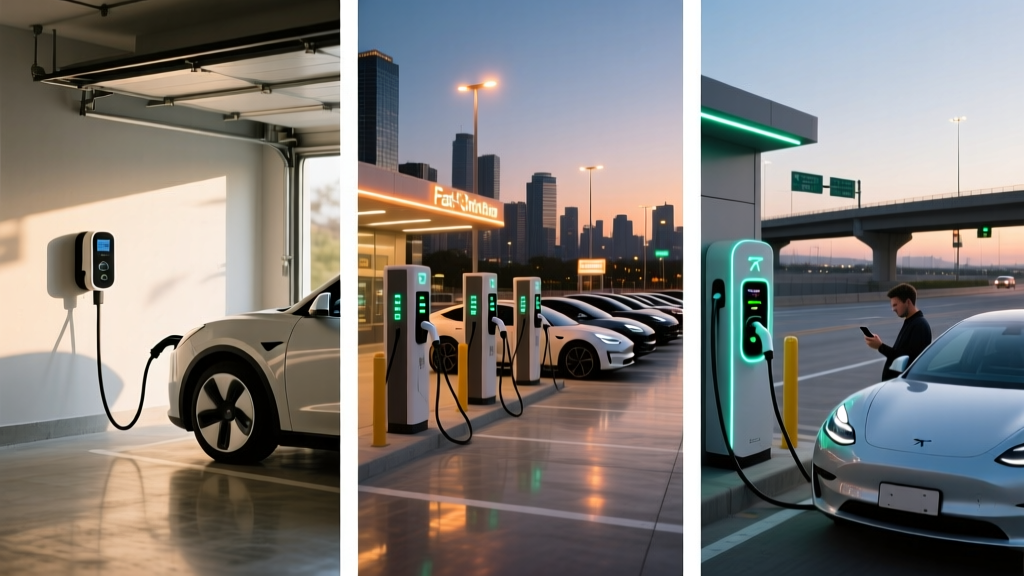
Most EV owners do 80–90% of their charging at home on Level 2. DC fast charging is reserved for road trips or occasional quick top-ups, and Level 1 is best treated as a fallback. The payment method and cost structure differ sharply across all three.
How to Pay for Home Charging: The Cheapest Option
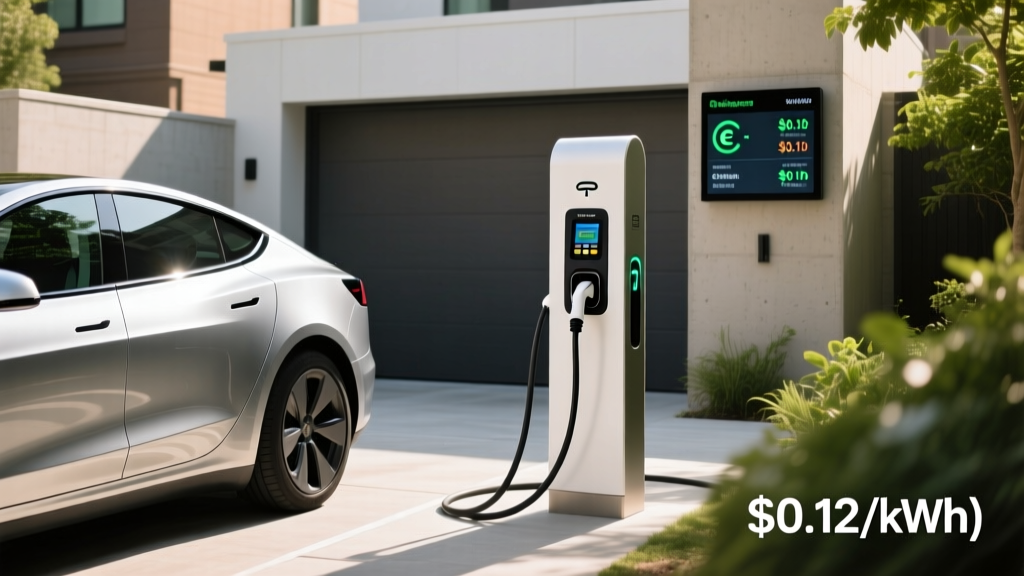
Home charging is where EV ownership economics shine. You're buying electricity at residential rates, which in the US average $0.16/kWh as of early 2026 according to the U.S. Energy Information Administration. But that average masks significant variation by state, utility, and time of day.
Payment Methods for Home Charging
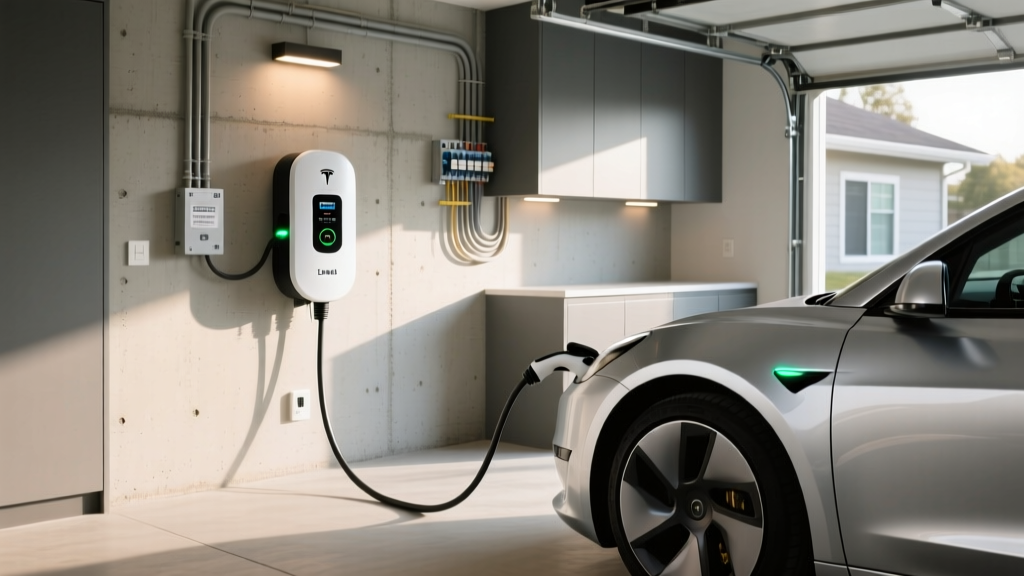
When you charge at home, payment is automatic—it simply appears on your monthly utility bill. There's no app to open, no RFID card to tap. Your Level 2 charger draws from your home's electrical panel, and your utility meter tracks the kWh consumed. Some smart chargers (like the ChargePoint Home Flex or Emporia Level 2) can track charging-specific energy use, which is useful if your utility offers a separate EV rate plan.
Time-of-Use (TOU) Plans: Slash Your Cost to $0.04–$0.08/kWh
Many utilities offer EV-specific time-of-use plans where off-peak electricity (typically 10 PM–6 AM) drops to $0.04–$0.08/kWh. If your utility offers this, scheduling your charger to run only during off-peak hours can cut your per-mile cost by 50–70% compared to standard rates. PG&E's EV2 rate in California, for example, offers off-peak rates around $0.12/kWh in winter and $0.15/kWh in summer, while Xcel Energy in Colorado offers off-peak EV rates as low as $0.05/kWh.
Real Home Charging Cost Scenarios
Consider a vehicle with a 75 kWh usable battery (like a Tesla Model Y Long Range or Hyundai Ioniq 5) charged from 10% to 90%—that's roughly 60 kWh added:
- Off-peak TOU ($0.06/kWh): $3.60 for 60 kWh
- Standard residential ($0.16/kWh): $9.60 for 60 kWh
- Peak TOU ($0.30/kWh): $18.00 for 60 kWh
At an efficiency of 3.5 miles per kWh (typical for a midsize crossover), that off-peak charge gives you roughly 210 miles of range for $3.60—a cost per mile of just $0.017.
How Much Does It Cost to Install a Home EV Charger?
The total cost of getting a Level 2 charger running at home includes the equipment, the electrician's labor, permits, and potentially a panel upgrade. Here's a realistic breakdown based on 2026 market rates:
| Component | Low End | High End | Notes |
|---|---|---|---|
| Level 2 Charger (hardware) | $350 | $700 | 32A–48A smart chargers; Wi-Fi enabled models cost more |
| Electrician labor | $500 | $2,000 | Depends on run length from panel to garage/driveway |
| Electrical permit | $50 | $250 | Varies by municipality; required by code in nearly all jurisdictions |
| 200A panel upgrade (if needed) | $1,500 | $4,000 | Older homes with 100A service often need an upgrade |
| Conduit, wiring, misc. materials | $100 | $500 | Longer runs from panel to outlet increase material cost |
| Total (no panel upgrade) | $1,000 | $3,450 | Most homes with existing 200A service fall in this range |
| Total (with panel upgrade) | $2,500 | $7,450 | Common in homes built before 1990 with 100A panels |
What Electrical Upgrades Might I Need?
A 48-amp Level 2 charger requires a dedicated 60-amp circuit (the National Electrical Code requires circuits to be rated at 125% of continuous load). Your electrician will check whether your panel has spare capacity. Homes with 200-amp service and open breaker slots usually accommodate a new 60A circuit without issue. Homes with 100-amp service, full panels, or subpanels already near capacity may need a service upgrade to 200A or even 400A—this is the single biggest variable in installation cost.
The IRS §25C residential energy credit can offset up to 30% of home charger equipment and installation costs (up to $1,000) through 2032, though eligibility depends on your tax situation—consult a tax professional.
Public Level 2 Charging: Payment and Pricing
Public Level 2 chargers—found at grocery stores, parking garages, hotels, and workplaces—bridge the gap between home and highway. Payment methods vary by network:
- ChargePoint: Pay via the ChargePoint app (credit card on file), RFID card, or Apple Pay/Google Pay at the station. Some stations are free; paid stations typically charge $0.10–$0.25/kWh or $1.00–$2.00/hour.
- EVgo: App-based payment with credit card or EVgo subscription plan. Level 2 stations charge $0.12–$0.20/kWh depending on market.
- Blink: App or Blink membership card. Rates vary widely by host—$0.39–$0.79/kWh at some commercial locations.
- Free Level 2: Many workplaces, hotels, and some retail locations offer complimentary Level 2 charging as an amenity. Apps like PlugShare filter for free stations.
Public Level 2 charging costs more than home charging but less than DC fast charging. Expect to pay $0.12–$0.30/kWh at most paid public Level 2 stations. A full charge on a 75 kWh battery might cost $9–$22 depending on the rate.
DC Fast Charging: Road Trip Costs and Payment
DC fast charging is the most expensive way to power your EV, but it's essential for road trips. The major networks in 2026:
- Tesla Supercharger (now open to NACS-equipped non-Tesla EVs): $0.25–$0.50/kWh depending on location and time of day. Pay via the Tesla app with a linked credit card. Non-Tesla vehicles with native NACS (Ford, Rivian, GM models from 2025+) use the same app.
- Electrify America: $0.35–$0.55/kWh for Guest rates; Pass+ subscription ($7/month) reduces to $0.25–$0.40/kWh. Pay via app or credit card at the kiosk.
- EVgo: $0.30–$0.48/kWh depending on market. App-based or RFID payment.
- ChargePoint (DC stations): $0.28–$0.45/kWh. Same app and payment as their Level 2 network.
DC Fast Charging Cost Reality Check
If you're exclusively DC fast charging a 75 kWh battery from 10–80% (about 52.5 kWh added) at $0.40/kWh, you're paying $21.00 per session. Over a month of heavy driving (2,000 miles at 3.5 mi/kWh), that's roughly $228 in electricity. The same distance on home off-peak charging at $0.06/kWh would cost about $34. DC fast charging is a convenience premium—budget accordingly if you can't charge at home.
Remember that DC fast charging follows a charge curve: your vehicle will accept peak power (e.g., 250 kW) only between roughly 10–40% state of charge, then taper significantly. A "10–80% in 18 minutes" claim assumes optimal battery preconditioning—cold batteries charge much slower.
Charging Cost Per Mile vs. Gas: The Real Comparison
The numbers below compare a typical midsize EV (3.5 mi/kWh efficiency, like a Hyundai Ioniq 5 or Tesla Model Y) against a comparable gas vehicle (28 MPG combined, like a Toyota RAV4 AWD) using national averages:
| Scenario | Rate | EV Cost/Mile | Gas Cost/Mile (28 MPG) | Annual Savings (15,000 mi) |
|---|---|---|---|---|
| Home off-peak (TOU) | $0.06/kWh | $0.017 | $0.111 | $1,410 |
| Home standard rate | $0.16/kWh | $0.046 | $0.111 | $975 |
| Public Level 2 | $0.22/kWh | $0.063 | $0.111 | $720 |
| DC Fast Charging | $0.40/kWh | $0.114 | $0.111 | -$45 (EV costs more) |
The takeaway: home charging delivers massive savings. Public Level 2 still saves meaningfully. But if you rely entirely on DC fast charging at current rates, you may actually spend more per mile than a gas car. This is why home charging access is the single most important economic factor in EV ownership. Gas prices based on a national average of $3.10/gallon (early 2026, per EIA).
Which Connector and Charger Is Compatible With My EV?
The connector landscape shifted dramatically in 2024–2025 when nearly every major automaker adopted Tesla's North American Charging Standard (NACS). Here's where things stand in 2026:
| Connector | Brands Using It Natively | Adapter Needed? |
|---|---|---|
| NACS (Tesla standard) | Tesla (all), Ford, GM, Rivian, Hyundai/Kia (2025+), Volvo/Polestar, BMW, Mercedes-Benz (2025+) | CCS1-to-NACS adapters available (~$200) for older CCS vehicles at NACS stations |
| CCS1 | VW, Audi, Porsche, older Ford/GM/Hyundai/Kia (pre-2025) | NACS-to-CCS1 adapters (~$200–$250) to use Tesla Superchargers |
| CHAdeMO | Nissan Leaf (legacy only, discontinued after 2025) | No widely available adapter; CHAdeMO stations increasingly rare |
For home Level 2 charging, all vehicles use the J1772 connector (or NACS, which includes J1772 signaling). If your EV has a NACS port (any Tesla, or 2025+ Ford/GM/Hyundai/Kia), you can use either a NACS-equipped home charger or a J1772 charger with the adapter that came with your vehicle. Most home chargers still ship with J1772 connectors; NACS home chargers from companies like Emporia and Wallbox are now widely available.
Equipment Recommendations: Best Home Level 2 Chargers for 2026
These are the chargers we recommend based on reliability, features, and value. All are UL-listed for safety and support the NACS or J1772 connector standard.
ChargePoint Home Flex (NACS or J1772)
- Power output: Up to 12 kW (50A) on a 60A circuit; adjustable down to 16A
- Cable length: 23 feet
- Smart features: Wi-Fi, app scheduling, energy tracking, Alexa integration, TOU optimization
- Price: $549 (J1772) / $599 (NACS)
- Best for: Drivers wanting detailed energy tracking and flexible amperage
Emporia Level 2 EV Charger
- Power output: Up to 11.5 kW (48A) on a 60A circuit
- Cable length: 24 feet
- Smart features: Wi-Fi, app control, solar integration, load management, TOU scheduling
- Price: $399 (J1772) / $449 (NACS)
- Best for: Budget-conscious buyers with solar panels or who want load balancing
Tesla Wall Connector (NACS native)
- Power output: Up to 11.5 kW (48A) on a 60A circuit
- Cable length: 24 feet
- Smart features: Wi-Fi, OTA updates, power sharing between multiple units, access control
- Price: $425
- Best for: Tesla owners and NACS-native EV drivers who want a clean, reliable unit
Grizzl-E Smart (J1772 or NACS)
- Power output: Up to 10 kW (40A) on a 50A circuit; adjustable 16/24/32/40A
- Cable length: 24 feet
- Smart features: OCPP-compatible, app scheduling, built-in RFID, extreme cold rated (-40°F)
- Price: $449 (J1772) / $499 (NACS)
- Best for: Cold-climate drivers and those wanting a rugged, outdoor-rated unit
Charging Time Examples for Common Battery Sizes
Here's how long a 10–80% charge takes on different setups for popular battery capacities:
- 60 kWh battery (e.g., base Tesla Model 3, Chevy Equinox EV): ~5 hours on a 12 kW Level 2; ~22 minutes on a 150 kW DC fast charger (10–80%)
- 75 kWh battery (e.g., Tesla Model Y LR, Hyundai Ioniq 5): ~6.3 hours on a 12 kW Level 2; ~18 minutes on a 250 kW DC fast charger (10–80%)
- 100 kWh battery (e.g., Ford F-150 Lightning Extended, Rivian R1T): ~8.3 hours on a 12 kW Level 2; ~25–30 minutes on a 250 kW DC fast charger (10–80%)
Level 2 overnight charging easily replenishes a full day's driving for any of these vehicles. DC fast charging times assume the battery is preconditioned (warmed to optimal temperature)—in cold weather, add 5–10 minutes.
Safety and Electrical Code Considerations
Home EV charger installation is electrical work governed by the National Electrical Code (NEC) and local building codes. Key requirements your electrician will follow:
- Dedicated circuit: Your Level 2 charger must be on its own dedicated breaker—no sharing with other outlets or appliances.
- GFCI protection: The NEC (2020 and later editions) requires ground-fault circuit interrupter protection for EV charging outlets in garages and all outdoor locations. Many modern chargers have built-in GFCI; if yours doesn't, a GFCI breaker is required.
- Outdoor rating: If your charger is installed outdoors, it must carry a NEMA 4 (weatherproof) rating. All chargers listed above meet this standard.
- Permit and inspection: Nearly all jurisdictions require an electrical permit for a new 240V circuit. Your electrician typically pulls this, and a city/county inspector verifies the work. Don't skip this—it's a safety requirement and may affect your home insurance.
- Wire gauge: A 60A circuit requires 6 AWG copper wire (or 4 AWG aluminum). Your electrician will size wire to the breaker rating and run length.
Never use an extension cord for EV charging. If your outlet is too far from your parking spot, have an electrician install a properly rated outlet or hardwired charger at the correct location.
Frequently Asked Questions
How much does it cost to install a home EV charger?
Expect $1,000–$3,450 total (equipment + electrician + permit) for homes with an existing 200-amp electrical panel and spare breaker slots. If your home needs a panel upgrade from 100A to 200A, add $1,500–$4,000, bringing the total to $2,500–$7,450. Get at least two quotes from licensed electricians—prices vary significantly by market and run complexity.
How fast will each charging level add range?
Level 1 (120V) adds 3–5 miles of range per hour—adequate for PHEVs or drivers covering under 30 miles daily. Level 2 (240V) adds 12–75 miles per hour depending on amperage; a 48A charger adds roughly 35–40 mi/hr for a typical crossover. DC fast charging adds 150–1,000+ miles per hour at peak rates, though actual charging sessions are typically 15–35 minutes (10–80%) due to the charge curve taper above 80%.
Which connector/charger is compatible with my EV?
If you drive a Tesla or a 2025+ model from Ford, GM, Hyundai, Kia, Rivian, Volvo, or BMW, your vehicle uses the NACS connector natively. Older non-Tesla EVs (pre-2025 VW, Audi, Porsche, and pre-adoption Ford/GM/Hyundai/Kia) use CCS1 and will need an adapter ($200–$250) to access Tesla Superchargers. CHAdeMO is essentially retired—only the now-discontinued Nissan Leaf used it. For home Level 2 charging, any J1772 or NACS charger will work with appropriate adapters.
How much does charging cost per mile vs gas?
At home on off-peak electricity ($0.06/kWh), a typical EV costs about $0.017/mile—roughly 85% cheaper than a 28 MPG gas car at $3.10/gallon ($0.111/mile). Even on a standard residential rate ($0.16/kWh), EV charging costs about $0.046/mile, still less than half the cost of gas. Only exclusive DC fast charging at $0.40/kWh ($0.114/mile) matches or exceeds gas costs. Annual savings for a home-charging driver covering 15,000 miles: $975–$1,410.
What electrical upgrades might I need?
The most common upgrade is a panel capacity increase from 100A to 200A service—needed in older homes that lack spare capacity for a 60A EV circuit. Your electrician will perform a load calculation (NEC Article 220) to determine if your existing panel can handle the charger. Other potential upgrades: adding a subpanel if your main panel is full, upgrading the service entrance wire, or installing a smart load management system (like the Emporia Smart Panel or Span Drive) that dynamically shares power between the charger and other high-draw appliances, avoiding a full panel upgrade.
Can I use a regular 120V outlet to charge my EV?
Yes, but slowly. A standard 120V household outlet delivers about 1.0–1.4 kW, adding 3–5 miles of range per hour. For a PHEV with a 15 kWh battery, a full overnight charge is realistic. For a full-size EV with a 75+ kWh battery, Level 1 would take 50+ hours from empty—only practical as an emergency backup or for very low-mileage drivers.
Do I need a permit to install a home EV charger?
In nearly all US jurisdictions, yes. Installing a new 240V circuit requires an electrical permit and a post-installation inspection. Permit fees typically range from $50–$250. Skipping the permit risks code violations, failed home inspections when you sell, and potential insurance claim denials if an electrical fire is traced to unpermitted work. A licensed electrician will handle the permit process.