The Real State of Free EV Charging in 2026
Let's be direct: the era of unlimited free Supercharging is over. Tesla phased out its lifetime free Supercharging transfer program years ago, and most legacy perks have been retired. But that doesn't mean you can't still find ways to charge your EV at zero marginal cost. Whether you drive a Tesla Model Y, a Hyundai Ioniq 5, or a Ford Mustang Mach-E, several legitimate paths exist to offset or eliminate your DC fast-charging expenses — and understanding the full charging ecosystem helps you maximize every one of them.
This guide covers how to get free Supercharging credits, free public charging alternatives, and how to set up the lowest-cost home charging possible. We'll also break down exactly what you're paying when you do have to plug in at a paid station, because knowing the numbers is how you spot a genuinely good deal.
kW (kilowatt) measures power — the rate at which electricity flows into your battery, like water pressure in a hose. kWh (kilowatt-hour) measures energy — the total amount stored, like gallons in a tank. A 72 kWh battery charged at 11 kW takes roughly 6.5 hours; at 150 kW DC fast charging, it can go from 10–80% in about 25 minutes. Charging stations bill you per kWh consumed or per minute of session time.
How Fast Will Each Charging Level Add Range?
Before chasing free electrons, understand what each charging tier actually delivers. This determines whether a "free" Level 2 charger at a shopping center adds enough range to matter, or whether you genuinely need DC fast charging for your route.
| Level | Voltage / Amperage | Power (kW) | Miles of Range Added per Hour | Typical Use Case |
|---|---|---|---|---|
| Level 1 | 120V / 12A | 1.4 kW | 3–5 mi/hr | Overnight trickle; emergency top-up |
| Level 2 (Home) | 240V / 32–48A | 7.7–11.5 kW | 25–44 mi/hr | Daily home charging; full overnight fill |
| Level 2 (Public) | 208–240V / 30–80A | 6.6–19.2 kW | 22–65 mi/hr | Workplace, hotels, shopping centers |
| DC Fast (Level 3) | 400–800V DC | 50–350 kW | 150–1,000+ mi/hr | Road trips; rapid top-ups |
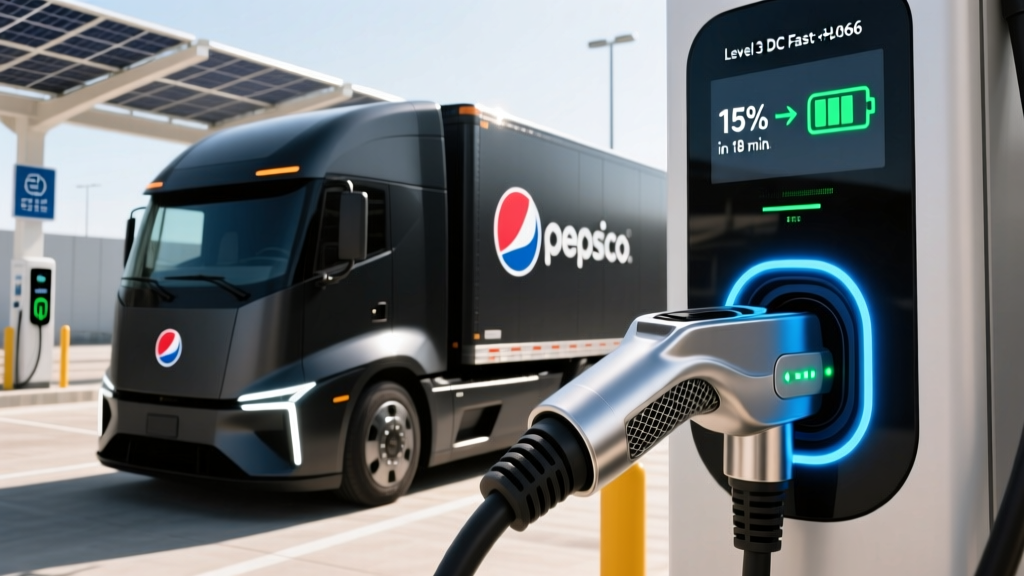
Real-world note: those DC fast-charging speeds are peak rates, typically sustained only between 10–50% State of Charge (SoC). Above 80%, the battery management system tapers the charge rate to protect cell health. A Tesla Model Y Long Range (75 kWh usable, NMC chemistry) might peak at 250 kW at a V4 Supercharger but averages closer to 100–130 kW across a full 10–80% session, completing it in roughly 25–28 minutes. A Hyundai Ioniq 5 with its 800V architecture (77.4 kWh usable) can sustain higher rates longer, hitting 10–80% in about 18 minutes at a 350 kW charger — one of the fastest production EVs available.
7 Legitimate Ways to Get Free Supercharging and DC Fast Charging
1. Tesla Referral Program Credits
Tesla's referral program periodically offers Supercharging credits — typically 1,000 to 3,000 free Supercharging miles — when an existing owner refers a new buyer. The program terms change frequently and sometimes pause entirely. Check your Tesla account's referral dashboard for current availability. These credits are applied automatically to Supercharger sessions.
2. Manufacturer Loyalty and Promotional Credits
Several automakers bundle complimentary charging with new vehicle purchases. In 2025–2026, programs have included:
- Hyundai / Kia: Complimentary Electrify America charging credits (typically 1,000–2,000 kWh or 2–3 years of limited sessions) with new Ioniq 5, Ioniq 6, and EV6 purchases.
- Volkswagen: Electrify America credits bundled with ID.4 purchases — historically 3 years of unlimited 30-minute sessions, though 2026 terms may differ. Verify at point of sale.
- Ford: Past promotions included complimentary DC fast-charging credits through partner networks for Mustang Mach-E and F-150 Lightning buyers.
These programs change by model year and trim. Always confirm the exact terms in writing before signing a purchase agreement.
3. Hotel and Destination Charging
Many hotels, resorts, and vacation rentals now offer complimentary Level 2 charging as a guest amenity. Platforms like PlugShare and ChargeHub let you filter for "free" stations and read user reviews confirming availability. A typical overnight session at a 7.2 kW Level 2 charger adds roughly 200+ miles of range — enough for most daily driving and a meaningful road-trip offset. This won't replicate Supercharger speeds, but it's genuinely free energy.
4. Workplace Charging
If your employer offers free workplace Level 2 charging, this is one of the most impactful zero-cost charging sources available. An 8-hour workday at 7.7 kW adds roughly 200–250 miles of range — essentially covering a full week of commuting for most drivers. Ask your facilities or HR department about EV charging availability and any sign-up requirements.
5. Utility Off-Peak and EV Rate Programs
While not technically "free," many utilities offer EV-specific time-of-use (TOU) rates that drop home charging costs to $0.05–$0.08/kWh during overnight off-peak hours (typically 11 PM – 6 AM). Some utilities in California, Texas, and the Southeast offer introductory EV credits or bill credits for enrolling in smart-charging programs that allow the utility to briefly pause your charger during peak demand. Check with your local utility for current EV rate plans.
6. Shopping Centers, Grocery Stores, and Municipal Lots
Free public Level 2 chargers are still common at grocery stores (Kroger, Whole Foods, Publix), big-box retailers, and some municipal parking garages. These are typically 6.6–7.2 kW units. A 45-minute grocery run adds roughly 20–30 miles — modest, but free. Use PlugShare or your vehicle's built-in navigation to identify free stations near your regular routes.
7. Credit Card and Membership Rewards
Some credit cards offer statement credits or reward points redeemable for EV charging network credits. American Express, for example, has periodically offered EV charging statement credits as a card benefit. Additionally, organizations like AAA offer members discounted or complimentary charging through partner networks in certain regions.
Which Connector and Charger Is Compatible with My EV?
The North American charging landscape has shifted dramatically. Tesla's North American Charging Standard (NACS) is now the dominant connector, with nearly every major automaker adopting it for 2025–2026 model-year vehicles. Here's how compatibility breaks down:
| Connector | Brands Using It (2026 Models) | Notes |
|---|---|---|
| NACS (Tesla) | Tesla (all), Ford, GM, Rivian, Volvo, Polestar, Mercedes-Benz, Nissan (Ariana), Honda, Fisker, Lucid (adapter), Hyundai/Kia (2025+ models) | Native access to Tesla Supercharger network. CCS vehicles need a NACS adapter (Tesla, Lectron, or A2Z). |
| CCS1 | VW ID.4 (remaining stock), some Stellantis models, legacy BMW iX/i4, older Hyundai/Kia | Used by Electrify America, EVgo, ChargePoint. NACS adapters available for future-proofing. |
| CHAdeMO | Nissan Leaf (legacy only — discontinued) | Effectively deprecated. No new vehicles use CHAdeMO in North America. |
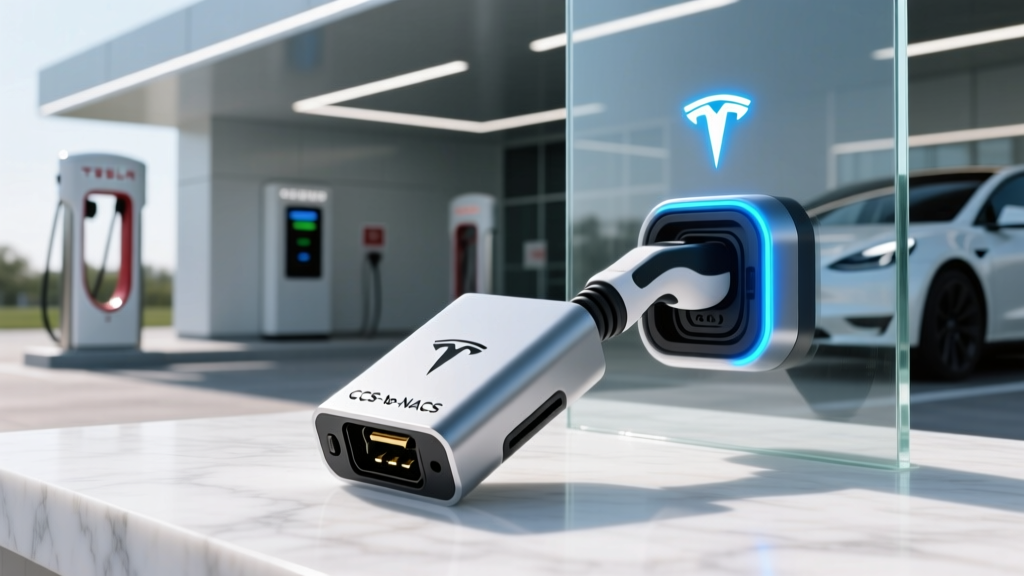
Adapter reality check: If you own a CCS-equipped vehicle (like a 2023–2024 Hyundai Ioniq 5 or VW ID.4), a NACS-to-CCS adapter ($150–$300) unlocks access to the Tesla Supercharger network — over 25,000 stalls in North America. Tesla sells an official adapter, and third-party options from Lectron and A2Z are widely available. Verify the adapter is rated for the full amperage your vehicle supports (typically up to 500A for DC fast charging).
How Much Does Charging Cost Per Mile vs. Gas?
Even when you can't get free Supercharging, EV charging almost always costs less per mile than gasoline. The exact savings depend on your local electricity rate and the vehicle's efficiency (measured in kWh/100 miles or MPGe). Here's a realistic comparison using a 2026 Tesla Model Y Long Range (28 kWh/100 mi, EPA combined) and a comparable gas SUV getting 26 MPG combined:
| Charging Scenario | Cost per kWh | Cost per Mile (Model Y) | Equivalent Gas SUV (26 MPG @ $3.40/gal) | Savings per 1,000 Miles |
|---|---|---|---|---|
| Home (off-peak TOU) | $0.07 | $0.020 | $0.131 | $111 |
| Home (standard rate) | $0.14 | $0.039 | $0.131 | $92 |
| Public Level 2 | $0.20 | $0.056 | $0.131 | $75 |
| Tesla Supercharger (avg) | $0.30 | $0.084 | $0.131 | $47 |
| Electrify America (peak) | $0.43 | $0.120 | $0.131 | $11 |
At home off-peak rates, you're paying roughly $0.02 per mile — an 85% reduction versus gasoline. Even at the most expensive DC fast-charging networks, EVs still hold a cost advantage, though the gap narrows significantly. This is precisely why maximizing free and low-cost charging opportunities matters: every session you shift from $0.43/kWh public DC to $0.07/kWh home overnight saves roughly $0.10 per mile, or $1,000 over 10,000 miles of driving.
How Much Does It Cost to Install a Home EV Charger?
Home Level 2 charging is the foundation of low-cost EV ownership. Installation costs vary widely based on your home's electrical panel capacity, the distance from the panel to the charger location, and local permitting requirements.
| Component | Simple Install (Panel Near Garage) | Complex Install (Panel Far / Upgrade Needed) |
|---|---|---|
| Level 2 Charger (hardware) | $400–$700 | $400–$700 |
| Electrician labor | $500–$1,200 | $1,500–$3,000 |
| Electrical permit | $50–$150 | $50–$200 |
| Panel upgrade (if needed) | $0 (not required) | $1,500–$3,500 |
| Conduit/wiring (long runs) | $100–$300 | $500–$1,500 |
| Total Range | $1,050–$2,350 | $3,950–$8,900 |
The panel upgrade gotcha: Most EV chargers require a dedicated 240V circuit at 40A (for a 9.6 kW charger) or 60A (for an 11.5 kW charger). If your home has a 100A main panel — common in homes built before 1990 — adding a 40–60A circuit may exceed the panel's capacity, requiring an upgrade to 200A. This is the single largest cost variable in any home charger installation. Always get a load calculation from a licensed electrician before committing to a charger amperage.
Federal tax credit: The IRS §30D-related Alternative Fuel Infrastructure Tax Credit (§30C) offers up to $1,000 for home EV charger installation, covering 30% of hardware and labor costs. Eligibility depends on your census tract meeting certain income or rural criteria. Verify current-year requirements at irs.gov and consult a tax professional.
What Electrical Upgrades Might I Need?
Beyond the panel itself, consider these requirements:
- Dedicated circuit: Your EV charger must have its own breaker — you cannot share a circuit with a dryer, oven, or HVAC system. A NEMA 14-50 outlet (240V/50A) is the most common, but hardwired installations eliminate the outlet and provide a cleaner, code-compliant connection for 48A+ chargers.
- GFCI protection: The 2020 and 2023 National Electrical Code (NEC) requires GFCI protection for all EV charging outlets. Some chargers (like the ChargePoint Home Flex) include built-in GFCI, which can simplify compliance. Hardwired chargers may not require an external GFCI breaker depending on local code interpretation — confirm with your electrician.
- Outdoor rating: If your charger is mounted outdoors or in an unconditioned garage, ensure it carries a NEMA 4 (weatherproof) rating. Most quality chargers (Tesla Wall Connector, ChargePoint Home Flex, Emporia Vue) are rated for outdoor use.
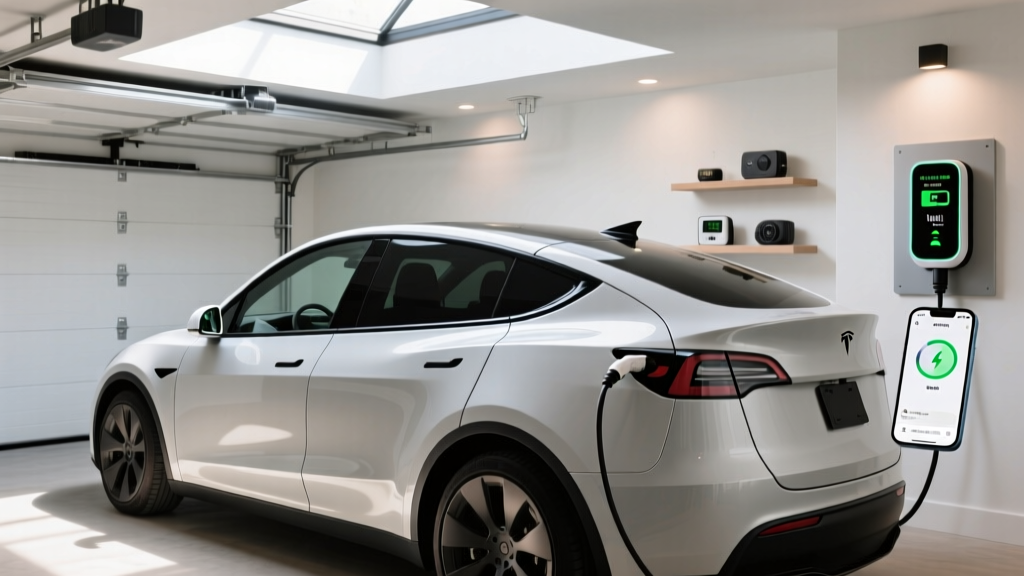
- Wi-Fi connectivity: Smart chargers connect to your home network for scheduling off-peak charging, monitoring session data, and receiving firmware updates. This is essential if your utility offers TOU rate optimization.
Recommended Home Chargers for 2026
ChargePoint Home Flex
- Power: Up to 11.5 kW (48A, 240V) — configurable down to 16A
- Connector: NACS native (2025+ models); CCS adapter included
- Cable length: 23 feet
- Smart features: Wi-Fi, app scheduling, Alexa/Google Home integration, utility TOU optimization
- Price: ~$550–$650
- Best for: Most EV owners wanting a reliable, configurable smart charger
Tesla Wall Connector
- Power: Up to 11.5 kW (48A, 240V)
- Connector: NACS native; J1772 adapter available for non-Tesla EVs
- Cable length: 24 feet
- Smart features: Wi-Fi, power sharing (link multiple units on one circuit), OTA updates
- Price: ~$420–$475
- Best for: Tesla owners or NACS-equipped households seeking the best value
Emporia Level 2 EV Charger
- Power: Up to 11.5 kW (48A, 240V)
- Connector: NACS or J1772 options available
- Cable length: 24 feet
- Smart features: Wi-Fi, solar integration (pairs with Emporia Vue energy monitor), TOU scheduling, load management
- Price: ~$400–$500
- Best for: Solar-equipped homes or owners wanting whole-home energy visibility
Frequently Asked Questions
Can I still get free unlimited Supercharging on a new Tesla?
No. Tesla discontinued free unlimited Supercharging for new vehicle purchases after the Model S/X legacy program ended. Some used Model S and Model X vehicles still carry transferable free Supercharging, but this is increasingly rare and reflected in higher resale prices. For new purchases, expect to pay per kWh at Superchargers (typically $0.25–$0.35/kWh depending on location and time of day).
Do free public chargers actually work reliably?
Reliability varies. Free Level 2 chargers at retail locations are often maintained by the property owner or a network like ChargePoint, and uptime is generally good (85–95% based on PlugShare user reports). Free DC fast chargers are extremely rare. Always check recent user reviews on PlugShare or your charging app before relying on a free station for a critical trip.
Is it worth getting a NACS adapter for my CCS vehicle?
Almost certainly yes, if you road-trip regularly. The Tesla Supercharger network has the largest footprint and highest reliability of any DC fast-charging network in North America. A quality NACS-to-CCS adapter costs $150–$300 and opens access to 25,000+ stalls. For a 2023–2024 Ioniq 5, EV6, or ID.4 owner, this is one of the highest-value accessories you can buy.
How long does it take to charge a 75 kWh battery at home?
At a 48A (11.5 kW) Level 2 charger, charging a 75 kWh battery from 10% to 100% takes approximately 6.5 hours. From 10–80% (the recommended daily range for NMC batteries), it takes about 4.5 hours. At a 32A (7.7 kW) charger, add roughly 50% more time — about 10 hours for a full charge. This is why overnight charging is ideal: you plug in when you get home and wake up with a full battery every morning.
What's the cheapest way to charge if I can't install a home charger?
Seek out free workplace or destination Level 2 chargers, enroll in your utility's EV TOU rate plan for the lowest public Level 2 rates, and use apps like PlugShare and A Better Routeplanner to plan DC fast-charging stops at lower-cost networks (Tesla Superchargers and Electrify America's off-peak rates tend to be cheaper than EVgo's peak pricing). Some apartment complexes are also beginning to install shared Level 2 chargers — ask your property manager about availability.