Understanding EV Charging Levels: How Fast Can You Add Range?
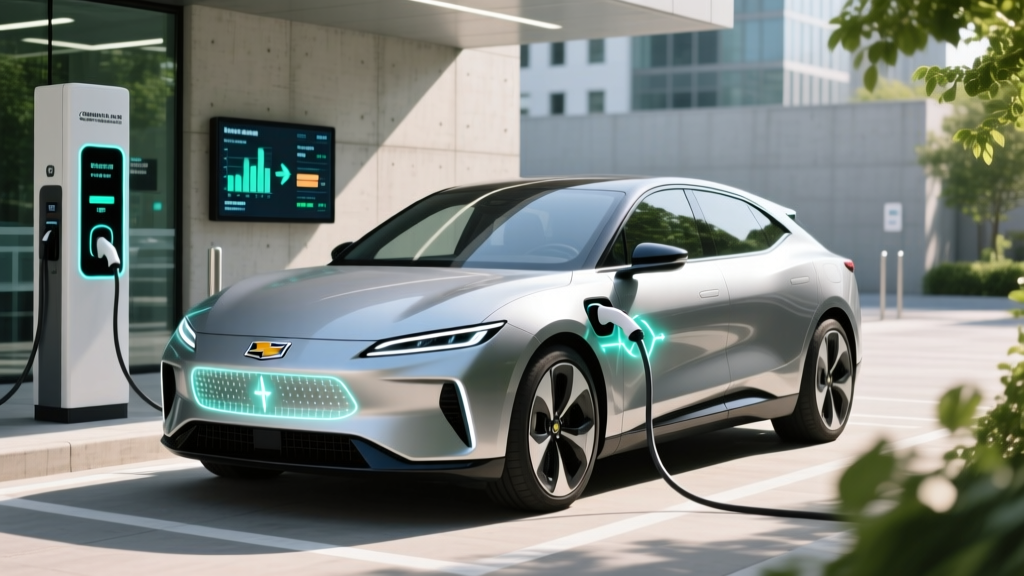
Before plugging in, you need to know the difference between kW (power — how fast energy flows) and kWh (energy — how much the battery holds). Think of kW as the width of a hose and kWh as the bucket size. A 60 kWh battery charged at 10 kW takes roughly 6 hours; at 150 kW, it takes under 30 minutes to 80%. Confusing these two units is the single most common mistake new EV owners make.
EV charging is split into three tiers, each suited to different scenarios:
| Level | Voltage | Power (kW) | Miles of Range Added per Hour | Typical Use Case |
|---|---|---|---|---|
| Level 1 | 120V AC | 1.0–1.4 kW | 3–5 mi/hr | Overnight trickle; PHEVs or low-mileage commutes |
| Level 2 | 240V AC | 7.2–19.2 kW | 25–75 mi/hr | Home daily charging; workplace; destination |
| DC Fast Charging | 400–800V DC | 50–350 kW | 150–1,000+ mi/hr (peak) | Road trips; highway corridors; rapid top-ups |
Real-world charging caveat: Peak DC fast-charge rates only apply between roughly 10–40% State of Charge (SoC). Above 80%, the battery management system throttles power to protect cell health — a 350 kW-capable vehicle might taper to 40 kW by 90%. Always plan road-trip stops around the 10–80% window for the fastest sessions.
Charging Time Examples: 10–80% for Common Battery Sizes
Charge times vary by battery chemistry (NMC vs. LFP), ambient temperature, and preconditioning. Below are realistic 10–80% estimates for representative 2025–2026 models:
| Vehicle | Battery (kWh usable) | Peak DC Rate (kW) | 10–80% Time |
|---|---|---|---|
| Tesla Model Y (Long Range) | 75 kWh (NMC) | 250 kW | ~22 min |
| Hyundai Ioniq 5 (Long Range) | 77.4 kWh (NMC) | 240 kW (800V) | ~18 min |
| Ford F-150 Lightning (Extended) | 131 kWh (NMC) | 150 kW | ~41 min |
| Chevrolet Equinox EV | 85 kWh (NMC) | 150 kW | ~30 min |
| BYD Atto 3 / Yuan Plus (LFP) | 60.5 kWh (LFP) | 88 kW | ~38 min |
For home Level 2 charging at 11.5 kW (48A on a 60A circuit), a 77 kWh battery charges from 10–80% in roughly 4.7 hours — easily covering an overnight session.
How Much Does It Cost to Install a Home EV Charger?
A Level 2 home charger installation involves three cost components: the charger unit, electrical labor, and permits. Total cost depends heavily on whether your electrical panel needs an upgrade.
| Component | Low-End Estimate | High-End Estimate |
|---|---|---|
| Level 2 charger (32A–48A, hardwired or NEMA 14-50) | $350 | $750 |
| Electrician labor (run 240V circuit, 20–50 ft) | $400 | $1,500 |
| Permit & inspection | $50 | $250 |
| Panel upgrade (100A → 200A, if needed) | $1,500 | $4,000 |
| Total (no panel upgrade) | $800 | $2,500 |
| Total (with panel upgrade) | $2,300 | $6,500 |
Homes built after 2000 typically have 200A panels with spare capacity. Pre-1980 homes with 100A service almost always require an upgrade before adding a 40–60A EV circuit. A licensed electrician should perform a load calculation per NEC Article 220 before quoting.
Electrical Requirements for a Standard Level 2 Install
- Circuit: Dedicated 240V, 40A or 60A breaker (supports 32A or 48A continuous draw, per the 80% NEC rule)
- Wiring: 6 AWG copper (for 48A) or 8 AWG (for 32A), in conduit where exposed
- Outlet vs. hardwired: NEMA 14-50 receptacle offers portability; hardwired avoids GFCI nuisance trips required by 2020+ NEC for outdoor receptacles
- GFCI: Required for outdoor receptacles in most jurisdictions post-2020 NEC; hardwired units often exempt
- Outdoor rating: NEMA 4 or IP65-rated enclosure if installed outside
Panel upgrade warning: If your home has a 100A panel, a 48A EV circuit may consume 50%+ of available capacity. An electrician may recommend a panel upgrade, a load-management device (like the Emporia Vue or Span smart panel), or derating the charger to 32A. Always get a load calculation before committing to equipment.
Which Connector Is Compatible With My EV?
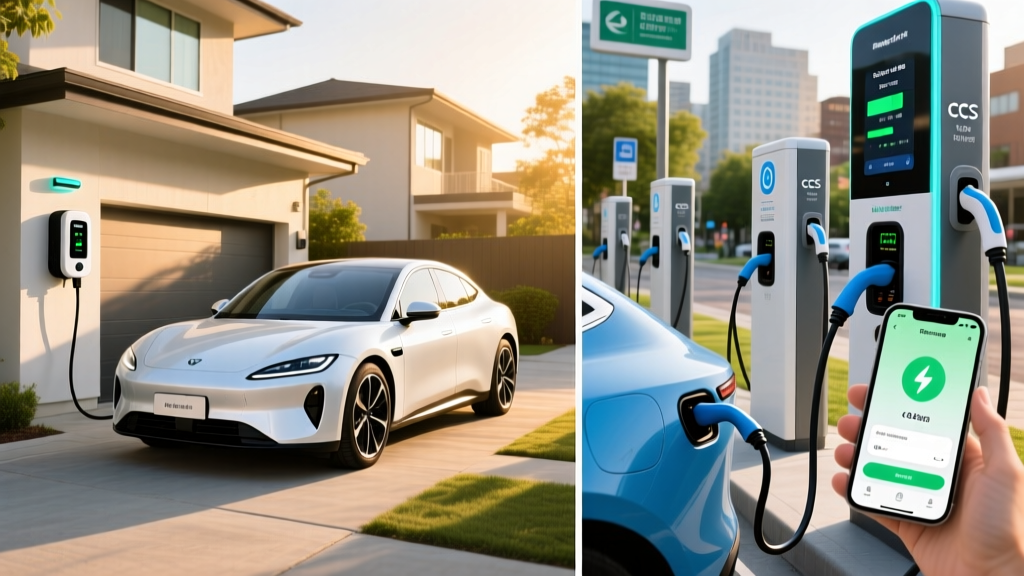
The North American market has largely consolidated around the NACS (North American Charging Standard), originally developed by Tesla. As of 2025–2026, Ford, GM, Rivian, Volvo, Hyundai/Kia, and others have adopted NACS on new vehicles. CCS1 remains on many 2022–2024 models, and CHAdeMO is limited to the Nissan Leaf and older Japanese-market EVs.
| Connector | Brands Using It (2025–2026 Models) | Adapter Needed? |
|---|---|---|
| NACS (Tesla) | Tesla (all), Ford (2025+), GM (2025+), Rivian (2025+), Hyundai/Kia (2026+), Volvo | CCS → NACS adapter for older CCS vehicles ($150–$250) |
| CCS1 | VW ID.4 (2024 and earlier), older BMW i4/iX, Porsche Taycan, Audi e-tron | NACS → CCS adapter available from Tesla ($250) |
| CHAdeMO | Nissan Leaf (all years), Mitsubishi Outlander PHEV (DC) | No adapter available; network-dependent |
Per fueleconomy.gov, Level 2 AC charging universally uses the J1772 connector, which Tesla vehicles accept via a small included adapter. The fragmentation applies only to DC fast charging.
How Much Does Charging Cost Per Mile vs. Gas?
EV electricity cost depends on your rate structure. Residential rates average $0.16/kWh nationally (EIA, 2025 data), but off-peak EV plans from utilities can drop to $0.08–$0.10/kWh. Public DC fast charging is significantly more expensive.
| Scenario | Rate ($/kWh) | Vehicle Efficiency (kWh/mi) | Cost per Mile |
|---|---|---|---|
| Home off-peak (TOU plan) | $0.09 | 0.30 (e.g., Tesla Model 3) | $0.027 |
| Home standard rate | $0.16 | 0.30 | $0.048 |
| Public Level 2 (ChargePoint, etc.) | $0.30 | 0.30 | $0.09 |
| DC Fast (Electrify America / Tesla Supercharger) | $0.48 | 0.30 | $0.144 |
| Gas car (28 MPG avg, $3.40/gal) | — | — | $0.121 |
At home on an off-peak plan, an EV costs roughly $0.03/mile — less than one-quarter the fuel cost of a 28 MPG gas car. Even at DC fast-charging prices, EVs are competitive with gas. The savings compound: 12,000 miles/year at home off-peak costs ~$324 in electricity vs. ~$1,457 in gasoline.
Recommended Home EV Chargers for 2026
Based on power output, build quality, smart features, and cable length, here are four proven Level 2 units:
Emporia Level 2 Smart Charger
- Power: 48A (11.5 kW) hardwired / 40A (9.6 kW) plug-in
- Connector: J1772 (NACS adapter included for 2026 model)
- Cable: 24 ft
- Smart features: Wi-Fi, solar integration, scheduled charging, load management with Emporia Vue panel monitor
- Price: ~$399
Wallbox Pulsar Plus
- Power: 48A (11.5 kW) hardwired
- Connector: J1772 or NACS (2025+ version)
- Cable: 25 ft
- Smart features: Wi-Fi + Bluetooth, app scheduling, Power Sharing (daisy-chain two units on one circuit)
- Price: ~$549
ChargePoint Home Flex
- Power: Up to 50A (12 kW) hardwired, configurable via DIP switches
- Connector: J1772 or NACS
- Cable: 23 ft
- Smart features: Wi-Fi, Alexa integration, flexible amperage to match panel capacity
- Price: ~$649
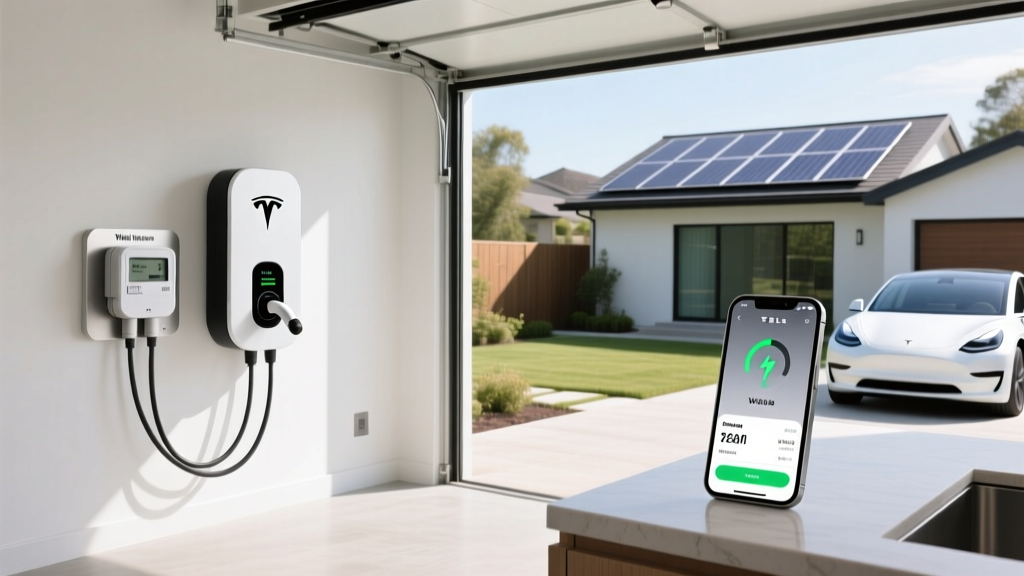
Tesla Wall Connector
- Power: 48A (11.5 kW) hardwired
- Connector: NACS (J1772 adapter included)
- Cable: 24 ft
- Smart features: Wi-Fi, OTA updates, load sharing between multiple units, access control
- Price: ~$475
All four units are UL-listed, NEMA 4 outdoor-rated, and support scheduled charging to exploit off-peak electricity rates. The Emporia and ChargePoint stand out for homes with limited panel capacity, as both allow amperage adjustment to fit a 30A or 40A circuit.
What Electrical Upgrades Might I Need?
Before purchasing a charger, assess your home's electrical readiness:
- Panel capacity: A 200A panel with < 160A of existing load can typically support a 40–60A EV circuit. A load calculation (NEC Article 220) is the definitive answer.
- Available breaker slots: You need two adjacent slots for a 240V double-pole breaker.
- Service entrance wire: Older homes may have undersized service entrance conductors that limit total capacity regardless of panel rating.
- Smart panel alternatives: Devices like the Span smart panel or Emporia load manager can dynamically limit EV charging when other loads (dryer, oven, AC) are active, avoiding a full panel upgrade.
- Utility incentives: Many utilities offer $250–$1,000 rebates for Level 2 installations, sometimes covering the charger cost entirely. Check your utility's EV program before buying.
Per the IRS §30C refueling property credit, homeowners may claim up to $1,000 (30% of cost) for EV charger installation through 2032, subject to census-tract eligibility requirements.
Public Charging: Networks, Speeds, and Reliability
For road trips, DC fast-charging networks have expanded significantly by 2026. The major players:
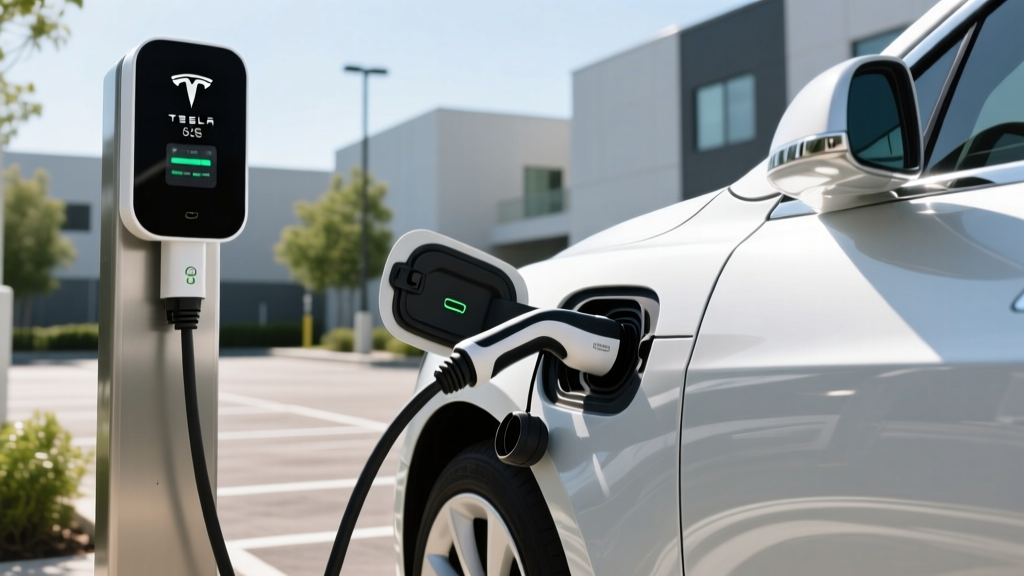
- Tesla Supercharger: 17,000+ stalls in North America, now open to NACS-equipped Ford, GM, Rivian, and Hyundai/Kia vehicles via the Tesla app. Peak 250 kW (V3) to 350 kW (V4). Reliability consistently rated highest by JD Power.
- Electrify America: 5,000+ stalls, CCS1 and NACS connectors, peak 350 kW. Pricing ~$0.48/kWh; Pass+ membership drops to $0.36/kWh.
- EVgo: 4,000+ stalls, mix of 50–350 kW. Partnership with GM for highway corridor expansion.
- ChargePoint: Primarily Level 2 destination charging (40,000+ ports), with growing DC fast presence.
Public charging tip: Always precondition your battery before arriving at a DC fast charger. Most EVs (Tesla, Hyundai/Kia, Ford) do this automatically when you navigate to a charger. Preconditioning warms the battery to optimal temperature, enabling peak charge rates — without it, a cold battery may accept only 50–80 kW even at a 250 kW stall.
Frequently Asked Questions
Can I charge my EV on a standard 120V outlet?
Yes — Level 1 charging at 120V adds 3–5 miles of range per hour. For a PHEV with 30 miles of electric range, an overnight session fully replenishes the battery. For a BEV with 300 miles of range, Level 1 is impractical as a daily strategy (it would take 60+ hours for a full charge). Use Level 1 as a backup or for low-mileage drivers covering under 20 miles/day.
Do I need a permit to install a home charger?
Most jurisdictions require an electrical permit for a new 240V circuit. Permit fees range from $50–$250 and include a safety inspection. Skipping the permit risks insurance denial in the event of an electrical fire and may violate local code. Your electrician typically handles the permit application.
Will a Level 2 charger work with any EV?
All Level 2 chargers use the J1772 connector (or NACS, which is electrically compatible). Tesla vehicles include a J1772 adapter; non-Tesla EVs with NACS ports can use J1772 chargers with a simple adapter. Level 2 AC charging is universally compatible across all EVs sold in North America.
How does cold weather affect charging speed?
Lithium-ion batteries charge slower when cold. Below 32°F (0°C), a battery may accept only 30–50% of its peak DC charge rate until it warms up. Preconditioning (via navigation to a charger or app-based preheating) mitigates this. In extreme cold (-10°F), expect 10–80% charge times to increase by 30–50% without preconditioning.
Is it safe to leave my EV plugged in overnight?
Yes. Modern EVs and chargers communicate via the J1772/NACS protocol to stop charging at the target SoC. Leaving plugged in at 80% target is actually better for battery longevity than frequent deep cycles. Most manufacturers recommend daily charging to 80% for NMC batteries and 100% for LFP batteries.