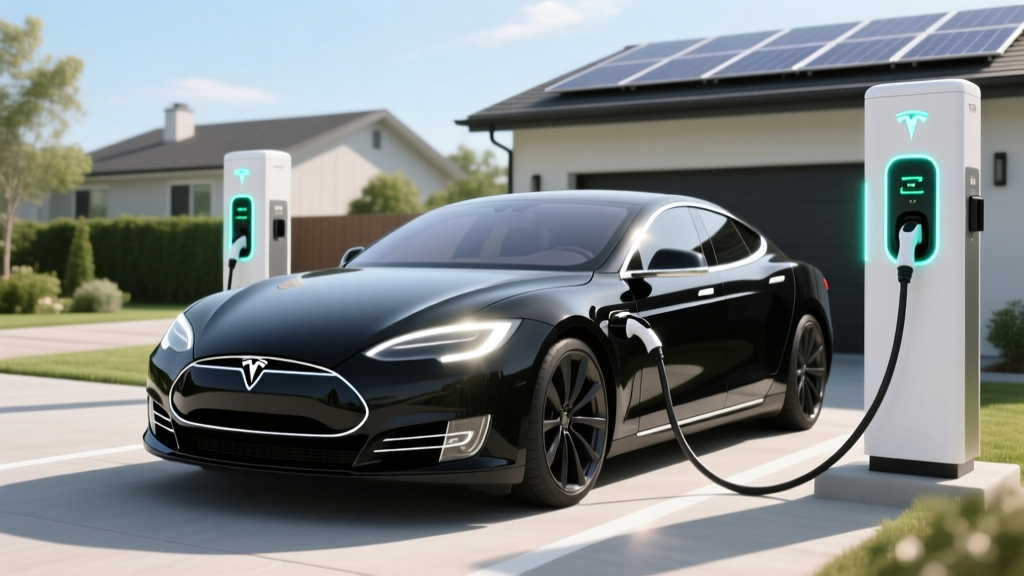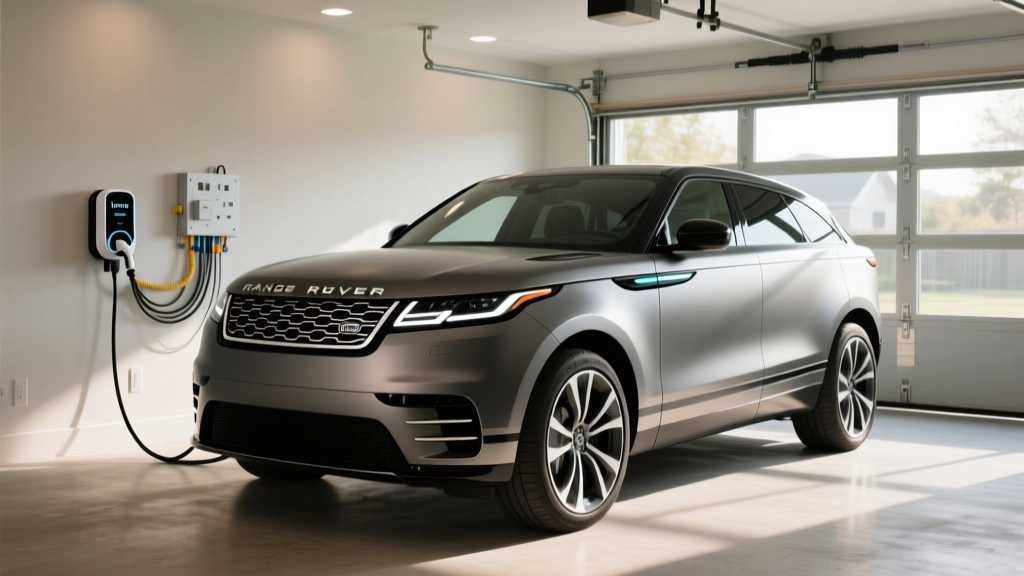
Charging an electric vehicle is fundamentally different from filling a gas tank, but once you understand the three charging levels, connector types, and real-world costs, the process becomes straightforward. Whether you are plugging in at home overnight, topping up at a grocery-store Level 2 station, or pulling into a DC fast charger on a road trip, the physics are the same: you are moving electrons measured in kilowatt-hours (kWh) into your battery at a rate measured in kilowatts (kW). The distinction matters — kW is the speed of the flow (power), and kWh is the total amount delivered (energy). Confusing the two is the single most common mistake new EV owners make.
This guide walks through exactly how to charge an electric car at a charging station of any type, with real numbers for charging speed, cost, equipment, and home installation requirements drawn from 2026 pricing and current EPA data.
The Three Charging Levels Explained: Speeds in kW and Miles Per Hour
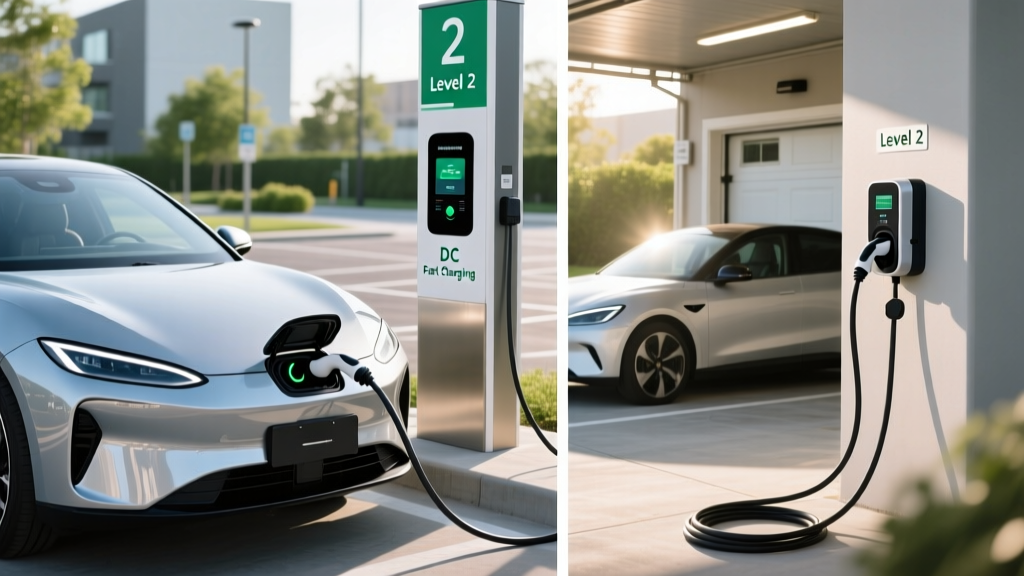
Every EV sold in the United States charges using one of three standardized levels. The level determines the voltage, amperage, and ultimately how many miles of range you recover per hour of plugging in. According to the U.S. Department of Energy's fueleconomy.gov, here is how the three levels break down in real-world conditions:
| Charging Level | Voltage | Typical Power (kW) | Miles of Range Added Per Hour | Best Use Case |
|---|---|---|---|---|
| Level 1 (120V AC) | 120V | 1.0–1.4 kW | 3–5 miles | Overnight trickle for PHEVs or low-mileage BEV drivers |
| Level 2 (240V AC) | 240V | 3.3–19.2 kW | 12–75 miles | Daily home charging, workplace, retail locations |
| DC Fast Charging (Level 3) | 400–900V DC | 50–350 kW | 150–1,200+ miles (equivalent rate) | Road trips, rapid top-ups in 15–40 minutes |
A few critical nuances behind those numbers:
- Level 2 wide range: A 3.3 kW charger (common on older 16A units) adds roughly 12 miles per hour. A modern 11.5 kW / 48A home charger adds about 44 miles per hour. The vehicle's onboard charger caps the maximum AC rate — for example, the Tesla Model Y accepts up to 11.5 kW on Level 2, while the Ford F-150 Lightning (extended range) can accept 19.2 kW.
- DC fast charging is not linear: A charger rated at 250 kW does not deliver 250 kW for the entire session. Charging follows a curve — peak power is sustained roughly from 10% to 50% State of Charge (SoC), then tapers significantly above 80% to protect battery health. A "10–80% in 18 minutes" claim assumes optimal battery temperature and preconditioning.
- Preconditioning matters: Most modern EVs warm or cool the battery to an ideal temperature window before you arrive at a DC fast charger (triggered by navigating to the station in the car's nav system). Skipping preconditioning in cold weather can cut peak charge rates by 30–50%.
Connector Compatibility: NACS, CCS1, and CHAdeMO
The physical plug connecting your car to the station varies by manufacturer and model year. As of 2026, the North American market has largely consolidated around NACS (the former Tesla connector), but CCS1 and CHAdeMO vehicles remain on the road. Here is the connector landscape:
| Connector Type | AC Level 2 Charging | DC Fast Charging | Vehicles Using It (2026 Models) | Adapter Availability |
|---|---|---|---|---|
| NACS (J3400) | Yes | Yes (up to 350+ kW) | Tesla (all), Ford, GM, Rivian, Hyundai/Kia, BMW, Mercedes, Volvo, Polestar, and most others adopting 2025–2026 | NACS-to-CCS adapters available from Tesla and third parties |
| CCS1 (Combo) | Yes (via J1772 upper section) | Yes (up to 350 kW) | Older VW ID.4, legacy Audi e-tron, pre-2025 Hyundai/Kia models, Stellantis EVs still transitioning | CCS-to-NACS adapters increasingly available for Supercharger access |
| CHAdeMO | No (uses separate J1772 for AC) | Yes (up to 100 kW, mostly 50 kW) | Nissan Leaf (discontinued after 2025), Mitsubishi Outlander PHEV (older models) | Very limited; CHAdeMO infrastructure declining |
What this means practically: If you are buying a 2026 EV, it almost certainly uses NACS. The Tesla Supercharger network — the largest and most reliable DC fast charging network in North America with over 30,000 stalls — is now accessible to NACS-equipped non-Tesla vehicles directly. CCS1 owners can access Superchargers using an approved adapter (such as the Tesla CCS adapter or the Lectron NACS-to-CCS adapter, ~$150–$200). CHAdeMO drivers face the most limited public fast-charging options and should plan routes carefully using PlugShare or A Better Routeplanner.
How to Charge at a Public DC Fast Charging Station: Step by Step
Walking up to a DC fast charger for the first time can feel unfamiliar. Here is the exact sequence you will follow at a typical Electrify America, EVgo, Tesla Supercharger, or ChargePoint station:
- Pull into the stall and check the screen or signage for the charger's maximum kW output. Stations often mix 50 kW, 150 kW, and 350 kW units — choose the highest rate your vehicle supports.
- Open your charge port (via the car's touchscreen, key fob, or physical button near the port).
- Select the correct connector — most DC fast chargers have both NACS and CCS1 cables. Grab the one matching your vehicle.
- Plug in firmly until you hear or feel the latch engage. DC connectors are heavier than AC plugs and require a deliberate push.
- Authenticate — this varies by network:
- Tesla Supercharger: Automatic via your Tesla or NACS-equipped vehicle's built-in authentication. No app or card needed.
- Electrify America / EVgo / ChargePoint: Use the network's mobile app, an RFID card, or tap a credit card at the kiosk.
- Plug & Charge (ISO 15118): Many 2025–2026 EVs support automatic authentication when you plug in — the car identifies itself and billing starts without an app.
- Monitor the session via the station screen or your car's app. Watch for the charge curve taper — once you pass 80% SoC, charging slows dramatically. For road-trip efficiency, charge to 80% and move on rather than waiting for a full battery.
- Disconnect and return the cable to its holster. Most connectors have a release button on the handle or require you to stop the session in the app first.
Charging Time Examples: 10–80% for Common Battery Sizes
The time it takes to charge depends on your battery's usable capacity (kWh) and the sustained charge rate (kW) your vehicle can accept. Here are real-world 10–80% estimates for popular 2026 models at a 350 kW DC fast charger, assuming preconditioned battery and moderate temperatures:
| Vehicle | Usable Battery (kWh) | Peak DC Rate (kW) | 10–80% Time (min) | Miles Added in 15 Min |
|---|---|---|---|---|
| Tesla Model Y Long Range | 75 kWh (NMC) | 250 kW | ~25 min | ~162 mi |
| Hyundai Ioniq 5 (Long Range) | 84 kWh (NMC) | 240 kW (800V) | ~18 min | ~186 mi |
| Ford F-150 Lightning (Ext. Range) | 131 kWh (NMC) | 150 kW | ~41 min | ~80 mi |
| Chevrolet Equinox EV | 85 kWh (NMC) | 150 kW | ~32 min | ~105 mi |
| BMW i4 eDrive40 | 81 kWh (NMC) | 205 kW | ~27 min | ~140 mi |
On Level 2 at home (a typical 11.5 kW / 48A hardwired charger), a full 0–100% charge for a 75–85 kWh battery takes roughly 7–8 hours — ideal for overnight charging. On Level 1 (120V standard outlet), the same battery would take 55–80+ hours, which is only practical for plug-in hybrids with smaller batteries or as an emergency trickle for BEVs.
Home EV Charger Installation: Costs, Electrical Requirements, and Panel Upgrades
Installing a Level 2 home charger is the single most impactful upgrade an EV owner can make. It transforms daily charging from a chore into a non-event — plug in when you get home, wake up to a full battery. But the installation involves real electrical work, potential panel upgrades, and permitting. Here is the full breakdown.
Electrical Requirements
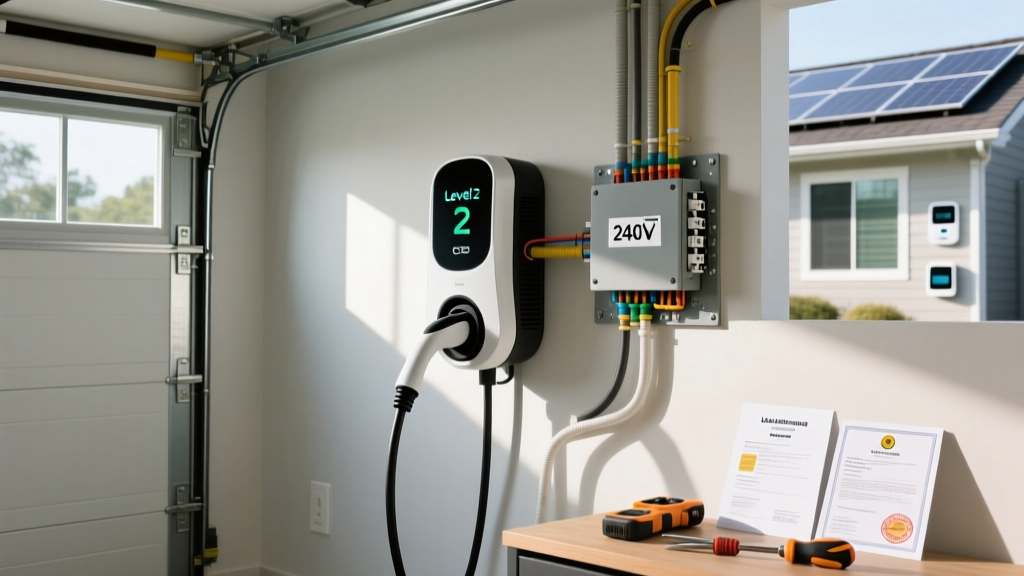
A Level 2 home charger requires a 240-volt dedicated circuit, similar to what powers an electric dryer or oven. The most common configurations:
- 40A circuit / 32A continuous (7.7 kW): Requires 8 AWG copper wire. Sufficient for most daily driving needs (adds ~30 miles per hour).
- 50A circuit / 40A continuous (9.6 kW): Requires 6 AWG copper wire. The most popular home charger size — adds ~37 miles per hour.
- 60A circuit / 48A continuous (11.5 kW): Requires 4 AWG copper wire. Maximizes charging speed for vehicles with 11.5+ kW onboard chargers — adds ~44 miles per hour.
- 80A circuit / 64A continuous (15.3–19.2 kW): Requires 2 AWG copper wire. Needed only for high-acceptance vehicles like the F-150 Lightning Extended Range or Hummer EV. Many homes cannot support this without a panel upgrade.
The National Electrical Code (NEC) requires that EV chargers be treated as continuous loads, meaning the circuit must be rated for 125% of the charger's maximum draw. A 48A charger requires a 60A breaker. A licensed electrician should always perform this calculation.
Panel Upgrade Considerations
This is the hidden cost that catches many homeowners off guard. Most homes built before 2000 have a 100A or 150A main electrical panel. Adding a 50–60A dedicated EV circuit may exceed the panel's available capacity, especially if you already have an electric range, dryer, and central AC. Signs you may need a panel upgrade:
- Your main breaker is 100A or 150A
- Your panel has no open slots for a new double-pole breaker
- An electrician's load calculation shows your existing circuits are near capacity
- You have a Federal Pacific or Zinsco panel (known safety hazards that insurers may require replacing)
A panel upgrade from 100A/150A to 200A typically costs $1,500–$4,000 depending on your utility's requirements, local labor rates, and whether new service wire must be pulled from the transformer. In some cases, utilities offer rebates or upgraded service at reduced cost to support EV adoption.
Permitting and Code
Most jurisdictions require an electrical permit for a new 240V circuit. The permit fee typically runs $50–$200, and the work must pass a final inspection. Key code requirements include:
- Dedicated circuit (no shared loads with other appliances)
- GFCI protection (required by NEC 2020 and later for EV outlets in garages)
- Outdoor-rated equipment (NEMA 4 or NEMA 4X enclosure) if the charger is installed outside
- Proper wire gauge for the circuit length (longer runs may require upsized wire to prevent voltage drop)
Installation Cost Breakdown
| Component | Simple Install (panel nearby, no upgrade) | Complex Install (long wire run or panel upgrade) |
|---|---|---|
| Level 2 Charger Equipment | $350–$700 | $350–$700 |
| Electrician Labor (2–4 hours simple / 6–12 hours complex) | $300–$800 | $800–$2,500 |
| Electrical Materials (wire, conduit, breaker) | $100–$300 | $300–$800 |
| Permit and Inspection | $50–$200 | $50–$200 |
| Panel Upgrade (if needed) | $0 | $1,500–$4,000 |
| Total Estimated Cost | $800–$2,000 | $3,000–$8,200 |
The IRS Residential Clean Energy Credit (IRC §25D) covers 30% of home EV charger equipment and installation costs up to $1,000 through 2032, which can offset a meaningful portion of a simple install. Check irs.gov for current eligibility rules, as income and location-based requirements apply.
Equipment Recommendations: Top Home Level 2 Chargers for 2026
Not all Level 2 chargers are equal. The best units combine reliable hardware, smart scheduling features (to charge during off-peak electricity rates), adequate cable length, and proper safety certifications. Here are three proven options across different budgets:
ChargePoint Home Flex (NACS or CCS1)
- Power Output: Up to 12 kW (50A circuit) — adjustable down to 16A for lower-capacity panels
- Connector: Available in NACS or J1772 (CCS1-compatible with adapter)
- Cable Length: 23 feet
- Smart Features: Wi-Fi connected, ChargePoint app scheduling, Alexa integration, energy-use tracking, works with utility demand-response programs
- Safety: UL listed, NEMA 4 outdoor-rated, built-in GFCI
- Price: ~$550–$650 (equipment only)
Tesla Wall Connector (NACS)
- Power Output: Up to 11.5 kW (48A / 60A circuit)
- Connector: NACS native; also includes J1772 adapter in box for non-Tesla EVs
- Cable Length: 24 feet
- Smart Features: Wi-Fi, over-the-air firmware updates, Power Sharing (link up to 6 units on one circuit), integrates with Tesla solar and Powerwall
- Safety: UL listed, NEMA 3R outdoor-rated
- Price: ~$420–$475 (equipment only)
Emporia Vue Level 2 Charger
- Power Output: Up to 11.5 kW (48A / 60A circuit)
- Connector: J1772 (CCS1-compatible); NACS adapter available
- Cable Length: 24 feet
- Smart Features: Wi-Fi, Emporia app with real-time energy monitoring, solar-aware charging (pairs with Emporia Vue energy monitor), TOU scheduling
- Safety: UL listed, NEMA 4 outdoor-rated
- Price: ~$350–$400 (equipment only)
For most homeowners, the ChargePoint Home Flex offers the best balance of adjustable amperage (critical if your panel is near capacity), robust app features, and wide connector availability. Tesla owners or those with NACS-equipped 2026 vehicles get excellent value from the Tesla Wall Connector, especially if you already have Tesla solar or Powerwall. Budget-conscious buyers who want energy monitoring should consider the Emporia.
Cost to Charge: Per-Mile Economics vs. Gasoline
The cost advantage of electric driving depends heavily on where and when you charge. Home charging on off-peak rates delivers the lowest cost per mile; DC fast charging on road trips can approach or occasionally exceed gasoline costs depending on the network and region.
| Charging Scenario | Typical $/kWh Rate | Cost to Add 200 Miles (at 3.5 mi/kWh) | Cost Per Mile |
|---|---|---|---|
| Home Off-Peak (utility TOU rate) | $0.08–$0.14/kWh | $3.20–$8.00 | $0.016–$0.040 |
| Home Standard Rate (no TOU) | $0.13–$0.20/kWh | $7.43–$11.43 | $0.037–$0.057 |
| Public Level 2 (workplace, retail) | $0.20–$0.40/kWh | $11.43–$22.86 | $0.057–$0.114 |
| DC Fast Charging (Electrify America, EVgo) | $0.35–$0.55/kWh | $20.00–$31.43 | $0.100–$0.157 |
| Tesla Supercharger (varies by location/time) | $0.25–$0.40/kWh | $14.29–$22.86 | $0.071–$0.114 |
| Gasoline Comparison (25 MPG avg, $3.40/gal) | — | $27.20 | $0.136 |
Key takeaways from this comparison:
- Home off-peak charging is 3–8× cheaper per mile than gasoline. A driver covering 12,000 miles per year at $0.12/kWh spends roughly $411 on electricity vs. $1,632 on gas at $3.40/gal and 25 MPG — a savings of over $1,200 annually.
- DC fast charging on road trips is competitive with or slightly cheaper than gas for most vehicles, but can exceed gas costs in high-rate states (California, New York) during peak pricing windows.
- Time-of-use (TOU) plans are critical. Most utilities offer TOU rates that drop electricity to $0.06–$0.10/kWh overnight (typically 9 PM–6 AM). Programming your charger or car to charge only during these windows maximizes savings.
Safety, Code Compliance, and Best Practices
EV charging equipment handles significant electrical current for extended periods. Safety is non-negotiable:
- Never use an extension cord with a Level 1 or Level 2 charger. The sustained high current can overheat undersized cords and create a fire hazard.
- Ensure UL or ETL certification. Only purchase chargers listed by a nationally recognized testing laboratory (NRTL). Uncertified chargers sold on online marketplaces may lack proper thermal protection or GFCI circuitry.
- Hardwired vs. plug-in: Hardwired chargers (direct-wired to a junction box) are generally preferred for 48A+ installations because they eliminate the NEMA 14-50 receptacle as a potential failure point. If using a NEMA 14-50 outlet, ensure it is an industrial-grade receptacle (Hubbell, Bryant) rated for frequent plug/unplug cycles — residential-grade outlets can overheat under sustained EV loads.
- Outdoor installations require a charger rated NEMA 4 (weatherproof) or NEMA 4X (corrosion-resistant). The electrical junction box must also be outdoor-rated.
- Cable management: Use a wall-mounted cable organizer to prevent the charging cable from dragging on the ground, which causes wear and tripping hazards.
Frequently Asked Questions
How much does it cost to install a home EV charger?
A straightforward Level 2 installation with an adequate electrical panel typically costs $800–$2,000 all-in (equipment, electrician, permit). If your home needs a panel upgrade from 100A/150A to 200A, total costs can reach $3,000–$8,200. The IRS §25D Residential Clean Energy Credit covers 30% of equipment and installation up to $1,000 through 2032.
How fast will each charging level add range?
Level 1 (120V) adds 3–5 miles per hour. Level 2 (240V) adds 12–75 miles per hour depending on the charger's kW output and your vehicle's onboard charger capacity. DC fast charging can add 150+ miles in 15 minutes at peak rates, though real-world speeds depend on battery temperature, state of charge, and the charger's maximum output.
Which connector and charger is compatible with my EV?
Check your vehicle's charge port. Most 2026 EVs use the NACS connector. Older models (pre-2025 VW, Hyundai, Kia) may use CCS1. The Nissan Leaf used CHAdeMO. For home charging, match the charger's connector to your car's port — or use a certified adapter. For public DC fast charging, most stations now offer both NACS and CCS1 cables.
How much does charging cost per mile compared to gas?
Home off-peak charging costs $0.02–$0.04 per mile — roughly 3–7× cheaper than gasoline at $3.40/gallon and 25 MPG ($0.136/mile). DC fast charging on road trips costs $0.07–$0.16 per mile, which is competitive with or slightly cheaper than gas depending on your vehicle's efficiency and the local charging rate.
What electrical upgrades might I need for a home charger?
You will need a dedicated 240V circuit (40A–60A for most homes) installed by a licensed electrician. If your main panel is 100A or 150A and is near capacity, you may need a panel upgrade to 200A ($1,500–$4,000). Older panels (Federal Pacific, Zinsco) may require full replacement regardless of capacity. Always get a professional load calculation before purchasing equipment.
Can I charge my EV with solar panels?
Yes. If you have rooftop solar, charging during peak sun hours effectively powers your car with free, clean electricity. Smart chargers like the Emporia Vue or Tesla Wall Connector (paired with Powerwall) can automatically route excess solar production to your EV rather than exporting it to the grid at low compensation rates.
Is it safe to charge in the rain or snow?
Yes. All UL-listed EV chargers and connectors are designed for outdoor use in wet conditions. The connector is sealed when mated to the vehicle's charge port, and the system will not energize until a secure connection is confirmed. Outdoor-rated (NEMA 4) equipment handles rain, snow, and dust without issue.