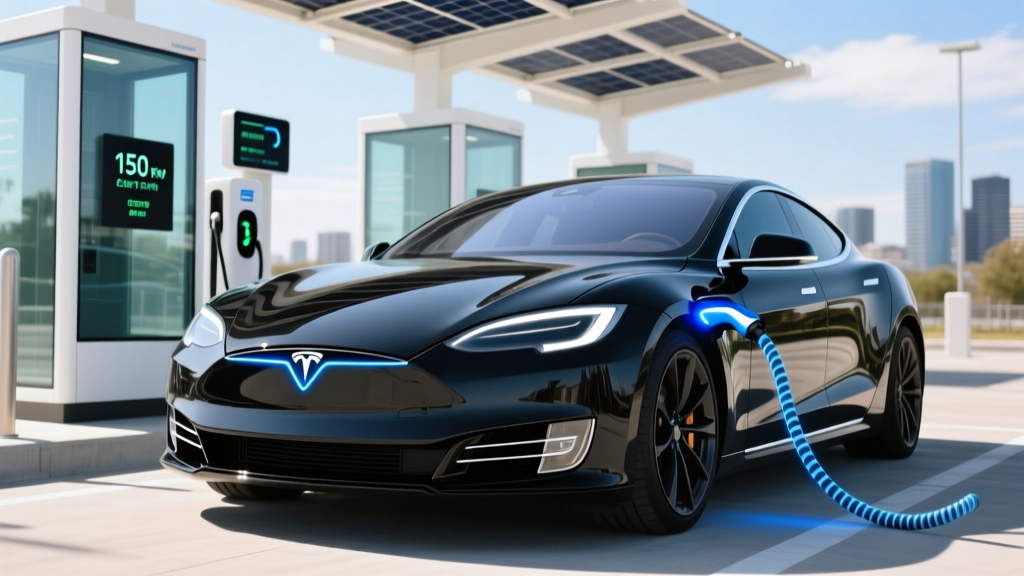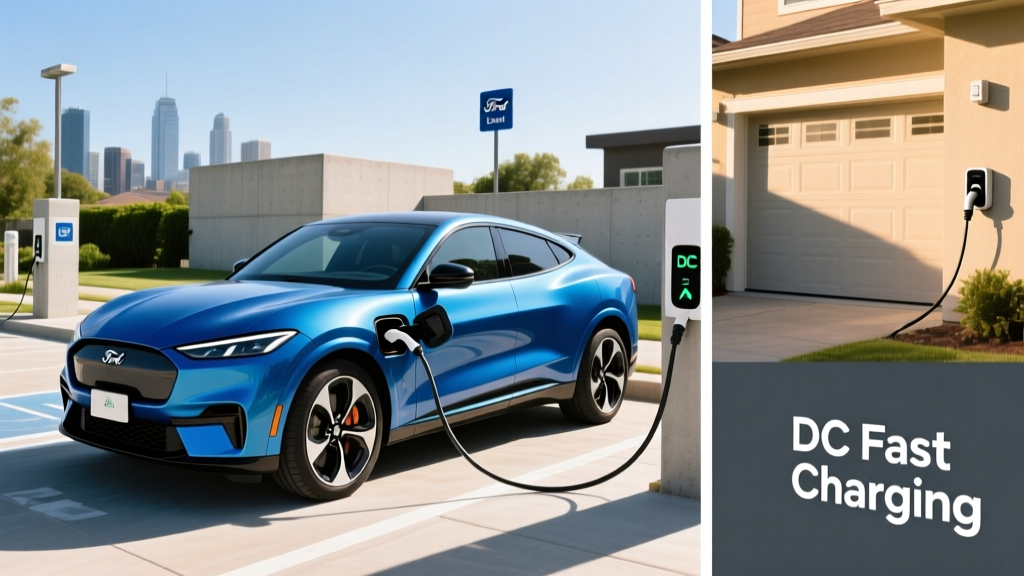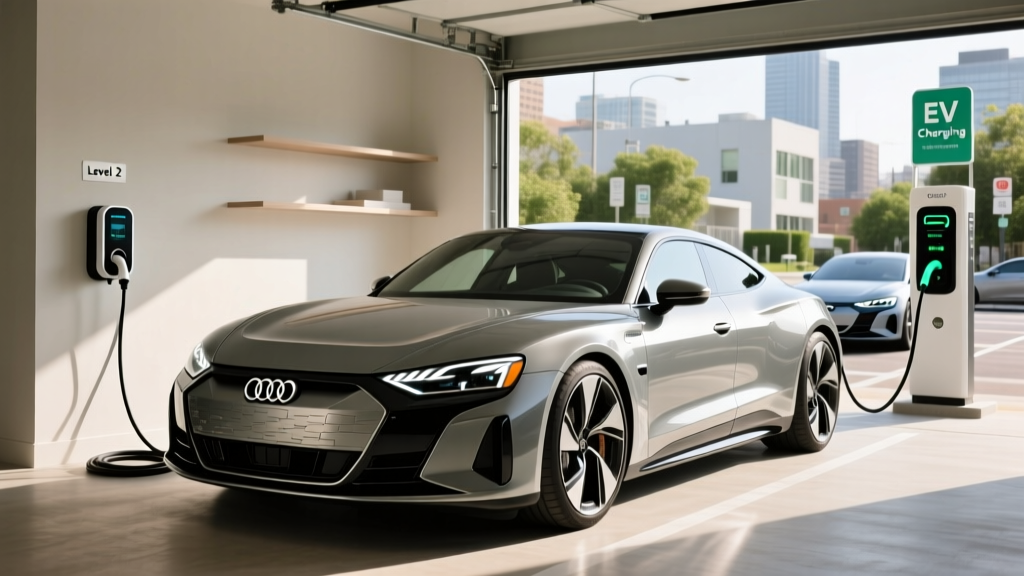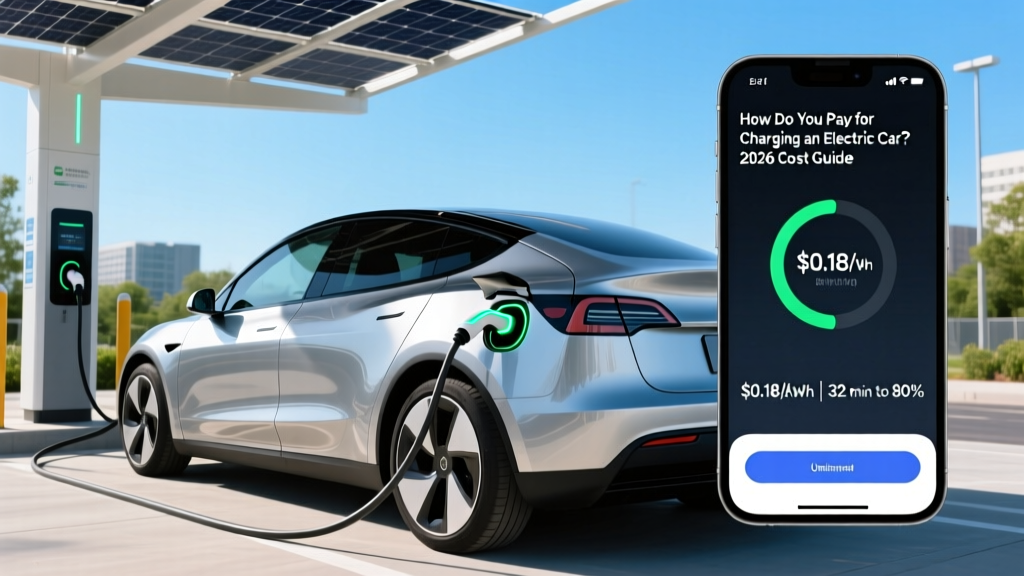
If you're new to electric vehicles, the payment process at a public charger can feel like navigating a maze of apps, RFID cards, and confusing per-kWh pricing. At home, the math is simpler — your electricity bill absorbs it — but understanding the true cost per mile requires knowing your utility rate, charging speed, and vehicle efficiency. This guide breaks down exactly how you pay for charging an electric car across every scenario, what equipment you need, and what installation actually costs in 2026.
Understanding EV Charging Levels and Speeds
Before discussing payment, you need to understand the three charging tiers and how they affect both cost and time. The critical distinction: kW (kilowatts) measures power — how fast energy flows into your battery. kWh (kilowatt-hours) measures energy — the total capacity of your battery. Think of kW as the width of a hose and kWh as the size of the bucket.
| Level | Voltage / Amperage | Power (kW) | Miles of Range Added Per Hour | Typical Use Case |
|---|---|---|---|---|
| Level 1 | 120V / 12A | 1.4 kW | 3–5 miles | Overnight top-ups, PHEVs, emergencies |
| Level 2 (Home/Public AC) | 240V / 32–48A | 7.7–11.5 kW | 25–44 miles | Daily home charging, workplace, shopping centers |
| DC Fast Charging | 400–800V DC | 50–350 kW | 150–1,200+ miles (equivalent rate) | Road trips, highway corridors, quick top-ups |
A few real-world caveats: DC fast charging rates are peak, not sustained. A vehicle rated for 250 kW peak may only sustain that rate between 10–30% State of Charge (SoC), then taper progressively. A typical 10–80% session on a 250 kW-capable vehicle with an 82 kWh battery (like the 2025 Tesla Model Y Long Range) takes roughly 25–28 minutes at a V3 Supercharger. Above 80%, charging slows dramatically to protect battery health — this is called the charge curve taper, and it's why most EV owners target 80% for road-trip stops.
How Much Does Charging Cost Per Mile vs. Gas?
The cheapest electrons are the ones you pull from your own garage. But public charging pricing varies wildly by network, location, and time of day. Here's how the math works out across common scenarios, using a vehicle averaging 3.0 miles per kWh (roughly 112 MPGe — typical for a midsize crossover EV like the Hyundai Ioniq 5 or Tesla Model Y).
| Scenario | Rate ($/kWh) | Cost Per Mile | Cost to "Fill" 75 kWh Battery |
|---|---|---|---|
| Home — Off-Peak Utility Rate | $0.08–$0.12 | $0.027–$0.040 | $6.00–$9.00 |
| Home — Standard Residential Rate | $0.14–$0.18 | $0.047–$0.060 | $10.50–$13.50 |
| Public Level 2 (Workplace/Retail) | $0.20–$0.35 | $0.067–$0.117 | $15.00–$26.25 |
| DC Fast — Electrify America / EVgo | $0.35–$0.55 | $0.117–$0.183 | $26.25–$41.25 |
| Tesla Supercharger (varies by location) | $0.25–$0.45 | $0.083–$0.150 | $18.75–$33.75 |
| Gas Equivalent (25 MPG @ $3.50/gal) | — | $0.140 | ~$42.00 (12-gal tank) |
The takeaway: Home charging at off-peak rates is 3–5× cheaper per mile than gasoline. Even the most expensive DC fast charging sessions are roughly cost-competitive with gas, though they're not the bargain that home charging is. If you can charge at home, your annual fuel cost for 12,000 miles drops from roughly $1,680 (gas) to $324–$480 (home electricity).
How Do You Actually Pay at Public Chargers?
Public charging payment in 2026 is still fragmented, though it's improving. Here's what you'll encounter:
Network Apps and Accounts
Most major networks — Electrify America, EVgo, ChargePoint, and Tesla Superchargers — require you to create an account and link a payment method (credit card, debit card, or in some cases PayPal). You initiate a session via the network's app or, increasingly, via Plug & Charge (ISO 15118), which authenticates and bills you automatically when you plug in. Tesla Superchargers have always worked this way for Tesla vehicles; now networks like Electrify America support Plug & Charge for compatible vehicles including the Ford Mustang Mach-E, Hyundai Ioniq 5, and BMW iX.
Tap-to-Pay Credit Cards
Federally funded charging stations (those receiving NEVI program funds) are required to accept contactless credit/debit card payment without requiring a network-specific app. This has significantly improved accessibility on highway corridors. Look for the tap-to-pay symbol on the station's screen.
RFID Cards and Membership Plans
Some networks still issue RFID cards. EVgo and ChargePoint offer subscription plans ($4.99–$7.99/month) that reduce per-kWh rates by 10–25%. If you charge publicly more than twice a month, these plans typically pay for themselves.
Free and Subsidized Charging
Some workplaces, shopping centers, and hotels offer complimentary Level 2 charging. Automaker promotions also matter — for example, some 2025–2026 EV purchases include 2–3 years of complimentary DC fast charging on partner networks (typically 1,000–2,500 kWh of credit). Check your purchase agreement for included charging credits.
Home Charger Installation: Costs, Electrical Requirements, and Panel Upgrades
Installing a Level 2 home charger is the single highest-impact upgrade an EV owner can make. But costs vary enormously based on your home's electrical infrastructure.
Electrical Requirements
A typical Level 2 home charger runs on a 240V dedicated circuit, similar to an electric dryer or oven. The most common configurations:
- 40-amp circuit / 32-amp continuous draw = 7.7 kW — sufficient for most EVs, charges a 75 kWh battery from 10–80% overnight in ~8 hours
- 50-amp circuit / 40-amp continuous draw = 9.6 kW — charges faster, recommended for larger batteries (100+ kWh trucks like the Ford F-150 Lightning or Rivian R1T)
- 60-amp circuit / 48-amp continuous draw = 11.5 kW — maximum single-phase residential speed; requires the vehicle's onboard charger to accept 11.5 kW (not all do — the Tesla Model 3/Y accepts 11.5 kW, but the Hyundai Ioniq 5 caps at 10.9 kW)
Installation Cost Breakdown
| Component | Cost Range | Notes |
|---|---|---|
| Level 2 Charger (Equipment) | $350–$750 | Smart Wi-Fi chargers (Emporia, ChargePoint, Wallbox); basic units from $250 |
| Electrician Labor (standard install) | $500–$1,500 | Short run from panel to garage; longer conduit runs add cost |
| Permit and Inspection | $50–$250 | Required in most jurisdictions; varies by municipality |
| Electrical Panel Upgrade (if needed) | $1,500–$4,000 | Required if your panel is 100A or maxed out; 200A service recommended |
| Total — No Panel Upgrade | $900–$2,500 | Most homes built after 2000 with 200A service |
| Total — With Panel Upgrade | $2,500–$6,500 | Older homes, 100A panels, or panels at capacity |
The panel upgrade gotcha: Many homes built before 1990 have 100-amp electrical service. Adding a 40–50 amp EV circuit may push total load beyond the panel's capacity, requiring a service upgrade to 200 amps. This is the single biggest variable in home charging cost. Some utilities and states offer rebates of $500–$1,500 for panel upgrades paired with EV charger installation — check your local utility's EV program page. A licensed electrician can assess your panel's available capacity during a site visit (often free or $50–$100).
Federal Tax Credit for Home Charging Equipment
The IRS §30C Alternative Fuel Vehicle Refueling Property Credit covers 30% of home charger equipment and installation costs, up to $1,000. This credit is available through 2032 but has census-tract eligibility requirements — the property must be located in a qualifying non-urban or low-income census tract. Check the IRS §30C page for the current qualifying tract map. Consult a tax professional for eligibility specifics.
Which Connector and Charger Is Compatible with My EV?
The connector landscape in North America consolidated significantly between 2023 and 2026, with the North American Charging Standard (NACS) — originally Tesla's proprietary connector — becoming the dominant standard. Here's where things stand:
| Connector | Brands Using It (2025–2026 Models) | Notes |
|---|---|---|
| NACS (Tesla / SAE J3400) | Tesla (all), Ford, GM, Rivian, Volvo, Polestar, Hyundai, Kia, BMW, Mercedes-Benz, Nissan (new models) | Access to Tesla Supercharger network (17,000+ stalls). Most new 2025+ EVs ship with NACS ports. |
| CCS1 (Combo) | Older GM, Ford, VW, Hyundai/Kia models (pre-2025); some Stellantis models | Legacy vehicles can use NACS-to-CCS adapters (~$150–$250) for Supercharger access |
| CHAdeMO | Nissan Leaf (all years), Mitsubishi Outlander PHEV (older) | Effectively discontinued; new stations rarely include CHAdeMO connectors |
Adapter needs: If you own a CCS-equipped vehicle (e.g., a 2023 Hyundai Ioniq 5 or 2024 VW ID.4), you'll likely need a NACS-to-CCS adapter to access Tesla Superchargers. Ford and GM provide these adapters free or at a discount to owners. Third-party adapters from brands like Lectron and A2Z are available for $150–$250. Always verify the adapter is rated for the full amperage of the Supercharger stall (typically 615A for V3 stalls).
Best Home EV Chargers for 2026: Equipment Picks
Emporia Vue Level 2 Smart Charger
- Power Output: 48A / 11.5 kW (hardwired) or 40A / 9.6 kW (NEMA 14-50 plug)
- Connector: NACS (J3400) or CCS1 (J1772+Combo) — select at purchase
- Cable Length: 24 feet
- Smart Features: Wi-Fi, app scheduling, solar integration with Emporia Vue energy monitor, load management
- Price: $399–$449
- Best for: Solar-panel owners, budget-conscious buyers wanting smart features
ChargePoint Home Flex (2nd Gen)
- Power Output: Up to 50A / 12 kW (adjustable via dip switches: 16A–50A)
- Connector: NACS or J1772 (CCS1 with adapter)
- Cable Length: 23 feet
- Smart Features: Wi-Fi, Alexa/Google Home integration, flexible amperage for older panels, detailed energy reports
- Price: $549–$649
- Best for: Homes with limited panel capacity (can be dialed down to 16A/3.8 kW)
Tesla Wall Connector (Gen 4)
- Power Output: 48A / 11.5 kW
- Connector: NACS native; includes J1772 adapter for non-Tesla EVs
- Cable Length: 24 feet
- Smart Features: Wi-Fi, over-the-air updates, power sharing (link two units on one circuit), vehicle integration with Tesla app
- Price: $475
- Best for: Tesla owners; multi-EV households with two Teslas (power sharing feature)
Wallbox Pulsar Plus
- Power Output: 40A / 9.6 kW
- Connector: J1772 (CCS1) or NACS
- Cable Length: 25 feet
- Smart Features: Wi-Fi + Bluetooth, Eco-Smart mode (charges only from solar surplus), Power Boost (dynamic load balancing with home meter)
- Price: $499–$599
- Best for: International design, solar integration, load-balancing without a full panel upgrade
For most households with 200A service, a 48A hardwired unit (11.5 kW) provides the best balance of charging speed and cost. If your panel is constrained, choose a unit with adjustable amperage (ChargePoint Home Flex) so your electrician can set it to match available capacity without a panel upgrade.
Safety, Electrical Code, and Installation Best Practices
EV charger installation involves high-amperage, continuous-load circuits that run for hours at a time. Cutting corners is a fire risk. Here's what proper installation requires:
- Dedicated circuit: Your EV charger must be on its own breaker — not shared with other appliances. A 48A charger requires a 60A breaker (National Electrical Code requires the breaker to be rated at 125% of the continuous load).
- GFCI protection: NEC 2020 and later requires GFCI (Ground Fault Circuit Interrupter) protection for all EV charging outlets. Hardwired units typically have built-in GFCI; plug-in units require a GFCI breaker.
- Outdoor rating: If your charger is installed outdoors or in an unenclosed carport, it must carry a NEMA 4 (weatherproof) rating. All the chargers listed above are rated for outdoor use.
- Wire gauge: A 60A circuit requires 6 AWG copper wire (or 4 AWG aluminum). Your electrician will size wire based on run length and local code amendments.
- Permit and inspection: Most jurisdictions require an electrical permit for EV charger installation. The inspection ensures the circuit, breaker, wire gauge, and grounding meet code. Don't skip this — it protects your home and is required for insurance coverage of electrical fires.
- NEMA 14-50 outlet vs. hardwired: A NEMA 14-50 receptacle offers portability (take the charger when you move), but hardwired installations are generally safer for continuous high-amperage loads and avoid the NEC GFCI-breaker nuisance-tripping issues some owners report with 14-50 outlets on 50A+ circuits.
Charging Time Examples for Common EV Battery Sizes
How long a charge takes depends on battery size (kWh), charging power (kW), and the 10–80% window most owners use. Here are real-world benchmarks:
| Vehicle (2025–2026) | Battery (kWh usable) | Level 2 at 11.5 kW (10–80%) | DC Fast Peak Rate | DC Fast 10–80% Time |
|---|---|---|---|---|
| Tesla Model 3 Long Range | 75 kWh | ~4.5 hours | 250 kW | ~25 minutes |
| Hyundai Ioniq 5 (Long Range) | 77.4 kWh | ~4.7 hours | 240 kW (800V) | ~18 minutes |
| Ford F-150 Lightning (Extended Range) | 131 kWh | ~8.0 hours | 150 kW | ~41 minutes |
| Chevrolet Equinox EV | 85 kWh | ~5.2 hours | 150 kW | ~30 minutes |
| Toyota bZ4X | 64 kWh | ~3.9 hours | 150 kW | ~30 minutes |
Note that the Hyundai Ioniq 5's 800V architecture enables faster sustained DC charging than competitors — it holds above 200 kW from 10–55% SoC before tapering, giving it one of the fastest 10–80% times in its class. Most 400V vehicles (including the F-150 Lightning and bZ4X) peak briefly at their maximum rate, then taper earlier, making real-world DC sessions longer than peak kW might suggest. Always look at 10–80% time, not peak kW, when comparing charging speed.
Frequently Asked Questions
How much does it cost to install a home EV charger?
Expect $900–$2,500 for a standard installation in a home with adequate 240V panel capacity (equipment + electrician + permit). If your home needs a 200A panel upgrade, total costs range from $2,500–$6,500. The federal §30C tax credit covers 30% of the cost (up to $1,000) for qualifying census tracts.
How fast will each charging level add range?
Level 1 (120V) adds 3–5 miles per hour — adequate for plug-in hybrids with small batteries but impractical for full EVs. Level 2 (240V) adds 25–44 miles per hour and is the standard for daily home charging. DC fast charging adds 150–1,200+ miles per hour at peak rates, with typical 10–80% sessions taking 18–45 minutes depending on the vehicle and battery size.
Which connector/charger is compatible with my EV?
For 2025–2026 model-year vehicles, NACS (J3400) is the dominant standard — Tesla, Ford, GM, Hyundai, Kia, Rivian, BMW, and most others now use it. Older CCS1 vehicles (2022–2024 model years) can use NACS adapters for Supercharger access. CHAdeMO is effectively discontinued for new vehicles. Check your vehicle's charge port or owner's manual to confirm your connector type before purchasing a home charger.
How much does charging cost per mile vs. gas?
Home charging at average residential rates ($0.14/kWh) costs roughly $0.047–$0.060 per mile for a typical EV — about one-third the cost of gasoline at $3.50/gallon in a 25 MPG vehicle ($0.14/mile). Public DC fast charging at $0.40–$0.55/kWh costs $0.13–$0.18 per mile, which is roughly comparable to gasoline. The savings advantage of EVs is maximized when you charge at home, especially on time-of-use off-peak rates.
What electrical upgrades might I need?
The most common upgrade is a 200A electrical panel replacement, needed if your home has a 100A panel or if existing circuits leave insufficient capacity for a new 40–60A EV circuit. Other potential upgrades include: a new conduit run from the panel to the garage (if the panel is far from the charge point), a GFCI breaker for plug-in installations, and a smart load-management device (like the Wallbox Power Boost or Emporia smart panel) that dynamically reduces charger amperage when other home loads spike — potentially avoiding a panel upgrade entirely.
Can I use a regular 120V outlet to charge my EV?
Yes — Level 1 charging on a standard 120V household outlet works, but it adds only 3–5 miles of range per hour (roughly 1.4 kW). This is practical for plug-in hybrids with 20–40 miles of electric range, or as a supplemental option for low-mileage BEV drivers. For a full EV with a 75+ kWh battery, a 10–80% Level 1 session would take 50+ hours — making Level 2 installation essential for daily use.
Understanding how you pay for charging an electric car ultimately comes down to one decision: invest in home Level 2 charging, and your per-mile cost drops to a fraction of gasoline with minimal friction. Rely solely on public charging, and costs approach parity with gas — though you still eliminate oil changes, exhaust repairs, and many other ICE maintenance expenses. For most EV owners, the garage charger is the single best investment in the ownership experience.