The Real Cost of Using Tesla Superchargers in 2026
If you've ever glanced at your Tesla app mid-charge and wondered why the bill jumped higher than expected, you're not alone. The question of how much Supercharger cost actually adds up to is one of the most searched topics among EV owners — and the answer depends heavily on where you plug in, what time of day you charge, and whether your vehicle is a Tesla or one of the growing number of NACS-equipped non-Tesla EVs now accessing the Supercharger network.
As of early 2026, Tesla Supercharger pricing in the U.S. typically ranges from $0.25 to $0.55 per kWh, with most urban and highway-corridor stations clustering around $0.32–$0.42/kWh. Some locations now offer time-of-use pricing, where off-peak rates can dip to $0.22/kWh while peak evening hours push toward $0.58/kWh. Non-Tesla vehicles using Superchargers via the built-in Magic Dock or NACS adapter often pay a small premium — roughly 10–15% above Tesla-owner rates at the same station.
To put that in perspective: charging a Tesla Model Y Long Range (75 kWh usable battery, EPA 310 miles) from 10% to 80% at $0.38/kWh costs approximately $19.95 and adds about 215 miles of range. That same energy at home, at the national average residential electricity rate of ~$0.17/kWh, costs just $8.93.
Charging Levels Explained: Speed, Power, and Miles Per Hour
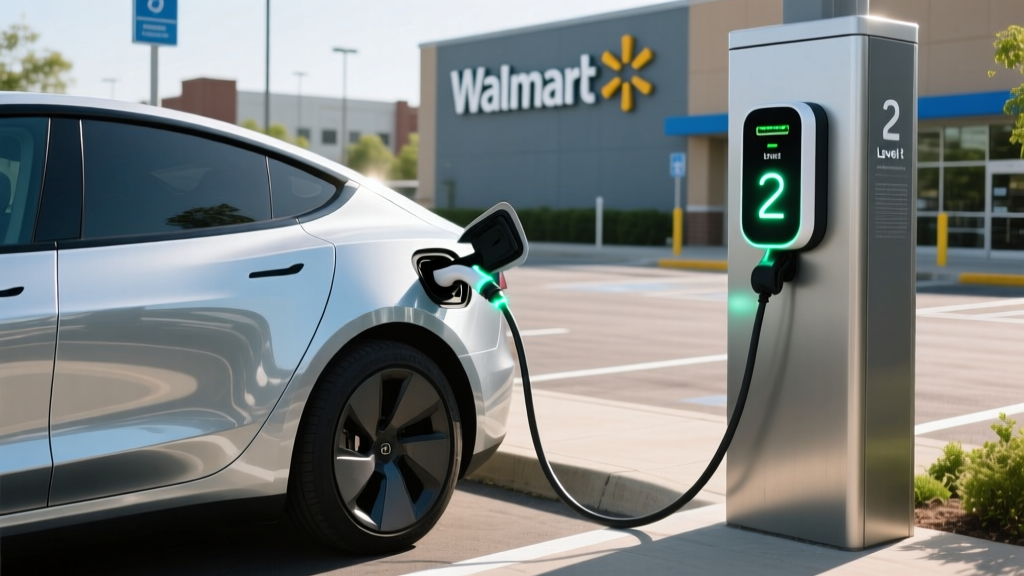
Understanding what you're paying for starts with understanding the three charging levels available to EV owners. The critical distinction: kW (kilowatts) measures the rate of power delivery — think of it as the size of the water hose — while kWh (kilowatt-hours) measures total energy delivered, like the total gallons in your bucket. You pay per kWh; your speed depends on kW.
| Level | Voltage / Amperage | Power (kW) | Miles of Range Added Per Hour | Best For |
|---|---|---|---|---|
| Level 1 (120V household) | 120V / 12A | ~1.4 kW | 3–5 mi/hr | Overnight trickle, PHEVs, emergencies |
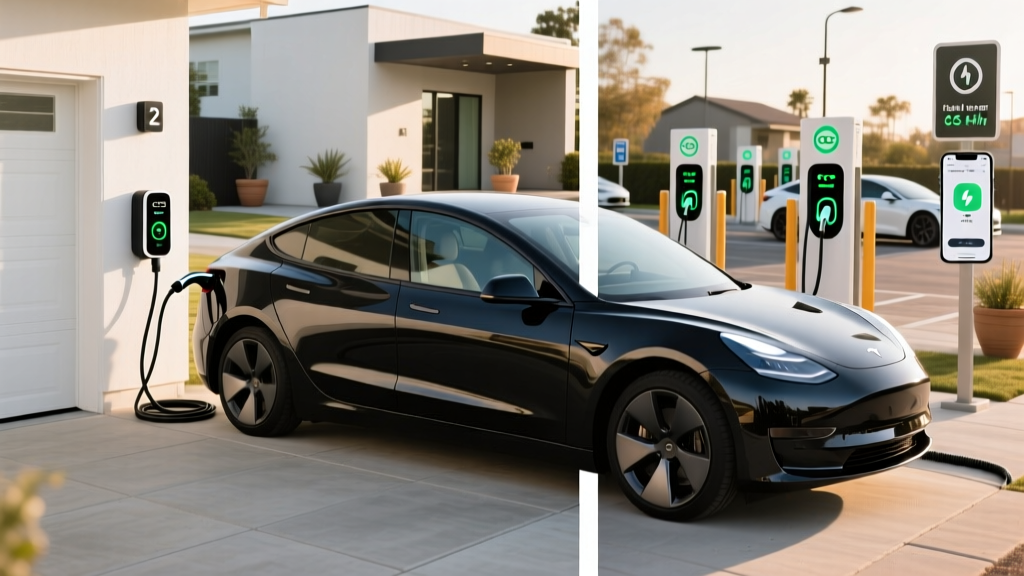
| Level 2 (240V home/public) | 240V / 32–48A | 7.7–11.5 kW | 25–45 mi/hr | Daily home charging, workplace, destinations |
| DC Fast (Supercharger/CCS) | 400–800V DC | 50–350 kW | 150–1,200+ mi/hr (peak) | Road trips, quick top-ups, commercial fleets |
For context, a 75 kWh battery charged at Level 1 (1.4 kW) would take roughly 54 hours from empty to full — impractical for a BEV but workable for a PHEV with a 15 kWh battery. At Level 2 (11.5 kW), that same battery charges in about 6.5 hours, ideal for overnight. On a 250 kW V3 Supercharger, 10–80% takes roughly 25–30 minutes for most mid-size SUVs.
How Much Does It Cost to Install a Home EV Charger?
Home Level 2 charging is where the economics overwhelmingly favor EV ownership. But the upfront installation cost varies dramatically based on your home's electrical infrastructure. Here's a realistic breakdown based on 2025–2026 electrician surveys and national averages:
| Component | Simple Install (panel nearby) | Complex Install (long run or panel upgrade) |
|---|---|---|
| Level 2 charger hardware (40A–48A) | $350–$700 | $350–$700 |
| Electrician labor (240V/50A dedicated circuit) | $400–$800 | $1,200–$3,000 |
| Permit & inspection | $50–$200 | $100–$350 |
| Electrical panel upgrade (100A → 200A, if needed) | N/A | $1,500–$3,500 |
| Total estimated cost | $800–$1,700 | $3,150–$7,550 |
The single biggest cost variable is whether your electrical panel has capacity for a new 50-amp breaker. Homes built after 2000 with 200-amp service usually accommodate a Level 2 charger without a panel upgrade. Older homes with 100-amp service, or those already running heavy loads (electric range, dryer, HVAC), may need an upgrade. Always have a licensed electrician perform a load calculation before committing to equipment.
Some utilities offer rebates of $250–$500 for Level 2 charger installation, and the federal Residential Clean Energy Credit (IRS Form 5695) covers 30% of qualified equipment costs up to $1,000 through 2032 — though eligibility depends on your census tract meeting certain criteria. Check your utility and state programs for stacking opportunities.
Cost Per Mile: Supercharger vs Home Charging vs Gas
The headline question for most buyers: does charging actually save money compared to gasoline? The answer is almost always yes, but the margin depends on your charging mix.
| Scenario | Rate ($/kWh) | Cost Per Mile* | Annual Cost (12,000 mi) |
|---|---|---|---|
| Home charging (national avg electricity) | $0.17 | $0.047 | $564 |
| Home off-peak (utility time-of-use plan) | $0.09 | $0.025 | $300 |
| Tesla Supercharger (avg 2026 rate) | $0.38 | $0.106 | $1,272 |
| Non-Tesla DC fast (Electrify America, EVgo) | $0.48 | $0.134 | $1,608 |
| Gasoline vehicle (28 MPG combined, $3.40/gal) | — | $0.121 | $1,457 |
*Based on an EV averaging 3.6 miles per kWh (typical for a mid-size crossover like the Model Y or IONIQ 5). Actual efficiency varies by vehicle, driving style, and climate.
The takeaway is clear: home charging is dramatically cheaper than any public option, and even exclusive Supercharger use costs less per mile than the average gasoline vehicle in most states. The worst-case scenario — exclusively using non-Tesla DC fast chargers at peak rates — can exceed gasoline costs in states with high electricity prices like California or Massachusetts. A mixed strategy of 80% home / 20% public charging keeps most owners well below gasoline costs.
Which Connector Is Compatible With Your EV?
The connector landscape shifted dramatically between 2023 and 2026. Tesla's North American Charging Standard (NACS) has been adopted by nearly every major automaker, but the transition means many EVs on the road today still carry CCS1 ports. Here's where things stand:
| Connector | Vehicles Using It (2026) | Supercharger Access | Adapter Needed? |
|---|---|---|---|
| NACS (Tesla) | All Tesla models; 2025+ Ford F-150 Lightning, Mustang Mach-E, Rivian R1T/R1S, GM Ultium vehicles, Volvo EX30/EX90, Polestar, Nissan Ariya | Native access | None |
| CCS1 | Hyundai IONIQ 5/6, Kia EV6/EV9 (pre-2025), BMW i4/iX, VW ID.4, older Ford/GM EVs | Via Magic Dock at select stalls or CCS-to-NACS adapter ($200–$300) | Yes — for Supercharger access |
| CHAdeMO | Nissan Leaf (legacy), Mitsubishi Outlander PHEV (older) | No — network largely discontinued | No viable adapter to NACS |
If you own a CCS-equipped EV and want Supercharger access, a CCS-to-NACS adapter from a reputable manufacturer (Tesla's official adapter, Lectron, or A2Z) is essential. Ensure the adapter is rated for the full amperage of the chargers you'll use — some budget adapters are limited to 200A, which caps charging at roughly 150 kW even at a 250 kW stall.
Home Level 2 Charger Recommendations for 2026
Not all Level 2 chargers are equal. Here are three proven options spanning different budgets and feature sets, all hardwired or NEMA 14-50 compatible:
Tesla Wall Connector
Power: 11.5 kW (48A) max
Connector: NACS (native), CCS adapter sold separately
Cable: 24 ft
Smart features: Wi-Fi, OTA updates, load sharing, power-sharing between units
Price: ~$475
Best for: Tesla owners or NACS-native EVs; excellent value-to-performance ratio
ChargePoint Home Flex
Power: Up to 12 kW (50A) configurable
Connector: J1772 (NACS adapter included for 2025+ models)
Cable: 23 ft
Smart features: Wi-Fi, app scheduling, utility demand-response integration, Alexa
Price: ~$650–$700
Best for: Multi-EV households, utility program participants
Emporia Vue Level 2 Charger
Power: 11.5 kW (48A)
Connector: J1772 (NACS version available)
Cable: 24 ft
Smart features: Energy monitoring, solar integration, scheduling, load management
Price: ~$400
Best for: Budget-conscious buyers, solar-panel homes
Regardless of which unit you choose, opt for a hardwired installation over a NEMA 14-50 plug if your electrician recommends it. Hardwired connections avoid the NEC requirement for a GFCI breaker on receptacle circuits — which can cause nuisance tripping with some chargers and adds $50–$120 to your electrical bill. A hardwired setup also allows the full 48A continuous draw; many 14-50 receptacles are limited to 40A continuous by code.
Safety, Electrical Code, and Panel-Upgrade Realities
EV charging is a sustained high-load activity — your charger will pull maximum current for hours at a time, unlike a dryer or oven that cycles on and off. This makes proper installation non-negotiable:
- Dedicated circuit: Your Level 2 charger must be on its own dedicated breaker — never shared with other appliances.
- Breaker sizing: NEC requires the breaker to be rated at 125% of continuous load. A 48A charger requires a 60A breaker; a 40A charger needs a 50A breaker.
- GFCI protection: Required for receptacle-based (14-50) installations per NEC 2020+. Hardwired installations may be exempt depending on local code.
- Outdoor rating: If your charger is mounted outside, ensure it carries a NEMA 4 or IP65 rating for weather resistance.
- Wire gauge: A 60A circuit typically requires 6 AWG copper wire; longer runs may need 4 AWG to prevent voltage drop.
The panel-upgrade question deserves special attention. If your home has a 100-amp main panel, adding a 60-amp EV circuit may push total calculated load beyond capacity — especially if you already have electric heat, a dryer, and an electric range. An electrician will perform a NEC Article 220 load calculation. If you're over capacity, options include a panel upgrade to 200A ($1,500–$3,500) or an automated load-management device like the Emporia Smart Load Center or Tesla's built-in load-sharing, which throttles the charger when other circuits draw heavily.
Charging Time Examples: What to Expect
Charge times depend on battery size, charger power, and the vehicle's onboard charge-curve management. Here are realistic 10–80% times for common battery sizes:
- 40 kWh battery (Nissan Leaf, base PHEV-sized packs): ~22 min at 100 kW DC fast; ~3.5 hr at 7.7 kW Level 2
- 75 kWh battery (Model Y LR, IONIQ 5 Long Range): ~25–30 min at 250 kW Supercharger; ~6.5 hr at 11.5 kW Level 2
- 100 kWh battery (Model S/X, F-150 Lightning Extended): ~32–40 min at 250 kW; ~8.5 hr at 11.5 kW Level 2
- 130 kWh battery (Silverado EV, Hummer EV): ~45–55 min at 350 kW (800V architecture); ~11+ hr at 11.5 kW Level 2
Remember: the last 20% of any DC fast charge takes disproportionately longer as the battery management system reduces current to protect cell health. For road trips, charging from 10–80% and driving on is almost always faster than waiting for a full 100%.
Frequently Asked Questions
How much does it cost to charge at a Tesla Supercharger?
In 2026, most U.S. Superchargers charge between $0.25 and $0.55 per kWh, with an effective average around $0.38/kWh. A typical 10–80% session for a Model Y costs roughly $18–$22 depending on location and time of day. Some stations now use time-of-use pricing, so charging before 9 AM or after 9 PM can save 20–30%.
Is home charging really cheaper than Supercharging?
Significantly cheaper. At the national average residential rate of $0.17/kWh, home charging costs roughly 55% less than the average Supercharger rate. If your utility offers off-peak EV rates (as low as $0.07–$0.10/kWh), savings exceed 70%. Over 12,000 miles annually, the difference between exclusive home charging and exclusive Supercharging is typically $600–$800 per year.
Can non-Tesla EVs use Superchargers?
Yes. As of 2026, Ford, Rivian, GM, Volvo, Polestar, and Nissan EVs with native NACS ports have full Supercharger access. CCS-equipped vehicles from Hyundai, Kia, BMW, and VW can access select Supercharger stations equipped with Tesla's Magic Dock or by using a CCS-to-NACS adapter. Check the Tesla app for station compatibility before traveling.
Do I need a panel upgrade to install a Level 2 charger?
Not always, but possibly. Homes with 200-amp service and moderate existing loads usually accommodate a 50A or 60A EV circuit without upgrades. Homes with 100-amp service, electric heat, or multiple high-draw appliances may need a panel upgrade costing $1,500–$3,500. A licensed electrician can perform a load calculation to determine your specific needs.
What's the difference between kW and kWh?
kW (kilowatts) measures power — the rate at which energy flows, like the speed of water from a hose. kWh (kilowatt-hours) measures energy — the total amount delivered over time, like gallons in a bucket. Your charger's kW rating determines how fast you charge; you pay per kWh consumed. A 75 kWh battery charged at 11.5 kW takes roughly 6.5 hours and costs based on your per-kWh rate.
How much does EV charging cost per mile compared to gas?
Home charging averages about $0.03–$0.05 per mile for a typical EV crossover, while the average gasoline vehicle at 28 MPG and $3.40/gallon costs roughly $0.12 per mile. Even exclusive Supercharger use (~$0.11/mile) undercuts gasoline in most states. The savings are largest for high-mileage drivers and those with access to off-peak utility rates.
Sources: EPA Fuel Economy, IRS Residential Clean Energy Credit, U.S. EIA electricity pricing. Pricing and tax-credit eligibility current as of early 2026; verify with your utility, electrician, and tax professional.