The kWh Numbers Behind Every Tesla Charge
If you're asking how much kWh to charge a Tesla, the short answer depends on the model and battery pack. A 2026 Tesla Model 3 Long Range has roughly 79 kWh of usable battery capacity, while the Model Y Long Range carries about 81 kWh. Charging from 10% to 80% on a Model 3 Long Range requires roughly 55 kWh of energy drawn from your charger — and that's the number that actually drives your electricity bill.
But kWh (kilowatt-hours) only tells half the story. You also need to understand kW (kilowatts), which measures the rate of charging. Think of it like a garden hose: kWh is the total volume of water in the bucket, while kW is how wide the nozzle is open. A 48-amp Level 2 home charger delivers up to 11.5 kW of power, filling that bucket far faster than a 1.4 kW Level 1 outlet.
Charging Levels Explained: Speeds in kW and Miles Per Hour
Every Tesla owner cycles through three charging tiers depending on context — overnight at home, topping off at a destination, or road-tripping on DC fast chargers. Here's exactly what each level delivers.
| Level | Voltage / Amps | Max Power (kW) | Miles of Range / Hour | 10–80% Time (Model 3 LR) |
|---|---|---|---|---|
| Level 1 (120V household) | 120V / 12A | ~1.4 kW | 3–5 mi/hr | ~45+ hours |
| Level 2 (240V home/public) | 240V / 48A | ~11.5 kW | 30–44 mi/hr | ~5–6 hours |
| DC Fast (Supercharger V4) | 400–800V DC | Up to 250 kW | ~200+ mi in 15 min | ~25–30 min |
Level 2 at 48 amps is the practical daily standard for Tesla owners. You plug in at night and wake up to a full battery. DC fast charging is for road trips — Tesla's Supercharger network peaks at 250 kW on V3/V4 stalls for the Model 3 and Model Y, though the charge curve tapers significantly above 80% state of charge. Expect the final 80–100% to take nearly as long as the 10–80% session.
Home Charger Installation: Electrical Requirements and Real Costs
Installing a Level 2 home charger is the single most impactful upgrade a Tesla owner can make. Here's what the project actually involves — and what it costs in 2026.
Electrical Requirements
A 48-amp Level 2 charger like the Tesla Wall Connector requires a dedicated 60-amp circuit on a 240V line (NEMA 14-60 or hardwired). National Electrical Code (NEC) mandates that continuous loads cannot exceed 80% of a circuit's rated capacity, hence 48A continuous on a 60A breaker.
If your electrical panel is already near capacity — common in homes built before 2000 with 100-amp service — you may need a panel upgrade to 200 amps. This is the single biggest variable in installation cost.
| Component | Typical Cost Range | Notes |
|---|---|---|
| Tesla Wall Connector (hardware) | $400–$475 | 48A, 24ft cable, Wi-Fi enabled |
| Electrician labor (standard install) | $600–$1,500 | Varies by run length from panel to garage |
| Permit & inspection | $50–$250 | Required in most jurisdictions |
| Panel upgrade (if needed) | $1,500–$3,500 | 100A → 200A service; older homes |
| Total (no panel upgrade) | $1,050–$2,225 | |
| Total (with panel upgrade) | $2,550–$5,725 |
Connector Compatibility: NACS, CCS, and Adapters
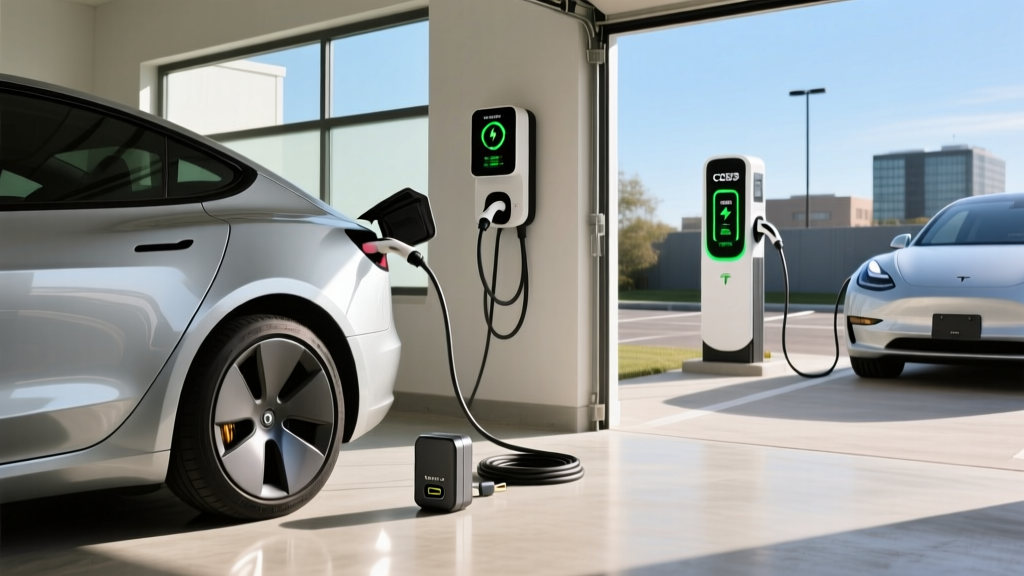
Tesla pioneered its own connector, now formally adopted as the North American Charging Standard (NACS). As of 2026, NACS is the dominant connector in the U.S., with Ford, GM, Rivian, Hyundai, and others equipping vehicles with native NACS ports.
| Connector | Native Vehicles | Adapter Needed? |
|---|---|---|
| NACS (Tesla) | All Tesla models, 2025+ Ford/GM/Rivian/Hyundai | No — native on Tesla; CCS→NACS adapter for older non-Tesla EVs |
| CCS1 | Pre-2025 Ford Mustang Mach-E, GM Ultium, VW ID.4, Hyundai Ioniq 5 (older) | NACS→CCS adapter required at Tesla Superchargers |
| CHAdeMO | Nissan Leaf (legacy) | Rare; limited DC fast infrastructure remaining |
For Tesla owners, the ecosystem is simple: your car has a native NACS port, the Tesla Wall Connector at home uses NACS, and all 25,000+ Supercharger stalls accept you without adapters. If you're buying a non-Tesla home charger (like a ChargePoint or Emporia), verify it ships with a NACS plug or purchase the $50–$100 adapter.
Cost to Charge a Tesla: kWh Pricing and Cost Per Mile vs. Gas
The economics of charging are where EV ownership pulls ahead of gas — but the gap varies dramatically based on where and when you charge.
| Scenario | $/kWh | Cost for 55 kWh (10–80% Model 3 LR) | Cost Per Mile |
|---|---|---|---|
| Home off-peak (utility TOU rate) | $0.08–$0.12 | $4.40–$6.60 | $0.02–$0.03 |
| Home standard residential rate | $0.14–$0.18 | $7.70–$9.90 | $0.03–$0.04 |
| Public Level 2 (workplace, mall) | $0.20–$0.35 | $11.00–$19.25 | $0.05–$0.07 |
| Tesla Supercharger (DC fast) | $0.28–$0.42 | $15.40–$23.10 | $0.07–$0.09 |
| Gas equivalent (30 MPG, $3.40/gal) | — | ~$23.80 (for ~210 mi) | $0.11 |
At home on off-peak rates, a Model 3 Long Range owner spends roughly $0.02–$0.03 per mile — about one-quarter the fuel cost of a 30 MPG gas car. Even on Tesla Superchargers at $0.35/kWh, you're still paying less per mile than gasoline in most states.
The 2026 Model 3 Long Range achieves an EPA-rated 134 MPGe combined, translating to roughly 25 kWh per 100 miles driven. Use this figure to estimate your personal costs: multiply your local $/kWh rate by 0.25 to get your cost per mile.
Best Home Chargers for Tesla in 2026
Not all Level 2 chargers are created equal. Here are three proven options matched to different needs and budgets.
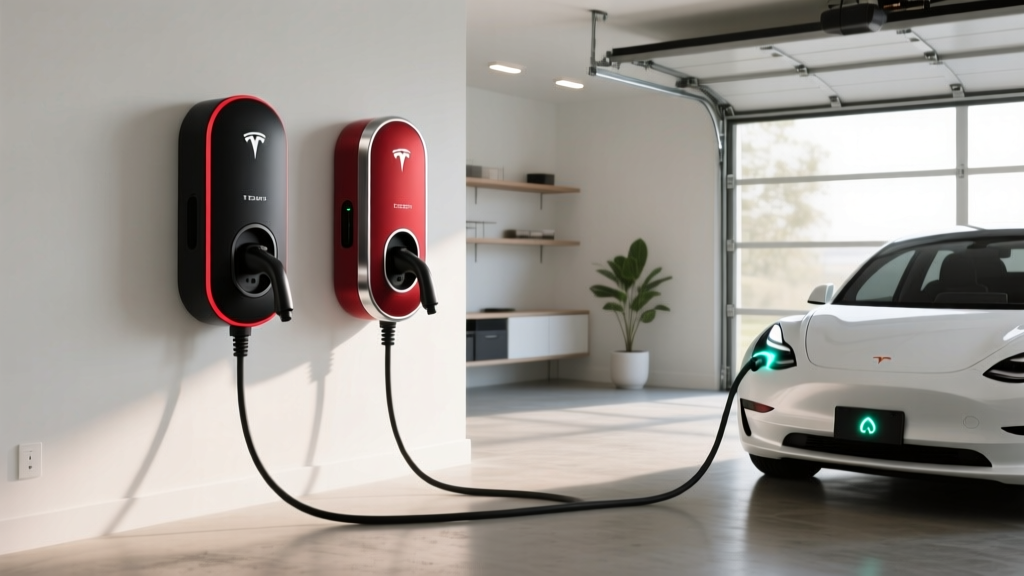
Tesla Wall Connector
Power: 11.5 kW (48A, 240V)
Connector: Native NACS, 24-ft cable
Smart features: Wi-Fi, OTA updates, power sharing (load-balance two units on one circuit), access control
Price: ~$475
Best for: Tesla-only households. Seamless integration, fastest Level 2 charge the car can accept.
Emporia Vue EV Charger
Power: 11.5 kW (48A, 240V)
Connector: NACS (2025+ models), 24-ft cable
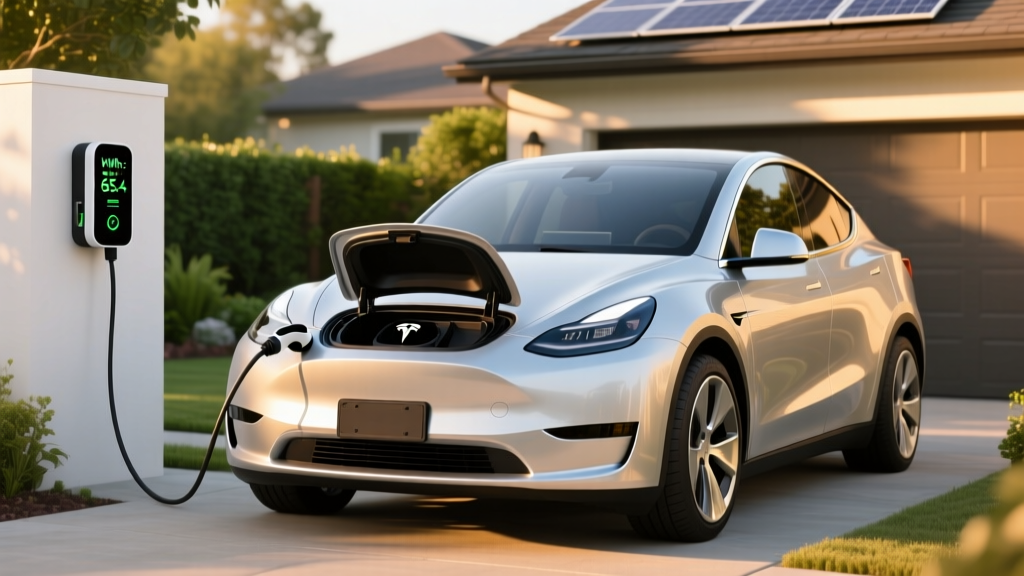
Smart features: Energy monitoring, solar integration, scheduling via app, load management
Price: ~$400
Best for: Solar-panel owners wanting to charge from excess generation. Best value in smart chargers.
ChargePoint Home Flex
Power: Up to 12 kW (50A, 240V)
Connector: NACS or CCS1 (configurable), 23-ft cable
Smart features: Alexa/Google Home, scheduling, charging history, flexible amperage (16A–50A dip-switch)
Price: ~$550
Best for: Mixed-EV households. Adjustable amperage lets you match any circuit from 20A to 60A.
All three are UL-listed and qualify for the 30C alternative fuel vehicle refueling property credit — up to 30% of hardware and installation cost, capped at $1,000, for chargers installed in eligible census tracts. Check irs.gov for current eligibility maps and income requirements.
Safety, Code, and Installation Best Practices
EV charging draws sustained high current for hours — this is not the same as plugging in a dryer. Proper installation protects your home and your car.
- Dedicated circuit: Your Level 2 charger must be on its own dedicated breaker. Never share a circuit with other high-draw appliances.
- GFCI protection: NEC 2023 and later require ground-fault circuit interrupter protection for outdoor receptacles used for EV charging. Hardwired installations (recommended) often bypass this requirement at the breaker, as the Wall Connector includes built-in ground-fault protection.
- Outdoor rating: If your charger mounts outside, ensure it carries a NEMA 4 or IP65 rating. The Tesla Wall Connector and ChargePoint Home Flex are rated for outdoor use; always verify the specific unit.
- Wire gauge: A 60A circuit typically requires 6 AWG copper wire for runs under 50 feet. Longer runs may need 4 AWG to prevent voltage drop. Your electrician will calculate this.
- Permit and inspection: Most municipalities require an electrical permit for a new 240V circuit. Skipping this risks insurance claim denial if an electrical fire occurs. Budget $50–$250 and 1–3 weeks for inspection.
Frequently Asked Questions
How much does it cost to install a home EV charger for my Tesla?
A standard Tesla Wall Connector installation on an existing 200-amp panel runs $1,050–$2,225 including hardware, electrician labor, and permit. If your home needs a panel upgrade from 100A to 200A service, expect the total to reach $2,550–$5,725. Get at least two quotes from licensed electricians — prices vary significantly by region and run length.
How fast will each charging level add range to my Tesla?
Level 1 (120V) adds 3–5 miles per hour — enough only for emergency trickle charging or very low daily mileage. Level 2 at 48 amps (11.5 kW) adds 30–44 miles per hour, fully replenishing a Model 3 Long Range overnight. DC fast charging at a 250 kW Supercharger adds roughly 200 miles in 15 minutes, though the charge curve tapers sharply above 80% SoC.
Which connector and charger are compatible with my Tesla?
All Tesla vehicles (Model S, 3, X, Y, Cybertruck) use the native NACS connector. The Tesla Wall Connector ships with NACS. Third-party chargers like the ChargePoint Home Flex now offer NACS configurations. If you buy a CCS-equipped charger, you'll need a CCS-to-NACS adapter (~$100–$200) — functional but less elegant.
How much does charging a Tesla cost per mile compared to gas?
Home charging on off-peak rates costs $0.02–$0.03 per mile for a Model 3 Long Range. A comparable 30 MPG gas car at $3.40/gallon costs roughly $0.11 per mile. Even Tesla Supercharging at $0.35/kWh comes in at $0.07–$0.09 per mile. Over 15,000 annual miles, home charging saves $1,000–$1,350 per year versus gasoline.
What electrical upgrades might I need for a Tesla home charger?
The most common upgrade is a panel increase from 100-amp to 200-amp service, costing $1,500–$3,500. Homes with modern 200A panels usually have sufficient headroom for a 60A EV circuit. A licensed electrician will perform a load calculation (NEC Article 220) to determine if your panel can handle the additional draw alongside existing appliances like electric dryers, ovens, and HVAC systems.
Does charging to 100% every night damage the Tesla battery?
For Teslas with NMC (nickel manganese cobalt) battery chemistry — which includes most Long Range and Performance models — daily charging to 100% accelerates degradation. Tesla recommends setting the daily charge limit to 80% and reserving 100% for road trips. Models with LFP (lithium iron phosphate) batteries, found in the base Model 3 Rear-Wheel Drive, can and should be charged to 100% regularly per Tesla's guidance, as LFP chemistry requires full-charge cycles for accurate state-of-charge calibration.