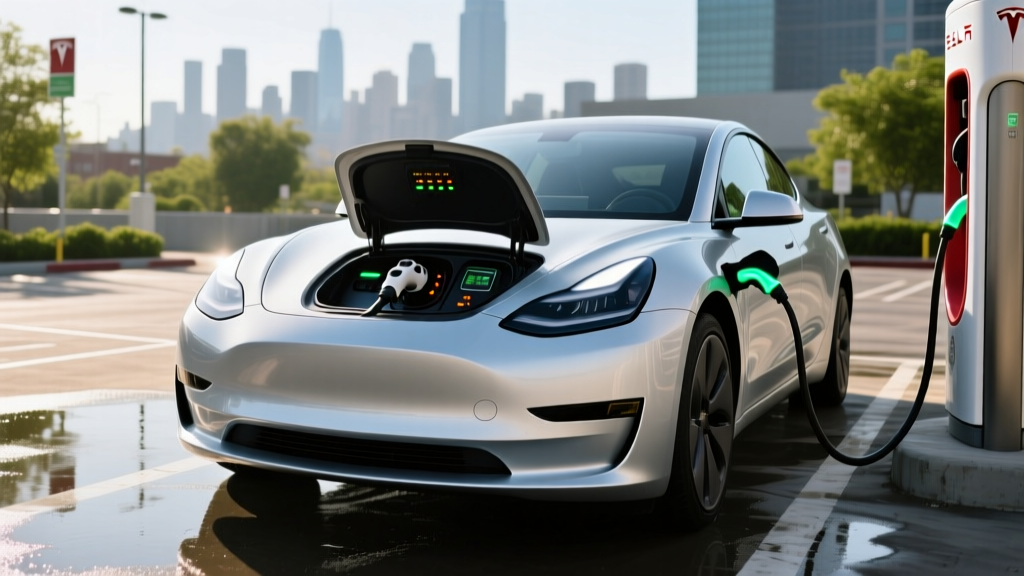
If you're shopping for a Tesla or just picked one up, one question surfaces fast: how many kWh to charge a Tesla from empty to full? The answer depends on which model you drive, the usable battery capacity, your charging setup, and the electricity rate you pay. This guide walks through the exact energy math for every current Tesla model, what you'll actually spend per mile, and how home and public charging costs compare to gasoline.
Before we start, a critical distinction: kWh (kilowatt-hours) measures energy — how much electricity your battery stores. kW (kilowatts) measures power — how fast a charger delivers that energy. Confusing the two is the most common mistake new EV owners make. You fill a battery with kWh; you charge it at a rate of kW.
Tesla Battery Sizes: How Many kWh Each Model Holds
Tesla's 2025–2026 lineup spans four consumer models, each with a different usable battery capacity. "Usable" matters because Tesla, like all automakers, buffers the top and bottom of the pack to protect long-term health — you never actually access 100% of the raw cell capacity.
| Model | Trim | Usable Battery (kWh) | Chemistry | EPA Range (mi) | Efficiency (kWh/100 mi) |
|---|---|---|---|---|---|
| Model 3 | RWD | ~60 | LFP | 272 | 25 |
| Model 3 | Long Range AWD | ~79 | NMC | 363 | 25 |
| Model 3 | Performance | ~79 | NMC | 315 | 28 |
| Model Y | Long Range AWD | ~79 | NMC | 320 | 28 |
| Model Y | Performance | ~79 | NMC | 298 | 30 |
| Model S | Long Range | ~100 | NMC | 402 | 28 |
| Model S | Plaid | ~100 | NMC | 396 | 30 |
| Model X | Long Range | ~100 | NMC | 348 | 32 |
| Model X | Plaid | ~100 | NMC | 326 | 34 |
Real-world caveat: EPA range assumes a mix of city and highway driving at moderate temperatures. On sustained highway trips at 75 mph, expect 10–15% less range than the EPA sticker. In freezing weather (below 32°F / 0°C), range can drop 20–30% due to cabin heating demands and reduced battery efficiency, even with Tesla's heat pump standard on all current models.
A Model 3 RWD needs roughly 60 kWh for a 0–100% fill. A Model Y Long Range needs about 79 kWh. A Model S or X requires around 100 kWh. In practice, most owners charge between 20% and 80%, meaning a typical session uses 36–48 kWh for a Model 3 and 47–63 kWh for a Model Y.
Charging Levels Explained: Speed, Power, and Miles Per Hour
Every Tesla can charge at three levels. The level you use determines how long a session takes and how much range you add per hour of plugging in.
| Level | Voltage / Amperage | Power (kW) | Miles of Range Added Per Hour | Best For |
|---|---|---|---|---|
| Level 1 | 120V / 12A | ~1.4 kW | 3–5 mi/hr | Overnight trickle, emergencies, PHEVs |
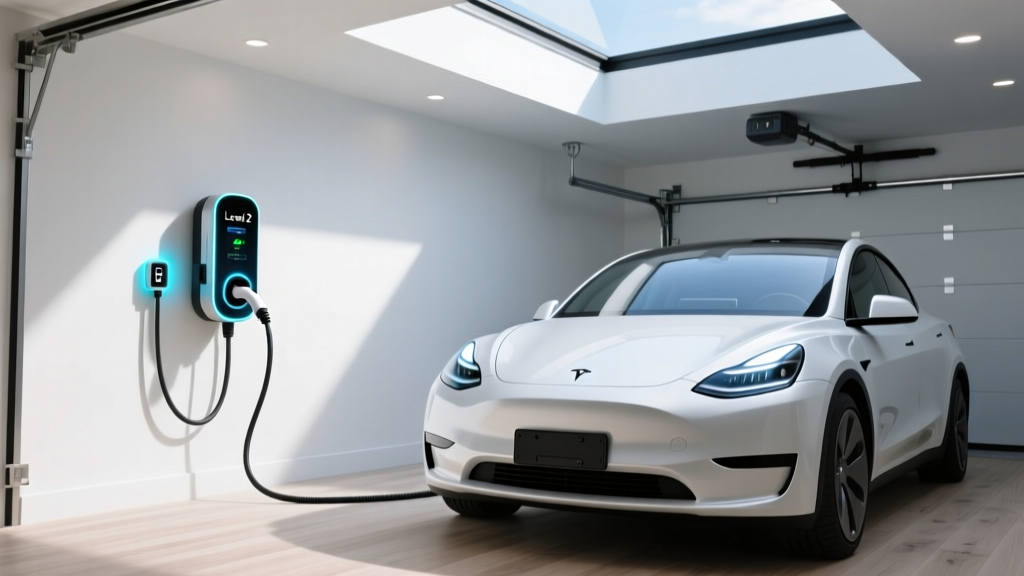
| Level 2 (home) | 240V / 40–48A | 9.6–11.5 kW | 30–44 mi/hr | Daily home charging, overnight fills |
| Level 2 (public) | 240V / 30–80A | 7.2–19.2 kW | 22–60 mi/hr | Workplace, shopping centers, hotels |
| DC Fast (Supercharger V3) | 400V+ / up to 420A | Up to 250 kW | ~1,000 mi/hr (peak) | Road trips, rapid top-ups |
| DC Fast (Supercharger V4) | 800V architecture capable | Up to 350 kW* | ~1,200+ mi/hr (peak) | Next-gen rapid charging |
*V4 Supercharger cabinets are rated up to 350 kW for compatible vehicles. Current Tesla models (Model 3/Y on 400V architecture) peak around 250 kW at V3/V4 stalls. The Cybertruck, with its higher-voltage pack, can accept higher rates.
Charge curve reality: A Tesla Model Y Long Range at a 250 kW Supercharger will peak near 250 kW only between roughly 10–30% state of charge (SoC). Above 50%, the rate tapers significantly — by 80% SoC, you're typically pulling 40–60 kW. A 10–80% session takes about 25–30 minutes for a Model 3 Long Range and 28–35 minutes for a Model Y Long Range. The last 20% (80–100%) can take as long as the first 80% due to cell-balancing and taper. For daily driving, Tesla recommends charging to 80% for NMC batteries and 100% for LFP batteries (Model 3 RWD).
How Much Does Charging a Tesla Actually Cost?
The cost to charge depends entirely on your $/kWh rate and how many kWh you need. Let's run real numbers.
| Scenario | Avg $/kWh | kWh for 300 mi* | Cost for 300 mi | Cost Per Mile |
|---|---|---|---|---|
| Home (national avg residential) | $0.17 | 80 kWh | $13.60 | $0.045 |
| Home (off-peak TOU rate) | $0.09 | 80 kWh | $7.20 | $0.024 |
| Home (high-cost state — CA, HI, CT) | $0.30 | 80 kWh | $24.00 | $0.080 |
| Tesla Supercharger (avg US) | $0.32 | 80 kWh | $25.60 | $0.085 |
| Electrify America / third-party DC | $0.43 | 80 kWh | $34.40 | $0.115 |
| Gasoline car (27 MPG avg, $3.40/gal) | — | 11.1 gallons | $37.74 | $0.126 |
*Based on ~27 kWh/100 mi average efficiency (Model Y Long Range real-world highway mix). Your exact kWh need depends on model, driving style, and conditions.
The takeaway: Home charging on an off-peak time-of-use (TOU) plan delivers the lowest cost per mile — often 75–80% cheaper than gasoline. Even at national average residential rates, a Tesla costs roughly $0.04–0.05 per mile versus $0.12–0.13 for a comparable gas sedan. Public DC fast charging narrows the gap considerably; exclusive Supercharger reliance can push costs to $0.08–0.12/mi, still below gasoline but not the dramatic savings home charging delivers.
Check your utility's EV-specific TOU plans. Many utilities now offer rates as low as $0.06–0.10/kWh for overnight charging (typically 10 PM – 6 AM), which is where the real EV economics shine. According to the U.S. Energy Information Administration (EIA), the national average residential electricity rate was approximately $0.17/kWh entering 2026, but this varies enormously by state.
Home Charger Installation: Requirements, Costs, and Panel Upgrades
To charge a Tesla at Level 2 speeds at home, you need a 240V circuit — the same voltage your electric dryer or oven uses. Here's what's involved.
Electrical Requirements
- Circuit: Dedicated 50A or 60A breaker (for 40A or 48A continuous charging, respectively)
- Wiring: 6 AWG copper for 50A; 4 AWG copper for 60A (runs over 50 ft may need thicker gauge)
- Outlet vs. hardwired: NEMA 14-50 outlet (50A) is the most common plug-in option. Hardwired units at 60A deliver maximum Level 2 speed (11.5 kW) and avoid the NEC requirement for GFCI breakers on receptacles — which can cause nuisance trips with EV chargers.
- Panel capacity: Your main electrical panel must have enough spare amperage. A 200A panel with moderate existing loads can usually accommodate a 50–60A EV circuit. A 100A panel almost certainly cannot and will require an upgrade.
Installation Cost Breakdown
| Component | Simple Install (panel nearby) | Complex Install (long run, panel upgrade) |
|---|---|---|
| EV charger equipment (Wall Connector or third-party) | $400–$500 | $400–$650 |
| Electrician labor (2–4 hrs simple / 6–12 hrs complex) | $300–$800 | $1,200–$3,000 |
| Permit & inspection | $50–$150 | $100–$300 |
| Electrical panel upgrade (100A → 200A, if needed) | N/A | $1,500–$3,500 |
| Conduit, wiring, miscellaneous | $50–$200 | $200–$800 |
| Total | $800–$1,650 | $3,400–$8,250 |
The panel upgrade wildcard: Homes built before the 1990s often have 100A service. Adding a 50–60A EV charger to a 100A panel with existing electric appliances (dryer, oven, A/C) will likely exceed the panel's capacity. A licensed electrician will perform a load calculation per NEC Article 220 to determine if an upgrade is required. Budget $1,500–$3,500 for a 200A panel upgrade — this is the single biggest cost surprise for new EV owners in older homes.
Some utilities and states offer rebates of $250–$1,000 for home charger installation, and the federal Alternative Fuel Vehicle Refueling Property Credit (IRS Form 8911) can cover up to 30% of equipment and installation costs (up to $1,000), subject to income and census-tract eligibility. Check with a tax professional for your specific situation.
Connector Compatibility: NACS, CCS, and What Fits Your Tesla
All current Tesla models use the North American Charging Standard (NACS) connector — the proprietary Tesla plug that has now been adopted industry-wide. Here's how compatibility works across charging networks.
| Connector | Tesla Native? | Adapter Needed? | Networks Available |
|---|---|---|---|
| NACS (Tesla) | Yes — native on all Teslas | No | Tesla Superchargers, Destination Chargers, growing number of non-Tesla networks |
| CCS1 | No | Yes — Tesla CCS Adapter (~$175) | Electrify America, EVgo, ChargePoint, Ionity (EU) |
| CHAdeMO | No | Yes — third-party adapter (~$400+) | Limited legacy stations (being phased out in US) |
| J1772 (Level 2 public) | No | Yes — included with Tesla (J1772 adapter) | Public Level 2 stations everywhere |
What this means practically: Tesla's Supercharger network — over 6,500 stations and 65,000+ stalls in North America as of early 2026 — remains the most reliable and widespread DC fast-charging network. For the vast majority of Tesla owners, no adapter is needed for daily life. The CCS adapter is worth buying ($175 from Tesla's shop) for road trips through areas where Electrify America or EVgo stations fill gaps in Supercharger coverage.
Since 2024, Tesla has opened select Supercharger stalls to non-Tesla EVs via the Magic Dock (built-in CCS adapter). Meanwhile, Ford, GM, Rivian, Volvo, and others now access the Supercharger network using NACS adapters — so expect stalls to get busier on popular corridors. Tesla's Supercharger map shows real-time availability.
Best Home Chargers for Tesla: Equipment Picks
While Tesla's own Wall Connector is the obvious default, several third-party units offer competitive features. All recommendations below are NACS-equipped or available with a NACS plug as of 2025–2026.
Tesla Wall Connector (Gen 3)
- Power output: Up to 11.5 kW (48A on 60A circuit)
- Connector: NACS native
- Cable length: 24 ft
- Smart features: Wi-Fi, OTA updates, load sharing (pair two units on one circuit), access control
- Price: ~$475
- Verdict: Best value for Tesla-only households. Clean integration with the Tesla app. No app of its own — managed through Tesla account.
ChargePoint Home Flex (NACS)
- Power output: Up to 12 kW (50A on 60A circuit, adjustable down to 16A)
- Connector: NACS (2025+ model) or J1772 with adapter
- Cable length: 23 ft
- Smart features: Wi-Fi, ChargePoint app scheduling, Alexa integration, flexible amperage setting
- Price: ~$550–$650
- Verdict: Best for mixed-EV households (Tesla + non-Tesla). Adjustable amperage is useful if your panel can't support a full 60A circuit.
Emporia Vue EV Charger
- Power output: Up to 11.5 kW (48A on 60A circuit)
- Connector: NACS or J1772 (select at purchase)
- Cable length: 24 ft
- Smart features: Wi-Fi, real-time energy monitoring, solar integration with Emporia Vue panel monitor, TOU scheduling
- Price: ~$400–$500
- Verdict: Best budget smart charger. Excellent if you have solar panels — can charge only on excess solar production.
Grizzl-E Smart (NACS)
- Power output: Up to 10 kW (40A on 50A circuit)
- Connector: NACS (2025+ models)
- Cable length: 24 ft
- Smart features: Wi-Fi, OCPP-compatible, adjustable amperage, extreme-cold rated (-40°F)
- Price: ~$450
- Verdict: Best for cold climates and outdoor installs. Built in Canada, rugged aluminum case. Lower max amperage than competitors but more than adequate for overnight charging.
Safety, Code, and Installation Best Practices
EV charging draws sustained high current for hours — unlike a dryer that cycles on and off. This makes proper installation non-negotiable.
- Dedicated circuit: Your EV charger must be on its own dedicated breaker. Never share a circuit with other appliances.
- GFCI considerations: The 2020 NEC requires GFCI protection on receptacles in garages (Article 210.8). However, many EV chargers have built-in ground-fault protection, and GFCI breakers can nuisance-trip with EVSEs. Hardwiring the charger eliminates this requirement entirely — a common recommendation from electricians.
- Outdoor rating: If mounting outside, ensure the charger is NEMA 4-rated (weatherproof). The Tesla Wall Connector and Grizzl-E both carry this rating. Use an in-use cover for receptacle-based installs.
- Permit and inspection: Most jurisdictions require an electrical permit for a new 240V circuit. The inspection ensures wire gauge, breaker sizing, and grounding meet code. Skipping the permit risks insurance claim denials and code violations at sale time.
- Wire sizing: For continuous loads (EV charging qualifies), the NEC requires wire rated for 125% of the load. A 48A charger needs wire rated for 60A — hence 4 AWG copper or 3 AWG aluminum.
Always hire a licensed electrician familiar with EV charger installations. Ask for their experience specifically with 240V EVSE circuits — general residential electricians sometimes undersize wire or overlook continuous-load derating requirements. The National Electrical Code (NFPA 70) governs all residential EV charging installations.
Frequently Asked Questions
How many kWh does it take to charge a Tesla Model Y from 20% to 80%?
A Model Y Long Range has roughly 79 kWh of usable capacity. Charging from 20% to 80% requires about 47 kWh (60% of 79 kWh). At home on a Level 2 charger at 11.5 kW, that takes roughly 4.5 hours. At a 250 kW Supercharger, the same session takes about 25–30 minutes, though charging losses (typically 5–10%) mean the grid will meter slightly more than 47 kWh.
How much does it cost to install a home EV charger?
A straightforward installation (200A panel, short wire run, no panel upgrade) typically costs $800–$1,650 all-in, including the charger unit, electrician labor, permit, and materials. If your home needs a panel upgrade from 100A to 200A, total costs can reach $3,400–$8,250. Get at least two quotes from licensed electricians and ask about utility rebates that can offset $250–$1,000 of the total.
How fast will each charging level add range to my Tesla?
Level 1 (120V): 3–5 miles per hour — adequate only for PHEVs or emergency trickle charging. Level 2 (240V, 48A): 30–44 miles per hour — enough to fully replenish a Model Y overnight in 7–9 hours. DC Fast Charging (250 kW Supercharger): up to 200 miles in 15 minutes at peak rate, tapering significantly above 50% SoC.
How much does charging a Tesla cost per mile vs. gasoline?
At the US national average residential rate (~$0.17/kWh), a Model Y costs approximately $0.045 per mile to charge at home. On off-peak TOU rates ($0.09/kWh), that drops to $0.024/mi. A comparable gas SUV at 27 MPG with $3.40/gallon fuel costs about $0.126/mi. Home charging saves $0.08–$0.10 per mile, or roughly $1,200–$1,500 per year at 15,000 miles driven.
What electrical upgrades might I need for a home charger?
The most common and costly upgrade is a panel upgrade from 100A to 200A service ($1,500–$3,500). Other potential upgrades include: replacing a Federal Pacific or Zinsco panel (known fire hazards, $2,000–$4,000 replacement), running new conduit for long wire runs from panel to garage ($200–$800), or adding a sub-panel if your main panel is full ($500–$1,500). A licensed electrician's load calculation will determine what's required before any work begins.
Do I need the Tesla Wall Connector, or can I use any charger?
Any NACS-equipped Level 2 charger will work with your Tesla. The Tesla Wall Connector offers the best price-to-performance ratio ($475, 11.5 kW) and native app integration. Third-party chargers like the ChargePoint Home Flex or Emporia Vue are excellent choices if you have multiple EV brands in your household or want features like solar integration. Avoid CCS-only chargers unless you also carry the Tesla CCS adapter.
Is it safe to charge a Tesla every night at home?
Yes — daily Level 2 home charging is the intended use case and is safe when properly installed. Tesla recommends setting a charge limit of 80% for NMC batteries (Model 3 LR, Model Y, Model S/X) to maximize long-term battery health, or 100% for LFP batteries (Model 3 RWD). The car's battery management system handles thermal regulation, cell balancing, and charge scheduling automatically. Ensure your installation meets NEC code with a dedicated circuit and proper wire sizing.