The kW Question Every EV Buyer Needs Answered
If you've ever stared at a charging station display and wondered what all those kilowatt numbers actually mean for your schedule and your wallet, you're not alone. The phrase "how many kilowatts to charge an electric car" is one of the most common searches among new EV owners — and the answer depends entirely on which charging level you're using, what vehicle you drive, and whether you're charging at home or on the road.
Before we get to the numbers, let's clear up the single most common EV confusion: kW (kilowatts) measures power — how fast energy flows into your battery. kWh (kilowatt-hours) measures energy — the total capacity of your battery. Think of kW as the width of a hose and kWh as the size of the bucket. A wider hose (more kW) fills the bucket faster, but the bucket size (kWh) determines how far you can drive.
Most EV batteries in 2026 range from roughly 60 kWh (compact models like the Chevrolet Equinox EV Standard Range) to over 130 kWh (heavy-duty trucks like the GMC Sierra EV). How many kilowatts you need to charge that battery efficiently depends on your daily driving pattern and whether you can install a home charger.
Charging Levels Explained: Speeds, Power, and Real-World Range Added
Every EV sold in the US charges across one of three tiers. Here's exactly what each delivers in terms of power output (kW) and practical range recovery per hour of charging:
| Level | Voltage | Power (kW) | Miles of Range/Hour | Best For |
|---|---|---|---|---|
| Level 1 (120V) | 120V AC | 1.0–1.9 kW | 3–5 miles | Overnight trickle, PHEVs, emergency top-ups |
| Level 2 (240V) | 240V AC | 3.3–19.2 kW | 12–75 miles | Daily home charging, workplace, hotels |
| DC Fast Charge | 400–900V DC | 50–350+ kW | 150–1,000+ miles (equivalent rate) | Road trips, highway corridors, quick stops |
Level 1 plugs into any standard household outlet. For a plug-in hybrid with 30–40 miles of electric range, Level 1 is often sufficient — you'll recover a full battery in 8–12 hours. For a full BEV with an 80 kWh battery, Level 1 would take 40–60+ hours for a full charge. It's a backup, not a primary strategy.
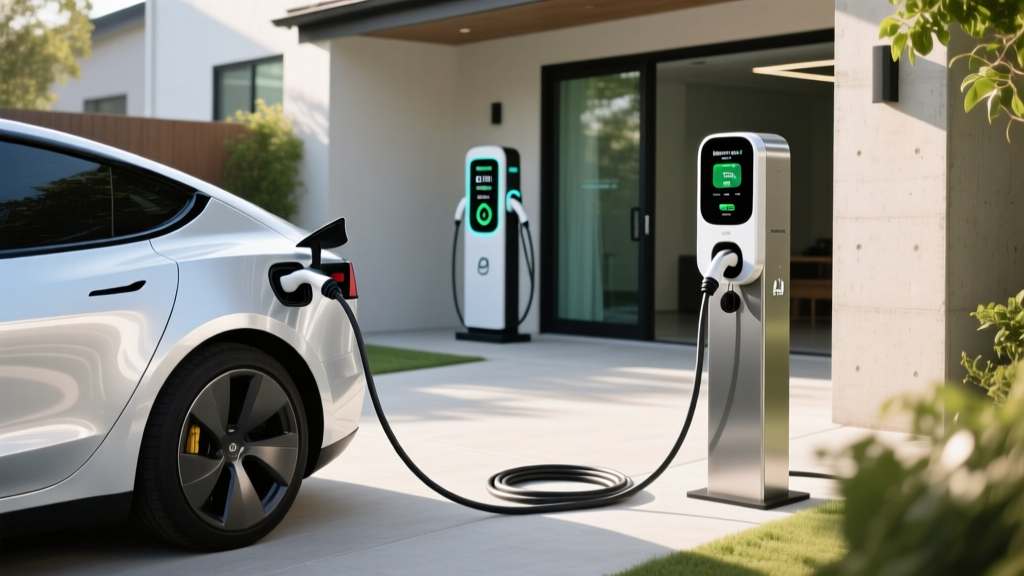
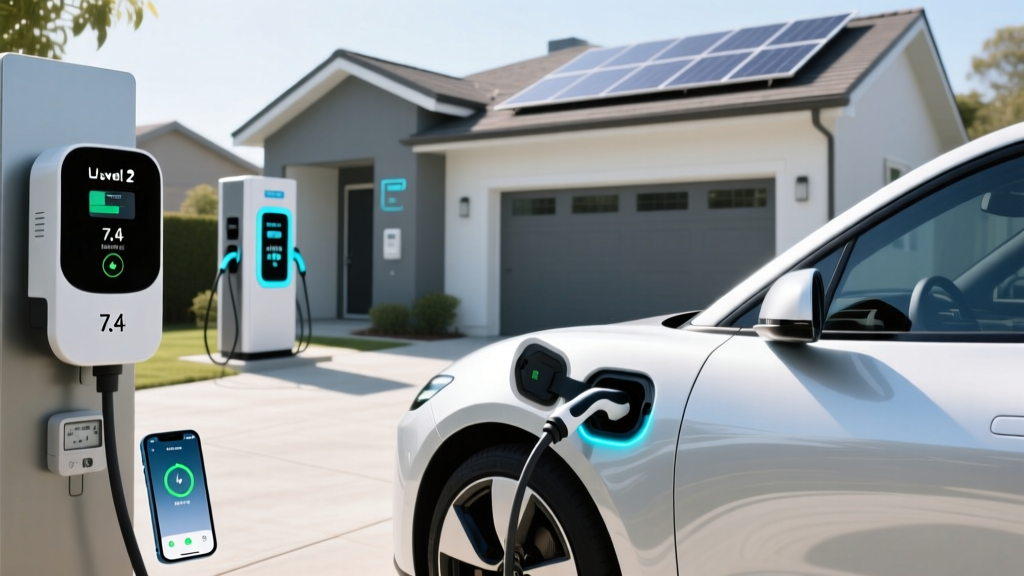
Level 2 is the workhorse of EV ownership. A 48-amp (11.5 kW) home charger will fully replenish most EV batteries overnight in 6–10 hours. This is what the vast majority of EV owners install at home, and it's the standard at workplaces, shopping centers, and hotels.
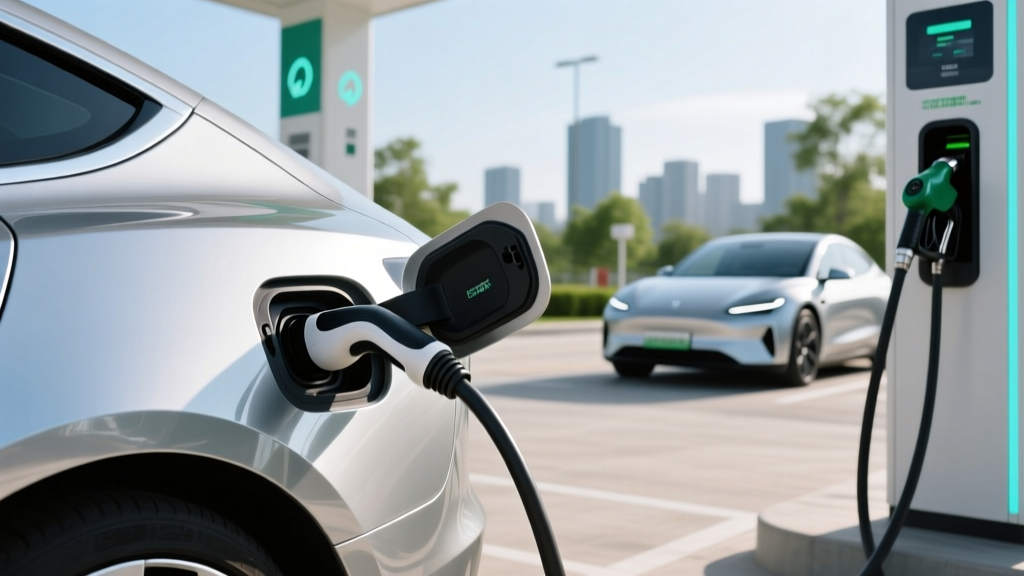
DC Fast Charging bypasses the vehicle's onboard charger and feeds direct current straight to the battery. Modern 800V-architecture vehicles like the Hyundai Ioniq 5, Kia EV6, and Porsche Taycan can accept peak rates of 240–350 kW, adding 10–80% charge in roughly 18 minutes under ideal conditions. However — and this is critical — peak kW is not sustained kW. Every EV's charge curve tapers significantly above 80% State of Charge (SoC) to protect battery health. A vehicle that peaks at 250 kW at 20% SoC may drop to 40 kW by the time it reaches 85%.
How Much Does It Cost to Install a Home EV Charger?
The honest answer to "how many kilowatts to charge an electric car at home" usually comes down to what your electrical panel can support — and what you're willing to spend on upgrades. Here's a realistic cost breakdown for a Level 2 home installation in 2026:
| Item | Typical Cost Range | Notes |
|---|---|---|
| Level 2 Charger Unit (40–48A) | $400–$800 | Hardwired or NEMA 14-50 plug; Wi-Fi/smart models cost more |
| Electrician Labor | $500–$2,000 | Depends on run length from panel to garage; conduit and drywall work add cost |
| Permit & Inspection | $50–$300 | Required in most jurisdictions; varies by municipality |
| Electrical Panel Upgrade (if needed) | $1,500–$4,000 | Older homes with 100A service often need a 200A upgrade for a 48A charger circuit |
| Total (No Panel Upgrade) | $950–$3,100 | Most homes with 200A service and a nearby panel |
| Total (With Panel Upgrade) | $2,450–$7,100 | Common in homes built before 2000 |
The panel upgrade gotcha: A 48-amp charger requires a dedicated 60-amp circuit (National Electrical Code requires circuits to be rated at 125% of continuous load). If your home has a 100-amp panel that's already near capacity running HVAC, an electric dryer, and a stove, your electrician will likely recommend upgrading to 200-amp service. This is the single biggest variable in home charging cost, and many buyers don't discover it until the electrician's site visit.
Some homeowners opt for a lower-amperage charger — a 32-amp unit (7.7 kW) on a 40-amp circuit — to avoid a panel upgrade. This still adds roughly 25–30 miles of range per hour, which is sufficient for most daily commutes under 60 miles. A licensed electrician can perform a load calculation to determine what your existing panel can safely handle.
Federal incentive: Under current IRS §30C rules, homeowners may qualify for a tax credit covering 30% of home EV charger equipment and installation costs, up to $1,000. Eligibility depends on census-tract requirements and is subject to change — consult a tax professional before filing.
Connector Compatibility: NACS, CCS, and CHAdeMO in 2026
The connector landscape has shifted dramatically. After Tesla opened its Supercharger network and the industry adopted the North American Charging Standard (NACS), nearly every major automaker has transitioned or committed to NACS for new vehicles. Here's where things stand:
| Connector | Brands Using It | Adapter Needed? |
|---|---|---|
| NACS (Tesla standard) | Tesla (all), Ford, GM, Rivian, Volvo, Polestar, Mercedes-Benz (new models), Hyundai/Kia (2025+ models) | N/A — native NACS port |
| CCS1 (Combined Charging System) | Volkswagen ID.4 (pre-2026), BMW iX (pre-2026), older Hyundai/Kia models, Stellantis EVs | CCS-to-NACS adapter (~$150–$250) for Tesla Supercharger access |
| CHAdeMO | Nissan Leaf (legacy only — discontinued for 2026 in US) | Limited public infrastructure; CHAdeMO stations are increasingly rare |
What this means for home charging: Level 2 home chargers use the J1772 connector for non-Tesla EVs, or a Tesla-specific connector for NACS vehicles. Many 2026 home chargers now ship with a NACS connector or include a J1772-to-NACS adapter in the box. Before purchasing a charger, confirm your vehicle's port type — buying a J1772 charger for a NACS-only vehicle means you'll need an adapter every time you plug in at home.
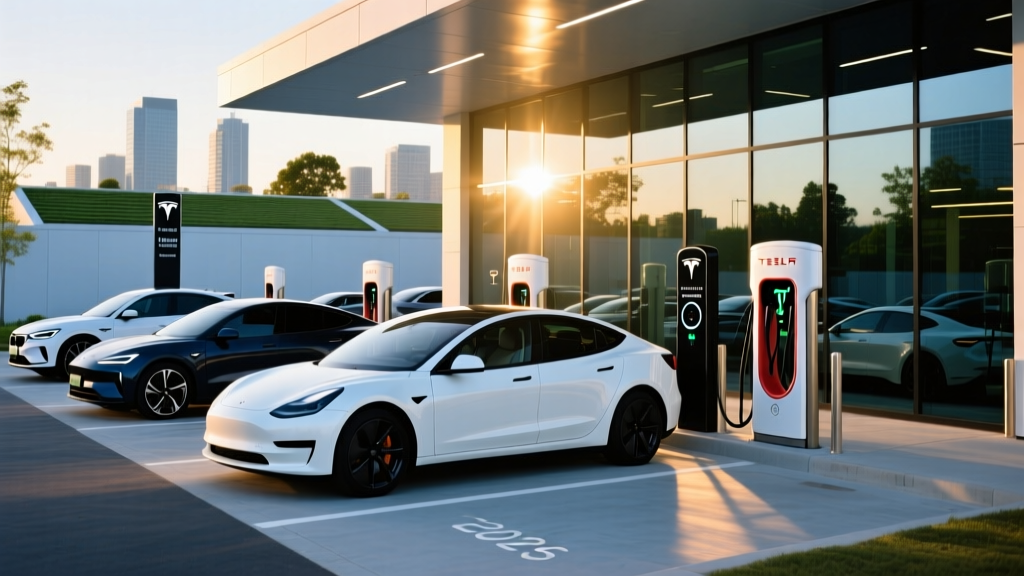
For public DC fast charging, Tesla Superchargers now serve non-Tesla vehicles at designated stalls with built-in CCS adapters ("Magic Dock"), while Electrify America, EVgo, and ChargePoint stations increasingly offer NACS cables alongside CCS. The trend is clear: NACS is becoming the universal standard, and CCS-to-NACS adapters bridge the gap for legacy vehicles.
Charging Time Examples: How Long Does 10–80% Actually Take?
Real-world charging times depend on battery size, peak charge rate, and — critically — the charge curve. Here are representative examples for popular 2026 EVs charging at a public DC fast station:
| Vehicle | Battery (kWh Usable) | Peak DC Rate (kW) | 10–80% Time (min) | Notes |
|---|---|---|---|---|
| Hyundai Ioniq 5 (800V) | 77.4 kWh (NMC) | 240 kW | ~18 min | Sustains high rate to ~60% SoC, then tapers |
| Tesla Model Y Long Range | 75 kWh (NMC) | 250 kW | ~25 min | Curve drops sharply above 50% SoC |
| Ford Mustang Mach-E Extended Range | 91 kWh (NMC) | 150 kW | ~38 min | Limited by lower peak rate |
| Chevrolet Equinox EV | 85 kWh (NMC) | 175 kW | ~32 min | Steady mid-range curve |
| BMW iX xDrive50 | 105.2 kWh (NMC) | 195 kW | ~34 min | Larger battery offsets high rate |
| Lucid Air Pure | 88 kWh (NMC) | 220 kW | ~22 min | Excellent sustained rate to ~70% |
Why 10–80% and not 0–100%? Charging above 80% SoC is dramatically slower — the final 20% can take as long as the first 80% due to the tapering charge curve and battery management system protections. For road trips, the fastest strategy is to charge from 10–80%, then drive. Arriving at the next charger at a low SoC also lets you take advantage of the fastest part of the curve again.
Preconditioning matters: Most EVs with active thermal management will precondition the battery when you navigate to a DC fast charger. A cold battery (below 50°F / 10°C) can reduce peak charge rates by 30–50%. If your EV offers battery preconditioning, always use it before a fast-charge stop — especially in winter.
How Much Does Charging Cost Per Mile vs. Gas?
The cost advantage of electric charging depends heavily on where and when you charge. Here's a practical comparison using national averages and real-world scenarios:
| Scenario | Rate ($/kWh) | Cost Per Mile* | Annual Cost (12,000 mi) |
|---|---|---|---|
| Home Level 2 (off-peak utility rate) | $0.08–$0.14 | $0.03–$0.05 | $360–$600 |
| Home Level 2 (standard residential rate) | $0.15–$0.20 | $0.05–$0.07 | $600–$840 |
| Public Level 2 (ChargePoint, EVgo L2) | $0.25–$0.49 | $0.08–$0.16 | $960–$1,920 |
| DC Fast Charging (Electrify America, EVgo) | $0.35–$0.55 | $0.11–$0.18 | $1,320–$2,160 |
| Tesla Supercharger (average) | $0.28–$0.40 | $0.09–$0.13 | $1,080–$1,560 |
| Gasoline (25 MPG avg, $3.40/gal) | — | $0.14 | $1,680 |
*Based on an average EV efficiency of 3.0 miles per kWh (roughly 112 MPGe combined), per fueleconomy.gov data for popular 2026 models.
The takeaway is straightforward: home charging on off-peak rates delivers the lowest cost per mile — typically one-quarter to one-third the cost of gasoline. Public DC fast charging, while convenient for road trips, can approach or even exceed gasoline costs per mile on some networks. The economics strongly favor home charging as your primary strategy, with public fast charging reserved for longer trips.
Time-of-use (TOU) utility plans can further reduce home charging costs. Many utilities offer overnight rates as low as $0.06–$0.09/kWh, which translates to roughly $0.02–$0.03 per mile. If you drive 40 miles per day, that's under $1/day in fuel cost — a figure no gasoline vehicle can match.
Home Charger Equipment Picks: What to Buy in 2026
Not all Level 2 chargers are created equal. Here are four well-regarded units covering different budgets and feature sets:
ChargePoint Home Flex (NACS or J1772)
- Power Output: Up to 12 kW (50 amps) on a 60A circuit; adjustable down to 16A for lower-capacity panels
- Cable Length: 23 feet
- Smart Features: Wi-Fi, app scheduling, Alexa integration, energy tracking
- Price: ~$599–$699
- Best For: Flexible amperage adjustment — ideal if your panel can't support a full 48A draw
Emporia Vue EV Charger
- Power Output: Up to 11.5 kW (48 amps) on a 60A circuit
- Cable Length: 24 feet
- Smart Features: Wi-Fi, app control, integrates with Emporia energy monitoring for whole-home solar optimization
- Price: ~$399–$449
- Best For: Budget-conscious buyers who want smart scheduling and solar integration
Tesla Wall Connector (NACS)
- Power Output: Up to 11.5 kW (48 amps) on a 60A circuit
- Cable Length: 24 feet
- Smart Features: Wi-Fi, firmware updates, power sharing between multiple units, Tesla app integration
- Price: ~$450
- Best For: Tesla owners and NACS-equipped vehicles; sleek design, reliable track record
Grizzl-E Smart (J1772 or NACS)
- Power Output: Up to 10 kW (40 amps) on a 50A circuit
- Cable Length: 24 feet
- Smart Features: Wi-Fi, OCPP protocol support, adjustable amperage (16A–40A)
- Price: ~$449–$549
- Best For: Outdoor installations (NEMA 4 rated), Canadian-built durability, cold-climate reliability
Safety, Electrical Code, and Installation Considerations
Installing a Level 2 charger isn't just plugging in an appliance — it's a permanent electrical installation that must meet the National Electrical Code (NEC) and local amendments. Here's what to expect:
- Dedicated circuit: Your charger must be on its own dedicated breaker — not shared with other outlets or appliances. A 48A charger needs a 60A breaker; a 32A charger needs a 40A breaker.
- GFCI protection: NEC 2020 and later require ground-fault circuit interrupter protection for EV charging outlets. Hardwired installations may satisfy this through the charger's internal protection. Your electrician will determine the compliant approach.
- Outdoor rating: If your charger is mounted outside (driveway, carport), the unit must carry a NEMA 4 or higher weather-resistance rating. All chargers listed above meet this standard.
- NEMA 14-50 vs. hardwired: A NEMA 14-50 outlet offers portability (you can take the charger when you move) but requires GFCI breaker protection, which can add $100–$200 to the installation. Hardwired installations are permanent but avoid the GFCI breaker requirement and are often slightly cheaper to install.
- Permit and inspection: Most jurisdictions require an electrical permit and a post-installation inspection. Skipping this step can void your homeowner's insurance coverage in the event of an electrical fire. Budget $50–$300 for the permit and plan for a 1–2 week inspection timeline.
- Wire gauge: A 60A circuit typically requires 6 AWG copper wire; a 40A circuit uses 8 AWG. Longer wire runs from the panel to the charger location increase material costs and can necessitate larger wire to prevent voltage drop.
Never DIY a 240V installation unless you are a licensed electrician. Working with 240V service carries serious shock and fire risk, and an improperly installed circuit can damage your vehicle's charging system or your home's electrical infrastructure.
Frequently Asked Questions
How many kilowatts do I actually need to charge my EV at home?
For most EV owners, a 7.7–11.5 kW (32–48 amp) Level 2 charger is the sweet spot. If you drive under 60 miles per day, a 7.7 kW unit fully replenishes your daily use in 3–4 hours. If you regularly drive 100+ miles or have a larger battery (90+ kWh), an 11.5 kW charger ensures a full overnight charge. Anything above 11.5 kW requires a panel capable of supporting a 60A+ dedicated circuit — feasible in newer homes but often requiring an upgrade in older ones.
Can I charge my EV with a regular 120V outlet?
Yes, but slowly. Level 1 charging at 120V delivers roughly 1.0–1.9 kW, adding 3–5 miles of range per hour. This works for PHEVs with small batteries (15–20 kWh) or for BEV owners who drive very little daily. For a full BEV with an 80 kWh battery, a 0–100% charge on Level 1 would take 40–80 hours — impractical as a primary charging method.
Will charging at home raise my electric bill significantly?
It will increase your electricity usage, but the cost is typically far less than gasoline. Charging a 75 kWh battery from 10–80% (about 52.5 kWh) at $0.13/kWh costs roughly $6.83. If you do this twice per week, that's about $55/month in added electricity — compared to roughly $140/month in gasoline for a 25 MPG vehicle driving the same distance. Net savings of $80–$100/month are common for home-charging EV owners.
Do I need a smart charger, or is a basic unit fine?
A basic (non-Wi-Fi) charger will charge your car just fine. Smart features — scheduling, energy monitoring, remote start/stop — are conveniences, not necessities. However, smart scheduling lets you charge during off-peak utility hours (saving money), and some utilities require smart chargers to qualify for TOU rate plans or rebates. If your utility offers a $200–$500 rebate for smart charger installation, the upgrade often pays for itself.
What electrical upgrades might I need for a home charger?
The most common upgrade is a panel service increase from 100A to 200A, which costs $1,500–$4,000. Other potential upgrades include: adding a sub-panel closer to the garage (if your main panel is on the opposite side of the house), replacing outdated wiring (aluminum or knob-and-tube), or upgrading your utility meter socket. Your electrician's load calculation will identify exactly what's needed. Request this assessment before purchasing a charger to avoid surprises.
How do I find my utility's off-peak EV charging rates?
Most utilities now offer EV-specific time-of-use plans. Visit your utility's website or call their customer service and ask about "EV rate plans" or "time-of-use plans for electric vehicle charging." Common off-peak windows are 10 PM – 6 AM, with rates 30–60% lower than standard residential pricing. Some utilities also offer a separate meter for EV charging, which isolates your charging costs from your household rate tier.