If you've just ordered a Tesla Model 3 or Model Y — or you're weighing whether to switch — one question usually comes first: how many kilowatts does it take to charge a Tesla? The answer isn't a single number. It depends entirely on which charging level you're using, whether you're at home or on a road trip, and which specific Tesla model you own.
Before we get to the numbers, a critical distinction: kW (kilowatts) measures power — how fast electricity flows into your car. kWh (kilowatt-hours) measures energy — how much total electricity your battery holds. Think of kW as the speed of water from a hose, and kWh as the size of the bucket you're filling. A Tesla Model Y Long Range has a ~75 kWh usable battery. How fast you fill that bucket depends on the kW rate of your charger.
Charging Levels Explained: kW, Speeds, and Miles Per Hour
Every EV charger falls into one of three levels. Here's how they stack up for Tesla vehicles specifically:
| Level | Voltage | Max kW | Miles of Range Per Hour | Typical Use Case |
|---|---|---|---|---|
| Level 1 (120V) | 120V AC | 1.4–1.9 kW | 3–5 mi/hr | Emergency / overnight trickle |
| Level 2 (240V) | 240V AC | 7.7–11.5 kW | 30–44 mi/hr | Home daily charging |
| DC Fast Charging | 400V+ DC | 170–250 kW | ~200 mi in 15 min (peak) | Road trips / Superchargers |
Level 1: The Emergency Backup
Every Tesla ships with a Mobile Connector that plugs into a standard 120V household outlet. At 1.4–1.9 kW, you'll add roughly 3–5 miles of range per hour of charging. For a Model Y with a 320-mile EPA range, a full 10–100% charge would take approximately 48–72 hours. This is adequate only if you drive fewer than 30 miles daily and have 12+ hours parked overnight.
Level 2: The Home Charging Standard
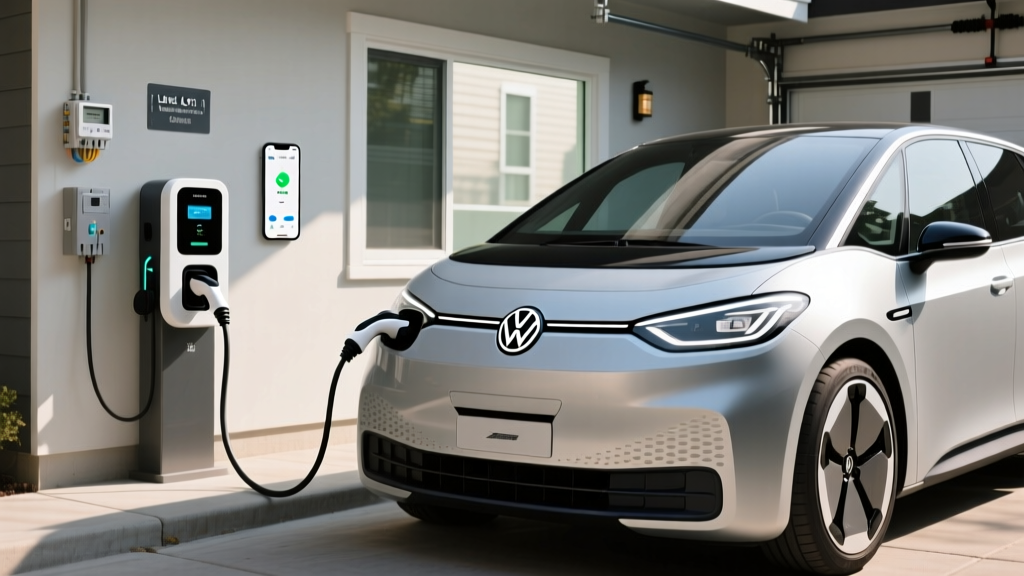
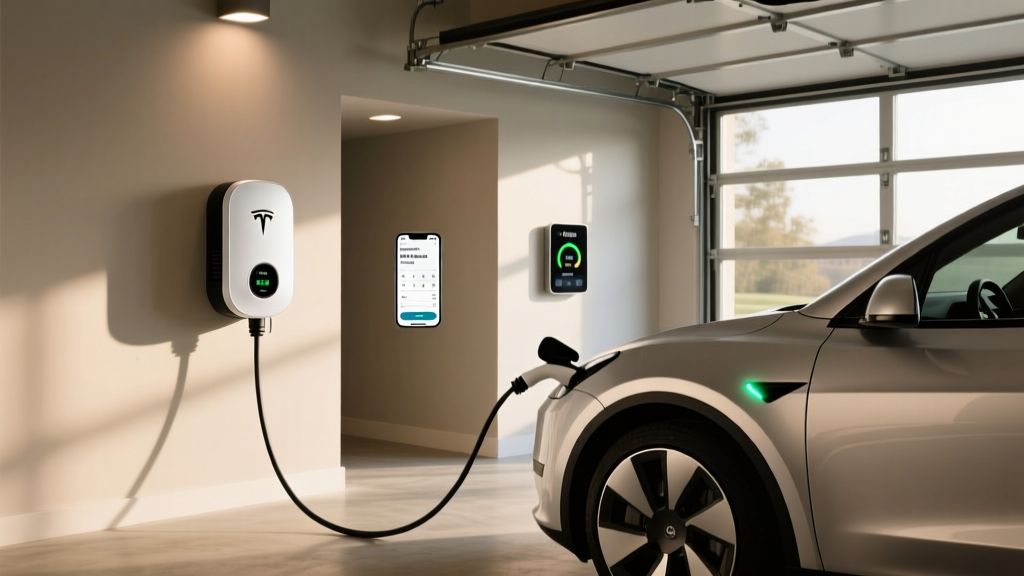
A 240V Level 2 setup is what over 80% of Tesla owners use as their primary charging method. The kW rate depends on your amperage:
- 32A circuit (40A breaker): 7.7 kW — adds ~30 mi/hr
- 48A circuit (60A breaker): 11.5 kW — adds ~44 mi/hr (Tesla Wall Connector max)
At 11.5 kW, a Model 3 Long Range (~82 kWh usable battery) charges 10–80% in roughly 5 hours. At 7.7 kW, that stretches to about 7.5 hours. Both fit comfortably within an overnight window.
DC Fast Charging: Supercharger and Beyond
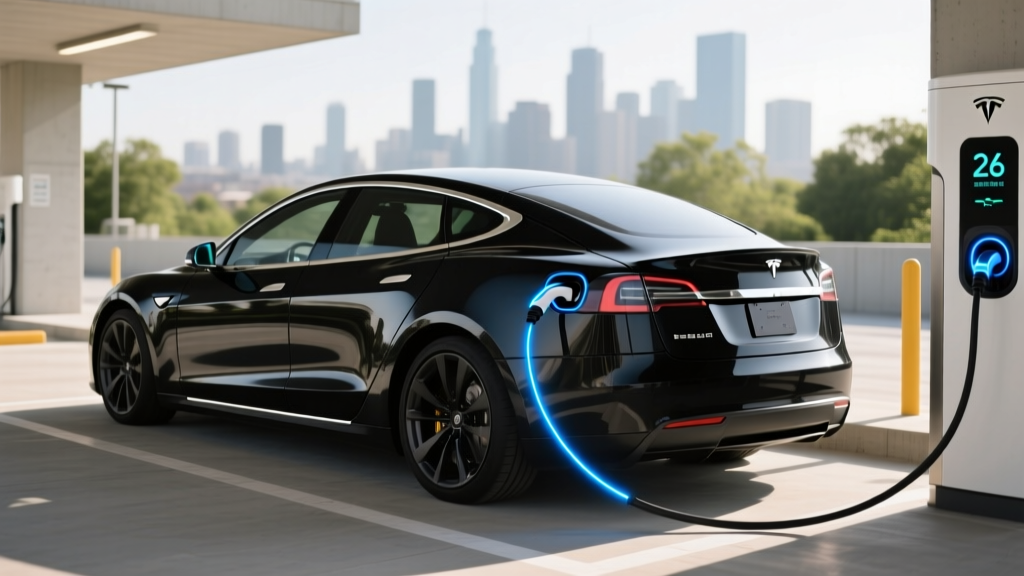
Tesla's V3 Superchargers deliver up to 250 kW peak, while V4 cabinets can sustain higher averages for newer vehicles. At a V3 stall, a Model 3 Long Range can add up to 175 miles in 15 minutes under optimal conditions (low state of charge, preconditioned battery). However, peak kW is not sustained kW — the charging curve tapers significantly above 50–60% state of charge. Expect a realistic 10–80% time of 25–35 minutes at a V3 Supercharger, not the theoretical 18 minutes that peak-rate math might suggest.
Home Charger Installation: Electrical Requirements and Costs
Installing a Level 2 home charger isn't just buying a $400 wall unit. The total cost depends on your home's electrical panel capacity, the distance from panel to charger location, and local permit requirements. Here's what you're actually looking at:
| Component | Low-End Estimate | High-End Estimate | Notes |
|---|---|---|---|
| Charger equipment (Tesla Wall Connector or third-party) | $400 | $650 | Tesla Wall Connector: $475 MSRP |
| Electrician labor (standard install) | $600 | $2,000 | Depends on run length, wall type |
| Electrical panel upgrade (if needed) | $1,500 | $4,000 | Required if panel is 100A or maxed out |
| Permit fees | $50 | $300 | Varies by municipality |
| Conduit/wiring materials | $100 | $500 | Long runs or outdoor conduit adds cost |
| Total (no panel upgrade) | $1,150 | $3,450 | Most homes with 200A panels |
| Total (with panel upgrade) | $2,650 | $7,450 | Older homes with 100A service |
Electrical Requirements: What Your Panel Needs
For a 48A Tesla Wall Connector (the maximum for most Teslas), you need a dedicated 60-amp circuit on a 240V line. The National Electrical Code (NEC) requires that continuous loads (like EV charging) use no more than 80% of a circuit's rated capacity — hence 48A on a 60A breaker.
If you're installing a 32A charger instead, a 40-amp dedicated circuit suffices. This is often enough for daily driving needs and puts less strain on older panels.
Permits and Code Requirements
Most jurisdictions require an electrical permit for EV charger installation. This ensures the work meets NEC standards for:
- Dedicated circuit: Your EV charger must have its own breaker — no sharing with other appliances
- GFCI protection: Required for outdoor installations and some indoor locations per 2023 NEC updates
- Outdoor rating: If mounting outside, the charger and receptacle must be rated for wet locations (NEMA 4 or equivalent)
- Proper wire gauge: 6 AWG copper for 60A circuits, 8 AWG for 40A circuits (varies by run length)
Charging Time Examples: How Long Does It Actually Take?
Theoretical kW numbers only matter if you know what they translate to in actual charging time. Here are real-world estimates for the two most common Tesla models:
| Charging Method | Model 3 LR (82 kWh) | Model Y LR (75 kWh) | Model Y (Standard) |
|---|---|---|---|
| Level 1 (1.4 kW / 120V) | ~41 hours | ~38 hours | ~30 hours |
| Level 2 (7.7 kW / 32A) | ~7.5 hours | ~6.8 hours | ~5.4 hours |
| Level 2 (11.5 kW / 48A) | ~5 hours | ~4.5 hours | ~3.6 hours |
| DC Fast (250 kW V3 Supercharger) | ~27 minutes | ~25 minutes | ~22 minutes |
| DC Fast (150 kW V2 Supercharger) | ~38 minutes | ~35 minutes | ~30 minutes |
These times assume a preconditioned battery (the car has warmed the battery in anticipation of charging, which Tesla does automatically when you navigate to a Supercharger). Cold batteries charge significantly slower — in winter conditions below 32°F, expect DC fast charging times to increase by 30–50% unless the battery is properly preconditioned.
Connector Compatibility: NACS, CCS, and Adapter Needs
Tesla uses the North American Charging Standard (NACS) connector, which is now being adopted across the industry. Here's how compatibility works in 2026:
| Connector | Native Vehicles | Tesla Compatibility | Adapter Needed? |
|---|---|---|---|
| NACS (Tesla) | Tesla (all), Ford F-150 Lightning (2025+), GM Ultium (2025+), Rivian (2025+) | Native — no adapter | No |
| CCS1 | Hyundai Ioniq 5/6, Kia EV6/EV9, VW ID.4, BMW iX, older Ford/GM EVs | Use at non-Tesla CCS stations with Tesla CCS adapter | Yes — Tesla CCS Adapter ($175) |
| CHAdeMO | Nissan Leaf, Mitsubishi Outlander PHEV (legacy) | Not compatible | N/A — network is sunsetting |
In 2026, the vast majority of new EVs sold in North America use NACS natively. If you own a Tesla and want to charge at Electrify America or other CCS-only networks, Tesla sells an official CCS adapter. If you own a non-Tesla EV with NACS (like a 2025+ Ford or GM), you can charge at Tesla Superchargers directly — no adapter needed.
Cost to Charge a Tesla: Per kWh and Per Mile vs. Gas
Charging costs vary dramatically depending on where and when you charge. Here's a realistic breakdown:
| Charging Scenario | Avg Cost per kWh | Cost for 75 kWh (Model Y Full) | Cost per Mile (320 mi range) |
|---|---|---|---|
| Home — off-peak utility rate | $0.08–$0.12 | $6.00–$9.00 | $0.019–$0.028 |
| Home — standard rate | $0.14–$0.18 | $10.50–$13.50 | $0.033–$0.042 |
| Home — peak / high-cost state (CA, HI) | $0.25–$0.35 | $18.75–$26.25 | $0.059–$0.082 |
| Tesla Supercharger (V3/V4) | $0.28–$0.36 | $21.00–$27.00 | $0.066–$0.084 |
| Public Level 2 (ChargePoint, etc.) | $0.20–$0.35 | $15.00–$26.25 | $0.047–$0.082 |
| Electrify America DC Fast | $0.35–$0.48 | $26.25–$36.00 | $0.082–$0.113 |
Cost Per Mile: Tesla vs. Gasoline Car
To put this in perspective, the average gasoline vehicle getting 28 MPG at $3.40/gallon costs about $0.121 per mile in fuel. Even at Supercharger rates, a Tesla costs $0.066–$0.084 per mile — roughly 30–45% less per mile than a gas car. At home off-peak rates, the savings jump to 75–85% less per mile.
Over 15,000 miles of annual driving, a Tesla owner charging primarily at home off-peak saves approximately $1,400–$1,550 per year compared to the gas equivalent. Source: fueleconomy.gov efficiency data.
Best Home Chargers for Tesla: Equipment Picks for 2026
Not all Level 2 chargers are equal. Here are three proven options for Tesla owners:
Tesla Wall Connector (Gen 3)
- Max output: 11.5 kW (48A)
- Connector: NACS (native Tesla)
- Cable length: 24 ft
- Smart features: Wi-Fi updates, power sharing between two units, load management
- Price: $475
- Best for: Tesla-only households wanting maximum charge speed
ChargePoint Home Flex
- Max output: 12 kW (50A, configurable down to 16A)
- Connector: NACS or CCS (J1772 with adapter)
- Cable length: 23 ft
- Smart features: App scheduling, Alexa integration, flexible amperage
- Price: $649
- Best for: Multi-EV households (Tesla + non-Tesla) needing flexibility
Emporia Vue Level 2
- Max output: 11.5 kW (48A)
- Connector: NACS (2025+ model) or J1772
- Cable length: 24 ft
- Smart features: Solar integration, energy monitoring, off-peak scheduling
- Price: $399
- Best for: Budget-conscious owners or homes with solar panels
All three chargers are hardwired units (no plug) for maximum reliability and amperage. The ChargePoint and Emporia offer NACS connector options as of 2025–2026 production runs, eliminating the need for a J1772-to-Tesla adapter.
Safety, Electrical Code, and Installation Best Practices
A properly installed home charger should be a fire-safe, code-compliant, set-and-forget system. Key considerations:
- Always use a licensed electrician. DIY 240V work is dangerous and may void your homeowner's insurance if unpermitted.
- Dedicated circuit is mandatory. Never share a circuit between your EV charger and another major appliance (dryer, oven, HVAC).
- Hardwired vs. receptacle: Hardwired chargers (direct wire to the unit) are more reliable and avoid NEMA 14-50 receptacle wear issues. If using a NEMA 14-50 outlet, use a commercial-grade receptacle (Hubbell or Bryant) — residential-grade outlets have been linked to overheating in EV charging applications.
- GFCI requirements: The 2023 NEC requires GFCI protection for EV outlets in garages in some jurisdictions. Hardwired chargers with internal GFCI protection often satisfy this requirement.
- Outdoor installations: Use a charger rated NEMA 4 (weatherproof). Ensure the conduit and junction boxes are rated for wet locations.
Frequently Asked Questions
How much does it cost to install a home EV charger?
Most Tesla owners pay between $1,150 and $3,450 for a complete Level 2 installation (equipment, electrician, permit, wiring) in a home with an adequate 200A electrical panel. If your home needs a panel upgrade from 100A to 200A, add $1,500–$4,000, bringing the total to $2,650–$7,450. Always get a load calculation from a licensed electrician first.
How fast will each charging level add range?
Level 1 (120V) adds 3–5 miles per hour. Level 2 (240V) at 48A adds ~44 miles per hour. DC fast charging at a Tesla V3 Supercharger can add up to 175 miles in 15 minutes under ideal conditions, though sustained rates average lower as the battery fills past 50–60%.
Which connector/charger is compatible with my EV?
All Tesla vehicles (Model S, 3, X, Y, Cybertruck) use the native NACS connector. At home, a Tesla Wall Connector with the NACS plug charges directly with no adapter. For non-Tesla DC fast charging networks that still use CCS1, Tesla sells a CCS adapter for $175. As of 2025–2026, most major automakers have switched to NACS, making it the dominant North American standard.
How much does charging cost per mile vs gas?
At home off-peak rates ($0.08–$0.12/kWh), a Tesla Model Y costs about $0.02–$0.03 per mile. At Supercharger rates ($0.28–$0.36/kWh), it costs $0.07–$0.08 per mile. The average gas car at 28 MPG and $3.40/gallon costs about $0.12 per mile. Even at public charging rates, EVs are cheaper per mile — and at home, the savings are 75–85%.
What electrical upgrades might I need?
The most common upgrade is a panel upgrade from 100A to 200A service ($1,500–$4,000), required in older homes that can't handle a new 60A dedicated circuit on top of existing loads. You may also need a new conduit run from the panel to the garage or driveway ($100–$500 depending on distance), and possibly a sub-panel if your main panel is out of breaker spaces. A licensed electrician's load calculation will determine exactly what's needed.
Can I charge a Tesla with solar panels?
Yes. A typical 8 kW residential solar system produces roughly 30–40 kWh per day in favorable conditions — enough to add 100–150 miles of range to a Tesla daily. Pair solar with a smart charger like the Emporia Vue or Wall Connector with scheduling features to prioritize charging during peak solar production hours.
Does charging to 100% damage the battery?
For daily driving, Tesla recommends setting the charge limit to 80–90% to reduce long-term battery degradation. Charging to 100% is fine for road trips when you need maximum range. Tesla's battery management system includes a top and bottom buffer, so the usable capacity is less than the total cell capacity — this built-in protection helps the battery retain approximately 88–92% of original capacity after 200,000 miles, per Tesla's 2024 Impact Report data.
For the latest Tesla specifications and Supercharger network details, visit Tesla's official charging support page. For federal EV tax credit eligibility on new Tesla purchases (up to $7,500 under IRS §30D, subject to MSRP, income, and battery sourcing requirements), see IRS.gov clean vehicle credits.