If you're shopping for an electric vehicle, one question surfaces fast: how many charging options do you actually need to make EV ownership practical? The answer depends on your daily mileage, home electrical infrastructure, and access to public fast-charging networks. This guide maps out every charging scenario — from a standard 120V wall outlet to a 350 kW DC fast charger — with exact speeds, costs, and equipment picks so you can build a charging strategy that fits your life.
Charging Levels Explained: Speed, Power, and Real-World Range Gains
EV charging falls into three tiers, each defined by its power delivery in kW (kilowatts) — the rate at which electricity flows into your battery. This is fundamentally different from kWh (kilowatt-hours), which measures total energy stored. Think of kW as the speed of water flowing through a hose, and kWh as the total volume in the bucket. Confusing the two is the single most common mistake new EV owners make.
| Level | Voltage / Amperage | Max Power (kW) | Miles of Range Added Per Hour | Typical Use Case |
|---|---|---|---|---|
| Level 1 (120V) | 120V / 12–16A | 1.4–1.9 kW | 3–5 miles | Overnight top-up, low-mileage drivers, PHEVs |
| Level 2 (240V) | 240V / 16–80A | 3.8–19.2 kW | 12–75 miles | Daily home charging, workplace, public destinations |
| DC Fast Charging | 400V–800V DC | 50–350 kW | 150–1,200+ miles (theoretical) | Road trips, highway corridors, quick top-ups |
A few critical nuances:
- Level 1 is viable for plug-in hybrids (PHEVs) with 20–40 miles of electric range — a full overnight charge covers most daily driving. For a battery-electric vehicle (BEV) with an 80+ kWh battery, Level 1 adds roughly 30–40 miles over 10 hours, which only works if you drive under 30 miles daily.
- Level 2 at 48A (11.5 kW on a 60A circuit) is the sweet spot for most BEV owners. It replenishes a 75 kWh battery from 10–80% in roughly 5–6 hours — ideal for overnight charging on a time-of-use electricity plan.
- DC fast charging speeds are peak rates, not sustained averages. A vehicle rated for 250 kW peak may only sustain that rate between 10–30% state of charge (SoC), then taper significantly. Real-world 10–80% times are typically 18–35 minutes depending on battery chemistry, thermal management, and ambient temperature.
How Much Does It Cost to Install a Home EV Charger?
Home Level 2 installation costs vary enormously based on your electrical panel's capacity, the distance from panel to charger location, and local permit fees. Here's a realistic breakdown for a typical 48A (11.5 kW) hardwired Level 2 charger on a dedicated 60A, 240V circuit:
| Component | Low Estimate | High Estimate | Notes |
|---|---|---|---|
| Level 2 Charger (Equipment) | $350 | $750 | 40A–48A smart charger, NACS or J1772 connector |
| Electrician Labor | $500 | $2,000 | Depends on run length, conduit, and wall material |
| Electrical Permit | $50 | $250 | Varies by municipality; some jurisdictions bundle with inspection |
| Panel Upgrade (if needed) | $1,500 | $4,000 | Required if existing panel is 100A or lacks spare breaker slots |
| Total (no panel upgrade) | $900 | $3,000 | Most homes with 200A service |
| Total (with panel upgrade) | $2,400 | $7,000 | Older homes, 100A panels, or high-load households |
Panel upgrade reality check: Homes built before 1990 often have 100A electrical service. Adding a 60A dedicated EV circuit to an already-loaded 100A panel is unsafe and will not pass inspection. A licensed electrician will perform a load calculation per NEC Article 220 to determine whether your panel can handle the additional draw. If you're already planning a solar install or heat pump conversion, bundling a panel upgrade to 200A or 400A can save thousands versus doing it separately.
The federal Residential Clean Energy Credit does not cover EV charger equipment for 2026 (the alternative fuel vehicle refueling property credit under §30C expired for most residential installations after 2032 with modified terms), but some states and utilities offer rebates of $250–$1,000 for Level 2 equipment and installation. Check your utility's EV program page and your state energy office for current incentives.
Which Connector and Charger Is Compatible with My EV?
The connector landscape in North America has consolidated significantly since 2024, when most major automakers committed to adopting the North American Charging Standard (NACS), originally developed by Tesla. Here's where things stand for 2026 model-year vehicles:
| Connector | Automakers Using It | Adapter Needed? |
|---|---|---|
| NACS (Tesla connector) | Tesla, Ford, GM, Rivian, Volvo, Polestar, Mercedes-Benz, Nissan, Honda, Fisker, BMW, Hyundai/Kia (select 2026 models) | CCS1→NACS adapters available (~$200–$300) for legacy CCS vehicles |
| CCS1 (Combined Charging System) | Legacy models from VW, Audi, Hyundai, Kia, BMW (pre-2025), Stellantis | NACS→CCS1 adapter needed for Tesla Supercharger access |
| CHAdeMO | Nissan Leaf (legacy only — discontinued), Mitsubishi Outlander PHEV (legacy) | Limited public infrastructure; no practical adapter path |
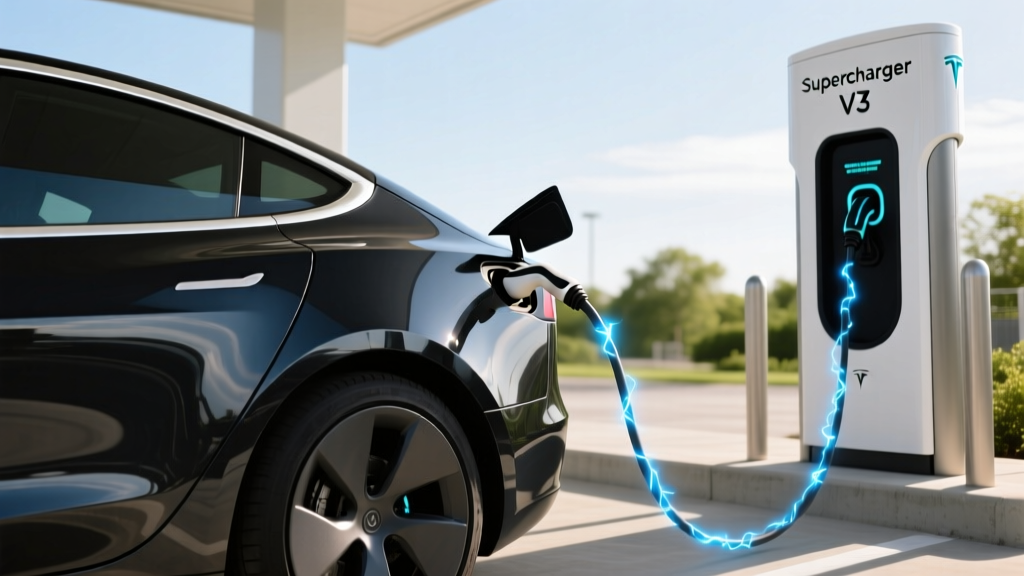
Practical advice: If you're buying a new EV in 2026, NACS is the clear trajectory. Tesla's Supercharger network — now open to NACS-equipped vehicles from Ford, GM, Rivian, and others via the Supercharger network — offers over 25,000 stalls in North America with industry-leading uptime. If your EV still has CCS1, purchase a high-quality NACS adapter (such as the Lectron or A2Z adapter rated for 250 kW) to unlock Supercharger access on road trips.
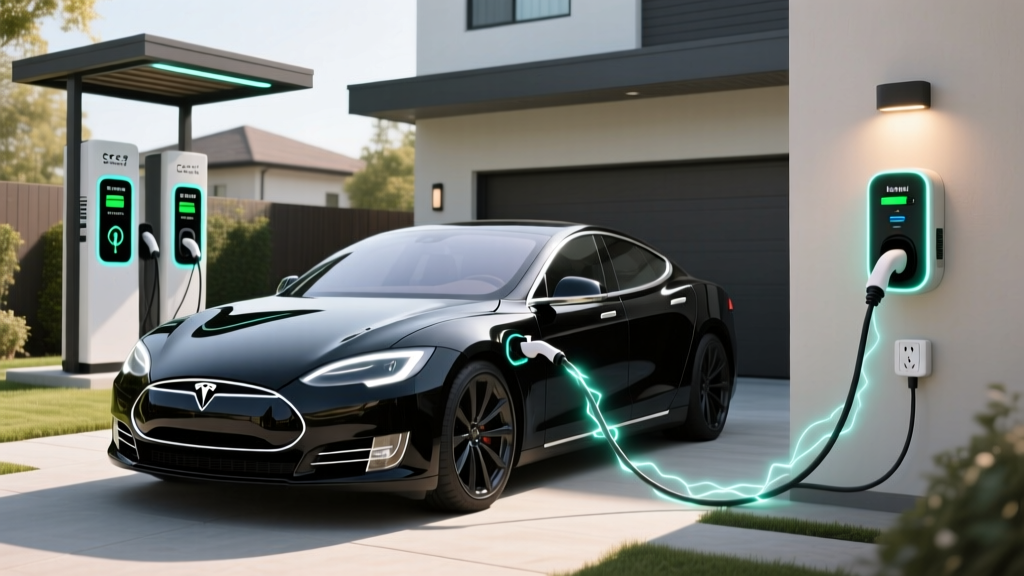
For home charging, Level 2 chargers use either a NACS plug or a J1772 plug (the legacy Level 2 standard). Most 2026 smart chargers ship with NACS or offer J1772-to-NACS adapter compatibility. Confirm your vehicle's AC charging port before ordering.
How Much Does Charging Cost Per Mile vs. Gas?
The economics of EV charging depend heavily on where and when you charge. Home charging on an off-peak utility rate is dramatically cheaper than DC fast charging on a road trip — and both are typically cheaper than gasoline on a per-mile basis.
| Scenario | Avg. $/kWh | Vehicle Efficiency | Cost Per Mile | Annual Cost (12,000 mi) |
|---|---|---|---|---|
| Home, off-peak utility rate | $0.08–$0.14 | 3.0 mi/kWh (avg BEV) | $0.03–$0.05 | $360–$600 |
| Home, standard residential rate | $0.15–$0.20 | 3.0 mi/kWh | $0.05–$0.07 | $600–$840 |
| Public Level 2 (workplace, mall) | $0.20–$0.35 | 3.0 mi/kWh | $0.07–$0.12 | $840–$1,440 |
| DC Fast Charging (Electrify America, EVgo, etc.) | $0.35–$0.55 | 3.0 mi/kWh | $0.12–$0.18 | $1,440–$2,160 |
| Gasoline vehicle (28 MPG combined, $3.40/gal) | — | 28 MPG | $0.12 | $1,440 |
Key takeaway: If you charge primarily at home on a time-of-use plan (shifting charging to overnight off-peak hours), your fuel cost is roughly 75% lower than an equivalent gas vehicle. If you rely exclusively on DC fast charging — as apartment dwellers without home charging access might — your costs approach or slightly exceed gasoline. This is why home charging access is the single biggest factor in EV ownership satisfaction.
For the most accurate efficiency data on specific models, the EPA's fueleconomy.gov lists kWh/100mi and MPGe ratings for every EPA-certified EV sold in the US.
Charging Time Examples: 10–80% for Common Battery Sizes
Charging from 10% to 80% SoC is the standard benchmark because charging slows dramatically above 80% to protect battery health (the "charge curve taper"). Here are representative times for common 2026 battery sizes:
- 60 kWh battery (e.g., base Hyundai Kona Electric): ~18 minutes at a 150 kW DC fast charger; ~4.5 hours on a 48A Level 2 home charger.
- 75 kWh battery (e.g., Tesla Model Y Long Range): ~15–20 minutes at a 250 kW Supercharger; ~5.5 hours on a 48A Level 2 home charger.
- 84 kWh battery (e.g., Ford F-150 Lightning Extended Range): ~25–30 minutes at a 150 kW charger; ~6 hours on a 48A Level 2 home charger.
- 100 kWh battery (e.g., GMC Sierra EV, Lucid Air): ~20–25 minutes at a 350 kW charger (800V architecture); ~7.5 hours on a 48A Level 2 home charger.
Charge curve taper matters: A vehicle rated for "250 kW peak" typically sustains that rate only between roughly 10–30% SoC. From 30–60%, power may drop to 150–180 kW, and from 60–80% it often falls to 50–80 kW. This is why a 10–80% time is more meaningful than a peak kW number. Cold weather (below 32°F / 0°C) can increase 10–80% times by 20–40% unless the vehicle has active battery preconditioning — a feature that warms the battery before you arrive at the charger.
Recommended Home Level 2 Chargers for 2026
After testing and tracking reliability data across major brands, here are three chargers that cover most EV owners' needs:
Emporia Vue Level 2 Smart Charger
- Power Output: 48A (11.5 kW), hardwired on 60A circuit
- Connector: NACS (J1772 version also available)
- Cable Length: 24 feet
- Smart Features: Wi-Fi, app-based scheduling, energy monitoring, solar integration, load management
- Price: ~$400
- Best for: Budget-conscious buyers who want smart scheduling and energy tracking without a subscription
ChargePoint Home Flex (2nd Gen)
- Power Output: Up to 50A (12 kW), configurable from 16A–50A via dip switches
- Connector: NACS or J1772 (configurable)
- Cable Length: 23 feet
- Smart Features: Wi-Fi, Alexa integration, ChargePoint app scheduling, flexible amperage for older panels
- Price: ~$550
- Best for: Homes where the electrician recommends a lower amperage circuit (e.g., 40A) — the Flex can be dialed down without replacing hardware
Tesla Wall Connector
- Power Output: 48A (11.5 kW), hardwired on 60A circuit
- Connector: NACS (native Tesla); J1772 adapter included for non-Tesla EVs
- Cable Length: 24 feet
- Smart Features: Wi-Fi, over-the-air updates, power sharing between two units on one circuit, Tesla app integration
- Price: ~$475
- Best for: Tesla owners or mixed-EV households (the included J1772 adapter handles non-Tesla vehicles)
All three chargers are NEMA 4-rated for outdoor installation, UL-listed for safety, and compatible with utility demand-response programs that can lower your electricity rate during peak grid events.
Safety, Electrical Code, and Installation Best Practices
EV charging draws sustained high current for hours — unlike a dryer or oven that cycles on and off. This makes proper installation non-negotiable:
- Dedicated circuit: Your Level 2 charger must be on its own dedicated breaker. Sharing a circuit with other appliances risks nuisance tripping and fire hazard. Per NEC 625, continuous loads (defined as 3+ hours) must be derated to 80% of breaker capacity — a 60A breaker supports a maximum 48A continuous draw.
- GFCI protection: The 2023 NEC (adopted by most jurisdictions by 2026) requires GFCI protection for all EV charging outlets. Hardwired chargers with built-in ground-fault protection satisfy this requirement. If you install a NEMA 14-50 receptacle instead of hardwiring, a GFCI breaker is required — these cost $80–$150 more than standard breakers.
- Outdoor rating: If your charger is mounted outdoors or in an unsealed garage, ensure it carries a NEMA 4 or NEMA 4X rating (weatherproof). All three chargers recommended above meet this standard.
- Permit and inspection: Every jurisdiction requires an electrical permit for EV charger installation. The inspection verifies wire gauge, breaker sizing, grounding, and GFCI compliance. Skipping the permit can void homeowner's insurance coverage for electrical fires and creates problems during home resale.
- Wire gauge: A 60A circuit requires 6 AWG copper wire (THHN in conduit) or 4 AWG NM-B (Romex). Your electrician will determine the correct gauge based on run length and local code amendments.
A note on NEMA 14-50 receptacles vs. hardwiring: A 14-50 outlet gives you the flexibility to unplug and take your charger when you move, or to plug in a welder or RV. However, hardwired installations are generally more reliable (no plug-receptacle connection to corrode or overheat), and many utility rebates require hardwiring. For most homeowners who plan to stay in their home 5+ years, hardwired is the better choice.
Frequently Asked Questions
How many charging stations do I need at home?
Most single-EV households need exactly one Level 2 home charger. If you have two EVs, consider installing a single high-amperage charger with a power-sharing feature (such as the Tesla Wall Connector's load-sharing mode) or two chargers on separate circuits. For most families, one 48A charger charging overnight is sufficient for two vehicles driven under 40 miles each per day.
How fast will each charging level add range?
Level 1 (120V) adds 3–5 miles per hour. Level 2 (240V, 48A) adds roughly 30–40 miles per hour for an average-efficiency EV. DC fast charging can add 150–300 miles in 20–30 minutes, depending on peak power, battery size, and the vehicle's charge curve. Always plan around 10–80% times rather than peak kW ratings.
What electrical upgrades might I need for a home charger?
The most common upgrade is a panel service increase from 100A to 200A, which costs $1,500–$4,000. You may also need a new breaker slot, a sub-panel if the charger is far from the main panel (e.g., a detached garage), or a meter-main replacement if your utility requires a meter socket upgrade for the additional load. A licensed electrician's load calculation will determine exactly what's needed.
Can I use a Tesla Supercharger with a non-Tesla EV?
Yes — if your EV has a native NACS port (most 2025+ models from Ford, GM, Rivian, and others) or you have a CCS1-to-NACS adapter. Tesla has opened thousands of Supercharger stalls to non-Tesla NACS vehicles, and the network's reliability remains the strongest in the industry. Check Tesla's Supercharger map for compatible locations in your area.
How much does charging cost per mile compared to gas?
Home charging at off-peak rates costs $0.03–$0.05 per mile — roughly 75% less than a 28 MPG gas vehicle at $3.40/gallon ($0.12/mile). Public DC fast charging at $0.35–$0.55/kWh costs $0.12–$0.18 per mile, which is comparable to or slightly more than gasoline. Maximizing home charging is the key to EV cost savings.