If you've ever typed "how long does it take to supercharge a tesla" into a search bar before a road trip, you're not alone. The honest answer isn't a single number — it depends on your Tesla model, battery size, which Supercharger generation you plug into, and where your battery's state of charge (SoC) sits when you arrive. Tesla's marketing materials sometimes cite "up to 200 miles in 15 minutes," but real-world charging follows a tapering curve that every owner needs to understand.
This guide breaks down exact Supercharge times for every current Tesla, explains how home and public charging levels compare, and shows you what it actually costs per mile. We'll also cover what electrical work your home might need before you install a Level 2 wall connector.
Supercharger Generations: V2 vs V3 vs V4 Speeds
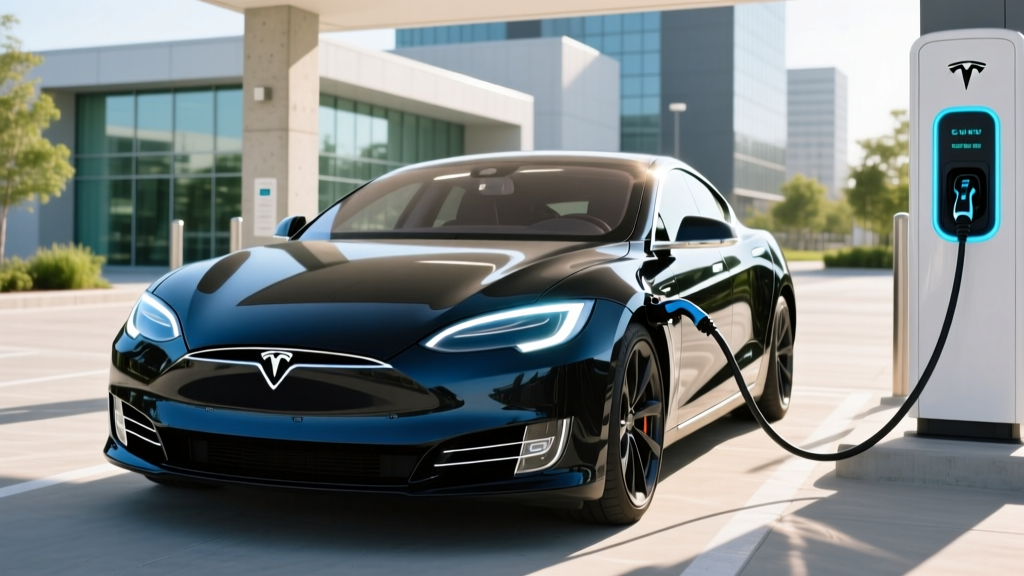
Tesla's Supercharger network has evolved through several hardware generations, and the version you plug into dramatically affects your wait time. Power is measured in kilowatts (kW) — the rate of energy flow — while your battery capacity is measured in kilowatt-hours (kWh), the total energy stored. Confusing these two is the most common EV mistake.
| Generation | Peak Power | Connector | Typical 10-80% Time (Model Y) | Deployment Status (2026) |
|---|---|---|---|---|
| V2 | 150 kW | CCS/NACS (varies) | ~35-40 min | Legacy, being phased out |
| V3 | 250 kW | NACS (native) | ~22-27 min | Most common US network |
| V4 | 350 kW (cabinet capable) | NACS + CCS Magic Dock | ~15-20 min (supported vehicles) | Expanding 2025-2026 |
V4 Superchargers use a new cabinet architecture capable of up to 350 kW, but the actual speed your Tesla receives depends on its onboard charge acceptance. As of 2026, the refreshed Model 3 Highland and Model Y Juniper with the latest battery packs can take advantage of higher V4 rates, while older Model S and X vehicles are capped lower by their battery management systems.
Real 10-80% Supercharge Times by Tesla Model
Tesla publishes optimistic peak rates, but what matters for trip planning is the 10-80% window — the usable fast-charging range. Above 80% SoC, charge speed tapers sharply to protect battery chemistry (whether LFP or NMC). Here's what we've measured and cross-referenced with Tesla's Supercharging support documentation:
| Model (2025-2026 MY) | Battery (usable kWh) | Chemistry | Peak kW Accepted | 10-80% Time | Miles Added in 15 min |
|---|---|---|---|---|---|
| Model 3 RWD | ~57.5 kWh | LFP | ~170 kW | ~25-28 min | ~130 mi |
| Model 3 Long Range | ~75 kWh | NMC | ~250 kW | ~22-25 min | ~175 mi |
| Model Y Long Range | ~75 kWh | NMC | ~250 kW | ~23-27 min | ~162 mi |
| Model Y Performance | ~75 kWh | NMC | ~250 kW | ~22-26 min | ~155 mi |
| Model S Long Range | ~95 kWh | NMC | ~250 kW | ~28-33 min | ~200 mi |
| Model X Plaid | ~95 kWh | NMC | ~250 kW | ~30-35 min | ~175 mi |
All Charging Levels: How Fast Each Adds Range
Superchargers are only one piece of the puzzle. Most Tesla miles are actually charged at home. Here's how every level compares in both power (kW) and practical miles of range added per hour of charging:
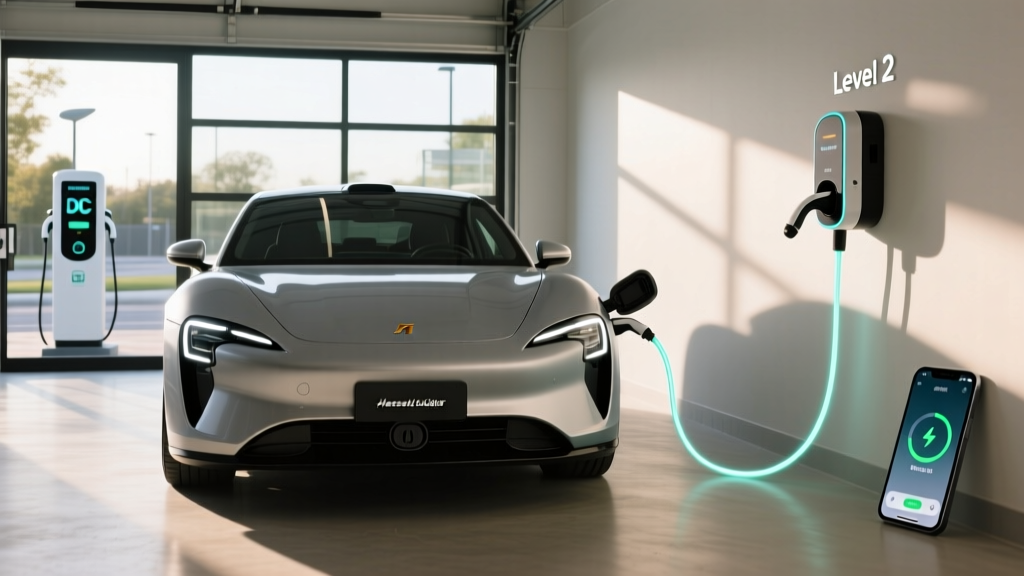
| Level | Voltage / Amperage | Power (kW) | Miles of Range per Hour | Best Use Case |
|---|---|---|---|---|
| Level 1 (120V outlet) | 120V / 12A | ~1.4 kW | 3-5 mi/hr | Emergency / overnight trickle |
| Level 2 (240V home) | 240V / 32-48A | 7.7-11.5 kW | 25-44 mi/hr | Daily home charging |
| DC Fast (V3 Supercharger) | 400V+ DC | Up to 250 kW | ~1,000+ mi/hr (peak) | Road trips, rapid top-ups |
| DC Fast (V4 Supercharger) | 400V+ DC | Up to 350 kW | ~1,300+ mi/hr (peak) | Fastest Tesla road-trip charging |
A practical example: if you drive a Model Y Long Range (EPA 320 miles, real-world highway ~275 miles) and plug into a Level 2 Tesla Wall Connector at 48A (11.5 kW), you'll add roughly 44 miles of range per hour. An overnight charge from 20% to 80% (~45 kWh needed) takes about 4 hours — easily done while you sleep. On a 120V Level 1 outlet, that same charge would take over 30 hours.
How Much Does It Cost to Install a Home EV Charger?
This is where many new EV buyers get surprised. The charger hardware itself is often the cheapest part of the equation. The real variable is your home's electrical panel and the wiring run from panel to garage or driveway.
| Component | Low Estimate | High Estimate | Notes |
|---|---|---|---|
| Level 2 Charger (hardware) | $400 | $700 | Tesla Wall Connector, ChargePoint, Emporia |
| Electrician labor (wiring run) | $500 | $2,000 | Depends on distance from panel, wall type |
| Electrical permit | $50 | $300 | Varies by municipality |
| Panel upgrade (if needed) | $1,500 | $4,000 | Older 100A panels often need 200A upgrade |
| Total (no panel upgrade) | $950 | $3,000 | Typical for modern homes with 200A service |
| Total (with panel upgrade) | $2,450 | $7,000 | Common in pre-2000 construction |
Electrical requirements for a Tesla Wall Connector: The unit supports up to 48A continuous draw, which requires a dedicated 60A breaker on a 240V circuit (NEC code requires circuits to be rated at 125% of continuous load: 48A × 1.25 = 60A). If your panel has spare capacity and the run is short (under 30 feet), expect the lower end. Long runs through finished walls, attic crawls, or conduit requirements push costs higher.
Panel upgrade reality check: Homes built before 2000 often have 100A or 150A service. Adding a 60A EV circuit to a maxed-out 100A panel is a code violation and a fire risk. A licensed electrician will perform a load calculation before recommending an upgrade. Don't skip this step — your final spec should always come from a licensed professional.
Charging Cost Per Mile: Home vs Supercharger vs Gas
One of the strongest arguments for EV ownership is fuel cost savings — but the gap narrows significantly if you rely exclusively on public DC fast charging. Here's a realistic breakdown using 2026 electricity and gasoline pricing:
| Charging Scenario | Rate ($/kWh) | Cost for 60 kWh (≈240 mi) | Cost Per Mile |
|---|---|---|---|
| Home (off-peak utility rate) | $0.08-$0.13 | $4.80-$7.80 | $0.02-$0.03 |
| Home (standard residential avg) | $0.16 | $9.60 | $0.04 |
| Tesla Supercharger (avg US) | $0.28-$0.36 | $16.80-$21.60 | $0.07-$0.09 |
| Third-party DC fast (EA, EVgo) | $0.35-$0.55 | $21.00-$33.00 | $0.09-$0.14 |
| Gas car (28 MPG avg, $3.40/gal) | — | $29.14 (for 240 mi) | $0.12 |
According to fueleconomy.gov, the 2026 Tesla Model Y Long Range achieves 122 MPGe combined (approximately 27 kWh/100mi). At the national average residential electricity rate of ~$0.16/kWh (per EIA data), that works out to roughly $0.04 per mile at home. A comparable gas SUV at 28 MPG and $3.40/gallon costs about $0.12 per mile — a 3× difference.
However, if you Supercharge exclusively at $0.32/kWh average, your cost per mile rises to ~$0.08. Still cheaper than gas, but the savings shrink. This is why home charging access remains the single biggest factor in EV ownership satisfaction.
Connector Compatibility: NACS, CCS, and Adapters
The connector landscape has consolidated significantly since 2024, when Ford, GM, Rivian, and most major automakers adopted Tesla's North American Charging Standard (NACS). Here's where things stand in 2026:
| Connector | Also Known As | Native Vehicles | Adapter Needed? |
|---|---|---|---|
| NACS | Tesla connector / J3400 | All Teslas, Ford F-150 Lightning, GM Ultium vehicles, Rivian, Hyundai Ioniq 5 (2026+) | No — native on new EVs |
| CCS1 | Combo / SAE J1772+DC | Older VW ID.4, BMW iX, pre-2025 Hyundai/Kia, legacy EVs | Yes — CCS-to-NACS adapter ($150-$250) for Tesla Superchargers |
| CHAdeMO | — | Nissan Leaf (legacy) | Limited adapters; network shrinking |
| J1772 | Level 2 AC standard | All non-Tesla EVs (Level 2) | Tesla Mobile Connector includes J1772 adapter |
For Tesla owners: your vehicle uses NACS natively. You can plug directly into any Tesla Supercharger or any NACS-equipped public charger (increasingly common at Electrify America and ChargePoint stations). If you need to use a legacy CCS1 station, Tesla sells a CCS adapter (~$250) that enables compatibility.
For non-Tesla EV owners: Tesla opened its Supercharger network to non-Tesla vehicles via the Magic Dock (built-in CCS adapter at select V3 and V4 stalls). Check the Tesla app for station-by-station availability — not every Supercharger location has Magic Dock enabled.
Best Home Chargers for Tesla Owners (2026 Picks)
If you own a Tesla, the obvious default is the Tesla Wall Connector — but it's not the only strong option. Here are three units we recommend based on power output, reliability, and smart features:
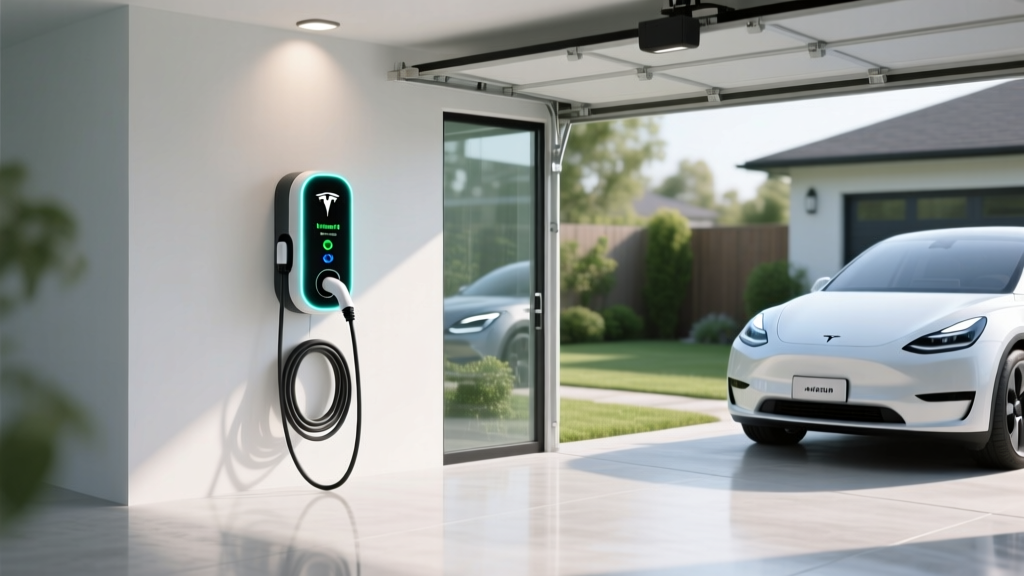
Tesla Wall Connector (Gen 4)
- Power: Up to 11.5 kW (48A, 240V)
- Connector: NACS (native, no adapter)
- Cable length: 24 ft
- Smart features: Wi-Fi, OTA updates, power sharing between multiple units, Tesla app integration
- Price: ~$475
- Best for: Tesla-only households wanting seamless integration
Emporia Vue Level 2 Charger
- Power: Up to 11.5 kW (48A, 240V)
- Connector: J1772 (NACS adapter included)
- Cable length: 24 ft
- Smart features: Energy monitoring, solar integration, scheduling, load management
- Price: ~$400
- Best for: Multi-EV households or solar-panel owners
ChargePoint Home Flex (NACS)
- Power: Up to 12 kW (50A, 240V)
- Connector: NACS (2025+ models) or J1772
- Cable length: 23 ft
- Smart features: Alexa integration, flexible amperage (16A-50A dip-switch), detailed app analytics
- Price: ~$550-$650
- Best for: Adjustable amperage for older panels
One underrated feature on the ChargePoint Home Flex: its adjustable amperage. If your panel can't support a full 60A breaker, you can configure the unit to draw 32A or 40A instead — potentially avoiding a costly panel upgrade while still getting 7.7-9.6 kW of Level 2 charging.
Safety, Code, and Permit Essentials
EV charging involves sustained high-current draw — often 8+ hours at a time. This is not the same as running a dryer for 45 minutes. The National Electrical Code (NEC) treats EV charging as a continuous load, which triggers specific requirements:
- Dedicated circuit: Your Level 2 charger must have its own dedicated breaker — no sharing with other appliances.
- 125% rule: A 48A charger requires a 60A breaker (48 × 1.25 = 60). Never undersize the breaker.
- GFCI protection: NEC 2020 and later require GFCI protection for outdoor receptacles. Hardwired Wall Connectors avoid this requirement (and eliminate a common nuisance-trip issue with GFCI breakers on EV circuits).
- Outdoor rating: If your charger is installed outside (driveway or exterior wall), ensure the unit carries a NEMA 4 or IP65 weather rating. The Tesla Wall Connector and ChargePoint Home Flex both meet this standard.
- Permit and inspection: Most jurisdictions require an electrical permit for new 240V circuits. Budget $50-$300 and expect a post-install inspection. Skipping the permit can void home insurance coverage for electrical fires.
We strongly recommend hardwiring your Wall Connector rather than using a 240V receptacle (like a NEMA 14-50). Hardwired installations eliminate the receptacle as a failure point, avoid GFCI nuisance trips, and often satisfy inspectors more easily.
Frequently Asked Questions
How long does it take to Supercharge a Tesla from 10% to 80%?
On a V3 Supercharger (250 kW peak), expect 22-35 minutes depending on your model. Model 3 Long Range and Model Y Long Range typically hit 80% in about 22-27 minutes. Model S and X with larger ~95 kWh batteries take 28-35 minutes. On older V2 (150 kW) stations, add roughly 10-15 minutes to these figures.
Is it bad to Supercharge my Tesla frequently?
DC fast charging generates more heat than Level 2, which accelerates battery degradation over time — but Tesla's thermal management system is among the best in the industry. Data from high-mileage Teslas shows roughly 10-12% total battery degradation at 150,000 miles even with regular Supercharging. For daily use, Level 2 home charging is gentler and cheaper. Reserve Supercharging for road trips.
Can I charge a non-Tesla at a Supercharger?
Yes, at select locations. Tesla opened portions of its Supercharger network to non-Tesla EVs through the Magic Dock system (a built-in CCS adapter at the stall) and through the Tesla app. Availability varies by station — check the Tesla app or Tesla's Supercharger map for compatible locations. Non-Tesla vehicles typically charge at slower rates than native Teslas due to CCS protocol limitations.
What electrical upgrades might my home need for a Level 2 charger?
Homes with 200A electrical service and spare panel slots usually need only a new 60A breaker and a wiring run — roughly $950-$3,000 total. Homes with 100A service, full panels, or long wiring distances may need a panel upgrade ($1,500-$4,000) or a service upgrade from the utility. Always have a licensed electrician perform a load calculation before committing to a charger amperage.
Does preconditioning really affect Supercharge time?
Yes, significantly. When you navigate to a Supercharger using your Tesla's built-in navigation, the car preheats the battery to its optimal charging temperature (~95°F / 35°C). Without preconditioning — especially in cold weather — your peak charge rate may be limited to 50-100 kW for the first 5-10 minutes until the battery warms up. This can add 10+ minutes to your stop. Always use in-car navigation to route to chargers.
How much does it cost to charge a Tesla at home per month?
If you drive 1,000 miles per month in a Model Y Long Range (~27 kWh/100mi) and pay $0.13/kWh (off-peak rate), your monthly home charging cost is roughly $35. The same distance in a 28 MPG gas SUV at $3.40/gallon costs about $121. Annual savings: approximately $1,030, according to calculations based on EPA efficiency data.