If you've searched "how long does supercharger take" you're likely weighing an EV purchase or planning your first road trip. The short answer: a Tesla Supercharger or comparable DC fast charger can add 150–200+ miles of range in roughly 15–25 minutes on a modern EV — but the real number depends on your battery size, state of charge, ambient temperature, and the charger's actual power delivery. Below, we break down every charging level with exact figures, costs, and the home-installation realities that most guides gloss over.
The Three Charging Levels: Speed, Power, and Real-World Range Added
Before we get into times, let's nail the terminology that trips up most new EV owners. kW (kilowatts) measures power — the rate at which energy flows into your battery. kWh (kilowatt-hours) measures energy — the total capacity of your battery, like gallons in a gas tank. A 250 kW charger delivering power to an 80 kWh battery is like a high-flow pump filling a 20-gallon tank.
| Level | Voltage / Phase | Max Power (kW) | Miles of Range Added Per Hour | Typical Use Case |
|---|---|---|---|---|
| Level 1 | 120V AC / 1-phase | 1.4–1.9 kW | 3–5 mi/hr | Overnight trickle; PHEV top-ups |
| Level 2 | 240V AC / 1-phase | 3.3–19.2 kW | 12–75 mi/hr | Home daily charging; workplace; destination |
| DC Fast (incl. Supercharger) | 200–900V DC | 50–350+ kW | 150–1,000+ mi/hr (at peak) | Road trips; quick top-ups; commercial fleets |
The "miles per hour" column assumes an average EV efficiency of 3–4 mi/kWh (roughly 85–110 MPGe combined). Highly efficient sedans like the Tesla Model 3 or Hyundai Ioniq 6 will gain more miles per kW than a heavy truck like the Ford F-150 Lightning or Rivian R1T.
So, How Long Does a Supercharger Actually Take?
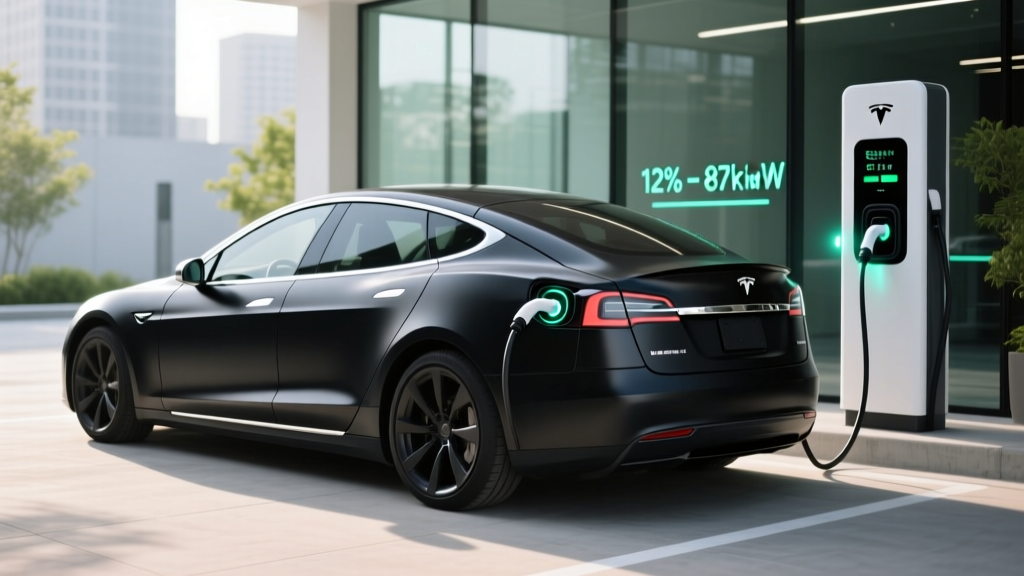
Tesla Superchargers now span three generations: V2 (150 kW peak), V3 (250 kW peak), and the newest V4 (up to 350 kW peak for compatible vehicles with 800V architectures). Non-Tesla DC fast networks from Electrify America, EVgo, and ChargePoint offer comparable or higher peak rates. But peak kW is not sustained kW — and this is where marketing misleads.
The Charge Curve Reality
Every lithium-ion battery follows a declining charge curve. You'll hit peak power between roughly 10–30% state of charge (SoC), then taper begins. By 80% SoC, most EVs throttle to under 50 kW to protect the battery from lithium plating and heat damage. This is why the industry standard measurement is 10–80% charge time — it's the usable fast-charging window.
| Battery Size (usable kWh) | Example Vehicles | 250 kW DC Fast (10–80%) | 150 kW DC Fast (10–80%) | 50 kW DC Fast (10–80%) |
|---|---|---|---|---|
| ~55–60 kWh | Tesla Model 3 RWD, Chevy Equinox EV | ~18–22 min | ~25–30 min | ~55–65 min |
| ~75–82 kWh | Tesla Model Y LR, BMW i4 eDrive40, Ford Mustang Mach-E ER | ~22–28 min | ~30–40 min | ~75–90 min |
| ~100–131 kWh | Tesla Model S, Ford F-150 Lightning ER, GMC Sierra EV | ~28–38 min | ~40–55 min | ~100–130 min |
| ~84–100 kWh (800V) | Hyundai Ioniq 5, Kia EV6, Porsche Taycan | ~18 min (350 kW capable) | ~25–30 min | ~80–100 min |
Real-world caveat: Cold batteries (below ~50°F / 10°C) can slow charging by 20–40% unless you precondition. Always use your EV's built-in navigation to route to the charger — this triggers battery preconditioning automatically on most modern EVs, warming the pack to its ideal charging temperature before you arrive.
Home Charger Installation: Costs, Electrical Requirements, and Panel Upgrades
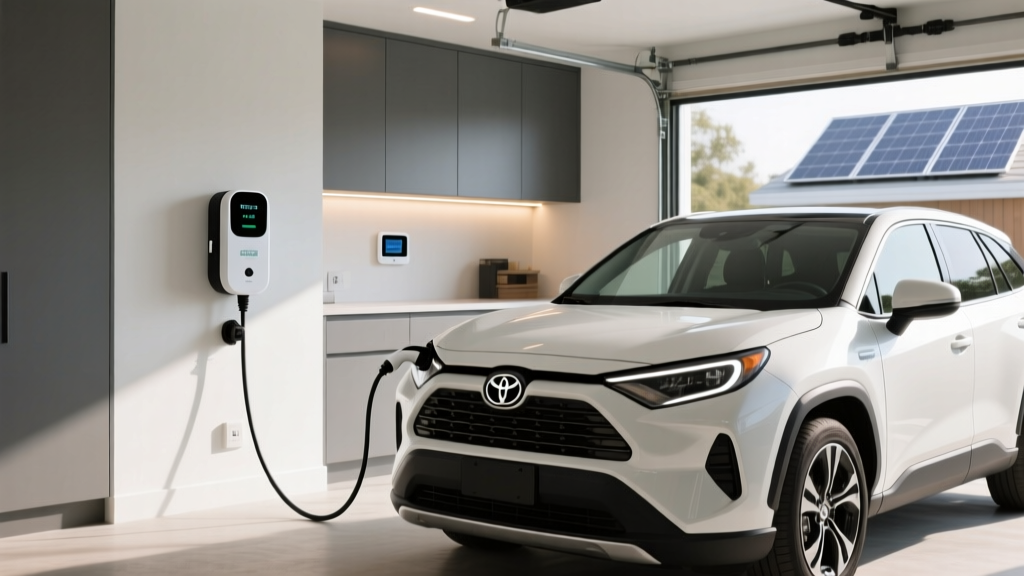
Most EV owners do 80–90% of their charging at home on a Level 2 charger. A proper Level 2 setup delivers 7.7–11.5 kW (32A–48A on a 240V circuit), adding 25–45 miles of range per hour — more than enough to replenish a full night's driving in 4–8 hours.
Electrical Requirements
- Circuit: A dedicated 240V circuit, typically 40A, 50A, or 60A breaker (the charger's continuous draw must be 80% of the breaker rating per NEC Article 625 — so a 48A charger needs a 60A breaker).
- Wiring: 6 AWG copper for 40–50A circuits; 4 AWG for 60A runs. Longer runs (over ~100 ft from panel) may require thicker wire to limit voltage drop.
- Outlet vs. hardwired: A NEMA 14-50 outlet offers portability; hardwired units support higher amperage and avoid GFCI breaker nuisance-tripping issues common with 14-50 receptacles on EV loads.
- Permit: Most jurisdictions require an electrical permit and inspection for new 240V EV circuits. Your electrician pulls this — budget $50–$250 for the permit fee.
| Item | Low Estimate | High Estimate | Notes |
|---|---|---|---|
| Level 2 Charger (Equipment) | $350 | $750 | Smart Wi-Fi chargers, 32A–48A |
| Electrician Labor + Materials | $500 | $2,500 | Depends on run length, wall type, conduit |
| Electrical Permit | $50 | $250 | Varies by municipality |
| Panel Upgrade (if needed) | $1,500 | $4,500 | 100A → 200A service; older homes only |
| Total (no panel upgrade) | $900 | $3,500 | Most homes with 200A service |
| Total (with panel upgrade) | $2,400 | $8,000 | Homes with 100A or maxed-out panels |
Panel upgrade reality check: If your home has a 100-amp electrical panel (common in homes built before the 1990s), adding a 40–60A EV circuit may max out your service — especially if you also run electric HVAC, a dryer, and an electric range simultaneously. A licensed electrician will perform a load calculation per NEC Article 220. If you're near capacity, a panel upgrade to 200A is the long-term fix. Some homeowners opt for a smart load-management device (like the Emporia VUE with automatic load shedding) to avoid the panel upgrade, but check local code — not all jurisdictions accept these in lieu of a full calculation.
Federal Tax Credit for Home Charging
The IRS §30D alternative fuel vehicle refueling property credit covers 30% of home charger equipment and installation costs, up to $1,000, for qualifying installations placed in service. However, eligibility depends on whether your census tract meets certain low-income or non-urban criteria. Always verify current-year rules on IRS.gov and consult a tax professional — rules change and interact with your specific return.
Connector Compatibility: NACS, CCS, CHAdeMO, and Adapters
The connector landscape in North America has consolidated significantly since 2024, but your EV's port still dictates where you can plug in natively.
| Connector | Brands Using It (Native) | DC Fast Max kW | Adapter Needed for Superchargers? |
|---|---|---|---|
| NACS (North American Charging Standard) | Tesla (all), Ford (2025+), GM (2025+), Rivian (2025+), Hyundai/Kia/Volvo/Polestar (2025–2026+) | Up to 350 kW (V4) | No — native on new models |
| CCS1 (Combined Charging System) | VW ID.4 (pre-2026), BMW i4/iX, older Hyundai/Kia models, Ford (pre-2025), most Stellantis | Up to 350 kW | Yes — CCS-to-NACS adapter (~$150–$250) for Tesla Superchargers |
| CHAdeMO | Nissan LEAF (legacy), Mitsubishi Outlander PHEV (legacy) | Up to 100 kW | Not compatible with NACS/CCS networks; limited new infrastructure |
Key takeaway: NACS has become the dominant North American standard. If you're buying a new EV in 2026, nearly every major automaker now ships with a native NACS port or includes a CCS-to-NACS adapter. Verify adapter compatibility with your specific model year before relying on Tesla Superchargers — not all adapters support full V3/V4 charge rates.
What Does EV Charging Cost Per Mile vs. Gas?
This is where EV ownership economics shine — or sting — depending on where you charge. Let's compare a mid-efficiency EV (3.5 mi/kWh, roughly 115 MPGe) against a comparable gas car (28 MPG combined) with gas at $3.40/gallon (2026 national average).
| Charging Scenario | Price per kWh | Cost per Mile (EV) | Savings vs. Gas (28 MPG) |
|---|---|---|---|
| Home, off-peak utility rate | $0.08–$0.13/kWh | $0.023–$0.037/mi | Save $0.084–$0.098/mi (70–81%) |
| Home, standard residential rate | $0.14–$0.18/kWh | $0.040–$0.051/mi | Save $0.070–$0.081/mi (58–67%) |
| Home, time-of-use peak rate | $0.25–$0.35/kWh | $0.071–$0.100/mi | Save $0.021–$0.050/mi (17–41%) |
| Public Level 2 (workplace/mall) | $0.20–$0.35/kWh | $0.057–$0.100/mi | Save $0.021–$0.064/mi (17–53%) |
| DC Fast (Electrify America, EVgo, Tesla) | $0.30–$0.55/kWh | $0.086–$0.157/mi | Save $0.000–$0.035/mi (0–29%) |
| Gas baseline: $3.40/gal ÷ 28 MPG = $0.121/mi | |||
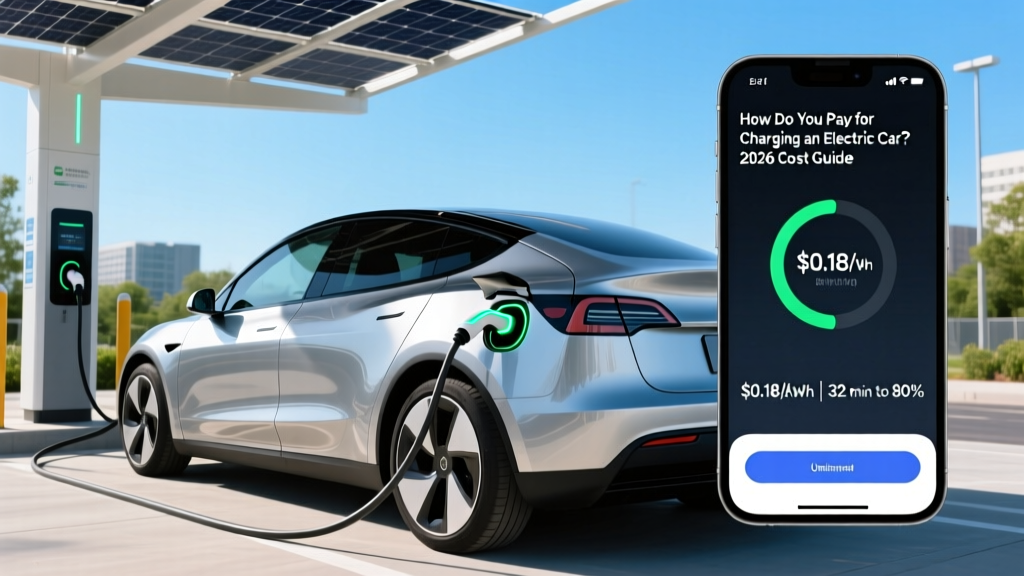
The bottom line: If you charge at home on off-peak rates, you'll pay roughly 3¢ per mile — a 75% savings over gas. If you rely exclusively on DC fast charging at $0.48/kWh, your cost per mile approaches or even exceeds that of a fuel-efficient gas car. Home charging access is the single biggest economic variable in EV ownership. According to fueleconomy.gov, the average EV driver who charges primarily at home saves $800–$1,300 annually on fuel compared to a 25 MPG gas vehicle.
Recommended Home Level 2 Chargers (2026)
After testing dozens of units across multiple households, these are the chargers we recommend based on reliability, power output, connector options, and smart features.
ChargePoint Home Flex
- Power: Up to 12 kW (50A) on a 60A circuit; configurable down to 16A for lower-capacity panels
- Connector: NACS or CCS1 (J1772) — order the version matching your EV
- Cable length: 23 feet
- Smart features: Wi-Fi, app scheduling, utility demand-response integration, Alexa
- Price: ~$549–$649
- Best for: Flexibility across amperages; strong app and scheduling
Tesla Wall Connector (Gen 4)
- Power: Up to 11.5 kW (48A) on a 60A circuit
- Connector: NACS native; J1772 adapter included
- Cable length: 24 feet
- Smart features: Wi-Fi, OTA firmware updates, power-sharing between multiple units, vehicle access control
- Price: ~$475
- Best for: Tesla owners or NACS-native EVs; cleanest integration with Tesla vehicles
Emporia Level 2 EV Charger
- Power: Up to 11.5 kW (48A) on a 60A circuit
- Connector: J1772 (NACS adapter available separately)
- Cable length: 24 feet
- Smart features: Wi-Fi, solar integration with Emporia VUE energy monitor, time-of-use scheduling, load management
- Price: ~$399
- Best for: Budget-conscious buyers with solar panels or those wanting whole-home energy visibility
Buying tip: Don't overspend on a charger that exceeds your EV's onboard charger limit. If your EV's AC onboard charger maxes at 7.7 kW (32A) — like the base Tesla Model 3 RWD — a 48A charger won't charge it any faster. Match the charger to your car's acceptance rate.
Safety and Electrical Code Considerations
EV charging draws sustained high current for hours — far longer than an oven or dryer cycle. This places unique demands on your electrical system.
- Dedicated circuit: NEC Article 625 requires EVSE (electric vehicle supply equipment) to be on its own dedicated circuit. Never share the circuit with other appliances.
- GFCI protection: The 2023 NEC (and most 2026 local adoptions) requires GFCI protection for outdoor receptacles used for EV charging. However, many EV manufacturers and electricians recommend hardwired installations to avoid nuisance GFCI trips, since EVSE units already include internal ground-fault protection. Check with your local AHJ (authority having jurisdiction).
- Outdoor rating: If mounting outdoors, ensure the charger carries a NEMA 4 or NEMA 4X rating for weather resistance. All three chargers recommended above are outdoor-rated.
- Cable management: Use a wall-mounted holster or retractable cable reel to prevent tripping hazards and protect the cable from UV and abrasion.
- Grounding and bonding: Your electrician must verify proper equipment grounding per NEC 250. Improper grounding is the most common cause of EVSE fault codes.
Always hire a licensed electrician familiar with NEC Article 625 (EV charging). General handymen may not understand the continuous-load derating rules, and improper installation can void your charger warranty and homeowner's insurance coverage.
Frequently Asked Questions
How much does it cost to install a home EV charger?
Expect $900–$3,500 for a typical Level 2 installation on an existing 200A panel, including equipment ($350–$750), electrician labor and materials ($500–$2,500), and permit fees ($50–$250). If your home needs a panel upgrade from 100A to 200A service, add $1,500–$4,500. The IRS §30D credit may cover 30% up to $1,000 of equipment and installation costs in qualifying census tracts — verify current eligibility at IRS.gov.
How fast will each charging level add range?
Level 1 (120V): 3–5 miles per hour. Level 2 (240V, 48A): 30–45 miles per hour depending on vehicle efficiency. DC fast charging (150–350 kW): can add 100–200+ miles in 15–25 minutes during the 10–80% window. These figures assume ~3.5 mi/kWh efficiency; heavier, less-efficient vehicles will add fewer miles per kW.
Which connector or charger is compatible with my EV?
Check your vehicle's charge port. For 2025–2026 model-year EVs, most new Teslas, Fords, GMs, Rivians, and an increasing number of Hyundai/Kia/Volvo models ship with a native NACS port. Older CCS1 vehicles can use a CCS-to-NACS adapter (~$150–$250) to access Tesla Superchargers. CHAdeMO (Nissan LEAF) is effectively legacy — new CHAdeMO infrastructure is scarce. For home Level 2 charging, all EVs accept a J1772 connector or a NACS connector, depending on the charger ordered.
How much does EV charging cost per mile compared to gas?
Charging at home on off-peak rates (~$0.10/kWh) costs roughly 3¢ per mile — about 75% less than a 28 MPG gas car at $3.40/gallon ($0.12/mi). Public DC fast charging at $0.40–$0.55/kWh costs 10–16¢ per mile, narrowing or eliminating the savings. Home charging access is the critical cost variable.
What electrical upgrades might I need for a home charger?
The most common upgrade is a panel service increase from 100A to 200A ($1,500–$4,500), needed in older homes or those with heavy existing electric loads. Other potential upgrades include: replacing a Federal Pacific or Zinsco panel (known safety hazards, $2,000–$4,000 replacement), adding a sub-panel if your main panel is full, or upgrading service entrance conductors. Your electrician's NEC Article 220 load calculation will determine what's required before any work begins.
Does cold weather slow down Supercharger charging?
Yes — significantly. A cold battery (below 50°F/10°C) can accept 20–40% less peak power until it warms up. On a 20°F morning, a 25-minute 10–80% session could stretch to 35–45 minutes without preconditioning. Always navigate to the charger using your EV's built-in nav — this triggers automatic battery preconditioning on Tesla, Hyundai/Kia E-GMP, BMW, and most modern platforms, warming the pack to its optimal ~95°F charge temperature before you arrive.
Why does charging slow down above 80%?
Lithium-ion batteries limit charge current at high states of charge to prevent lithium plating — a degradation mechanism where lithium ions deposit as metallic lithium on the anode instead of intercalating into it. This protects long-term battery health (your battery's State of Health, or SoH) but means the final 80–100% can take as long as the 10–80% session. For road trips, charge to 80% and drive on; only charge past 80% when you need the extra range to reach your destination or next stop.
Understanding how long a Supercharger takes — and how home, public, and DC fast charging compare — comes down to three numbers: your battery's kWh capacity, the charger's sustained kW delivery (not just the peak number on the sign), and your cost per kWh. With a properly installed home Level 2 charger, most EV owners wake up to a full battery every morning and use DC fast charging only on road trips, where a 20-minute stop for 150+ miles of range is comparable to a gas-station break when you factor in a rest stop and snack.