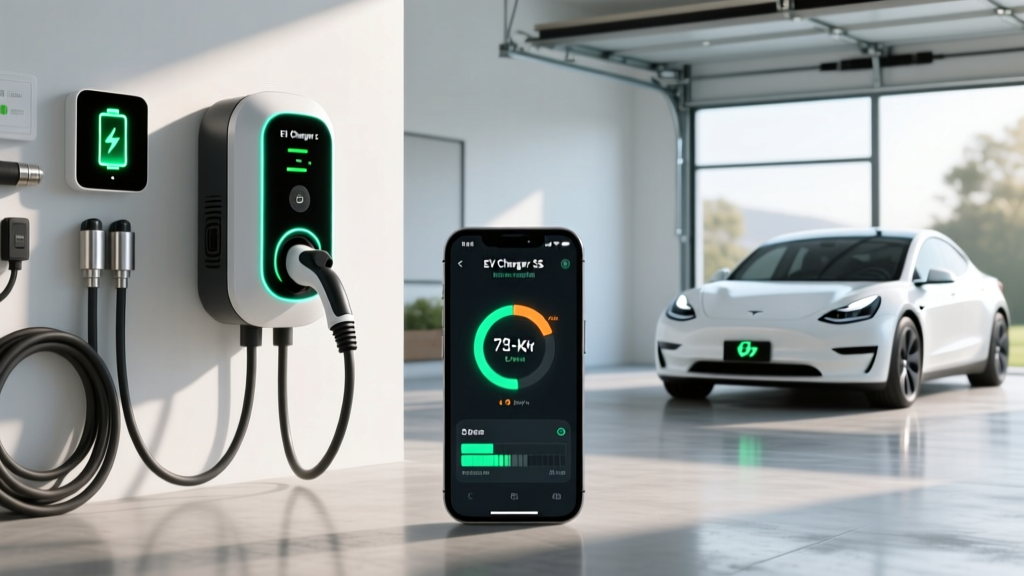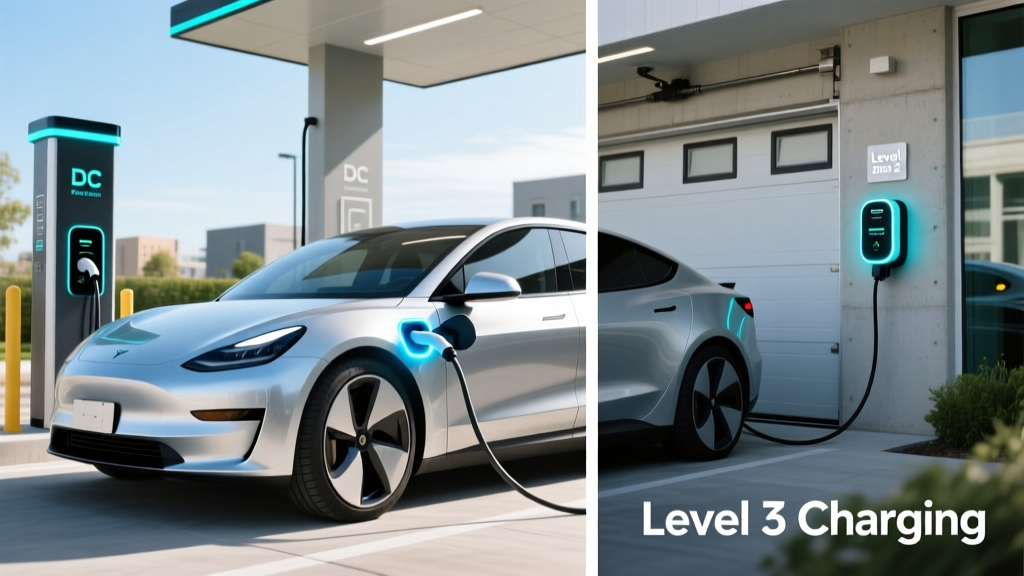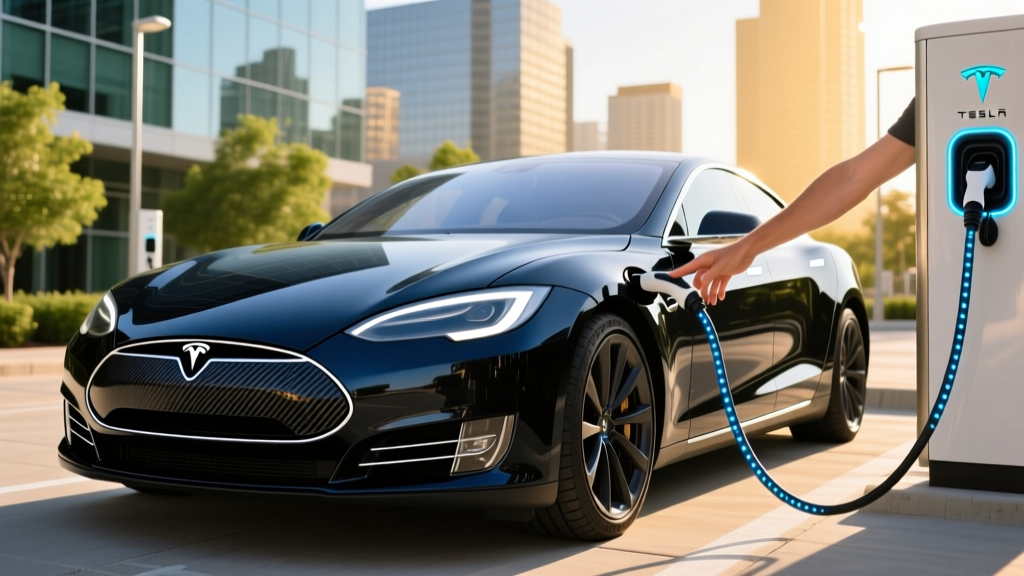
If you own a Tesla—or are about to buy one—the single most practical question is how long you'll spend plugged in. The answer depends entirely on which charging level you use, the size of your Tesla's battery pack, and the state of charge (SoC) when you plug in. Below, we break down real charging times for the current 2026 Tesla lineup (Model 3, Model Y, Model S, Model X, and Cybertruck), the home electrical upgrades you may need, what it actually costs per mile, and which Level 2 wall connectors are worth your money.
Charging Levels Explained: How Fast Will Each Add Range?
Tesla vehicles can charge at three distinct levels, each with dramatically different speeds. Here's what you'll actually experience:
| Level | Voltage / Amperage | Max Power (kW) | Miles of Range Per Hour | Best For |
|---|---|---|---|---|
| Level 1 (120V) | 120V / 12A | ~1.4 kW | 3–5 mi/hr | Overnight trickle, emergencies |
| Level 2 (240V) | 240V / 32–48A | 7.7–11.5 kW | 22–44 mi/hr | Daily home charging |
| DC Fast (Supercharger) | 400–800V DC | 150–250 kW | Up to 1,000+ mi/hr (peak) | Road trips, rapid top-ups |
Real-world context: Level 1 from a standard household outlet is painfully slow. Plugging a Model Y Long Range (75 kWh usable battery, ~320 miles EPA) into a 120V outlet overnight adds roughly 30–40 miles in 10 hours—barely enough for a short commute. Level 2 is the practical standard for daily ownership: a 48-amp, 240V circuit replenishes the same Model Y from 20% to 80% in about 5–6 hours, perfect for overnight charging. DC fast charging at a V3 Supercharger (250 kW peak) can take that same Model Y from 10% to 80% in roughly 25–30 minutes, though the charge curve tapers significantly above 80%.
How Long Does Charging a Tesla Take? Model-by-Model Breakdown
Charging times vary by battery size, onboard charger capacity, and the charging equipment. Below are realistic estimates for the current 2026 Tesla lineup using the most common scenarios.
| Model (2026) | Usable Battery (kWh) | EPA Range | Level 1 (120V): 20–80% | Level 2 (48A/240V): 20–80% | DC Fast (250 kW): 10–80% |
|---|---|---|---|---|---|
| Model 3 Long Range | ~75 kWh | 363 mi | ~38 hours | ~5.5 hours | ~25 min |
| Model Y Long Range | ~75 kWh | 320 mi | ~38 hours | ~5.5 hours | ~27 min |
| Model S Long Range | ~95 kWh | 402 mi | ~48 hours | ~7 hours | ~30 min |
| Model X Long Range | ~95 kWh | 348 mi | ~48 hours | ~7 hours | ~32 min |
| Cybertruck AWD | ~123 kWh | 340 mi | ~62 hours | ~9 hours | ~38 min |
The charge curve matters. DC fast charging doesn't sustain peak speed. A V3 Supercharger delivers 250 kW only between roughly 10–30% SoC, then tapers to ~150 kW through 50%, and drops below 75 kW above 80%. This is why manufacturers quote 10–80% times rather than 0–100%—the last 20% can take as long as the first 70%.
Home Charger Installation: Electrical Requirements & Cost
Installing a Level 2 home charger is the single best investment a Tesla owner can make. But costs vary enormously depending on your home's electrical panel, the distance from panel to charging location, and local permit requirements.
Electrical Requirements
A full-speed Tesla Wall Connector requires a 240V dedicated circuit with a 60-amp breaker, which delivers up to 48 amps continuous (11.5 kW). The National Electrical Code (NEC) requires that continuous loads not exceed 80% of the breaker rating, hence a 60A breaker for 48A continuous draw. If your panel has limited capacity, you can configure the Wall Connector for a lower amperage—40A breaker (32A continuous / 7.7 kW) or even 30A breaker (24A continuous / 5.8 kW)—which still provides ample overnight charging for most drivers.
Panel upgrade reality: Many older homes have 100-amp main panels that cannot support an additional 60A circuit alongside existing loads (HVAC, electric range, dryer). A panel upgrade to 200A typically costs $1,500–$3,500. A licensed electrician will perform a load calculation before recommending a circuit size. Don't skip this step.
Installation Cost Breakdown
| Component | Simple Install (panel nearby) | Complex Install (long run / conduit) | With Panel Upgrade |
|---|---|---|---|
| Level 2 Charger (equipment) | $400–$600 | $400–$600 | $400–$600 |
| Electrician labor & materials | $500–$1,200 | $1,500–$3,000 | $2,000–$4,000 |
| Permit & inspection | $50–$200 | $100–$300 | $150–$400 |
| Panel upgrade (if needed) | — | — | $1,500–$3,500 |
| Total estimated cost | $950–$2,000 | $2,000–$3,900 | $4,050–$8,500 |
Always hire a licensed electrician and pull a permit. Unpermitted EV charger installations can void home insurance, fail a future home inspection, and create fire hazards. The charger circuit should be GFCI-protected if outdoors, and outdoor-rated equipment (NEMA 4 rating) is required for exterior installations.
Connector Compatibility: NACS, CCS, and Adapters
Tesla uses the North American Charging Standard (NACS) connector, which Tesla opened to other automakers starting in 2022. As of 2026, NACS is the dominant EV connector in North America, with Ford, GM, Rivian, Volvo, Hyundai, and most major brands adopting it.
| Connector | Native Vehicles | Adapter Needed for Tesla? | Network Access |
|---|---|---|---|
| NACS (Tesla) | Tesla, Ford, GM, Rivian, Volvo, Hyundai/Kia (2025+) | No—native on all Teslas | Tesla Supercharger + all NACS public stations |
| CCS1 | Legacy VW ID.4, older BMW iX, some pre-2025 models | Yes—Tesla sells a CCS adapter (~$250) | Electrify America, EVgo, ChargePoint CCS stalls |
| CHAdeMO | Nissan Leaf (legacy) | Yes—third-party adapter (limited availability) | Declining network; mostly legacy |
For Tesla owners, the NACS connector is the simplest ecosystem: every Supercharger works natively, and with the Tesla CCS adapter, you can also access Electrify America and other CCS networks on road trips through areas with sparse Supercharger coverage. You can check current Supercharger availability at tesla.com/supercharger.
Cost to Charge a Tesla: Home vs. Public vs. Gas
Charging cost is where EV ownership economics shine—but the savings depend heavily on where you charge.
| Scenario | Rate ($/kWh) | Cost per Mile (Model Y LR) | Annual Cost (12,000 mi) |
|---|---|---|---|
| Home off-peak (utility rate) | $0.08–$0.14 | $0.02–$0.04 | $240–$480 |
| Home standard rate | $0.15–$0.22 | $0.04–$0.06 | $480–$720 |
| Tesla Supercharger (V3/V4) | $0.28–$0.40 | $0.08–$0.11 | $960–$1,320 |
| Public Level 2 (ChargePoint, etc.) | $0.25–$0.49 | $0.07–$0.13 | $840–$1,560 |
| Gas car (28 MPG avg, $3.40/gal) | — | $0.12 | $1,440 |
The bottom line: A Model Y Long Range averages about 280 Wh/mi (0.28 kWh/mi) in mixed real-world driving. At home off-peak rates, that translates to roughly $0.03/mile—about 75% cheaper than a 28 MPG gas car at $3.40/gallon. Even exclusive Supercharger use is typically cheaper than gas, though the gap narrows. The biggest savings come from home charging on a time-of-use (TOU) plan with overnight off-peak rates.
Best Level 2 Chargers for Tesla Owners (2026)
Not all Level 2 chargers are equal. Here are top picks based on power output, cable management, smart features, and reliability:
Tesla Wall Connector (Gen 4)
Power: Up to 11.5 kW (48A / 240V)
Connector: NACS (native)
Cable: 24 ft
Smart features: Wi-Fi, OTA updates, power sharing (link multiple units on one circuit), load management
Price: ~$475
Verdict: The default pick for Tesla owners. Seamless integration, fastest Level 2 charge, and power sharing lets you install two connectors on a single 60A circuit—ideal for two-EV garages.
ChargePoint Home Flex
Power: Up to 12 kW (50A / 240V, configurable to lower amperages)
Connector: NACS (2025+ version) or J1772 with adapter
Cable: 23 ft
Smart features: Wi-Fi, app scheduling, Alexa integration, energy tracking, TOU optimization
Price: ~$550–$650
Verdict: Best non-Tesla option with excellent app control and flexible amperage configuration for homes with limited panel capacity.
Emporia Vue EV Charger
Power: Up to 11.5 kW (48A / 240V)
Connector: NACS or J1772
Cable: 24 ft
Smart features: Whole-home energy monitoring integration, solar-aware charging, scheduling
Price: ~$400–$500
Verdict: Best value pick, especially if you have or plan to add solar. The whole-home energy dashboard provides unmatched visibility into your electricity usage.
Safety, Code, and Installation Best Practices
EV charging draws sustained high current for hours—this is not the same as plugging in a phone. Proper installation protects your home and your investment:
- Dedicated circuit: Your Level 2 charger must have its own dedicated breaker—never share a circuit with other appliances.
- GFCI protection: Required by NEC 2020+ for all outdoor receptacles and recommended for garage installations in many jurisdictions.
- Outdoor rating: If mounting outside, the charger must carry a NEMA 4 (weatherproof) rating. Indoor-rated units in outdoor locations create shock hazards and equipment failure.
- Hardwired vs. plug: Hardwired installations (no plug) are preferred for 48A+ circuits because NEMA 14-50 receptacles are rated for intermittent, not continuous, use. If using a NEMA 14-50 outlet, ensure it's an industrial-grade receptacle (Hubbell or Bryant) rated for continuous EV loads.
- Permit and inspection: Required in virtually all US jurisdictions. A failed inspection due to unpermitted work can cost more than doing it right the first time.
Frequently Asked Questions
How much does it cost to install a home EV charger?
A straightforward Level 2 installation (panel within 10–20 feet of the charging location, no panel upgrade) typically costs $950–$2,000 including equipment, electrician labor, and permits. Complex runs through walls, attics, or across long distances push costs to $2,000–$3,900. If your home needs a panel upgrade from 100A to 200A service, total costs can reach $4,000–$8,500.
How fast will each charging level add range?
Level 1 (120V) adds 3–5 miles per hour. Level 2 (240V, 48A) adds 30–44 miles per hour depending on the vehicle. DC fast charging at a V3 Supercharger (250 kW) can add up to 200 miles in 15 minutes at peak rate, though the charge curve tapers substantially above 50% SoC.
Which connector/charger is compatible with my EV?
All Tesla vehicles use the NACS connector natively. The Tesla Supercharger network and a growing number of third-party stations support NACS. For CCS-based public chargers (Electrify America, EVgo), Tesla sells a CCS adapter (~$250). CHAdeMO adapters exist but are increasingly rare as that standard phases out in North America.
How much does charging cost per mile vs. gas?
Home charging at off-peak rates costs roughly $0.02–$0.04 per mile for a Model Y—about 75% less than a 28 MPG gas car at $3.40/gallon ($0.12/mile). Even exclusive Supercharger use ($0.08–$0.11/mile) typically undercuts gas. The savings are largest for drivers with access to cheap overnight home electricity.
What electrical upgrades might I need?
The most common upgrade is a panel capacity increase from 100A to 200A ($1,500–$3,500) if your existing panel can't support a new 60A circuit alongside current loads. Some homes also need a new conduit run from the panel to the garage or driveway. A licensed electrician will perform a NEC Article 220 load calculation to determine your available capacity before recommending a circuit size. Always get this assessment before purchasing equipment.