If you've searched for EV charging stations on a navigation app or in-car GPS system, you've likely noticed different speed ratings listed at each stop. The question "how fast are GPS chargers" usually refers to the DC fast-charging stations that mapping systems like Google Maps, Apple Maps, and in-dash EV route planners display along highways and in cities. The answer depends entirely on the charging level, the station's rated power output in kilowatts (kW), and your vehicle's maximum acceptance rate.
This guide breaks down every charging tier you'll encounter, what those speed numbers actually mean in miles of range added per hour, what home installation really costs, and how charging economics compare to filling up a gas car in 2026.
The Three EV Charging Levels: kW Speeds and Range Added Per Hour
Before comparing stations your GPS might route you to, it's essential to understand the three charging tiers. The single most important distinction in EV charging: kW (kilowatts) measures power — the rate of energy delivery, like water pressure from a hose. kWh (kilowatt-hours) measures energy — the total amount stored in your battery, like the size of the bucket. A 150 kW charger fills your battery faster than a 50 kW charger, but both deliver the same kWh of energy eventually.
| Charging Level | Voltage / Phase | Power Output (kW) | Miles of Range Added Per Hour | Typical Use Case |
|---|---|---|---|---|
| Level 1 (120V AC) | 120V / Single-phase | 1.0 – 1.4 kW | 3 – 5 miles/hr | Overnight top-up, PHEVs, emergency |
| Level 2 (240V AC) | 240V / Single-phase | 3.3 – 19.2 kW | 12 – 75 miles/hr | Home daily charging, workplaces, hotels |
| DC Fast Charging | 200 – 900V DC | 50 – 350 kW | 150 – 1,200+ miles/hr (peak) | Highway road trips, the stations GPS shows |
Those "miles per hour" figures assume an average EV efficiency of roughly 3–4 miles per kWh. A highly efficient sedan like the Hyundai Ioniq 6 (140 MPGe combined, per fueleconomy.gov) will gain more miles per kWh than a heavy electric truck. Always translate kW into your specific vehicle's efficiency to get a realistic range-add estimate.
How Fast Are the DC Fast Chargers Your GPS Shows?
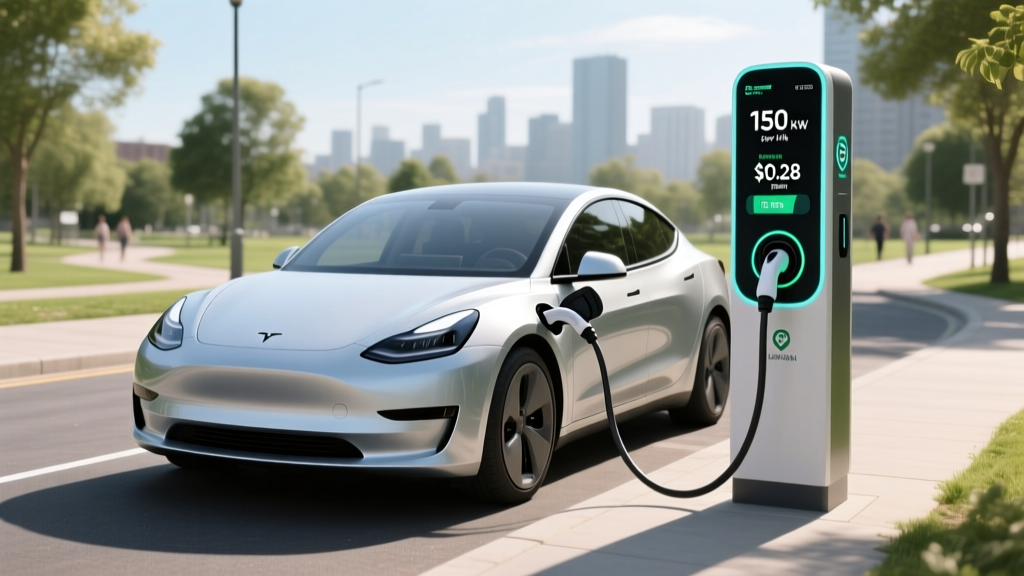
When your car's navigation or phone GPS displays a charging station, it typically labels the charger's maximum power output. Here's what those numbers mean in real-world 10–80% charging times for common battery sizes:
| Station Rating | Network Example | 10–80% Time (~60 kWh battery) | 10–80% Time (~85 kWh battery) | 10–80% Time (~100 kWh battery) |
|---|---|---|---|---|
| 50 kW (CHAdeMO/CCS) | Older Electrify America, EVgo | ~55 minutes | ~75 minutes | ~90 minutes |
| 150 kW | Electrify America, ChargePoint | ~28 minutes | ~38 minutes | ~48 minutes |
| 250 kW (Tesla V3 Supercharger) | Tesla Supercharger (NACS) | ~18 minutes | ~25 minutes | ~32 minutes |
| 350 kW | Electrify America, EVgo eXtend | ~16 minutes* | ~22 minutes* | ~28 minutes* |
*Only EVs with 800V+ architectures — like the Hyundai Ioniq 5/6, Kia EV6/EV9, Porsche Taycan, and Audi e-tron GT — can actually accept 250–350 kW. Most 400V vehicles peak around 150–175 kW regardless of the station's rating.
Which Connector Is Compatible With My EV?
The connector landscape in North America has consolidated significantly since 2024, when most major automakers committed to adopting the North American Charging Standard (NACS), originally developed by Tesla. Here's the current compatibility picture for 2026 model-year vehicles:
| Connector Type | Brands Using It (2026 Models) | DC Fast Charge Support | Adapter Needed? |
|---|---|---|---|
| NACS (Tesla / SAE J3400) | Tesla, Ford, GM, Rivian, Volvo, Polestar, Mercedes-Benz, Nissan, BMW, Hyundai/Kia (2025+ models) | Yes — up to 350 kW at Superchargers | None for native NACS; CCS-to-NACS adapters available for older EVs |
| CCS1 (Combined Charging System) | Legacy models from VW, Hyundai/Kia (pre-2025), Stellantis, some BMW | Yes — up to 350 kW | NACS-to-CCS adapter needed at Tesla Superchargers |
| CHAdeMO | Nissan Leaf (discontinued), Mitsubishi Outlander PHEV (legacy) | Yes — typically 50–100 kW | Limited adapters; network availability declining |
If you're buying a new EV in 2026, NACS is effectively the standard. If you own a CCS-equipped EV from 2022–2024, you can access Tesla Superchargers using an official adapter (Ford and GM provide these; aftermarket options from Lectron and A2Z run $150–$250). CHAdeMO infrastructure is shrinking — plan accordingly if you own a Leaf.
How Much Does It Cost to Install a Home EV Charger?
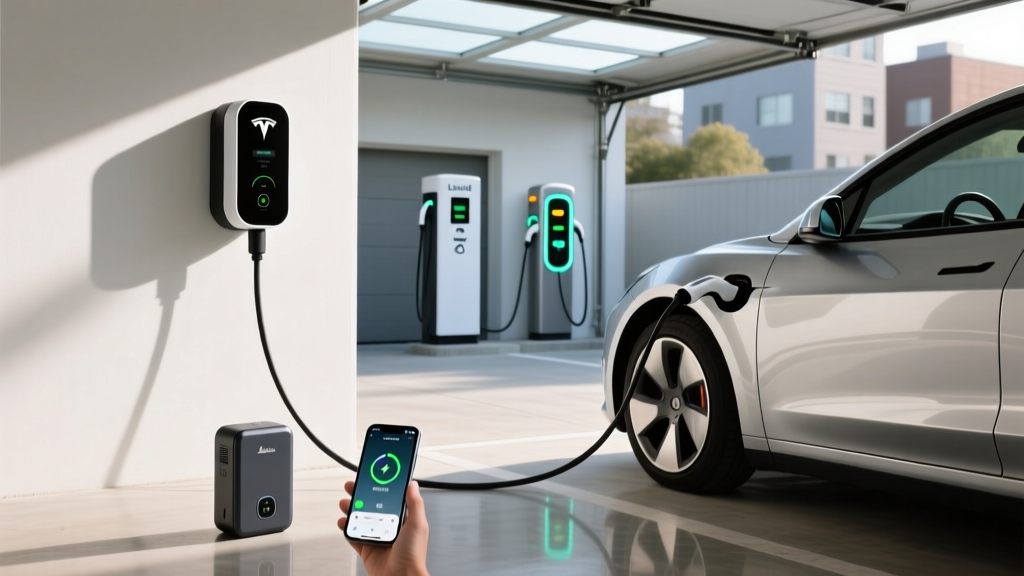
Home Level 2 charging is where most EV owners do 80–90% of their charging. A proper installation involves three cost components: the charger hardware, the electrician's labor, and permits. Here's a realistic breakdown based on 2026 national averages:
| Cost Component | Basic Install (Near Panel) | Standard Install (Garage, 30–50 ft run) | Complex Install (Long run, panel upgrade) |
|---|---|---|---|
| Level 2 Charger (hardware) | $350 – $550 | $400 – $650 | $400 – $700 |
| Electrician labor (240V circuit) | $300 – $600 | $500 – $1,200 | $1,000 – $2,500 |
| Electrical permit | $50 – $150 | $50 – $200 | $50 – $200 |
| Panel upgrade (if needed) | $0 | $0 | $1,500 – $3,500 |
| Total Estimated Cost | $700 – $1,300 | $950 – $2,050 | $2,950 – $6,900 |
What Electrical Upgrades Might I Need?
Most homes built after 1990 have a 200-amp electrical panel, which can typically support a 40-amp or 48-amp dedicated circuit for Level 2 charging without an upgrade. However, you may need a panel upgrade if:
- Your home has a 100-amp service (common in pre-1980 construction)
- Your panel is already near capacity with existing loads (electric range, dryer, HVAC, water heater)
- You want to run a 60-amp circuit for a 48-amp continuous charger and don't have spare breaker slots
- Your utility requires a load calculation that exceeds your panel's rated capacity
A licensed electrician will perform a NEC Article 220 load calculation to determine if your panel can handle the additional draw. Some homeowners opt for a smart panel load-management device (like the Emporia VUE or Span smart panel) that dynamically reduces charger amperage when other appliances are running — this can avoid a costly panel upgrade entirely.
Cost to Charge: Per-Mile Economics vs. Gasoline
One of the strongest arguments for EV ownership is lower per-mile energy cost — but the savings vary dramatically depending on where and when you charge.
| Charging Scenario | Average $/kWh (2026) | Cost to Add 200 Miles (3 mi/kWh EV) | Cost Per Mile |
|---|---|---|---|
| Home — off-peak utility rate | $0.08 – $0.14 | $5.33 – $9.33 | $0.027 – $0.047 |
| Home — standard residential rate | $0.14 – $0.20 | $9.33 – $13.33 | $0.047 – $0.067 |
| Public Level 2 (ChargePoint, EVgo) | $0.25 – $0.49 | $16.67 – $32.67 | $0.083 – $0.163 |
| DC Fast Charging (Electrify America, Tesla) | $0.30 – $0.56 | $20.00 – $37.33 | $0.100 – $0.187 |
| Gas car comparison (28 MPG, $3.40/gal) | — | $24.29 | $0.121 |
Home off-peak charging delivers the most dramatic savings — roughly one-quarter to one-third the cost per mile of gasoline. Even at peak public DC fast-charging rates, EVs are typically cheaper per mile than the average gas car, though the margin narrows. The key takeaway: home charging access is the single biggest economic factor in EV ownership. If you can install a Level 2 charger at home, your fuel costs drop substantially. If you rely exclusively on public DC fast chargers at $0.50+/kWh, the savings shrink considerably.
Recommended Home Level 2 Chargers for 2026
Based on power output, build quality, smart features, cable length, and price, here are the top home chargers for different needs:
Best Overall: ChargePoint Home Flex (2nd Gen)
- Power Output: Up to 12 kW (50-amp circuit) or 9.6 kW (40-amp circuit)
- Connector: NACS (native) or CCS1 — both available
- Cable Length: 23 feet
- Smart Features: Wi-Fi, app scheduling, Alexa integration, utility demand-response compatible, ENERGY STAR certified
- Price: $549 – $599
- Why: Adjustable amperage (16A–50A) lets you match your circuit without buying a different unit. NEMA 4 outdoor rating. Works with virtually every EV through adapter.
Best for Tesla/NACS Owners: Tesla Wall Connector
- Power Output: Up to 11.5 kW (48-amp circuit)
- Connector: NACS native
- Cable Length: 24 feet
- Smart Features: Wi-Fi, over-the-air updates, Power Sharing (link up to 6 units on one circuit), integrated cable management
- Price: $425
- Why: Lowest price in the premium segment, seamless integration with Tesla vehicles, and now compatible with all NACS-equipped EVs from Ford, GM, Rivian, and others.
Best Budget Option: Emporia Level 2 EV Charger
- Power Output: Up to 11.5 kW (48-amp circuit)
- Connector: J1772 (CCS compatible) — NACS adapter available
- Cable Length: 24 feet
- Smart Features: Wi-Fi, app with real-time energy monitoring, solar integration, time-of-use scheduling
- Price: $349 – $399
- Why: Excellent value with energy monitoring that pairs with the Emporia VUE home energy panel. Ideal if you have solar panels and want to charge only on excess production.
Best for High-Power Needs: Grizzl-E Smart
- Power Output: Up to 11.5 kW (adjustable: 16A/24A/32A/40A/48A)
- Connector: J1772 or NACS
- Cable Length: 24 feet
- Smart Features: Wi-Fi, OCPP protocol support, adjustable amperage via dip switches, -40°F rated
- Price: $499 – $549
- Why: Built in Canada for extreme cold climates. IP67-rated and impact-resistant. The adjustable amperage means you can install it on a 20-amp circuit today and upgrade later without replacing the unit.
Safety and Electrical Code Requirements
EV chargers draw significant continuous current — the National Electrical Code (NEC) classifies EV charging as a continuous load, meaning the circuit must be rated for 125% of the charger's maximum draw. A 48-amp charger requires a 60-amp breaker and 6 AWG copper wire.
Key code and safety requirements for any 2026 installation:
- Dedicated circuit: Your Level 2 charger must have its own dedicated breaker — it cannot share a circuit with other appliances.
- GFCI protection: NEC 2020 and later (adopted in most jurisdictions by 2026) requires GFCI protection for all 240V EV charging outlets. Hardwired chargers with built-in GFCI may not require an additional GFCI breaker, but check local code.
- Outdoor rating: If installing outside, the charger must be rated NEMA 4 (weather-resistant) or NEMA 4X (corrosion-resistant). All chargers listed above meet this standard.
- Permit and inspection: Nearly all jurisdictions require an electrical permit for a new 240V circuit. Your electrician pulls the permit, and a local inspector verifies the work meets code. Skipping this step can void your homeowner's insurance coverage for electrical fires.
- Wire gauge: 6 AWG copper for 48A–60A circuits; 8 AWG for 32A–40A circuits; 10 AWG for 24A circuits. Aluminum wire requires one gauge larger.
Always hire a licensed electrician familiar with EV charger installations. The National Fire Protection Association maintains the NEC standards that govern these installations, and local amendments may add further requirements.
Frequently Asked Questions
How fast will each charging level add range to my EV?
Level 1 (120V standard outlet) adds 3–5 miles of range per hour — sufficient for plug-in hybrids with small batteries but impractical for full EVs. Level 2 (240V home charger) adds 12–75 miles per hour depending on amperage, easily replenishing a full overnight charge. DC fast chargers — the ones your GPS displays — add 150–1,200+ miles per hour at peak, though the charging curve tapers significantly above 80% State of Charge.
How much does it cost to install a home EV charger?
A straightforward installation near your electrical panel costs $700–$1,300 including equipment, labor, and permit. A typical garage install with a 30–50 foot wire run costs $950–$2,050. If your home needs a panel upgrade from 100A to 200A service, total costs can reach $2,950–$6,900. Always get a quote from a licensed electrician who will perform a load calculation first.
Which connector and charger is compatible with my EV?
For 2026 model-year vehicles, most new EVs use NACS (the Tesla connector, now SAE J3400). If you own a 2022–2024 EV with CCS1, you can access Tesla Superchargers using a manufacturer-provided or aftermarket adapter. CHAdeMO is effectively legacy — only older Nissan Leafs use it. For home chargers, buy a NACS unit if your EV is NACS-equipped, or a J1772/CCS unit with an adapter if your EV uses CCS.
How much does EV charging cost per mile compared to gas?
Home off-peak charging costs $0.03–$0.05 per mile — roughly one-quarter the cost of a 28 MPG gas car at $3.40/gallon ($0.12/mile). Standard home rates bring it to $0.05–$0.07/mile. Public DC fast charging at $0.35–$0.56/kWh costs $0.10–$0.19/mile, which is comparable to or slightly above gas. The economic case for EVs is strongest when you charge at home on off-peak utility rates.
What electrical upgrades might I need for a home charger?
Homes with 200-amp service and available breaker slots typically need no upgrades beyond a dedicated 240V circuit. You may need a panel upgrade ($1,500–$3,500) if you have 100-amp service, an already-loaded panel, or insufficient breaker spaces. Smart load-management devices can sometimes avoid an upgrade by dynamically sharing capacity between the charger and other appliances.
Why doesn't my EV charge at the full kW rate the station advertises?
Two factors limit your actual charging speed: your vehicle's maximum acceptance rate and the charging curve. A Chevy Equinox EV that peaks at 150 kW will never draw 350 kW regardless of the station's rating. Additionally, batteries charge fastest between 10–50% State of Charge and taper significantly above 80% to prevent lithium plating and heat damage. Cold batteries also charge slower — preconditioning your battery (most EVs do this automatically when you navigate to a charger) is essential for reaching peak kW.