The Basics: kW vs kWh and How EV Charging Actually Works
Before unpacking how charging stations for electric cars work, you need to lock in one distinction that trips up nearly every new EV buyer: kW (kilowatts) measures power — the rate at which electricity flows into your car. kWh (kilowatt-hours) measures energy — the total capacity of your battery. Think of kW as the width of a hose and kWh as the size of the bucket. A wider hose (higher kW) fills the bucket (kWh battery) faster.
Every charging station — from a standard wall outlet to a 350 kW DC fast charger — is simply delivering electrical power to your vehicle's onboard charger or directly to its battery pack. The speed of that delivery, the connector used, and the cost per mile all depend on which charging level you're using.
Charging Levels Explained: Speeds, Times, and Range Added
EV charging falls into three tiers. Each serves a different use case, from overnight topping to cross-country road trips.
| Level | Voltage | Power (kW) | Miles of Range per Hour | Best For |
|---|---|---|---|---|
| Level 1 | 120V AC | 1.0–1.4 kW | 3–5 mi/hr | Overnight top-ups, PHEVs, low-mileage drivers |
| Level 2 | 240V AC | 3.3–19.2 kW | 12–75 mi/hr | Daily home charging, workplace, destinations |
| DC Fast Charge | 400–800V DC | 50–350 kW | 150–300+ mi in 20 min | Road trips, quick top-ups away from home |
Level 1: The Outlet You Already Have
Every EV ships with a Level 1 cord that plugs into a standard 120V household outlet. At roughly 1.2 kW, you'll add about 4 miles of range per hour. For a 75 kWh battery (say, a Tesla Model Y Long Range), a full charge from empty takes over 60 hours — impractical for most BEV owners but adequate for PHEVs with smaller 10–20 kWh batteries or drivers who travel under 30 miles daily.
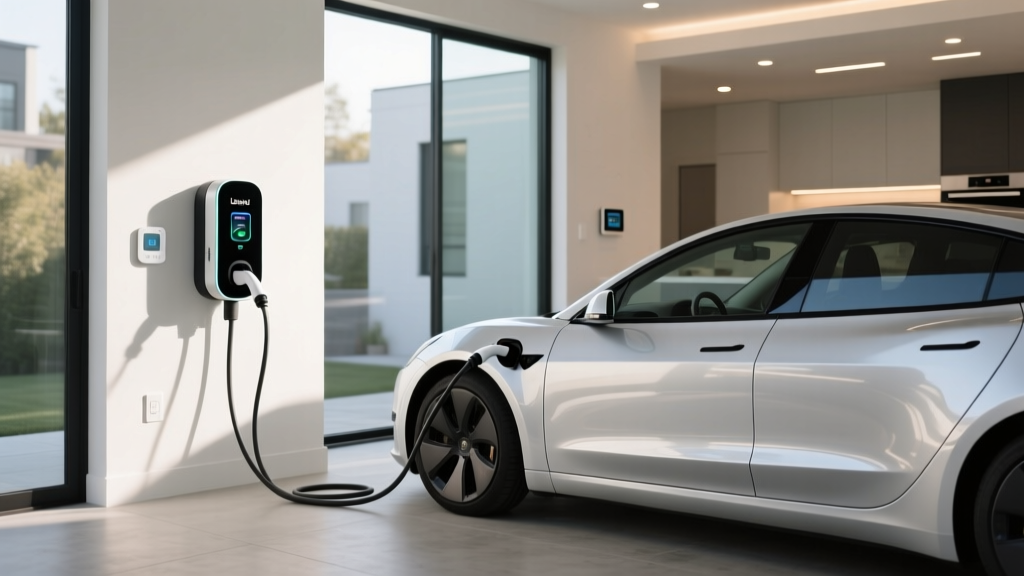
Level 2: The Home Charging Sweet Spot
Level 2 charging uses 240V — the same voltage as your electric dryer or oven. Most home installations run a dedicated 40-amp or 48-amp circuit, delivering 9.6 to 11.5 kW to the vehicle. At 11.5 kW, you add roughly 40–44 miles of range per hour, enough to refill a 75 kWh battery overnight in about 7–8 hours.
Some hardwired Level 2 stations push 80 amps (19.2 kW), which is useful for large-battery trucks like the Ford F-150 Lightning Extended Range (131 kWh usable) or the GMC Hummer EV. However, most EVs cap their onboard AC charger at 11.5 kW, meaning the extra capacity goes unused unless your vehicle supports it (certain Lucid Air and Tesla configurations do).
DC Fast Charging: Road-Trip Speeds
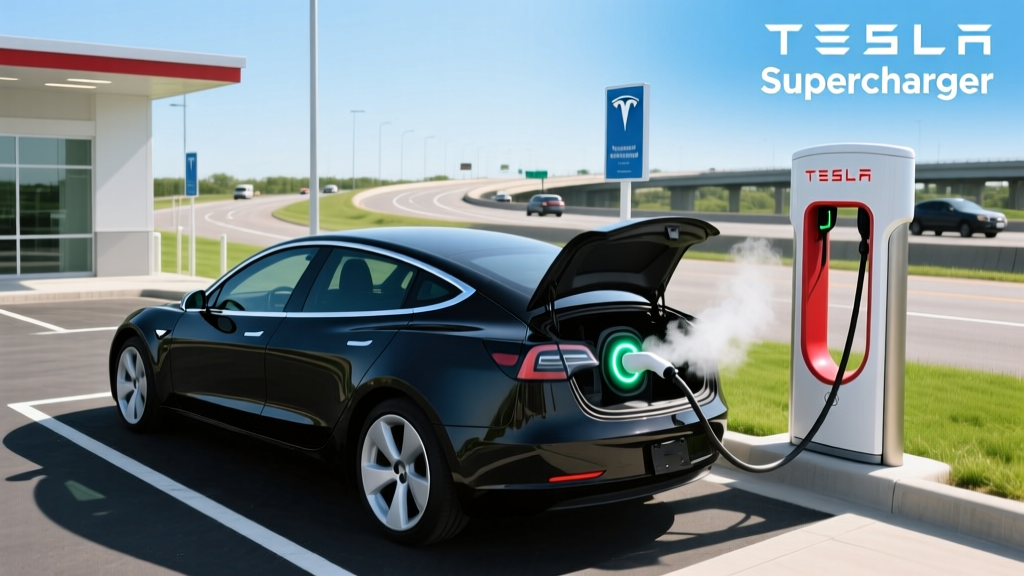
DC fast chargers bypass the vehicle's onboard AC-to-DC converter and feed direct current straight into the battery. Speeds range from 50 kW legacy units to 350 kW chargers on networks like Electrify America and EVgo.
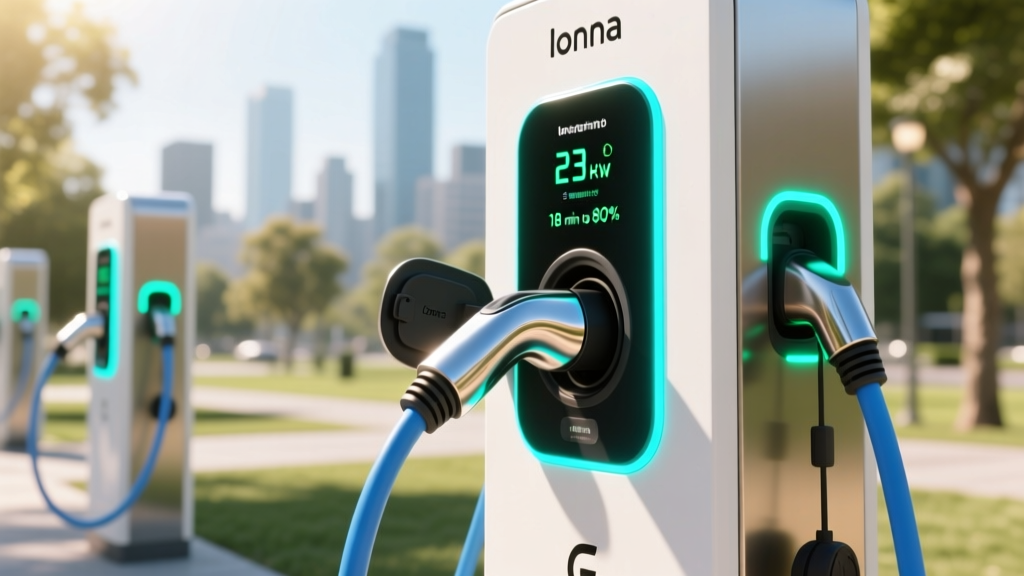
Critically, peak kW is not sustained kW. Every EV follows a charge curve: it ramps up to peak speed at low state-of-charge (SoC), holds that peak through the mid-range, then tapers sharply above 80% to protect battery health. A Hyundai Ioniq 5 may peak at 240 kW on an 800V charger and hit 10–80% in about 18 minutes, but that last 20% (80–100%) can take another 15–20 minutes. This is why road-trippers plan around 10–80% charges and skip the final top-up unless they're stopping overnight.
- Tesla Model 3 RWD (57.5 kWh LFP): ~25 min at 170 kW peak on a V3 Supercharger
- Chevrolet Equinox EV (85 kWh NMC): ~22 min at 190 kW peak on a 350 kW charger
- Ford F-150 Lightning Ext. Range (131 kWh NMC): ~41 min at 150 kW peak
- Hyundai Ioniq 5 (77.4 kWh NMC): ~18 min at 240 kW peak on an 800V charger
How Much Does It Cost to Install a Home EV Charger?
Home Level 2 installation is where most new EV owners hit their first real-world decision. Costs vary enormously depending on your home's electrical panel, the distance from the panel to the charging location, and local permit requirements. Here's a realistic breakdown based on 2026 pricing data:
| Component | Typical Range | Notes |
|---|---|---|
| Level 2 EVSE hardware | $300–$700 | 32A–48A smart charger (ChargePoint, Wallbox, Grizzl-E) |
| Electrician labor | $500–$2,000 | Depends on run length, conduit, drywall work |
| Electrical permit | $50–$200 | Required in most jurisdictions; varies by locality |
| Panel upgrade (if needed) | $1,500–$4,000 | Upgrading from 100A to 200A service panel |
| Total (no panel upgrade) | $850–$2,900 | Most homes with 200A service fall here |
| Total (with panel upgrade) | $2,350–$6,900 | Older homes with 100A or 60A panels |
What Electrical Upgrades Might I Need?
A Level 2 charger drawing 48 amps requires a dedicated 60-amp breaker (the National Electrical Code requires circuits to be rated at 125% of continuous load). If your home has a 200-amp service panel with spare capacity, a licensed electrician can usually add the circuit without issue. The challenge arises in older homes with 100-amp or 60-amp panels that are already near capacity with HVAC, electric range, and dryer loads.
Before committing, have an electrician perform a load calculation on your panel. If you're close to capacity, options include:
- Panel upgrade to 200A: $1,500–$4,000 depending on utility requirements and local labor rates.
- Lower-amperage charger: A 32-amp charger (7.7 kW) on a 40-amp breaker draws less from the panel — adequate for most daily driving.
- Smart load-management devices: Products like the Emporia EV charger or Span smart panel dynamically reduce charging power when other household loads spike, avoiding a panel upgrade entirely.
Always defer final electrical specifications to a licensed electrician — local codes and your home's wiring condition will dictate the final plan.
Connector Compatibility: NACS, CCS1, and CHAdeMO
The connector landscape in North America has consolidated rapidly. As of 2026, the North American Charging Standard (NACS) — originally developed by Tesla — is the dominant connector for new EVs. Nearly every major automaker (Ford, GM, Rivian, Volvo, BMW, Hyundai/Kia, and others) has adopted NACS for 2025+ model-year vehicles.
| Connector | Brands Using It (New Vehicles) | Adapter Needed? |
|---|---|---|
| NACS (Tesla) | Tesla, Ford, GM, Rivian, Volvo, BMW, Hyundai, Kia, Mercedes, Subaru | None for new vehicles; CCS→NACS adapters available for older models |
| CCS1 | Remaining 2024–2025 stock; some Stellantis models | NACS→CCS adapter needed at Tesla Superchargers |
| CHAdeMO | Nissan Leaf (legacy); discontinued for new models | CHAdeMO→NACS adapters available but limited |
If you own a 2023–2024 CCS-equipped EV (like an earlier Hyundai Ioniq 5 or Ford Mustang Mach-E), you can access Tesla's Supercharger network using a CCS-to-NACS adapter. Tesla sells an official adapter for approximately $250, and third-party options from Lectron and A2Z are available for $150–$200. For home Level 2 charging, J1772 connectors remain standard on most wall units, and NACS-equipped vehicles typically ship with a J1772-to-NACS adapter in the box.
How Much Does Charging Cost Per Mile vs Gas?
The cost advantage of electric charging over gasoline depends on where and when you charge. Here's a data-driven comparison using a mainstream EV (2026 Tesla Model 3 Long Range, 132 MPGe combined per fueleconomy.gov) versus a comparable gas sedan (2026 Toyota Camry LE, 32 MPG combined).
| Scenario | Cost per kWh | EV Cost per Mile | Gas Cost per Mile (32 MPG, $3.50/gal) | Annual Savings (12,000 mi) |
|---|---|---|---|---|
| Home, off-peak utility rate | $0.08–$0.14 | $0.02–$0.04 | $0.11 | $840–$1,080 |
| Home, standard utility rate | $0.15–$0.22 | $0.04–$0.06 | $0.11 | $600–$840 |
| Public Level 2 (ChargePoint, EVgo) | $0.25–$0.45 | $0.07–$0.12 | $0.11 | -$120 to $480 |
| DC Fast Charge (Electrify America, EA Pass) | $0.35–$0.55 | $0.10–$0.15 | $0.11 | -$480 to $120 |
The takeaway is clear: home charging is where EV economics win decisively. If you charge primarily at home on off-peak rates, you'll spend roughly $360–$480 per year on electricity versus $1,320 on gas. Public DC fast charging, while essential for road trips, can match or exceed gasoline costs per mile — so it's a tool for convenience, not a daily cost strategy.
Many utilities now offer time-of-use (TOU) plans that drop electricity rates to $0.06–$0.10/kWh between midnight and 6 AM. Pairing a TOU plan with scheduled charging on your Level 2 station maximizes savings. According to the U.S. Department of Energy, EV owners who charge at home save an average of $800–$1,000 annually compared to gasoline.
Recommended Home Level 2 Chargers (2026)
The Level 2 charger market has matured enough that several models stand out for reliability, smart features, and build quality. Here are three we recommend based on real installation and ownership experience:
ChargePoint Home Flex
- Power: Up to 11.5 kW (48A) on a 60A circuit; configurable down to 16A
- Connector: J1772 (NACS adapter included with many 2025+ purchases)
- Cable length: 23 ft
- Smart features: Wi-Fi, app scheduling, Alexa integration, energy tracking
- Price: ~$550–$650
- Best for: Most homeowners wanting app control and flexible amperage
Wallbox Pulsar Plus
- Power: Up to 11.5 kW (48A)
- Connector: J1772 (NACS version now available)
- Cable length: 25 ft
- Smart features: Wi-Fi + Bluetooth, Power Sharing for dual installations, solar integration
- Price: ~$500–$600
- Best for: Garages with two EVs; solar-panel homeowners
Grizzl-E Smart
- Power: Up to 10 kW (40A) on a 50A circuit
- Connector: J1772 or NACS (factory selectable)
- Cable length: 24 ft
- Smart features: OCPP protocol, app scheduling, extreme cold rated (-40°F)
- Price: ~$450–$550
- Best for: Cold-climate owners, outdoor installs, budget-conscious buyers
For Tesla owners, the Tesla Wall Connector ($475) delivers up to 11.5 kW (48A) with a NACS plug native — no adapter needed. It includes a 24-ft cable, Wi-Fi scheduling, and Power Sharing for multi-unit installs. Its main limitation is that it only outputs NACS; non-Tesla EVs require a NACS-to-J1772 adapter (available from Tesla for ~$200).
Safety and Electrical Code Considerations
EV charging is a continuous high-draw electrical load — think of it as running your electric oven for 8 hours straight. Safety and code compliance are non-negotiable.
- Dedicated circuit: Your Level 2 charger must be on its own dedicated breaker — never shared with other appliances. A 48A charger requires a 60A breaker per NEC Article 625.
- GFCI protection: The 2023 NEC update requires GFCI (ground-fault circuit interrupter) protection for all EV receptacles. Many modern EVSE units have built-in GFCI, but confirm with your electrician.
- Outdoor rating: If your charger is installed outside (carport, driveway), ensure the EVSE carries a NEMA 4 or IP65 weather rating. All units listed above meet this standard.
- Hardwired vs plug: Hardwired installations (no plug) are preferred for 48A+ chargers because they eliminate the receptacle as a failure point and often don't require GFCI breakers (which can nuisance-trip on EV loads). For plug-in setups, a NEMA 14-50 receptacle is standard.
- Permit and inspection: Most jurisdictions require an electrical permit and post-installation inspection. Skipping this can void homeowner's insurance coverage in the event of an electrical fire. Permit fees typically run $50–$200.
Frequently Asked Questions
How fast will each charging level add range to my EV?
Level 1 (120V) adds 3–5 miles per hour. Level 2 (240V, 48A) adds roughly 35–44 miles per hour for most EVs. DC fast charging at 150+ kW can add 150–250 miles in 20 minutes, though speed tapers significantly above 80% state-of-charge. Actual speed depends on your vehicle's onboard AC charger limit (typically 11.5 kW for most EVs) and battery chemistry.
Which connector does my EV use?
For 2026 model-year vehicles, nearly all new EVs use the NACS connector (the Tesla standard). Earlier CCS1-equipped vehicles (2022–2024 models) can access NACS chargers with an adapter. The Nissan Leaf remains the last CHAdeMO holdout. Check your vehicle's charge port or owner's manual for the definitive answer, and consult the Alternative Fuels Data Center for station compatibility near you.
How much does charging cost per mile compared to gas?
Home charging on off-peak rates costs $0.02–$0.04 per mile — roughly one-quarter the cost of gasoline at $3.50/gallon in a 32 MPG sedan. Public DC fast charging at $0.40–$0.55/kWh can equal or exceed gas costs. The economic case for EVs depends heavily on reliable home charging access.
Do I need to upgrade my electrical panel?
If your home has a 200-amp service panel with spare breaker slots and capacity, probably not. If you have a 100-amp panel (common in homes built before 1990) or your existing loads are near capacity, a panel upgrade ($1,500–$4,000) may be required. A licensed electrician can perform a load calculation to determine this before you commit to a charger purchase.
Can I install a Level 2 charger myself?
Technically, a plug-in NEMA 14-50 setup is possible if the receptacle already exists (some homes have one for a welder or RV). However, any new circuit, hardwired installation, or panel work should be done by a licensed electrician with a permit. Improper EV charger wiring has been linked to electrical fires, and unpermitted work may void your homeowner's insurance.
Does the federal tax credit cover home charger installation?
The IRS §30C Alternative Fuel Vehicle Refueling Property Credit covers up to 30% of home charger hardware and installation costs, capped at $1,000. However, eligibility depends on your census tract meeting certain low-income or non-urban criteria. Check IRS Form 8911 and consult a tax professional before claiming — rules and eligible tract maps are updated annually.