If you're new to electric vehicles, the charging ecosystem can feel like a maze of unfamiliar acronyms, connector shapes, and pricing structures. But the core question is straightforward: how do charging stations work, and what does that mean for your daily routine and your wallet?
Unlike a gas pump that simply transfers liquid fuel, an EV charging station is really a power delivery system that communicates with your vehicle's onboard computer to manage electricity flow safely into the battery pack. The station itself doesn't "store" charge — it acts as a controlled conduit from the electrical grid to your car's battery management system (BMS). The speed of that transfer, the connector type, and the cost all depend on which charging level and equipment you're using.
Before we break down each level, let's clear up the single most common point of confusion in EV charging:
kW (kilowatts) measures power — the rate at which electricity flows into your battery. Think of it like the diameter of a hose. A 150 kW DC fast charger delivers energy much faster than a 7.2 kW Level 2 unit.
kWh (kilowatt-hours) measures energy — the total amount stored in your battery. A Tesla Model Y Long Range has roughly 75 kWh of usable battery capacity. That's the size of the tank.
Filling a 75 kWh battery at 7.2 kW (Level 2) takes about 10 hours. Filling it at 150 kW (DC fast) can add significant charge in 20–30 minutes, though the rate tapers as the battery approaches full.
The Three Charging Levels: Speed, Power, and Use Cases
Every EV charging scenario in North America falls into one of three categories. Here's how they stack up in real-world performance:
| Level | Voltage | Power (kW) | Miles of Range Added Per Hour | 10–80% Time (75 kWh Battery) | Best For |
|---|---|---|---|---|---|
| Level 1 (120V) | 120V AC | 1.0–1.4 kW | 3–5 mi/hr | ~45–50+ hours | Overnight top-ups, PHEVs, emergency backup |
| Level 2 (240V) | 240V AC | 3.3–19.2 kW | 14–75 mi/hr | ~4–10 hours (varies by kW) | Daily home/work charging — the EV owner's workhorse |
| DC Fast Charging | 400–800V DC | 50–350 kW | 150–1,000+ mi/hr (peak) | ~15–35 minutes | Road trips, quick top-ups, commercial fleets |
Level 1: The Trickle Charge
Every EV comes with a Level 1 cord that plugs into a standard 120V household outlet. At 1.2–1.4 kW, you'll add roughly 3–5 miles of range per hour. For a plug-in hybrid with 30 miles of electric range, Level 1 is perfectly adequate overnight. For a full BEV with a 75+ kWh battery, Level 1 is a painful last resort — it would take nearly two full days to charge from 10% to 80%.
Level 2: Where Real EV Ownership Lives
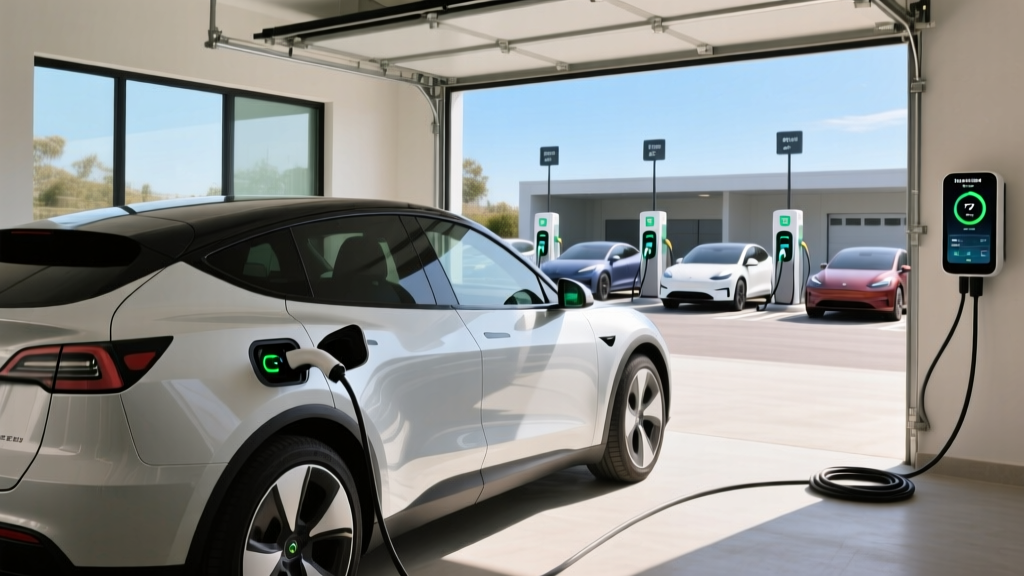
This is the sweet spot for daily charging. A 240V circuit — the same type your electric dryer uses — delivers between 3.3 kW (16A) and 19.2 kW (80A). Most home installations run at 40A or 48A (9.6–11.5 kW), which adds roughly 30–44 miles of range per hour. Plug in when you get home, wake up to a full battery. According to fueleconomy.gov, Level 2 charging is the most cost-efficient and battery-friendly method for regular use.
DC Fast Charging: Road-Trip Essential
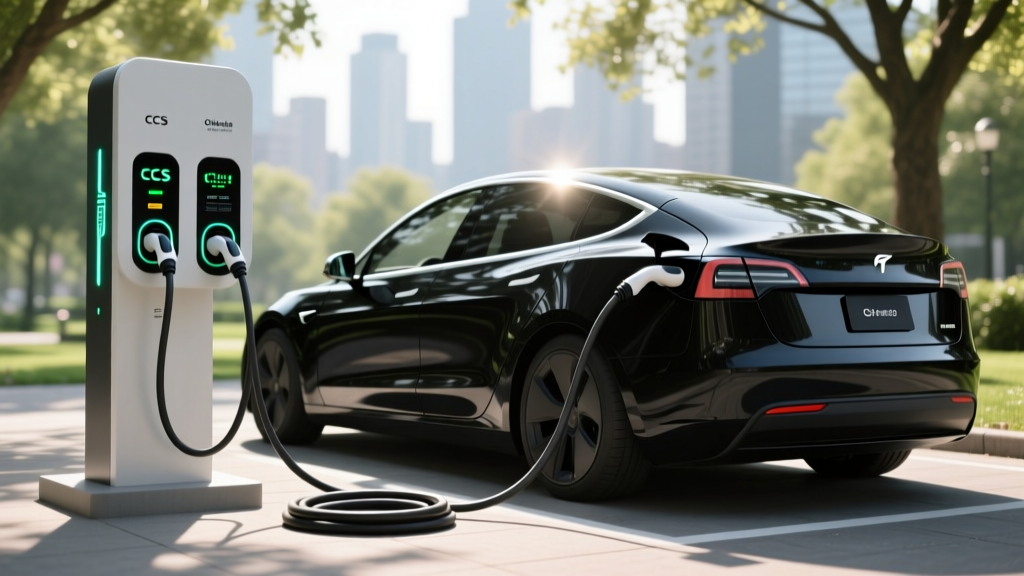
DC fast chargers bypass your car's onboard charger and feed direct current straight into the battery at high voltage. Peak rates range from 50 kW (older stations) to 350 kW (latest Electrify America and Tesla Supercharger V4 hardware). But here's the critical real-world detail: peak kW is not sustained kW.
EV batteries accept charge fastest between roughly 10–50% state of charge. As the battery fills past 80%, the BMS deliberately slows the charge rate to protect cell health. A Hyundai Ioniq 5 that peaks at 240 kW from 10–50% may drop to under 60 kW above 80%. This is why 10–80% charge times are the industry standard metric — charging the final 20% can take as long as the first 70%.
How Much Does It Cost to Install a Home EV Charger?
This is where many new EV buyers get sticker shock — or relief, depending on their home's electrical setup. The total cost of a Level 2 home charging station depends on three variables: the charger hardware, the complexity of the electrical run, and whether your panel needs an upgrade.
| Component | Simple Install | Moderate Install | Complex Install |
|---|---|---|---|
| Level 2 Charger (hardware) | $350–$500 | $500–$700 | $500–$750 |
| Electrician labor (240V circuit run) | $300–$600 | $600–$1,200 | $1,200–$2,500 |
| Permit & inspection | $50–$150 | $100–$250 | $150–$400 |
| Electrical panel upgrade (if needed) | Not required | $500–$1,000 (sub-panel) | $1,500–$3,500 (200A service upgrade) |
| Total Estimated Cost | $700–$1,250 | $1,200–$3,150 | $2,350–$7,150 |
What Electrical Upgrades Might I Need?
Your home's electrical panel is the bottleneck. A Level 2 charger on a 48A circuit requires a dedicated 60A breaker (the National Electrical Code requires circuits to be rated at 125% of continuous load). Here's what to assess:
- 200A panel with spare capacity: You likely need only a new 240V circuit run from the panel to your garage or parking spot. This is the best-case scenario.
- 100A panel or limited spare slots: You may need a sub-panel installed or a service upgrade to 200A. This is the most common surprise cost for older homes built before the 1990s.
- Panel at or near capacity: A licensed electrician will perform a load calculation to determine if your existing service can handle the additional 9.6–11.5 kW draw alongside your HVAC, water heater, dryer, and other appliances.
Always hire a licensed electrician and pull a permit. Unpermitted EV charger installations can void home insurance claims and create fire hazards. The National Electrical Code (NEC) Article 625 governs EV charging equipment specifically.
Which Connector Is Compatible With My EV?
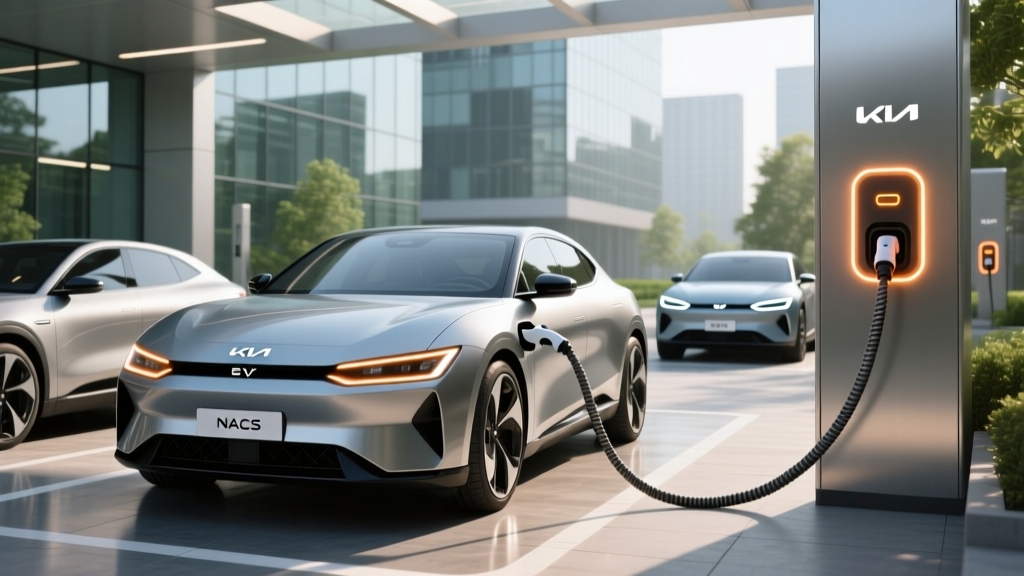
The connector landscape in North America has consolidated significantly. As of 2026, nearly every major automaker has adopted or committed to the NACS (North American Charging Standard) — originally developed by Tesla. But millions of CCS1-equipped EVs remain on the road, and adapters bridge the gap.
| Connector | Brands Using It (2026 Models) | DC Fast Charge Availability | Adapter Needed? |
|---|---|---|---|
| NACS (Tesla standard) | Tesla (all), Ford, GM, Rivian, Volvo, Polestar, Mercedes-Benz, Hyundai/Kia (2026+ models) | Tesla Supercharger network + NACS-equipped public stations | CCS1-to-NACS adapter for older CCS vehicles (~$200–$300) |
| CCS1 (Combo) | Hyundai/Kia (pre-2026), BMW, VW, older Ford/GM models | Electrify America, EVgo, ChargePoint DC stations | NACS-to-CCS adapter available for Tesla Supercharger access |
| CHAdeMO | Nissan Leaf (legacy only — discontinued for new models) | Declining network — some Electrify America and independent stations | No widely available adapter; legacy owners rely on remaining CHAdeMO stations |
If you're buying a new EV in 2026, NACS is the future-proof choice. If you own a CCS1-equipped vehicle, a Ford- or Tesla-approved CCS-to-NACS adapter (typically $200–$300) unlocks access to the Supercharger network — the most reliable DC fast-charging infrastructure in the U.S.
How Much Does Charging Cost Per Mile vs. Gas?
This is the economic argument for EVs — and it holds up, though the savings vary enormously depending on where and when you charge.
| Charging Scenario | Avg. $/kWh | Cost Per Mile (3.5 mi/kWh EV) | Annual Cost (12,000 mi) |
|---|---|---|---|
| Home — Off-peak utility rate | $0.08–$0.13 | $0.023–$0.037 | $275–$445 |
| Home — Standard residential rate | $0.14–$0.18 | $0.040–$0.051 | $480–$615 |
| Public Level 2 (workplace, retail) | $0.20–$0.35 | $0.057–$0.100 | $685–$1,200 |
| DC Fast Charging (road trips) | $0.30–$0.55 | $0.086–$0.157 | $1,030–$1,885 |
| Gas car (30 MPG, $3.40/gal) | — | $0.113 | $1,360 |
At off-peak home rates, an EV owner driving 12,000 miles per year spends roughly $300–$450 on electricity — about a third of what a 30 MPG gas car costs at $3.40/gallon. Even at DC fast-charging prices during road trips, EVs remain competitive with or cheaper than gas on a per-mile basis.
The catch: if you rely exclusively on public DC fast chargers (no home or workplace charging), your fuel costs can exceed a comparable gas car. Home charging access is the single biggest economic variable in EV ownership.
Recommended Home Level 2 Chargers for 2026
Not all Level 2 chargers are created equal. Here are proven units we recommend based on reliability, smart features, connector options, and value:
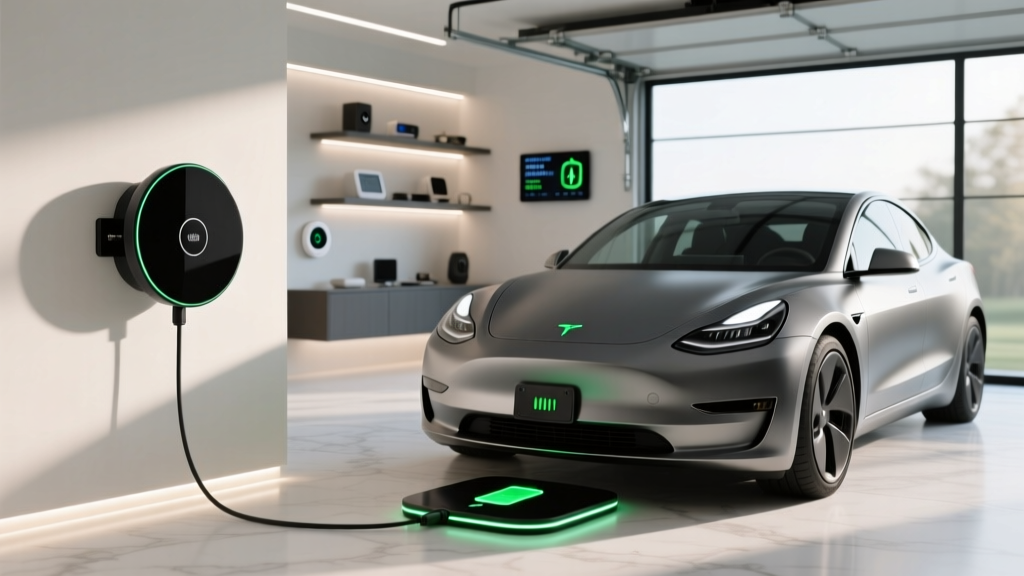
Tesla Wall Connector (Gen 4)
- Power: Up to 11.5 kW (48A)
- Connector: NACS native
- Cable length: 24 ft
- Smart features: Wi-Fi, OTA updates, load sharing (pair up to 6 units on one circuit), integrated cable management
- Price: ~$475
- Best for: Tesla owners and NACS-equipped EVs; cleanest installation
ChargePoint Home Flex
- Power: Up to 12 kW (50A) — adjustable via DIP switch
- Connector: J1772 (CCS-compatible); NACS adapter available
- Cable length: 23 ft
- Smart features: Wi-Fi, app scheduling, Alexa integration, energy tracking, utility demand-response compatible
- Price: ~$550–$650
- Best for: CCS1 owners; flexible amperage for older panels
Emporia Vue Level 2 Charger
- Power: Up to 11.5 kW (48A)
- Connector: J1772 (NACS adapter available)
- Cable length: 24 ft
- Smart features: Wi-Fi, solar integration (pairs with Emporia energy monitor), scheduled charging, load management
- Price: ~$400–$500
- Best for: Solar homeowners; best value in smart chargers
Safety, Code, and Installation Best Practices
EV chargers draw sustained high current for hours — this is fundamentally different from intermittent loads like a microwave. Proper installation isn't optional; it's a safety requirement.
- Dedicated circuit: Your Level 2 charger must have its own dedicated breaker — no shared circuits with other appliances. A 48A charger requires a 60A breaker per NEC 625.41.
- GFCI protection: The 2023 NEC update (adopted in most jurisdictions by 2026) requires GFCI (Ground Fault Circuit Interrupter) protection for all EV charging outlets. Hardwired units with built-in ground-fault protection satisfy this requirement.
- Outdoor rating: If your charger is installed outdoors or in an open carport, it must be rated NEMA 4 (weatherproof). All chargers recommended above carry NEMA 4 ratings.
- Wire gauge: A 60A circuit typically requires 6 AWG copper wire (THHN in conduit or NM-B cable). Your electrician will size this based on the run length and local code.
- Hardwired vs. plug-in: Hardwired installations (no plug — direct wire connection) are preferred for 48A+ chargers because they eliminate the NEMA 14-50 receptacle as a potential failure point. Some utilities and inspectors require hardwired for circuits above 40A.
Charging Time Examples: Real-World 10–80% Scenarios
Let's ground this in actual vehicles. The following estimates assume typical charging conditions with battery preconditioning enabled:
| Vehicle | Battery (kWh) | Level 2 at 11.5 kW | DC Fast (Peak kW) | DC Fast 10–80% Time |
|---|---|---|---|---|
| Tesla Model Y Long Range | ~75 kWh | ~5.5 hours | 250 kW (Supercharger V3) | ~25 minutes |
| Hyundai Ioniq 5 (Long Range) | ~77.4 kWh | ~6 hours | 240 kW (800V architecture) | ~18 minutes |
| Ford Mustang Mach-E (Extended Range) | ~91 kWh | ~7 hours | 150 kW | ~35 minutes |
| Chevrolet Equinox EV | ~85 kWh | ~6.5 hours | 150 kW | ~30 minutes |
| BMW i4 eDrive40 | ~81.5 kWh | ~6.5 hours | 200 kW | ~28 minutes |
Note that 800V-architecture vehicles like the Ioniq 5 and Porsche Taycan sustain higher charge rates longer than 400V platforms, giving them a real-world road-trip advantage even when peak kW numbers look similar on paper.
Frequently Asked Questions
Can I charge my EV with a regular household outlet?
Yes — that's Level 1 charging (120V, ~1.2 kW). It adds 3–5 miles of range per hour and is fine for PHEVs or occasional BEV top-ups. For a full battery electric vehicle used daily, Level 1 is impractical as a primary charging method. Plan for a Level 2 installation.
Does DC fast charging damage my battery?
Occasional DC fast charging has minimal impact on modern battery health. Battery management systems actively limit charge rates when cells are too cold, too hot, or at high state of charge. However, exclusively using DC fast charging (never Level 2) can accelerate degradation slightly — studies from Idaho National Laboratory show a measurable but modest difference over 100,000+ miles. For daily use, Level 2 is gentler and cheaper.
How do I find public charging stations near me?
The Alternative Fuels Data Center maintains a comprehensive, government-maintained map of all public EV chargers in the U.S. Apps like PlugShare, ChargePoint, and EVgo also provide real-time availability, pricing, and user reviews. For Tesla Supercharger locations, the Tesla app and in-car navigation are the most accurate sources.
Do I qualify for a tax credit on home charger installation?
The federal Alternative Fuel Vehicle Refueling Property Credit (§30C) covers up to 30% of home charging equipment and installation costs, capped at $1,000. However, eligibility is restricted to census tracts classified as low-income or non-urban. Check the IRS §30C page for current eligibility maps and rules. Many states and utilities also offer rebates — check your local provider.
What happens if my power goes out while charging?
Your EV and charger handle this gracefully. The charging session simply pauses, and when power is restored, most smart chargers automatically resume. Your vehicle's battery is not damaged by a power interruption. If you live in an area with frequent outages, consider a charger with scheduled charging features so you can optimize around time-of-use utility rates when power is stable.