If you're driving an electric vehicle through Western Pennsylvania and searching for hotels with EV charging in Mars, you've landed in one of the more interesting charging corridors in the state. Mars, PA — a growing borough about 25 miles north of Pittsburgh in Butler County — sits near the I-79 and PA-228 interchange, making it a natural waypoint for EV road-trippers heading between Pittsburgh, Erie, and the Ohio border.
But here's the reality: dedicated hotel-based EV charging in Mars itself remains limited as of early 2026. Most lodging in the immediate Mars area consists of smaller inns and extended-stay properties that haven't yet installed Level 2 destination chargers. The good news? A cluster of EV-friendly hotels with charging exists within a 10–15 minute drive, and several public DC fast-charging stations along the I-79 corridor make topping up quick and painless.
This guide breaks down exactly where to charge, what speeds and connectors to expect, what it costs, and — if you're a local homeowner or business owner considering adding your own charger — what a home or commercial install actually involves.
Where to Find EV Charging Near Hotels in Mars, PA
The Mars borough area has a handful of lodging options, but dedicated on-site EV charging at hotels within Mars proper is sparse. Your best strategy is to book at hotels in the Cranberry Township and Seven Fields corridor (roughly 8–12 miles south on I-79/US-19), where larger hotel chains have begun installing Level 2 destination chargers and sit adjacent to retail centers with public charging.
Here's what the charging landscape looks like within a 15-minute drive of Mars:
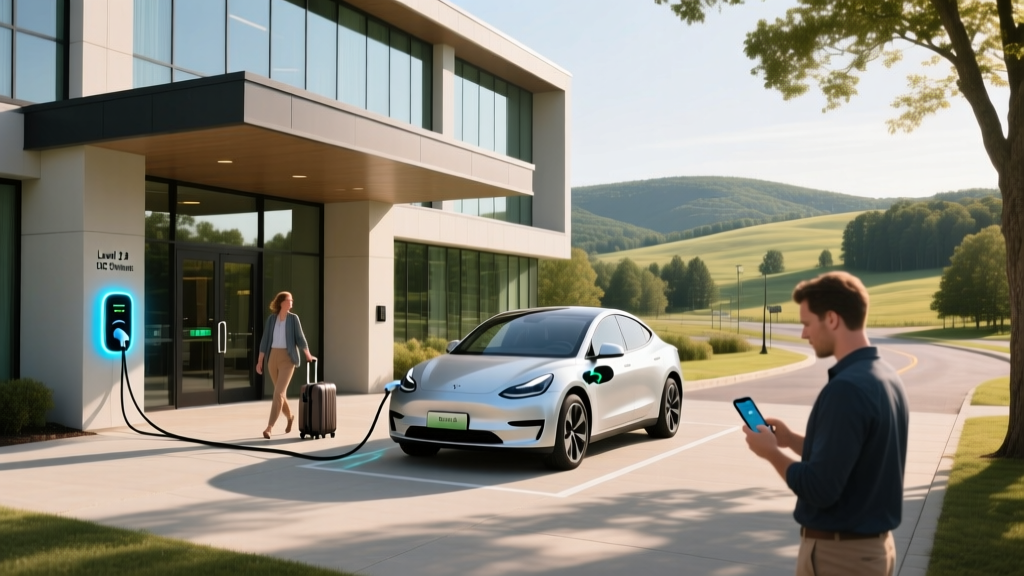
- Cranberry Township hotels (Hilton Garden Inn, Hampton Inn, Hyatt Place cluster near I-79 Exit 28): Several properties offer Tesla Destination Chargers or ChargePoint Level 2 stations. Always call ahead — availability varies by property and some chargers are guest-only.
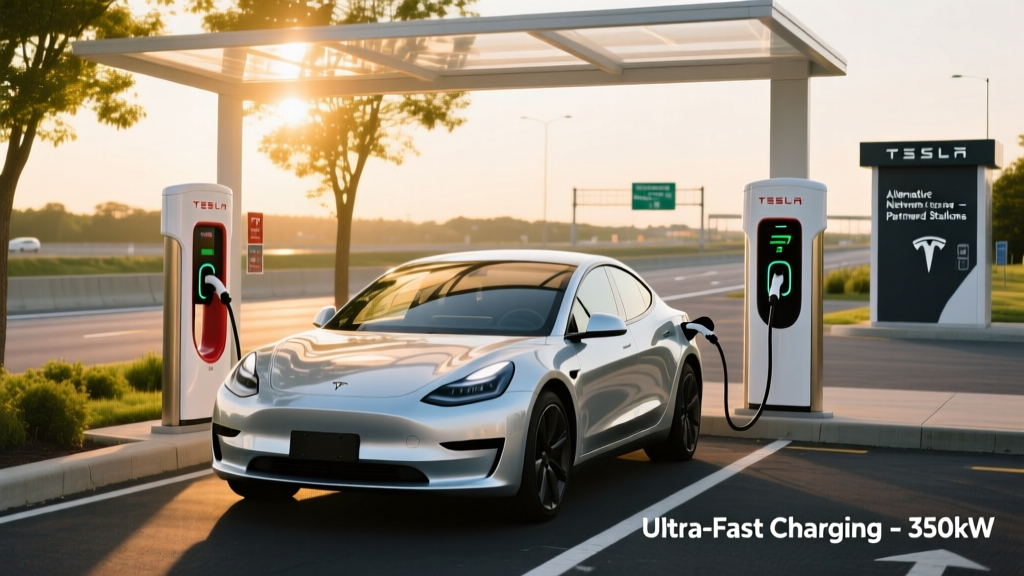
- Seven Fields / Warrendale retail centers: Electrify America and EVgo DC fast-charging stations are located at shopping plazas within 10 minutes of the Mars area, offering 150–350 kW peak charging.
- Grove City Premium Outlets (~20 min north on I-79): Electrify America station with multiple 150–350 kW CCS/NACS stalls — a reliable road-trip stop.
- Pittsburgh North (McCandless/Wexford): Additional ChargePoint and EVgo Level 2 and DC fast options roughly 15 minutes south.
Understanding EV Charging Levels: Speeds, kW, and What to Expect
Before you pull up to any charger near Mars — hotel, retail, or highway — you need to understand the three charging levels and what they mean for your battery. The single most important distinction: kW (kilowatts) measures power — how fast energy flows into your car. kWh (kilowatt-hours) measures energy — how much your battery holds. A 75 kWh battery charged at 7.2 kW takes roughly 10+ hours from empty; at 150 kW, it takes about 30 minutes to reach 80%.
| Level | Voltage | Power (kW) | Miles of Range Added per Hour | Best Use Case |
|---|---|---|---|---|
| Level 1 (120V) | 120V AC | 1.0–1.4 kW | 3–5 mi/hr | Emergency/overnight trickle |
| Level 2 (240V) | 240V AC | 3.3–19.2 kW | 12–70 mi/hr | Home, hotel, workplace overnight |
| DC Fast Charge | 400–800V DC | 50–350 kW | 150–1,000+ mi/hr (peak) | Road trips, quick top-ups |
Real-World Charging Time Examples
Charging speed isn't constant — your EV's battery management system tapers power above ~80% State of Charge (SoC) to protect cell health. Here's what 10–80% charging looks like for common battery sizes you'll see on the road near Mars:
- Tesla Model Y (75 kWh usable, LFP/NMC): At a 250 kW V3 Supercharger, 10–80% in ~20 minutes. At a 7.2 kW hotel Level 2, ~9 hours.
- Hyundai Ioniq 5 (77.4 kWh usable, NMC): At a 350 kW Electrify America station, 10–80% in ~18 minutes (800V architecture sustains high power longer). At 11.5 kW Level 2, ~6 hours.
- Ford F-150 Lightning Extended Range (131 kWh usable, NMC): At 150 kW DC fast, 10–80% in ~45 minutes. At 9.6 kW Level 2, ~12 hours.
- Chevrolet Equinox EV (85 kWh usable, NMC): At 150 kW DC fast, 10–80% in ~30 minutes. At 7.7 kW Level 2, ~10 hours.
For a hotel overnight stay, Level 2 charging at 7.2–11.5 kW is more than sufficient to replenish 150–300 miles of range while you sleep — which covers most daily driving needs.
Connector Compatibility: NACS, CCS, and CHAdeMO in 2026
The connector landscape has shifted dramatically. As of 2026, nearly every major automaker has transitioned to the NACS (North American Charging Standard) — the Tesla-designed connector now adopted by Ford, GM, Rivian, Hyundai, Kia, and others. CCS1 is still widely available at public stations, and CHAdeMO is effectively legacy (Nissan Leaf remains the primary user).
| Connector | Native Vehicles | Adapter Needed? | Availability at Mars-Area Stations |
|---|---|---|---|
| NACS (Tesla) | Tesla (all), Ford (2025+), GM (2025+), Rivian, Hyundai/Kia (2025+), Volvo, Polestar | No — native port | Tesla Superchargers + growing Electrify America NACS stalls |
| CCS1 | Pre-2025 Ford/GM/Hyundai/Kia EVs, BMW iX/i4, VW ID.4, Porsche Taycan, legacy models | NACS-to-CCS adapter for Tesla Superchargers | Electrify America, EVgo, most ChargePoint DC stations |
| CHAdeMO | Nissan Leaf, Mitsubishi Outlander PHEV (legacy) | No widely available adapter to NACS | Limited — a few older EA/ChargePoint stalls |
How Much Does EV Charging Cost Per Mile vs. Gas?
Charging costs near Mars, PA vary significantly depending on where and when you plug in. Pennsylvania's average residential electricity rate sits around $0.15–$0.17/kWh as of early 2026 (per EIA state data). Public DC fast charging is considerably more expensive.
| Scenario | Rate ($/kWh) | Cost to Add 200 Miles* | Equivalent Cost Per Mile |
|---|---|---|---|
| Home Level 2 (off-peak utility rate) | $0.10–$0.12 | $6.00–$7.20 | $0.030–$0.036 |
| Home Level 2 (standard PA residential) | $0.15–$0.17 | $9.00–$10.20 | $0.045–$0.051 |
| Hotel Level 2 (complimentary or guest rate) | $0.00–$0.15 | $0.00–$9.00 | $0.000–$0.045 |
| Public DC Fast (Electrify America/EVgo) | $0.35–$0.48 | $21.00–$28.80 | $0.105–$0.144 |
| Tesla Supercharger (V3/V4) | $0.28–$0.36 | $16.80–$21.60 | $0.084–$0.108 |
| Gasoline (PA avg $3.50/gal, 28 MPG car) | — | $25.00 | $0.125 |
*Based on a vehicle averaging 3.0 miles per kWh (typical for a mid-size crossover EV like the Model Y or Ioniq 5). Your actual efficiency varies — larger trucks like the F-150 Lightning average closer to 2.0 mi/kWh, raising per-mile costs proportionally.
The takeaway: home and hotel Level 2 charging delivers the lowest per-mile fuel cost in the EV ecosystem. Public DC fast charging is convenient for road trips but costs nearly as much as — or sometimes more than — gasoline on a per-mile basis. For travelers staying at hotels with complimentary EV charging near Mars, that overnight top-up is effectively free fuel.
Installing a Home EV Charger: Costs, Electrical Requirements, and Upgrades
If you live in the Mars, Cranberry Township, or Butler County area and want to install a Level 2 home charger, here's a data-driven breakdown of what's involved. This is also relevant for local hotel and Airbnb owners considering adding guest charging.
Electrical Requirements
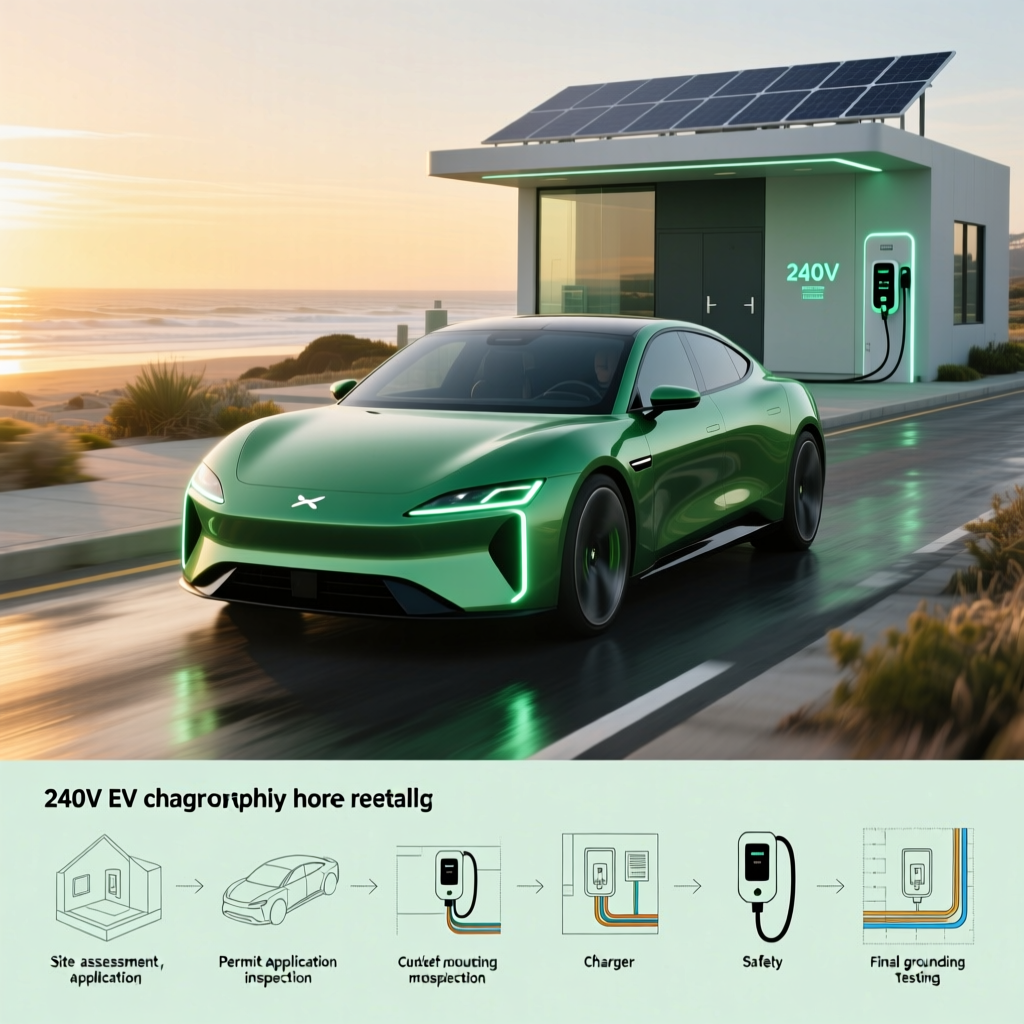
A Level 2 home charger requires a dedicated 240V circuit, similar to what powers an electric dryer or oven. The most common setup:
- Circuit: 240V / 40A or 50A (delivers 9.6 kW or 12.0 kW respectively, though continuous-load code requires derating to 80%, so 40A = 7.7 kW continuous, 50A = 9.6 kW continuous)
- Wire gauge: 6 AWG copper (for 50A) or 8 AWG (for 40A), run through conduit if exposed
- NEMA 14-50 outlet (for plug-in chargers) or hardwired connection (required for some high-power units and often preferred for outdoor installs)
- GFCI protection: The 2023 NEC (adopted in PA) requires GFCI breakers for EV receptacles — expect your electrician to install a GFCI-compatible breaker
Panel Upgrade: The Hidden Cost
This is where many homeowners get surprised. If your home has a 100-amp electrical panel (common in homes built before 2000 in the Mars/Butler County area), adding a 40–50A EV circuit may exceed your panel's capacity — especially if you already run electric heat, an electric dryer, and an electric range.
A panel upgrade to 200A service typically costs $1,500–$3,500 depending on utility connection complexity. Some installers offer a load-management device (like the Emporia VUE or Tesla Wall Connector with load-sharing) that dynamically throttles charger amperage based on total home draw — this can avoid a panel upgrade entirely in some cases.
| Component | Low Estimate | High Estimate | Notes |
|---|---|---|---|
| Level 2 charger unit | $350 | $700 | ChargePoint Home Flex, Emporia J1772, Tesla Wall Connector |
| Electrical permit (Butler County) | $50 | $150 | Required for all new 240V circuits |
| Electrician labor (no panel upgrade) | $500 | $1,200 | Depends on run length from panel to garage/driveway |
| Panel upgrade (if needed, 100A → 200A) | $1,500 | $3,500 | Major cost driver — not always required |
| Conduit, wiring, breaker | $150 | $400 | Materials for the circuit run |
| Total (no panel upgrade) | $1,050 | $2,450 | Most common scenario for newer homes |
| Total (with panel upgrade) | $2,550 | $5,950 | Older homes with 100A service |
Safety and Code Considerations
- Dedicated circuit: Your EV charger must be on its own breaker — never shared with other appliances.
- Outdoor rating: If installing outside (driveway or exterior wall), use a NEMA 4-rated enclosure and a charger rated for outdoor use (IP55 or higher). Most modern smart chargers meet this standard.
- GFCI breaker: Required by NEC 2023+ for EV receptacles. Hardwired installations may bypass this requirement depending on local inspector interpretation — ask your electrician.
- Utility notification: Some PA utilities (FirstEnergy/Penn Power serves the Mars area) request notification when you add a significant 240V load. They may also offer off-peak EV charging rates that cut your cost per kWh substantially.
Recommended Home and Portable EV Chargers (2026 Picks)
Whether you're installing at home in the Mars area or want a portable unit to keep in your trunk for hotel stays, here are proven options with exact specs:
Tesla Wall Connector (Gen 4)
- Power: Up to 11.5 kW (48A) on a 60A circuit
- Connector: NACS native (J1772 adapter included)
- Cable: 24 ft
- Smart features: Wi-Fi, OTA updates, load sharing, Powerwall integration
- Price: ~$475
- Best for: Tesla owners and NACS-native EVs
ChargePoint Home Flex (NACS)
- Power: Up to 12 kW (50A) adjustable down to 16A
- Connector: NACS (2025+ models) or J1772 (older)
- Cable: 23 ft
- Smart features: Wi-Fi, app scheduling, Alexa integration, load management
- Price: ~$599–$699
- Best for: Multi-EV households, flexible amperage
Emporia Level 2 Smart Charger
- Power: Up to 11.5 kW (48A)
- Connector: J1772 (NACS adapter available)
- Cable: 24 ft
- Smart features: Real-time energy monitoring via Emporia VUE, solar integration, scheduling
- Price: ~$399
- Best for: Budget-conscious buyers, energy-monitoring enthusiasts
For hotel travel, keep a portable Level 1/2 EVSE in your trunk. Units like the Lectron V-BOX Pro ($250–$350) support both 120V and 240V outlets with interchangeable plugs, delivering up to 12 kW on a NEMA 14-50 — useful when a hotel has a 240V dryer outlet but no dedicated EV charger.
Federal Tax Credit for Home Charger Installation
The IRS §30C Alternative Fuel Vehicle Refueling Property Credit covers 30% of home EV charger equipment and installation costs, up to $1,000. This is separate from the §30D new-EV purchase credit.
Key eligibility rules for 2026:
- The charger must be installed at your primary residence in the United States.
- The property must be located in an eligible census tract (the IRS provides a locator tool — many Butler County tracts qualify).
- Both equipment and labor costs count toward the 30% credit.
- Maximum credit: $1,000 per tax year.
Example: If your total Mars-area home charger install costs $2,000 (no panel upgrade needed), you could claim $600 (30% × $2,000) on your federal return. Consult a tax professional to confirm your specific eligibility.
Frequently Asked Questions: EV Charging in the Mars, PA Area
Are there any hotels in Mars, PA with EV chargers on-site?
As of early 2026, dedicated hotel EV chargers within Mars borough itself are limited. Your best options are in nearby Cranberry Township (8–12 miles south), where several chain hotels offer Level 2 destination chargers. Always call ahead to confirm charger availability and whether it's guest-exclusive.
Where is the nearest DC fast charger to Mars, PA?
The closest high-speed DC fast chargers are along the I-79 corridor in Cranberry/Warrendale and at the Grove City Premium Outlets (~20 min north). Electrify America and EVgo operate 150–350 kW stations in these areas. Tesla Superchargers are available at the Cranberry Mall area and Grove City.
How much does it cost to install a home EV charger in the Mars area?
Expect $1,050–$2,450 for a standard Level 2 install in a home with an adequate 200A electrical panel. If your home has older 100A service, a panel upgrade adds $1,500–$3,500, bringing the total to $2,550–$5,950. Get at least three quotes from licensed electricians — Butler County rates are typically lower than Pittsburgh metro.
Can I charge my CCS-equipped EV at a Tesla Supercharger near Mars?
Yes, if you have a NACS-to-CCS adapter. Tesla has opened select Superchargers to non-Tesla EVs via the "Charge Other Vehicles" program. Ford, GM, and Rivian provide adapters to owners; aftermarket adapters from Lectron cost $150–$250. Check the Tesla app for which specific stalls are open to non-Tesla vehicles.
Is overnight hotel Level 2 charging enough for a road trip?
For most EVs, yes. A hotel Level 2 charger delivering 7.2 kW over a 10-hour overnight stay adds approximately 200–250 miles of range (at 3.0 mi/kWh efficiency). That's sufficient for most daily driving segments. If you arrive with a near-empty battery and need to depart early, plan a 20–30 minute DC fast-charge stop in the morning at a nearby Electrify America or Supercharger station.
Does Penn Power (FirstEnergy) offer EV charging rates for Mars-area residents?
Penn Power has offered time-of-use (TOU) rate options that reduce electricity costs during off-peak hours (typically 10 PM–6 AM). Check FirstEnergy's EV programs page or contact Penn Power directly for current EV-specific rate plans available in Butler County.