Quick Verdict: The Horsepower V6 Charger at a Glance
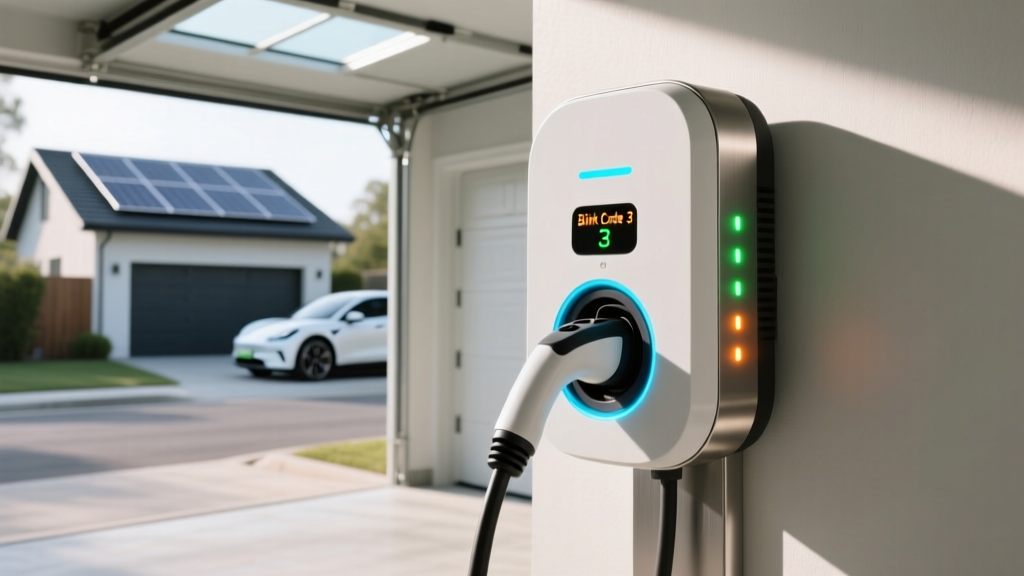
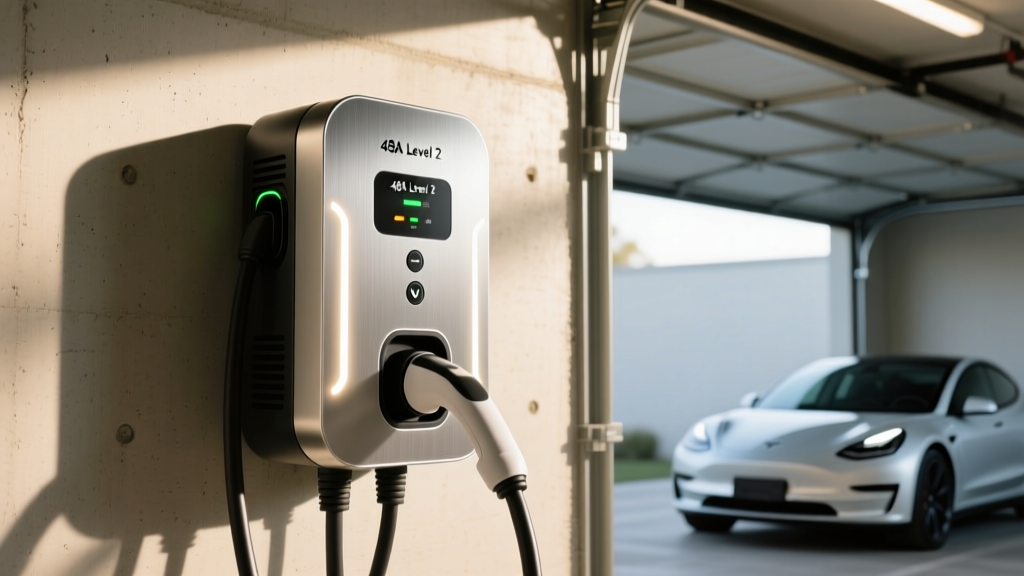
The Horsepower V6 is a 48-amp, Level 2 home EV charger delivering up to 11.5 kW of power on a 240V circuit. It ships with a NACS (Tesla-style) connector, a 25-foot cable, Wi-Fi-enabled scheduling, and a NEMA 4 outdoor rating. At a street price hovering around $399–$449, it undercuts premium brands like ChargePoint and Grizzl-E while matching their core output specs. But does the value proposition hold up once you factor in installation, long-term durability, and compatibility with non-Tesla EVs?
This guide breaks down the V6's real-world performance, the full cost of getting it installed in your garage (including the panel-upgrade scenarios that catch older-home buyers off guard), connector compatibility across every major EV brand sold in 2026, and how the V6 stacks up against three competing Level 2 units.
| Max Output | 11.5 kW (48A @ 240V) |
| Connector | NACS (J3400) |
| Cable Length | 25 ft |
| Wi-Fi / Smart Features | Yes — app scheduling, energy tracking, OTA updates |
| Indoor/Outdoor Rating | NEMA 4 (weather-resistant) |
| Warranty | 3 years |
| Street Price (2026) | $399–$449 |
Understanding Charging Levels: Where the V6 Fits
Before evaluating any specific charger, you need to understand the three charging tiers available to EV owners. The single most important distinction: kW (kilowatts) measures power — how fast energy flows into your battery. kWh (kilowatt-hours) measures energy — the total capacity of your battery. Think of kW as the width of a hose and kWh as the size of the bucket.
| Level | Voltage | Max Power (kW) | Miles of Range Added Per Hour | Typical Use Case |
|---|---|---|---|---|
| Level 1 | 120V (standard outlet) | 1.0–1.4 kW | 3–5 mi/hr | Overnight top-off, PHEVs, low-mileage commuters |
| Level 2 (Horsepower V6) | 240V (dryer-style circuit) | 11.5 kW | 30–44 mi/hr | Daily home charging, most EVs fully charged overnight |
| DC Fast Charging | 400–800V DC | 50–350 kW | 150–1,200+ mi/hr | Road trips, highway corridors, commercial stations |
The Horsepower V6 sits squarely in Level 2 territory. At 11.5 kW, it will add roughly 35–44 miles of range per hour of charging depending on your vehicle's efficiency (measured in kWh per 100 miles). A Tesla Model Y with its ~30 kWh/100mi efficiency gains about 38 mi/hr, while a more efficient Hyundai Ioniq 6 (~25 kWh/100mi) picks up closer to 44 mi/hr.
Real-World Charging Times: 10–80% for Popular EVs
Most EV owners charge between 10% and 80% state of charge for daily use — the top 20% charges significantly slower due to the battery management system tapering current to protect cell health. Here's what 10–80% looks like on the V6 at its full 11.5 kW output:
| Vehicle (2026 Model Year) | Usable Battery (kWh) | 10–80% Energy Needed | Time on V6 at 11.5 kW |
|---|---|---|---|
| Tesla Model Y Long Range | 75 kWh | ~52.5 kWh | ~4 hr 35 min |
| Ford Mustang Mach-E Extended Range | 88 kWh | ~61.6 kWh | ~5 hr 20 min |
| Hyundai Ioniq 5 (84 kWh pack) | 77.4 kWh | ~54.2 kWh | ~4 hr 45 min |
| Chevrolet Equinox EV | 85 kWh | ~59.5 kWh | ~5 hr 10 min |
| BMW i4 eDrive40 | 81.5 kWh | ~57 kWh | ~4 hr 55 min |
| Toyota bZ4X | 64 kWh | ~44.8 kWh | ~3 hr 55 min |
Critical caveat: Not every EV can accept the V6's full 11.5 kW. The vehicle's onboard charger (OBC) is the bottleneck. Most 2026 EVs have 11.5 kW OBCs, but some — like the base Nissan Ariya and certain PHEVs — max out at 7.2 kW. In those cases, the V6 will still work, but charge times stretch proportionally longer.
Installation Cost Breakdown: What You'll Actually Pay
The charger itself is only part of the equation. Installation costs vary dramatically based on your home's electrical panel, the distance from panel to charger location, and local permit fees. Here's a realistic breakdown for a 2026 installation:
| Component | Simple Install (panel nearby, 200A service) | Complex Install (long run, panel upgrade needed) |
|---|---|---|
| Horsepower V6 unit | $399–$449 | $399–$449 |
| 60A breaker + wiring (6 AWG copper) | $50–$80 | $150–$300 |
| Electrician labor (licensed) | $300–$600 | $800–$2,000 |
| Permit & inspection | $50–$150 | $100–$300 |
| Electrical panel upgrade (100A → 200A) | Not needed | $1,500–$3,500 |
| Conduit / surface raceway (if exposed run) | $0–$50 | $100–$400 |
| Total Estimated Range | $800–$1,330 | $3,050–$6,950 |
Electrical Requirements for the V6
The Horsepower V6 draws 48 amps continuously. Per National Electrical Code (NEC), continuous loads require a circuit rated at 125% of the draw — meaning you need a 60-amp breaker on a dedicated 240V circuit using 6 AWG copper wire (or 4 AWG aluminum). Do not install this on a shared circuit with a dryer, oven, or HVAC system.
When You'll Need a Panel Upgrade
If your home has a 100-amp main panel — common in homes built before 1990 — adding a 60A EV circuit will likely exceed your panel's capacity, especially if you already run electric heat, an electric dryer, and an electric range. A licensed electrician will perform a load calculation (NEC Article 220) to determine whether your panel can handle the additional draw. If it can't, a panel upgrade to 200A service typically costs $1,500–$3,500 depending on your utility's requirements and whether a new meter base is needed.
Pro tip: Some utilities offer rebates of $200–$500 for panel upgrades done in conjunction with EV charger installation. Check with your local utility before scheduling work.
Connector Compatibility: Will the V6 Work With Your EV?
As of 2026, the North American EV charging landscape has largely consolidated around NACS (the Tesla connector, now standardized as SAE J3400). The Horsepower V6 ships with a native NACS plug, which directly fits all Tesla vehicles and the growing number of 2025–2026 models from Ford, GM, Rivian, Hyundai, Kia, and others that have adopted NACS.
But what about EVs still equipped with CCS1 or the older CHAdeMO standard? Here's the compatibility matrix:
| EV Connector Type | Brands Using It (2026) | V6 Compatible? | Adapter Needed? |
|---|---|---|---|
| NACS (J3400) | Tesla, Ford, GM, Rivian, Hyundai, Kia, Volvo, Polestar | ✅ Yes — native | None |
| CCS1 | VW ID.4, some 2024–2025 holdover models, BMW (pre-2026) | ✅ Yes — with adapter | NACS-to-CCS1 adapter (~$150–$250) |
| CHAdeMO | Nissan Leaf (legacy) | ⚠️ Limited | CHAdeMO adapters are rare and expensive ($300+) |
If you own a CCS1-equipped EV but plan to switch to a NACS vehicle in the next few years, the V6 is a reasonable investment — just budget for a quality NACS-to-CCS1 adapter like the Lectron or A2Z adapter in the interim. CHAdeMO owners (primarily Nissan Leaf drivers) should consider a CCS-native charger instead, as CHAdeMO adapters remain scarce and poorly supported.
Cost to Charge: Home vs. Public vs. Gas
One of the strongest arguments for home Level 2 charging is cost. Let's compare real-world per-mile fueling costs using national average energy prices as of early 2026:
| Scenario | Rate | Cost Per Mile (3 mi/kWh EV) | Annual Cost (12,000 mi) |
|---|---|---|---|
| Home — off-peak utility rate | $0.08–$0.12/kWh | $0.03–$0.04 | $320–$480 |
| Home — standard residential rate | $0.14–$0.18/kWh | $0.05–$0.06 | $560–$720 |
| Public Level 2 (ChargePoint, etc.) | $0.25–$0.49/kWh | $0.08–$0.16 | $1,000–$1,960 |
| DC Fast Charging (Electrify America) | $0.35–$0.55/kWh | $0.12–$0.18 | $1,400–$2,200 |
| Gas vehicle (28 MPG avg, $3.40/gal) | $3.40/gal | $0.12 | $1,457 |
The math is clear: home charging on an off-peak rate saves $1,000–$1,100 per year versus gasoline for an average driver. Even on a standard residential rate with no time-of-use optimization, you'll save $700–$900 annually. Public DC fast charging, by contrast, can actually exceed gasoline costs — which is why home Level 2 charging is the economic backbone of EV ownership.
The Horsepower V6's app includes scheduled charging, letting you set charge windows to align with your utility's off-peak hours (typically 10 PM – 6 AM). This feature alone can save $200–$400 per year depending on your rate structure.
How the Horsepower V6 Compares: Equipment Showdown
The Level 2 home charger market in 2026 is competitive. Here's how the V6 stacks up against three established alternatives:
Horsepower V6
Output: 11.5 kW / 48A
Connector: NACS
Cable: 25 ft
Smart Features: Wi-Fi, app scheduling, energy monitoring
Rating: NEMA 4
Warranty: 3 years
Price: $399–$449
Best for: Budget-conscious NACS owners wanting full 48A output.
ChargePoint Home Flex
Output: 12 kW / 50A
Connector: NACS or J1772 (configurable)
Cable: 23 ft
Smart Features: Wi-Fi, Alexa, detailed app, utility demand-response
Rating: NEMA 4
Warranty: 3 years
Price: $599–$699
Best for: Users wanting ecosystem integration and utility demand-response programs.
Grizzl-E Smart
Output: 10 kW / 40A
Connector: NACS or J1772
Cable: 24 ft
Smart Features: Wi-Fi, OCPP compatible, adjustable amperage
Rating: NEMA 4 (built for Canadian winters, -40°C tested)
Warranty: 3 years
Price: $499–$549
Best for: Extreme cold climates and users needing adjustable amperage for older panels.
Tesla Wall Connector
Output: 11.5 kW / 48A
Connector: NACS
Cable: 24 ft
Smart Features: Wi-Fi, OTA updates, Power-Share (dual unit load balancing)
Rating: NEMA 4
Warranty: 4 years
Price: $475
Best for: Tesla loyalists wanting first-party support and longest warranty.
The V6's primary advantage is price-to-output ratio: it delivers the same 48A as the Tesla Wall Connector at $75–$100 less. Its main disadvantage is brand maturity — Horsepower is a newer entrant, and long-term reliability data (5+ years) simply doesn't exist yet. The ChargePoint and Grizzl-E have multi-year track records with large installed bases.
Safety, Code, and Installation Best Practices
Level 2 charger installation is not a DIY project. Here are the non-negotiable safety and code requirements per the 2023 NEC (adopted by most jurisdictions through 2026):
- Dedicated circuit: The V6 must be on its own 60A breaker — no shared circuits.
- GFCI protection: NEC 2023 Section 625.54 requires GFCI protection for all EV charging outlets rated 150V to ground or less and 50A or less. For hardwired installations (which the V6 supports), GFCI requirements vary by jurisdiction — your electrician will confirm local code.
- Outdoor rating: The V6's NEMA 4 rating means it can withstand splashing water and windblown dust, making it suitable for outdoor installation. However, NEMA 4 is not submersible — don't install it where standing water or direct hose spray is routine.
- Cable management: The 25-foot cable should be routed to avoid trip hazards. Use the included cable holster or a J-hook. Never let the cable rest on a driveway surface where vehicles will drive over it — repeated compression damages internal conductors.
- Permit and inspection: Nearly all US jurisdictions require an electrical permit for a new 240V circuit. The inspection ensures proper wire gauge, breaker sizing, grounding, and torque on connections. Skipping the permit risks insurance claim denial if an electrical fire occurs.
Frequently Asked Questions
How much does it cost to install a Horsepower V6 home EV charger?
Expect $800–$1,330 for a straightforward installation where your electrical panel is nearby and has adequate capacity. If your home needs a panel upgrade or a long conduit run, costs can reach $3,000–$7,000. The V6 unit itself costs $399–$449, with the remainder covering the 60A breaker, 6 AWG wiring, licensed electrician labor, and local permit fees.
How fast will the Horsepower V6 add range to my EV?
At its full 11.5 kW output, the V6 adds approximately 35–44 miles of range per hour depending on your vehicle's efficiency. A Tesla Model Y gains about 38 mi/hr, while a Hyundai Ioniq 6 gains closer to 44 mi/hr. Most EVs with 75–85 kWh batteries will charge from 10% to 80% in roughly 4–5.5 hours.
Which connector does the V6 use, and is it compatible with my non-Tesla EV?
The V6 ships with a native NACS (J3400) connector. This directly fits all Teslas and most 2025–2026 EVs from Ford, GM, Hyundai, Kia, Rivian, and others. If your EV has a CCS1 port (e.g., VW ID.4, some older models), you'll need a NACS-to-CCS1 adapter ($150–$250). CHAdeMO vehicles (Nissan Leaf) have limited adapter availability.
How much does EV charging cost per mile compared to gasoline?
Home charging on an off-peak utility rate ($0.08–$0.12/kWh) costs about $0.03–$0.04 per mile — roughly one-quarter the cost of gasoline at $3.40/gallon in a 28 MPG vehicle ($0.12/mile). Even on standard residential rates, home charging costs $0.05–$0.06/mile. Public DC fast charging ($0.35–$0.55/kWh) can approach or exceed gasoline costs, which is why home charging is the key to EV savings.
What electrical upgrades might I need before installing a Level 2 charger?
The most common upgrade is a panel capacity increase from 100A to 200A service, needed in older homes that lack headroom for a 60A EV circuit alongside existing appliances. This costs $1,500–$3,500. You may also need a new breaker slot (some panels are physically full), upgraded service wiring from the utility, or replacement of a hazardous panel brand (Federal Pacific, Zinsco). A licensed electrician's load calculation will identify all requirements before work begins.
Does the Horsepower V6 qualify for any tax credits or utility rebates?
The federal Alternative Fuel Vehicle Refueling Property Credit (IRS Form 8911) covers 30% of home charger equipment and installation costs, up to $1,000 — but only if you live in a qualifying census tract (typically rural or low-income areas per IRS guidelines). Additionally, many utilities offer $200–$500 rebates for Level 2 charger installation, sometimes stackable with the federal credit. Check your utility's EV program page and consult a tax professional for eligibility.
Sources: EPA vehicle efficiency data via fueleconomy.gov; NEC electrical code standards via NFPA; federal tax credit rules via irs.gov.