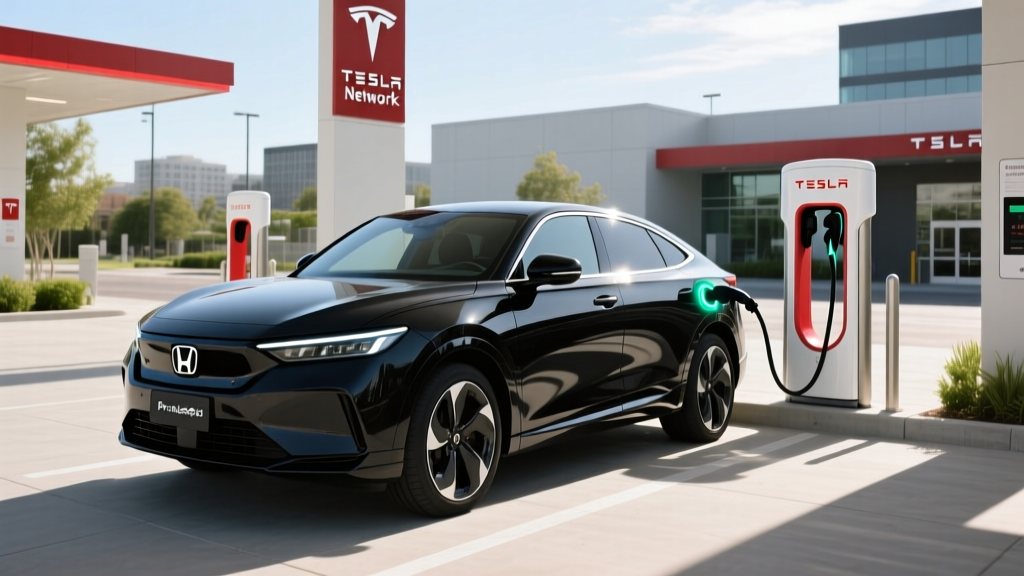
The 2026 Honda Prologue arrives with a built-in NACS (North American Charging Standard) port, meaning Honda's first dedicated electric SUV can plug directly into Tesla Superchargers without an adapter. For Prologue buyers, this unlocks access to over 20,000 Tesla Supercharger stalls nationwide — the most reliable DC fast-charging network in North America. But knowing how to charge, what it costs, and how to set up home charging are the real ownership questions.
This guide walks through every charging scenario for the Honda Prologue: Supercharger network access, home Level 2 installation, connector compatibility, cost-per-mile math, and equipment recommendations — with the exact numbers you need to budget and plan.
Honda Prologue Charging Specs at a Glance
Before getting into networks and hardware, here's the Prologue's charging hardware profile. The 2026 Prologue uses an 85 kWh (usable) NMC lithium-ion battery pack shared with the GM Ultium platform.
| Spec | 2026 Honda Prologue |
|---|---|
| Battery (usable) | 85 kWh, NMC |
| EPA Range (FWD) | 296 miles |
| EPA Range (AWD) | 273–281 miles |
| Real-World Highway Range | ~230–255 miles (70+ mph, moderate temps) |
| Max DC Fast Charge Rate | 150 kW peak |
| 10–80% DC Fast Charge | ~32 minutes |
| Level 2 AC Charge Rate | 11.5 kW (48A) |
| Charge Port | NACS (native, no adapter needed for Tesla) |
| Battery Warranty | 8 years / 100,000 miles |
Charging Levels Explained: Speed, Power, and Range Added
EV charging comes in three tiers. The critical distinction: kW (kilowatts) measures power — how fast energy flows into the battery. kWh (kilowatt-hours) measures energy — the battery's total capacity. Think of kW as the flow rate of a hose and kWh as the size of the bucket.
| Level | Voltage | Power (kW) | Miles of Range per Hour | Best For |
|---|---|---|---|---|
| Level 1 (120V) | 120V AC | 1.2–1.4 kW | ~3–5 miles/hr | Emergency / overnight trickle |
| Level 2 (240V) | 240V AC | 7.2–11.5 kW | ~25–42 miles/hr | Daily home charging |
| DC Fast Charge | 400–800V DC | 50–350 kW | ~150–800 miles/hr (peak) | Road trips, quick top-ups |
For the Prologue's 85 kWh battery, Level 1 charging from empty would take roughly 60+ hours — impractical for daily use. Level 2 at the Prologue's max 11.5 kW rate replenishes the full battery in about 8 hours, ideal for overnight charging. DC fast charging from 10–80% takes roughly 32 minutes at a 150 kW stall, though the charge curve tapers significantly above 80% SoC to protect battery health.
Using Tesla Superchargers With the Honda Prologue
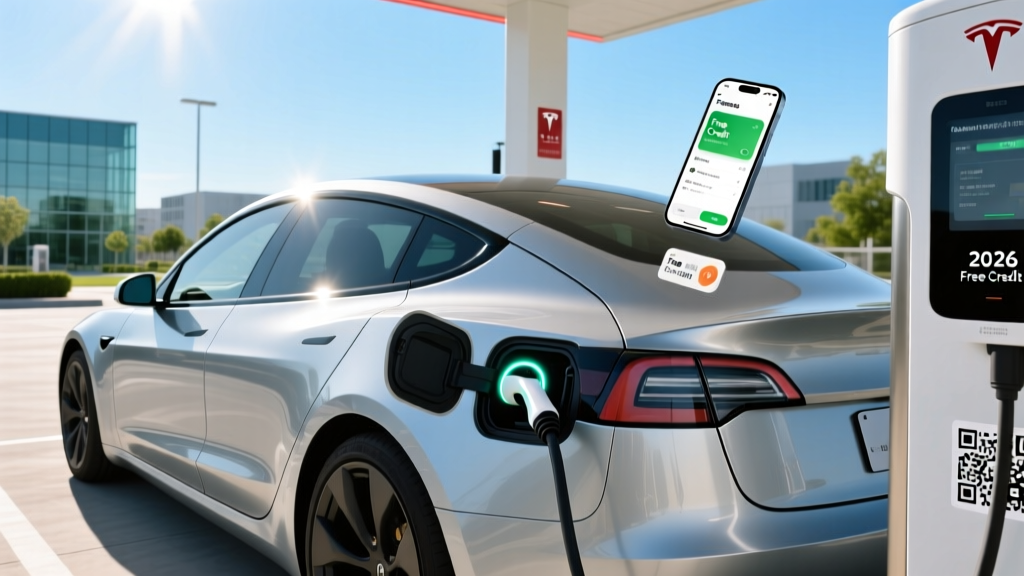
Because the 2026 Prologue ships with a native NACS charge port, you can pull into any Tesla Supercharger and plug in directly — no adapter required. Here's how the experience works in practice:
- Network Access: Honda has partnered with Tesla to enable Supercharger access. Use the HondaLink app or the Tesla app (with your non-Tesla EV registered) to locate stalls, initiate sessions, and track billing.
- Supercharger V3 (250 kW stalls): The Prologue will peak at its 150 kW max — it cannot absorb the full 250 kW. Expect 10–80% in ~32 minutes.
- Supercharger V4 stalls: Newer V4 installations feature longer cables and improved cable management, making it easier to reach the Prologue's driver-side rear port.
- Urban Superchargers (72 kW): Slower but adequate for a 45-minute shopping stop — adds roughly 100–120 miles in that window.
Connector Compatibility: What Plugs Into What
The North American charging landscape has consolidated heavily around NACS, but legacy connectors still exist. Here's where the Prologue stands:
| Connector | Network Examples | Prologue Compatibility |
|---|---|---|
| NACS (Tesla) | Tesla Supercharger, Rivian Adventure Network, newer Electrify America / EVgo stalls | ✅ Native — no adapter |
| CCS1 | Electrify America (legacy), EVgo (legacy), ChargePoint DC | ⚠️ Requires NACS-to-CCS adapter (check Honda dealer availability) |
| CHAdeMO | Limited legacy stations (being phased out) | ❌ Not compatible — no adapter available |
For Prologue owners, NACS-native access is the primary advantage. Tesla's Supercharger network consistently posts uptime rates above 99%, making it the most dependable public network. For CCS-only stations still common in some regions, Honda is expected to offer an official NACS-to-CCS adapter through dealerships — budget $150–$250 if you need one for travel in areas where CCS-only chargers remain.
Home Level 2 Charger Installation: Costs, Electrical Requirements, and Upgrades
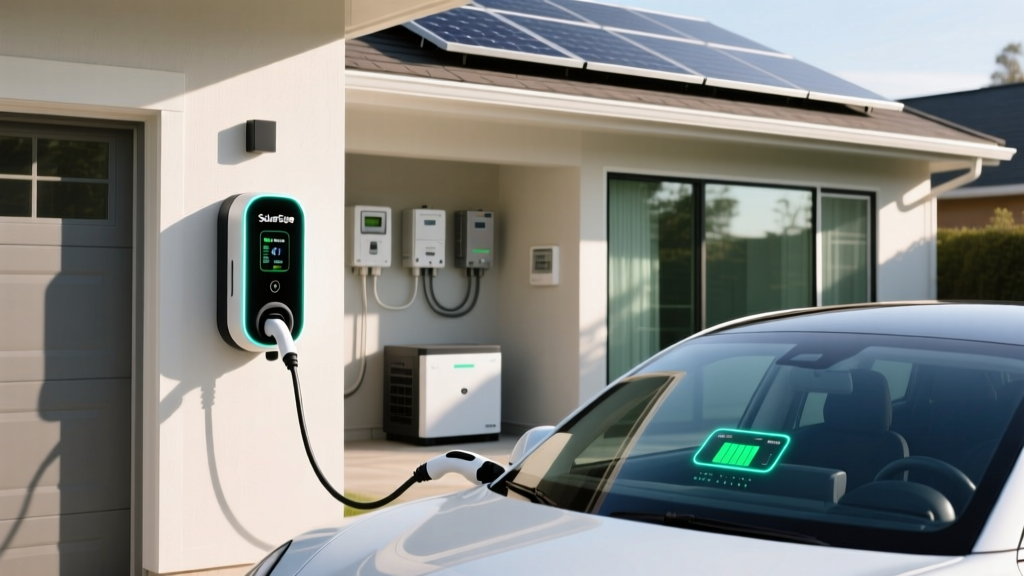
Most Prologue owners will charge at home 80–90% of the time. A Level 2 home charger on a 240V circuit is the practical baseline. Here's what's involved electrically and financially.
Electrical Requirements
- Circuit: Dedicated 60-amp breaker (to support continuous 48-amp / 11.5 kW charging — NEC requires circuits rated at 125% of continuous load)
- Wire: 6 AWG copper (or 4 AWG aluminum) for runs up to ~100 feet; thicker gauge for longer runs
- Panel Capacity: Your main electrical panel must have sufficient amperage headroom. A 200-amp panel is the modern standard; older homes with 100-amp panels often need an upgrade.
- Permit: Most jurisdictions require an electrical permit for new 240V circuits — typically $50–$200 depending on locality.
Installation Cost Breakdown
| Item | Cost Range |
|---|---|
| Level 2 Charger (hardware) | $400–$750 |
| Electrician labor (standard install) | $500–$1,500 |
| Electrical permit | $50–$200 |
| Panel upgrade (100A → 200A, if needed) | $1,500–$3,500 |
| Total (no panel upgrade) | $950–$2,450 |
| Total (with panel upgrade) | $2,450–$5,950 |
Safety and Code Considerations
- Dedicated circuit: The EV charger must have its own dedicated breaker — never share with other appliances.
- GFCI protection: NEC 2020+ requires GFCI protection for outdoor receptacles; hardwired chargers may be exempt in some jurisdictions, but GFCI breakers add safety for garage installs too.
- Outdoor rating: If mounting outdoors, ensure the charger carries a NEMA 4 (weatherproof) rating. Most quality Level 2 units are rated for outdoor use.
- Hardwired vs. plug: Hardwired installations (no plug) are more reliable and avoid the 14-50 receptacle wear issues reported with high-amperage daily use. A NEMA 14-50 outlet offers portability but requires a GFCI breaker under current code.
Level 2 Charger Equipment Recommendations
The Prologue accepts up to 11.5 kW (48 amps) on Level 2. To get the full rate, you need a charger rated for at least 48 amps on a 60-amp circuit. Here are proven options:
Emporia Level 2 EV Charger
- Power: 48A / 11.5 kW (240V)
- Connector: NACS (native)
- Cable Length: 24 ft
- Smart Features: Wi-Fi, energy monitoring via Emporia app, solar integration, scheduling
- Price: ~$400
- Best For: Budget-conscious buyers who want smart energy tracking
ChargePoint Home Flex (NACS)
- Power: Up to 50A / 12 kW (240V, adjustable)
- Connector: NACS
- Cable Length: 23 ft
- Smart Features: Wi-Fi, ChargePoint app scheduling, Alexa integration, flexible amperage settings
- Price: ~$550
- Best For: Flexible amperage for older panels (dial down to 32A if needed)
Tesla Wall Connector (Gen 4)
- Power: 48A / 11.5 kW (240V)
- Connector: NACS (native)
- Cable Length: 24 ft
- Smart Features: Wi-Fi, OTA updates, power sharing (multiple units on one circuit), integrated cable management
- Price: ~$475
- Best For: Prologue owners who primarily use Superchargers and want Tesla ecosystem integration
Grizzl-E Smart (NACS)
- Power: 40A / 9.6 kW (240V)
- Connector: NACS
- Cable Length: 24 ft
- Smart Features: Wi-Fi, OCPP compatibility, adjustable amperage
- Price: ~$450
- Best For: Cold-climate durability (rated to -40°F), simple rugged build
Our pick for most Prologue owners: The Emporia or Tesla Wall Connector deliver the full 11.5 kW the Prologue can accept at competitive prices. If your panel is tight on capacity, the ChargePoint Home Flex lets you set the amperage to 32A or 40A without buying a different unit.
Charging Cost Per Mile: Home vs. Public vs. Gas
The Prologue's efficiency is rated at approximately 3.0–3.3 miles per kWh (roughly 99–109 MPGe combined per fueleconomy.gov). Here's how charging costs compare across scenarios, benchmarked against a gas SUV averaging 25 MPG at $3.40/gallon:
| Scenario | Rate | Cost per kWh | Cost per Mile | Full 85 kWh Fill |
|---|---|---|---|---|
| Home (off-peak utility rate) | $0.13/kWh avg | $0.13 | $0.042 | $11.05 |
| Home (TOU peak rate) | $0.28/kWh | $0.28 | $0.090 | $23.80 |
| Tesla Supercharger (avg) | $0.30–$0.40/kWh | $0.35 | $0.113 | $29.75 |
| Electrify America / public DC | $0.35–$0.55/kWh | $0.45 | $0.145 | $38.25 |
| Gas SUV (25 MPG, $3.40/gal) | — | — | $0.136 | — |
The bottom line: Home off-peak charging at $0.042/mile saves roughly 70% vs. gas. Even Supercharging at $0.113/mile undercuts the gas baseline. Only frequent use of expensive public DC chargers pushes EV charging costs near gas parity. For a driver covering 12,000 miles/year, home charging saves approximately $1,100–$1,300 annually vs. gasoline.
Solar-panel owners can push home charging costs near $0.02/mile or less, depending on system payback and net metering rules in their state.
Charging Time Examples: How Long Does a Full Session Take?
Real charging times depend on starting SoC, battery temperature, and charger output. Here are practical scenarios for the Prologue's 85 kWh pack:
| Scenario | Charger | Time | Range Added |
|---|---|---|---|
| Overnight home (0–100%) | 11.5 kW Level 2 | ~7.5–8 hours | Full 296 mi (FWD) |
| Road trip stop (10–80%) | 150 kW DC (Tesla V3) | ~32 minutes | ~210 miles |
| Quick top-up (40–70%) | 150 kW DC | ~15 minutes | ~90 miles |
| Mall stop (20–60%) | 72 kW Urban Supercharger | ~35 minutes | ~115 miles |
| Emergency trickle (overnight) | 1.4 kW Level 1 (120V) | 10 hours | ~35 miles |
Pro tip: Use the Prologue's battery preconditioning feature (activated via navigation to a DC fast charger) to warm the battery before arrival. In cold weather, preconditioning can shave 5–10 minutes off a 10–80% session by bringing the battery to optimal charging temperature.
Frequently Asked Questions
Does the Honda Prologue need an adapter for Tesla Superchargers?
No. The 2026 Prologue has a native NACS charge port, which is the same connector used by Tesla Superchargers. Plug in directly — no adapter needed. For older CCS-only public chargers, you may need a NACS-to-CCS adapter from Honda.
How much does it cost to install a home EV charger for the Prologue?
Expect $950–$2,450 for a standard Level 2 installation (charger + electrician + permit) if your electrical panel has sufficient capacity. If your home needs a panel upgrade from 100A to 200A, total cost rises to $2,450–$5,950. Get a quote from a licensed electrician who will perform a load calculation before committing.
How fast does each charging level add range to the Prologue?
Level 1 (120V) adds roughly 3–5 miles per hour. Level 2 (240V at 11.5 kW) adds about 38–42 miles per hour. DC fast charging at 150 kW peak can add up to 150+ miles in 15 minutes, though the rate tapers above 60% SoC.
Is home charging cheaper than gas for the Prologue?
Yes, significantly. At the national average electricity rate of ~$0.13/kWh, home charging costs about $0.042 per mile. A comparable gas SUV at 25 MPG and $3.40/gallon costs $0.136 per mile — roughly 3× more. Annual savings for 12,000 miles of driving: approximately $1,100–$1,300.
What electrical upgrades might my home need for a Level 2 charger?
The most common upgrade is a panel capacity increase. A 60-amp dedicated circuit for Level 2 charging draws significant load. Homes with 100-amp panels, older wiring, or many existing electric appliances (range, dryer, HVAC) may need a panel upgrade to 200 amps. Your electrician will run a load calculation per NEC Article 220 to determine if an upgrade is required.
Can I use a Tesla Wall Connector to charge my Honda Prologue at home?
Yes. The Tesla Wall Connector (Gen 3 or Gen 4) uses a NACS connector and works with any NACS-equipped EV, including the Prologue. It delivers up to 48A / 11.5 kW — matching the Prologue's onboard charger maximum. The Tesla app is not required; the Wall Connector can be configured via its built-in Wi-Fi setup portal.
Does the §30D federal tax credit apply to home charger installation?
The Residential Clean Energy Credit (IRC §25C) covers 30% of home EV charger equipment and installation costs, up to $1,000. This is separate from the §30D vehicle purchase credit. Eligibility depends on your tax liability and whether you live in a qualifying census tract. Consult a tax professional for your specific situation, as rules are subject to legislative change.