Honda Prologue Range: What the EPA Sticker Doesn't Tell You
The 2026 Honda Prologue pairs an 85 kWh usable Ultium battery (NMC chemistry, co-developed with GM) with an EPA-estimated range of up to 296 miles for the front-wheel-drive EX trim. The all-wheel-drive Elite drops to 283 miles EPA. But as any seasoned EV owner knows, the window sticker is just the starting point for real-world planning.
EPA vs. Real-World Range — Honda Prologue
EPA Estimate: 296 mi (FWD EX) / 283 mi (AWD Elite)
Highway driving (70-80 mph): ~235–260 mi
Cold weather (below 32°F): ~200–230 mi
Combined mixed driving (typical owner): ~255–275 mi
Efficiency: 99 MPGe combined / 34 kWh/100mi (FWD)
Why the gap? The Prologue's aerodynamic profile and 4,900-lb curb weight work against it at sustained highway speeds, and NMC batteries lose roughly 15-25% of effective capacity in freezing temperatures due to increased internal resistance and cabin heating load. Honda includes a heat pump on all trims, which helps mitigate cold-weather losses compared to resistive heaters, but physics still wins in deep winter.
| Spec | EX (FWD) | Touring (FWD) | Elite (AWD) |
|---|---|---|---|
| EPA Range | 296 mi | 296 mi | 283 mi |
| Battery (usable) | 85 kWh NMC | 85 kWh NMC | 85 kWh NMC |
| Horsepower | 212 hp | 212 hp | 288 hp |
| 0-60 mph | 7.5 sec | 7.5 sec | 6.2 sec |
| Peak DC Fast Charge | 150 kW | 150 kW | 150 kW |
| 10-80% DC Time | ~35 min | ~35 min | ~35 min |
| Level 2 Acceptance | 11.5 kW | 11.5 kW | 11.5 kW |
| Base MSRP | $48,795 | $51,795 | $59,295 |
| Battery Warranty | 8 yr / 100,000 mi | 8 yr / 100,000 mi | 8 yr / 100,000 mi |
Source: EPA / fueleconomy.gov
Understanding Charging Levels: kW, kWh, and Miles Per Hour
Before plugging in, let's nail down the most critical distinction in EV ownership: kW (kilowatts) measures power — how fast energy flows into your car. kWh (kilowatt-hours) measures energy — the total capacity of the battery. Think of kW as the width of the hose and kWh as the size of the bucket. The Prologue's bucket is 85 kWh; the hose width changes depending on your charging level.
| Level | Voltage / Amps | Power (kW) | Miles of Range Per Hour | 0-100% Time (85 kWh) |
|---|---|---|---|---|
| Level 1 (120V) | 120V / 12A | ~1.4 kW | ~3-4 mi/hr | ~60+ hours |
| Level 2 (240V) | 240V / 48A | 11.5 kW | ~30-35 mi/hr | ~7.5 hours |
| DC Fast Charge | 400V DC | 150 kW (peak) | ~200+ mi in 30 min | 10-80% in ~35 min |
The Prologue's onboard charger maxes out at 11.5 kW on Level 2, meaning even if you install a 19.2 kW wall connector, the car will only accept 11.5 kW. This is important for sizing your home charger correctly — there's no benefit to paying for a 80A circuit if the car caps at 48A.
On DC fast charging, the Prologue peaks at 150 kW but only sustains that rate up to roughly 30-40% State of Charge (SoC). Above 60%, the charge curve tapers significantly, dropping to 75 kW and then 40 kW as it approaches 80%. This is standard for NMC battery management — pushing high current into a nearly-full battery accelerates degradation and generates excess heat. Honda's 10-80% estimate of ~35 minutes reflects this curve, not a sustained 150 kW rate.
Home Charger Installation: What It Actually Costs
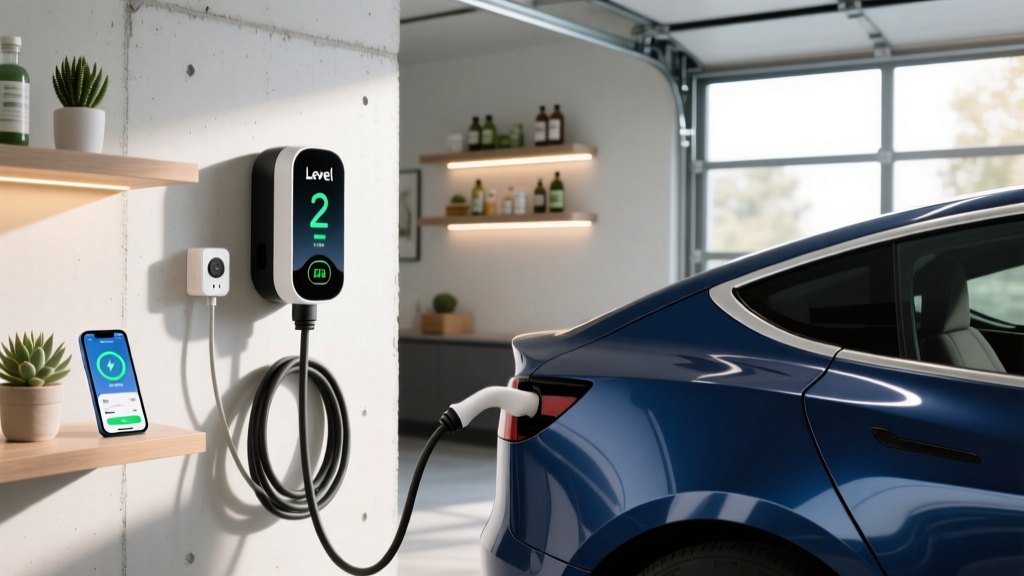
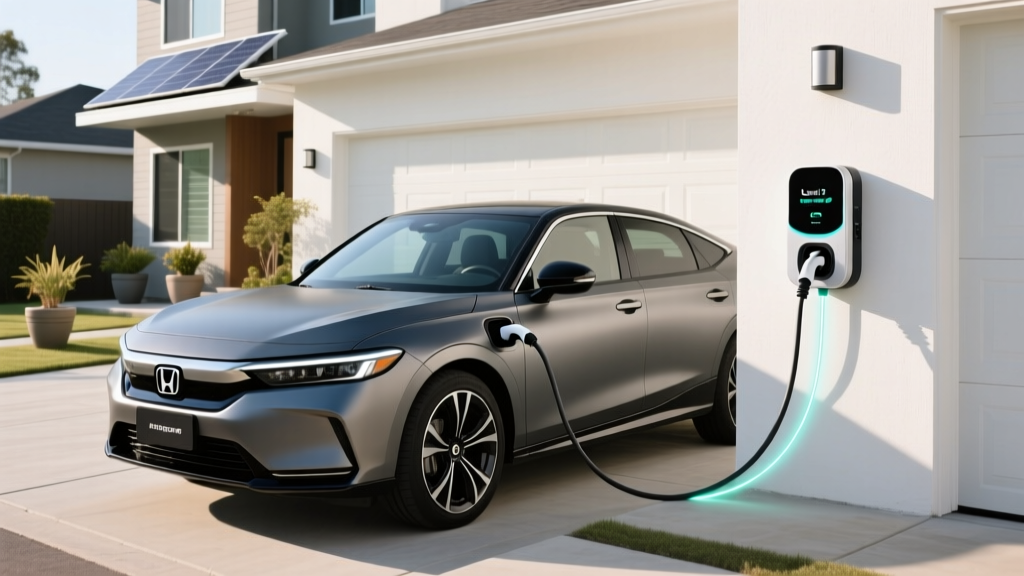
Level 2 home charging is where the Prologue shines for daily ownership. A full charge from 10% to 100% takes about 7.5 hours at 11.5 kW — plug in at 10 PM and you're at 100% by your morning commute. But getting a Level 2 charger installed properly requires understanding your home's electrical infrastructure.
Electrical requirements for the Prologue: A 240V dedicated circuit with a 60-amp breaker (to support continuous 48A draw, NEC code requires the breaker to be rated 125% above continuous load: 48A × 1.25 = 60A). You'll need a NEMA 14-60 outlet or a hardwired connection — most EV pros recommend hardwired for reliability and to avoid the outlet degradation that high-amperage plugs can cause over time.
| Component | Low Estimate | High Estimate | Notes |
|---|---|---|---|
| Level 2 Charger (hardware) | $350 | $700 | 48A smart charger, 25ft cable |
| Electrician labor | $500 | $2,000 | Depends on run length, conduit, drywall |
| Electrical permit | $50 | $250 | Varies by municipality |
| Panel upgrade (if needed) | $1,500 | $4,500 | 100A → 200A service upgrade |
| Total (no panel upgrade) | $900 | $2,950 | Most homes with 200A service |
| Total (with panel upgrade) | $2,400 | $7,450 | Older homes with 100A service |
The panel upgrade is the wildcard. Homes built before 1990 often have 100-amp electrical service, which may not support a 60A dedicated EV circuit alongside existing loads (electric dryer, oven, HVAC). Your electrician will perform a load calculation per NEC Article 220 to determine if an upgrade is necessary. Some homeowners can avoid this by choosing a lower-amperage charger (32A / 40A breaker) that still delivers adequate overnight charging at 7.7 kW — roughly 20 miles of range per hour, which covers most daily needs.
The federal government offers a 30% tax credit (up to $1,000) for home EV charger installation under IRS §25E, though eligibility depends on your census tract qualifying as a "low-income or non-urban area." Check your eligibility on the IRS website or consult a tax professional.
Which Connector Does the Honda Prologue Use?
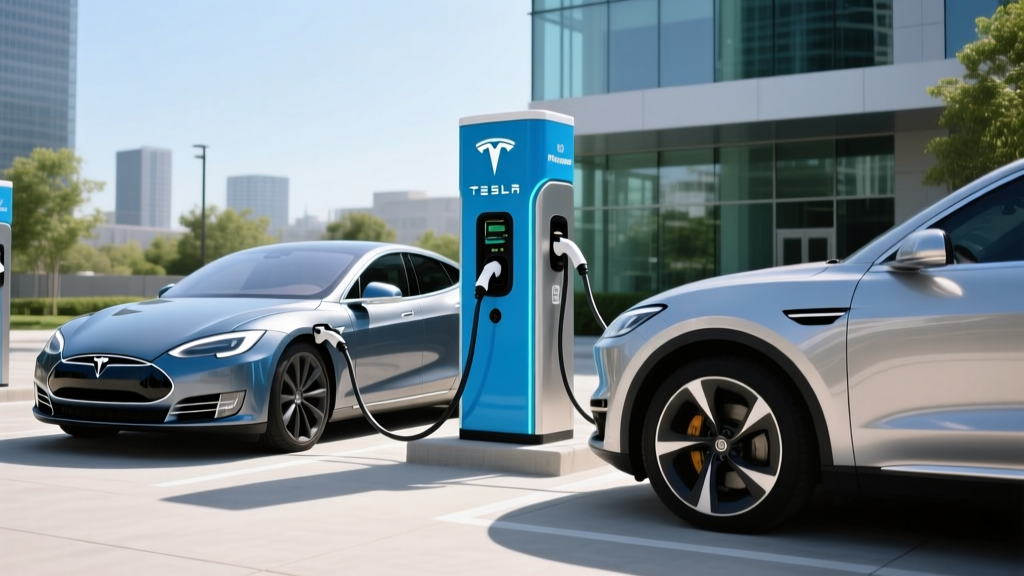
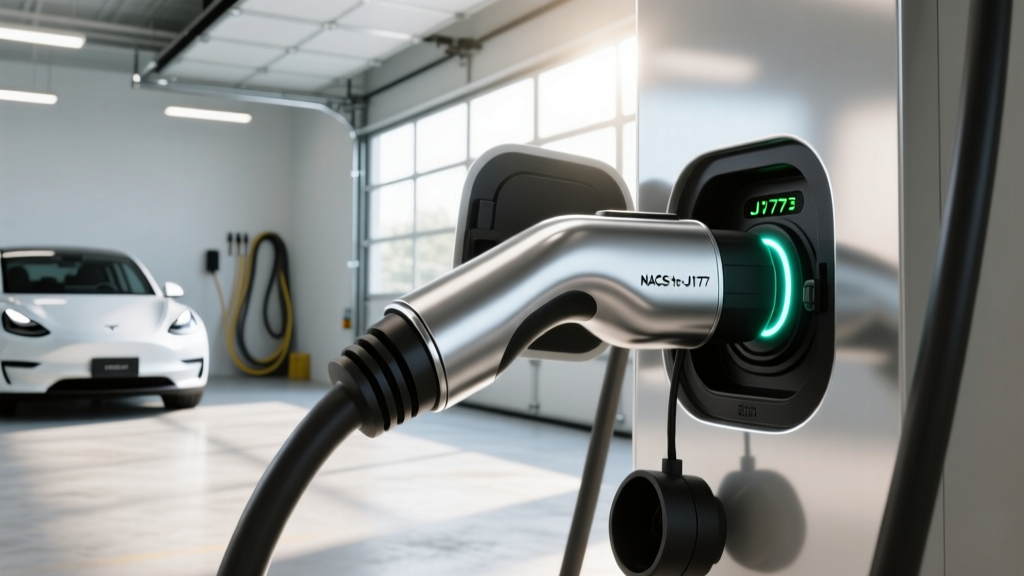
The 2026 Honda Prologue ships with a CCS1 (Combined Charging System) port, consistent with Honda's current North American lineup. However, the industry-wide shift to NACS (North American Charging Standard, the Tesla connector) means the Prologue can access Tesla Superchargers using an adapter.
| Connector | Native Support? | Adapter Needed? | Network Access |
|---|---|---|---|
| CCS1 | Yes (built-in) | No | Electrify America, EVgo, ChargePoint, Ionity |
| NACS (Tesla) | No | Yes — CCS-to-NACS adapter (~$200-$250) | Tesla Supercharger network (17,000+ stalls) |
| CHAdeMO | No | Not available | Largely deprecated in North America |
| J1772 (Level 2) | Yes (built-in) | No | All public Level 2 stations |
Honda has confirmed that future models (2027+) will transition to native NACS ports, but for the 2026 Prologue, CCS1 is your native connector. Honda provides access to Electrify America's network through the HondaLink app, with some complimentary charging included on new purchases. The CCS-to-NACS adapter is worth purchasing (~$200-250 from authorized retailers) to unlock Tesla Superchargers, which remain the most reliable DC fast-charging network by uptime metrics.
Charging Cost Per Mile: Prologue vs. Gasoline SUVs
The Prologue's efficiency of 34 kWh/100mi (FWD) makes it one of the more efficient midsize electric SUVs on the market. Here's how charging costs stack up against a comparable gasoline SUV averaging 25 MPG combined.
| Scenario | Rate | Prologue Cost/Mile | Gas SUV Cost/Mile |
|---|---|---|---|
| Home charging (off-peak) | $0.13/kWh | $0.044 | $0.140 (at $3.50/gal) |
| Home charging (peak) | $0.25/kWh | $0.085 | $0.140 |
| Public Level 2 | $0.35/kWh | $0.119 | $0.140 |
| DC Fast Charging | $0.48/kWh | $0.163 | $0.140 |
| DC Fast ( Electrify America Idle+) | $0.58/kWh | $0.197 | $0.140 |
The takeaway is clear: home charging is where the economics work best. At off-peak residential rates ($0.13/kWh national average), the Prologue costs roughly $0.04 per mile — about one-third the fuel cost of a gas SUV. But if you rely exclusively on DC fast charging at premium rates, you can actually exceed gasoline costs per mile. This is why home Level 2 access isn't just a convenience — it's the financial backbone of EV ownership.
For a driver covering 12,000 miles annually with 80% home charging at $0.13/kWh and 20% public DC at $0.48/kWh, annual fuel costs land around $680. The equivalent gas SUV at $3.50/gallon burns $1,680. That's roughly $1,000 in annual fuel savings — enough to offset a higher insurance premium or monthly payment difference within a few years.
Best Home Chargers for the Honda Prologue
Since the Prologue caps at 11.5 kW (48A), you need a charger that can deliver at least that — but there's no reason to overspend on a 80A unit. Here are three chargers well-matched to this vehicle:
Emporia Level 2 Smart Charger
Power: 48A / 11.5 kW (240V)
Connector: J1772 (NACS adapter available)
Cable length: 24 ft
Smart features: Wi-Fi, energy monitoring, solar integration, scheduling via app
Price: ~$399
Best for: Budget-conscious owners who want energy tracking and solar pairing. The app's real-time kWh monitoring helps you track exact charging costs. Hardwired installation recommended for 48A.
ChargePoint Home Flex
Power: Up to 50A / 12 kW (240V, adjustable down to 16A)
Connector: J1772 (NACS version available)
Cable length: 23 ft
Smart features: Wi-Fi, Alexa integration, flexible amperage settings, ChargePoint network account
Price: ~$599
Best for: Flexibility. The adjustable amperage (16A-50A via DIP switches) means you can install it on a 40A circuit today and upgrade later without replacing the unit. UL-listed and widely supported.
Wallbox Pulsar Plus
Power: 48A / 11.5 kW (240V)
Connector: J1772
Cable length: 25 ft
Smart features: Wi-Fi + Bluetooth, load balancing (Power Sharing for two units), compact design
Price: ~$549
Best for: Garages with limited wall space. The Pulsar Plus is one of the smallest 48A chargers on the market, and its Power Sharing feature lets two chargers share a single circuit — useful for two-EV households.
All three chargers are NEMA 4-rated for outdoor use (though indoor garage installation is ideal) and carry 3-year manufacturer warranties. For the Prologue's 11.5 kW acceptance rate, the Emporia at 48A hits the sweet spot of matching the car's capability without paying for unused capacity.
Safety, Electrical Code, and Permit Requirements
EV charging pulls sustained high current for hours — this isn't like plugging in a lamp. Proper installation isn't optional; it's a fire-safety necessity.
- Dedicated circuit: NEC Article 625 requires EV chargers to have a dedicated branch circuit — no sharing with outlets, lights, or appliances.
- GFCI protection: The 2023 NEC update (adopted by most jurisdictions by 2026) requires GFCI protection for all EV charging outlets. Hardwired installations may be exempt in some jurisdictions — check local code.
- Outdoor rating: If your charger is installed outside, it must carry at minimum a NEMA 3R rating (rain-resistant). NEMA 4 (watertight) is preferred for areas with driving rain or snow.
- Permit and inspection: Nearly all jurisdictions require an electrical permit for a new 240V circuit. The inspection ensures wire gauge, breaker sizing, and grounding meet code. Skipping the permit risks insurance claim denial in the event of an electrical fire.
- Wire gauge: A 60A circuit requires 6 AWG copper wire (THHN in conduit) or 4 AWG aluminum. Your electrician will size this based on the run length to account for voltage drop on longer runs (>100 ft).
A licensed electrician should always perform the installation. While the hardware is straightforward, the load calculation, panel assessment, and code compliance are where mistakes happen. Expect the electrician to spend 3-6 hours on a standard garage installation with the panel on the same wall; longer runs through attics or crawlspaces add labor cost.
Honda Prologue Charging FAQ
How much does it cost to install a home EV charger for the Honda Prologue?
Most homeowners spend between $900 and $2,950 for a complete Level 2 installation (charger, electrician labor, and permit) if no panel upgrade is needed. Homes with older 100A electrical service may need a panel upgrade to 200A, adding $1,500–$4,500 to the total.
How fast will each charging level add range to the Prologue?
Level 1 (120V) adds roughly 3-4 miles per hour — essentially useless for daily driving unless you drive under 30 miles/day. Level 2 (240V, 48A) adds 30-35 miles per hour, fully replenishing the 85 kWh battery in about 7.5 hours. DC fast charging at 150 kW peak can add roughly 200 miles in 30 minutes, though the charge curve tapers significantly above 60% SoC.
Which connector does the Prologue use, and do I need an adapter?
The 2026 Prologue has a native CCS1 port, compatible with Electrify America, EVgo, and ChargePoint DC fast chargers. For Tesla Supercharger access, you'll need a CCS-to-NACS adapter (approximately $200-250). All public Level 2 stations use J1772, which the Prologue supports natively.
How much does charging the Prologue cost per mile compared to gas?
At home off-peak rates ($0.13/kWh), the Prologue costs about $0.044 per mile — roughly one-third the cost of a 25-MPG gas SUV at $3.50/gallon ($0.14/mile). Public DC fast charging at $0.48/kWh pushes the cost to $0.16/mile, which is more expensive than gas. Home charging access is critical for EV economics.
What electrical upgrades might my home need for a Level 2 charger?
The most common upgrade is a panel replacement from 100A to 200A service, required when the existing panel lacks capacity for a new 60A circuit alongside major appliances. Homes built after 2000 typically have 200A service and can accommodate a charger without panel work. A load calculation by a licensed electrician will determine your specific situation.
Does the Honda Prologue qualify for the federal EV tax credit?
The Prologue's eligibility for the §30D federal tax credit (up to $7,500) depends on current-year battery sourcing and critical mineral requirements, buyer income caps ($150K single / $300K joint), and the vehicle's MSRP falling under the $80,000 SUV cap. The Prologue qualifies on price, but battery component sourcing rules change frequently. Verify current eligibility on IRS.gov or with a tax professional before purchasing.
Can I charge the Prologue on a regular 120V outlet?
Yes, but slowly. Level 1 charging at 120V delivers about 1.4 kW, adding 3-4 miles of range per hour. A full charge from empty takes over 60 hours. Level 1 works as a trickle-charge supplement for low-mileage drivers or as a backup, but it's not practical as a primary charging strategy for the Prologue's 85 kWh battery.