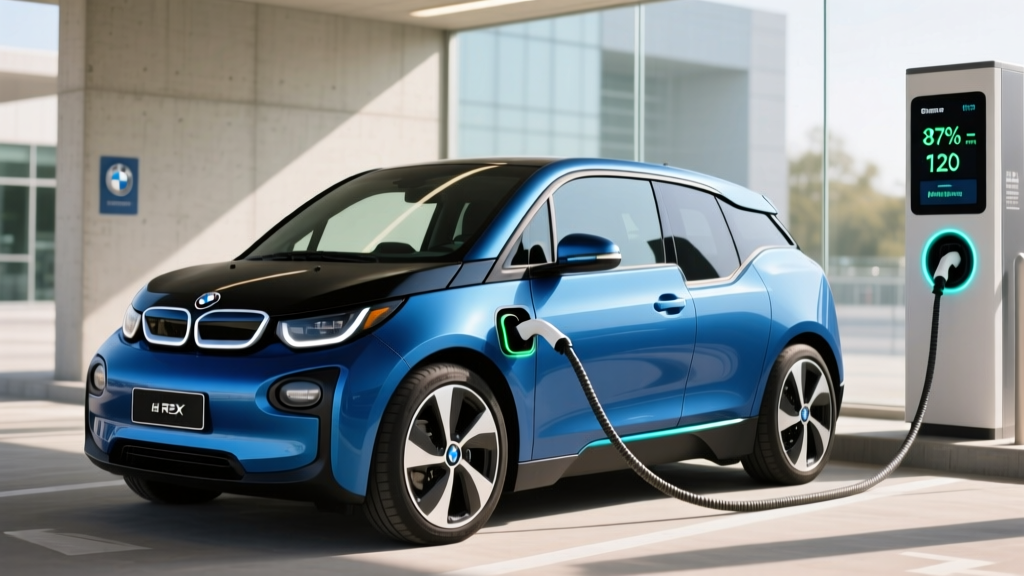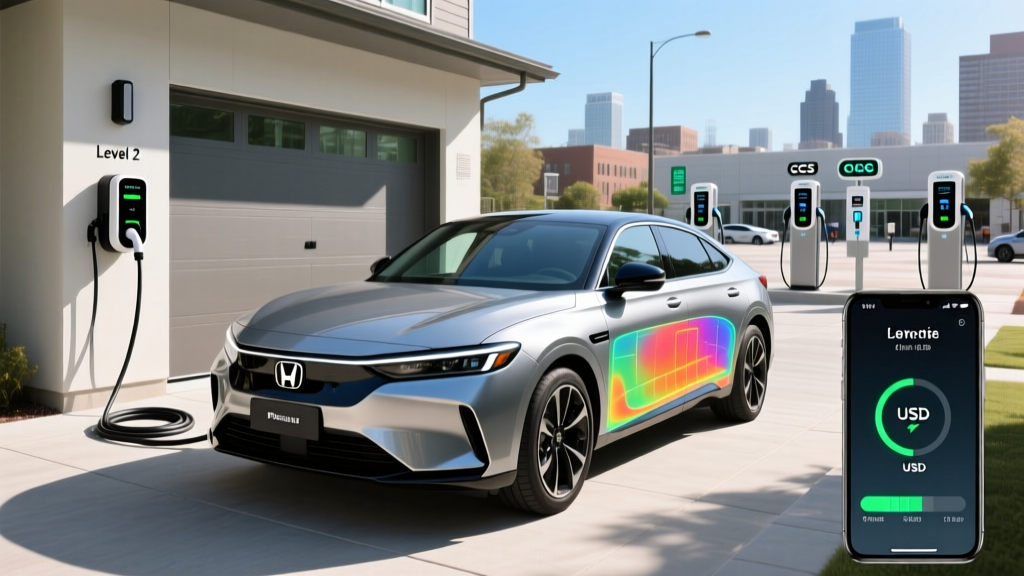
The 2025 Honda Prologue arrives with an EPA-estimated range of up to 296 miles (FWD) and a usable battery capacity of 85 kWh. But real-world range depends heavily on how, where, and when you charge. Whether you're evaluating the Prologue's daily usability or planning your home charging infrastructure, understanding the relationship between its Ultium-based battery pack and available charging speeds is essential.
This guide covers everything a Prologue owner — or prospective buyer — needs to know about charging: home Level 2 installation, DC fast charging on road trips, connector compatibility (including the NACS adapter situation), and the true cost per mile compared to gasoline.
Prologue Battery and Charging Specs at a Glance
| Spec | Value |
|---|---|
| Battery (usable) | 85 kWh (NMC chemistry, Ultium platform) |
| EPA Range (FWD) | 296 miles |
| EPA Range (AWD) | 281 miles |
| Max DC Fast Charge Rate | 150 kW peak |
| 10–80% DC Fast Charge Time | ~35 minutes (estimated) |
| Level 2 AC Charge Rate | 11.5 kW (48A) |
| Level 2 Full Charge Time (0–100%) | ~8.5 hours |
| Native Connector | CCS1 (2025 model year) |
| MPGe (FWD combined) | 94 MPGe |
| Battery/Powertrain Warranty | 8 years / 100,000 miles |
| Base MSRP (EX FWD) | $47,400 |
The Prologue shares GM's Ultium platform with the Chevrolet Blazer EV and Cadillac Lyriq, which means its charging architecture is proven but not class-leading. The 150 kW peak DC rate trails rivals like the Hyundai Ioniq 5 (peak 240 kW) and Kia EV6 (peak 240 kW), which can achieve 10–80% in roughly 18 minutes. For the Prologue, you'll spend about 35 minutes at a DC fast charger on road trips — manageable, but worth factoring into longer drives.
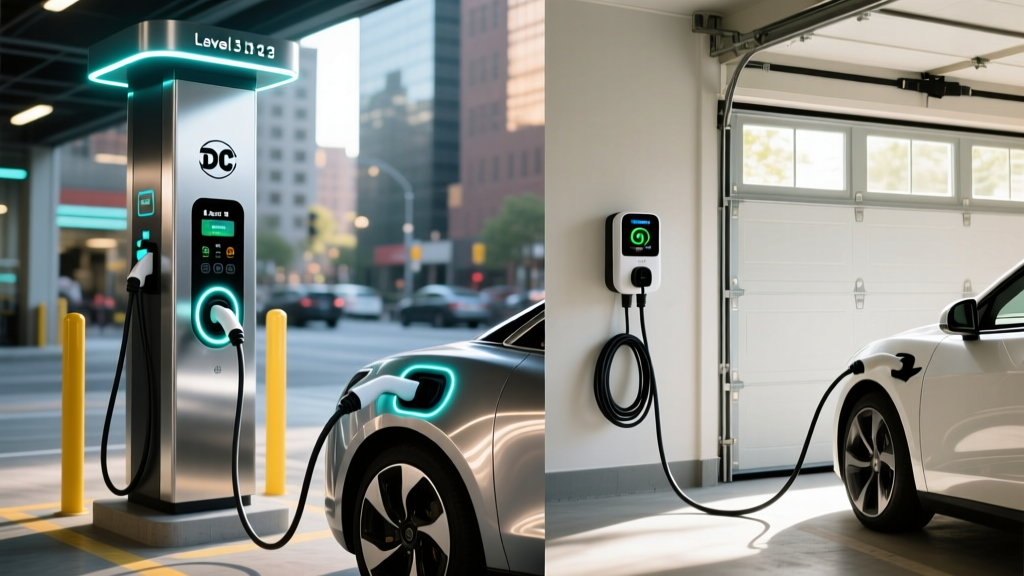
Understanding Charging Levels: How Fast Will Each Add Range?
EV charging is categorized into three levels. The critical distinction: kW (kilowatts) measures power — the rate of energy delivery — while kWh (kilowatt-hours) measures energy capacity, like gallons in a fuel tank. A higher kW number means faster charging, not more range stored.
| Level | Voltage / Power | Miles of Range Added per Hour | Full Charge Time (85 kWh) | Best Use Case |
|---|---|---|---|---|
| Level 1 | 120V / 1.4 kW | ~3–4 miles/hr | 60+ hours | Emergency / trickle top-up |
| Level 2 | 240V / 7.7–11.5 kW | ~22–32 miles/hr | 8.5–11 hours | Daily home charging |
| DC Fast Charge | 400V+ / 50–150 kW | ~150–200+ miles in 30 min | 10–80% in ~35 min | Road trips |
Level 1 uses a standard 120V household outlet. The included mobile charging cord delivers roughly 1.4 kW, adding about 3–4 miles of range per hour. For a Prologue driven 30 miles per day, Level 1 could technically keep up overnight (10 hours × 4 miles = 40 miles), but it's impractical as a primary strategy and inefficient due to energy losses.
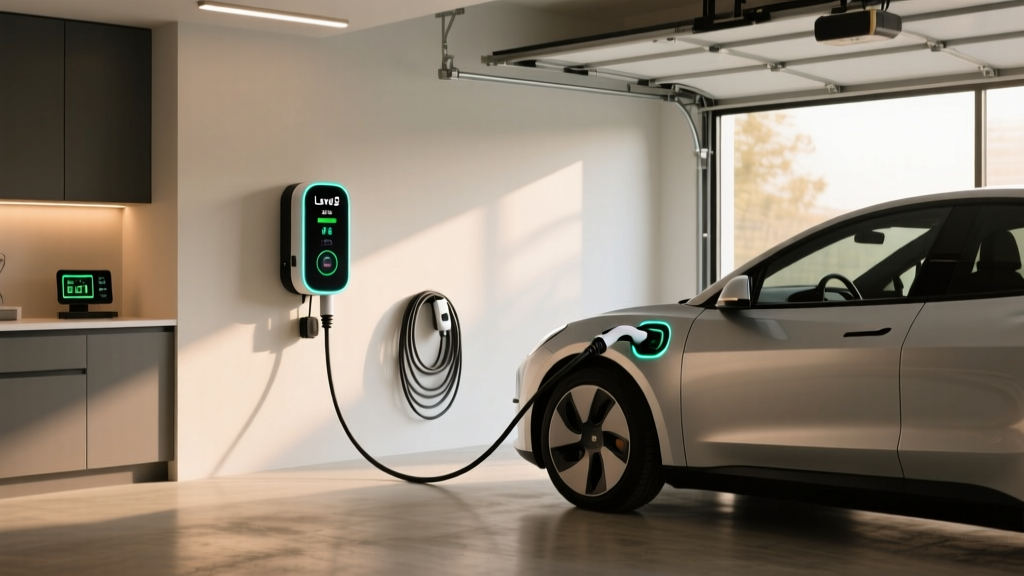
Level 2 is the standard for daily home charging. The Prologue's onboard charger accepts up to 11.5 kW (48 amps at 240V). A 48A Level 2 station will add roughly 30–32 miles of range per hour, fully replenishing the 85 kWh battery in about 8.5 hours — ideal for overnight charging.
DC Fast Charging bypasses the onboard charger and sends direct current straight to the battery. The Prologue peaks at 150 kW, though sustained rates taper as the battery fills. Expect roughly 150 kW from 10–40% SoC, tapering to ~80 kW by 60% and ~40 kW above 80%. This charge curve is why manufacturers quote 10–80% times rather than 0–100% — the final 20% can take as long as the first 70%.
Home Charger Installation: Requirements, Costs, and Electrical Upgrades
Installing a Level 2 home charger is the single biggest ownership upgrade you can make. Here's what's involved for a Prologue owner.
Electrical Requirements
To deliver the Prologue's maximum 11.5 kW AC charge rate, you need a 240V, 60-amp dedicated circuit (a 48A continuous load requires a circuit rated at 125% of that load per National Electrical Code, hence 60A). This typically uses a NEMA 14-60 outlet or a hardwired connection.
If you opt for a lower-amperage charger — say a 32A unit on a 40A circuit — you'll still add roughly 22 miles per hour, which is sufficient for most daily driving. This can reduce installation cost if your panel has limited capacity.
Installation Cost Breakdown
| Component | Cost Range | Notes |
|---|---|---|
| Level 2 Charger (hardware) | $350–$750 | Smart Wi-Fi chargers with 25ft cable |
| Electrician labor (standard install) | $500–$1,500 | Varies by run length from panel to garage |
| Permit and inspection | $50–$250 | Required in most jurisdictions |
| Electrical panel upgrade (if needed) | $1,500–$4,000 | 100A→200A service upgrade for older homes |
| Total (no panel upgrade) | $900–$2,500 | Typical for modern homes with 200A service |
| Total (with panel upgrade) | $2,400–$6,500 | Homes built before 1990 with 100A service |
Panel upgrade reality: Homes built before the 1990s often have 100-amp electrical service. Adding a 60A EV circuit to a 100A panel that's already near capacity (central AC, electric dryer, electric range) may require upgrading to 200A service. This is the single largest cost variable and is often overlooked in online estimates. A licensed electrician will perform a load calculation to determine if an upgrade is necessary.
Safety and code requirements: NEC Article 625 governs EV charging installations. Key requirements include a dedicated circuit (no shared loads), GFCI protection for outdoor receptacles, and proper conductor sizing. If installing outdoors, ensure the charger carries a NEMA 4 or NEMA 4X weather-resistance rating. Always pull a permit — unpermitted work can void homeowner's insurance and create issues at resale.
Recommended Level 2 Chargers for the Honda Prologue
Emporia Level 2 Smart Charger
- Power: 48A / 11.5 kW (240V)
- Connector: J1772 (CCS1 compatible)
- Cable: 24 ft
- Smart features: Wi-Fi, app scheduling, energy tracking, solar integration
- Price: ~$399
- Best for: Budget-conscious buyers who want full smart features
ChargePoint Home Flex
- Power: Configurable 16–50A / up to 12 kW (240V)
- Connector: J1772 (CCS1 compatible)
- Cable: 23 ft
- Smart features: Wi-Fi, app scheduling, Alexa, adjustable amperage
- Price: ~$699
- Best for: Flexible amperage to match panel capacity
Tesla Wall Connector (with J1772 adapter)
- Power: 48A / 11.5 kW (240V, 60A circuit)
- Connector: NACS (requires J1772 adapter for Prologue)
- Cable: 24 ft
- Smart features: Wi-Fi, OTA updates, power sharing between units
- Price: ~$475 (charger) + ~$30 (adapter)
- Best for: Multi-EV households with both NACS and CCS vehicles
All three units deliver the Prologue's maximum 11.5 kW AC rate when installed on a 60A circuit. The ChargePoint Home Flex's adjustable amperage (down to 16A) is particularly useful if your electrician determines your panel can't support a full 60A circuit.
Connector Compatibility: CCS1, NACS, and the Adapter Question
The 2025 Honda Prologue ships with a CCS1 (Combined Charging System) port — the current standard for most non-Tesla EVs in North America. However, the industry is rapidly transitioning to NACS (North American Charging Standard), Tesla's connector, which Honda has committed to adopting on future models.
| Connector | Native Support? | Adapter Needed? | Network Access |
|---|---|---|---|
| CCS1 | Yes (native) | No | Electrify America, EVgo, ChargePoint, Ionity |
| NACS (Tesla) | No | Yes — CCS1-to-NACS adapter (~$200–$300) | Tesla Supercharger network (15,000+ stalls in US) |
| CHAdeMO | No | Not available / not recommended | Legacy network, largely deprecated |
| J1772 (Level 2 AC) | Yes (native, top portion of CCS1) | No | All public Level 2 stations |
Why a NACS adapter matters: Tesla's Supercharger network is the largest and most reliable DC fast-charging network in North America. As of 2025, Honda owners can access Superchargers using a CCS1-to-NACS adapter. Honda has announced that future Prologue model years will adopt NACS natively, but for the 2025 model, an adapter is your bridge to approximately 15,000 additional fast-charging stalls. According to Honda's official EV page, adapter compatibility with Superchargers has been validated for the Prologue.
Adapter caution: Not all third-party CCS-to-NACS adapters are created equal. Look for adapters that are UL-listed or certified to SAE J3400 standards. Avoid unbranded adapters from marketplace sellers — a poor connection at 150 kW can overheat and damage your vehicle's charge port.
Cost to Charge: Home vs. Public vs. Gas Comparison
One of the strongest economic arguments for the Prologue is fuel cost. Here's how charging costs break down across scenarios, compared to a gasoline equivalent.
| Scenario | Rate | Cost per Mile | Annual Cost (12,000 mi) |
|---|---|---|---|
| Home charging (off-peak utility rate) | $0.10/kWh | $0.030 | $360 |
| Home charging (national avg. rate) | $0.17/kWh | $0.051 | $612 |
| Public Level 2 (network pricing) | $0.25/kWh | $0.075 | $900 |
| DC Fast Charging (Electrify America, EVgo) | $0.48/kWh | $0.144 | $1,728 |
| Gasoline SUV (25 MPG, $3.50/gal) | $3.50/gallon | $0.140 | $1,680 |
Key takeaway: Home charging at off-peak rates saves roughly $1,300 per year compared to gasoline. Even at the national average residential rate of $0.17/kWh, you save over $1,000 annually. However, if you rely exclusively on DC fast charging, your cost per mile actually exceeds gasoline — a critical consideration for apartment dwellers without home charging access.
The Prologue FWD consumes approximately 30 kWh per 100 miles (or roughly 3.3 miles per kWh) based on its EPA efficiency rating. This figure is the basis for all cost calculations above.
Public Charging Networks: Where to Charge on the Road
The Prologue's CCS1 port gives you native access to the major public DC fast-charging networks:
- Electrify America: ~900 stations, peak rates up to 350 kW (Prologue limited to 150 kW). Pricing: ~$0.48/kWh or subscription plans at $0.31/kWh.
- EVgo: ~1,100 stations, peak rates up to 350 kW. Pricing: ~$0.43–$0.52/kWh depending on market.
- ChargePoint: Extensive Level 2 network plus growing DC fast footprint. Pricing varies by site host.
- Tesla Supercharger (via adapter): ~1,700 US stations with 150–250 kW stalls. Pricing: ~$0.25–$0.35/kWh (varies by location and time of day).
Preconditioning tip: The Prologue's battery thermal management system works best when the battery is at optimal temperature before a fast-charge session. On cold days, use the navigation system to route to a charger — this triggers battery preconditioning, warming the pack for faster charge acceptance. Without preconditioning, a cold battery may initially accept only 50–70 kW instead of the full 150 kW peak, adding 10–15 minutes to your stop.
Charging curve reality: At a 150 kW DC fast charger, the Prologue's charge rate follows a stepped taper. Expect approximately 150 kW from 10–30% SoC, stepping down to ~120 kW from 30–50%, ~80 kW from 50–70%, and ~40–50 kW from 70–80%. The 10–80% time of ~35 minutes reflects this curve, not a sustained 150 kW rate.
Federal Tax Credit and Charging Equipment Incentives
The Prologue's eligibility for the federal §30D clean vehicle tax credit depends on current-year rules, which include battery component sourcing requirements, critical minerals thresholds, MSRP caps ($80,000 for SUVs), and buyer income limits ($300,000 joint / $150,000 single). As of 2025, the Prologue's credit eligibility varies by trim and production batch — consult the IRS qualified vehicle list and a tax professional before relying on a specific credit amount.
Additionally, the Alternative Fuel Vehicle Refueling Property Credit (§30C) provides up to $1,000 (30% of cost) for home EV charger installation, subject to income and census-tract eligibility. This credit applies to the hardware and installation of your Level 2 charger. Check IRS guidelines for current eligibility.
Frequently Asked Questions
How much does it cost to install a home EV charger for the Honda Prologue?
A typical Level 2 installation costs $900–$2,500 if your home has a 200A electrical panel with available capacity. This includes the charger ($350–$750), electrician labor ($500–$1,500), and permit ($50–$250). If your home needs a panel upgrade from 100A to 200A service, add $1,500–$4,000, bringing the total to $2,400–$6,500.
How fast will each charging level add range to the Prologue?
Level 1 (120V) adds approximately 3–4 miles per hour. Level 2 (240V, 48A) adds roughly 30–32 miles per hour. DC fast charging at 150 kW can add approximately 150 miles in 30 minutes under optimal conditions (warm battery, low state of charge).
Which connector and charger is compatible with my Prologue?
The 2025 Prologue uses a CCS1 connector natively, compatible with all J1772 Level 2 stations and CCS DC fast chargers. To access Tesla Superchargers, you need a CCS1-to-NACS adapter ($200–$300). CHAdeMO is not supported and the network is largely deprecated.
How much does charging cost per mile compared to gas?
Home charging at the national average rate of $0.17/kWh costs approximately $0.051 per mile in the Prologue FWD — roughly one-third the cost of a 25 MPG gasoline SUV at $3.50/gallon ($0.14/mile). However, exclusive reliance on DC fast charging at $0.48/kWh pushes cost to $0.144/mile, essentially matching gasoline.
What electrical upgrades might I need for a Level 2 charger?
You need a dedicated 240V circuit — typically 60A for the Prologue's full 11.5 kW charge rate. Homes with 200A service usually have sufficient capacity. Homes with 100A service, especially those with other high-draw electric appliances (range, dryer, HVAC), may require a panel upgrade to 200A, adding $1,500–$4,000 to installation cost. A licensed electrician will perform a load calculation to determine your specific needs.
Can I use a Tesla Supercharger with the Honda Prologue?
Yes, with a CCS1-to-NACS adapter. Honda has validated Supercharger access for the Prologue. Keep in mind that the Prologue's 150 kW peak charge rate means you won't take full advantage of V3 Supercharger stalls rated at 250 kW, but you'll still benefit from the network's coverage and reliability.