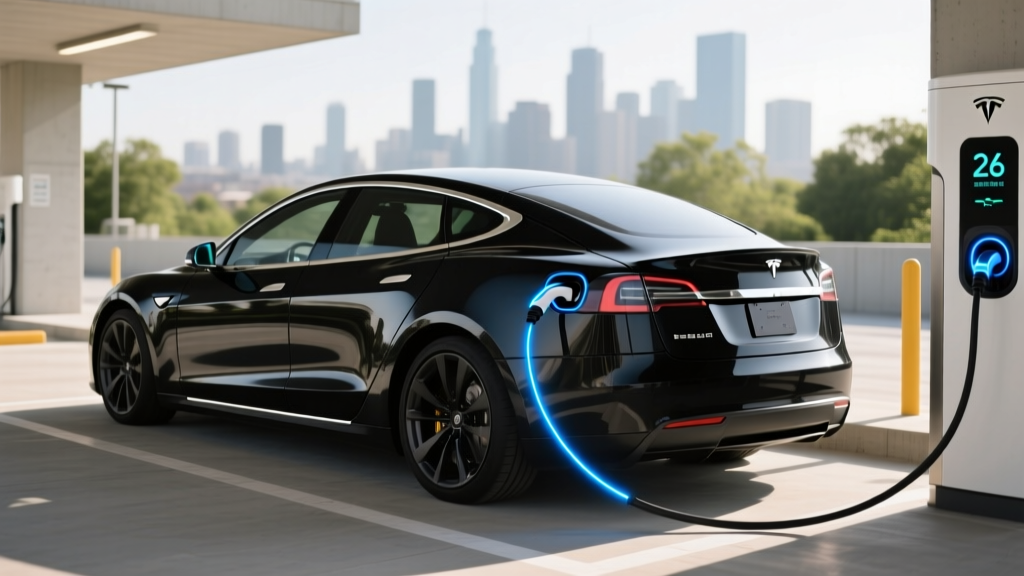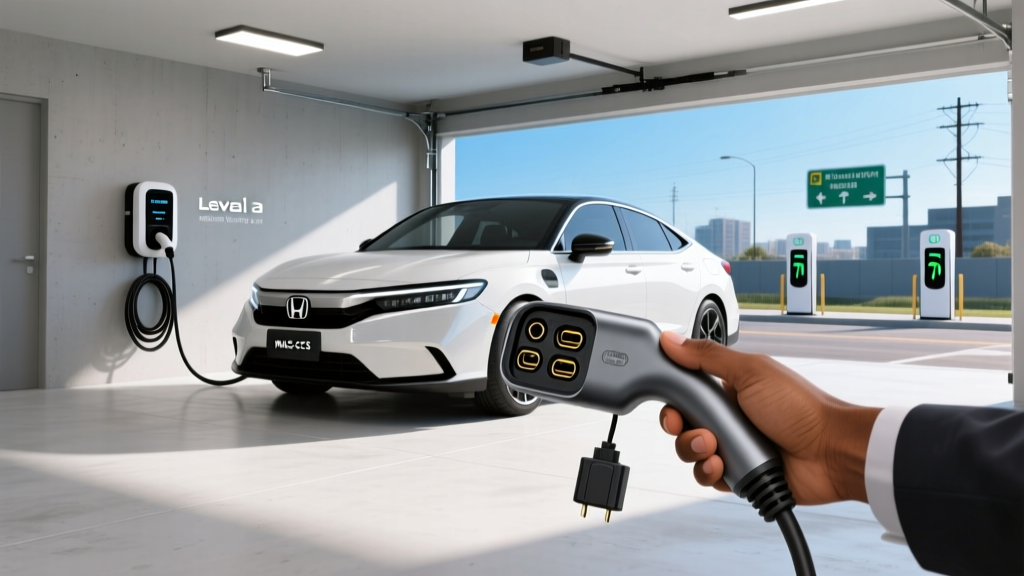
If you own a Honda Prologue or are eyeing the upcoming Honda 0 Series EVs, one question dominates your charging strategy: which plug do you actually need? Honda's current electric lineup ships with the CCS1 connector, but the North American Charging Standard (NACS) — pioneered by Tesla and now adopted by most automakers — controls access to the largest fast-charging network in the country. The Honda NACS-CCS adapter bridges that gap, letting CCS-equipped Hondas tap into Tesla Superchargers and other NACS-only stations.
This guide breaks down exactly what the adapter does, how fast each charging level adds range, what a home Level 2 install really costs (including the panel-upgrade scenario nobody warns you about), and how Honda's charging economics compare to filling a gas tank.
Why Honda Owners Need a NACS-CCS Adapter in 2026
Honda's first modern EVs — the Prologue (built on GM's Ultium platform) and the Acura ZDX — launched with CCS1 ports. Starting with the 2025 model year, Honda committed to NACS adoption for future vehicles, but tens of thousands of CCS-equipped Hondas are already on the road. The Honda NACS-CCS adapter (and equivalent third-party options from brands like Lectron and A2Z) gives these vehicles access to:
- Tesla Supercharger network: Over 25,000 stalls in North America, many now equipped with the "Magic Dock" CCS-compatible connector, but many still NACS-only.
- NACS-native destination chargers: Hotels, workplaces, and retail locations that installed Tesla Wall Connectors.
- Future-proofing: As new charging stations default to NACS, CCS-only infrastructure may become less common over time.
Honda EV Connector Compatibility Quick Reference
| Charger Type | Native Honda Plug | Adapter Needed? | Network Examples |
|---|---|---|---|
| CCS1 DC Fast | CCS1 (built-in) | No | Electrify America, EVgo, ChargePoint |
| NACS DC Fast (Tesla Supercharger) | CCS1 | Yes — NACS-to-CCS adapter | Tesla Supercharger (non-Magic Dock stalls) |
| J1772 Level 2 (public) | CCS1 (J1772-compatible) | No | ChargePoint, Blink, public Level 2 |
| NACS Level 2 (Tesla Wall Connector) | CCS1 | Yes — NACS-to-CCS adapter | Tesla destination chargers |
| CHAdeMO | CCS1 | Yes — CHAdeMO-to-CCS (rare) | Legacy Nissan-era stations |
Charging Levels Explained: Speeds, kW, and Miles Per Hour
The single most important distinction in EV charging: kW (kilowatts) measures power — how fast energy flows into your battery. kWh (kilowatt-hours) measures energy — the total capacity of your battery. Think of kW as the width of a hose and kWh as the size of the bucket. Confusing these two is the most common EV literacy mistake, and it leads to wildly wrong expectations at the charger.
Here's what each charging level delivers for a Honda Prologue (85 kWh usable battery, EPA 296 miles on the FWD Elite trim):
| Level | Voltage / Amperage | Power (kW) | Miles of Range Added Per Hour | Typical Use Case |
|---|---|---|---|---|
| Level 1 | 120V / 12A | ~1.4 kW | ~3–5 mi/hr | Emergency / overnight trickle |
| Level 2 (standard home) | 240V / 32A | ~7.7 kW | ~23–28 mi/hr | Daily home charging |
| Level 2 (max home) | 240V / 48A | ~11.5 kW | ~35–42 mi/hr | Fast home charging, 60A circuit |
| DC Fast Charging | 400V+ / variable | Up to 150 kW (Prologue peak) | ~190 mi in ~28 min (10–80%) | Road trips, highway corridors |
Real-world note: The Prologue's onboard charger maxes at 11.5 kW on Level 2. On DC fast charging, it peaks around 150 kW but sustains that rate only between roughly 10–40% state of charge (SoC). Above 80%, the charge curve tapers significantly — expect 80–100% to take nearly as long as 10–80%. This is normal lithium-ion battery management to prevent overheating and degradation.
How Much Does a Home Level 2 Charger Installation Actually Cost?
This is where most EV buyers get blindsided. The charger unit itself is a fraction of the total cost. The real variable is your home's electrical panel — and whether it can handle a new 240V dedicated circuit.
Electrical Requirements for Home Level 2 Charging
- Voltage: 240V (same as a dryer or oven outlet)
- Amperage: 32A charger needs a 40A breaker; 48A charger needs a 60A breaker (NEC code requires 125% overhead on continuous loads)
- Dedicated circuit: Your EV charger must have its own breaker — you cannot share with other appliances
- GFCI protection: Required for outdoor installations per NEC 2023/2026 updates
- Permit: Most jurisdictions require an electrical permit and inspection for new 240V circuits
Panel Upgrade: The Hidden Cost
If your home has a 100-amp main panel (common in homes built before 2000), adding a 40–60A EV circuit may exceed your panel's capacity. An electrician will perform a load calculation to determine if you need a panel upgrade to 200A. This is not optional — it's a code requirement.
Home Level 2 Charger Installation Cost Breakdown (2026 Estimates)
| Component | Simple Install (panel has capacity) | Complex Install (panel upgrade needed) |
|---|---|---|
| Level 2 charger unit (hardwired or plug-in) | $400–$700 | $400–$700 |
| Electrician labor (run 240V circuit, ~30–50 ft) | $500–$1,200 | $800–$2,000 |
| Electrical permit & inspection | $50–$200 | $50–$200 |
| Panel upgrade (100A → 200A, if needed) | N/A | $1,500–$3,500 |
| Conduit, wiring, miscellaneous materials | $100–$300 | $200–$500 |
| Total estimated cost | $1,050–$2,400 | $2,950–$6,900 |
Pro tip: Get at least three quotes from licensed electricians who specifically list EV charger installation experience. Ask them to include the load calculation in their initial assessment. Some utilities offer rebates of $250–$1,000 for home charger installs — check with your local provider before starting work.
Equipment Picks: Best Level 2 Chargers for Honda EVs (2026)
Since the Honda Prologue and current Honda EVs use CCS1/J1772 for Level 2, you'll want a charger with a J1772 connector (or a NACS charger plus your adapter). Here are proven units matched to Honda's 11.5 kW onboard charging limit:
ChargePoint Home Flex
- Power output: Up to 12 kW (50A) — adjustable down to 16A
- Connector: J1772 (native fit for Honda)
- Cable length: 23 feet
- Smart features: Wi-Fi, app scheduling, Alexa integration, energy tracking
- Price: ~$549
- Best for: Honda owners who want app control and flexible amperage
Emporia Vue Level 2 Charger
- Power output: Up to 11.5 kW (48A)
- Connector: J1772
- Cable length: 24 feet
- Smart features: Wi-Fi, solar integration, time-of-use scheduling, energy monitoring via Emporia Vue panel
- Price: ~$399
- Best for: Budget-conscious buyers who still want smart scheduling
Tesla Wall Connector (with adapter)
- Power output: Up to 11.5 kW (48A)
- Connector: NACS (requires your Honda NACS-CCS adapter for Level 2 use)
- Cable length: 24 feet
- Smart features: Wi-Fi, over-the-air updates, power sharing between two units
- Price: ~$475
- Best for: Multi-EV households where one car is Tesla and one is Honda
All three units are NEMA 4 rated (suitable for outdoor installation) and UL-listed. Hardwired installations are generally preferred over plug-in (NEMA 14-50) for reliability and to avoid GFCI nuisance trips that some breakers experience with plug-in EV chargers.
Cost to Charge: Honda Prologue vs. Gas — The Real Math
Charging costs vary dramatically depending on where and when you plug in. Here's a realistic breakdown using the Prologue FWD (EPA-rated 296 miles, 85 kWh battery) versus a comparable Honda CR-V AWD (EPA 28 MPG combined).
Charging Cost Scenarios vs. Gasoline (2026 National Averages)
| Scenario | Cost per kWh | Full Charge Cost (85 kWh) | Cost per Mile | Equivalent Gas MPG |
|---|---|---|---|---|
| Home off-peak (utility TOU rate) | $0.09–$0.13 | $7.65–$11.05 | $0.026–$0.037 | ~90–125 MPG |
| Home standard rate | $0.14–$0.18 | $11.90–$15.30 | $0.040–$0.052 | ~65–82 MPG |
| Public Level 2 (ChargePoint, etc.) | $0.25–$0.49 | $21.25–$41.65 | $0.072–$0.141 | ~24–46 MPG |
| DC Fast Charging (Electrify America, EVgo) | $0.35–$0.58 | $29.75–$49.30 | $0.101–$0.167 | ~20–33 MPG |
| Tesla Supercharger (via adapter, where open) | $0.28–$0.42 | $23.80–$35.70 | $0.080–$0.121 | ~28–41 MPG |
| Comparison: Honda CR-V AWD at $3.30/gal, 28 MPG combined = $0.118/mile | ||||
The takeaway: Home charging at off-peak rates delivers fuel costs roughly one-quarter to one-third what you'd pay for gas in a comparable CR-V. Even DC fast charging on the road is competitive with gas on a per-mile basis — though it's not dramatically cheaper, and convenience varies by route. The real savings come from consistent home charging.
For authoritative efficiency data, the EPA's fueleconomy.gov lists the Prologue FWD at 99 MPGe combined, which translates to roughly 34 kWh per 100 miles of driving.
DC Fast Charging in Practice: 10–80% Times and the Charge Curve Reality
Honda rates the Prologue at up to 150 kW peak DC fast charging on its Ultium-based 85 kWh NMC battery. But peak rate is not sustained rate — and understanding the charge curve is essential for road-trip planning.
Typical Honda Prologue DC Fast Charge Session (10–80% SoC)
- 10–40% SoC: Sustains near peak ~130–150 kW. This is the fastest window.
- 40–60% SoC: Tapers to ~90–110 kW as battery temperature management kicks in.
- 60–80% SoC: Further taper to ~55–75 kW.
- 80–100% SoC: Drops to ~20–30 kW. Charging above 80% at a DC fast charger is rarely worth the time unless you absolutely need a full battery.
Total 10–80% time: approximately 28–32 minutes under ideal conditions (battery preconditioned, moderate ambient temperature, station delivering full rated power). Add 5–10 minutes in cold weather below 32°F, as the battery management system restricts charge rate to protect cell health.
Using the Honda NACS-CCS adapter at a Tesla Supercharger: Most V3 Superchargers deliver up to 250 kW, but the Prologue's 150 kW ceiling means you'll still max at ~150 kW. The adapter does not limit your speed — the car's onboard charging hardware does. You will see no speed penalty versus using a CCS-native Electrify America station, assuming both deliver their rated output.
Safety, Electrical Code, and Installation Best Practices
EV charging involves sustained high-current draw — more like running a welder for 8 hours than plugging in a lamp. Cutting corners on installation is a fire risk.
Non-Negotiable Safety Requirements
- Dedicated circuit: Never share your EV charger circuit with other loads. NEC Article 625 mandates a dedicated branch circuit.
- Correct wire gauge: 40A circuit requires minimum 8 AWG copper; 60A circuit requires 6 AWG or 4 AWG depending on run length and conduit fill. Your electrician will size this correctly.
- GFCI protection: Required for outdoor receptacles. Hardwired installations may be exempt in some jurisdictions but GFCI is still recommended.
- Outdoor rating: Any charger installed outside must be NEMA 4 (weather-resistant) rated. All three picks above meet this standard.
- Permit and inspection: Skipping the permit voids your homeowner's insurance coverage for any electrical fire originating from the unpermitted work. The inspection fee ($50–$200) is cheap protection.
Always defer final electrical specifications to a licensed electrician who can assess your specific panel, wire runs, and local code amendments. The figures in this guide are national averages — your jurisdiction may have additional requirements.
Honda NACS-CCS Adapter: What to Buy and What to Avoid
As of 2026, Honda has indicated that an official OEM NACS adapter will be available for Prologue and ZDX owners, though availability and pricing have been inconsistent. In the meantime, third-party adapters fill the gap:
- Lectron NACS-to-CCS adapter: ~$175–$225. Rated for up to 250A / 500V DC. UL-listed variants available. Widely used by Ford and Rivian owners as well.
- A2Z NACS-to-CCS adapter: ~$150–$200. Similar specs. Check for UL certification — some earlier batches lacked it.
- Honda OEM adapter: Check with your dealer. When available, expect ~$200–$300. OEM adapters carry the advantage of being explicitly validated for your vehicle's charging protocol.
Critical warning: Only purchase adapters that are UL-listed or certified by a recognized testing laboratory. Cheap, uncertified adapters from unknown marketplace sellers can lack proper thermal management and overcurrent protection. A $100 savings is not worth a melted connector or damaged vehicle charging port.
For the latest on Honda's official adapter program and Supercharger access, check Honda's electrified vehicles page or contact your local dealer.
Frequently Asked Questions
How much does it cost to install a home EV charger for my Honda?
Expect $1,050–$2,400 for a straightforward installation where your electrical panel has sufficient capacity. If your home needs a panel upgrade from 100A to 200A, total costs can reach $2,950–$6,900. The charger unit itself is $400–$700; the rest is labor, materials, and permits.
How fast will each charging level add range to the Honda Prologue?
Level 1 (120V) adds about 3–5 miles per hour — essentially an overnight trickle. Level 2 (240V, 48A) adds 35–42 miles per hour, enough to fully recharge overnight. DC fast charging at 150 kW peak adds roughly 190 miles in about 28 minutes (10–80% SoC).
Which charger connector is compatible with my Honda EV?
Current Honda EVs (Prologue, ZDX) use CCS1, which is backward-compatible with J1772 for Level 2 charging. For NACS/Tesla chargers, you need a NACS-to-CCS adapter. Starting with future Honda 0 Series models, NACS will be the native connector.
How much does charging a Honda Prologue cost per mile vs. gasoline?
Home charging at off-peak rates costs roughly $0.03–$0.04 per mile — about one-quarter the cost of fueling a Honda CR-V at $0.12 per mile. DC fast charging on road trips runs $0.08–$0.17 per mile, roughly comparable to gasoline.
What electrical upgrades might I need for a home charger?
You need a dedicated 240V circuit (40A or 60A breaker). If your home has a 100-amp electrical panel, a load calculation may reveal the need for a panel upgrade to 200A, adding $1,500–$3,500 to your installation cost. Homes with 200A panels typically have sufficient headroom.
Can I use a Tesla Supercharger with my Honda Prologue?
Yes, with a NACS-to-CCS adapter. Many Supercharger stalls now have the "Magic Dock" (CCS-compatible), but NACS-only stalls require the adapter. The Prologue will still be limited to its ~150 kW peak charge rate regardless of the station's maximum output.
Does the Honda NACS-CCS adapter affect charging speed?
No. A properly designed adapter passes through the full DC current without restriction. Your charge speed is limited by the vehicle's onboard charging hardware (150 kW peak for the Prologue), not by the adapter. Only use UL-listed adapters to ensure safe, unrestricted current flow.
For current federal tax credit rules that may apply to home charger equipment (the IRS §25E residential clean energy credit covers up to 30% of charger hardware and installation, capped at $1,000, subject to income and location requirements), consult a tax professional — eligibility depends on your specific situation and the credit's current-year provisions.