If you have been searching for a Honda Fit supercharged setup, you are not alone. The third-generation Fit (GK5, 2015–2020 in the U.S.) developed a cult following for its magic-seat cargo flexibility, sub-2,700-pound curb weight, and 1.5-liter Earth Dreams engine. Enthusiasts have bolted on Kraftwerks, SOS, and HKS centrifugal supercharger kits pushing 150–180 wheel horsepower. But in 2026, with supercharger kits running $3,500–$5,500 installed, tune costs adding another $500–$800, and the Fit's CVT struggling to handle the extra torque long-term, a growing number of Fit owners are asking a different question: what if I just went electric?
This guide uses the "Honda Fit supercharged" search as a jumping-off point to cover what actually matters for daily-driver performance and cost: a full breakdown of Level 1, Level 2, and DC fast charging; real home installation costs including panel upgrades; connector compatibility; cost-per-mile math versus a supercharged Fit on premium fuel; and specific charger recommendations you can buy today.
Supercharging the Fit vs Going Electric: The Real Cost Math
Before we get into charging infrastructure, let's ground the comparison in numbers. A typical supercharged Honda Fit on a 6 psi kit makes roughly 160 hp at the wheels, drops 0–60 mph from the stock ~8.1 seconds to about 6.5 seconds, and requires 91-octane premium fuel. Real-world fuel economy falls from the EPA-rated 33 mpg combined to roughly 27–28 mpg when you actually enjoy the extra power.
Compare that to a 2026 compact EV like the Hyundai Kona Electric (EPA 261 miles, 201 hp, 0–60 in 6.5 seconds, MSRP ~$33,950 before incentives) or a used Tesla Model 3 Standard Range (EPA 272 miles, 271 hp, 0–60 in 5.8 seconds). The EV matches or beats the supercharged Fit's acceleration, delivers instant torque with no CVT lag, and costs a fraction per mile to fuel. Here is what charging levels actually look like in practice.
Charging Levels Explained: kW, Miles Per Hour, and Real Times
The single most important distinction in EV ownership is kW versus kWh. Kilowatts (kW) measure power — how fast energy flows into the battery, like water pressure from a hose. Kilowatt-hours (kWh) measure energy — the total capacity of the battery pack, like the size of the tank. A 75 kWh battery charged at 7.5 kW takes roughly 10 hours from empty. Never use these interchangeably.
| Level | Voltage / Amps | Power (kW) | Miles of Range Per Hour | Typical Use Case |
|---|---|---|---|---|
| Level 1 | 120V / 12–16A | 1.4–1.9 kW | 3–5 mi/hr | Overnight top-up, PHEVs, low-mileage drivers |
| Level 2 (Home) | 240V / 32–48A | 7.7–11.5 kW | 25–44 mi/hr | Daily home charging, covers 90%+ of needs |
| Level 2 (Public) | 208–240V / 30–80A | 6.6–19.2 kW | 22–70 mi/hr | Workplace, shopping centers, apartments |
| DC Fast Charge | 400–800V DC | 50–350 kW | 150–1,200+ mi/hr (peak) | Road trips, 10–80% in 15–30 minutes |
A critical reality check: DC fast charging does not sustain peak kW. A vehicle rated for 250 kW peak may only hold that rate between 10–30% state of charge (SoC), then taper to 150 kW, then 80 kW, then 40 kW above 80%. This is the charging curve, and it is why manufacturers quote 10–80% times rather than 0–100%. Charging the final 20% can take as long as the first 80% due to cell-balancing and thermal management protecting the battery.
Charging Time Examples for Common Battery Sizes (10–80%)
| Battery Size | Level 2 at 11.5 kW | DC Fast (Peak Rate) | Example Vehicle |
|---|---|---|---|
| 40 kWh | ~2 hr 25 min | ~22 min (100 kW peak) | Nissan Leaf S |
| 65 kWh | ~4 hr 00 min | ~24 min (175 kW peak) | Chevy Equinox EV |
| 75 kWh | ~4 hr 35 min | ~18 min (250 kW peak) | Tesla Model 3 LR |
| 84 kWh | ~5 hr 10 min | ~18 min (240 kW peak) | Hyundai Ioniq 5 |
| 100 kWh | ~6 hr 05 min | ~20 min (350 kW peak) | Lucid Air, F-150 LR |
Home Charger Installation: Electrical Requirements and Real Costs
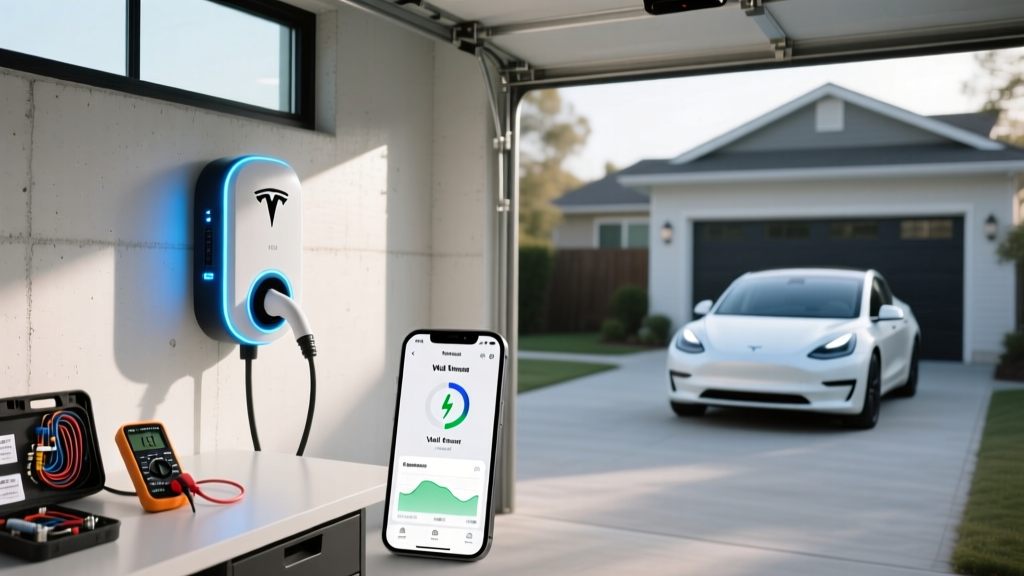
Installing a Level 2 home charger is where most new EV owners encounter surprises. The charger itself is only part of the expense. Here is what a proper 240V installation requires:
- Dedicated circuit: A 40A charger needs a 50A breaker (NEC 80% continuous-load rule). A 48A charger needs a 60A breaker.
- Wire gauge: Typically 6 AWG copper for 50A circuits, 4 AWG for 60A, depending on run length and local code.
- Panel capacity: Your main service panel must have spare amperage headroom. A 200A panel running near capacity may need an upgrade to 400A or a smart load-management system like the Emporia VUE or Span panel.
- Permit: Most jurisdictions require an electrical permit ($50–$250) and a post-install inspection.
- Outlet vs hardwired: A NEMA 14-50 receptacle offers portability but requires a GFCI breaker in many jurisdictions (adding $100–$180). Hardwired installations avoid the GFCI requirement and support higher amperage.
Home EV Charger Install Cost Breakdown
| Component | Simple Install (Near Panel) | Complex Install (Long Run / Conduit) | Panel Upgrade Scenario |
|---|---|---|---|
| Level 2 Charger (48A) | $500–$700 | $500–$700 | $500–$700 |
| Electrician Labor | $350–$700 | $800–$1,800 | $1,200–$2,500 |
| Materials (Wire, Conduit, Breaker) | $100–$250 | $300–$700 | $200–$500 |
| Permit & Inspection | $50–$150 | $100–$250 | $100–$250 |
| Panel Upgrade (if needed) | $0 | $0 | $1,500–$3,500 |
| Total | $1,000–$1,800 | $1,700–$3,450 | $3,500–$7,450 |
Connector Compatibility: NACS, CCS1, CHAdeMO, and Adapters
The North American charging connector landscape consolidated significantly between 2023 and 2026. Here is where things stand:
| Connector | Brands Using It (Native) | DC Fast Availability | Adapter Options |
|---|---|---|---|
| NACS (Tesla / SAE J3400) | Tesla, Ford, GM, Rivian, Volvo, Polestar, Nissan (2025+), Hyundai/Kia (2025+) | 17,000+ Tesla Superchargers (V2 150 kW, V3 250 kW, V4 350 kW); growing open networks | CCS-to-NACS adapters available ($150–$300) for legacy CCS vehicles |
| CCS1 (Combined Charging System) | VW, BMW, Mercedes, Stellantis, Honda, Toyota, legacy Hyundai/Kia/Ford/GM | Electrify America, EVgo, ChargePoint — 4,000+ stations, 50–350 kW | NACS-to-CCS adapters ($200–$350) for accessing Superchargers |
| CHAdeMO | Nissan Leaf (legacy), Mitsubishi Outlander PHEV | Declining — most new DC stations omit CHAdeMO | No practical adapter to NACS/CCS; plan routes carefully |
| J1772 | All non-Tesla EVs (Level 1 & 2 AC only) | N/A — AC charging only | Tesla Mobile Connector includes J1772 adapter; universal |
If you are buying a new EV in 2026, prioritize a NACS-native vehicle for the widest DC fast-charging access via the Tesla Supercharger network (now open to non-Tesla EVs via the Magic Dock adapter at select stalls, or natively for NACS-equipped vehicles). CCS vehicles still work fine but rely on Electrify America and EVgo, whose uptime and reliability remain more variable than Tesla's network per J.D. Power EV charging studies.
Cost Per Mile: EV Charging vs a Supercharged Honda Fit on Premium
This is where the "Honda Fit supercharged" fantasy meets economic reality. A supercharged Fit averaging 27 mpg on $4.20/gallon premium (2026 national average) costs $0.156 per mile in fuel alone. Here is how EV charging scenarios compare:
| Scenario | Rate | Vehicle Efficiency | Cost Per Mile |
|---|---|---|---|
| Home Level 2 (off-peak TOU rate) | $0.09/kWh | 3.5 mi/kWh (115 MPGe) | $0.026 |
| Home Level 2 (standard rate) | $0.16/kWh | 3.5 mi/kWh | $0.046 |
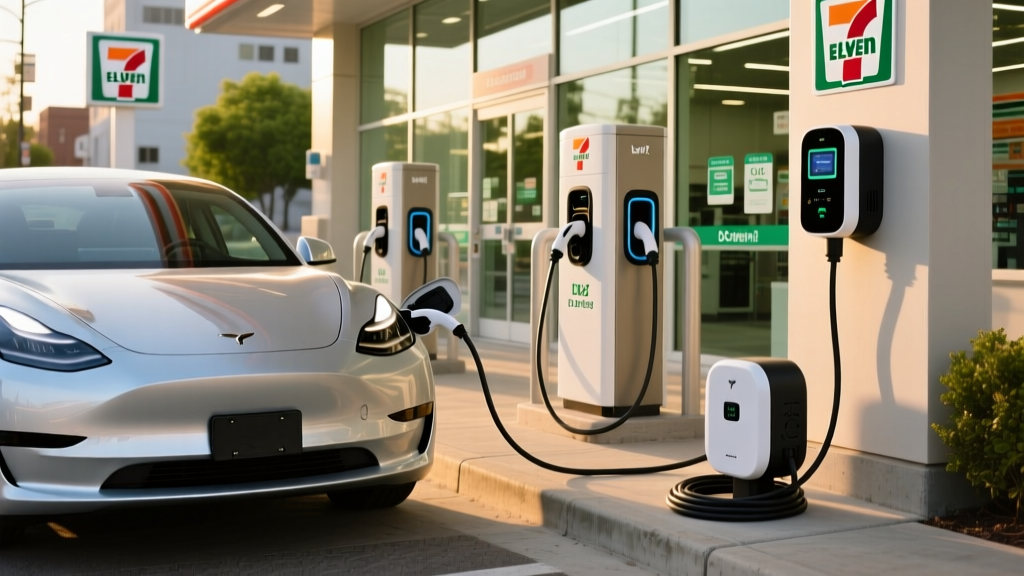
| Public Level 2 (ChargePoint, etc.) | $0.25/kWh | 3.5 mi/kWh | $0.071 |
| DC Fast Charge (Electrify America) | $0.48/kWh | 3.5 mi/kWh | $0.137 |
| Tesla Supercharger V3 (average) | $0.30/kWh | 3.8 mi/kWh (Model 3) | $0.079 |
| Supercharged Honda Fit (premium fuel) | $4.20/gal | 27 mpg | $0.156 |
At 12,000 miles per year, the supercharged Fit burns roughly $1,872 in fuel annually. A home-charged EV on off-peak rates spends about $312 — a $1,560 annual savings, or $7,800 over five years, before factoring in the EV's lower maintenance costs (no oil changes, no spark plugs, no supercharger belt, minimal brake wear thanks to regenerative braking).
For official efficiency data on any EV you are considering, the EPA's fueleconomy.gov remains the authoritative source for MPGe ratings, kWh/100mi figures, and range estimates.
Recommended Level 2 Home Chargers (2026 Picks)
Tesla Wall Connector
- Power: 11.5 kW (48A) on 60A circuit
- Connector: NACS native; J1772 adapter included
- Cable: 24 ft
- Smart features: Wi-Fi, OTA updates, load sharing (up to 6 units on one circuit), Power Share with Powerwall
- Price: ~$475
- Best for: Tesla and NACS-native vehicle owners; best value-to-power ratio
ChargePoint Home Flex
- Power: Up to 12 kW (50A), adjustable 16–50A via dip switches
- Connector: J1772 (NACS adapter available separately)
- Cable: 23 ft
- Smart features: Wi-Fi, app scheduling, Alexa integration, utility demand-response programs
- Price: ~$550–$650
- Best for: CCS/J1772 vehicle owners wanting flexible amperage tuning to match panel capacity
Emporia Level 2 EV Charger
- Power: Up to 11.5 kW (48A)
- Connector: J1772 (NACS version available)
- Cable: 24 ft
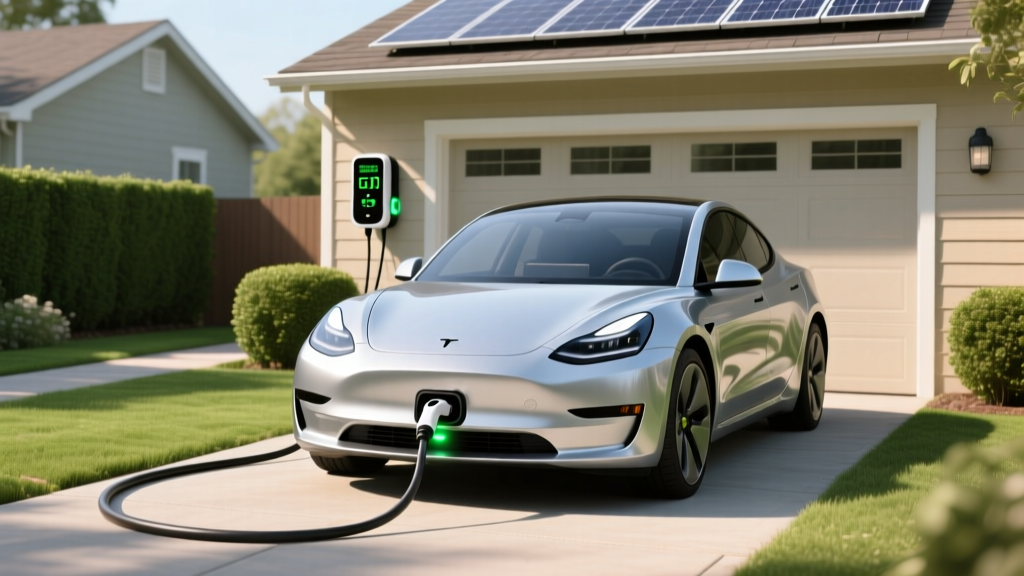
- Smart features: Real-time energy monitoring via Emporia VUE integration, solar-aware charging, TOU rate scheduling
- Price: ~$400–$500
- Best for: Solar-panel owners and energy-data enthusiasts; best budget smart charger
Grizzl-E Smart
- Power: Up to 10 kW (40A)
- Connector: J1772 or NACS
- Cable: 24 ft
- Smart features: OCPP-compatible, adjustable amperage, extreme-cold rated (-40°F)
- Price: ~$450–$550
- Best for: Cold-climate and outdoor installations; Canadian-built durability
Safety, Code, and Installation Best Practices
Level 2 EV charging is a continuous load under NEC Article 625, meaning the circuit must be rated for 125% of the charger's maximum draw. A 48A charger requires a 60A breaker and appropriately sized wire — never undersize this.
- GFCI protection: NEC 2020+ requires GFCI for receptacle-based (NEMA 14-50) EV charging circuits in garages. Hardwired installations are exempt. GFCI breakers for 50–60A circuits cost $100–$180 and can be nuisance-trip prone with some chargers — another reason to consider hardwiring.
- Outdoor rating: If mounting outside, ensure the charger carries a NEMA 4 or IP65 rating. All recommended units above meet this standard.
- Cable management: A 24-foot cable draped across a garage floor is a trip hazard and degrades the cable jacket over time. Budget $30–$60 for a wall-mounted cable organizer.
- Utility rebates: Many utilities offer $250–$1,000 rebates for Level 2 charger installations, particularly when paired with time-of-use rate enrollment. Check your local utility before purchasing equipment.
The Honda Fit EV That Almost Was — and Why 2026 Is Different
Honda did produce a limited-run Honda Fit EV from 2012–2014 — a compliance car with a 123-mile EPA range, 20 kWh battery, and lease-only availability in California and Oregon. Only about 1,100 were built. It is not a realistic used-EV option today given its age, battery degradation, and lack of DC fast charging.
However, Honda's 2026 EV lineup now includes the Prologue (EPA 296 miles, 85 kWh Ultium battery, 190 kW DC fast charging, 10–80% in ~28 minutes, MSRP ~$47,400) and the upcoming 0 Series models. If you love the Fit's packaging brilliance, the closest 2026 equivalent in spirit is the Kia Niro EV (EPA 239 miles, 64.8 kWh, 176 kW peak DC, 10–80% in ~24 minutes, MSRP ~$39,600) — tall-hatchback cargo flexibility, instant electric torque, and none of the reliability concerns that come with bolting a supercharger onto a CVT-equipped subcompact.
Frequently Asked Questions
How much does it cost to install a home EV charger?
A straightforward Level 2 installation (short wire run from a 200A panel, hardwired 48A charger) typically costs $1,000–$1,800 all-in (charger + electrician + permit). Complex runs with long conduit, sub-panel additions, or trenching run $1,700–$3,450. If your home needs a panel upgrade from 100A to 200A, add $1,500–$3,500, bringing the worst-case total to $3,500–$7,450.
How fast will each charging level add range?
Level 1 (120V) adds 3–5 miles of range per hour — fine for PHEVs with small batteries or drivers covering under 30 miles daily. Level 2 (240V, 48A) adds 25–44 miles per hour, fully replenishing most EVs overnight. DC fast charging adds 150–1,200+ miles per hour at peak, but the charging curve means real-world 10–80% sessions take 15–30 minutes depending on battery size and peak kW capability.
Which connector/charger is compatible with my EV?
If your EV is a 2025+ model from Ford, GM, Rivian, Volvo, Nissan, or Hyundai/Kia, it likely has a native NACS port. Most 2024 and earlier non-Tesla EVs use CCS1. The aging CHAdeMO standard is limited to the Nissan Leaf and Mitsubishi Outlander PHEV. For Level 2 home charging, all non-Tesla EVs use J1772; Teslas use NACS (with a J1772 adapter included for non-Tesla chargers). Check your vehicle's charge port or the EPA fueleconomy.gov listing for your specific model year.
How much does charging cost per mile vs gas?
Home charging on off-peak rates averages $0.026–$0.046 per mile — roughly 70–83% cheaper than a gasoline vehicle averaging 27 mpg on $4.20/gallon premium ($0.156/mile). Even public DC fast charging at $0.48/kWh ($0.137/mile) undercuts premium gasoline. Over 12,000 annual miles, home charging saves $1,200–$1,560 per year versus a supercharged Fit.
What electrical upgrades might I need?
The most common upgrade is a new 50A or 60A double-pole breaker and a dedicated 240V circuit with 6 AWG or 4 AWG copper wire. Older homes with 100A service panels may need a full panel upgrade to 200A ($1,500–$3,500) or a smart load-management system. Homes with electric dryers on 30A circuits can use a smart splitter ($400–$550) to share that circuit with the EV charger, avoiding a panel upgrade entirely. Always have a licensed electrician perform a load calculation before committing to equipment.