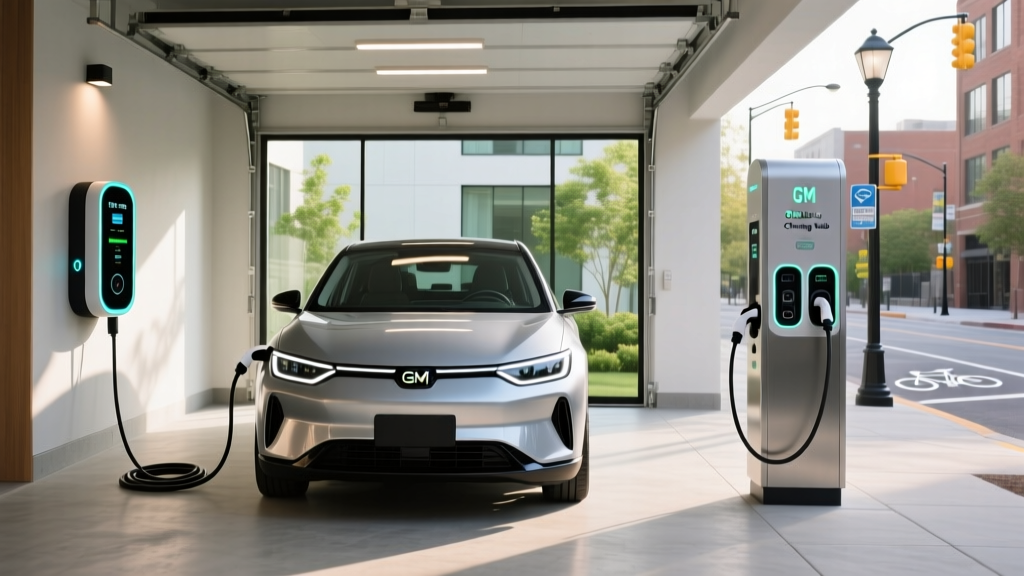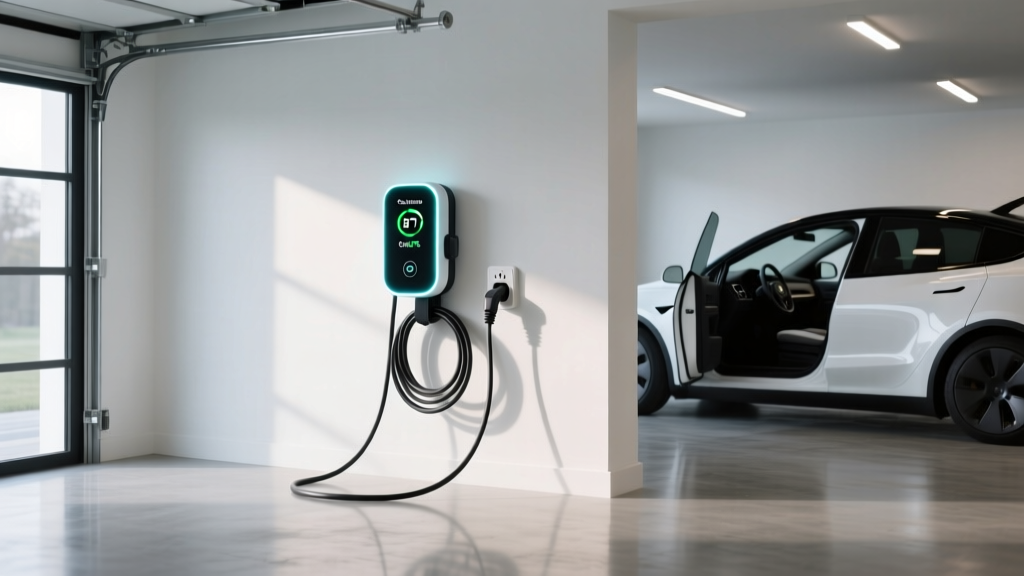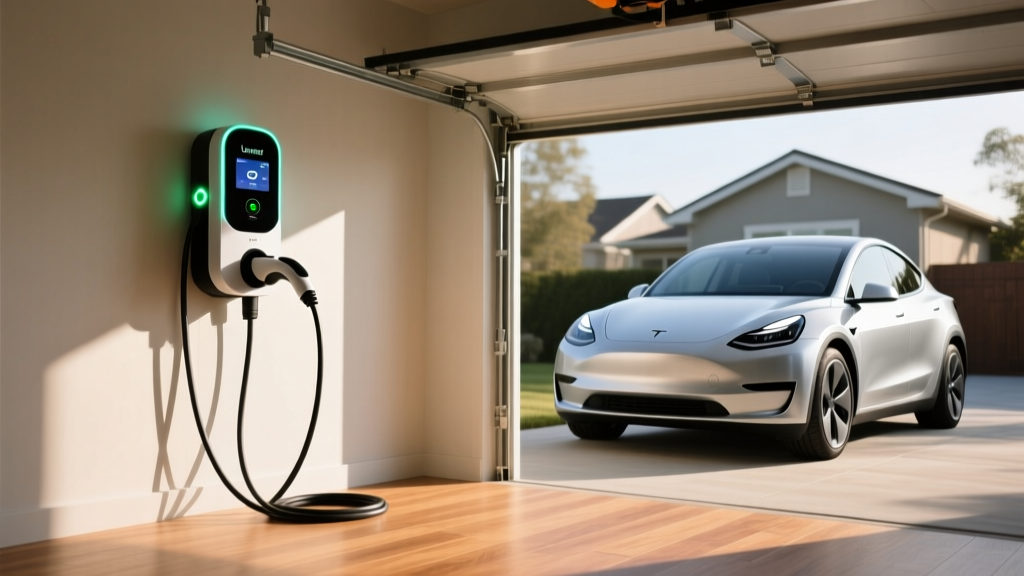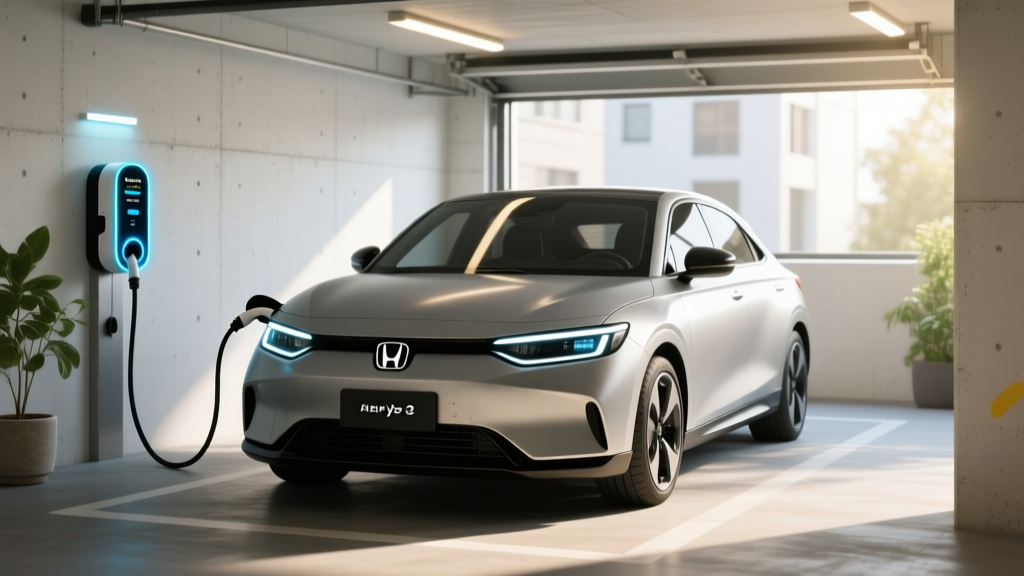
Honda was late to the battery-electric party, but the automaker has steadily rolled out EVs built on General Motors' Ultium platform (the Prologue) and its own e:Architecture (the e:Ny1 in Europe). For buyers and current owners, the critical question isn't just range — it's how long charging actually takes at home and on the road. This guide evaluates Honda's EV charging times across its current lineup, breaks down home Level 2 installation requirements and costs, and gives you exact numbers to plan your daily driving and road trips.
Honda's Current EV Lineup: Battery Specs at a Glance
Before we can evaluate charging time, we need to know what we're filling. Honda's two primary EVs for the 2025–2026 model years use different battery chemistries and capacities, which directly affect how long they take to charge.
| Model | Market | Battery (usable kWh) | Chemistry | EPA / WLTP Range | Max DC Fast Charge (kW) | Level 2 Onboard Charger (kW) |
|---|---|---|---|---|---|---|
| Honda Prologue (2025/2026) | US / Canada | 85 kWh | NMC (Ultium) | EPA 296 mi (FWD) | 150 kW (peak) | 11.5 kW |
| Honda e:Ny1 (2025) | Europe / Asia | 68.8 kWh | NMC | WLTP 256 mi (~210 mi EPA est.) | 100 kW (peak) | 11 kW |
Real-world range caveat: The Prologue's EPA 296 miles applies to mixed city/highway driving in moderate temperatures. Expect roughly 240–260 miles on sustained highway trips at 70+ mph, and as low as 200–220 miles in sub-freezing winter conditions due to cabin heating load and reduced battery efficiency. The e:Ny1, not sold in the US, follows similar derating patterns.
Charging Levels Explained: Speeds, Times, and Miles Per Hour
EV charging happens at three distinct levels. Understanding the difference between kW (power — how fast energy flows) and kWh (energy — how much the battery holds) is essential. Think of kW as the speed of water flowing from a hose and kWh as the size of the bucket you're filling.
| Charging Level | Voltage / Amps | Power (kW) | Miles of Range Added Per Hour | Typical Use Case |
|---|---|---|---|---|
| Level 1 (Standard Outlet) | 120V / 12A | ~1.4 kW | 3–5 mi/hr | Overnight top-up, emergencies |
| Level 2 (Home / Workplace) | 240V / 32–48A | 7.7–11.5 kW | 25–40 mi/hr | Daily home charging, destination charging |
| DC Fast Charging | 400V+ / high amperage | 50–350 kW | 150–300+ mi/hr (peak) | Road trips, highway corridors |
Honda Prologue Charging Times by Level
Here's how long each method takes with the Prologue's 85 kWh battery:
- Level 1 (120V): A full 0–100% charge takes roughly 60+ hours. Practically useless for daily driving unless you drive fewer than 30 miles per day and can leave it plugged in continuously.
- Level 2 (240V, 48A / 11.5 kW): 0–100% in approximately 8.5 hours. This is the sweet spot for overnight home charging — plug in at 10 PM, full by 6:30 AM.
- DC Fast Charging (150 kW peak): 10–80% in approximately 35–40 minutes under ideal conditions. However, the Prologue's charge curve tapers significantly above 80%, so a 10–100% session takes closer to 55–65 minutes.
Honda e:Ny1 Charging Times by Level
- Level 1: ~49 hours for 0–100%. Same limitations apply.
- Level 2 (240V, 11 kW): 0–100% in approximately 7.5 hours.
- DC Fast Charging (100 kW peak): 10–80% in approximately 40–45 minutes.
Charge curve reality check: Honda's peak DC fast-charge rate is not sustained across the entire session. The Prologue hits 150 kW only between roughly 10–30% state of charge (SoC), then steps down to ~120 kW through 50%, ~90 kW through 70%, and below 50 kW above 80%. This is normal for NMC batteries with active thermal management, but it means your average charging speed over a 10–80% session is closer to 100–110 kW, not the advertised 150 kW peak.
Home Level 2 Charger Installation: Costs, Electrical Requirements, and Upgrades
The single biggest question for new EV owners: how much does it cost to install a home EV charger? The answer depends heavily on your home's existing electrical panel and the distance from the panel to your garage or driveway.
Electrical Requirements for Honda EVs
The Prologue's 11.5 kW onboard charger can accept up to 48 amps on a 240V circuit. To get the maximum Level 2 speed, you need:
- Circuit: 60-amp dedicated breaker (NEC code requires circuits rated at 125% of continuous load, so a 48A charger needs a 60A breaker)
- Wire: 6 AWG copper (or 4 AWG aluminum) for runs up to ~50 feet; thicker gauge for longer runs
- Outlet or hardwire: NEMA 14-60 receptacle (if using a plug-in charger) or direct hardwire connection
- Panel capacity: Your main service panel must have at least 60A of available capacity. Most modern 200A panels can accommodate this; older 100A or 150A panels may require an upgrade.
Installation Cost Breakdown
| Component | Low-End Estimate | High-End Estimate | Notes |
|---|---|---|---|
| Level 2 Charger (Equipment) | $350 | $700 | Quality smart chargers; basic models cheaper |
| Electrician Labor | $400 | $1,500 | Depends on run length, wall type, conduit needs |
| Electrical Permit | $50 | $200 | Varies by municipality |
| Panel Upgrade (if needed) | $1,500 | $4,000 | 100A→200A service upgrade; not always required |
| Total (no panel upgrade) | $800 | $2,400 | Most homes with 200A service fall here |
| Total (with panel upgrade) | $2,300 | $6,400 | Older homes with 100A/150A service |
Panel upgrade gotcha: If your home was built before 1990 and still has a 100-amp or 150-amp main service panel, adding a 60A EV circuit may push you over the panel's safe capacity. A licensed electrician will perform a load calculation per NEC Article 220. If you're over the limit, you'll either need a panel upgrade ($1,500–$4,000) or a lower-amperage charger on a 30A or 40A circuit, which still delivers 20–30 miles of range per hour — sufficient for most daily driving.
Connector Compatibility: NACS, CCS, and Honda's Transition
Which connector does a Honda EV use? The answer is shifting rapidly in 2025–2026 as the industry migrates to the North American Charging Standard (NACS), originally developed by Tesla.
| Honda Model | Native Connector | Tesla Supercharger Access | Adapter Needed? |
|---|---|---|---|
| Prologue (2025) | CCS1 | Via adapter (included or aftermarket) | CCS-to-NACS adapter for Superchargers |
| Prologue (2026 expected) | NACS (native) | Direct, no adapter | CCS adapter needed for legacy stations |
| e:Ny1 (Europe) | CCS2 | Via adapter | Region-dependent |
Honda has committed to adopting NACS as the standard charging port on its North American EVs starting with upcoming models. For 2025 Prologue owners with CCS1 ports, Honda and third-party suppliers offer CCS-to-NACS adapters (typically $150–$250) that unlock access to Tesla's Supercharger network — a major advantage given that Superchargers represent the most reliable DC fast-charging network in the US, according to J.D. Power charging satisfaction data.
CHAdeMO note: Honda never adopted CHAdeMO for its EVs. If you encounter a CHAdeMO-only station, it will not be compatible with any Honda electric vehicle.
Cost to Charge: Home vs. Public vs. Gas Comparison
One of the strongest arguments for EV ownership is lower per-mile fuel cost. But the savings depend heavily on where you charge. Here's a realistic breakdown for the Honda Prologue.
| Charging Scenario | Rate ($/kWh) | Cost for 85 kWh (0–100%) | Cost Per Mile (est.) |
|---|---|---|---|
| Home (off-peak utility rate) | $0.09–$0.14 | $7.65–$11.90 | $0.03–$0.04 |
| Home (standard rate, no TOU) | $0.15–$0.20 | $12.75–$17.00 | $0.04–$0.06 |
| Public Level 2 (ChargePoint, etc.) | $0.25–$0.49 | $21.25–$41.65 | $0.07–$0.14 |
| DC Fast (Electrify America, EVgo) | $0.35–$0.55 | $29.75–$46.75 | $0.10–$0.16 |
| Tesla Supercharger (with adapter) | $0.28–$0.40 | $23.80–$34.00 | $0.08–$0.11 |
| Gasoline baseline (28 MPG, $3.40/gal) | — | — | $0.12 |
Key takeaway: Home charging at off-peak rates saves 65–75% per mile compared to a 28 MPG gasoline SUV at $3.40/gallon. Even public DC fast charging is roughly cost-competitive with gas, and significantly cheaper when you use networks with membership pricing. However, relying exclusively on public DC fast charging erodes most of the cost advantage — home charging access is critical for EV economics.
For detailed national average electricity rates, the U.S. Energy Information Administration (EIA) publishes monthly state-by-state residential pricing data.
Recommended Level 2 Home Chargers for Honda EVs
Not all Level 2 chargers are created equal. Here are three proven units that pair well with the Prologue's 11.5 kW onboard charger, along with a budget option for e:Ny1 owners or those with lower-amperage circuits.
ChargePoint Home Flex
- Power Output: Up to 12 kW (50A) — configurable down to 16A for smaller circuits
- Connector: CCS1 (J1772 + CCS combo); NACS version available
- Cable Length: 23 feet
- Smart Features: Wi-Fi, app scheduling, Alexa integration, energy tracking
- Price: ~$550–$650
- Best for: Prologue owners wanting max Level 2 speed with flexible amperage settings
Emporia Vue Smart EV Charger
- Power Output: Up to 11.5 kW (48A)
- Connector: J1772 (CCS adapter included in some bundles)
- Cable Length: 24 feet
- Smart Features: Wi-Fi, app control, solar integration, load management with Emporia energy monitor
- Price: ~$399–$450
- Best for: Budget-conscious buyers with solar panels or whole-home energy monitoring
Grizzl-E Smart
- Power Output: Up to 10 kW (40A)
- Connector: J1772 (NACS version available)
- Cable Length: 24 feet
- Smart Features: Wi-Fi, OCPP compatibility, adjustable amperage (16/24/32/40A)
- Price: ~$450–$550
- Best for: Cold-climate owners — rated to -40°F, rugged aluminum enclosure
Wallbox Pulsar Plus (Budget Pick)
- Power Output: Up to 11.5 kW (48A)
- Connector: J1772 (CCS/NACS options)
- Cable Length: 25 feet
- Smart Features: Wi-Fi, Bluetooth, app scheduling, Power Sharing for dual-charger setups
- Price: ~$450–$550
- Best for: Compact form factor, garage installations with limited wall space
Important: All chargers listed above are NEMA 4-rated for outdoor installation and include built-in GFCI protection as required by NEC 2023 (Article 625). Verify that your electrician installs a dedicated circuit — sharing a circuit with other large appliances (dryer, oven) creates a fire risk and violates electrical code.
Safety, Code, and Installation Best Practices
EV charging is a high-draw, continuous electrical load. Cutting corners on installation creates real fire and liability risk. Here's what code requires and what best practice recommends:
- Dedicated circuit: NEC Article 625 requires EVSE (Electric Vehicle Supply Equipment) to be on its own dedicated breaker. No shared circuits.
- GFCI protection: Required for all receptacle-based (plug-in) EV chargers, both indoor and outdoor. Hardwired units may be exempt in some jurisdictions but GFCI breakers are still recommended.
- Outdoor rating: If your charger is installed outdoors or in an unsealed garage, it must carry a NEMA 4 (or higher) weather resistance rating.
- Permit and inspection: Most US municipalities require an electrical permit for new 240V circuits. Your electrician should pull this permit — if they suggest skipping it, find a different electrician. The inspection protects you and is often required for insurance claims.
- Cable management: Use a wall-mounted holster or cable reel. Leaving a 240V cable on the garage floor is a trip hazard and accelerates cable jacket wear.
For the full text of NEC requirements, the National Fire Protection Association (NFPA) publishes the National Electrical Code, which is adopted by most US jurisdictions.
Federal Tax Credit for Home Charger Installation
The IRS §30C Alternative Fuel Vehicle Refueling Property Credit covers 30% of home EV charger equipment and installation costs, up to $1,000. Key eligibility details:
- The charger must be installed at your primary residence.
- The property must be located in an eligible census tract (low-income or non-urban area) — many suburban and urban addresses do not qualify under current rules.
- The credit is non-refundable (it reduces your tax liability but won't generate a refund beyond what you owe).
- Both the equipment cost and electrician labor are eligible expenses.
Check the IRS §30C page for current eligibility maps and filing requirements. This credit is separate from the §30D vehicle purchase credit.
Frequently Asked Questions
How much does it cost to install a home EV charger for a Honda Prologue?
Most homes with a modern 200-amp electrical panel will pay $800–$2,400 total (charger + electrician + permit). Homes needing a panel upgrade should budget $2,300–$6,400. The §30C tax credit can offset up to $1,000 of this cost if your address qualifies.
How fast will each charging level add range to the Honda Prologue?
Level 1 (120V) adds 3–5 miles per hour. Level 2 (240V, 48A) adds 30–40 miles per hour. DC fast charging at 150 kW peak can add up to 100+ miles in 10 minutes at low state of charge, but the charge curve tapers significantly above 50% SoC.
Which connector and charger is compatible with my Honda EV?
The 2025 Honda Prologue uses a CCS1 connector natively. A CCS-to-NACS adapter ($150–$250) enables Tesla Supercharger access. The 2026 Prologue is expected to ship with a native NACS port. The e:Ny1 (Europe/Asia) uses CCS2. No Honda EV uses CHAdeMO.
How much does charging the Honda Prologue cost per mile vs. gas?
Home charging at off-peak rates costs roughly $0.03–$0.04 per mile — about 65–75% less than a comparable 28 MPG gas SUV at $3.40/gallon ($0.12/mile). Public DC fast charging costs $0.10–$0.16 per mile, which is roughly cost-neutral with gas.
What electrical upgrades might I need for a Level 2 charger?
You need a 60-amp dedicated 240V breaker for maximum 48A charging. If your home has a 100A or 150A main panel, a load calculation may reveal insufficient capacity, requiring a panel upgrade ($1,500–$4,000). Alternatively, you can install a 30A or 40A circuit, which still provides 20–30 miles of range per hour — adequate for most daily driving.
Does the Honda Prologue support V2L (vehicle-to-load) or bidirectional charging?
As of the 2025 model year, the Prologue does not support V2L or V2H (vehicle-to-home) functionality. Honda has indicated future Ultium-based models may include bidirectional capability, but no confirmed timeline exists. The Hyundai Ioniq 5 and Ford F-150 Lightning currently lead in this feature.
Is the Honda Prologue eligible for the $7,500 federal EV tax credit?
The Prologue's eligibility under IRS §30D depends on current-year battery sourcing and critical mineral requirements, buyer income caps ($150K single / $300K joint), and the $80,000 MSRP cap for SUVs. The credit can be applied at the point of sale as a discount. Check the latest fueleconomy.gov tax credit listings for real-time eligibility, as sourcing rules change frequently.