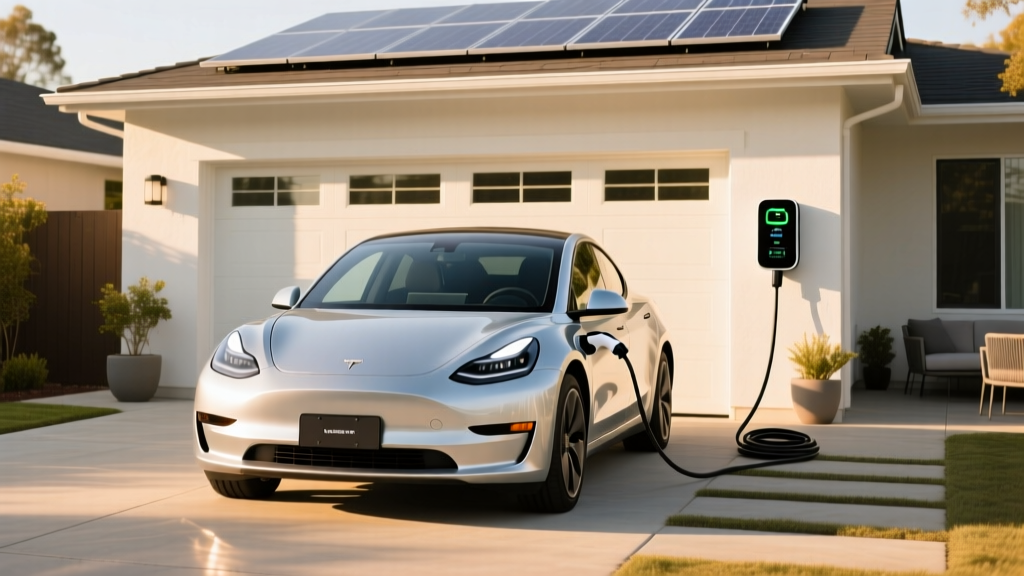
If your garage used to echo with the whine of a 5.0-liter supercharged V8 — the signature soundtrack of a 2014 Land Rover Supercharged (LR4 or Range Rover Sport) — you're about to trade 510 horsepower for something quieter, cheaper per mile, and far more predictable to "fuel." But before you park a new EV where that old Land Rover sat, the garage itself has to be ready. A 2014-era home electrical panel, the circuits that once supported a block heater and a trickle tender, and the 240V dryer-style outlet in the corner all dictate what kind of EV charging you can actually install.
This guide walks through exactly what Level 1, Level 2, and DC Fast Charging deliver in kW (power, i.e., the flow rate), how that translates to miles of range per hour, what an electrician will charge in 2026, and which chargers are worth the wall space. We'll also clear up the single biggest confusion new EV buyers have: kW is power (how fast energy flows), kWh is energy (how much the battery holds). Think of kW as the width of the hose and kWh as the size of the bucket.
Charging Levels Explained: kW, Miles Per Hour, and Realistic Times
Every EV sold in the U.S. can use Level 1. Most daily driving is best served by Level 2. DC Fast Charging is for road trips. Here's what each actually delivers, measured in the units that matter.
| Level | Voltage / Amps | Max Power (kW) | Miles of Range Per Hour | Typical Use |
|---|---|---|---|---|
| Level 1 | 120V / 12A | ~1.4 kW | 3–5 mi/hr | Overnight top-up, PHEVs, low-mileage drivers |
| Level 2 (home) | 240V / 32–48A | 7.7–11.5 kW | 25–44 mi/hr | Daily charging, garage or driveway |
| Level 2 (public/destination) | 208–240V / 30–80A | 6.6–19.2 kW | 22–65 mi/hr | Hotels, workplaces, malls |
| DC Fast (CCS/NACS) | 400–800V DC | 50–350 kW | 150–1,000+ mi/hr (peak) | Road trips, 10–80% top-ups |
A critical nuance: DC Fast Charging does not sustain its peak rate. A vehicle rated at "250 kW peak" may hold that rate for only 5–8 minutes before the battery management system tapers to protect the cells. A realistic 10–80% session on a modern 80–100 kWh pack takes 18–30 minutes at a 150–350 kW station, not the theoretical minimum the peak number implies. Source: fueleconomy.gov EV technology overview.
What It Costs to Install a Level 2 Home Charger in 2026
The headline number people see online — "$500 to install a charger" — is the equipment alone. The real invoice includes the electrician's labor, the circuit, the permit, and, in older homes like those built around the era of a 2014 Land Rover Supercharged, possibly a panel upgrade. Here is an honest 2026 breakdown.
| Item | Low End | Typical | High End | Notes |
|---|---|---|---|---|
| Level 2 charger (hardwired, 40–48A) | $400 | $600 | $850 | Wi-Fi smart units cost more |
| Electrician labor (20–50 ft run) | $500 | $900 | $1,600 | Longer runs, conduit, attic crawls add cost |
| Materials (wire, conduit, breaker) | $150 | $300 | $600 | 6 AWG copper for 48A circuits |
| Permit & inspection | $75 | $175 | $350 | Varies by municipality |
| Panel upgrade (if needed) | $1,800 | $2,800 | $4,500 | 100A → 200A service; older homes often need this |
| Total without panel upgrade | $1,125 | $1,975 | $3,400 | |
| Total with panel upgrade | $2,925 | $4,775 | $7,900 |
Homes built in the 2010–2015 window — the same vintage as a 2014 Land Rover Supercharged — often have 200A panels that can accommodate a 40–60A EV circuit without an upgrade, if there aren't already heavy loads (electric range, dryer, HVAC, hot tub). Your electrician will perform a NEC Article 220 load calculation before quoting. Do not skip this step.
Electrical Requirements at a Glance
- Voltage: 240V split-phase (same as a dryer or oven outlet)
- Amperage: 40A circuit for a 32A continuous charger; 50A circuit for 40A continuous; 60A circuit for 48A continuous (NEC 80% rule)
- Wire gauge: 8 AWG copper for 40A, 6 AWG copper for 50–60A runs
- Breaker: Dedicated 2-pole breaker, sized 125% of continuous load
- GFCI: Required for receptacle-based installs (NEMA 14-50) under NEC 2020/2023; hardwired units are exempt and often preferred to avoid nuisance trips
- Outdoor rating: NEMA 4 enclosure if mounted outside; most modern chargers carry this rating
Connector Compatibility: NACS, CCS, CHAdeMO, and Adapter Reality
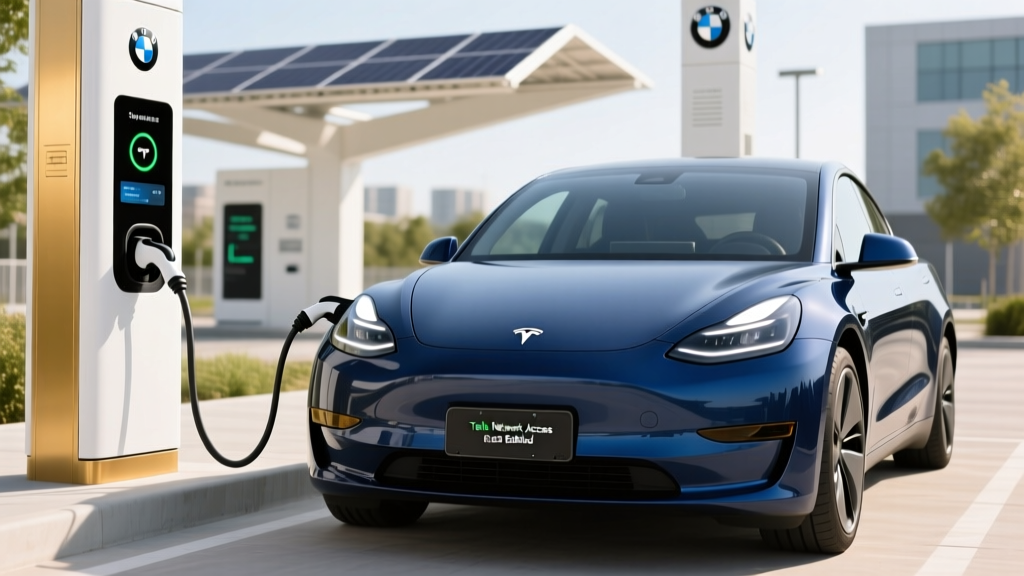
The connector landscape in North America has consolidated sharply since 2023. As of 2026, nearly every new EV sold in the U.S. ships with the NACS (Tesla-style) inlet. Legacy CCS1 vehicles — including most 2020–2024 models from Hyundai, Kia, VW, Ford, GM, and BMW — use adapters at Tesla Superchargers. CHAdeMO is effectively discontinued on new passenger vehicles; only the used Nissan Leaf fleet still relies on it.
| Connector | Used By | Home Charger Availability | Public DC Network |
|---|---|---|---|
| NACS (J3400) | Tesla (all years), Ford, GM, Rivian, Hyundai, Kia, BMW, most 2025+ EVs | Widely available; Tesla Wall Connector, Grizzl-E, Emporia | Tesla Supercharger, Electrify America (new stalls), EVgo |
| CCS1 | Legacy 2020–2024 EVs from VW, BMW, Ford, GM, Hyundai, Kia | Widely available; ChargePoint, Emporia, Wallbox | Electrify America, EVgo, ChargePoint — adapters needed for Superchargers |
| CHAdeMO | Nissan Leaf (all years), Mitsubishi Outlander PHEV (older) | Limited; most new home chargers no longer offer it | Declining; plan around CCS/NACS |
For a home Level 2 install, the charger's connector must match your vehicle's inlet. If you own a CCS1 EV but plan to buy a NACS vehicle in the next few years, buy a charger with a swappable cable or a NACS unit plus a CCS-to-NACS adapter (approximately $150–$250). Tesla's Mobile Connector and Wall Connector work only with NACS inlets.
Cost to Charge: $/kWh Scenarios and Cost Per Mile vs Gas
This is where the 2014 Land Rover Supercharged comparison becomes painful for the old fuel bill. That 5.0L V8 returned roughly 14 MPG combined. At $3.60/gallon (a reasonable 2026 national average), that's about $0.257 per mile. A modern EV averaging 3.0 miles per kWh undercuts that dramatically — but the rate you pay per kWh determines by how much.
| Scenario | Rate ($/kWh) | EV Efficiency (mi/kWh) | Cost Per Mile | Savings vs LR4 |
|---|---|---|---|---|
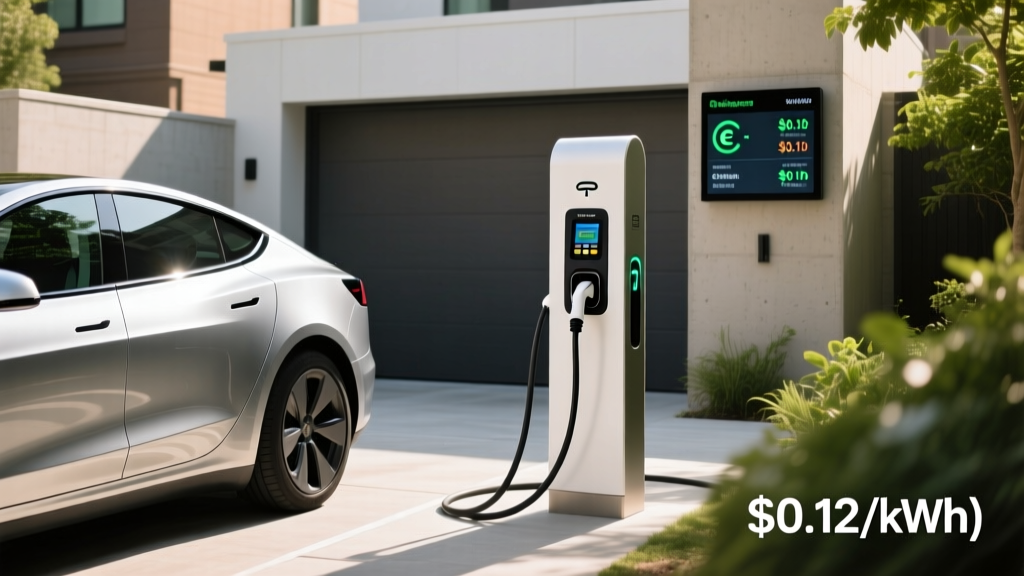
| Home, off-peak utility rate | $0.12 | 3.0 | $0.040 | 84% cheaper |
| Home, blended residential rate | $0.17 | 3.0 | $0.057 | 78% cheaper |
| Public Level 2 (ChargePoint, EVgo) | $0.35 | 3.0 | $0.117 | 55% cheaper |
| DC Fast (Electrify America, peak) | $0.52 | 3.0 | $0.173 | 33% cheaper |
| 2014 Land Rover Supercharged (gasoline) | $3.60/gal | 0.071 gal/mi (14 MPG) | $0.257 | — baseline — |
At 12,000 miles per year on home off-peak charging, an EV owner spends roughly $480 annually on electricity where the 2014 Land Rover Supercharged would burn about $3,086 in gasoline. That's a $2,606/year fuel savings — enough to pay back a full Level 2 install in under a year, even with a panel upgrade.
Charging Time Examples: 10–80% for Common Battery Sizes
"How long does it take to charge?" depends on three numbers: the battery's usable capacity in kWh, the charger's sustained output in kW, and the state-of-charge window. Most EV owners charge between 10% and 80% on road trips to respect the charge curve taper above 80%.
- 60 kWh pack (e.g., base Tesla Model 3, Hyundai Kona Electric): ~42 kWh to add (10–80%). On a 48A Level 2 home charger (11.5 kW), that's roughly 3 hours 40 minutes. On a 150 kW DC fast charger, approximately 22 minutes.
- 82 kWh pack (e.g., Tesla Model Y Long Range, Ford Mustang Mach-E Extended Range): ~57 kWh to add. Level 2 at 11.5 kW: ~5 hours. 150 kW DC: ~28 minutes.
- 100 kWh pack (e.g., Rivian R1T, GMC Sierra EV, Lucid Air): ~70 kWh to add. Level 2 at 11.5 kW: ~6 hours. 250–350 kW DC: ~22–30 minutes (sustained rate matters more than peak).
Level 1 at 1.4 kW is essentially an overnight trickle: a 60 kWh pack takes 40+ hours from 10–80%. It works for plug-in hybrids with 15–20 kWh batteries (8–12 hours overnight) but is impractical as a primary strategy for a full-size BEV.
2026 Equipment Recommendations: Chargers Worth Installing
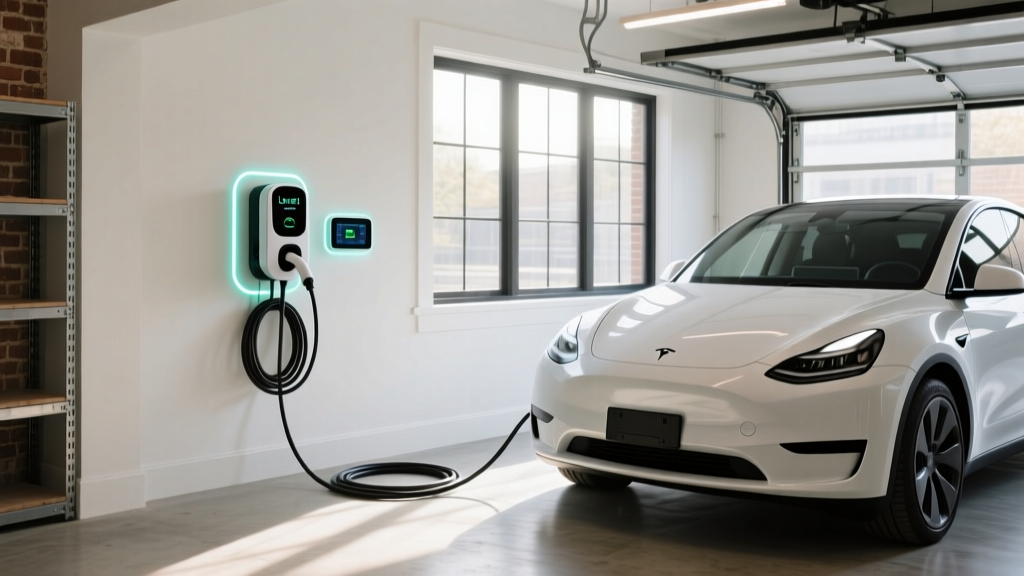
These are the units I'd recommend based on sustained output, cable quality, smart features, and connector flexibility. All are hardwired-capable, which avoids the GFCI nuisance-trip issues common with NEMA 14-50 receptacle installs.
Tesla Wall Connector (Gen 3, NACS)
- Max output: 11.5 kW (48A) on a 60A circuit
- Connector: NACS native; CCS adapter included for non-Tesla EVs on some packages
- Cable length: 24 ft
- Smart features: Wi-Fi, OTA updates, load sharing between two units on one circuit, Power Sharing
- Price: ~$475
- Best for: Tesla owners or households planning to buy a NACS vehicle
Grizzl-E Smart (CCS1 or NACS versions)
- Max output: 10 kW (40A) on a 50A circuit; adjustable down to 16A
- Connector: Available in CCS1 or NACS; built in Canada
- Cable length: 24 ft
- Smart features: Wi-Fi, energy tracking, OCPP-compatible for utility demand-response programs
- Price: ~$549
- Best for: Cold-climate owners (rated to -40°F) and those wanting utility rebates via OCPP
Emporia Vue Level 2 Charger
- Max output: 11.5 kW (48A) on a 60A circuit
- Connector: J1772 (CCS1-compatible); NACS version available 2025+
- Cable length: 24 ft
- Smart features: Integrates with Emporia Vue home energy monitor, solar-aware scheduling, EV-only circuit tracking
- Price: ~$399 (often $349 on sale)
- Best for: Solar homes and budget-conscious buyers wanting full smart features
ChargePoint Home Flex (NACS or J1772)
- Max output: 12 kW (50A) on a 60A circuit; adjustable via DIP switches
- Connector: Available in NACS or J1772 (CCS1-compatible)
- Cable length: 23 ft
- Smart features: Wi-Fi, Alexa/Google integration, detailed app with cost tracking, scheduled charging
- Price: ~$699
- Best for: Buyers who want a polished app experience and flexible amperage tuning
Safety, Code, and the Panel-Upgrade Reality
The NEC (National Electrical Code) treats EV charging as a continuous load — anything running for 3+ hours — which triggers the 125% sizing rule. A 48A charger requires a 60A breaker and 6 AWG copper wire. Skipping this rule risks overheating and voids homeowner's insurance coverage in the event of a fault.
Key code and safety points:
- Dedicated circuit: The EV charger must have its own 2-pole breaker. Sharing with a dryer, welder, or hot tub is a code violation.
- GFCI protection: NEC 2020 and 2023 require GFCI on receptacle-based (NEMA 14-50) EV circuits. Hardwired installations are exempt, which is one reason experienced EV owners prefer hardwiring — GFCI breakers on high-draw EV circuits are a known source of nuisance trips.
- Outdoor rating: If the charger is mounted outside or in an open carport, it must carry a NEMA 4 rating (weatherproof). All four chargers above qualify.
- Permit required: Nearly all U.S. jurisdictions require an electrical permit for a new 240V circuit. The inspection typically takes 15–30 minutes and protects your insurance coverage.
- Panel capacity: A licensed electrician will perform a load calculation. If your home has a 100A panel (common in homes built before 2000) or a 150A panel with heavy existing loads, a 200A upgrade ($1,800–$4,500) may be mandatory.
For authoritative code guidance, the U.S. Department of Energy's Home Charging Installation Guide covers the full process from panel assessment to final inspection.
Frequently Asked Questions
How much does it cost to install a home EV charger?
For a typical 48A Level 2 hardwired charger with a 30-foot wire run, expect $1,500–$2,800 total including the charger, electrician labor, materials, and permit. If your home needs a 100A-to-200A panel upgrade, add $1,800–$4,500. Homes built in the 2010–2015 era (the same vintage as the 2014 Land Rover Supercharged) often have 200A panels that can accommodate a 40–60A EV circuit without an upgrade.
How fast will each charging level add range?
Level 1 (120V, 1.4 kW) adds 3–5 miles per hour. Level 2 (240V, 7.7–11.5 kW) adds 25–44 miles per hour. DC Fast Charging (50–350 kW) adds 150–1,000+ miles per hour at peak, but only for short bursts — the charge curve tapers significantly above 80% state of charge.
Which connector/charger is compatible with my EV?
Check your vehicle's charge port. If it's a 2025+ model from Tesla, Ford, GM, Hyundai, Kia, Rivian, or BMW, it almost certainly uses NACS. If it's a 2020–2024 model from most non-Tesla brands, it uses CCS1. The Nissan Leaf uses CHAdeMO. Buy a home charger with the matching connector, or use an adapter (~$150–$250) for flexibility.
How much does charging cost per mile vs gas?
At a $0.12/kWh off-peak home rate and 3.0 mi/kWh efficiency, an EV costs about $0.04 per mile. The 2014 Land Rover Supercharged at 14 MPG combined and $3.60/gallon costs $0.26 per mile. Even at peak DC fast-charging rates ($0.52/kWh), the EV still costs ~$0.17/mile — 33% less than the supercharged V8.
What electrical upgrades might I need?
The most common upgrade is a panel capacity increase from 100A or 150A to 200A ($1,800–$4,500). You may also need a new 2-pole breaker slot (if your panel is full), a longer wire run requiring thicker gauge copper, or a sub-panel if the charger is far from the main service. Your electrician's NEC Article 220 load calculation will determine this before any work begins.
Can I use a NEMA 14-50 outlet instead of hardwiring?
Yes, but NEC 2020/2023 requires a GFCI breaker on receptacle-based EV circuits, and these breakers are a documented source of nuisance trips on high-draw (40–50A) continuous loads. Hardwired installations are exempt from the GFCI requirement and are generally more reliable. If portability matters (you plan to take the charger when you move), a NEMA 14-50 with a quality GFCI breaker (Eaton or Siemens, not a budget brand) is acceptable.
Do I qualify for a tax credit on home charger installation?
The federal Alternative Fuel Vehicle Refueling Property Credit (IRC §30C) covers 30% of home charger equipment and installation costs, up to $1,000, but only if you live in an eligible census tract (typically rural or low-income areas as defined by the IRS). Check your eligibility on IRS.gov before counting on this credit. State and utility rebates may stack on top; many utilities offer $250–$750 rebates for smart charger installs.
Swapping a 2014 Land Rover Supercharged for a modern EV is one of the cleanest garage upgrades you can make — but the garage itself has to do some of the work. Get the load calculation done first, choose a hardwired 48A charger that matches your vehicle's connector, and budget honestly for the panel if your home needs it. The per-mile savings will pay it back faster than the supercharger under that old hood ever could.