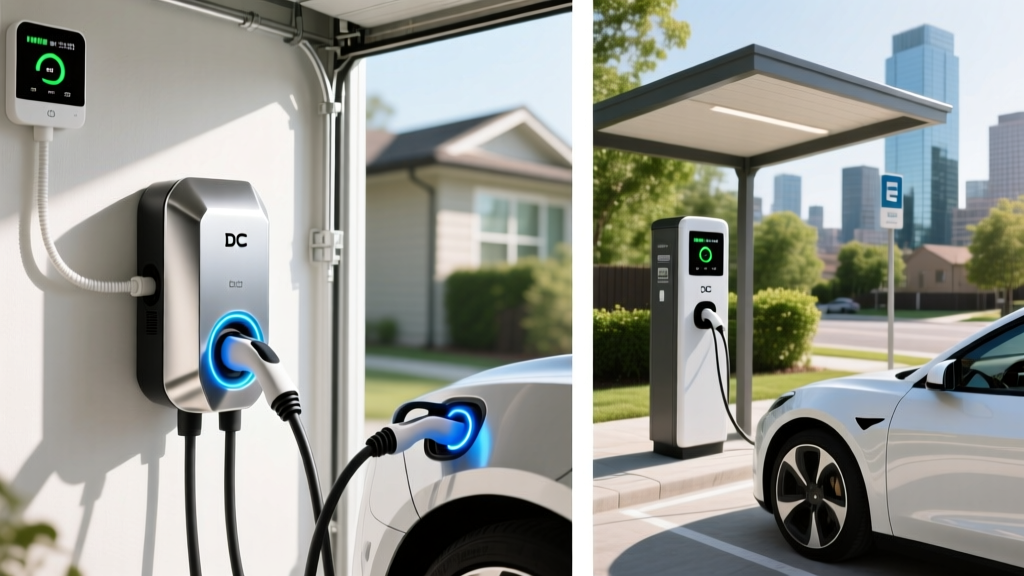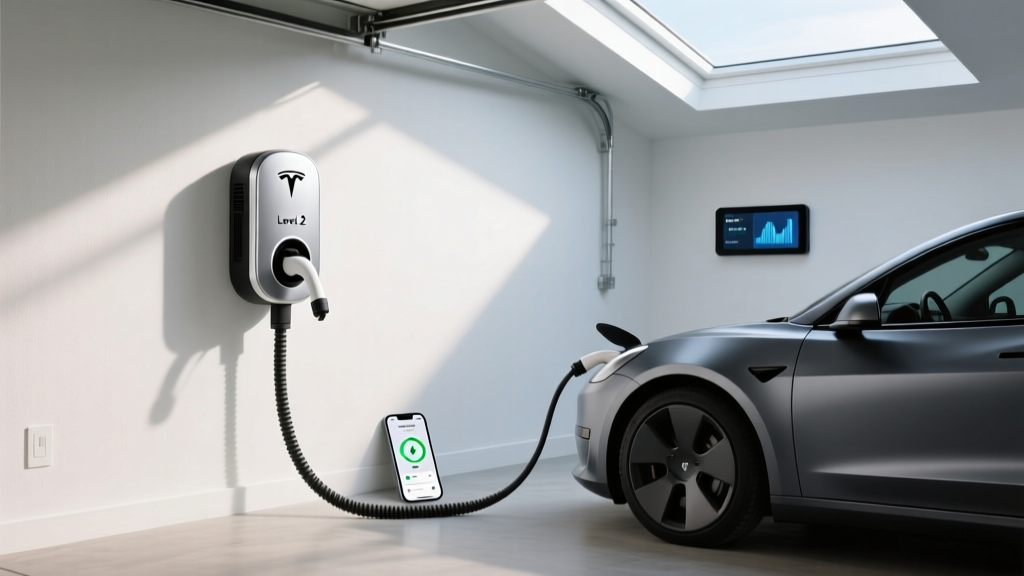
If you have just taken delivery of a new electric vehicle — or you are preparing your garage for one — the single highest-impact upgrade you can make is a properly installed home Level 2 charger. Public DC fast-charging networks continue to expand, but the overwhelming majority of EV charging (industry estimates put it above 80%) happens at home, overnight, while electricity rates are at their lowest. Getting your home setup right means waking up every morning with a full battery, avoiding the per-kWh premium of public stations, and protecting your home's electrical system from overload.
This guide walks through the three charging levels, the exact electrical requirements for a home install, realistic cost breakdowns (including the panel upgrade many older homes need), connector compatibility across 2026 models, equipment recommendations, and the math on what charging actually costs per mile compared to gasoline.
Understanding the Three EV Charging Levels
EV charging is categorized into three levels based on voltage, amperage, and the resulting power delivery measured in kilowatts (kW). Remember: kW measures power (how fast energy flows into the battery), while kWh measures energy (the total capacity of the battery itself). A 100 kWh battery charged at 10 kW takes roughly 10 hours from empty — that is the core relationship.
Here is how each level performs in real-world conditions:
| Level | Voltage / Amperage | Power (kW) | Miles of Range Added Per Hour | Typical Use Case |
|---|---|---|---|---|
| Level 1 | 120V / 12–16A | 1.4–1.9 kW | 3–5 miles | Emergency / PHEV overnight top-up |
| Level 2 | 240V / 16–80A | 3.8–19.2 kW | 14–70 miles | Daily home charging (primary method) |
| DC Fast | 400–900V DC | 50–350+ kW | 150–1,000+ miles/hr (burst) | Road trips, quick top-ups away from home |
Level 1 uses a standard household outlet and the portable cord that ships with most EVs. It is painfully slow for a battery-electric vehicle with a 75+ kWh pack — a full charge from near-empty can take 40–60 hours. However, Level 1 is perfectly adequate for a plug-in hybrid like the Toyota RAV4 Prime (18.1 kWh battery, ~42 miles electric range), which can fully replenish overnight on 120V.
Level 2 is where home charging becomes practical for BEVs. A 48-amp, 240V circuit delivering 11.5 kW can add roughly 40–45 miles of range per hour, meaning an overnight session of 8–10 hours easily replenishes 300+ miles of range — more than enough for any daily driving pattern.
DC fast charging bypasses the vehicle's onboard charger and pushes direct current straight into the battery at very high power. Modern platforms like Hyundai's E-GMP or the 800V architecture in the Porsche Taycan can accept 250–350 kW, achieving a 10–80% charge in 18–22 minutes at compatible stations. However, DC fast charging is not intended for daily use — frequent high-power sessions accelerate battery degradation, and the per-kWh cost at public stations is typically two to three times higher than home electricity.
Home Level 2 Installation: Electrical Requirements and Costs
Installing a Level 2 home charger is not simply plugging into a dryer outlet. It requires a dedicated 240V circuit run from your main electrical panel to the charger location, sized correctly for the charger's amperage. The National Electrical Code (NEC) requires the circuit to be rated at 125% of the charger's continuous draw — so a 48-amp charger needs a 60-amp circuit and breaker.
Key Electrical Specifications
- Voltage: 240V (split-phase, standard US residential)
- Amperage: 40A or 48A circuits are most common for EV charging (50A or 60A breaker)
- Wire gauge: 6 AWG copper for 48A/60A circuits; 8 AWG may suffice for 32A/40A (electrician will determine based on run length)
- Dedicated circuit: The charger must have its own breaker — it cannot share a circuit with other appliances
- GFCI protection: NEC 2020 and later requires GFCI protection for EV charging outlets (hardwired units with built-in GFCI are common)
Panel Capacity and Upgrade Considerations
Before any installation, a licensed electrician should perform a load calculation on your existing electrical panel. Most modern homes have a 200-amp main panel, which can usually accommodate a 48A/60A EV circuit alongside existing loads. However, older homes with 100-amp or 150-amp service, or homes already running high-draw equipment (electric range, heat pump, hot tub, dryer), may need a panel upgrade to 200A or even 400A.
A panel upgrade is the single largest variable in home charger installation cost. If your panel is maxed out, upgrading to 200A service can add $1,500–$4,000+ to the project, depending on utility requirements, trenching, and local permit fees.
Installation Cost Breakdown
Here is a realistic cost range for a 2026 Level 2 home charger installation, based on national averages. Your actual cost depends on run length from panel to charger, wall construction, local labor rates, and whether a panel upgrade is needed:
| Component | Simple Install (panel nearby, no upgrade) | Complex Install (long run or panel upgrade) |
|---|---|---|
| Level 2 Charger Equipment | $400–$700 | $500–$700 |
| Electrician Labor (2–6 hours) | $400–$900 | $800–$2,000 |
| Materials (wire, conduit, breaker) | $100–$300 | $200–$600 |
| Permit and Inspection | $50–$200 | $50–$200 |
| Panel Upgrade (if needed) | $0 | $1,500–$4,000 |
| Total Estimated Cost | $950–$2,100 | $3,050–$7,500 |
The IRS §30D clean vehicle credit does not cover home charger equipment directly, but the separate Residential Clean Energy Credit (§25D) and the Alternative Fuel Vehicle Refueling Property Credit (§30C) may offer up to 30% of equipment and installation costs (capped at $1,000 for residential). Eligibility depends on census-tract qualifications and income limits — consult a tax professional for your specific situation.
Connector Compatibility: NACS, CCS1, and CHAdeMO in 2026
The connector landscape has consolidated dramatically since 2023, when Ford, GM, Rivian, and most major automakers announced adoption of the North American Charging Standard (NACS) — originally developed by Tesla. As of the 2026 model year, NACS is the dominant connector for new EVs sold in North America.
| Connector | Brands Using It (2026) | Notes |
|---|---|---|
| NACS (Tesla / SAE J3400) | Tesla, Ford, GM, Rivian, Volvo, Polestar, Mercedes-Benz, Hyundai, Kia, BMW, Toyota, Subaru | Standard on most 2025+ models; adapters available for older CCS vehicles |
| CCS1 (Combined Charging System) | Older model years (pre-2025), Volkswagen ID.4 (early), some fleet vehicles | Still widely available at public stations; CCS-to-NACS adapters sold by Ford and others |
| CHAdeMO | Nissan Leaf (legacy only) | Effectively discontinued for new vehicles; declining station availability |
If you drive a 2025 or 2026 model-year EV from any major brand, it almost certainly has a NACS port. Home chargers with a NACS plug are now widely available from ChargePoint, Emporia, Wallbox, and Tesla. If you own an older CCS-equipped vehicle (say, a 2023 Hyundai Ioniq 5 or 2024 VW ID.4), you can purchase a CCS-to-NACS adapter ($150–$250) to use newer NACS home chargers and access Tesla Superchargers.
CHAdeMO owners (primarily Nissan Leaf drivers) face a more limited future. Public CHAdeMO stations are being phased out by most networks. Home Level 2 charging with a J1772 connector remains fully supported, but DC fast-charging options are shrinking.
What Does Charging Cost Per Mile vs. Gasoline?
One of the strongest financial arguments for EV ownership is the per-mile energy cost, but the savings depend heavily on where and when you charge. Here is a breakdown using 2026 national average rates:
| Charging Scenario | Cost Per kWh | Vehicle Efficiency (kWh/100 mi) | Cost Per Mile |
|---|---|---|---|
| Home, off-peak (utility time-of-use rate) | $0.08–$0.12 | 30 kWh | $0.024–$0.036 |
| Home, standard residential rate | $0.14–$0.18 | 30 kWh | $0.042–$0.054 |
| Public Level 2 (ChargePoint, EVgo L2) | $0.25–$0.40 | 30 kWh | $0.075–$0.12 |
| DC Fast Charging (Electrify America, Tesla Supercharger) | $0.35–$0.55 | 30 kWh | $0.105–$0.165 |
| Gasoline vehicle (25 MPG combined, $3.40/gal) | — | — | $0.136 |
At home on off-peak rates, an efficient EV like the Tesla Model 3 (26 kWh/100 mi combined per EPA data on fueleconomy.gov) costs roughly $0.025–$0.035 per mile — about one-quarter the cost of a 25 MPG gasoline car. Even at standard residential rates, home charging delivers 50–70% savings per mile.
However, relying exclusively on DC fast charging at $0.45–$0.55/kWh erases most of the fuel-cost advantage. This is why home charging is not just a convenience — it is the economic foundation of EV ownership. A driver who charges 90% at home and 10% on DC fast chargers for road trips will see an effective per-mile cost of roughly $0.04–$0.05, still dramatically below gasoline.
Charging Time Examples: 10–80% for Common Battery Sizes
EV charging is not linear. Batteries accept charge fastest between roughly 10–50% state of charge (SoC), then the charge rate tapers significantly above 80% to protect cell health. This is why manufacturers and testers quote "10–80%" times rather than 0–100%.
Here are realistic 10–80% charge times for common battery sizes across Level 2 and DC fast charging:
| Battery Size (usable kWh) | Example Vehicle | Level 2 at 11.5 kW (48A) | DC Fast at 150 kW (peak) | DC Fast at 250 kW (peak, 800V) |
|---|---|---|---|---|
| 62 kWh | Volvo EX30 | ~3.5 hours | ~28 min | N/A (400V platform) |
| 75 kWh | Tesla Model Y | ~4.5 hours | ~28 min | N/A |
| 84 kWh | Hyundai Ioniq 5 | ~5 hours | ~25 min | ~18 min (800V) |
| 100 kWh | GMC Sierra EV | ~6 hours | ~35 min | ~30 min (800V) |
| 131 kWh | Ford F-150 Lightning (Extended Range) | ~8 hours | ~42 min | N/A (400V) |
Note that the Ford F-150 Lightning's massive 131 kWh pack takes roughly 8 hours on a home Level 2 charger — which is still fine for overnight charging if you drive under 200 miles per day. But if you regularly deplete the full battery (say, towing or heavy work use), you will want a 48A or even 80A Level 2 circuit to minimize downtime.
The Hyundai Ioniq 5's 800V architecture is a standout for road trips: at a 350 kW Electrify America station, it can sustain over 230 kW through the 10–60% window before tapering, achieving 10–80% in approximately 18 minutes. By contrast, a 400V vehicle at the same station peaks lower and tapers sooner, typically taking 25–30 minutes for the same session.
Equipment Recommendations: Top Home Chargers for 2026
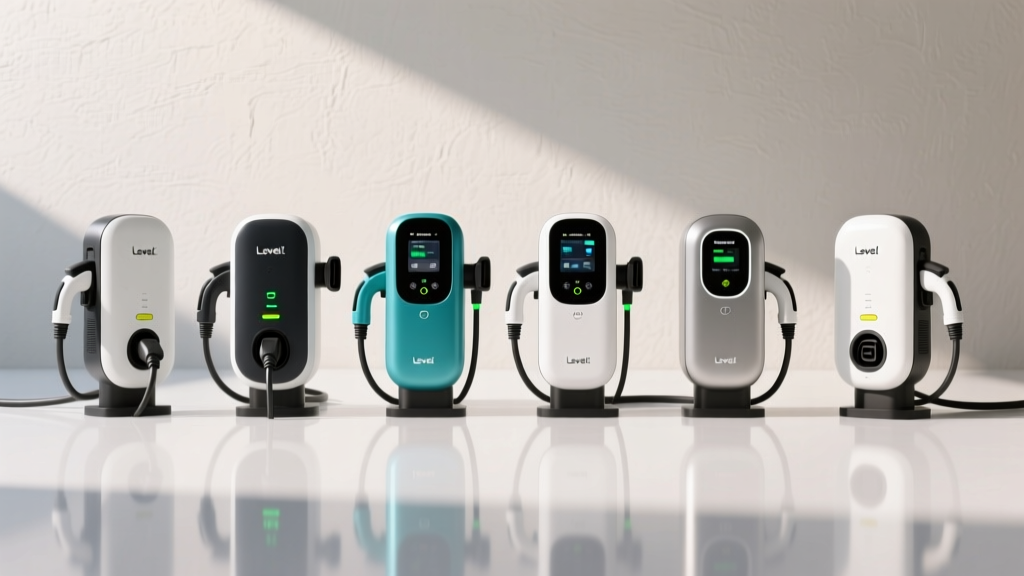
When selecting a Level 2 home charger, the critical specifications are maximum amperage (which determines kW output), connector type, cable length, smart features (Wi-Fi, scheduling, energy tracking), and whether the unit is hardwired or plug-in (NEMA 14-50 outlet).
Hardwired installations are generally preferred for 48A+ chargers because a NEMA 14-50 receptacle is rated for 50A but should only be loaded to 40A continuous (80% rule). A hardwired 48A charger draws within the 60A breaker's continuous capacity without the receptacle as a potential failure point.
Emporia Vue + Level 2 EV Charger
- Power Output: 48A / 11.5 kW (hardwired, 60A circuit)
- Connector: NACS (J3400) native; J1772 version also available
- Cable Length: 24 feet
- Smart Features: Wi-Fi, Emporia app with solar integration, time-of-use scheduling, whole-home energy monitoring via Vue panel sensors
- Price: ~$549 (charger) + ~$349 (Vue energy monitor)
- Best For: Solar-equipped homes wanting integrated energy tracking and scheduled off-peak charging
ChargePoint Home Flex (2nd Gen)
- Power Output: Up to 50A / 12 kW (hardwired, NEMA 14-50 plug for up to 40A)
- Connector: NACS or J1772 (configurable)
- Cable Length: 23 feet
- Smart Features: Wi-Fi, ChargePoint app, Alexa/Google Home, flexible amperage setting via DIP switches (16A–50A to match your circuit)
- Price: ~$649
- Best For: Buyers wanting a proven, UL-listed unit with flexible amperage for different circuit sizes
Tesla Wall Connector (Gen 4)
- Power Output: 48A / 11.5 kW (hardwired, 60A circuit)
- Connector: NACS native
- Cable Length: 24 feet
- Smart Features: Wi-Fi, over-the-air updates, power-sharing (link multiple units on one circuit), Tesla app integration
- Price: ~$475
- Best For: Tesla owners or households with multiple NACS-equipped EVs (power-sharing is ideal for two-car garages on a single 60A circuit)
Wallbox Pulsar Max
- Power Output: 48A / 11.5 kW (hardwired)
- Connector: NACS or J1772
- Cable Length: 25 feet (longest in class)
- Smart Features: Wi-Fi + Bluetooth, myWallbox app, Eco-Smart mode for solar surplus charging, Power Sharing
- Price: ~$599
- Best For: Garages where the charge port is far from the wall unit — the 25-foot cable provides extra reach
Safety, Permits, and Electrical Code Compliance
EV charging draws significant continuous current — often for 6–10 hours at a stretch. This is fundamentally different from an oven or dryer cycle. Proper installation is not optional; it protects your home from fire risk and ensures your insurance policy remains valid.
Non-Negotiable Safety Requirements
- Dedicated circuit: Your EV charger must have its own breaker. Sharing a circuit with a dryer, water heater, or workshop equipment creates overload risk.
- Correct wire gauge: Undersized wire on a long run causes voltage drop and heat buildup. Your electrician will calculate the correct gauge based on circuit amperage and distance from the panel.
- GFCI protection: Required by NEC 2020 (Article 625) for all EV supply equipment. Hardwired units typically include integrated ground-fault protection.
- Outdoor rating: If your charger is installed outside or in an unconditioned garage, it must carry a NEMA 4 (or NEMA 4X) rating for weather resistance. All recommended units above carry outdoor ratings.
- Permit and inspection: Virtually all jurisdictions require an electrical permit for a new 240V circuit. The inspection ensures code compliance and protects your home insurance coverage. Unpermitted work can void claims in the event of an electrical fire.
Panel Upgrade Warning: If your electrician's load calculation shows your panel is near capacity, do not skip the upgrade to save money. An overloaded panel can trip the main breaker unexpectedly, damage equipment, or create a fire hazard. A 200A panel upgrade typically costs $1,500–$3,500, while a 400A service upgrade (for homes adding heat pumps, solar, and EV charging simultaneously) runs $3,000–$5,000. This is a long-term infrastructure investment that increases your home's resale value and supports future electrification.
Frequently Asked Questions
How much does it cost to install a home EV charger?
A straightforward Level 2 installation (panel has capacity, short wire run, no upgrade needed) typically costs $950–$2,100 total, including the charger, electrician labor, materials, and permit. If your panel needs an upgrade to 200A, the total rises to $3,050–$7,500. Always get at least two quotes from licensed electricians who have specific EV charger installation experience.
How fast will each charging level add range?
Level 1 (120V) adds 3–5 miles of range per hour — adequate for plug-in hybrids but impractical for BEVs. Level 2 (240V, 48A) adds roughly 40–45 miles per hour, fully replenishing most EVs overnight. DC fast charging at 150–350 kW can add 150–300+ miles in 20–30 minutes, though the charge rate tapers significantly above 80% SoC to protect battery health.
Which connector and charger is compatible with my EV?
For 2025–2026 model-year vehicles from Tesla, Ford, GM, Hyundai, Kia, Rivian, BMW, Volvo, Mercedes-Benz, and Toyota, the NACS (J3400) connector is standard. Older CCS1 vehicles can use a CCS-to-NACS adapter ($150–$250) for both home and public charging. CHAdeMO is limited to legacy Nissan Leaf models. When buying a home charger, match the connector to your vehicle's charge port — or buy a J1772/NACS adapter if you have multiple EVs in the household.
How much does charging cost per mile compared to gas?
Home charging on off-peak utility rates costs approximately $0.025–$0.036 per mile for an efficient EV (26–30 kWh/100 mi). A comparable gasoline vehicle at 25 MPG and $3.40/gallon costs $0.136 per mile. That is a 70–80% savings per mile when charging at home. Public DC fast charging at $0.45/kWh raises the cost to roughly $0.135/mile — essentially matching gasoline — which is why home charging is essential for EV economics.
What electrical upgrades might I need?
The most common upgrade is a panel capacity increase from 100A or 150A to 200A, required when your existing loads (HVAC, electric range, dryer, water heater) leave insufficient headroom for a 48A continuous EV circuit. Your electrician will perform a NEC Article 220 load calculation to determine this. Other potential upgrades include replacing a Federal Pacific or Zinsco panel (known fire hazards found in pre-1990 homes), adding a sub-panel for a detached garage, or upgrading the service drop from the utility. Budget $1,500–$4,000 for a standard 200A panel upgrade.