Whether you've just traded in your supercharged Impala SS for a modern electric vehicle or you're planning the switch from a high-performance gas sedan, one thing becomes immediately clear: your daily refueling habits are about to change completely. Instead of pulling into a gas station, you'll be plugging in at home—and the setup you choose will define your ownership experience for years to come.
This guide breaks down everything you need to know about home EV charging installation, public charging networks, connector standards, and the real cost per mile compared to the premium fuel your previous V8 demanded. We'll cover exact numbers: kilowatt charge rates, installation costs, circuit requirements, and equipment recommendations current for 2026.
Understanding EV Charging Levels: Speed, Power, and Range Added
EV charging is measured in kilowatts (kW), which represents power—the rate at which energy flows into your battery. Your battery capacity is measured in kilowatt-hours (kWh), which represents total energy stored. Think of kW as how fast the hose fills the tank, and kWh as the size of the tank itself. Confusing these two is the single most common EV literacy mistake—never treat them as interchangeable.
| Level | Voltage | Max Power (kW) | Miles of Range per Hour | Typical Use Case |
|---|---|---|---|---|
| Level 1 | 120V AC | 1.4–1.9 kW | 3–5 miles | Overnight trickle, PHEVs, low-mileage drivers |
| Level 2 | 240V AC | 7.2–19.2 kW | 20–60 miles | Home daily charging, workplace, public AC stations |
| DC Fast Charge | 400–800V DC | 50–350 kW | 150–1,000+ miles (theoretical) | Road trips, highway corridors, rapid top-ups |
For most EV owners, Level 2 at home is the backbone of daily charging. A typical commuter driving 30–40 miles per day will fully replenish overnight on a 40-amp Level 2 circuit. Level 1 is adequate for plug-in hybrids with smaller batteries (typically 10–20 kWh) or EV drivers covering fewer than 20 miles daily, but it's painfully slow for a full-size BEV with an 80+ kWh battery.
How Much Does It Cost to Install a Home EV Charger?
This is the question every new EV owner asks, and the honest answer spans a wide range depending on your home's electrical infrastructure. A straightforward install on a modern 200-amp panel with short wire runs might cost $500–$800. An older home needing a panel upgrade, long conduit runs, or trenching could push past $3,000–$5,000.
| Component | Simple Install | Complex Install |
|---|---|---|
| Level 2 EVSE equipment | $350–$650 | $500–$800 |
| Electrician labor (licensed) | $300–$600 | $800–$2,000 |
| Permit & inspection | $50–$150 | $100–$300 |
| Electrical panel upgrade (if needed) | $0 | $1,500–$3,500 |
| Wire/conduit (long runs 50+ ft) | $50–$100 | $200–$600 |
| Total Estimated Range | $750–$1,500 | $3,100–$7,200 |
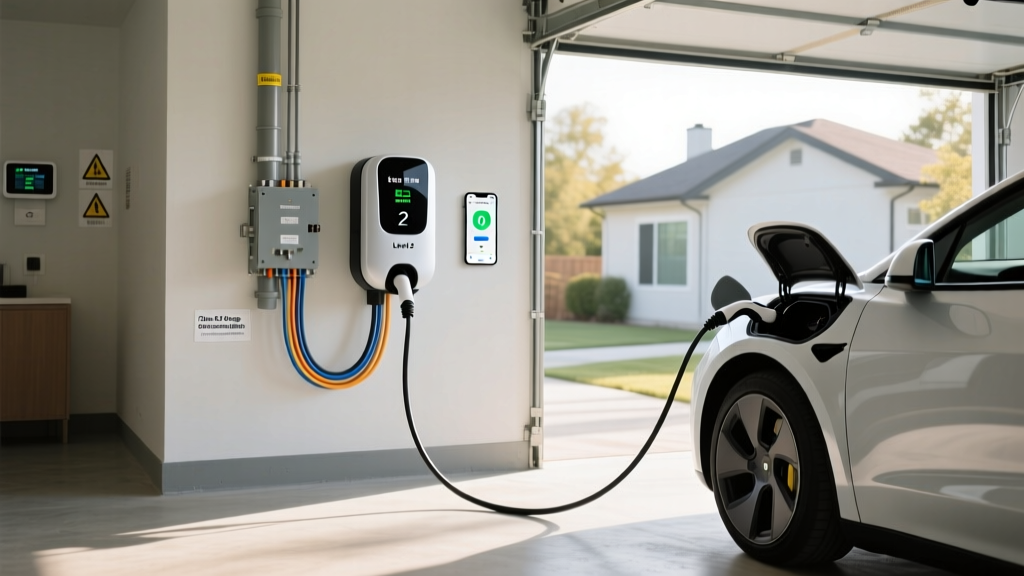
For a typical 48-amp Level 2 charger, you need a dedicated 60-amp circuit (the National Electrical Code requires circuits to be rated at 125% of continuous load). This means 6-gauge copper wire (or 4-gauge aluminum) and a double-pole 60-amp breaker in your panel. Your panel must have two adjacent open slots and sufficient remaining capacity—usually not an issue in homes with 200-amp service, but tighter in older 100-amp panels.
If you're coming from a performance gas car like an Impala SS with a supercharged V8, your home likely already has 200-amp service to support central A/C and other heavy loads. That's favorable. But always have a licensed electrician perform a load calculation before committing to equipment.
What Electrical Upgrades Might I Need?
The most common and costly upgrade is a panel upgrade from 100A to 200A, typically required in homes built before the 1980s or those that have added significant electrical loads over time. Signs you might need one:
- Your panel is 100 amps or less (check the main breaker rating)
- No adjacent open slots for a double-pole breaker
- Your electrician's load calculation shows you're near capacity with existing circuits
- You have a Federal Pacific or Zinsco panel (known safety hazards that should be replaced regardless)
Some utilities and states offer rebates for panel upgrades when paired with EV charger installation—check with your local provider. Additionally, the federal Residential Clean Energy Credit may apply to certain energy-related home upgrades, though the §30D credit applies to vehicles, not chargers (the §30C alternative fuel infrastructure credit expired for most residential installations).
Which Connector Is Compatible with My EV?
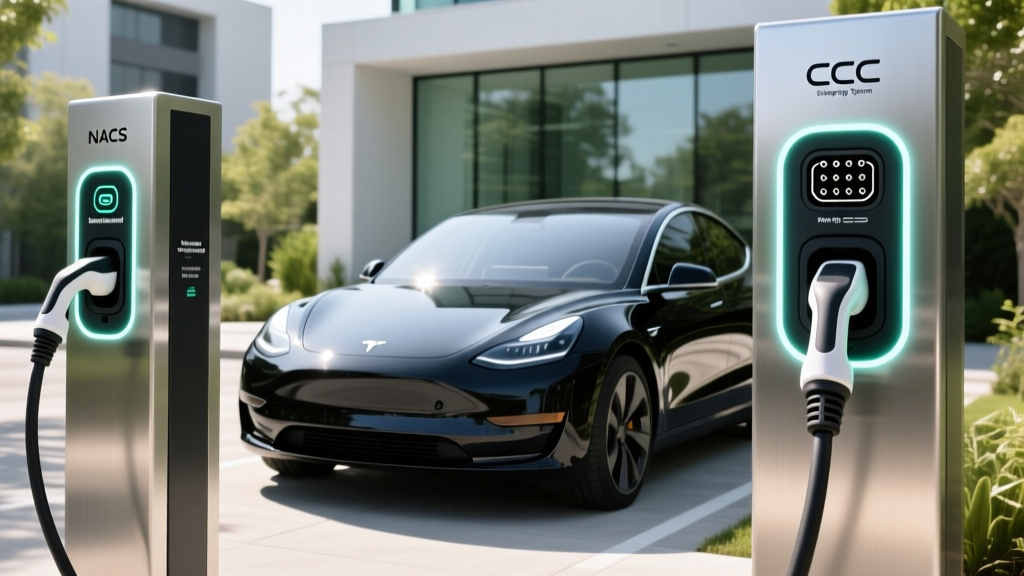
The connector landscape has consolidated significantly since 2024, when most major automakers committed to adopting the North American Charging Standard (NACS), originally developed by Tesla. By 2026, NACS is the dominant connector for new EVs, though CCS1 remains on many vehicles sold between 2019 and 2024.
| Connector | Brands Using It (New Vehicles) | DC Fast Charging Networks | Adapter Availability |
|---|---|---|---|
| NACS (Tesla) | Tesla, Ford, GM, Rivian, Volvo, Polestar, Hyundai, Kia, BMW, Mercedes-Benz | Tesla Supercharger, Electrify America (select), EVgo, ChargePoint | CCS-to-NACS adapters: $150–$300 |
| CCS1 (Combo) | VW ID.4 (pre-2025), some Stellantis models, legacy EVs | Electrify America, EVgo, ChargePoint, Ionity (EU) | NACS-to-CCS adapters available from Tesla ($200) |
| CHAdeMO | Nissan Leaf (discontinued), Mitsubishi Outlander PHEV (legacy) | Limited and declining network | Very limited adapter options |
Key takeaway for 2026 buyers: If you're purchasing a new EV, it almost certainly has a NACS port. If you own a 2020–2024 EV with CCS1, adapters are widely available and allow you to access the Tesla Supercharger network (now open to non-Tesla vehicles via NACS adapters). CHAdeMO is effectively a legacy standard—functional but with a shrinking station footprint.
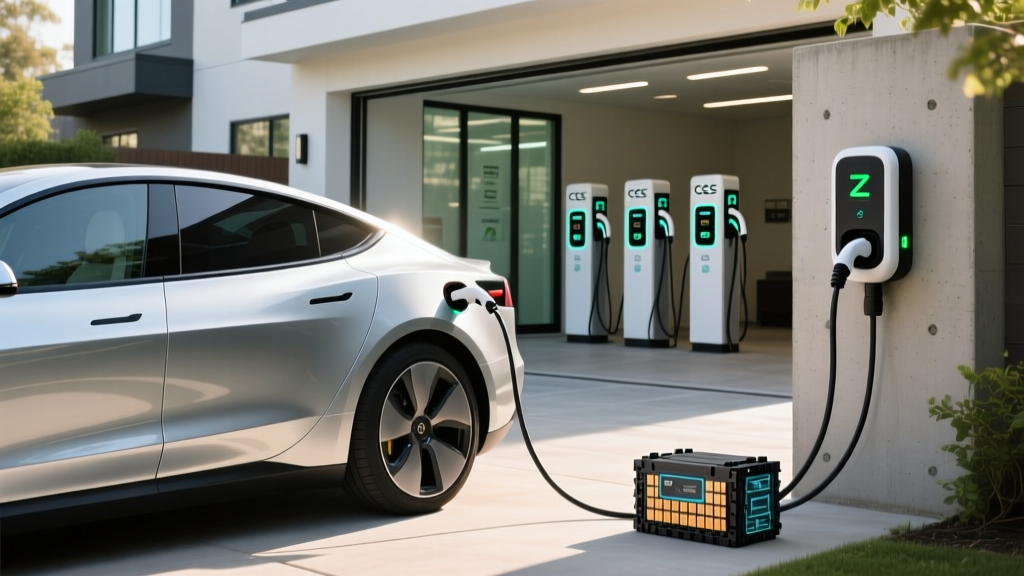
For home Level 2 charging, all non-Tesla EVs use a J1772 connector (which is the AC portion of CCS1). Tesla vehicles include a J1772 adapter in the glovebox, or you can purchase a dedicated NACS-terminated home charger.
Cost Per Mile: EV Charging vs. Gasoline
If you're coming from a supercharged sedan that required premium fuel, the cost difference of EV charging is often the most dramatic ownership benefit. Let's compare exact numbers.
| Scenario | Rate | Cost per Mile (3 mi/kWh EV) | Cost per Mile (22 MPG Gas, $4.20/gal premium) |
|---|---|---|---|
| Home charging (off-peak utility rate) | $0.09–$0.14/kWh | $0.03–$0.047 | $0.191 |
| Home charging (standard rate, no TOU) | $0.15–$0.20/kWh | $0.05–$0.067 | $0.191 |
| Public Level 2 (network pricing) | $0.25–$0.45/kWh | $0.083–$0.15 | $0.191 |
| DC Fast Charging (road trip pricing) | $0.35–$0.55/kWh | $0.117–$0.183 | $0.191 |
Home charging at off-peak rates delivers fuel costs roughly 75–85% lower than premium gasoline at 22 MPG combined (typical for a supercharged V8 sedan). Even public DC fast charging on road trips approaches gasoline parity rather than exceeding it. Over 15,000 miles per year, home charging saves approximately $2,000–$2,500 annually compared to premium fuel.
Efficiency matters here: a heavy, performance-oriented EV might achieve 2.5–2.8 miles per kWh, while an efficient sedan can hit 3.5–4.0 mi/kWh. Check fueleconomy.gov for EPA-rated efficiency (MPGe and kWh/100mi) for specific models.
Charging Time Examples: What to Expect by Battery Size
Charging time depends on three variables: battery capacity (kWh), charger power output (kW), and the vehicle's onboard charger limit (for AC charging). Here are realistic estimates for common scenarios:
Level 2 Home Charging (48A / 11.5 kW)
- 60 kWh battery (e.g., Hyundai Kona Electric): 0–100% in ~5.5 hours
- 82 kWh battery (e.g., Tesla Model 3 Long Range): 0–100% in ~7.5 hours
- 100 kWh battery (e.g., Ford F-150 Lightning Extended Range): 0–100% in ~9 hours
- 130 kWh battery (e.g., GMC Sierra EV): 0–100% in ~12 hours
DC Fast Charging (10–80% SoC)
- 250 kW peak (Tesla Model Y, Hyundai Ioniq 5): 10–80% in ~18–22 minutes
- 200 kW peak (Ford Mustang Mach-E): 10–80% in ~25–30 minutes
- 150 kW peak (older CCS vehicles): 10–80% in ~35–45 minutes
- 350 kW capable (Porsche Taycan, Hyundai Ioniq 5 N on 800V): 10–80% in ~15–18 minutes
Equipment Recommendations: Best Home Level 2 Chargers (2026)
Based on reliability data, smart features, connector options, and value, here are the top home Level 2 chargers currently available. All require a dedicated 240V circuit installed by a licensed electrician.
ChargePoint Home Flex
- Power Output: Up to 12 kW (50A) or configurable down to 16A for limited panels
- Connector: J1772 (NACS version available)
- Cable Length: 23 feet
- Smart Features: Wi-Fi, app scheduling, Alexa/Google integration, energy tracking, utility TOU optimization
- Price: $549–$599 (unit only)
- Best For: Most homeowners wanting reliable smart scheduling and flexible amperage
Tesla Wall Connector
- Power Output: Up to 11.5 kW (48A)
- Connector: NACS native (J1772 adapter included for non-Tesla EVs)
- Cable Length: 24 feet
- Smart Features: Wi-Fi, OTA updates, power sharing (daisy-chain up to 6 units on one circuit), Tesla app integration
- Price: $475
- Best For: Tesla owners and households with multiple EVs (power sharing feature is unique)
Grizzl-E Smart
- Power Output: Up to 10 kW (40A)
- Connector: J1772
- Cable Length: 24 feet
- Smart Features: Wi-Fi, OCPP protocol, app scheduling, over-the-air updates
- Price: $449
- Best For: Extreme cold climates (rated to -40°F), outdoor installations, budget-conscious buyers
Emporia Vue Level 2 Charger
- Power Output: Up to 11.5 kW (48A)
- Connector: J1772
- Cable Length: 24 feet
- Smart Features: Integrates with Emporia Vue energy monitor, solar-aware charging, TOU scheduling, load management
- Price: $399–$449
- Best For: Homes with solar panels or whole-home energy monitoring
When choosing, match the charger's amperage to your circuit capacity and your vehicle's onboard charger limit. A 48A charger requires a 60A circuit, but if your EV's onboard charger maxes at 32A (7.7 kW), you won't gain speed from a higher-amp unit—though it provides future-proofing for your next vehicle.
Safety, Electrical Code, and Installation Best Practices
EV charging is a continuous high-draw load—your charger will run at full power for 6–10 hours straight. This is fundamentally different from a dryer or oven that cycles on and off. The NEC (National Electrical Code) treats it as a continuous load, requiring the circuit to be rated at 125% of the charger's maximum draw.
Key Code and Safety Requirements
- Dedicated circuit: Your Level 2 charger must have its own breaker—not shared with other outlets or appliances.
- GFCI protection: NEC 2020 and later requires GFCI protection for EVSE outlets. Hardwired units have GFCI built into the charger itself.
- Outdoor rating: If installing outside, ensure the EVSE is rated NEMA 4 (weather-resistant). Most quality units are, but check before purchasing.
- Wire gauge: 6 AWG copper for 60A circuits; 8 AWG for 40A circuits. Aluminum wire must be two sizes larger for the same ampacity.
- Permit and inspection: Most jurisdictions require an electrical permit for new 240V circuits. Your electrician pulls this, and a local inspector verifies the work. Skipping the permit risks insurance coverage issues and code violations.
- Hardwired vs. plug: Hardwired installations avoid the need for a 240V receptacle (NEMA 14-50 or 6-50) and are generally preferred for permanent installations. Plug-in offers portability if you might move.
For outdoor installations, consider a NEC-compliant mounting post or wall bracket with cable management. Drip loops and proper conduit sealing prevent moisture intrusion over years of exposure.
Public Charging Networks: What to Know Beyond Home
Even with perfect home charging, you'll need public infrastructure for road trips and occasional top-ups. The 2026 public charging landscape is significantly more reliable than even two years prior, driven by network expansion and the NACS standardization.
Major Networks and Coverage
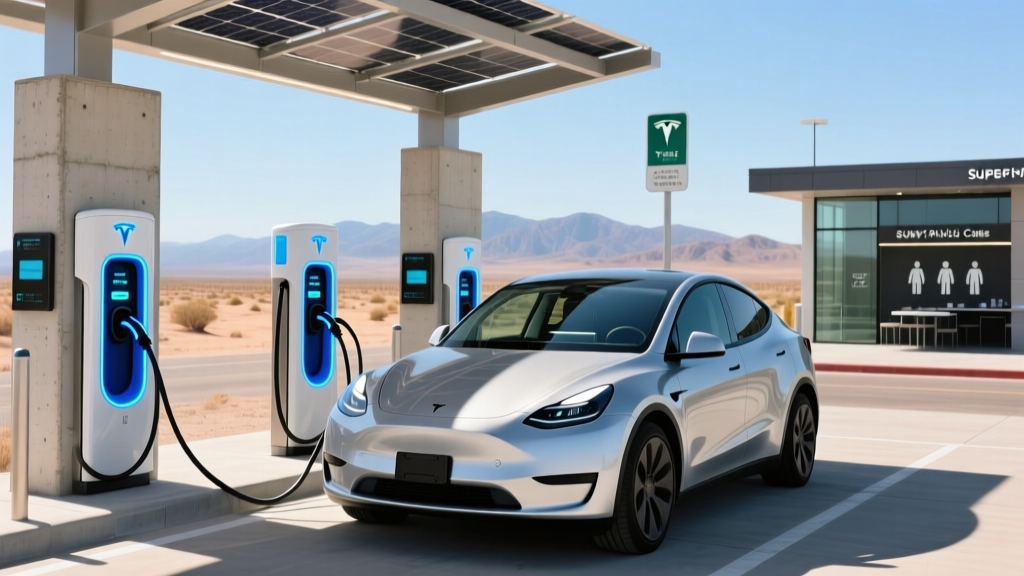
- Tesla Supercharger: 6,500+ stations and 60,000+ stalls in North America. Now open to non-Tesla NACS-equipped vehicles. Typically 150–250 kW. Pricing: $0.25–$0.40/kWh depending on location and time of day.
- Electrify America: 1,000+ stations, adding NACS connectors alongside CCS. Up to 350 kW capable. Pricing: $0.35–$0.55/kWh; subscription plan ($4/month) reduces rates.
- EVgo: 1,100+ stations, predominantly in metro areas. 50–350 kW. Pricing: $0.30–$0.50/kWh.
- ChargePoint: Largest network by station count but includes many Level 2 locations. DC fast stations growing. Pricing varies by site operator.
For reliable trip planning, use PlugShare or your vehicle's built-in navigation with live charger status. Most modern EVs will precondition the battery (warm it to optimal temperature) when you navigate to a DC fast charger, which significantly improves actual charge speed—especially in cold weather.
Frequently Asked Questions
How much does it cost to install a home EV charger?
A straightforward Level 2 installation on a modern 200A panel typically costs $750–$1,500 including equipment, electrician labor, and permit. Complex installs requiring panel upgrades, long wire runs, or trenching can reach $3,000–$7,000. Get 2–3 quotes from licensed electricians before committing.
How fast will each charging level add range?
Level 1 (120V) adds 3–5 miles per hour. Level 2 (240V, 48A) adds 30–45 miles per hour for most EVs. DC fast charging can add 150–300 miles in a 20–30 minute session depending on vehicle capability and charger output. Your vehicle's efficiency (miles per kWh) directly affects these numbers.
Which connector/charger is compatible with my EV?
New 2025–2026 EVs from nearly all major manufacturers use NACS. Older 2019–2024 models likely use CCS1. The Nissan Leaf used CHAdeMO. For home charging, any J1772-compatible Level 2 charger works with CCS and CHAdeMO vehicles; Tesla vehicles need a NACS charger or a J1772-to-NACS adapter (included with the car).
How much does charging cost per mile vs gas?
Home charging at typical utility rates ($0.12–$0.18/kWh) costs $0.04–$0.06 per mile for an average EV—roughly 70–80% less than a gasoline car getting 25 MPG on $3.80/gallon fuel. Public DC fast charging at $0.40–$0.50/kWh costs $0.12–$0.17 per mile, approaching but generally not exceeding gasoline costs.
What electrical upgrades might I need?
The most common upgrade is a panel expansion from 100A to 200A service ($1,500–$3,500) if your existing panel lacks capacity or open slots. You'll need a dedicated 60A double-pole breaker with two adjacent slots. Your electrician will perform a load calculation per NEC Article 220 to determine if your current service can support the additional continuous load.
Can I charge my EV from a standard 120V outlet?
Yes—this is Level 1 charging. It delivers roughly 1.4–1.9 kW and adds 3–5 miles of range per hour. For a 300-mile range EV, a full charge from empty would take 60–90 hours. Level 1 is practical for PHEVs with small batteries or EV drivers covering under 20 miles daily who can charge overnight (10–12 hours). For most BEV owners, it's an emergency backup, not a daily solution.
Does the federal tax credit cover home charger installation?
The §30D New Clean Vehicle Credit applies to qualifying EV purchases, not charger installation. The §30C Alternative Fuel Vehicle Refueling Property Credit previously covered up to 30% of home charger costs (max $1,000), but this credit has restricted eligibility tied to census tracts classified as low-income or non-urban. Check IRS guidance on §30C for current eligibility rules and consult a tax professional.