If you're transitioning from a performance SUV like the 2014 Range Rover Sport Supercharged — with its 510-horsepower supercharged 5.0L V8 averaging around 14 MPG combined — to a modern electric vehicle, charging logistics become your new fuel strategy. This guide covers every technical detail you need to charge at home and on the road in 2026, with exact numbers for equipment, electrical requirements, and costs.
Understanding EV Charging Levels: kW Power and Miles Per Hour
The most common confusion for new EV owners is the difference between kW (kilowatts), which measures charging power or speed, and kWh (kilowatt-hours), which measures battery energy capacity. Think of kW as the flow rate of water through a hose, and kWh as the total volume of the tank you're filling. A 100 kWh battery charged at 10 kW takes roughly 10 hours; the same battery at 150 kW (peak) fills far faster but only sustains that peak for a portion of the session.
| Level | Voltage / Amps | Power (kW) | Miles of Range Per Hour | Typical Use Case |
|---|---|---|---|---|
| Level 1 | 120V / 12A | 1.4 kW | 3–5 mi/hr | Overnight top-ups, PHEVs, emergency |
| Level 2 (Home) | 240V / 32–48A | 7.7–11.5 kW | 25–45 mi/hr | Daily home charging, primary method |
| Level 2 (Public) | 208–240V / 30–80A | 6.6–19.2 kW | 22–65 mi/hr | Workplace, shopping, hotels |
| DC Fast (Level 3) | 400–800V DC | 50–350 kW | 150–1,200 mi/hr (peak) | Road trips, highway corridors |
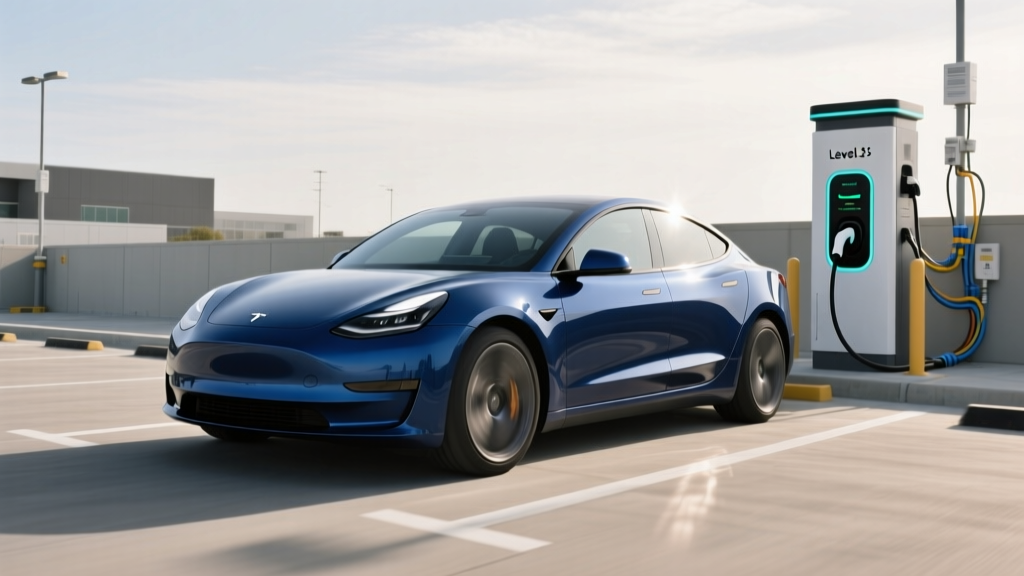
For a typical 2026 EV with a 75–100 kWh battery, Level 2 home charging at 11.5 kW adds roughly 35–45 miles of range per hour — enough to replenish a full day's driving in 2–3 hours. DC fast charging peaks at high rates but tapers significantly above 80% state of charge (SoC) to protect battery health. A 250 kW charger might deliver 10–80% in 18–22 minutes for a vehicle with an 800V architecture like the Hyundai Ioniq 5 or Porsche Taycan, but 400V vehicles typically peak at 150–175 kW and take 25–35 minutes for the same session.
Home Charger Installation: Electrical Requirements and Costs
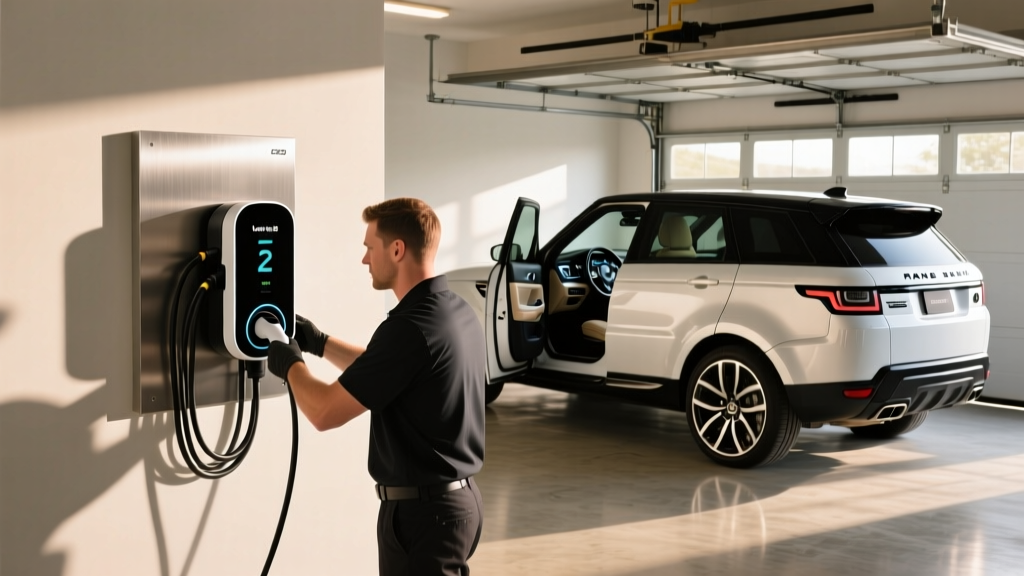
A Level 2 home charger requires a dedicated 240-volt circuit, typically rated at 40, 50, or 60 amps. The National Electrical Code (NEC) requires that continuous loads (like EV charging, which runs for 3+ hours) not exceed 80% of the circuit rating. So a 48-amp charger needs a 60-amp circuit; a 32-amp charger needs a 40-amp circuit.
Electrical Panel Capacity Check
Before installing, determine your home's electrical service panel capacity. Most modern homes have 100A or 200A main service. A licensed electrician will perform a load calculation — adding up existing circuits and expected simultaneous loads — to confirm whether a new 40–60A circuit is feasible without a panel upgrade.
Homes built before the 1980s often have 100A panels that are already near capacity. Upgrading to a 200A panel typically costs $1,500–$3,000 depending on your utility's requirements, the panel location, and whether a new meter base or service drop is needed. Some utilities offer panel-upgrade rebates — check with your provider.
| Component | Cost Range | Notes |
|---|---|---|
| Level 2 Charger (Equipment) | $300–$750 | Varies by brand, power output, smart features |
| Electrician Labor | $300–$1,500 | Depends on run length, conduit, wall penetration |
| Electrical Permit | $50–$250 | Required in most jurisdictions; varies by municipality |
| Panel Upgrade (if needed) | $1,500–$3,000 | 200A service upgrade for older homes |
| Total (No Panel Upgrade) | $650–$2,500 | Most common scenario for modern homes |
| Total (With Panel Upgrade) | $2,150–$5,500 | Older homes or high-load situations |
The single biggest cost variable is the distance from your electrical panel to the charger location. A 10-foot run through an attached garage wall might cost $300 in labor. A 60-foot run through a finished basement, requiring conduit and drywall repair, can push labor past $1,200. Always get at least two quotes from licensed electricians who have EV charger installation experience.
Connector Compatibility: NACS, CCS, and CHAdeMO in 2026
The North American charging connector landscape has consolidated dramatically. As of 2026, the North American Charging Standard (NACS) — originally developed by Tesla — has become the dominant connector, adopted by Ford, GM, Rivian, Volvo, Hyundai/Kia, and most other major automakers for new vehicles. The CCS1 (Combined Charging System) connector remains on many 2023–2025 model-year vehicles, and CHAdeMO persists only on legacy Nissan Leaf models.
| Connector | Brands Using It (2026 Models) | DC Fast Charge Availability | Adapter Options |
|---|---|---|---|
| NACS (Tesla) | Tesla, Ford, GM, Rivian, Volvo, Polestar, Hyundai, Kia, Mercedes | Tesla Supercharger network + growing third-party NACS stations | CCS-to-NACS adapters available (~$200–$300) |
| CCS1 | VW ID.4 (prior years), BMW iX (prior years), older Ford/GM EVs | Electrify America, EVgo, ChargePoint DC stations | NACS-to-CCS adapters from Tesla and third parties |
| CHAdeMO | Nissan Leaf (legacy) | Limited; most networks prioritize CCS/NACS | No practical adapter to NACS/CCS |
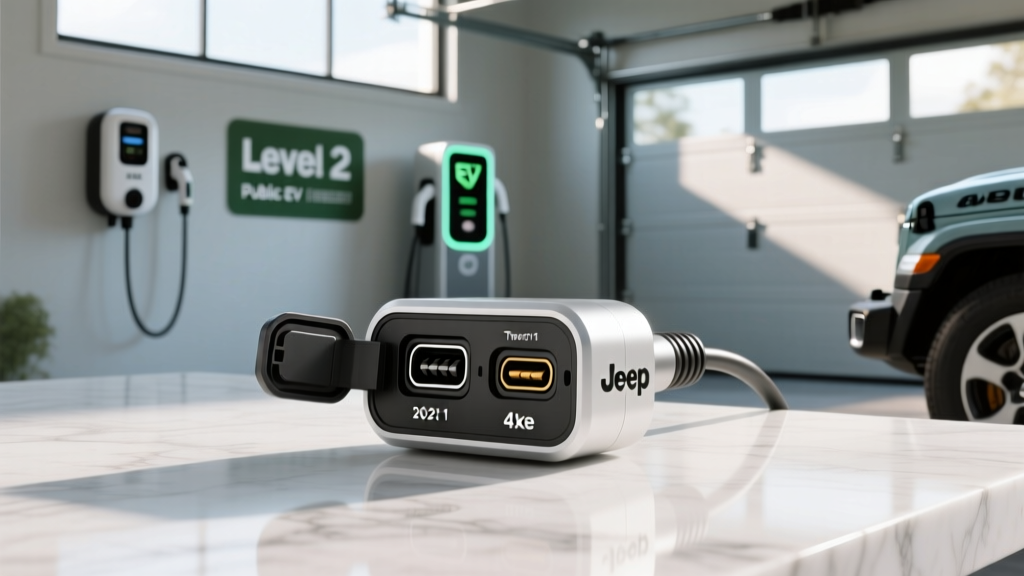
For home Level 2 charging, all non-Tesla EVs sold in recent years use a J1772 connector. Tesla vehicles include a J1772 adapter in the trunk. Most third-party Level 2 home chargers ship with a J1772 plug, so they'll work with any EV except Tesla (which requires the included adapter or a NACS-terminated charger). Several manufacturers now offer dual-connector or NACS-native home chargers for Tesla owners who want plug-in convenience without adapters.
Recommended Home EV Chargers for 2026
These recommendations are based on real-world reliability, smart features, and value. All units listed are hardwired or NEMA 14-50 plug-in compatible and carry UL or ETL safety certification.
ChargePoint Home Flex
- Power Output: Up to 11.5 kW (48A) on a 60A circuit; configurable down to 16A
- Connector: J1772 (NACS adapter included for newer kits)
- Cable Length: 23 feet
- Smart Features: Wi-Fi, Alexa integration, scheduled charging, energy tracking via app
- Price: ~$550–$650
- Best For: Flexible amperage for older panels; strong app ecosystem
Wall Connector (Tesla, Gen 3+)
- Power Output: Up to 11.5 kW (48A) on a 60A circuit
- Connector: NACS native (J1772 adapter available)
- Cable Length: 24 feet
- Smart Features: Wi-Fi, over-the-air updates, power sharing between two units, Tesla app integration
- Price: ~$475–$550
- Best For: Tesla owners and NACS-equipped vehicles; cleanest install aesthetic
Emporia Vue Smart EV Charger
- Power Output: Up to 11.5 kW (48A)
- Connector: J1772
- Cable Length: 24 feet
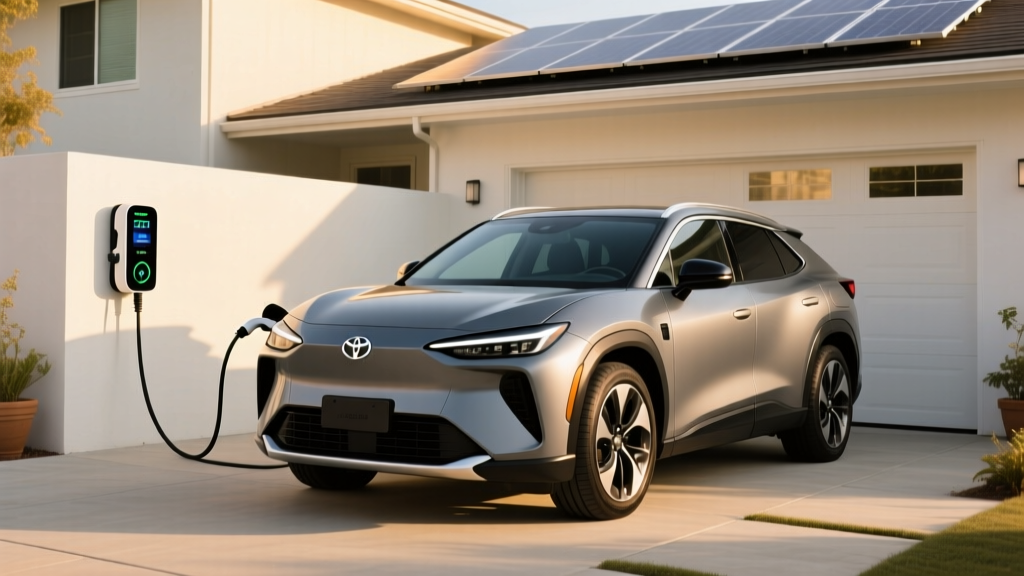
- Smart Features: Real-time energy monitoring, solar integration, whole-home energy dashboard pairing
- Price: ~$400–$500
- Best For: Solar-equipped homes and energy-monitoring enthusiasts
For most homes with a 200A panel, a 48A charger on a 60A circuit delivers the fastest practical Level 2 speed. If your panel is tight on capacity, the ChargePoint Home Flex's ability to be software-configured down to 32A or even 16A — without changing hardware — makes it the most adaptable option.
Cost to Charge: Home vs. Public vs. Gas Comparison
One of the strongest economic arguments for EV ownership is fuel cost. Here's how charging costs break down across scenarios, compared to the gasoline baseline. For reference, the 2014 Range Rover Sport Supercharged required premium fuel and averaged roughly 14 MPG, costing approximately $0.28–$0.34 per mile to drive at 2026 fuel prices.
| Charging Scenario | Cost per kWh | Cost per Mile (3.5 mi/kWh EV) | Annual Cost (12,000 mi) |
|---|---|---|---|
| Home Off-Peak (Time-of-Use Rate) | $0.08–$0.12 | $0.023–$0.034 | $275–$410 |
| Home Standard Residential Rate | $0.14–$0.18 | $0.040–$0.051 | $480–$615 |
| Public Level 2 (ChargePoint, etc.) | $0.25–$0.40 | $0.071–$0.114 | $855–$1,370 |
| DC Fast Charging (Electrify America, Tesla) | $0.30–$0.55 | $0.086–$0.157 | $1,030–$1,885 |
| Gas (2014 Range Rover Sport SC, 14 MPG, $4.20/gal premium) | — | $0.30 | $3,600 |
Even at the most expensive DC fast charging rates, an EV costs roughly half per mile compared to a thirsty performance SUV. For the 80%+ of EV owners who charge primarily at home on off-peak rates, annual fuel costs drop below $400 — a savings of over $3,000 per year versus the Range Rover Sport Supercharged.
Many utilities offer time-of-use (TOU) plans that provide electricity at $0.06–$0.10/kWh during overnight hours (typically 11 PM – 6 AM). Programming your charger or vehicle to charge only during these windows maximizes savings. According to the U.S. Department of Energy's fueleconomy.gov, EVs converting grid energy to motion are 3–4 times more efficient than internal combustion vehicles converting gasoline to motion.
Charging Time Examples: 10–80% Sessions by Battery Size
Real-world charging time depends on battery capacity, vehicle charge acceptance rate, and charger output. Below are estimated 10–80% times for common 2026 EV configurations. Note that charging slows significantly above 80% SoC — the final 20% can take as long as the first 70%.
| Vehicle Example | Battery (kWh Usable) | Peak DC Rate (kW) | 10–80% at Peak DC | Level 2 (11.5 kW) 10–80% |
|---|---|---|---|---|
| Tesla Model Y Long Range | 75 kWh | 250 kW | ~22 minutes | ~5.5 hours |
| Hyundai Ioniq 5 (800V) | 77.4 kWh | 240 kW | ~18 minutes | ~5.5 hours |
| Ford F-150 Lightning Ext. Range | 131 kWh | 150 kW | ~45 minutes | ~9 hours |
| Chevrolet Equinox EV | 85 kWh | 150 kW | ~32 minutes | ~6 hours |
| BMW iX xDrive50 | 105 kWh | 200 kW | ~34 minutes | ~7.5 hours |
For daily driving of 30–50 miles, a Level 2 home charger replenishes your battery in 1–2 hours — typically while you sleep. DC fast chargers are reserved for road trips where you need to add 150–200 miles of range in a rest stop.
Safety, Electrical Code, and Installation Best Practices
EV charging involves sustained high-current draw — more similar to running an electric furnace than plugging in a phone. Safety and code compliance are non-negotiable.
- Dedicated Circuit: Your Level 2 charger must be on a circuit dedicated solely to EV charging. Sharing with other appliances risks tripping breakers or overheating wiring.
- GFCI Protection: The 2020 NEC and later require GFCI (Ground Fault Circuit Interrupter) protection for EV charging circuits in garages. Many modern chargers have built-in GFCI; confirm with your electrician.
- NEMA 14-50 vs. Hardwired: A NEMA 14-50 outlet offers portability (take the charger when you move), but some jurisdictions now require GFCI breakers for 14-50 receptacles used for EV charging, adding $100–$150. Hardwired installations avoid this requirement and reduce connection points that can overheat.
- Outdoor Rating: If your charger is mounted outside, ensure it carries a NEMA 4 or IP65 weather rating. All recommended units above are rated for outdoor installation.
- Permit and Inspection: Most municipalities require a permit ($50–$250) and a post-installation inspection. Skipping this step can void homeowner's insurance coverage in the event of an electrical fire and may cause issues during a home sale.
For detailed code requirements, the National Fire Protection Association (NFPA) publishes the NEC, and your local building department enforces the applicable edition. Always hire a licensed electrician — DIY high-amperage 240V work carries genuine shock and fire risk.
Frequently Asked Questions
How much does it cost to install a home EV charger?
Most installations without a panel upgrade cost $650–$2,500 total, including the charger ($300–$750), electrician labor ($300–$1,500), and permit ($50–$250). Homes needing a 200A panel upgrade should budget $2,150–$5,500 total. The IRS Residential Clean Energy Credit (§25D) may cover 30% of installation costs up to $1,000 — consult a tax professional for eligibility.
How fast will each charging level add range?
Level 1 (120V) adds 3–5 miles per hour — too slow for most BEVs but workable for PHEVs with smaller batteries. Level 2 (240V, 48A) adds 35–45 miles per hour, fully replenishing most EVs overnight. DC fast charging at 150–250 kW adds 150–1,200 miles per hour at peak, though real sessions taper after 80% SoC.
Which connector/charger is compatible with my EV?
For 2026 model-year vehicles, most new EVs use the NACS connector. Prior-year models from VW, BMW, and others may use CCS1. Home Level 2 charging uses J1772 for all non-Tesla vehicles, with Tesla providing a J1772 adapter. Check your vehicle's charge port or owner's manual to confirm.
How much does charging cost per mile vs. gas?
Home charging at off-peak rates costs $0.02–$0.05 per mile. Public DC fast charging costs $0.09–$0.16 per mile. Compare this to the 2014 Range Rover Sport Supercharged at roughly $0.30/mile on premium fuel, or a typical 25 MPG gas car at $0.14–$0.17/mile. EVs save $1,000–$3,000+ annually on fuel depending on your electricity rate and mileage.
What electrical upgrades might I need?
If your home has a 100A panel that's already heavily loaded (electric range, dryer, HVAC, water heater), you'll likely need a panel upgrade to 200A service — costing $1,500–$3,000. Homes with 200A+ service usually have sufficient capacity for a 40–60A EV circuit. Some utilities offer load-management devices that allow EV charging without a panel upgrade by briefly pausing the charger when other heavy loads activate.