If you're driving a 2002 Nissan Frontier Supercharged and considering the jump to an electric vehicle, you're not alone. Many truck owners are evaluating EVs as battery technology improves and charging infrastructure expands. But making the switch means understanding one critical new element: home charging. This guide walks you through everything you need to know about installing a home EV charger, from electrical requirements to equipment selection.
Understanding EV Charging Levels
EV charging is measured in kilowatts (kW), which represents power delivery rate. Don't confuse this with kilowatt-hours (kWh), which measures total energy stored in your battery. Think of kW like water pressure and kWh like the total gallons in your tank.
| Level | Voltage | Power (kW) | Miles Added/Hour | Best Use Case |
|---|---|---|---|---|
| Level 1 | 120V | 1.2-1.8 kW | 3-5 miles | Overnight top-ups, PHEVs |
| Level 2 | 240V | 3.3-19.2 kW | 14-75 miles | Daily home charging |
| DC Fast | 400-800V | 50-350 kW | 180-1,200 miles | Road trips, quick stops |
For most EV owners, Level 2 home charging is the sweet spot. A typical 40-amp, 9.6 kW Level 2 charger adds roughly 30-35 miles of range per hour, meaning an overnight charge easily replenishes daily driving. DC Fast Charging is reserved for public stations and road trips—a 150 kW charger can take a 75 kWh battery from 10-80% in roughly 25-30 minutes, though charging speed tapers significantly above 80% to protect battery health.
Home Charger Installation Costs
The total cost to install a Level 2 home charger varies dramatically based on your home's electrical infrastructure. Here's a realistic breakdown:
| Component | Basic Install | Complex Install |
|---|---|---|
| Level 2 Charger Equipment | $400-$700 | $600-$1,200 |
| Electrician Labor | $300-$800 | $1,200-$3,000 |
| Electrical Permit | $50-$150 | $100-$300 |
| Panel Upgrade (if needed) | $0 | $1,500-$4,000 |
| Conduit/Wiring (long runs) | $0-$200 | $400-$1,500 |
| Total Range | $750-$1,850 | $3,800-$10,000 |
When You'll Need a Panel Upgrade
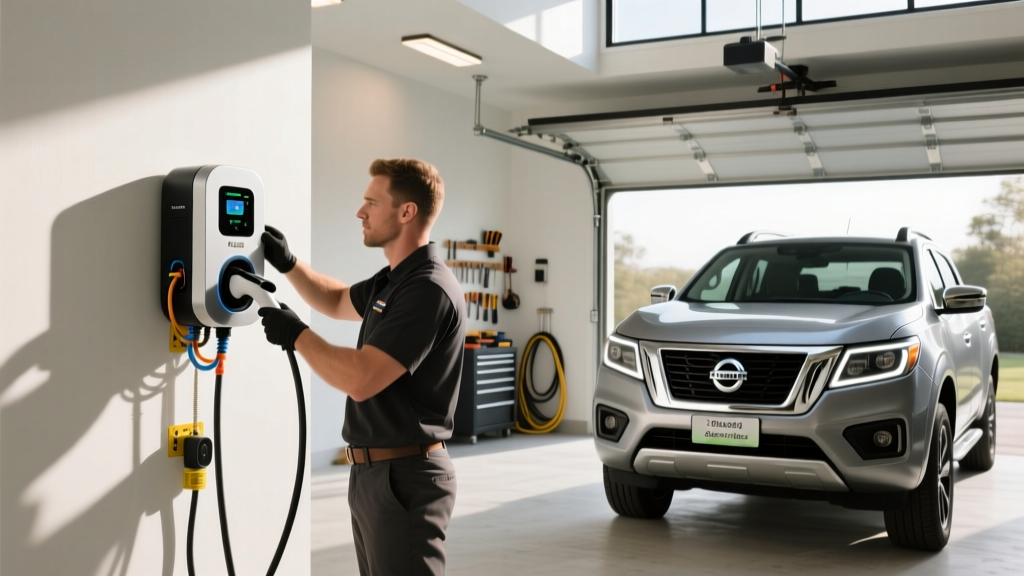
Homes built before 1990 often have 100-amp electrical panels. A Level 2 charger drawing 40 amps requires a dedicated 50-amp circuit (the National Electrical Code requires circuits to be rated 125% of continuous load). If your panel is already near capacity with existing appliances, you'll need to upgrade to a 200-amp panel—this is the single biggest cost variable in EV charger installation.
Modern homes with 200-amp panels typically have sufficient capacity for a Level 2 charger without upgrades. Your electrician will perform a load calculation to determine if your panel can handle the additional draw.
Electrical Requirements and Safety
A proper Level 2 installation requires:
- Dedicated circuit: 40-50 amp breaker (for 32-40 amp chargers) or 60 amp breaker (for 48 amp chargers)
- Voltage: 240V (same as your dryer or oven)
- Wire gauge: 6 AWG copper for 40-50 amp circuits, 4 AWG for 60 amp
- GFCI protection: Required for outdoor installations per NEC 2023
- NEMA 14-50 outlet or hardwired: Hardwired connections are safer and allow higher amperage
For outdoor installations, ensure your charger has a NEMA 4 rating (weather-resistant). Most quality Level 2 chargers meet this standard, but verify before purchasing if your installation location is exposed to the elements.
Charging Costs: EV vs Your Old Gas Truck
One of the biggest advantages of switching from a gas vehicle like the 02 Nissan Frontier Supercharged is fuel cost savings. Here's how charging costs break down:
| Charging Scenario | Cost per kWh | Cost per Mile (4 mi/kWh EV) | Annual Cost (12,000 mi) |
|---|---|---|---|
| Home (off-peak rate) | $0.08-$0.12 | $0.02-$0.03 | $240-$360 |
| Home (standard rate) | $0.12-$0.18 | $0.03-$0.045 | $360-$540 |
| Public Level 2 | $0.25-$0.49 | $0.06-$0.12 | $720-$1,440 |
| DC Fast Charging | $0.35-$0.65 | $0.09-$0.16 | $1,080-$1,920 |
| Gas Truck (20 MPG, $3.50/gal) | N/A | $0.175 | $2,100 |
Even using expensive DC fast charging exclusively, an EV costs less per mile than a gas truck getting 20 MPG. Most EV owners charge primarily at home on off-peak rates, resulting in annual "fuel" costs of $300-$500 versus $2,000+ for gasoline.
Connector Compatibility
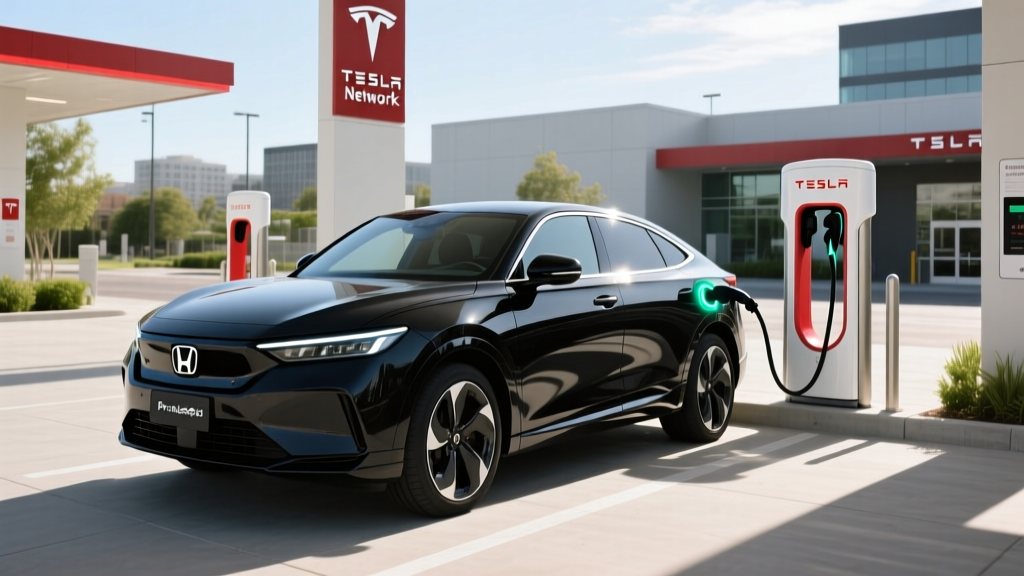
As of 2026, the EV charging connector landscape has largely consolidated around the North American Charging Standard (NACS), originally developed by Tesla:
| Connector | Brands Using It | Notes |
|---|---|---|
| NACS (Tesla) | Tesla, Ford, GM, Rivian, Volvo, Polestar, others | Industry standard as of 2025+ |
| CCS1 | Hyundai, Kia, BMW, VW, older models | Being phased out by most brands |
| CHAdeMO | Nissan Leaf (older), Mitsubishi | Largely discontinued |
If you're buying a 2025 or newer EV from a major manufacturer, it likely uses NACS. For CCS-equipped vehicles, adapters are available ($150-$250) to access Tesla Superchargers, which now welcome non-Tesla vehicles at many locations.
Recommended Level 2 Home Chargers
Based on reliability, features, and value, here are top picks for 2026:
ChargePoint Home Flex
- Power: Up to 12 kW (50 amps) adjustable
- Connector: NACS or CCS1 options
- Cable length: 23 feet
- Smart features: Wi-Fi, scheduling, energy tracking
- Price: $550-$650
- Best for: Most homeowners wanting flexibility
Emporia Level 2 EV Charger
- Power: Up to 11.5 kW (48 amps)
- Connector: NACS or J1772 (with adapter)
- Cable length: 24 feet
- Smart features: Solar integration, load management
- Price: $400-$500
- Best for: Budget-conscious buyers, solar homes
Tesla Wall Connector
- Power: Up to 11.5 kW (48 amps)
- Connector: NACS native, J1772 adapter included
- Cable length: 24 feet
- Smart features: Wi-Fi, power sharing for multiple units
- Price: $475
- Best for: Tesla owners, multi-EV households
Charging Time Examples
Actual charging times depend on battery size, state of charge, and charger power. Here are realistic scenarios:
- 75 kWh battery (Tesla Model Y, Ford Mustang Mach-E): 10-80% in ~7-8 hours on 9.6 kW Level 2
- 100 kWh battery (Ford F-150 Lightning, Rivian R1T): 10-80% in ~9-10 hours on 9.6 kW Level 2
- 40 kWh battery (older Nissan Leaf): 10-80% in ~4 hours on 9.6 kW Level 2
For context, if you're replacing an 02 Nissan Frontier Supercharged with an electric truck like the F-150 Lightning (extended range, 131 kWh battery), plan for overnight charging on Level 2. The Lightning's 19.2 kW onboard charger option reduces 10-80% time to roughly 6 hours.
Frequently Asked Questions
How much does it cost to install a home EV charger?
Basic installations in homes with 200-amp panels typically cost $750-$1,850 total (equipment + electrician + permit). Homes requiring panel upgrades can see costs of $3,800-$10,000. Get 2-3 quotes from licensed electricians and verify they have EV charger installation experience.
How fast will each charging level add range?
Level 1 (120V) adds 3-5 miles per hour. Level 2 (240V, 40 amps) adds roughly 30-35 miles per hour. DC Fast Charging at 150 kW can add 200+ miles in 20 minutes, though speeds taper above 80% state of charge.
Which connector/charger is compatible with my EV?
Check your vehicle's charging port or owner's manual. Most 2025+ EVs use NACS (Tesla-style). Older EVs may use CCS1 or CHAdeMO. Adapters are available for cross-compatibility, but native connectors are always preferable for reliability.
How much does charging cost per mile vs gas?
Home charging costs $0.02-$0.045 per mile for most EVs (at $0.12-$0.18/kWh). A gas truck getting 20 MPG at $3.50/gallon costs $0.175 per mile—roughly 4-8x more expensive than home EV charging.
What electrical upgrades might I need?
If your home has a 100-amp panel or your existing electrical load is near capacity, you'll likely need a panel upgrade to 200 amps ($1,500-$4,000). Your electrician will perform a load calculation to determine if your current panel can support a dedicated 40-50 amp circuit for EV charging.
Making the switch from a gas truck to an EV requires upfront investment in home charging infrastructure, but the long-term fuel savings and convenience of waking up to a "full tank" every morning make it worthwhile for most drivers. Start by getting an electrical assessment from a licensed electrician to understand your specific installation costs.