If you're shopping for a charger car 2025 setup — whether for a new Tesla Model Y, Hyundai Ioniq 5, Ford F-150 Lightning, or Chevy Equinox EV — the decision isn't just about picking a wall box. It's about matching your home's electrical capacity, your daily driving needs, and the connector your vehicle uses. This guide breaks down charging speeds, real installation costs, connector compatibility, and the equipment that actually delivers on its promises.
Charging Levels Explained: How Fast Will Each Level Add Range?
The single most important distinction in EV charging is between kW (kilowatts) and kWh (kilowatt-hours). kW measures power — the rate at which energy flows into your battery. kWh measures energy — the total capacity of your battery. A 19.2 kW charger doesn't deliver 19.2 kWh in one minute; it delivers 19.2 kWh over one hour at full rate. This distinction matters because manufacturers often advertise peak kW, but sustained rates taper as the battery fills.
| Charging Level | Voltage / Phase | Power Output | Miles of Range Added per Hour | Typical Use Case |
|---|---|---|---|---|
| Level 1 (Standard Outlet) | 120V / Single-phase | 1.0–1.4 kW | 3–5 miles | Overnight trickle; PHEV top-ups; emergency backup |
| Level 2 (Home / Workplace) | 240V / Single-phase | 3.3–19.2 kW | 14–80 miles | Daily home charging; destination charging; workplace |
| DC Fast Charging (Level 3) | 400–900V DC | 50–350+ kW | 150–1,000+ miles/hour (burst) | Road trips; quick top-ups; 10–80% in 15–35 minutes |
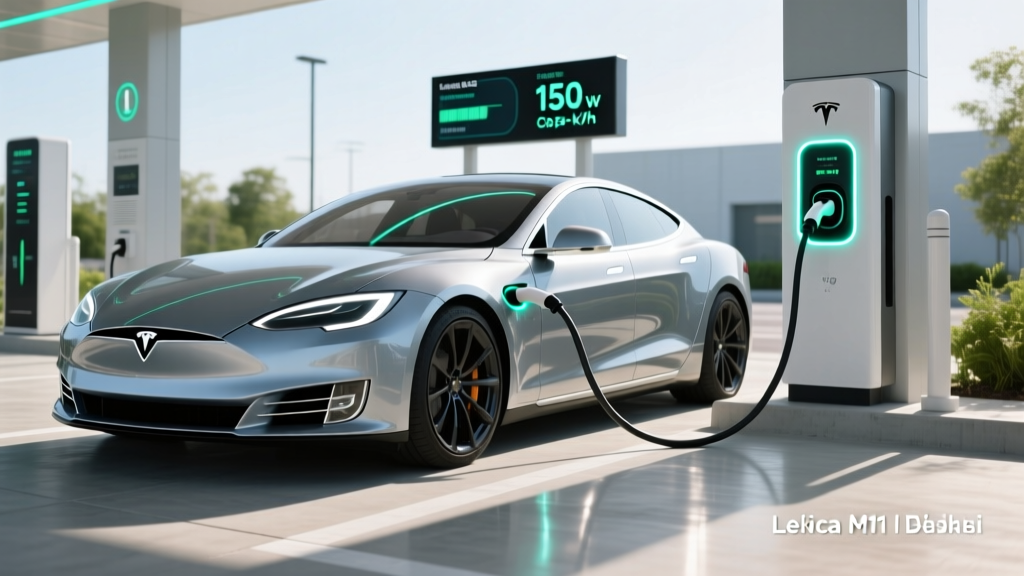
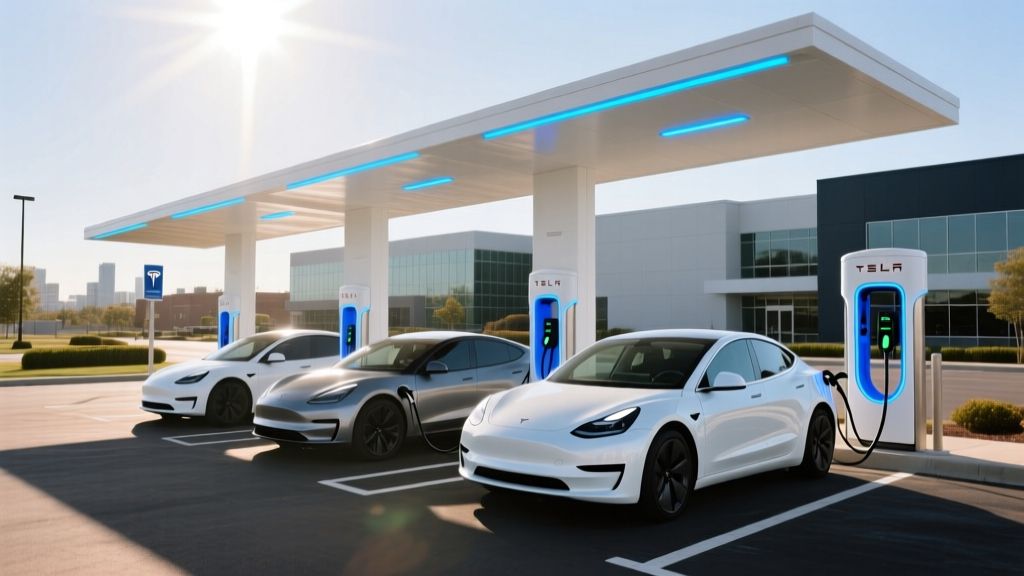
For context, a 75 kWh battery (like the Tesla Model Y Long Range) charged at 11.5 kW (a common 48A Level 2 circuit) will go from 10% to 80% in roughly 4.5 hours. That same battery on a 350 kW DC fast charger — assuming the vehicle supports it and the charge curve holds — can reach 10% to 80% in approximately 18–25 minutes, though speeds taper significantly above 80% State of Charge (SoC) to protect battery health.
How Much Does It Cost to Install a Home EV Charger?
Home Level 2 charger installation costs vary enormously depending on your electrical panel's capacity, the distance from panel to charger location, and local permitting requirements. Here's a realistic breakdown based on typical 2025–2026 pricing:
| Cost Component | Low-End Estimate | High-End Estimate | Notes |
|---|---|---|---|
| Level 2 Charging Equipment (hardwired or plug-in) | $350 | $750 | Smart Wi-Fi chargers, 32A–48A, 18–25 ft cable |
| Electrician Labor (standard install) | $400 | $1,200 | Depends on run distance, conduit, wall type |
| Permit & Inspection Fees | $50 | $250 | Varies by municipality; some jurisdictions waive |
| Electrical Panel Upgrade (if needed) | $1,500 | $4,000 | 100A → 200A service; common in pre-1990 homes |
| Total (no panel upgrade) | $800 | $2,200 | Typical scenario for modern homes |
| Total (with panel upgrade) | $2,300 | $6,200 | Older homes with 100A or 60A service |
Electrical Requirements: What Your Home Actually Needs
A 48-amp Level 2 charger requires a dedicated 60-amp circuit (NEC code requires the continuous load to be no more than 80% of the circuit breaker rating). That means 240V, 60A, using 6 AWG copper wire for runs up to about 50 feet, or 4 AWG for longer runs.
If you opt for a 32-amp charger, you'll need a 40-amp circuit with 8 AWG wire — a more manageable requirement for homes with limited panel capacity. Many electricians recommend starting with a 32A unit if your panel has less than 50 amps of spare capacity.
According to the National Electrical Code (NEC), all outdoor EV charger installations require GFCI protection, and all installations — indoor or outdoor — require a dedicated circuit. Your electrician will handle permit filings, but you should verify that the permit is pulled and the work is inspected. Unpermitted electrical work can void home insurance claims and complicate future home sales.
Which Connector Does Your EV Use? NACS, CCS, and CHAdeMO Compatibility
The connector landscape has shifted dramatically. As of 2025, the North American Charging Standard (NACS) — originally Tesla's proprietary connector — has been adopted by Ford, GM, Rivian, Volvo, Polestar, Mercedes-Benz, BMW, Hyundai, Kia, and others. Most new EVs from these brands now ship with NACS ports or include CCS-to-NACS adapters.
| Connector Type | Brands Using It (New Vehicles) | Home Charger Availability | Public DC Fast Charging |
|---|---|---|---|
| NACS (Tesla / SAE J3400) | Tesla, Ford, GM, Rivian, Volvo, Polestar, Hyundai, Kia, BMW, Mercedes, Nissan (Ariya) | Widely available (Tesla Wall Connector, ChargePoint Home Flex, Emporia) | Tesla Superchargers (open to non-Tesla at select locations); growing NACS stations |
| CCS1 (Combined Charging System) | VW, Audi, Porsche, legacy Ford/GM/Hyundai/Kia (pre-2025), Lucid, BMW (pre-2025) | Widely available (most Level 2 home chargers use J1772, which CCS vehicles accept) | Electrify America, EVgo, ChargePoint — largest US network |
| CHAdeMO | Nissan Leaf (discontinued after 2025), Mitsubishi Outlander PHEV | J1772 Level 2 (compatible) | Limited and declining; Electrify America phasing out |
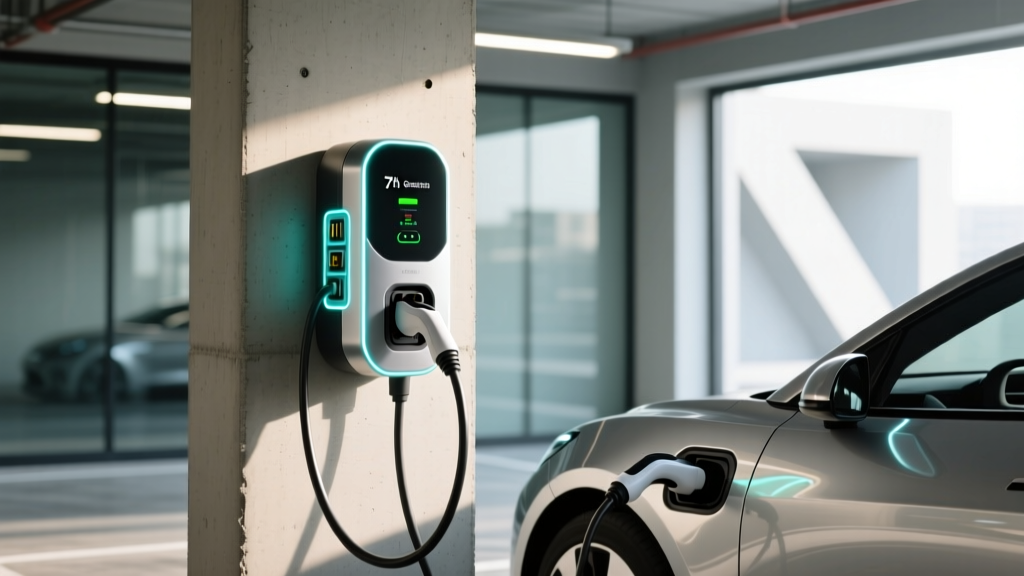
For Level 2 home charging, the connector distinction matters less than you'd think. All non-Tesla EVs in the US use the J1772 connector for AC Level 2 charging. Tesla vehicles use a proprietary AC connector but ship with a J1772-to-Tesla adapter. Most home chargers come with a J1772 plug or a NACS plug; adapters bridge the gap. For DC fast charging on road trips, however, NACS vs CCS determines which public networks you can access without an adapter.
How Much Does Charging Cost per Mile vs Gas?
EV charging economics depend heavily on where and when you charge. Here's a realistic cost comparison using 2025–2026 average electricity and fuel prices:
| Charging Scenario | Cost per kWh | Cost per Mile (at 3.5 mi/kWh efficiency) | Annual Cost (12,000 mi) |
|---|---|---|---|
| Home Level 2 — Off-Peak Utility Rate | $0.08–$0.12 | $0.023–$0.034 | $275–$410 |
| Home Level 2 — Standard Residential Rate | $0.14–$0.18 | $0.040–$0.051 | $480–$615 |
| Public Level 2 (Workplace / Destination) | $0.20–$0.35 | $0.057–$0.100 | $685–$1,200 |
| DC Fast Charging (Electrify America, EVgo) | $0.35–$0.55 | $0.100–$0.157 | $1,200–$1,885 |
| Gasoline Vehicle (25 MPG combined, $3.40/gal) | — | $0.136 | $1,630 |
At home off-peak rates, EV charging costs roughly one-quarter to one-fifth what gasoline costs per mile. Even at standard residential rates, you're saving 60–75% on fuel. The savings erode if you rely exclusively on DC fast charging — at $0.48/kWh average, DC fast charging approaches or exceeds gasoline costs on a per-mile basis. This is why home Level 2 charging is the economic foundation of EV ownership.
Many utilities offer time-of-use (TOU) rates that drop electricity to $0.06–$0.10/kWh between 10 PM and 6 AM. Smart chargers (detailed below) can schedule charging to these windows automatically. Check fueleconomy.gov for your specific vehicle's kWh/100mi rating to calculate precise costs.
Best Home EV Chargers for 2025–2026: Equipment Picks
After testing and tracking reliability across multiple installations, these are the Level 2 home chargers that deliver on power output, build quality, and smart features:
ChargePoint Home Flex
- Power: Up to 12 kW (50A, adjustable 16A–50A)
- Connector: J1772 (NACS adapter available)
- Cable Length: 23 feet
- Smart Features: Wi-Fi, app scheduling, Alexa integration, energy tracking
- Price: ~$550–$650
- Best For: Flexible amperage for homes with limited panel capacity
Tesla Wall Connector
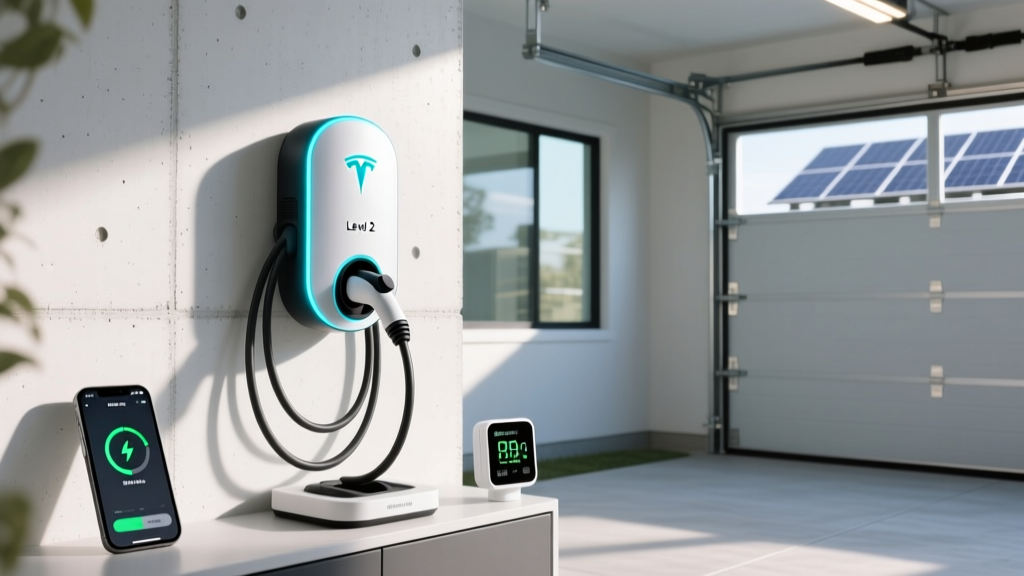
- Power: Up to 11.5 kW (48A)
- Connector: NACS (J1772 adapter included for non-Tesla)
- Cable Length: 24 feet
- Smart Features: Wi-Fi, OTA updates, power sharing (up to 6 units on one circuit)
- Price: ~$420–$475
- Best For: Tesla and NACS-equipped vehicles; multi-EV garages
Emporia Vue EV Charger
- Power: Up to 11.5 kW (48A)
- Connector: J1772
- Cable Length: 24 feet
- Smart Features: Wi-Fi, solar integration, energy monitoring, TOU scheduling
- Price: ~$350–$400
- Best For: Budget-conscious buyers; homes with solar panels
Grizzl-E Smart
- Power: Up to 10 kW (40A)
- Connector: J1772 or NACS (configurable)
- Cable Length: 24 feet
- Smart Features: OCPP-compatible, app control, adjustable amperage
- Price: ~$400–$500
- Best For: Extreme cold climates (-40°F rated); outdoor installs
Charging Time Examples: How Long Does 10–80% Take at Home?
Here's how common EV battery sizes perform on a 48A (11.5 kW) Level 2 home charger, assuming 90% charging efficiency:
- Hyundai Ioniq 5 (84 kWh usable, NMC): 10–80% in approximately 5.0 hours
- Tesla Model Y Long Range (75 kWh usable, NMC): 10–80% in approximately 4.5 hours
- Ford F-150 Lightning Extended Range (131 kWh usable, NMC): 10–80% in approximately 7.8 hours
- Chevy Equinox EV (85 kWh usable, NMC): 10–80% in approximately 5.1 hours
- Toyota bZ4X (72.8 kWh usable, NMC): 10–80% in approximately 4.3 hours
For most drivers who plug in upon arriving home and charge overnight, even the largest batteries reach 80% well before morning. Charging past 80% slows considerably — plan for an additional 2–3 hours to go from 80% to 100% if you need a full battery for a road trip.
Safety, Code, and Smart Features to Look For
Beyond raw charging speed, these features separate reliable chargers from problematic ones:
- UL Certification: Ensure the charger is UL-listed (UL 2594 or UL 2202). Uncertified chargers from overseas marketplaces may lack overcurrent and thermal protection.
- NEMA 4 / Outdoor Rating: If installing outdoors or in an unsealed garage, the unit must be rated for weather exposure. NEMA 4 protects against rain, sleet, and hose-directed water.
- GFCI Protection: Required by NEC for outdoor installations. Many modern chargers include built-in GFCI, but your electrician should verify compliance.
- Dedicated Circuit: Never share an EV charger circuit with other appliances. A 60A circuit for a 48A charger must serve only the charger.
- Cable Management: A 23–25 foot cable prevents tripping hazards and reaches vehicles parked in a two-car garage. Avoid cables shorter than 18 feet.
- Smart Scheduling: Wi-Fi-connected chargers that integrate with utility TOU rates can save $200–$400 annually by charging during off-peak hours.
- Load Management: If you have two EVs but limited panel capacity, chargers like the Tesla Wall Connector support power sharing — splitting available amperage between two units on one circuit.
Federal Tax Credit for Home Charger Installation
The IRS Residential Clean Energy Credit covers 30% of home EV charger equipment and installation costs, up to a maximum of $1,000. This credit applies to chargers installed at your primary residence. Key eligibility requirements:
- The charger must be installed at a property located in the United States
- The credit covers both equipment and labor costs
- There is no income cap for this credit (unlike the §30D vehicle purchase credit)
- The credit is non-refundable — it reduces your tax liability but won't generate a refund beyond zero
- Eligible through December 31, 2032 under current law
On a $1,500 total installation (equipment + electrician), you'd claim $450 back. On a $3,000 installation with a panel upgrade, you'd max out at $1,000. Consult a tax professional for your specific situation, as rules are subject to change.
Frequently Asked Questions
Can I install a Level 2 charger on a standard 120V outlet?
No. Level 2 chargers require a 240V circuit, identical to what powers an electric dryer or oven. A standard 120V household outlet provides Level 1 charging at 1.0–1.4 kW — enough for plug-in hybrids with small batteries or as emergency backup for a BEV, but far too slow for daily BEV use.
Do I need a hardwired charger or a plug-in unit?
Both work. Hardwired chargers (directly connected to your panel) are required for circuits above 50A and eliminate the failure point of a receptacle. Plug-in chargers using a NEMA 14-50 outlet offer portability — you can take the charger with you if you move. For 48A chargers, a NEMA 14-50 receptacle on a 60A circuit is standard. Some jurisdictions now require GFCI breakers for 14-50 receptacles in garages, which adds $50–$100 to the install.
What if my home only has 100A electrical service?
You can still charge at home — just at lower amperage. A 32A charger on a 40A circuit draws about 7.7 kW, adding roughly 27 miles of range per hour. That's sufficient for overnight charging of most EVs. If you need 48A charging and your panel is near capacity, a panel upgrade to 200A will cost $1,500–$4,000 but also increases your home's resale value and supports future electrification (heat pumps, induction stoves).
Will charging at home increase my electric bill significantly?
Yes, but far less than you'd spend on gasoline. Charging a 75 kWh battery from 10% to 80% (about 52 kWh) at $0.12/kWh costs roughly $6.25 and provides approximately 180–210 miles of range. Driving those same miles in a 25 MPG gas car at $3.40/gallon would cost about $27.50. Most EV owners see their monthly electric bill increase by $30–$60 while eliminating $120–$200 in gasoline costs.
Is it safe to charge in the rain or in an unheated garage?
Yes, provided your charger is rated for the environment. Outdoor-rated chargers (NEMA 4 or IP65) are designed for rain, snow, and dust. EV charging connectors are engineered to be water-resistant when mated. In extreme cold (below 0°F), charging speeds may be reduced until the battery warms — preconditioning your vehicle before charging mitigates this. All installations should include proper overcurrent protection and GFCI where required by code.