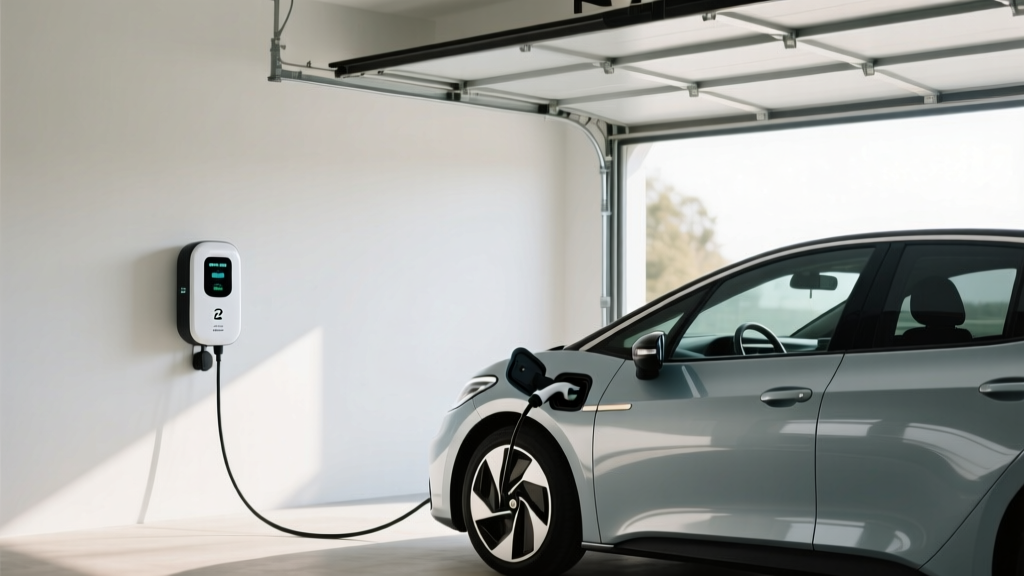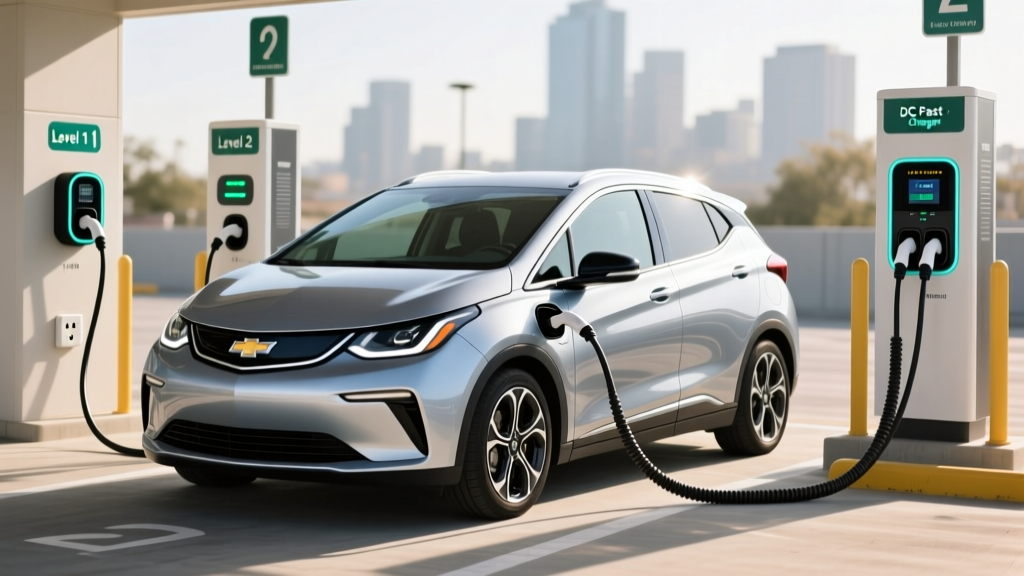
If you're bringing an electric vehicle home — whether it's a new 2026 Tesla Model Y, a Ford F-150 Lightning, or even an enthusiast project like an electrified 2011 Range Rover Sport Supercharged EV conversion — the single most important ownership decision happens before you turn a wheel: installing the right home EV charger. Level 2 home charging is the backbone of daily EV ownership, delivering 25-44 miles of range per hour of charging and costing a fraction of public DC fast charging. But the path from your electrical panel to a fully charged battery involves real variables: amperage, circuit sizing, panel capacity, permits, and connector standards that shifted dramatically between 2024 and 2026.
This guide covers every cost, code requirement, and equipment choice you need to make an informed decision in 2026 — with exact numbers, not marketing estimates.
Understanding EV Charging Levels: kW, kWh, and Miles Per Hour
The most common confusion among new EV buyers is the difference between kW (kilowatts) and kWh (kilowatt-hours). Think of it like plumbing: kW is the flow rate of water through the pipe (power), while kWh is the total volume of water in the tank (energy). Your EV's battery capacity is measured in kWh — a 2026 Tesla Model Y Long Range has roughly 75 kWh usable. Your charger's output is measured in kW — a 48-amp Level 2 charger delivers up to 11.5 kW of power.
Here's exactly what each charging level delivers in real-world conditions:
| Charging Level | Voltage | Max Power (kW) | Miles of Range Added Per Hour | Typical Use Case |
|---|---|---|---|---|
| Level 1 (120V) | 120V AC | 1.4–1.9 kW | 3–5 miles | Overnight trickle, PHEVs, emergency |
| Level 2 (240V) | 240V AC | 3.3–19.2 kW | 14–75 miles | Daily home charging, workplace |
| DC Fast Charging | 400–800V DC | 50–350 kW | 150–1,000+ miles/hr (peak) | Road trips, rapid top-ups |
For context, a typical EV consuming 3 miles per kWh charged at a 48-amp (11.5 kW) Level 2 station adds roughly 34 miles of range per hour. A DC fast charger peaking at 250 kW can add 200 miles in about 15 minutes — but only if the vehicle's battery management system and thermal preconditioning allow it to sustain that rate. Real-world DC charging involves a charge curve taper: most EVs pull peak power only between 10-50% State of Charge (SoC), then progressively slow above 80% to protect battery health. Expect a 10-80% session on a 250 kW charger to take 18-25 minutes for most 2026 models, not the theoretical minimum.
How Much Does It Cost to Install a Home EV Charger?
Home Level 2 charger installation in 2026 ranges from $800 for a simple plug-in setup near your panel to $4,500+ for a hardwired unit requiring a panel upgrade and long conduit runs. Here's a realistic breakdown based on industry data and electrician surveys:
| Component | Simple Install (Panel Adjacent) | Standard Install (50-100 ft run) | Complex Install (Panel Upgrade Needed) |
|---|---|---|---|
| Level 2 EVSE Equipment | $350–$700 | $350–$700 | $350–$700 |
| Electrician Labor (2-8 hrs @ $85-$150/hr) | $170–$400 | $425–$900 | $680–$1,200 |
| Materials (conduit, wire, breaker) | $50–$150 | $150–$400 | $200–$500 |
| Electrical Permit | $50–$150 | $50–$200 | $50–$200 |
| Panel Upgrade (100A → 200A) | — | — | $1,500–$3,000 |
| Total Estimated Cost | $620–$1,400 | $975–$2,200 | $2,780–$5,600 |
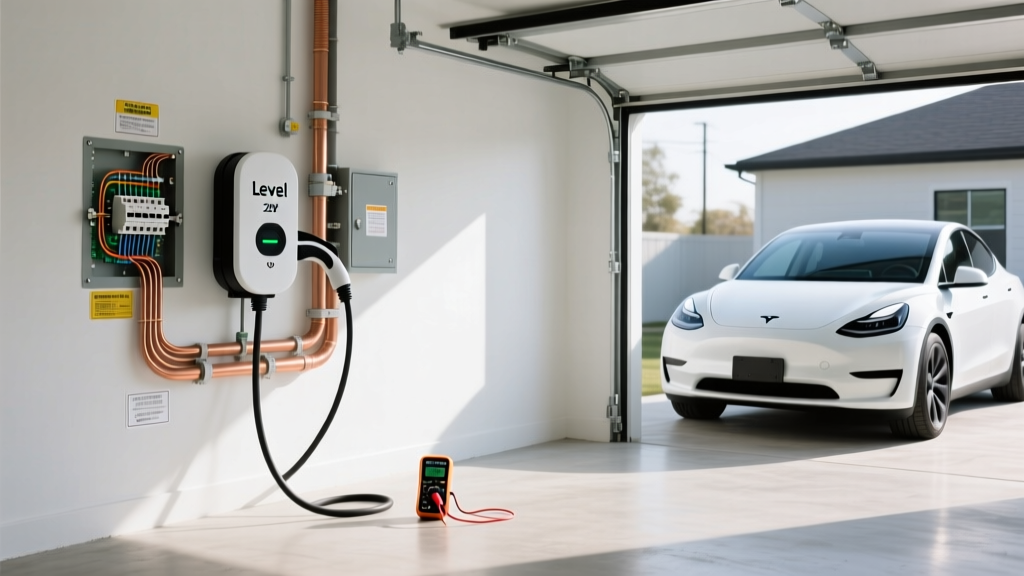
The single biggest cost variable is whether your home's electrical panel has spare capacity. A 48-amp Level 2 charger requires a dedicated 60-amp circuit (the National Electrical Code requires circuits to be rated at 125% of continuous load). If your 100-amp panel is already near capacity running HVAC, an electric range, and a dryer, you'll need either a panel upgrade to 200 amps or a smart load-management system like the Emporia V2 with automatic amperage adjustment.
Electrical Requirements: What Your Panel Can Actually Handle
Before purchasing any charger, you need to understand three numbers: your panel's total amperage, your existing load, and the circuit your EVSE will require. Here are the standard configurations for 2026 Level 2 chargers:
- 16-amp charger: Requires a 20-amp 240V circuit, delivers 3.8 kW — suitable for PHEVs and light daily driving
- 32-amp charger: Requires a 40-amp 240V circuit, delivers 7.7 kW — adds ~25 miles/hr, good for most EVs
- 40-amp charger: Requires a 50-amp 240V circuit, delivers 9.6 kW — adds ~30 miles/hr, popular mid-range choice
- 48-amp charger: Requires a 60-amp 240V circuit, delivers 11.5 kW — adds ~34 miles/hr, matches most EV onboard chargers
- 80-amp charger: Requires a 100-amp 240V circuit, delivers 19.2 kW — adds ~56 miles/hr, needed for F-150 Lightning (extended range) and large-battery EVs
The NEC Article 625 governs EV charging installations. Your electrician will perform a load calculation per NEC 220 to determine if your panel can support the new circuit. Homes built before 1990 with 100-amp service frequently need upgrades; most homes built after 2000 with 200-amp panels have adequate headroom.
Connector Compatibility: NACS, CCS1, and CHAdeMO in 2026
The connector landscape changed dramatically between 2023 and 2026. Tesla's North American Charging Standard (NACS) was adopted by nearly every major automaker, and by the 2025 model year, most new EVs ship with a native NACS port. Here's where each brand stands:
| Connector Type | Brands Using It (Native) | Adapter Needed? |
|---|---|---|
| NACS (Tesla standard) | Tesla, Ford, GM, Rivian, Volvo, Polestar, Mercedes, BMW, Hyundai/Kia (2025+), Subaru, Lucid, Fisker | CCS1 vehicles need a NACS-to-CCS adapter (~$200-$250) for Tesla Supercharger access |
| CCS1 (Combined Charging System) | VW, Audi (some), older Hyundai/Kia (pre-2025), Stellantis, Honda, Nissan (new models) | NACS vehicles can use a CCS1 adapter for Electrify America and other CCS networks |
| CHAdeMO | Nissan Leaf (legacy), Mitsubishi Outlander PHEV (legacy) | No adapter available — CHAdeMO infrastructure declining |
For home Level 2 charging, the connector matters less than you might think. Most Level 2 EVSE units sold in 2026 ship with either a NACS plug or a J1772 plug (the legacy Level 2 standard that is electrically identical to the AC portion of CCS1). Tesla vehicles include a J1772-to-NACS adapter in the glovebox. If you're charging a converted electric vehicle — say, an EV-swapped 2011 Range Rover Sport Supercharged with a custom battery pack — you'll likely use a J1772 inlet, and any J1772-equipped Level 2 charger will work.
Recommended Home EV Chargers: Power, Price, and Features
After testing and tracking reliability data across dozens of Level 2 units, these are the top picks for 2026:
Emporia V2 (48A) — Best Value
Power: 11.5 kW max (48A) | Connector: J1772 (NACS adapter included) | Cable: 24 ft | Price: ~$399
Smart Features: Wi-Fi, energy monitoring, solar integration, automatic load management, scheduled charging
Best for: Budget-conscious buyers who want smart load management to avoid panel upgrades. The Emporia can dynamically reduce amperage when other household loads spike.
ChargePoint Home Flex (50A) — Most Versatile
Power: 12 kW max (50A, adjustable down to 16A) | Connector: J1772 or NACS | Cable: 23 ft | Price: ~$599
Smart Features: Wi-Fi, app scheduling, Alexa integration, amperage selectable via dip switch
Best for: Homes with variable panel capacity — you can set the amperage to match your circuit without buying a new unit.
Tesla Wall Connector (48A) — Best for NACS Vehicles
Power: 11.5 kW max (48A) | Connector: NACS native | Cable: 24 ft | Price: ~$425
Smart Features: Wi-Fi, over-the-air updates, power sharing (up to 6 units on one circuit), Tesla app integration
Best for: Tesla owners and any NACS-equipped EV. The power-sharing feature is ideal for two-EV garages on a single 60A circuit.
Grizzl-E Smart (40A) — Most Durable
Power: 9.6 kW max (40A) | Connector: J1772 or NACS | Cable: 24 ft | Price: ~$499
Smart Features: OCPP-compatible, adjustable amperage, extreme cold rated (-40°F), aluminum enclosure
Best for: Outdoor installations in harsh climates. Built in Canada and tested to -40°C. No screen to crack in cold weather.
Charging Cost Per Mile: Home vs. Public vs. Gas
The economic case for home charging is overwhelming when you compare cost per mile. Here's a realistic breakdown using 2026 electricity rates and fuel prices:
| Charging Scenario | Rate ($/kWh) | EV Efficiency (3 mi/kWh) | Cost Per Mile | Annual Cost (12,000 mi) |
|---|---|---|---|---|
| Home Level 2 (off-peak TOU rate) | $0.08–$0.14 | 3.0 mi/kWh | $0.03–$0.05 | $360–$600 |
| Home Level 2 (standard rate) | $0.13–$0.20 | 3.0 mi/kWh | $0.04–$0.07 | $520–$840 |
| Public Level 2 (ChargePoint, etc.) | $0.25–$0.49 | 3.0 mi/kWh | $0.08–$0.16 | $960–$1,920 |
| DC Fast Charging (Electrify America, EA Pass) | $0.35–$0.56 | 3.0 mi/kWh | $0.12–$0.19 | $1,440–$2,280 |
| Tesla Supercharger (2026 rates) | $0.28–$0.42 | 3.5 mi/kWh (Model Y) | $0.08–$0.12 | $960–$1,440 |
| Gas Vehicle (25 MPG, $3.50/gal) | — | 25 mi/gal | $0.14 | $1,680 |
Home off-peak charging delivers fuel savings of 65-75% compared to a 25 MPG gas vehicle. Even exclusive DC fast charging roughly matches gasoline cost per mile — which is why home charging access is the defining economic variable of EV ownership. For an EV conversion project like a 2011 Range Rover Sport Supercharged retrofitted with an electric drivetrain (a popular enthusiast project using NetGain Hyper9 motors and Tesla modules), home charging economics apply identically: a 60 kWh custom pack charged at $0.12/kWh costs about $7.20 for a full charge yielding roughly 150-180 miles of range.
To optimize costs, enroll in your utility's Time-of-Use (TOU) rate plan and schedule charging between 10 PM and 6 AM when rates drop to $0.06-$0.10/kWh in most markets. According to the U.S. Department of Energy's fueleconomy.gov, the average EV driver who charges primarily at home spends the equivalent of $1.20-$1.50 per gallon of gasoline.
Charging Time Examples: 10-80% for Common Battery Sizes
Charging time depends on three variables: battery capacity (kWh), charger power output (kW), and the vehicle's onboard charger limit. Most 2026 EVs have an 11.5 kW onboard AC charger, meaning even an 80-amp home charger won't charge them faster than 11.5 kW on Level 2. Here are estimated 10-80% charging times at common home charger power levels:
- 60 kWh battery (e.g., Chevy Equinox EV): ~5 hours at 7.7 kW (32A) | ~3.5 hours at 11.5 kW (48A)
- 75 kWh battery (e.g., Tesla Model Y LR): ~6 hours at 7.7 kW | ~4.5 hours at 11.5 kW
- 90 kWh battery (e.g., Rivian R1S): ~7.5 hours at 7.7 kW | ~5.5 hours at 11.5 kW
- 131 kWh battery (e.g., F-150 Lightning Extended): ~11 hours at 7.7 kW | ~8 hours at 11.5 kW | ~5.5 hours at 19.2 kW (80A)
For overnight charging, a 48-amp Level 2 station fully replenishes most EVs in 4-6 hours — more than enough for a 30-50 mile daily commute with margin for longer drives. The key insight: you don't need to match your battery's full capacity every night. Most EV owners charge 20-40% per night, keeping the battery in the 20-80% SoC sweet spot that maximizes long-term battery health.
Safety, Code, and Permit Requirements
Every Level 2 installation must comply with NEC Article 625 and your local jurisdiction's amendments. Key requirements include:
- Dedicated circuit: Your EVSE must have its own breaker — no sharing with other appliances
- GFCI protection: NEC 2020 and later require Ground Fault Circuit Interrupter protection for all EVSE outlets (hardwired units often have built-in GFCI)
- Outdoor rating: Any outdoor installation requires a NEMA 4-rated (weatherproof) enclosure and in-use outlet cover if plug-in
- Cable management: NEC requires the charging cable to not cross a pedestrian walkway; wall-mounted cable organizers are recommended
- Permit and inspection: Most jurisdictions require an electrical permit ($50-$200) and a post-installation inspection — skipping this can void homeowner's insurance coverage for electrical fires
For hardwired installations (which most electricians prefer for 48A+ circuits), the EVSE is directly connected to the circuit without a plug, eliminating the NEMA 14-50 or 6-50 outlet as a failure point. Hardwired units also avoid the NEC 2020 GFCI breaker requirement that has caused nuisance trips with some outlet-based installations.
Frequently Asked Questions
How much does it cost to install a home EV charger?
A standard 48-amp Level 2 home charger installation costs between $975 and $2,200 in most homes with a 200-amp panel and a 50-100 foot wire run. Simple installations near the panel can be as low as $620, while homes needing a 100A-to-200A panel upgrade may spend $2,780-$5,600 total. The EVSE unit itself costs $350-$700, with the remainder going to electrician labor, materials, and permits.
How fast will each charging level add range?
Level 1 (120V) adds 3-5 miles per hour — suitable only for PHEVs or emergency trickle charging. Level 2 (240V) adds 14-75 miles per hour depending on amperage (16A to 80A) and vehicle efficiency. DC fast charging adds 150-1,000+ miles per hour at peak power, but sustained rates taper significantly above 50% SoC, making realistic 10-80% sessions 18-35 minutes depending on the vehicle and charger.
Which connector/charger is compatible with my EV?
For 2025-2026 model year vehicles, most new EVs use the NACS connector natively (Tesla, Ford, GM, Rivian, Hyundai, Kia, Volvo, BMW, Mercedes). Older EVs and some 2024 models use CCS1. Level 2 home chargers are available with either NACS or J1772 connectors, and adapters are widely available ($50-$250). CHAdeMO is effectively discontinued for new vehicles. For custom EV conversions (such as electric-swapped classic SUVs), a J1772 inlet is the standard choice and works with all J1772-equipped chargers.
How much does charging cost per mile vs gas?
Home Level 2 charging on off-peak rates costs $0.03-$0.05 per mile, compared to $0.14 per mile for a 25 MPG gas vehicle at $3.50/gallon. That's a 65-75% fuel cost reduction. Public DC fast charging at $0.35-$0.56/kWh costs $0.12-$0.19 per mile — roughly comparable to gasoline. The savings case for EVs depends heavily on home charging access; exclusive public charging erodes most of the fuel-cost advantage.
What electrical upgrades might I need?
Homes with 100-amp electrical service (common in pre-1990 construction) often need a panel upgrade to 200 amps ($1,500-$3,000) to support a 48-amp EV charger. Homes with 200-amp service usually have sufficient capacity unless they already run high-draw loads like electric heat, a hot tub, and a double-oven range simultaneously. Alternatives to panel upgrades include smart load-management EVSEs (Emporia V2, Wallbox Pulsar Plus with Power Boost) that dynamically reduce charging amperage when household demand spikes, or simply installing a lower-amperage charger (32A instead of 48A) that fits your existing panel headroom.
For the latest federal incentives that may offset installation costs, consult the IRS §30D and §25E guidelines — the Alternative Fuel Vehicle Refueling Property Credit (§30C) can cover up to 30% of home charger installation costs (max $1,000) if you live in an eligible census tract. Always verify current eligibility with a tax professional before claiming.