If you're shopping for a home electric vehicle charger, the decision comes down to three variables: your electrical panel's capacity, the daily range you need to replenish, and how much you're willing to spend upfront to save thousands on fuel over the life of the car. Most EV owners who install a Level 2 charger at home never visit a public station again except on road trips — and the math overwhelmingly favors home charging on cost per mile.
This guide walks through every practical consideration — from the difference between kW (power) and kWh (energy), to panel upgrades, to specific charger models worth buying in 2026 — so you can spec a system that actually matches your vehicle and your home's wiring.
Charging Levels Explained: What Speeds Actually Look Like
EV charging is measured in kW (kilowatts), which is the rate of power delivery. The energy stored in your battery is measured in kWh (kilowatt-hours) — think of kW as the flow rate of a hose and kWh as the size of the bucket. A 10 kW charger fills a 75 kWh battery from empty to full in roughly 7.5 hours (minus losses and taper).
| Level | Voltage / Amps | Max Power (kW) | Miles of Range Per Hour | Typical Use Case |
|---|---|---|---|---|
| Level 1 | 120V / 12A | 1.4 kW | 3–5 mi/hr | Overnight trickle; PHEVs or low-mileage days |
| Level 2 | 240V / 32A–48A | 7.7–11.5 kW | 25–44 mi/hr | Daily home charging; covers most BEVs overnight |
| DC Fast | 400V–800V DC | 50–350 kW | 150–1,200+ mi/hr | Road trips; public stations only |
For context, a typical mid-size EV consuming 28–32 kWh per 100 miles will gain roughly 30–36 miles of range per hour on a 9.6 kW (40A) Level 2 circuit. That means a full overnight session of 8–10 hours restores 240–360 miles — more than enough for almost any daily commute, even accounting for cold-weather range loss of 15–30%.
Home Electrical Requirements: What Your Panel Can Handle
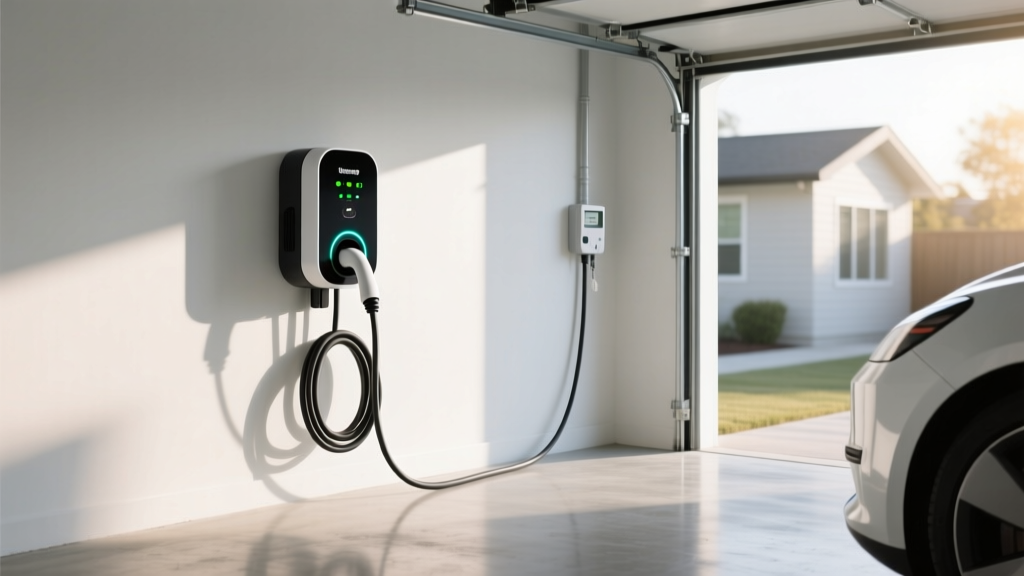
A Level 2 home electric vehicle charger requires a dedicated 240V circuit, similar to what powers an electric dryer or range. The most common configurations are:
- 40A circuit (32A continuous): Delivers up to 7.7 kW. Adequate for most EVs with daily driving under 60 miles. Uses 8-gauge copper wire (THHN/THWN) or 6-gauge NM-B.
- 50A circuit (40A continuous): Delivers up to 9.6 kW. The sweet spot for most 2026 EVs with 80+ kWh batteries. Uses 6-gauge copper wire.
- 60A circuit (48A continuous): Delivers up to 11.5 kW. Required for vehicles with large batteries (100+ kWh) or high onboard charger capacity like the Ford F-150 Lightning Extended Range. Uses 4-gauge copper wire.
The National Electrical Code (NEC) requires EV charging circuits to be rated at 125% of the continuous load — meaning a charger that draws 40A continuously must be on a 50A breaker. Any licensed electrician will enforce this, and your local building inspector will check it during the permit inspection.
Panel Capacity: The Hidden Cost Factor
Most modern homes have a 200A main service panel. Adding a 50A EV circuit consumes a significant chunk of that capacity, and whether you need a panel upgrade depends on your existing loads:
- Likely fine (no upgrade): Gas appliances (range, water heater, furnace), 200A panel, no existing high-draw additions like a hot tub.
- Possible upgrade needed: All-electric home with electric range, electric water heater, electric dryer, and central A/C on a 150A or 200A panel. The EV circuit may push you past the panel's rated capacity.
- Upgrade almost certain: Older homes with 100A service. A panel upgrade to 200A typically runs $2,500–$5,000 before the charger circuit is even installed.
Some homeowners avoid a panel upgrade by installing a smart load-management device (such as the Emporia VUE with automatic load shedding), which throttles the charger's amperage when other large appliances are running. This can save $2,000–$4,000 versus a full panel replacement and is worth asking your electrician about.
How Much Does It Cost to Install a Home EV Charger?
Installation costs vary enormously based on the distance from your panel to the garage or driveway, your local labor rates, and whether upgrades are needed. Here's a realistic breakdown based on 2026 contractor pricing across U.S. metro areas:
| Component | Simple Install (panel in garage) | Moderate Install (50–80 ft run) | Complex Install (panel upgrade needed) |
|---|---|---|---|
| Level 2 Charger (hardware) | $350–$700 | $350–$700 | $350–$700 |
| Electrician labor (2–6 hrs) | $300–$600 | $600–$1,200 | $800–$1,500 |
| Materials (wire, conduit, breaker) | $100–$200 | $200–$500 | $300–$700 |
| Permit & inspection | $50–$200 | $50–$200 | $50–$200 |
| Panel upgrade (if needed) | — | — | $2,500–$5,000 |
| Total Estimated Cost | $800–$1,700 | $1,200–$2,600 | $4,000–$8,100 |
A few factors that push costs higher:
- Trenching: If you need to run conduit underground from the house to a detached garage or carport, add $500–$2,000 depending on distance.
- Concrete cutting/patching: Running wire through a finished basement ceiling or slab floor adds labor.
- Local utility incentives: Some utilities (PG&E, ConEdison, Xcel Energy) offer rebates of $300–$1,000 for installing a smart Level 2 charger on a time-of-use rate plan. Check with your utility before purchasing.
The IRS also allows the Residential Clean Energy Credit to cover certain energy-storage and efficiency improvements, though the §30D alternative fuel vehicle refueling property credit (which previously covered 30% of charger installation up to $1,000) has had a complex eligibility history. Consult a tax professional and check current IRS guidance for your filing year.
Connector Compatibility: NACS, CCS1, and CHAdeMO in 2026
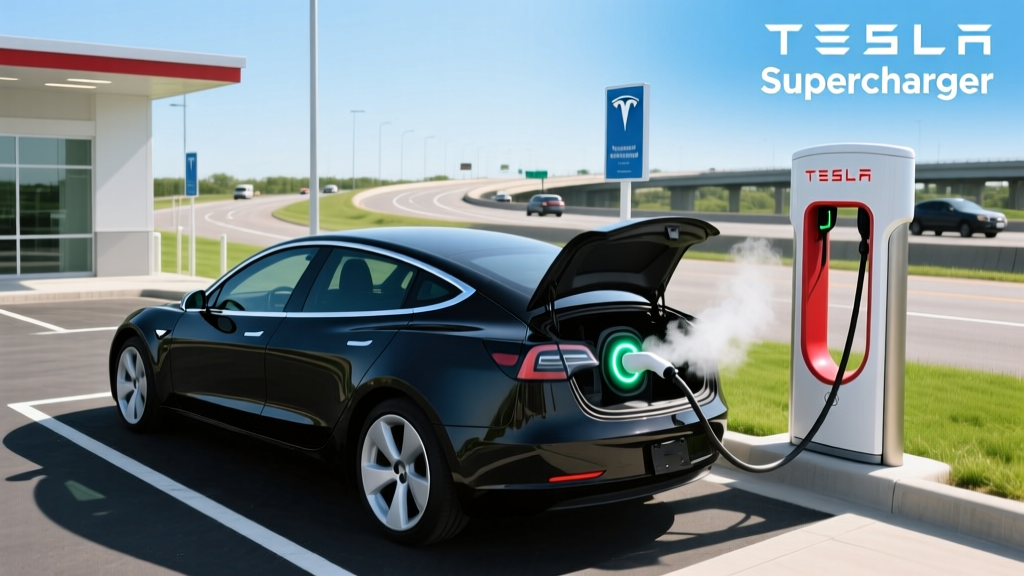
The connector landscape has consolidated significantly since 2023, when Ford and GM announced adoption of the North American Charging Standard (NACS). As of 2026, here's where things stand:
| Connector | Brands Using It (2026 Models) | Adapter Needed? |
|---|---|---|
| NACS (Tesla-style) | Tesla (all), Ford (2025+), GM (2025+), Rivian (2025+), Hyundai/Kia (2026+), Volvo/Polestar | None for NACS-native vehicles |
| CCS1 | Volkswagen ID.4 (2024–2025), BMW i4/iX (2024–2025), some legacy models | NACS-to-CCS adapter for Tesla Superchargers |
| CHAdeMO | Nissan Leaf (discontinued), Mitsubishi Outlander PHEV (older) | Largely unsupported at new public stations |
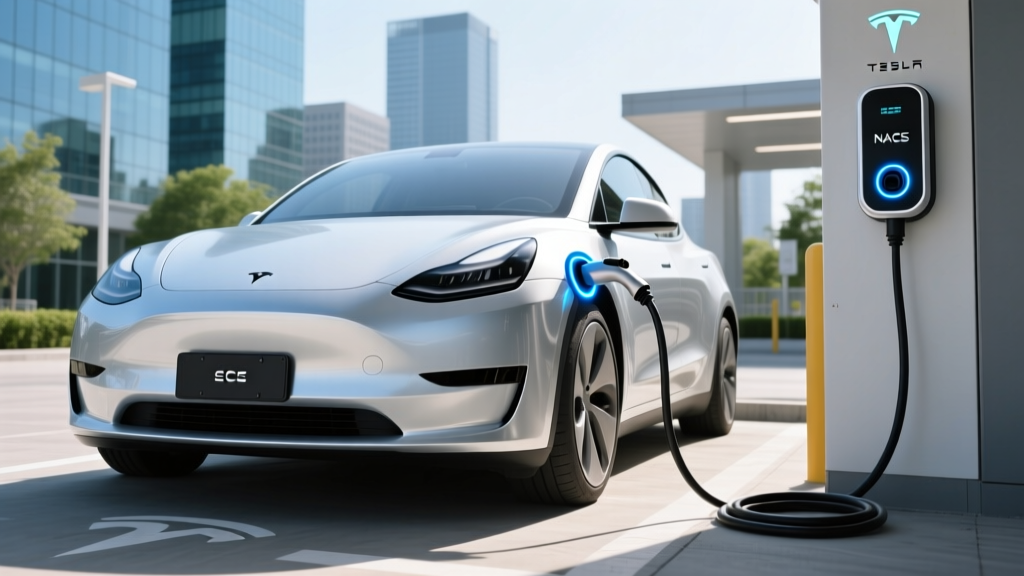
What this means for your home charger purchase: If you own or plan to buy a 2025+ Ford, GM, Rivian, Hyundai, or Kia EV, buy a NACS-connector home charger. If you have a CCS1 vehicle, buy a CCS1 (J1772 Combo) charger or use a NACS-to-CCS adapter. Most major charger manufacturers now offer both connector options at the same price.
For Level 2 home charging, the J1772 connector (the round, 5-pin plug used on all non-Tesla EVs through 2024) is being phased out on new vehicles but remains compatible via the adapters included with most new NACS-equipped EVs.
Cost to Charge: Home vs. Public vs. Gas, Per Mile
The strongest financial argument for a home electric vehicle charger is the per-mile fuel cost. Here's how the numbers break down across common scenarios:
| Scenario | Rate | Cost per kWh | Cost per Mile (at 3.2 mi/kWh) |
|---|---|---|---|
| Home, off-peak TOU rate | $0.09–$0.14/kWh | $0.12 avg | $0.038/mi |
| Home, standard flat rate | $0.14–$0.22/kWh | $0.18 avg | $0.056/mi |
| Public Level 2 (ChargePoint, etc.) | $0.25–$0.49/kWh | $0.35 avg | $0.109/mi |
| DC Fast (Electrify America, etc.) | $0.35–$0.65/kWh | $0.48 avg | $0.150/mi |
| Gas car (28 MPG, $3.40/gal) | — | — | $0.121/mi |
At 12,000 miles per year, home off-peak charging costs roughly $456 annually versus $1,452 for gas — a savings of nearly $1,000 per year. Even on a standard flat rate, home EV charging costs less than half what gas does per mile.
The catch: public DC fast charging at $0.48/kWh is actually more expensive per mile than gas. This is why a home charger isn't optional for EV economics — it's the entire value proposition. Relying exclusively on public fast charging erases the fuel-cost advantage.
Charging Time Examples: What to Expect by Battery Size
Here's how long common EV battery sizes take to charge from 10% to 80% State of Charge (SoC) on different Level 2 circuits. We use 10–80% because charging slows significantly above 80% to protect battery health — most EVs taper to under 2 kW in the final 20%.
| Battery Size | Example Vehicles | 7.7 kW (32A) | 9.6 kW (40A) | 11.5 kW (48A) |
|---|---|---|---|---|
| 58–65 kWh | VW ID.4 Std, Volvo EX30 | 5.0–5.5 hrs | 4.0–4.5 hrs | 3.5–4.0 hrs |
| 75–84 kWh | Tesla Model Y LR, Hyundai Ioniq 5 | 6.5–7.5 hrs | 5.0–6.0 hrs | 4.5–5.0 hrs |
| 98–105 kWh | Ford F-150 Lightning Ext, Rivian R1S Max | 9.0–10.0 hrs | 7.5–8.0 hrs | 6.0–7.0 hrs |
| 130+ kWh | GMC Hummer EV, Silverado EV | 12.0–14.0 hrs | 10.0–11.5 hrs | 8.0–9.5 hrs |
For vehicles with batteries over 100 kWh, a 48A (11.5 kW) circuit is strongly recommended — a 32A circuit simply won't refill the battery overnight if you've driven it down to 10%.
Equipment Picks: Best Home EV Chargers in 2026
These are the chargers we recommend based on reliability, smart features, connector availability, and value. All support NACS and/or CCS1 connectors and carry UL/ETL certification for safety.
Emporia Level 2 EV Charger
- Power Output: Up to 48A (11.5 kW) — configurable down to 16A for smaller circuits
- Connector: NACS or J1772 (with adapter)
- Cable Length: 24 ft
- Smart Features: Wi-Fi connected, solar integration, TOU scheduling, load management with Emporia VUE panel monitor
- Price: $399 (charger only), ~$499 with VUE energy monitor
- Best For: Budget-conscious buyers who want load management without a panel upgrade
ChargePoint Home Flex (2nd Gen)
- Power Output: Up to 50A (12 kW) — dip-switch configurable from 16A–50A
- Connector: NACS or J1772
- Cable Length: 23 ft
- Smart Features: Wi-Fi, Alexa/Google integration, detailed app with session history, scheduled charging
- Price: $549–$649
- Best For: Reliability-focused buyers who want a proven brand with excellent app support
Tesla Wall Connector (Gen 4)
- Power Output: Up to 48A (11.5 kW)
- Connector: NACS native; J1772 adapter included for non-Tesla EVs
- Cable Length: 24 ft
- Smart Features: Wi-Fi, OTA firmware updates, power sharing (link up to 6 units on one circuit), vehicle-specific charge limits
- Price: $475
- Best For: Tesla owners or households with mixed Tesla/non-Tesla EVs
Grizzl-E Smart (United Chargers)
- Power Output: Up to 40A (9.6 kW)
- Connector: J1772 or NACS
- Cable Length: 24 ft
- Smart Features: OCPP-compatible (works with utility demand-response programs), Bluetooth + Wi-Fi, adjustable amperage
- Price: $449–$549
- Best For: Cold-climate owners — rated to -40°F, built in Canada with rugged aluminum housing
Safety, Code, and Installation Best Practices
EV charging draws high current for many consecutive hours, which puts sustained thermal stress on wiring and connections. Cutting corners here creates fire risk. Here's what proper installation requires:
- Dedicated circuit: Your EV charger must have its own breaker — never share a circuit with other outlets or appliances.
- GFCI protection: The 2020 NEC (and most 2023/2026 local adoptions) requires GFCI protection for outdoor receptacles used for EV charging. Hardwired installations (which we recommend) may not require a GFCI breaker in all jurisdictions, but many inspectors still require one. A GFCI breaker adds $40–$80 to the materials cost.
- Outdoor rating: If your charger is mounted outdoors or in an exposed carport, it must carry a NEMA 4 (or IP65+) weatherproof rating. All four chargers recommended above meet this standard.
- Hardwired vs. plug-in: A hardwired connection (directly wired to a junction box, no plug) is more reliable and avoids the potential for a 240V receptacle to overheat under sustained load. Plug-in units on a NEMA 14-50 receptacle are convenient for portability but require a high-quality, industrial-grade receptacle (Hubbell or Bryant brand — not the $12 hardware-store variety) rated for continuous EV duty.
- Permit and inspection: Virtually every U.S. jurisdiction requires an electrical permit for a new 240V circuit. The inspection ensures proper wire gauge, breaker sizing, grounding, and GFCI compliance. Permits typically cost $50–$200 and protect you from liability and insurance issues.
Frequently Asked Questions
How much does it cost to install a home EV charger?
A straightforward Level 2 installation with the panel in or near the garage typically costs $800–$1,700 including equipment, labor, materials, and permit. A moderate run of 50–80 feet costs $1,200–$2,600. If your home needs a panel upgrade from 100A to 200A service, the total project can reach $4,000–$8,100. Get at least two quotes from licensed electricians who have specific EV charger installation experience.
How fast will each charging level add range?
Level 1 (120V standard outlet) adds 3–5 miles of range per hour — adequate only for plug-in hybrids or very low daily mileage. Level 2 (240V) at 32A–48A adds 25–44 miles per hour, which fully replenishes most EVs overnight. DC fast charging at public stations adds 150–1,200+ miles per hour depending on the station's kW output and your vehicle's charge acceptance rate, but is far more expensive per mile than home charging.
Which connector and charger is compatible with my EV?
Check your vehicle's charge port. If you drive a 2025+ Tesla, Ford, GM, Rivian, Hyundai, Kia, or Volvo EV, your vehicle uses NACS — buy a NACS home charger. If you drive a 2024 or older non-Tesla EV, your vehicle likely uses J1772/CCS1 — buy a J1772 charger or use the NACS-to-J1772 adapter that came with many newer vehicles. CHAdeMO (Nissan Leaf) is a legacy standard with declining public infrastructure support.
How much does charging cost per mile versus gas?
Home charging on an off-peak utility rate averages $0.03–$0.06 per mile. A comparable gas car at 28 MPG and $3.40/gallon costs about $0.12 per mile. At 12,000 miles per year, that's a savings of $720–$1,080 annually with home charging. Public DC fast charging at $0.35–$0.65/kWh can actually exceed the per-mile cost of gasoline, which is why home charging is essential to EV economics.
What electrical upgrades might I need?
The most common upgrade is adding a 50A or 60A double-pole breaker and running a new 240V circuit from your panel to the garage or parking area. If your home has a 100A service panel or an all-electric home with a 200A panel already near capacity, you may need a panel upgrade to 200A or 400A ($2,500–$5,000+). A smart load-management system can sometimes avoid a panel upgrade by dynamically reducing charger amperage when other large loads are active. Ask your electrician to perform a load calculation per NEC Article 220 before deciding.
Can I install a home EV charger myself?
While a competent DIYer with electrical experience can physically mount a charger and run wire, a 240V/50A circuit is not a beginner project. Errors in wire gauge, breaker sizing, or torque on terminal connections can cause overheating and fire. Most jurisdictions require a licensed electrician to pull the permit, and your homeowner's insurance may deny a fire claim if unpermitted electrical work is found. We strongly recommend hiring a licensed, EV-experienced electrician.
Does a home EV charger increase my home's value?
A hardwired Level 2 charger is increasingly seen as a desirable feature, particularly in markets with high EV adoption (California, Pacific Northwest, Northeast corridor). It may not add formal appraised value, but it differentiates your home for the growing pool of EV-owning buyers. A 200A panel upgrade (if done for the charger) is a legitimate home improvement that benefits any future owner.