The Real Cost of Charging an EV at Home
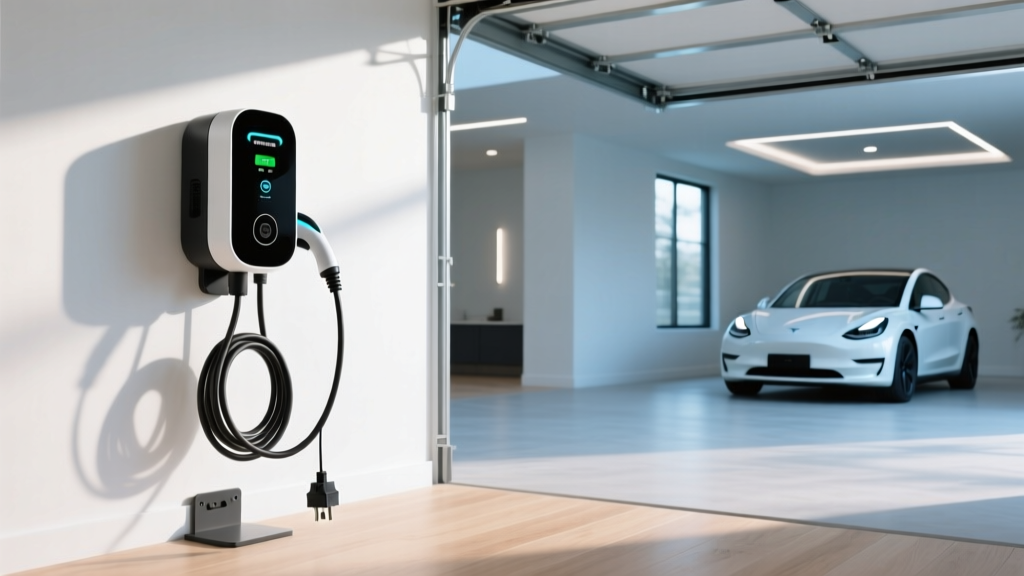
If you own or are shopping for an electric vehicle, the single highest-impact ownership decision you'll make is installing a Level 2 home charger. It determines your daily convenience, your per-mile fuel cost, and how often you'll ever visit a public station. But the upfront investment raises an immediate question: what does a home electric car charger cost, all-in?
The short answer is $500 to $2,500 for a straightforward installation, and potentially $3,000 to $7,000+ if your home's electrical panel needs an upgrade. That wide range exists because the final price depends on three variables you control: the charger hardware you select, the complexity of your home's electrical system, and local permitting requirements. This guide breaks down every component with 2026 pricing so you can budget accurately before calling an electrician.
Charging Levels Explained: Speed, Power, and What You Actually Need
Before pricing anything, it's critical to understand the three charging levels and what they deliver. EV charging power is measured in kW (kilowatts) — that's the rate of energy flow, like water pressure from a hose. Your battery's capacity is measured in kWh (kilowatt-hours) — that's the total energy it stores, like the size of a bucket. Conflating kW and kWh is the most common mistake in EV discussions. Keep them separate and everything else makes sense.
| Level | Voltage | Max Power (kW) | Miles of Range Added Per Hour | Typical Use Case |
|---|---|---|---|---|
| Level 1 | 120V AC | 1.4–1.9 kW | 3–5 miles | Overnight top-ups, PHEVs, low-mileage drivers |
| Level 2 | 240V AC | 7.2–19.2 kW | 20–75 miles | Primary home charging, daily use for all BEVs |
| DC Fast Charging | 400–800V DC | 50–350 kW | 150–1,000+ miles (equivalent rate) | Road trips, public stations — not for home install |
For most EV owners, a Level 2 home charger delivering 11.5 kW (48 amps on a 60-amp circuit) is the practical sweet spot. It fully replenishes a 75–85 kWh battery overnight in roughly 7–8 hours, which covers virtually every daily driving scenario. Level 1 (a standard 120V outlet) works for plug-in hybrids with small batteries or BEV drivers who travel fewer than 30 miles daily, but it's painfully slow for full battery-electric vehicles — adding just 30–40 miles over a 10-hour overnight session.
Home Electric Car Charger Cost: The Full Breakdown
The total home electric car charger cost breaks into four line items: the charger unit itself, the electrical labor, any required panel upgrade, and the local permit. Here's what each component costs in 2026.
| Component | Simple Install (Panel Nearby) | Moderate Install (50–80 ft Run) | Complex Install (Panel Upgrade Needed) |
|---|---|---|---|
| Level 2 Charger (hardware) | $350–$700 | $350–$700 | $350–$700 |
| Electrician labor | $300–$600 | $600–$1,500 | $800–$2,000 |
| Electrical panel upgrade | $0 | $0 | $1,500–$4,000 |
| Permit & inspection | $50–$200 | $100–$300 | $150–$500 |
| Conduit, wiring, misc. materials | $50–$150 | $150–$500 | $200–$600 |
| TOTAL ESTIMATED COST | $750–$1,650 | $1,200–$3,000 | $3,000–$7,800 |
What Drives the Cost Variance
Distance from panel to charger location. If your electrical panel is in the garage where you park, an electrician may run a short 10-foot conduit and charge a few hundred dollars in labor. If the panel is in the basement and your parking spot is on the far side of the house, expect a 60–100 foot wire run through walls, attic, or underground conduit — significantly more labor and materials.
Panel capacity. A Level 2 charger on a 60-amp circuit draws 48 amps continuously. If your home has a 100-amp or 150-amp main panel that's already near capacity (common in homes built before 1990), you'll need a panel upgrade to 200 amps. This is the single biggest cost variable and the reason some homeowners see quotes above $5,000. A licensed electrician will perform a load calculation to determine if your panel can handle the additional draw — don't skip this step.
Local permitting. Most jurisdictions require a permit for new 240V circuit installations, and an inspection after completion. Permit fees range from $50 in rural areas to $300+ in cities with strict electrical codes. Some municipalities also require GFCI protection on outdoor 240V circuits, which adds $50–$150 in hardware.
Connector Compatibility: Which Plug Does Your EV Use?
The North American charging connector landscape has shifted dramatically since 2023, when Ford and GM announced adoption of Tesla's NACS (North American Charging Standard). By the 2026 model year, NACS is the dominant connector for new EVs sold in the U.S., though CCS1-equipped vehicles from prior model years remain on the road in large numbers.
| Connector | Brands Using It (2026) | Adapter Needed for Home Charger? |
|---|---|---|
| NACS (Tesla standard) | Tesla, Ford, GM, Rivian, Volvo, Polestar, Hyundai/Kia (2025+), BMW, Mercedes-Benz, Lucid | Buy a NACS-connector charger, or use CCS-to-NACS adapter with a CCS charger |
| CCS1 | Remaining 2023–2024 model year vehicles (older Bolt EV, Ioniq 5, Mach-E, etc.) | Buy a CCS1-connector charger, or use NACS-to-CCS1 adapter |
| CHAdeMO | Nissan Leaf (legacy only — no new models) | Requires CHAdeMO-specific DC charger; irrelevant for home Level 2 (Level 2 uses J1772) |
Critical clarification: For home Level 2 charging, the connector distinction matters less than you might think. All Level 2 chargers sold in North America use a J1772 plug or a NACS plug. If you buy a NACS-wall-connector charger (like the Tesla Wall Connector), it charges Teslas natively and can charge CCS1 vehicles with an adapter (such as the Lectron or A2Z J1772-to-NACS adapter, ~$150–$250). If you buy a J1772 charger, it charges all non-Tesla EVs natively, and Tesla provides a J1772-to-NACS adapter with every new vehicle. The practical takeaway: buy a charger with the connector that matches your current EV, and plan for an adapter if you anticipate switching brands.
Level 2 Charger Equipment Recommendations
Here are proven Level 2 chargers across the 2026 market, spanning budget to premium. Every recommendation below includes the unit's maximum power output — a non-negotiable spec that determines your charging speed.
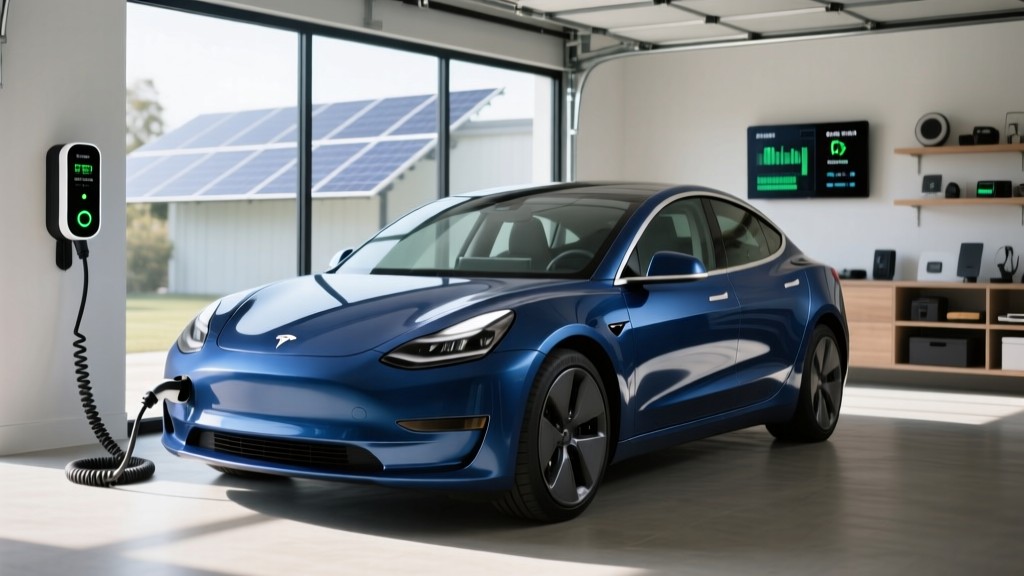
Tesla Wall Connector (Gen 4)
- Max Power: 11.5 kW (48A) on a 60A circuit
- Connector: NACS native; J1772 adapter included in box
- Cable Length: 24 feet
- Smart Features: Wi-Fi, OTA firmware updates, Tesla app scheduling, Power-Sharing (daisy-chain up to 6 units on one circuit), load management integration with Tesla Powerwall
- Price: ~$475
- Best For: Tesla owners, multi-EV households, homes with solar/Powerwall
ChargePoint Home Flex
- Max Power: 12 kW (50A) on a 65A circuit, configurable down to 16A for lower-capacity panels
- Connector: J1772 (NACS adapter available separately)
- Cable Length: 23 feet
- Smart Features: Wi-Fi, ChargePoint app, Alexa integration, flexible amperage DIP-switch configuration, detailed energy tracking
- Price: ~$550–$650
- Best For: Non-Tesla EVs, renters who may move (adjustable amperage adapts to different homes)
Emporia Level 2 EV Charger
- Max Power: 11.5 kW (48A) on a 60A circuit
- Connector: J1772 (NACS version available)
- Cable Length: 24 feet
- Smart Features: Wi-Fi, Emporia app, solar-integration scheduling (pairs with Emporia Vue energy monitor), TOU rate optimization, load balancing
- Price: ~$350–$400
- Best For: Budget-conscious buyers, solar-panel homes, energy-monitoring enthusiasts
Grizzl-E Smart (United Chargers)
- Max Power: 10 kW (40A) on a 50A circuit
- Connector: J1772 or NACS (choose at purchase)
- Cable Length: 24 feet
- Smart Features: Wi-Fi, OCPP-compatible, adjustable amperage, extreme cold-weather rated (-40°F), aluminum enclosure
- Price: ~$450–$550
- Best For: Cold-climate garages, outdoor installations, commercial/fleet flexibility
Installation tip: Regardless of which charger you select, have your electrician install a NEMA 14-60 receptacle rather than hardwiring the unit. A plug-in installation adds $50–$100 to the job but lets you unplug and take the charger when you move, or swap it for a different model without calling an electrician again.
Cost to Charge: Home Electricity vs. Public Stations vs. Gas
The ongoing economics of EV charging are where home installation pays for itself. Here's how the per-mile cost compares across scenarios, using a midsize EV averaging 3.5 miles per kWh (roughly 286 Wh/mi, similar to a 2026 Hyundai Ioniq 5 or Tesla Model Y).
| Charging Scenario | Rate | Cost Per kWh | Cost Per Mile (at 3.5 mi/kWh) |
|---|---|---|---|
| Home, national avg. electricity | $0.17/kWh | $0.17 | $0.049 |
| Home, off-peak TOU rate | $0.09/kWh (overnight) | $0.09 | $0.026 |
| Home, peak TOU rate | $0.32/kWh (summer afternoon) | $0.32 | $0.091 |
| Public Level 2 (ChargePoint, EVgo) | $0.25–$0.49/kWh | $0.37 avg. | $0.106 |
| DC Fast Charging (Electrify America, Tesla Supercharger) | $0.35–$0.65/kWh | $0.48 avg. | $0.137 |
| Gasoline vehicle (28 MPG combined, $3.30/gal) | $3.30/gallon | n/a | $0.118 |
The bottom line: Charging at home on an off-peak rate costs roughly $0.026 per mile — less than a quarter of what a 28 MPG gas car spends at $3.30 per gallon. Even on a national average home rate of $0.17/kWh, you're paying $0.049/mi, still less than half the gas cost. Public DC fast charging, however, erodes much of that advantage, which is exactly why a home charger is the single most impactful EV ownership investment.
For a driver covering 12,000 miles per year, the annual fuel savings of home charging (off-peak) versus gasoline is approximately $1,100–$1,200. At that rate, a $2,000 home charger installation pays for itself in under two years. Source: fueleconomy.gov EV technology comparison.
Charging Time Examples: How Long Does It Actually Take?
Charging time depends on your battery's usable capacity (kWh), the charger's power output (kW), and the charge curve — a factor many buyers overlook. Lithium-ion batteries accept charge fastest between 10–50% State of Charge (SoC), then taper significantly above 80% to protect cell longevity. This is why manufacturers quote "10–80%" times rather than 0–100%.
| Vehicle (2026) | Usable Battery (kWh) | 11.5 kW Charger (48A) | 7.7 kW Charger (32A) |
|---|---|---|---|
| Tesla Model Y Long Range | 75 kWh | ~4.5 hours | ~6.8 hours |
| Hyundai Ioniq 5 (Long Range) | 77.4 kWh | ~4.7 hours | ~7.0 hours |
| Ford F-150 Lightning (Extended) | 131 kWh | ~8.0 hours | ~11.9 hours |
| Chevrolet Equinox EV | 85 kWh | ~5.2 hours | ~7.7 hours |
| BMW i4 eDrive40 | 81.5 kWh | ~5.0 hours | ~7.4 hours |
For overnight charging, even the F-150 Lightning's 8-hour session on an 11.5 kW charger is manageable — plug in at 10 PM and you're at 80% by 6 AM. If your daily commute is under 60 miles round-trip, you'll rarely need a full 10–80% session; a nightly 2–3 hour top-up from 50% to 75% is more typical.
Electrical Requirements and Safety Considerations
A Level 2 charger installation is a serious electrical project. Here's what your electrician will evaluate, and what you should understand before signing a contract.
Circuit and Amperage
EV chargers are classified as continuous loads under the National Electrical Code (NEC Article 625), meaning they may draw maximum current for 3 hours or more. NEC requires that continuous loads not exceed 80% of the circuit's rated capacity. Therefore:
- A 48A charger requires a 60-amp dedicated circuit
- A 40A charger requires a 50-amp dedicated circuit
- A 32A charger requires a 40-amp dedicated circuit
The circuit must be dedicated — no other outlets or appliances may share it. Your electrician will run appropriately gauged copper wire (typically 6 AWG for 60A, 8 AWG for 50A) from the panel to the charger location.
Panel Load Calculation
Before adding a 60-amp circuit, your electrician must perform a NEC Article 220 load calculation on your home's main panel. A 200-amp panel typically has enough headroom for an EV charger alongside normal household loads. A 100-amp or 150-amp panel, especially one already supporting electric range, dryer, HVAC, and water heater, may not. If the load calculation fails, you'll need a panel upgrade (to 200A) or a smart load-management device (such as the Emporia Smart Load Center or Tesla Wall Connector with Power-Sharing) that dynamically throttles charger amperage when other circuits are under heavy use.
GFCI Protection and Outdoor Ratings
The 2023 NEC revision (adopted by most jurisdictions by 2026) requires GFCI protection on all 240V receptacles rated 60A or less in garages and outdoor locations. If you're installing a NEMA 14-60 receptacle, expect your electrician to include a GFCI breaker ($80–$150) or select a charger with built-in GFCI protection. For outdoor installations, the charger must carry a NEMA 4 or IP65 weather rating, and the receptacle must be in a weatherproof enclosure.
Permit and Inspection
Skipping the permit saves $100–$300 but creates real risk: unpermitted electrical work can void homeowner's insurance coverage in the event of a fire, and it will surface during a future home inspection if you sell the property. Most jurisdictions offer online permit applications with 1–3 day turnaround, and the inspection itself typically takes 20 minutes.
Frequently Asked Questions
How much does it cost to install a home EV charger?
In 2026, expect to pay $750–$1,650 for a simple installation where your electrical panel is near the charging location and has sufficient capacity. If the wire run is long (50–80+ feet), budget $1,200–$3,000. If your panel needs an upgrade from 100A or 150A to 200A, the total can reach $3,000–$7,800. The §30C federal tax credit may cover 30% of equipment and installation costs, up to $1,000, depending on your census tract.
How fast will each charging level add range?
Level 1 (120V) adds 3–5 miles of range per hour — adequate for PHEVs but inadequate for daily BEV use. Level 2 (240V, 48A/11.5 kW) adds 25–40 miles per hour depending on vehicle efficiency, which is the practical standard for home charging. DC fast charging at public stations adds 150–300+ miles in 15–25 minutes, but is not available for home installation and costs 3–5x more per kWh than home electricity.
Which connector and charger is compatible with my EV?
For 2026 model-year vehicles, most new EVs use the NACS connector (Tesla, Ford, GM, Rivian, Hyundai, Kia, BMW, and others). Older model-year EVs (2022–2024) may use CCS1. For Level 2 home charging, buy a NACS charger for NACS-equipped vehicles, or a J1772 charger for CCS1 vehicles. Adapters are available in both directions for $100–$250. Tesla includes a J1772 adapter with every vehicle, and most NACS chargers include or offer a J1772 adapter for compatibility.
How much does charging cost per mile versus gas?
Home charging on an off-peak electricity rate (~$0.09/kWh) costs approximately $0.026 per mile for a typical midsize EV. The national average home rate (~$0.17/kWh) yields about $0.049 per mile. By comparison, a 28 MPG gasoline vehicle at $3.30 per gallon costs $0.118 per mile. Home charging saves $0.07–$0.09 per mile, translating to $840–$1,100 in annual savings at 12,000 miles per year.
What electrical upgrades might I need?
The most common upgrade is a panel capacity increase from 100A or 150A to 200A, costing $1,500–$4,000 depending on your utility's service entrance and local labor rates. If your panel is adequate but the wire run to the garage is long, expect higher material and labor costs for conduit and 6 AWG copper wire. In some cases, a smart load-management system ($200–$500 additional hardware) can avoid a panel upgrade by dynamically limiting charger draw when other major appliances are running.
Can I install a home EV charger myself?
While physically possible for experienced DIYers with electrical knowledge, self-installation is strongly discouraged. A 240V/60A circuit carries lethal current, and errors in wire gauge, torque specs, or grounding can cause fires. Most jurisdictions require a licensed electrician to pull the permit, and DIY work may not pass inspection. Additionally, many charger manufacturers void the warranty if the unit is not installed by a licensed professional.
Does a home charger increase my property value?
Real estate data suggests a properly permitted Level 2 charger installation adds modest value — typically $500–$1,500 in appraised value — and more importantly, it makes the home more attractive to the growing pool of EV-buying homeowners. The installation cost rarely recoups dollar-for-dollar, but it removes a purchase barrier for EV-driving buyers.