Buying an electric vehicle is only half the equation. The other half — and the one that determines whether EV ownership feels effortless or frustrating — is how you'll charge it at home. A properly sized home charger electric vehicle setup lets you wake up to a full battery every morning, eliminate gas station visits, and pay a fraction of what fuel costs per mile. But getting there requires navigating electrical requirements, choosing the right equipment, and understanding real-world charging speeds versus marketing claims.
This guide covers everything you need to spec, budget, and install a home charging system in 2026, with exact numbers for costs, speeds, and equipment — no guesswork.
Charging Levels Explained: How Fast Will Each Add Range?
EV charging happens at three levels, and the differences in speed are dramatic. Before we get into numbers, a critical distinction: kW (kilowatts) measures power — how fast energy flows into your battery. kWh (kilowatt-hours) measures energy — the total capacity of your battery, like gallons in a gas tank. A 48-amp Level 2 charger delivering 11.5 kW will refill a 75 kWh battery much faster than a 1.4 kW Level 1 outlet. Got it? Good.
| Charging Level | Voltage / Amperage | Power Output (kW) | Miles of Range Added Per Hour | Typical 10–80% Time (75 kWh Battery) |
|---|---|---|---|---|
| Level 1 (Standard Outlet) | 120V / 12A | 1.4 kW | 3–5 miles | ~37 hours (not practical) |
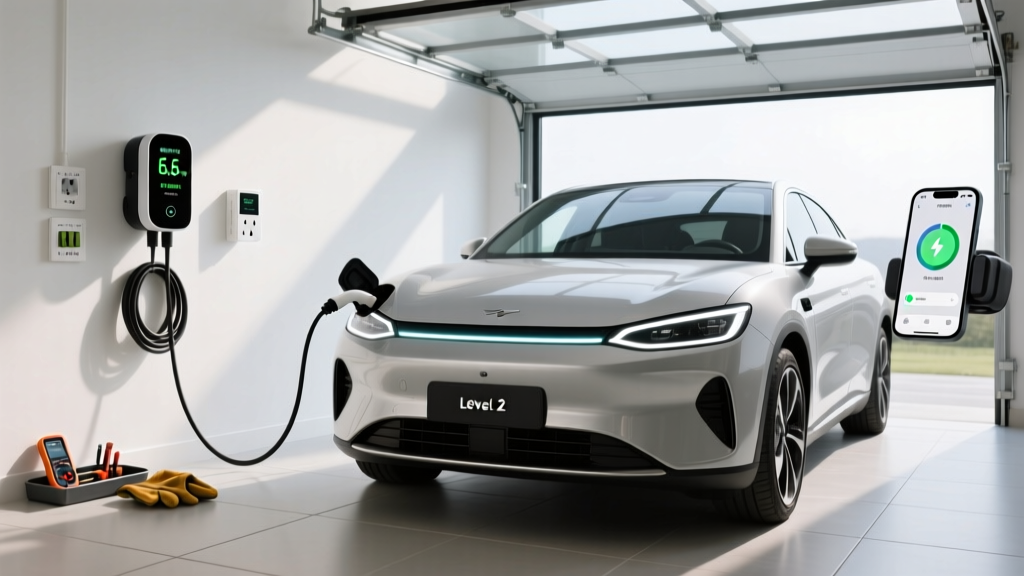
| Level 2 (Home / Public AC) | 240V / 32A–48A | 7.7–11.5 kW | 25–44 miles | 5–7.5 hours |
| DC Fast Charging (Public) | 400V–800V DC | 50–350 kW | 150–1,000+ miles | 18–45 minutes |
Real-world context: Most EV owners do 80%+ of their charging at home on Level 2. A 48-amp (11.5 kW) Level 2 charger will fully replenish a typical 75–85 kWh overnight, even if you drive 60–80 miles that day. Level 1 is only viable for plug-in hybrids with small batteries (under 18 kWh) or EVs driven fewer than 30 miles daily. DC fast charging is for road trips — it's not something you install at home, and frequent use accelerates battery degradation slightly.
How Much Does It Cost to Install a Home EV Charger?
This is the question every new EV buyer asks, and the answer varies wildly based on your home's electrical panel. Here's the honest breakdown — equipment, electrician labor, permit, and the panel upgrade scenario that catches many homeowners off guard.
| Component | Simple Install (Panel Adjacent) | Moderate Install (50–80 ft Run) | Complex Install (Panel Upgrade Needed) |
|---|---|---|---|
| Level 2 Charger (Hardware) | $350–$700 | $350–$700 | $350–$700 |
| Electrician Labor | $300–$600 | $600–$1,500 | $1,200–$3,000+ |
| Permit & Inspection | $50–$150 | $50–$200 | $100–$300 |
| Electrical Panel Upgrade (if needed) | — | — | $1,500–$4,000 |
| Total Estimated Cost | $700–$1,450 | $1,000–$2,400 | $3,150–$8,000+ |
The panel upgrade gotcha: Most homes built before 2000 have 100-amp or 150-amp electrical panels. A 48-amp Level 2 charger draws 60 amps from the panel (the National Electrical Code requires circuits to be rated 125% above continuous load). If your panel is already near capacity — running electric heat, a dryer, and an electric range — you may need a panel upgrade to 200 amps. This is the single biggest cost variable, and you won't know until an electrician does a load calculation.
Federal tax credit note: The IRS §25C Energy Efficient Home Improvement Credit covers 30% of the cost of home EV charging equipment (up to $1,000) through 2032, but it does not cover electrical panel upgrades or labor beyond the charger itself. Check current-year eligibility — rules around qualifying census tracts apply for some incentives. Always consult a tax professional for your specific situation.
What Electrical Upgrades Might I Need?
Before you order a charger, assess your home's electrical infrastructure. Here's what determines whether you can simply add a 240V circuit or need a more involved upgrade:
- Circuit: Dedicated 60-amp, 240V circuit (NEC 125% rule: 48A × 1.25 = 60A breaker)
- Wire: 6 AWG copper (THHN in conduit) or 4 AWG aluminum for runs over 50 feet
- Panel capacity: At least 200-amp service recommended; load calculation required
- Outlet vs. hardwired: NEMA 14-50 outlet (plug-in) or direct hardwire — hardwire is preferred for 48A+ circuits due to thermal management
- GFCI protection: Required by NEC 2020+ for outlets in garages; hardwired units handle this internally
When you'll need a panel upgrade: If your home has a 100-amp panel, or a 150-amp panel with significant existing electric loads (heat pump, electric water heater, electric range, dryer), adding a 60-amp EV circuit may exceed 80% of your panel's rated capacity — the threshold where code requires an upgrade. An electrician will perform a Manual J load calculation to determine this.
Alternatives if a panel upgrade is cost-prohibitive:
- Install a lower-amperage charger: A 32-amp charger (requiring a 40-amp circuit) draws significantly less and may fit within your existing panel.
- Smart panel load management: Devices like the Emporia VUE or Span smart panel can dynamically throttle EV charging when other appliances are running, keeping total draw within panel limits.
- Time-of-use scheduling: Charge only overnight when HVAC and cooking loads are minimal.
Which Connector Is Compatible With My EV?
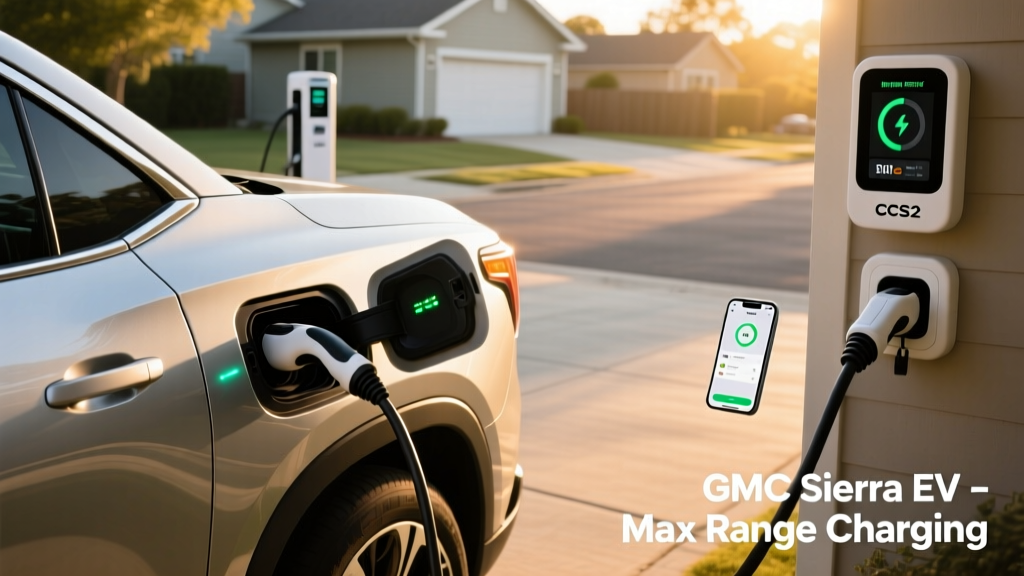
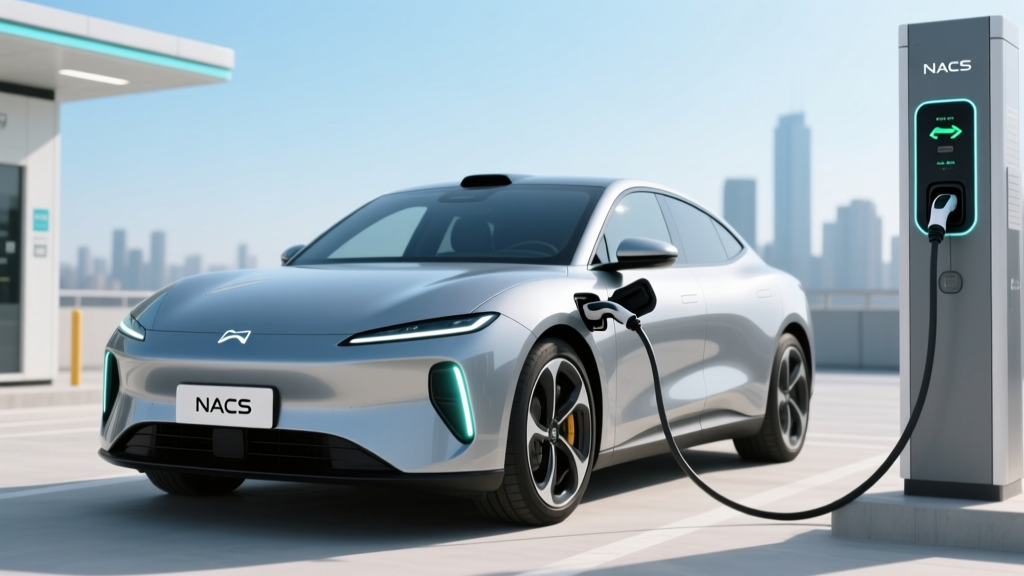
The connector landscape has shifted dramatically since 2023, when Ford and GM announced adoption of Tesla's North American Charging Standard (NACS). As of the 2026 model year, nearly all new EVs sold in North America ship with a NACS charge port. Here's where things stand:
| Connector Type | Brands / Models | Home Charger Availability | Adapter Needed? |
|---|---|---|---|
| NACS (J3400) | Tesla (all), Ford (2025+), GM (2025+), Rivian (2025+), Hyundai/Kia (2025+), BMW, Mercedes, Volvo, Polestar, Fisker, Lucid | Widely available — Tesla Wall Connector, Emporia, ChargePoint, Grizzl-E | Not for new NACS vehicles; CCS-to-NACS adapters available for legacy vehicles accessing Tesla Superchargers |
| CCS1 (Combo) | VW ID.4 (pre-2026), some Stellantis models, older BMW/Hyundai/Kia models | Available — ChargePoint, Emporia, JuiceBox (CCS models) | NACS-to-CCS adapter needed for Tesla Supercharger access |
| CHAdeMO | Nissan Leaf (legacy), Mitsubishi Outlander PHEV (older) | Limited — some ChargePoint and JuiceBox models | No adapter available; CHAdeMO infrastructure is declining |
Practical recommendation: If you're buying a 2025 or 2026 model-year EV, it almost certainly has NACS. Buy a NACS home charger. If you own an older CCS vehicle, buy a CCS charger or a dual-standard unit. The SAE J3400 standard formalized NACS, ensuring cross-brand compatibility going forward.
Best Home EV Chargers: Equipment Recommendations
Not all Level 2 chargers are created equal. Differences in amperage, cable length, smart features, and build quality matter. Here are proven picks across budgets, all current as of 2026:
Tesla Wall Connector (Gen 4)
- Power: 48A / 11.5 kW (on 60A circuit)
- Connector: NACS native
- Cable: 24 ft
- Smart features: Wi-Fi, OTA updates, load sharing (pair up to 6 units on one circuit), access control
- Price: ~$475
- Best for: Tesla and NACS-equipped vehicles; multi-EV households
Emporia Vue Level 2 Charger
- Power: 48A / 11.5 kW (on 60A circuit)
- Connector: NACS (J3400)
- Cable: 24 ft
- Smart features: Solar integration, real-time energy monitoring, time-of-use scheduling, load management with Emporia VUE panel monitor
- Price: ~$399
- Best for: Solar owners, budget-conscious buyers wanting smart features
ChargePoint Home Flex (2nd Gen)
- Power: Up to 50A / 12 kW (on 60A+ circuit, adjustable 16–50A)
- Connector: NACS or CCS (configurable)
- Cable: 23 ft
- Smart features: Wi-Fi, app scheduling, Alexa integration, detailed session history
- Price: ~$649
- Best for: Flexibility across connector types; robust app ecosystem
Grizzl-E Smart
- Power: 40A / 9.6 kW (on 50A circuit)
- Connector: NACS or J1772 (configurable)
- Cable: 24 ft
- Smart features: Wi-Fi, OCPP compatibility, adjustable amperage, extreme cold rated (-40°F)
- Price: ~$499
- Best for: Cold climates, outdoor installs, Canadian/Northern US owners
What to prioritize when choosing: Amperage (48A is the sweet spot for most homes), cable length (measure your garage — 24 ft covers most setups), and whether you want hardwired or plug-in (NEMA 14-50). Hardwired installations avoid the NEC GFCI breaker requirement for outlets, saving $50–$100 on the breaker itself and eliminating nuisance trips.
How Much Does Charging Cost Per Mile vs. Gas?
This is where EV ownership economics get compelling — but the savings depend heavily on where and when you charge. Let's compare a typical 2026 EV (averaging 3.0 miles/kWh or ~112 MPGe) against a comparable gas car getting 28 MPG combined.
| Charging / Fueling Scenario | Rate | Cost Per Mile | Annual Cost (12,000 mi/yr) |
|---|---|---|---|
| Home Level 2 — Off-Peak TOU Rate | $0.09/kWh | $0.030 | $360 |
| Home Level 2 — Standard Residential Rate | $0.16/kWh (US avg) | $0.053 | $640 |
| Public Level 2 (Workplace / Retail) | $0.25–$0.35/kWh | $0.083–$0.117 | $1,000–$1,400 |
| DC Fast Charging (Electrify America / Tesla) | $0.35–$0.55/kWh | $0.117–$0.183 | $1,400–$2,200 |
| Gasoline (28 MPG, $3.40/gal) | $3.40/gallon | $0.121 | $1,457 |
The takeaway: Home charging on an off-peak rate is roughly 75% cheaper per mile than gasoline. Even at standard residential rates, you save about 57%. The economics flip if you rely exclusively on DC fast charging — at $0.48/kWh national average for DCFC networks like Electrify America, you're paying close to or slightly more than gas per mile. This is why home charging access is the single most important factor in EV ownership satisfaction.
Pro tip: Many utilities offer Time-of-Use (TOU) plans that drop rates to $0.07–$0.10/kWh between 11 PM and 6 AM. Pair this with your charger's scheduling feature and you'll minimize cost while charging during low-demand grid hours.
Safety, Code, and Installation Best Practices
EV charging involves sustained high-current draw — hours at a time, every night. This isn't like plugging in a dryer for 45 minutes. Proper installation is non-negotiable for safety and insurance compliance.
- Dedicated circuit: Your Level 2 charger must be on its own dedicated circuit — never shared with other appliances. A 48A charger needs a 60A breaker with appropriately sized wire.
- Permit and inspection: Virtually every jurisdiction in the US requires an electrical permit for new 240V circuits. Your electrician should pull this permit, and a city/county inspector will verify the work. Unpermitted work can void home insurance claims.
- Outdoor rating: If your charger is mounted outside, it must be rated NEMA 4 (weatherproof). All chargers listed above meet this standard, but verify the rating for your specific installation environment.
- GFCI considerations: NEC 2020 and later requires GFCI protection for 240V outlets in garages. This means a GFCI breaker ($80–$150) for plug-in installations. Hardwired chargers integrate ground-fault protection internally and avoid this requirement — another reason hardwired is preferred for high-amperage circuits.
- Wire sizing: For a 60A circuit, 6 AWG copper wire is standard for runs under 50 feet. Longer runs require upsizing to 4 AWG to prevent voltage drop. Your electrician will calculate this.
- Certified equipment: Only purchase chargers that are UL-listed or ETL-listed. Budget chargers from unknown brands on Amazon may lack proper safety certifications.
Frequently Asked Questions
Can I use a regular 120V outlet to charge my EV at home?
Yes, but slowly. Level 1 charging on a standard 120V outlet delivers about 1.4 kW, adding 3–5 miles of range per hour. For a 75 kWh battery going from 10–80%, that's roughly 37 hours. This works only if you drive under 30 miles per day and can charge for 10+ hours overnight. For plug-in hybrids with 15–40 miles of electric range, Level 1 is often sufficient.
Do I need a Tesla Wall Connector if I own a Tesla?
Not necessarily. The Tesla Wall Connector is excellent (48A, 11.5 kW, load sharing, ~$475), but any NACS-compatible Level 2 charger will work with your Tesla. The Emporia Vue offers similar specs at ~$399 with solar integration. What you do need is a NACS connector — CCS chargers will require an adapter.
How long does a home Level 2 charger take to charge a full EV battery?
For a typical 75–85 kWh battery (like in a Tesla Model Y, Ford Mustang Mach-E, or Hyundai Ioniq 5), a 48A / 11.5 kW Level 2 charger will go from 10% to 80% in approximately 5–6 hours, and from 10% to 100% in about 7–8 hours. Since most owners charge overnight (8–10 hours available), this comfortably covers daily use. Note that charging slows significantly above 80% SoC to protect battery health — this is normal charge-curve behavior, not a charger defect.
Will installing a home charger increase my electric bill significantly?
Adding an EV increases household electricity consumption by roughly 250–400 kWh per month (assuming 1,000–1,500 miles driven monthly at 3 mi/kWh). At the US average of $0.16/kWh, that's $40–$64/month. Compare this to $120–$150/month in gasoline for the same mileage at 28 MPG. Net savings: $60–$100/month, even at standard rates. With TOU off-peak rates, savings widen further.
Is a hardwired charger better than a plug-in (NEMA 14-50) charger?
For 48A and higher circuits, hardwired is generally preferred. It eliminates the GFCI breaker requirement (saving cost and avoiding nuisance trips), provides a more reliable connection with less thermal buildup, and is required by some manufacturers for their highest-amperage units. A NEMA 14-50 plug-in offers portability — you can take the charger when you move — but is best limited to 40A circuits or lower. Discuss with your electrician based on your specific amperage and installation location.