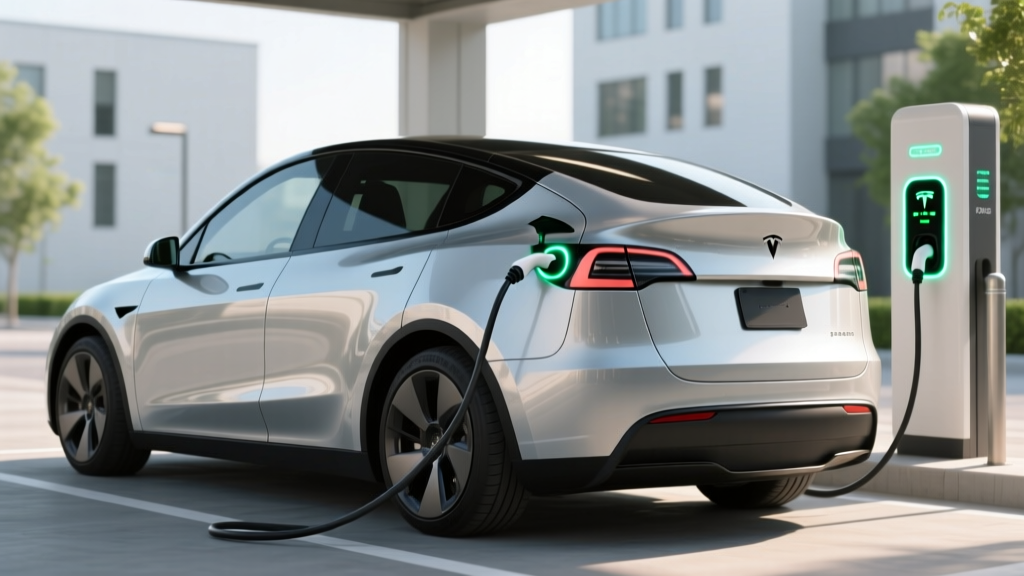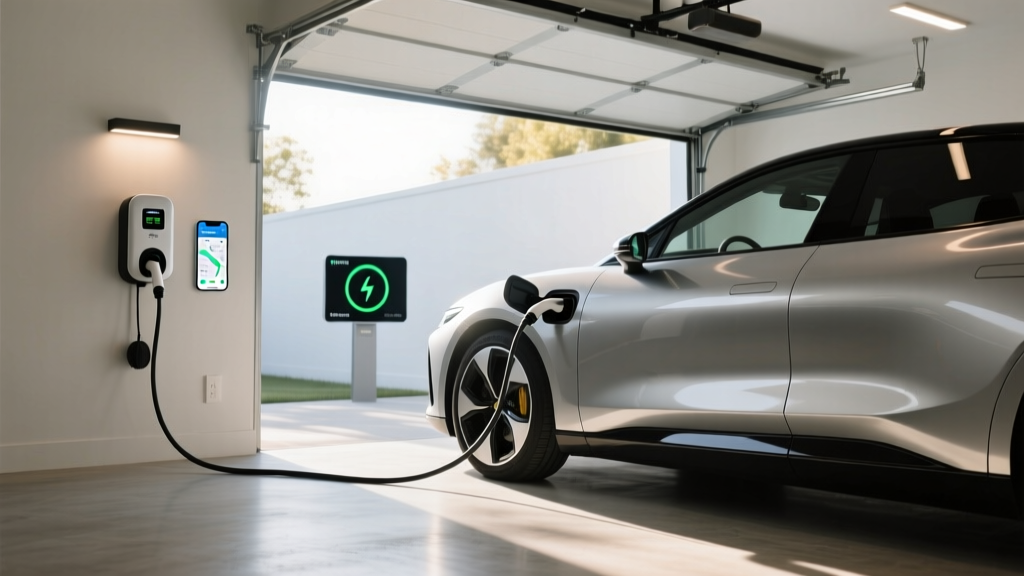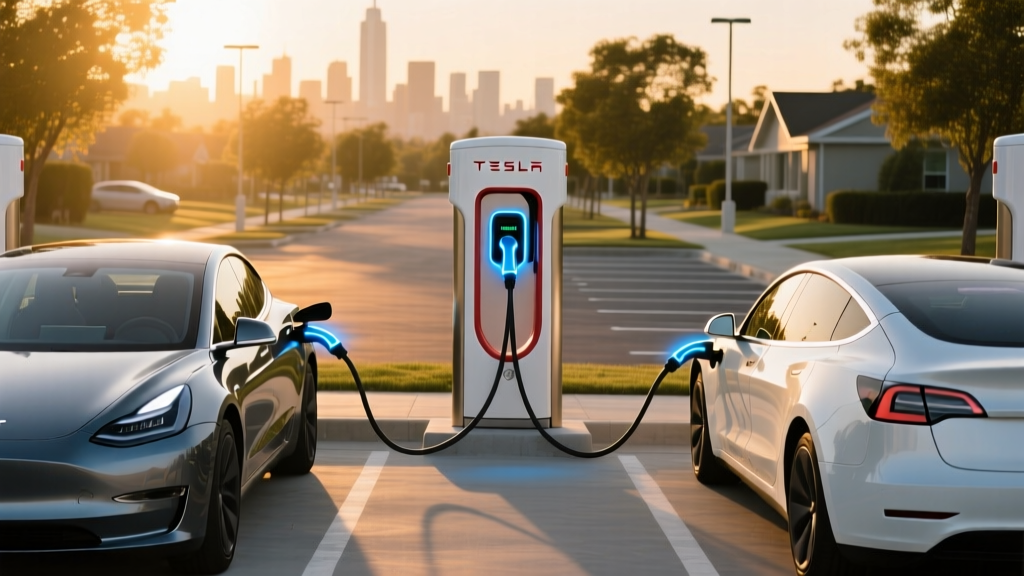
If you're shopping the highest range EVs — trucks and sedans pushing 350 to 500+ miles of EPA-rated range — you're also buying batteries in the 100–200 kWh range. That makes your charging setup the single biggest ownership variable. A 131 kWh pack in a Rivian R1T or a 135 kWh pack in a Lucid Air won't recharge overnight on a standard 120V wall outlet; it will take days. This guide walks through exactly how to spec, install, and pay for charging infrastructure that matches a big-battery EV, with real numbers for 2026 buyers.
Charging Levels Explained: Speeds, kW, and Miles Per Hour
The single most common EV literacy gap is confusing kW (power, the rate of energy flow) with kWh (energy, the battery's capacity). Think of kW as the width of the hose and kWh as the size of the tank. For the highest range EVs with large tanks, hose width matters enormously.
| Level | Voltage / Amps | Power (kW) | Miles of Range Added per Hour | Best Use Case |
|---|---|---|---|---|
| Level 1 | 120V / 12A | ~1.4 kW | 3–5 mi/hr | Emergency / trickle for PHEVs |
| Level 2 (Home) | 240V / 32–48A | 7.7–11.5 kW | 25–44 mi/hr | Daily overnight charging |
| Level 2 (Commercial) | 208–240V / 48–80A | 11.5–19.2 kW | 44–70 mi/hr | Workplace / destination |
| DC Fast Charging | 400V–900V DC | 50–350 kW | 150–1,000+ mi/hr | Road trips, quick top-ups |
For a 135 kWh battery (Lucid Air Grand Touring), Level 1 would take roughly 96 hours for a full charge — unusable. A 48-amp Level 2 home charger (11.5 kW) refills the same pack in about 12–13 hours from near-empty. A 350 kW DC fast charger can take that pack from 10–80% in roughly 20–25 minutes, depending on the vehicle's charge curve and battery preconditioning.
Home Charger Installation: Electrical Requirements and Costs
Most highest range EVs benefit from a 48-amp (or higher) Level 2 circuit. That requires a dedicated 60-amp breaker (NEC code requires circuits rated at 125% of continuous load, so 48A continuous needs a 60A breaker). Here's what that actually costs in 2026.
Electrical Requirements
- Voltage: 240V (split-phase residential, same as an electric dryer)
- Amperage: 40A circuit for a 32A charger, or 60A circuit for a 48A charger
- Wire gauge: 6 AWG copper for 60A runs under ~50 feet; 4 AWG for longer runs
- Panel capacity: Your main panel must have spare capacity. A 200-amp panel with a 48A EV circuit is typically fine; a 100-amp panel in an older home likely needs a panel upgrade to 200A, adding $1,500–$3,500 to the project
- Permit: Required in most jurisdictions; electrical permit fees range $50–$250
- GFCI: NEC 2023+ requires GFCI protection for EV outlets in garages; some hardwired chargers have built-in GFCI
Installation Cost Breakdown
| Component | Low End | Typical | High End | Notes |
|---|---|---|---|---|
| Level 2 Charger (Equipment) | $350 | $550 | $800 | 32A–48A smart chargers |
| Electrician Labor | $400 | $800 | $1,500 | Depends on run length and complexity |
| Materials (Wire, Conduit, Breaker) | $150 | $300 | $600 | Longer runs cost more |
| Permit & Inspection | $50 | $150 | $300 | Varies by municipality |
| Panel Upgrade (if needed) | $1,500 | $2,500 | $4,000 | 100A → 200A service upgrade |
| Total (no panel upgrade) | $950 | $1,800 | $3,200 | — |
| Total (with panel upgrade) | $2,450 | $4,300 | $7,200 | — |
The IRS §30D new clean vehicle credit covers up to $1,000 (30% of cost) for qualified home EV charger installation through 2032, though it's subject to income caps and census-tract eligibility. Check irs.gov for current-year rules and consult a tax professional before claiming.
Connector Compatibility: NACS, CCS1, and CHAdeMO
The connector landscape has shifted dramatically. As of 2026, the North American Charging Standard (NACS) — originally Tesla's proprietary connector — is the dominant standard. Ford, GM, Rivian, Volvo, Hyundai/Kia, and most other automakers have transitioned to NACS for new vehicles. CCS1 remains on many 2023–2025 models still on the road. CHAdeMO is effectively legacy (Nissan Leaf only).
| Connector | Brands Using It (2026) | Adapter Needed? |
|---|---|---|
| NACS (Tesla standard) | Tesla, Ford, GM, Rivian, Volvo, Polestar, Hyundai/Kia (2025+), BMW (2025+), Mercedes (2025+) | No — native NACS |
| CCS1 | VW ID.4 (2024 and earlier), older Hyundai/Kia, some Stellantis | CCS1-to-NACS adapter for Tesla Superchargers (~$150–$250) |
| CHAdeMO | Nissan Leaf (legacy) | Limited; CHAdeMO stations declining |
If you're buying one of the highest range EVs in 2026 — a Lucid Air, Tesla Model S, Rivian R1T Dual-Motor Max, or Hyundai Ioniq 6 Long Range — you'll almost certainly have a NACS port. For home Level 2 charging, NACS and J1772 (the Level 2 standard that NACS has superseded) are backward-compatible with a simple adapter included with most chargers.
Cost to Charge: Home vs. Public vs. Gas
Electricity pricing varies enormously by region, time of day, and whether you're charging at home or on a public DC fast network. Here's how the math breaks down for a high-range EV averaging 3.0 miles per kWh (a realistic combined figure for a large-battery EV like the Lucid Air or Tesla Model S).
| Scenario | $/kWh | Cost per Mile (at 3 mi/kWh) | Cost for 300-Mile Trip |
|---|---|---|---|
| Home Off-Peak (Time-of-Use) | $0.09–$0.13 | $0.03–$0.04 | $9–$13 |
| Home Standard Rate | $0.14–$0.20 | $0.05–$0.07 | $14–$20 |
| Public Level 2 (Workplace/Mall) | $0.20–$0.35 | $0.07–$0.12 | $20–$35 |
| DC Fast (Electrify America, EVgo, Tesla) | $0.30–$0.55 | $0.10–$0.18 | $30–$55 |
| Gas Vehicle (25 MPG, $3.40/gal) | — | $0.14 | $41 |
Home off-peak charging is the clear winner — roughly 70–75% cheaper per mile than gas. Even DC fast charging, the most expensive electric option, is often comparable to or cheaper than gasoline on a per-mile basis. According to fueleconomy.gov, the Lucid Air Grand Touring achieves 123 MPGe combined, translating to roughly $0.04/mile on average residential electricity.
Charging Time Examples for Large-Battery EVs
Here's what charging actually looks like for the biggest batteries on the market:
- Lucid Air Grand Touring (112 kWh usable, EPA 516 mi): Home Level 2 (48A/11.5 kW): ~10 hours 10–80%. DC fast (peak 250 kW): ~22 minutes 10–80%.
- Tesla Model S Long Range (100 kWh, EPA 402 mi): Home Level 2 (48A/11.5 kW): ~9 hours 10–80%. DC fast (peak 250 kW): ~25 minutes 10–80%.
- Rivian R1T Max Pack (141 kWh, EPA 420 mi): Home Level 2 (48A/11.5 kW): ~12 hours 10–80%. DC fast (peak 220 kW): ~35 minutes 10–80%.
- Hyundai Ioniq 6 Long Range (77.4 kWh, EPA 361 mi): Home Level 2 (48A/11.5 kW): ~7 hours 10–80%. DC fast (peak 240 kW): ~18 minutes 10–80%.
Charge curve reality check: No EV sustains peak kW for the full session. A vehicle rated at "250 kW peak" typically holds that rate only between roughly 10–40% state of charge, then tapers progressively. The 10–80% time is the honest metric — ignore "peak" claims in isolation.
Equipment Recommendations: Best Home Chargers for Big-Battery EVs
For the highest range EVs, you want a 48-amp charger on a 60-amp circuit. Here are proven 2026 picks:
ChargePoint Home Flex (NACS)
- Power: Up to 11.5 kW (48A, 240V)
- Connector: NACS native (J1772 adapter included)
- Cable length: 23 feet
- Smart features: Wi-Fi, app scheduling, Alexa, energy tracking
- Price: ~$599
- Best for: Most buyers — flexible amperage dip-switch settings, UL listed, Energy Star certified
Tesla Wall Connector (NACS)
- Power: Up to 11.5 kW (48A, 240V)
- Connector: NACS native
- Cable length: 24 feet
- Smart features: Wi-Fi, OTA updates, power sharing (link multiple units on one circuit), access control
- Price: ~$450
- Best for: Tesla owners and NACS-native EVs; best value per kW
Grizzl-E Smart (NACS or J1772)
- Power: Up to 10 kW (40A, 240V)
- Connector: NACS or J1772 versions available
- Cable length: 24 feet
- Smart features: OCPP-compatible, app control, works with utility demand-response programs
- Price: ~$449
- Best for: Budget-conscious buyers; built in Canada, rugged outdoor rating (IP67)
Emporia Level 2 EV Charger
- Power: Up to 11.5 kW (48A, 240V)
- Connector: NACS or J1772
- Cable length: 24 feet
- Smart features: Wi-Fi, detailed energy monitoring, solar integration (pairs with Emporia Vue panel monitor)
- Price: ~$399
- Best for: Solar-home owners wanting to track EV energy use vs. production
Safety, Code, and Installation Best Practices
EV charging is a continuous high-amperage load — essentially running a space heater at full blast for 8+ hours. This is why shortcuts are dangerous.
- Dedicated circuit: Your EV charger must be on its own dedicated breaker. Never share a circuit with other appliances.
- Hardwired vs. plug-in: Hardwired installations (no plug) are preferred for 48A+ chargers — they eliminate the NEMA 14-50 outlet as a potential failure point. If you use a NEMA 14-50 outlet, ensure your electrician uses an industrial-grade receptacle (Hubbell or Bryant, not a $10 residential unit) — cheap outlets have caused documented fires under continuous EV load.
- Outdoor rating: If your charger is outdoors, it needs at least an IP55 rating (rain-resistant). IP67 is better for harsh climates.
- GFCI protection: NEC 2023 Article 625 requires GFCI for EV outlets. Hardwired chargers with internal ground-fault protection may satisfy this — confirm with your local inspector.
- Load management: If your panel is near capacity, consider a smart charger with load-management capability (e.g., Emporia, Tesla Power Sharing) that throttles charge rate based on real-time household demand.
Real-World Range Considerations for High-Range EVs
EPA sticker vs. reality: The highest range EVs post impressive EPA numbers, but real-world results depend heavily on conditions:
- Highway driving (75+ mph): Expect 85–90% of EPA range. Aerodynamic drag is the dominant loss factor at speed.
- Cold weather (below 32°F): Expect 65–80% of EPA range without preconditioning. LFP batteries lose more range in cold than NMC chemistries.
- Preconditioning: If your EV preheats the battery before a DC fast charge session (most 2025+ models do this automatically when you navigate to a charger), you'll see significantly faster charge speeds and better range retention.
- Regenerative braking: City driving with regen can actually exceed EPA range estimates — some Lucid Air owners report 450+ real-world city miles.
Frequently Asked Questions
How much does it cost to install a home EV charger?
A typical Level 2 home charger installation costs $1,200–$2,500 all-in (equipment, electrician, permit, materials) when your electrical panel has sufficient capacity. If you need a panel upgrade from 100A to 200A service, add $1,500–$3,500, bringing the total to $2,700–$6,000. The IRS §30D alternative fuel vehicle refueling property credit covers up to $1,000 (30%) of home charger installation costs, subject to income limits and census-tract requirements.
How fast will each charging level add range?
Level 1 (120V) adds roughly 3–5 miles of range per hour — inadequate for large-battery EVs. Level 2 (240V, 48A) adds roughly 35–44 miles per hour, enough to refill most EVs overnight. DC fast charging adds 150–1,000+ miles per hour at peak, with a typical 10–80% session taking 18–35 minutes depending on battery size and peak charge rate.
Which connector/charger is compatible with my EV?
For 2026 model-year vehicles, NACS is the dominant standard across Tesla, Ford, GM, Rivian, Hyundai/Kia, and most others. If your EV has a CCS1 port (common on 2023–2024 models), you'll need a CCS1-to-NACS adapter (~$150–$250) to access Tesla Superchargers. For home Level 2, most chargers ship with NACS connectors and include J1772 adapters for backward compatibility.
How much does charging cost per mile vs. gas?
Home off-peak charging costs $0.03–$0.04 per mile — roughly 70–75% less than gasoline at $3.40/gallon in a 25 MPG vehicle ($0.14/mile). Even DC fast charging at $0.35–$0.55/kWh costs $0.10–$0.18 per mile, which is comparable to or cheaper than gas. The savings are largest for high-mileage drivers who charge primarily at home.
What electrical upgrades might I need?
The most common upgrade is a panel capacity increase from 100A to 200A ($1,500–$3,500). You may also need a new dedicated 60-amp breaker, 6 AWG wire run (or 4 AWG for runs over 50 feet), and conduit. Homes built after 2000 with 200A panels usually need only the breaker, wire, and charger — no panel work. Always have a licensed electrician perform a load calculation before committing to a 48A charger.
Do the highest range EVs charge faster than shorter-range ones?
Not necessarily. Range and charge speed are separate engineering variables. The Hyundai Ioniq 6 (361 mi EPA) charges 10–80% in ~18 minutes thanks to its 800V architecture and 240 kW peak rate, while the Rivian R1T Max Pack (420 mi EPA) takes ~35 minutes at 220 kW peak because of its larger 141 kWh battery. Charge speed is determined by battery chemistry, voltage architecture, and thermal management — not range alone.