What Does 'Hellcat Charger' Mean in an EV World?
If you've searched for Hellcat chargers, you're likely navigating two very different automotive universes colliding. The Dodge Charger SRT Hellcat — with its 717-horsepower supercharged 6.2L HEMI V8 — is one of the most iconic muscle cars of the modern era. But Dodge's 2024–2026 transition to the all-electric Charger Daytona lineup means the word "Charger" now spans both gasoline muscle and high-voltage EVs.
This guide cuts through the confusion. Whether you own a Hellcat and are curious about EV charging infrastructure, you're shopping for a home Level 2 charger for a new EV, or you're cross-shopping the electric Charger Daytona against its Hellcat predecessor, we cover the exact numbers: kilowatt speeds, installation costs, connector types, and per-mile economics that matter in 2026.
EV Charging Levels Explained: kW Speeds and Range Added Per Hour
Understanding EV charging starts with one critical distinction: kW (kilowatts) measures power — how fast energy flows into your battery. kWh (kilowatt-hours) measures energy capacity — how much the battery holds. Think of kW as the diameter of a water hose and kWh as the size of the tank you're filling.
| Level | Voltage | Power (kW) | Miles of Range Added Per Hour | Typical Use Case |
|---|---|---|---|---|
| Level 1 | 120V AC | 1.2–1.9 kW | 3–5 miles | Overnight trickle, PHEVs, emergencies |
| Level 2 | 240V AC | 7.2–19.2 kW | 20–65 miles | Home daily charging, workplace |
| DC Fast Charging | 200–800V DC | 50–350 kW | 150–1,200+ miles (per hour equivalent) | Road trips, rapid top-ups |
For context, a home Level 2 charger delivering 11.5 kW (the most common residential maximum on a 60A circuit) adds roughly 35–40 miles of range per hour to a mid-size EV. That means a 75 kWh battery going from 10% to 80% State of Charge (SoC) takes approximately 5–6 hours overnight — more than adequate for daily driving. DC fast chargers at 150 kW can accomplish the same 10–80% fill in roughly 25–30 minutes, though charge-curve taper above 80% SoC means the last 20% takes disproportionately longer.
How Much Does It Cost to Install a Home EV Charger?
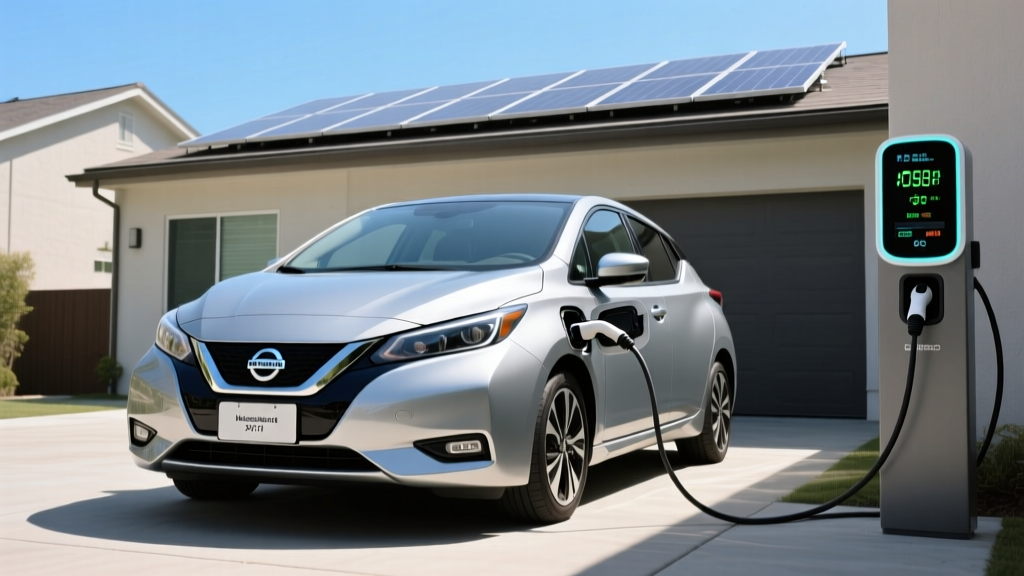
Home Level 2 installation is the single biggest infrastructure decision most EV owners face. Costs vary dramatically based on your home's electrical panel capacity, the distance from panel to garage or driveway, and local permitting requirements.
| Component | Low Estimate | Typical Estimate | High Estimate |
|---|---|---|---|
| Level 2 Charger Equipment (hardwired, 40–48A) | $350 | $550 | $800 |
| Electrician Labor (run 240V circuit, mount unit) | $400 | $900 | $2,000 |
| Electrical Permit | $50 | $150 | $400 |
| Panel Upgrade (if needed: 100A → 200A service) | $1,500 | $2,500 | $4,500 |
| Total (no panel upgrade) | $800 | $1,600 | $3,200 |
| Total (with panel upgrade) | $2,300 | $4,100 | $7,700 |
Panel upgrade reality check: Homes built before 2000 often have 100-amp electrical service. Adding a 48A continuous-load EV circuit (which requires a 60A breaker per NEC 125% continuous-load rules) can consume 40–60% of a 100A panel's capacity. If your panel is already near capacity with HVAC, electric range, and dryer loads, a licensed electrician may recommend upgrading to 200A service — a $1,500–$4,500 job that adds a day of work and a utility coordination step.
Under the IRS Residential Clean Energy Credit, you may qualify for a 30% tax credit on charger equipment and installation costs (up to $1,000), though this provision has specific eligibility requirements — consult a tax professional and review current-year IRS guidance.
Connector Compatibility: NACS, CCS1, and CHAdeMO in 2026
The connector landscape has consolidated significantly. Tesla's North American Charging Standard (NACS) has been adopted by Ford, GM, Rivian, Volvo, Hyundai, and most major automakers for 2025–2026 models. CCS1 (Combined Charging System) remains on many 2023–2025 vehicles, and CHAdeMO is effectively legacy-only (Nissan Leaf being the last major holdout).
| Connector | Brands Using It (New Vehicles) | Adapter Needed For |
|---|---|---|
| NACS (Tesla-style) | Tesla, Ford, GM, Rivian, Volvo, Polestar, Hyundai, Kia (select), Dodge Charger Daytona | CCS1 chargers (with CCS-to-NACS adapter, ~$100–$200) |
| CCS1 | VW ID.4 (2024 and earlier), BMW iX (2024 and earlier), older Hyundai/Kia | Tesla Superchargers (with Magic Dock or NACS adapter) |
| CHAdeMO | Nissan Leaf (legacy) | Limited infrastructure; no practical adapter to NACS/CCS |
For home Level 2 charging, all EVs use a J1772 connector (or NACS, which supports Level 2 AC through the same plug). Most Level 2 home chargers ship with J1772; NACS-equipped vehicles include a J1772-to-NACS adapter in the box. If you're buying a home charger in 2026, choosing a NACS-terminated unit future-proofs your setup for the dominant standard.
How Much Does Charging Cost Per Mile vs. Gasoline?
The economics of EV charging depend on your electricity rate, whether you charge at home or publicly, and your vehicle's efficiency. Here's a realistic comparison using 2026 national averages.
| Scenario | Rate | Vehicle Efficiency | Cost Per Mile |
|---|---|---|---|
| Home charging (off-peak utility rate) | $0.11/kWh | 3.0 mi/kWh (100 MPGe) | $0.037 |
| Home charging (national avg. rate) | $0.17/kWh | 3.0 mi/kWh | $0.057 |
| Public Level 2 (ChargePoint, etc.) | $0.30/kWh | 3.0 mi/kWh | $0.10 |
| DC Fast Charging (Electrify America, Tesla) | $0.42/kWh | 3.0 mi/kWh | $0.14 |
| Gasoline (25 MPG combined, $3.40/gal) | $3.40/gallon | 25 MPG | $0.136 |
| Gasoline (Hellcat, 16 MPG combined, $3.40/gal) | $3.40/gallon | 16 MPG | $0.213 |
Home off-peak charging delivers fuel costs roughly 75–85% lower than a gasoline Hellcat. Even public DC fast charging at premium rates comes in cheaper per mile than fueling a 16 MPG supercharged V8. According to fueleconomy.gov, the 2023 Dodge Charger SRT Hellcat Widebody rates at just 15 MPG combined — making the per-mile cost disparity even more dramatic against any EV.
Charging Time Examples: 10–80% for Common Battery Sizes
Charge time depends on battery capacity (kWh), the charger's power output (kW), and the vehicle's onboard charge acceptance rate. Here are realistic 10–80% times for representative battery sizes:
- 40 kWh battery (Nissan Leaf, compact EVs): ~3.5 hours on 11.5 kW Level 2; ~22 minutes on 100 kW DC fast
- 75 kWh battery (Tesla Model Y, Ford Mustang Mach-E): ~5 hours on 11.5 kW Level 2; ~25 minutes on 150 kW DC fast
- 100 kWh battery (Dodge Charger Daytona Scat Pack, large SUVs): ~7 hours on 11.5 kW Level 2; ~28 minutes on 250 kW DC fast (peak)
Charge-curve reality: No EV sustains its peak DC charge rate for the entire session. A vehicle advertising "250 kW peak" may only sustain that rate between 10–35% SoC, then taper to 150 kW, then 80 kW above 60%, and drop below 50 kW past 80%. This is why 10–80% time — not peak kW — is the metric that matters. Cold weather (below 40°F) can add 15–30% to charge times unless the battery is preconditioned via the vehicle's navigation-routed thermal management system.
Best Home Level 2 Chargers: Equipment Recommendations for 2026
These are proven, UL-listed units we recommend based on reliability, power output, smart features, and value:
Emporia Vue Level 2 EV Charger
- Power Output: 11.5 kW (48A) on a 60A circuit
- Connector: J1772 (NACS adapter included or available)
- Cable Length: 24 feet
- Smart Features: Wi-Fi, app scheduling, energy monitoring, solar integration
- Price: ~$399
- Best For: Budget-conscious buyers wanting smart scheduling and energy tracking
ChargePoint Home Flex (NACS)
- Power Output: Up to 12 kW (50A) on a 60A circuit; configurable down to 16A
- Connector: NACS (2025+ model); J1772 version also available
- Cable Length: 23 feet
- Smart Features: Wi-Fi, Alexa integration, ChargePoint network app, flexible amperage dip-switch
- Price: ~$599
- Best For: Flexibility across circuit sizes; robust app ecosystem
Tesla Wall Connector (NACS)
- Power Output: 11.5 kW (48A) on a 60A circuit
- Connector: NACS native
- Cable Length: 24 feet
- Smart Features: Wi-Fi, over-the-air updates, power sharing (multiple units on one circuit), Tesla app integration
- Price: ~$475
- Best For: Tesla owners and NACS-adopting brands; clean installation with power-sharing capability
Grizzl-E Smart (United Chargers)
- Power Output: 10 kW (40A) on a 50A circuit
- Connector: J1772 (NACS version available)
- Cable Length: 24 feet
- Smart Features: OCPP-compatible, adjustable amperage, extreme cold rating (-40°F), rugged aluminum case
- Price: ~$549
- Best For: Cold-climate durability and outdoor installations
Safety, Code, and Electrical Requirements You Can't Ignore
The National Electrical Code (NEC) treats EV charging as a continuous load, meaning the circuit must be rated at 125% of the charger's maximum draw. A 48A charger requires a 60A breaker and appropriately sized wire (typically 6 AWG copper for runs under 100 feet, 4 AWG for longer runs).
- Dedicated circuit required: Your EV charger must have its own dedicated breaker — no sharing with dryers, ranges, or HVAC.
- GFCI protection: NEC 2020 and later requires GFCI (Ground Fault Circuit Interrupter) protection for all outdoor receptacles and many jurisdictions now require it for indoor garage installations as well. Hardwired installations may have different GFCI requirements — your electrician will confirm local code.
- Outdoor rating: If mounting outside, ensure the unit carries a NEMA 4 or IP65 weather rating. All units listed above meet outdoor installation standards.
- Permit and inspection: Nearly all jurisdictions require an electrical permit for a new 240V circuit. The inspection ensures proper wire gauge, breaker sizing, grounding, and GFCI compliance. Skipping this step risks insurance denial in the event of an electrical fire.
- Load calculation: A licensed electrician will perform a NEC Article 220 load calculation on your panel before approving the circuit. If your calculated load exceeds 80% of panel capacity, a panel upgrade or a load-management device (like the Emporia Smart Load Center) becomes necessary.
Hellcat Owners Considering an EV: What Changes?
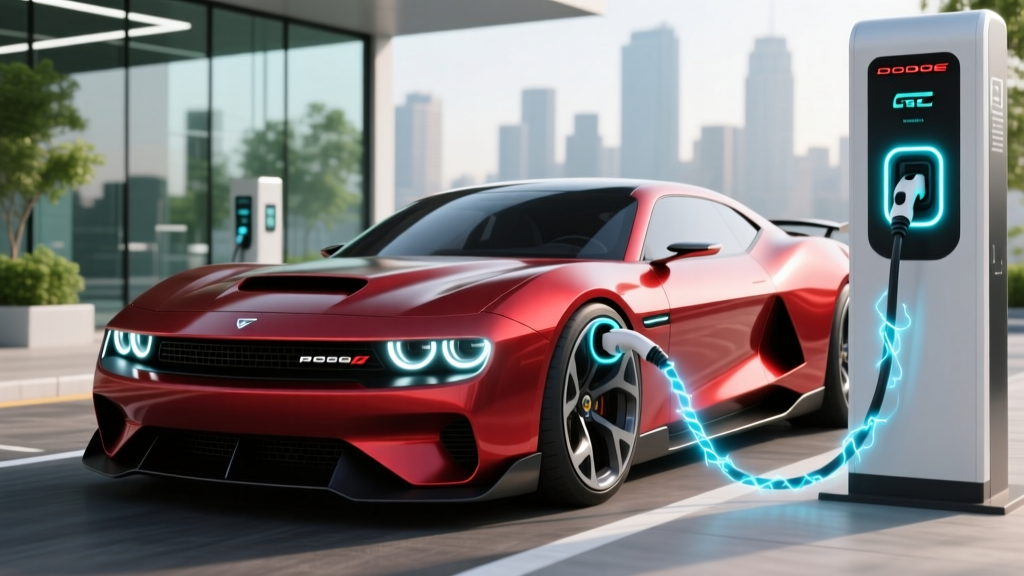
If you're a Charger Hellcat owner eyeing the electric Dodge Charger Daytona (available in R/T and Scat Pack trims with up to 670 horsepower and an EPA-estimated 317 miles of range on the R/T), the charging transition is straightforward:
- The Charger Daytona uses the NACS connector for both AC Level 2 and DC fast charging.
- DC fast charging peaks at approximately 150 kW, delivering a 10–80% charge in roughly 27–32 minutes.
- Home Level 2 charging at 11.5 kW fills the ~100 kWh battery overnight in approximately 8–9 hours (0–100%).
- Access to the Tesla Supercharger network (via NACS) gives Daytona owners access to over 25,000 fast-charging stalls nationwide.
The performance math is different from a Hellcat: 0–60 mph in 3.3 seconds (Scat Pack with Direct Connection stage) versus 3.6 seconds for the last supercharged Hellcat Redeye — but with a fuel cost per mile roughly one-fifth that of premium gasoline.
Frequently Asked Questions
How much does it cost to install a home EV charger?
Expect $800–$3,200 for a standard Level 2 installation on an existing 200A panel. If your home requires a panel upgrade from 100A to 200A service, total costs range from $2,300–$7,700 including equipment, electrician labor, and permitting.
How fast will each charging level add range?
Level 1 (120V) adds 3–5 miles per hour. Level 2 (240V) adds 20–65 miles per hour depending on amperage. DC fast charging adds the equivalent of 150–1,200+ miles per hour, with typical 10–80% sessions lasting 18–35 minutes depending on battery size and peak kW acceptance.
Which connector or charger is compatible with my EV?
For 2026 models, most new EVs use NACS (Tesla, Ford, GM, Rivian, Dodge Charger Daytona, Hyundai, Kia). Older models (2023–2024 VW, BMW) use CCS1. Nissan Leaf uses CHAdeMO. For home charging, a NACS-terminated Level 2 unit or a J1772 unit with an included adapter covers virtually all vehicles.
How much does charging cost per mile compared to gas?
Home off-peak charging costs roughly $0.03–$0.06 per mile. Public DC fast charging runs $0.12–$0.15 per mile. A Hellcat at 16 MPG combined and $3.40/gallon gasoline costs approximately $0.21 per mile — making home EV charging 70–80% cheaper per mile.
What electrical upgrades might I need for a home charger?
The most common upgrade is a panel capacity increase from 100A to 200A service ($1,500–$4,500). You may also need a new dedicated 60A breaker, 6 AWG copper wiring, and a GFCI-compliant receptacle or hardwired junction box. Homes with 200A panels and available breaker slots typically need no upgrade beyond the circuit itself.
Sources: fueleconomy.gov (EPA efficiency data), IRS Residential Clean Energy Credit, NHTSA vehicle safety data. Tax credit and incentive rules are subject to change — verify current-year eligibility with a tax professional.