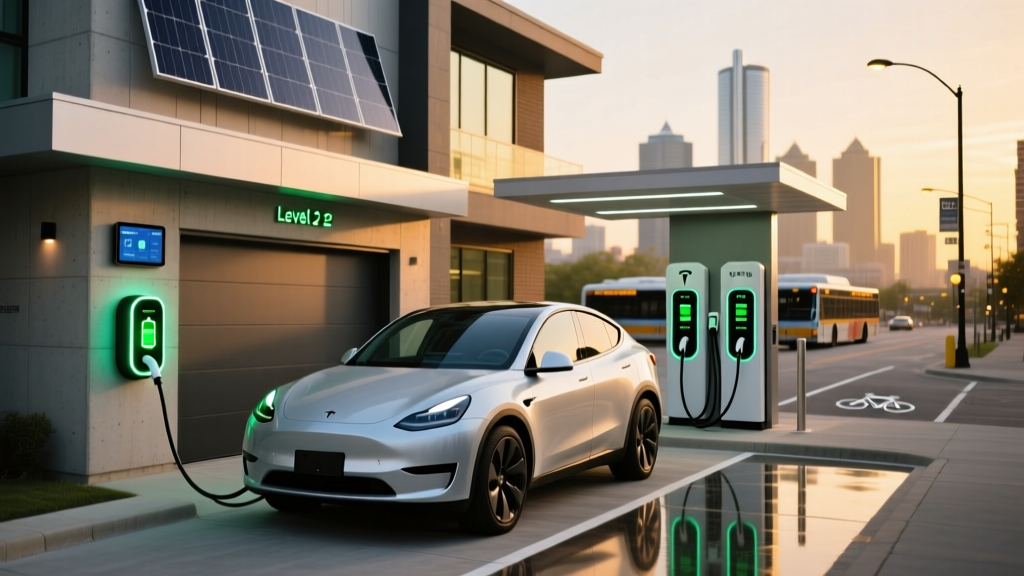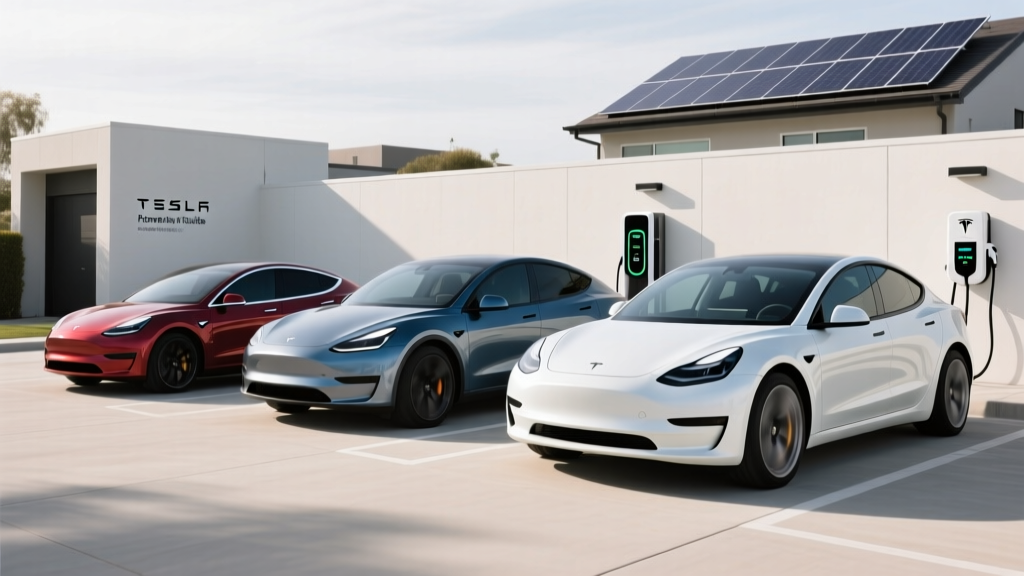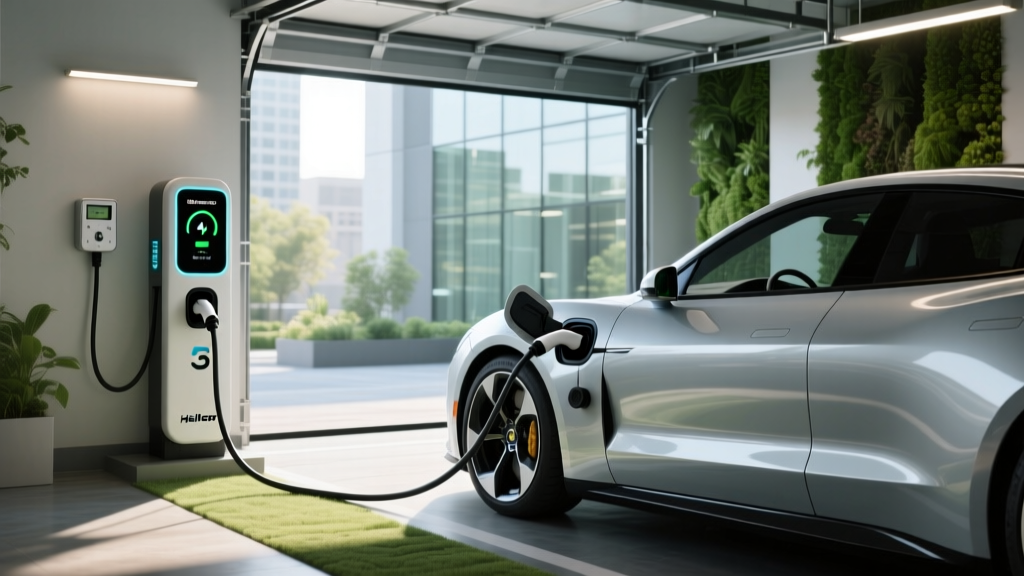
The Dodge Charger SRT Hellcat—717 horsepower, 6.2-liter supercharged V8, and a 0-60 mph time around 3.6 seconds—has been one of America's most visceral muscle cars. But with Dodge ending the gas-powered Charger and Challenger after the 2023 model year and pivoting to the electric Charger Daytona lineup for 2024 and beyond, many Hellcat owners (and fans) are confronting a practical question: what does charging an EV actually look like compared to filling up a supercharged V8?
This guide breaks down the real numbers—home charging installation, public DC fast charging, connector compatibility, per-mile costs, and equipment picks—so anyone transitioning from a Hellcat Charger to an electric vehicle knows exactly what to expect, what to budget, and which 2026 EV alternatives deliver comparable thrills.
Why Hellcat Charger Owners Are Looking at EVs in 2026
The 2023 Dodge Charger SRT Hellcat Redeye Widebody produced 797 hp and 707 lb-ft of torque, with EPA fuel economy rated at just 12 mpg city and 21 mpg highway (15 mpg combined) according to fueleconomy.gov. At 15 mpg combined and $3.50/gallon, that's roughly $0.23 per mile in fuel alone. An equivalent-performance EV can cut that to $0.04–$0.06 per mile on home electricity.
The 2024–2026 Dodge Charger Daytona EV lineup (Scat Pack, R/T) replaces the Hellcat with up to 670 hp and a 317-mile EPA range on the Scat Pack. Whether you're considering the Daytona or a competitor like the Tesla Model S Plaid, Porsche Taycan, or Lucid Air, understanding charging infrastructure is essential before you buy.
Charging Levels Explained: Speed, Power, and Real-World Expectations
The most common EV literacy gap is confusing kW (kilowatts, a measure of power or charge rate) with kWh (kilowatt-hours, a measure of energy or battery capacity). Think of kW as how fast water flows from a hose, and kWh as the total gallons in the bucket. A 100 kWh battery charged at 10 kW takes 10 hours; at 100 kW, roughly 1 hour (before taper).
| Level | Voltage | Max Power (kW) | Typical Range Added/Hour | Best Use Case |
|---|---|---|---|---|
| Level 1 | 120V (standard outlet) | 1.0–1.4 kW | 3–5 miles | Overnight top-off, PHEVs, low-mileage drivers |
| Level 2 (Home/Public) | 240V (dryer/outlet) | 3.3–19.2 kW | 12–75 miles | Daily home charging, workplace, destination |
| DC Fast Charging | 400V–800V+ DC | 50–350 kW | 150–1,000+ miles (equivalent rate) | Road trips, quick 10–80% top-ups |
Charging Time Examples for Common Battery Sizes (10–80%)
| Battery Size | Level 2 (11.5 kW) | DC Fast (150 kW avg) | DC Fast (250 kW avg) | Example Vehicles |
|---|---|---|---|---|
| 60 kWh | ~4 hours | ~22 min | ~14 min | Tesla Model 3 RWD, Chevy Bolt (discontinued) |
| 82 kWh | ~5.5 hours | ~28 min | ~18 min | Tesla Model Y LR, BMW i4 |
| 100 kWh | ~7 hours | ~35 min | ~22 min | Dodge Charger Daytona Scat Pack, Tesla Model S |
| 118 kWh | ~8 hours | ~42 min | ~26 min | Lucid Air Grand Touring, Rivian R1T Max |
Home EV Charger Installation: Electrical Requirements and Cost Breakdown
A Level 2 home charger is the backbone of practical EV ownership—covering 90%+ of charging for most drivers. But installation costs vary wildly depending on your home's electrical panel, distance from panel to garage, and local code.
Electrical Requirements
- Voltage: 240V (same as an electric dryer or oven)
- Amperage: Typically 40A, 48A, or 60A dedicated circuit
- Breaker sizing: NEC code requires breakers rated 125% of continuous load—a 48A charger needs a 60A breaker
- Wire gauge: 6 AWG copper for 48A; 4 AWG for 60A (varies by run length)
- GFCI protection: Required for outdoor installations and some jurisdictions for indoor (NEC 2020+)
- Permit: Most municipalities require an electrical permit ($50–$200) with inspection
Panel Upgrade Reality Check
Homes built before 2000 often have 100A or 150A main panels. Adding a 48A EV circuit may push you over 80% panel capacity, triggering a panel upgrade to 200A ($1,500–$3,500) or requiring a smart load-management device like the Emporia VUE or Span panel that dynamically throttles charger amperage when other loads are high.
| Component | Simple Install (panel near garage) | Complex Install (long run, conduit) | With Panel Upgrade |
|---|---|---|---|
| Level 2 Charger (hardware) | $400–$700 | $400–$700 | $400–$700 |
| Electrician labor (2–6 hrs @ $100–$175/hr) | $200–$450 | $600–$1,200 | $800–$1,500 |
| Materials (wire, conduit, breaker) | $100–$250 | $300–$800 | $300–$600 |
| Permit & inspection | $50–$150 | $100–$250 | $100–$250 |
| Panel upgrade (if needed) | — | — | $1,500–$3,500 |
| Total | $750–$1,550 | $1,400–$2,950 | $3,100–$6,550 |
The IRS §30D credit doesn't cover home charger installation for most buyers as of 2026 (the alternative fuel vehicle refueling property credit, §30C, was modified under the IRA). Some utilities offer $250–$500 rebates—check your local provider.
Which Connector Is Compatible with Your EV?
The North American connector landscape has consolidated significantly since 2023, when Ford and GM adopted Tesla's NACS (North American Charging Standard). As of 2026, virtually all new EVs sold in the US ship with NACS charge ports. CCS1 is legacy, and CHAdeMO is effectively discontinued for new vehicles (Nissan Ariana still uses it in some markets).
| Connector | Brands Using (Native) | Adapter Needed? | Network Access |
|---|---|---|---|
| NACS (Tesla standard) | Tesla, Ford, GM, Rivian, Volvo, Polestar, Dodge (Charger Daytona), Hyundai/Kia (2025+), Toyota, BMW (2025+) | CCS-to-NACS adapter (~$150–$250) for non-Tesla DCFC | Tesla Supercharger, Electrify America (NACS stalls), ChargePoint, EVgo |
| CCS1 (legacy) | VW ID.4 (pre-2025), Hyundai Ioniq 5 (pre-2025), Kia EV6 (pre-2025), BMW i4 (pre-2025) | NACS-to-CCS adapter for Tesla Supercharger access | Electrify America, ChargePoint, EVgo, non-Tesla networks |
| CHAdeMO | Nissan Leaf (discontinued), Mitsubishi Outlander PHEV (legacy) | Rare adapters; declining infrastructure | Limited; many stations removed CHAdeMO plugs |
The 2024–2026 Dodge Charger Daytona uses a NACS charge port natively, giving it direct access to Tesla's Supercharger network (20,000+ stalls in North America) without adapters.
Cost to Charge: Per-Mile Comparison vs. Hellcat V8
Here's where the math shifts dramatically. A 2023 Charger Hellcat Redeye at 15 mpg combined costs roughly $0.23/mile at $3.50/gallon. An equivalent EV consuming 3.0 miles/kWh (a realistic efficiency figure for a 5,000-lb performance EV) costs:
| Charging Scenario | Cost per kWh | EV Cost/Mile (3 mi/kWh) | Savings vs. Hellcat |
|---|---|---|---|
| Home (off-peak utility rate) | $0.10–$0.14 | $0.03–$0.05 | $0.18–$0.20/mile (80–87% less) |
| Home (standard residential avg) | $0.16–$0.20 | $0.05–$0.07 | $0.16–$0.18/mile (70–78% less) |
| Public Level 2 (ChargePoint, etc.) | $0.25–$0.40 | $0.08–$0.13 | $0.10–$0.15/mile (43–65% less) |
| DC Fast Charging (Electrify America, EVgo) | $0.35–$0.55 | $0.12–$0.18 | $0.05–$0.11/mile (22–48% less) |
| Tesla Supercharger (avg 2026) | $0.28–$0.38 | $0.09–$0.13 | $0.10–$0.14/mile (43–61% less) |
| Hellcat Charger (15 mpg @ $3.50/gal) | — | $0.23 | — |
For a driver covering 12,000 miles/year, the Hellcat spends roughly $2,760/year on fuel. An EV charged primarily at home (off-peak) spends $420–$600/year on electricity—a $2,100+ annual savings.
Best Level 2 Home Chargers for Performance EV Owners (2026 Picks)
Performance EVs like the Charger Daytona Scat Pack (100 kWh battery, NACS) or Tesla Model S Plaid benefit from higher-amperage Level 2 chargers to minimize overnight charge time. Here are the top picks:
Tesla Wall Connector (Gen 4)
- Power Output: Up to 11.5 kW (48A) on a 60A circuit
- Connector: NACS native; CCS adapter available separately
- Cable Length: 24 ft
- Smart Features: Wi-Fi, OTA updates, load sharing (up to 6 units on one circuit), Power-Share with Tesla Powerwall
- Price: ~$475
- Best For: Tesla and NACS-equipped EVs; best value at 48A
ChargePoint Home Flex
- Power Output: Configurable 16A–50A (up to 12 kW on a 60A circuit)
- Connector: NACS or J1772 (select at purchase); adapters available
- Cable Length: 23 ft
- Smart Features: Wi-Fi, app scheduling, Alexa integration, load management, detailed energy reports
- Price: ~$550–$650
- Best For: Multi-EV households, flexible amperage tuning
Emporia Vue Level 2 Charger
- Power Output: Up to 11.5 kW (48A)
- Connector: J1772 or NACS (with adapter)
- Cable Length: 24 ft
- Smart Features: Integrated whole-home energy monitoring, solar integration, time-of-use scheduling, load balancing
- Price: ~$400–$500 (often bundled with Emporia VUE monitor)
- Best For: Solar-equipped homes, budget-conscious buyers wanting smart features
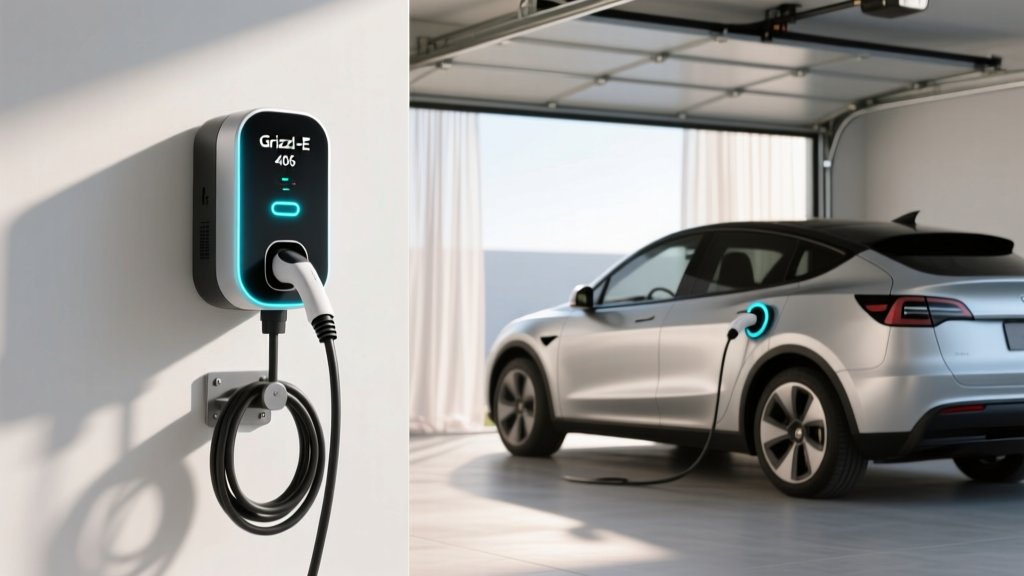
Grizzl-E Smart
- Power Output: Up to 10 kW (40A) on a 50A circuit
- Connector: J1772 or NACS
- Cable Length: 24 ft
- Smart Features: Wi-Fi, OCPP compatibility, outdoor-rated (NEMA 4), adjustable amperage
- Price: ~$450–$550
- Best For: Outdoor installations, cold climates (-40°F rated), Canadian-built durability
Safety, Code, and Installation Best Practices
EV charging is a continuous high-amperage load—often running 6–10 hours straight. This demands correct installation to avoid overheating, tripped breakers, or fire risk.
- Dedicated circuit: Never share an EV charger circuit with other appliances. NEC 625 requires a dedicated branch circuit.
- Hardwired vs. plug-in: Hardwired chargers (no plug) are preferred for 48A+ installations—NEMA 14-50 outlets at 40A+ have known overheating risks with cheap receptacles. If using a 14-50 outlet, specify a commercial-grade Hubbell or Bryant receptacle ($80–$120 vs. $15 residential).
- GFCI: Required for outdoor installations per NEC 2020+. Many modern chargers include integrated ground-fault protection, which can conflict with GFCI breakers—consult your electrician.
- Outdoor rating: If installing outside, ensure NEMA 4 or NEMA 4X rating (weather and UV resistant).
- Permit and inspection: Skipping permits voids home insurance coverage for electrical fires. Budget $50–$250 for the permit and schedule inspection before drywall patching.
- Load management: For homes with 100–150A panels, consider a smart load manager (Emporia, Span, or Enel X JuiceBox with load sharing) that throttles charger amperage when HVAC, oven, or dryer loads spike.
2026 EV Alternatives to the Hellcat Charger: Performance and Charging Specs
If you're transitioning from a Hellcat, these are the performance EVs that match or exceed its straight-line acceleration—with far lower running costs:
| Vehicle | 0–60 mph | Horsepower | EPA Range | Battery (kWh) | Max DC Fast Charge | 10–80% Charge Time | Base MSRP |
|---|---|---|---|---|---|---|---|
| 2023 Dodge Charger Hellcat Redeye (gas) | 3.5 sec | 797 hp | ~320 mi (15 mpg × 21.4 gal tank) | N/A (gas tank) | N/A | ~5 min (gas fill-up) | $88,000 (discontinued) |
| 2026 Dodge Charger Daytona Scat Pack | 3.3 sec | 670 hp | 260 mi (EPA est.) | 100 kWh (NMC) | ~175 kW (CCS/NACS) | ~28 min | $73,090 |
| 2026 Tesla Model S Plaid | 1.99 sec | 1,020 hp | 359 mi (EPA) | 100 kWh (NMC) | 250 kW (NACS) | ~22 min | $89,990 |
| 2026 Porsche Taycan Turbo GT | 2.1 sec | 1,092 hp | 269 mi (EPA) | 105 kWh (NMC, 800V) | 320 kW | ~16 min | $217,000 |
| 2026 Lucid Air Sapphire | 1.89 sec | 1,234 hp | 427 mi (EPA) | 118 kWh (NMC) | 300 kW | ~20 min | $249,000 |
| 2026 BMW i5 M60 | 3.7 sec | 593 hp | 256 mi (EPA) | 81.2 kWh (NMC) | 205 kW | ~25 min | $85,195 |
Frequently Asked Questions
How much does it cost to install a home EV charger?
A typical Level 2 home charger installation costs $750–$1,550 for a simple setup (panel near garage, short wire run), $1,400–$2,950 for complex runs with conduit, and $3,100–$6,550 if your home needs a 200A panel upgrade. Equipment itself runs $400–$700; electrician labor and materials make up the rest. Always get a detailed quote that breaks out equipment, labor, permit, and any panel work.
How fast will each charging level add range?
Level 1 (120V) adds 3–5 miles per hour—adequate only for plug-in hybrids or very low-mileage drivers. Level 2 (240V, 48A) adds 30–40 miles per hour for most EVs, fully recharging overnight. DC fast charging (150–350 kW) can add 150–300+ miles in 15–25 minutes, depending on battery size and charge-curve taper.
Which connector/charger is compatible with my EV?
For 2025–2026 model-year EVs, NACS is the dominant standard—Tesla, Ford, GM, Dodge, Rivian, Volvo, Hyundai, Kia, and most others now use it natively. Older (pre-2025) non-Tesla EVs likely have CCS1 and need a NACS-to-CCS adapter (~$150–$250) to access Tesla Superchargers. CHAdeMO is effectively discontinued for new vehicles.
How much does charging cost per mile vs. gas?
Charging at home on off-peak rates ($0.10–$0.14/kWh), a typical performance EV costs $0.03–$0.05 per mile—roughly 80% less than a 15-mpg Hellcat Charger at $3.50/gallon ($0.23/mile). Even DC fast charging at $0.40–$0.55/kWh costs $0.12–$0.18/mile, still 22–48% cheaper than gasoline.
What electrical upgrades might I need?
Homes with 100A or 150A main panels often need a 200A panel upgrade ($1,500–$3,500) to safely add a 48A EV charger circuit. Homes built after 2010 usually have 200A panels and can accommodate a Level 2 charger without upgrades. If your panel is at capacity but you don't want to upgrade, smart load-management devices ($200–$500) can dynamically reduce charger amperage when other circuits are drawing heavily, avoiding the panel upgrade entirely.
Can I charge a Dodge Charger Daytona at a Tesla Supercharger?
Yes—the 2024–2026 Dodge Charger Daytona ships with a native NACS charge port, giving it direct plug-in access to Tesla's Supercharger network (over 20,000 stalls across North America) without any adapter. It can also use Electrify America, EVgo, and ChargePoint stations via adapter or NACS-equipped stalls.
Is a 40A or 48A home charger better for a large-battery EV?
For EVs with 100 kWh+ batteries (like the Charger Daytona Scat Pack or Tesla Model S), a 48A charger on a 60A circuit is strongly recommended over 40A. A 48A charger delivers 11.5 kW, recharging a depleted 100 kWh battery in roughly 7 hours vs. 9+ hours at 40A (9.6 kW). The incremental installation cost is minimal ($50–$150 for heavier-gauge wire), but the time savings are significant.
The Bottom Line for Hellcat Charger Owners
Transitioning from a supercharged V8 to an electric performance vehicle requires a mindset shift—from 5-minute gas fill-ups every 320 miles to overnight home charging and occasional DC fast stops on road trips. The trade-off is substantial: $2,000+ annual fuel savings, instant torque that matches or beats the Hellcat's 0–60, and zero tailpipe emissions.
Budget $1,000–$3,000 for a quality Level 2 home charger installation (more if your panel needs upgrading), choose a 48A NACS charger for future-proofing, and take advantage of off-peak electricity rates to minimize per-mile cost. The Hellcat era is ending, but the performance EV era is delivering comparable thrills at a fraction of the running cost.