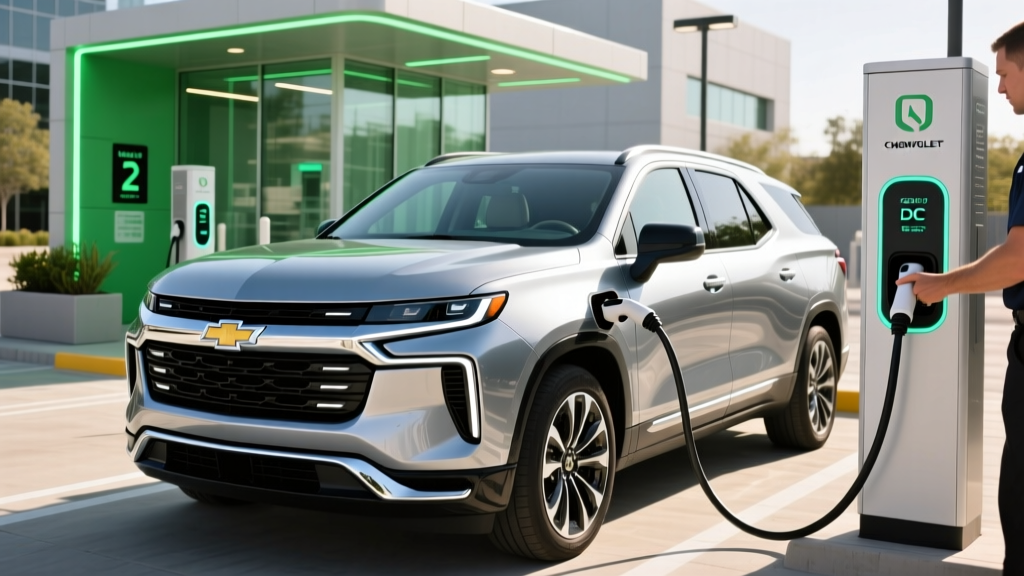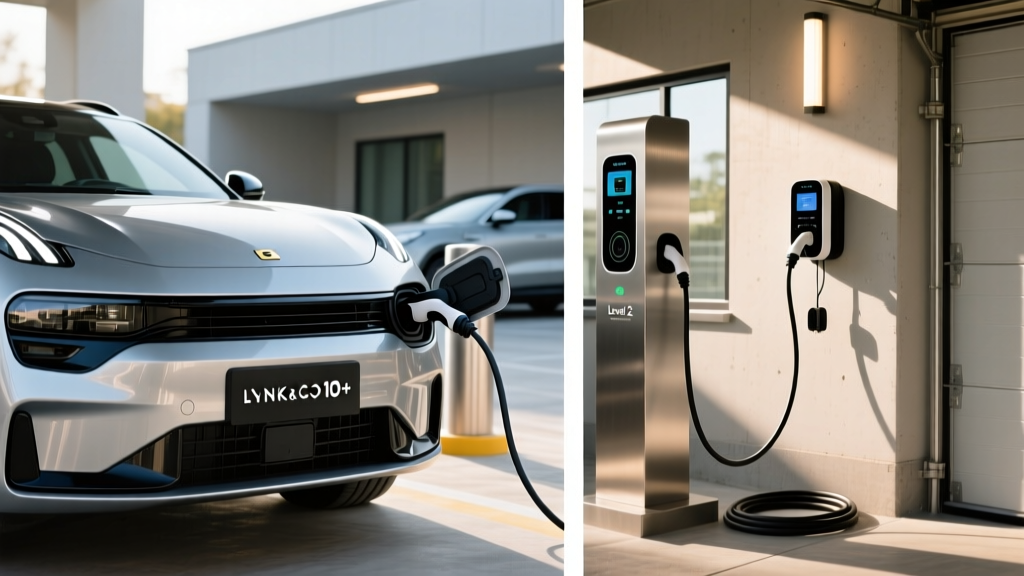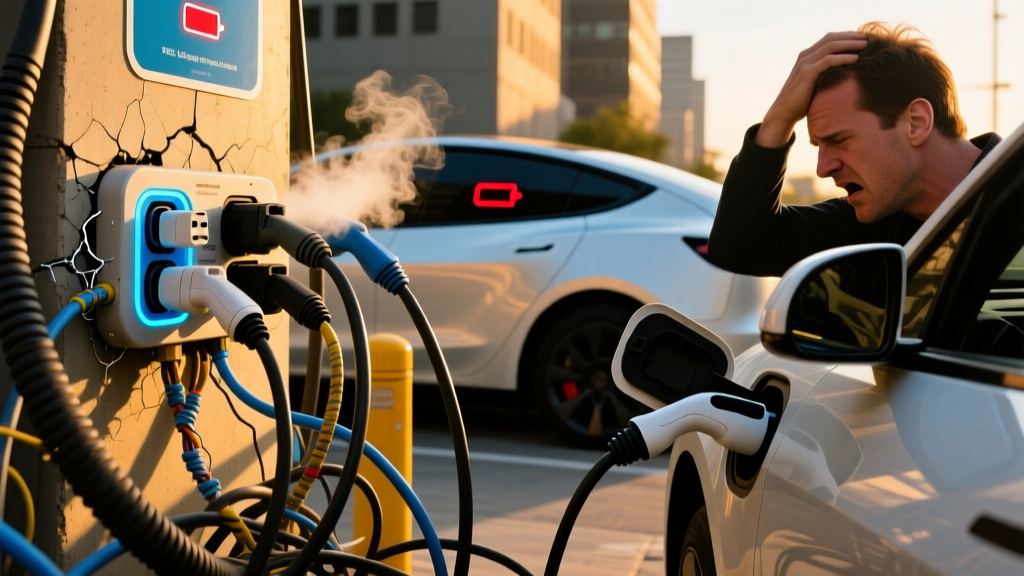
If you've spent any time in EV owner forums, you've seen the phrase: "I bought a hell charger and now I regret everything." It's not an official industry term — it's owner slang for any home or public EV charger that delivers a miserable experience: unreliable connections, broken apps, glacial speeds, melted plugs, or install bills that spiral into the thousands. The good news? Almost every "hell charger" scenario is preventable with the right specs, the right electrician, and the right hardware.
This guide breaks down exactly what turns a charger into a hell charger, the electrical realities of Level 1, Level 2, and DC fast charging, what a home install actually costs in 2026, and which specific chargers we'd trust daily. We'll also settle the kW vs. kWh confusion once and for all — because mixing those up is the #1 reason buyers end up disappointed.
What Makes a Charger a 'Hell Charger'?
A hell charger usually fails in one (or more) of these ways:
- Overpromised power: Box says "48A" but the unit throttles to 32A or trips the breaker because it was installed on an undersized circuit.
- Connector mismatch: You bought a CCS1 charger for a 2026 Tesla, or a NACS unit for an older Nissan Leaf with CHAdeMO — without the proper adapter.
- Wi-Fi/app dependency: The charger refuses to deliver power if the cloud is down. This is shockingly common on cheap smart chargers.
- Thermal failure: Sustained 40A+ draws overheat cheap NEMA 14-50 receptacles. This is a real fire risk and why hardwired installs are preferred above 40A.
- Hidden install costs: A $300 charger becomes a $3,500 project once you discover your panel needs an upgrade from 100A to 200A service.
None of these are mysterious — they're all spec and planning problems. Let's fix them.
The Three Charging Levels — Speeds in kW and Miles per Hour
Before buying anything, understand what each level actually delivers. Power is measured in kW (kilowatts) — that's the rate. Energy stored is measured in kWh (kilowatt-hours) — that's the tank size. Mixing these up is like confusing gallons-per-minute with gallons-in-the-tank.
| Level | Voltage | Typical Power (kW) | Miles of Range Added per Hour | Best For |
|---|---|---|---|---|
| Level 1 | 120V | 1.4 kW | 3–5 mi/hr | Overnight top-up, PHEVs, emergencies |
| Level 2 | 240V | 7.7–11.5 kW | 25–45 mi/hr | Daily home charging (the sweet spot) |
| DC Fast (Level 3) | 400–800V DC | 50–350 kW | 150–1,000+ mi/hr (tapers) | Road trips, public stations |
Real-world example: a 2026 Hyundai Ioniq 5 (84 kWh usable battery, NMC chemistry) charging on a 48A / 11.5 kW Level 2 circuit will add roughly 38 miles of range per hour — going from 10% to 80% in about 6 hours. On a 350 kW DC fast charger, the same 10–80% takes roughly 18 minutes because the Ioniq 5's 800V architecture sustains peak power longer than most rivals. But that peak is never held to 100% — charge curves taper sharply above 80% to protect the battery. That taper is why "10–80%" is the honest metric, not "0–100%."
Home Install Reality: Electrical Requirements and True Cost
The single biggest "hell charger" surprise is the install bill. A charger that costs $400 online can easily cost $2,000–$4,500 installed once you factor in circuit runs, permits, and panel capacity. Here's what actually drives the cost:
- Circuit sizing: EV chargers are "continuous loads" under NEC Article 625, meaning the circuit must be rated at 125% of the charger's draw. A 48A charger requires a 60A breaker. A 40A charger needs a 50A breaker.
- Receptacle vs. hardwired: NEMA 14-50 outlets are convenient (you can unplug and move the charger), but many electricians now recommend hardwired installs for anything above 40A. Sustained high-amperage draws have been linked to overheating in cheap 14-50 receptacles — use only an industrial-grade Hubbell or Bryant receptacle if you go plug-in.
- Panel headroom: Your main panel must have both physical breaker slots AND amperage capacity. A 200A panel running near its load calculation may need an upgrade to 325A or 400A service — that's a $3,000–$6,000 job on its own.
- Permit and inspection: Most jurisdictions require a permit for any new 240V circuit. Skipping it voids insurance coverage if something goes wrong.
| Item | Typical Cost Range |
|---|---|
| Level 2 charger (hardware) | $350–$750 |
| Electrician labor (short run, hardwired) | $500–$1,200 |
| Electrician labor (long run / conduit) | $1,200–$2,500 |
| Permit and inspection | $100–$350 |
| Industrial-grade NEMA 14-50 receptacle | $75–$150 |
| Panel upgrade (100A → 200A) | $1,800–$4,000 |
| Service upgrade (200A → 400A) | $3,000–$6,000 |
| Total typical install (no panel upgrade) | $950–$2,500 |
| Total with panel upgrade | $2,800–$6,500+ |
Before you buy a charger, have an electrician perform a load calculation on your panel. Many utilities and cities publish free pre-install checklists — the U.S. Department of Energy's home charging guide is a solid starting point.
Connector Compatibility: NACS, CCS1, and CHAdeMO in 2026
North America has consolidated around NACS (the Tesla-style connector, now SAE J3400) as the dominant standard. By the 2026 model year, virtually every new EV sold in the U.S. ships with a native NACS port. CCS1 is being phased out on new vehicles, and CHAdeMO is essentially legacy — still supported at many public stations, but no longer installed on new mainstream EVs.
| Connector | Typical Brands (2026) | Adapter Needed? |
|---|---|---|
| NACS (J3400) | Tesla, Ford, GM, Rivian, Hyundai/Kia, Volvo, Polestar, BMW, Mercedes | None for new EVs |
| CCS1 | Older VW ID.4, pre-2025 Ford/GM EVs, some Stellantis | NACS-to-CCS adapter (~$200–$300) for Tesla Superchargers |
| CHAdeMO | Legacy Nissan Leaf, Mitsubishi Outlander PHEV | No practical NACS adapter; use CHAdeMO public stations |
For home Level 2 charging, most chargers ship with a NACS connector in 2026. If you own a CCS1 vehicle, buy a charger with a CCS1-terminated cable (still widely available) or use a certified adapter. Never buy an uncertified adapter from a marketplace — poorly bonded adapters are a real fire and warranty-risk issue.
Cost Per Mile: Charging vs. Gas
The economics of EV charging depend heavily on where and when you charge. A "hell charger" scenario often includes an owner who relied entirely on DC fast charging and was shocked by the per-mile cost — which can exceed gasoline in some regions.
| Scenario | $/kWh | Cost per Mile (at 3 mi/kWh) |
|---|---|---|
| Home, off-peak utility rate | $0.09–$0.14 | $0.03–$0.05 |
| Home, standard residential rate | $0.15–$0.22 | $0.05–$0.07 |
| Public Level 2 (ChargePoint, EVgo L2) | $0.25–$0.49 | $0.08–$0.16 |
| DC Fast (Electrify America, EVgo, Tesla Supercharger) | $0.35–$0.65 | $0.12–$0.22 |
| Gasoline baseline (25 MPG, $3.40/gal) | — | $0.14 |
At home off-peak rates, an EV costs roughly a third what a 25 MPG gas car does per mile. But if you rely entirely on DC fast chargers at $0.50+/kWh, you may actually pay more per mile than gasoline. This is why home Level 2 charging is the economic backbone of EV ownership — without it, the savings case weakens significantly.
Equipment We'd Actually Buy in 2026
Based on long-term ownership, thermal behavior under sustained load, app reliability, and connector quality, these are the units we'd install in our own garages:
ChargePoint Home Flex (NACS, 2026 refresh)
- Output: up to 11.5 kW / 48A on a 60A circuit
- Connector: native NACS, 23-ft cable
- Smart features: Wi-Fi, scheduled charging, utility demand-response
- Price: ~$599
- Verdict: Best all-rounder, excellent app, UL-listed
Tesla Universal Wall Connector
- Output: up to 11.5 kW / 48A
- Connector: built-in NACS with integrated CCS adapter
- Smart features: Wi-Fi, OTA updates, Powerwall integration
- Price: ~$599
- Verdict: Best for mixed fleets (Tesla + non-Tesla)
Emporia Level 2 Smart Charger
- Output: up to 11.5 kW / 48A
- Connector: NACS, 24-ft cable
- Smart features: solar integration, energy monitoring, load management
- Price: ~$399
- Verdict: Budget pick with surprisingly good build quality
Grizzl-E Smart (hardwired)
- Output: up to 10 kW / 40A
- Connector: NACS, 24-ft cable
- Smart features: OCPP-compatible, works with most utility programs
- Price: ~$549
- Verdict: Tank-like durability, ideal for outdoor / cold-climate installs
Avoid any charger that requires Wi-Fi to deliver power. The best units default to full-amperage charging if the network drops — that's the difference between a reliable daily driver and a hell charger.
Safety, Code, and the Gotchas That Cause Fires
EV charging is a continuous, hours-long high-amperage load — very different from a dryer or oven that cycles on and off. Treat it accordingly:
- Dedicated circuit: Never share an EV charger circuit with other appliances. NEC 625.40 requires a dedicated branch circuit.
- GFCI protection: 2023 NEC updates require GFCI protection on many receptacle-based EV circuits. Hardwired installations often avoid this requirement — another reason electricians prefer them.
- Outdoor rating: If mounting outside, the charger must be rated NEMA 4 (weatherproof). Not all "outdoor-capable" units meet this — check the label.
- Cable management: A 23–25 ft cable dragging on a wet garage floor degrades faster. Use a holster or cable organizer.
- Thermal monitoring: Quality chargers have thermistors in the plug and internal bus bars that throttle amperage if temperatures rise. Cheap units do not.
- Permit and inspection: Skipping the permit is the #1 reason insurance companies deny claims after an EV-related electrical fire. Always permit, always inspect.
Frequently Asked Questions
How much does it cost to install a home EV charger?
A straightforward hardwired Level 2 install with a short conduit run typically costs $950–$2,500 including the charger, electrician, and permit. Homes needing a panel upgrade (100A to 200A service) should budget $2,800–$6,500 total. Get three quotes — pricing varies wildly by region.
How fast will each charging level add range?
Level 1 (120V) adds 3–5 miles per hour. Level 2 (240V, 48A) adds 30–45 miles per hour depending on vehicle efficiency. DC fast charging adds 150–1,000+ miles per hour at peak, but the charge curve tapers sharply above 80% SoC, which is why 10–80% time is the honest metric — typically 18–40 minutes for modern EVs.
Which connector/charger is compatible with my EV?
For 2026 model-year EVs, nearly all use NACS (J3400). Older CCS1 vehicles (pre-2025 VW ID.4, older Ford/GM EVs) need a CCS1 cable or a NACS-to-CCS adapter. The Nissan Leaf remains CHAdeMO. Check your owner's manual or the charge-port door — the connector shape is unmistakable.
How much does charging cost per mile vs. gas?
At home off-peak rates ($0.10/kWh), expect $0.03–$0.05 per mile — roughly one-third the cost of a 25 MPG gas car at $3.40/gallon ($0.14/mi). Public DC fast charging at $0.50+/kWh can cost $0.15–$0.22/mile, sometimes exceeding gasoline. Home charging is where the savings live.
What electrical upgrades might I need?
The most common upgrade is a 60A dedicated 240V circuit with appropriate wire gauge (typically 6 AWG copper). Older homes with 100A main panels often need a service upgrade to 200A or higher, which adds $1,800–$6,000. A licensed electrician will perform a load calculation per NEC Article 220 before recommending any upgrade — never skip this step.