If you've recently purchased or are researching a new EV — and you're picturing it in that sleek graphite or matte gray finish — you've probably started searching for everything you need to keep it powered up. The term gray charger car has become shorthand among EV buyers for modern, neutral-toned electric vehicles paired with smart, minimalist home charging equipment. Whether your EV is a Tesla Model Y, Hyundai IONIQ 5, Ford Mustang Mach-E, or Chevrolet Equinox EV, the charging fundamentals are identical: you need to understand power levels, connectors, installation requirements, and real costs.
This guide breaks down every charging scenario you'll encounter as an EV owner in 2026, from plugging into a standard 120V outlet overnight to pulling up to a 350 kW DC fast charger on a road trip. We'll give you exact numbers — kW rates, miles added per hour, installation cost ranges, and per-mile charging costs — so you can plan your setup with confidence.
Understanding EV Charging Levels: Speeds in kW and Miles Per Hour
EV charging is organized into three tiers. The critical distinction every owner must internalize: kW (kilowatts) measures power — how fast energy flows into your battery — while kWh (kilowatt-hours) measures energy — the total capacity of your battery pack. Think of kW as the width of a pipe and kWh as the size of the tank you're filling.
| Charging Level | Voltage | Power Output (kW) | Miles of Range Added Per Hour | Typical Use Case |
|---|---|---|---|---|
| Level 1 (120V) | 120V AC | 1.0–1.9 kW | 3–5 miles/hr | Overnight top-ups, PHEVs, low-mileage drivers |
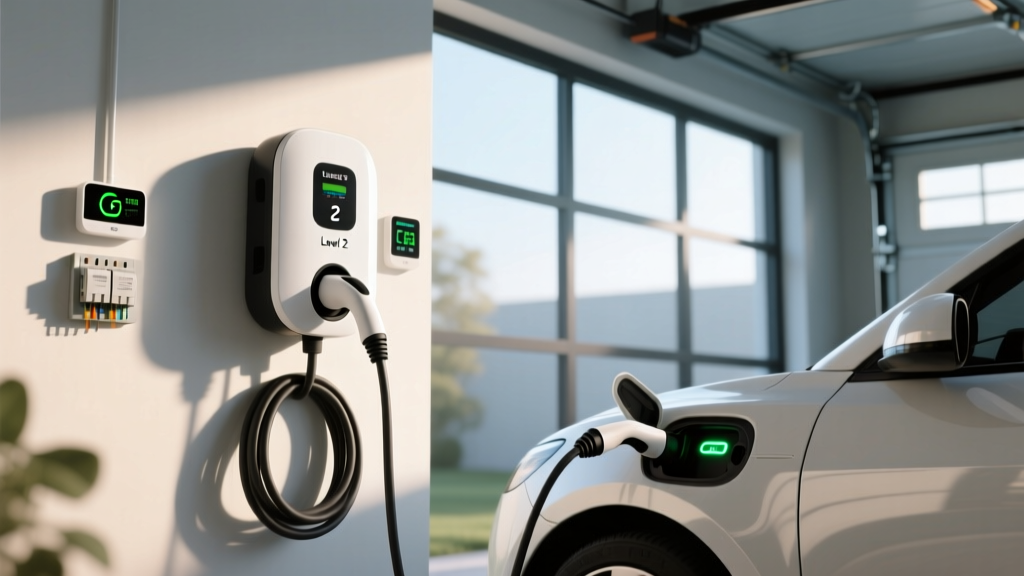
| Level 2 (240V) | 240V AC | 3.3–19.2 kW | 12–75 miles/hr | Daily home charging, workplace, shopping centers |
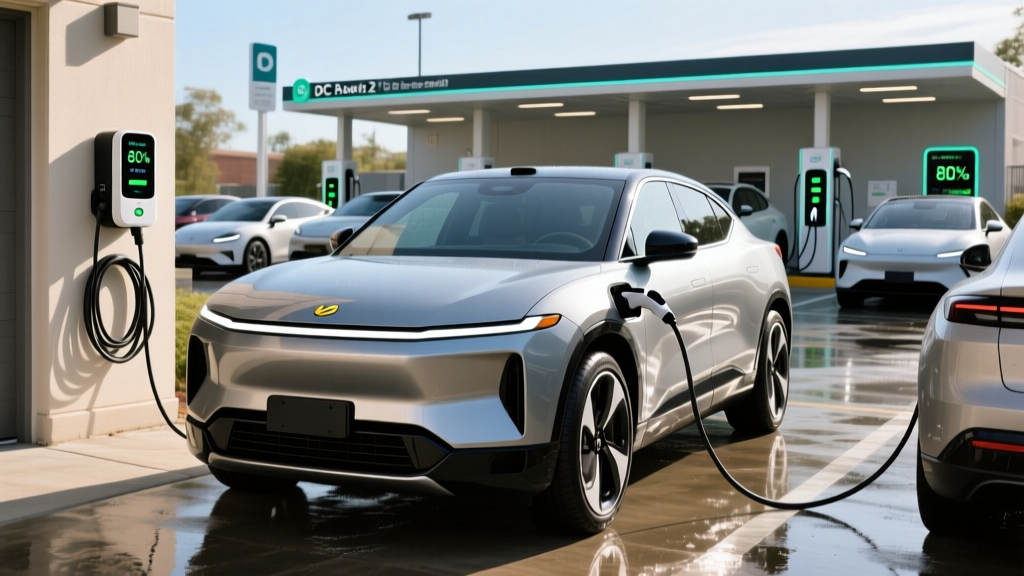
| DC Fast Charging | 400–800V DC | 50–350 kW | 150–1,000+ miles/hr (peak) | Road trips, highway corridors, quick top-ups |
Real-world context: A 75 kWh battery (like the one in the Ford Mustang Mach-E Extended Range) charged from 10% to 80% on a Level 2 home charger at 11.5 kW takes roughly 5 hours. On a 150 kW DC fast charger, that same 10–80% session takes approximately 25–30 minutes — though peak rates only hold up to about 50–60% State of Charge (SoC) before the charge curve tapers to protect battery health. This taper is why manufacturers quote 10–80% times rather than 0–100%.
How Much Does It Cost to Install a Home EV Charger?
Home Level 2 charging is the backbone of practical EV ownership. According to the U.S. Department of Energy's fueleconomy.gov, over 80% of EV charging happens at home. But installation costs vary dramatically depending on your electrical panel's capacity and the distance between your panel and the charger location.
| Cost Component | Simple Install (Panel Adjacent) | Complex Install (Long Run + Panel Upgrade) |
|---|---|---|
| Level 2 Charger Equipment | $350–$700 | $350–$700 |
| Electrician Labor (240V/50A circuit) | $400–$800 | $1,200–$2,500 |
| Permit & Inspection | $50–$200 | $100–$300 |
| Electrical Panel Upgrade (if needed) | $0 | $1,500–$3,500 |
| Total Estimated Range | $800–$1,700 | $3,150–$7,000 |
Electrical Requirements: What Your Panel Needs to Handle
A typical Level 2 home charger requires a dedicated 240V circuit rated for 40–60 amps, depending on the charger's power output. Here's how the math works:
- 40-amp circuit → supports up to a 32-amp (7.7 kW) charger (code requires circuits rated at 125% of continuous load)
- 50-amp circuit → supports up to a 40-amp (9.6 kW) charger
- 60-amp circuit → supports up to a 48-amp (11.5 kW) charger
Panel upgrade warning: Homes built before 1990 often have 100-amp main panels. Adding a 50-amp EV circuit to an already-loaded 100-amp panel may require upgrading to a 200-amp service — this is the single biggest variable in installation cost. A licensed electrician will perform a load calculation to determine if your panel can handle the additional draw. Always defer final electrical specifications to a licensed electrician who has inspected your specific property.
Safety and Code Considerations
- Dedicated circuit: NEC (National Electrical Code) requires EV chargers to be on their own dedicated circuit — not shared with other appliances.
- GFCI protection: Outdoor installations and garage outlets in many jurisdictions require Ground Fault Circuit Interrupter protection.
- NEMA 14-50 vs. hardwired: A NEMA 14-50 outlet provides flexibility (you can unplug and take the charger with you), but hardwired installations avoid the ~$100–$150 outlet cost and are required for chargers above 40 amps.
- Outdoor rating: If mounting outside, ensure the charger carries a NEMA 4 or IP65 weather-resistance rating.
Connector Compatibility: NACS, CCS1, and CHAdeMO Explained
The EV charging connector landscape has shifted significantly. As of 2026, the North American Charging Standard (NACS) — originally developed by Tesla — has become the dominant connector for new vehicles, while Combined Charging System (CCS1) remains common on models sold between 2018–2024. CHAdeMO is effectively legacy, found primarily on older Nissan Leafs.
| Connector Type | Brands Using It (2025–2026 Models) | Adapter Needed? |
|---|---|---|
| NACS (Tesla) | Tesla (all), Ford, GM, Rivian, Volvo, Polestar, Hyundai/Kia (2025+), BMW, Mercedes-Benz | CCS-to-NACS adapter for legacy CCS public chargers (~$100–$200) |
| CCS1 | VW ID.4 (pre-2025), Hyundai/Kia (pre-2025), older BMW i4/iX, Porsche Taycan (pre-2025) | NACS-to-CCS adapter to access Tesla Superchargers (~$100–$200) |
| CHAdeMO | Nissan Leaf (legacy), Mitsubishi Outlander PHEV (older) | Limited adapter options; network availability declining |
Key takeaway for your gray charger car setup: If you're buying a new EV in 2026, it almost certainly uses NACS. If you're buying a slightly used EV from 2022–2024, it likely uses CCS1. Either way, plan for an adapter to maximize your public charging network access. Most home Level 2 chargers use the J1772 connector for non-Tesla vehicles, but NACS-equipped home chargers are now widely available.
Charging Time Examples: 10–80% for Common Battery Sizes
Charging speed depends on both the charger's power output and the vehicle's onboard charger capacity (for Level 2) or battery architecture (for DC fast charging). Here are real-world time estimates for popular EV battery sizes:
| Vehicle (Example) | Battery (kWh Usable) | Level 2 at 11.5 kW (10–80%) | DC Fast at 150 kW (10–80%) | DC Fast at 350 kW (10–80%) |
|---|---|---|---|---|
| Chevy Equinox EV | 85 kWh | ~5.2 hours | ~28 minutes | ~20 minutes |
| Tesla Model Y Long Range | 75 kWh | ~4.6 hours | ~25 minutes | ~15 minutes |
| Hyundai IONIQ 5 (800V) | 77.4 kWh | ~4.7 hours | ~26 minutes | ~18 minutes |
| Ford Mustang Mach-E ER | 91 kWh | ~5.5 hours | ~32 minutes | ~24 minutes |
Charge curve reality check: That "350 kW" peak rate only applies for a portion of the session. Most EVs sustain peak rates between roughly 10–50% SoC, then taper progressively. An 800V architecture (like the IONIQ 5 or Porsche Taycan) sustains higher rates longer than a 400V system, which is why 800V vehicles charge faster even at the same peak kW rating.
How Much Does Charging Cost Per Mile vs. Gas?
One of the strongest economic arguments for an EV is the lower per-mile energy cost — but it depends heavily on where and when you charge. Let's break down the real numbers.
| Charging Scenario | Cost per kWh | Cost Per Mile (at 3 mi/kWh) | Equivalent Gas Price (at 30 MPG) |
|---|---|---|---|
| Home Off-Peak (utility time-of-use rate) | $0.08–$0.12 | $0.027–$0.040 | $0.80–$1.20/gallon |
| Home Standard Rate | $0.13–$0.18 | $0.043–$0.060 | $1.30–$1.80/gallon |
| Public Level 2 (ChargePoint, EVgo) | $0.25–$0.45 | $0.083–$0.150 | $2.50–$4.50/gallon |
| DC Fast Charging (Electrify America, Tesla) | $0.30–$0.55 | $0.100–$0.183 | $3.00–$5.50/gallon |
| Gas Vehicle (national avg, 2026) | — | $0.11–$0.14 (at $3.30–$4.20/gal, 30 MPG) | $3.30–$4.20/gallon |
The bottom line: Home charging — especially with a time-of-use plan that offers off-peak rates — delivers fuel costs equivalent to paying under $1.50 per gallon of gas. Public DC fast charging can equal or exceed gas costs, which is why home charging is the economic sweet spot. For a driver covering 12,000 miles per year, home charging at $0.14/kWh costs approximately $560 annually versus $1,560 for gas at $3.90/gallon and 30 MPG — a $1,000 annual savings.
Best Level 2 Home Chargers for Your Gray Charger Car in 2026
Here are four well-regarded Level 2 home chargers that pair well with modern EVs. All support NACS or J1772, and most offer smart features like scheduling and energy monitoring.
ChargePoint Home Flex
- Power Output: Up to 12 kW (50 amps), adjustable down to 16 amps
- Connector: J1772 (NACS adapter available) or NACS-native (2025+)
- Cable Length: 23 feet
- Smart Features: Wi-Fi, app scheduling, Alexa integration, energy tracking
- Price: ~$550–$650
- Best For: Flexibility — adjustable amperage works with older panels without a full upgrade
Wall Connector (Tesla, 3rd Gen)
- Power Output: Up to 11.5 kW (48 amps)
- Connector: NACS native; J1772 adapter included for non-Tesla EVs
- Cable Length: 24 feet
- Smart Features: Wi-Fi updates, power sharing (multiple units on one circuit), Tesla app integration
- Price: ~$475
- Best For: Tesla owners and NACS-equipped vehicles seeking a clean, minimalist look
Emporia Vue Level 2 Charger
- Power Output: Up to 11.5 kW (48 amps)
- Connector: J1772 or NACS (select at purchase)
- Cable Length: 24 feet
- Smart Features: Real-time energy monitoring, solar integration, time-of-use scheduling, EV/solar dashboard
- Price: ~$400–$500
- Best For: Budget-conscious buyers who want detailed energy data and solar pairing
Grizzl-E Smart
- Power Output: Up to 10 kW (40 amps)
- Connector: J1772 or NACS
- Cable Length: 24 feet
- Smart Features: Wi-Fi, OCPP-compatible (works with utility demand-response programs), outdoor-rated
- Price: ~$450–$550
- Best For: Outdoor installations in cold climates — rated to -40°F and built in Canada
Public Charging Networks: What to Expect on the Road
While home charging handles daily needs, public charging is essential for road trips and apartment dwellers. Here's what the major networks offer in 2026:
- Tesla Supercharger Network: Now open to NACS-equipped non-Tesla EVs via the Tesla app. Over 25,000 stalls in the U.S., most at 150–250 kW. Pricing averages $0.28–$0.40/kWh. Reliability consistently ranks highest among networks.
- Electrify America: Largest non-Tesla DC fast network, with 350 kW chargers at many stations. CCS1 native; NACS adapters available on-site at select locations. Pricing: $0.38–$0.52/kWh.
- EVgo: Strong urban presence, many 350 kW stalls. NACS and CCS connectors at newer stations. Pricing: $0.30–$0.48/kWh; subscription plans available.
- ChargePoint: Largest network by station count, but primarily Level 2. Growing DC fast footprint. Pricing varies by location ($0.25–$0.45/kWh).
Pro tip: Before a road trip, precondition your battery by setting the charger as your navigation destination. This warms the battery to optimal temperature and can improve DC fast charging speeds by 20–30%, especially in cold weather.
Frequently Asked Questions
How much does it cost to install a home EV charger?
Expect $800–$1,700 for a straightforward installation near your electrical panel, or $3,150–$7,000 if you need a panel upgrade from 100A to 200A service. The charger itself costs $350–$700, with the remainder going to electrician labor, materials, and permits. Always get a load calculation from a licensed electrician before committing.
How fast will each charging level add range?
Level 1 (120V) adds 3–5 miles per hour. Level 2 (240V) adds 12–75 miles per hour depending on amperage. DC fast charging can add 150–1,000+ miles per hour at peak rates, but sessions are typically measured in minutes for a 10–80% charge (15–35 minutes depending on battery size and charger power).
Which connector and charger is compatible with my EV?
Check your vehicle's charge port. If it's a 2025–2026 model from Ford, GM, Rivian, Tesla, Hyundai, Kia, BMW, or Volvo, it uses NACS. If it's a 2018–2024 model from VW, Hyundai, Kia, or BMW, it likely uses CCS1. Older Nissan Leafs use CHAdeMO. For home Level 2 charging, most non-Tesla EVs use the J1772 connector, but NACS-native home chargers are now available.
How much does charging cost per mile compared to gas?
Home charging at average rates costs $0.04–$0.06 per mile — equivalent to $1.20–$1.80/gallon gas. Public DC fast charging costs $0.10–$0.18 per mile, closer to or slightly above gas costs. A driver traveling 12,000 miles/year can save $800–$1,200 annually by charging primarily at home versus buying gas.
What electrical upgrades might I need?
If your home has a 100-amp main panel, you'll likely need a 200-amp upgrade ($1,500–$3,500) to safely add a 40–50 amp EV circuit. Homes with 200-amp panels usually have sufficient headroom. Other potential upgrades include adding a sub-panel, running new conduit over long distances, or upgrading the service drop from the utility. A licensed electrician will determine exactly what's needed.
Can I charge my EV with a regular household outlet?
Yes — Level 1 charging on a standard 120V outlet works, adding 3–5 miles of range per hour. This is sufficient for plug-in hybrids with small batteries (10–18 kWh) and for BEV drivers who travel under 40 miles per day and can charge for 10–12 hours overnight. For higher-mileage drivers, Level 2 is strongly recommended.
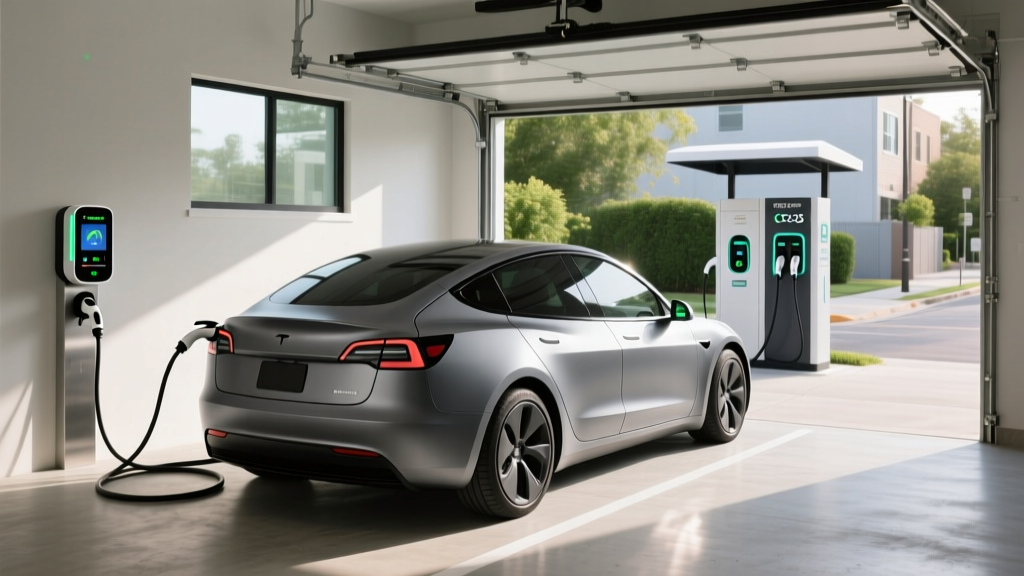
Whether your EV is parked in a garage next to your gray charger car setup or charging under a carport in the driveway, the fundamentals are the same: invest in a proper Level 2 installation, understand your connector type, charge at home whenever possible for the lowest per-mile costs, and plan road trips around reliable DC fast charging networks. The exact numbers above should give you everything you need to budget your installation and predict your ongoing fuel savings.