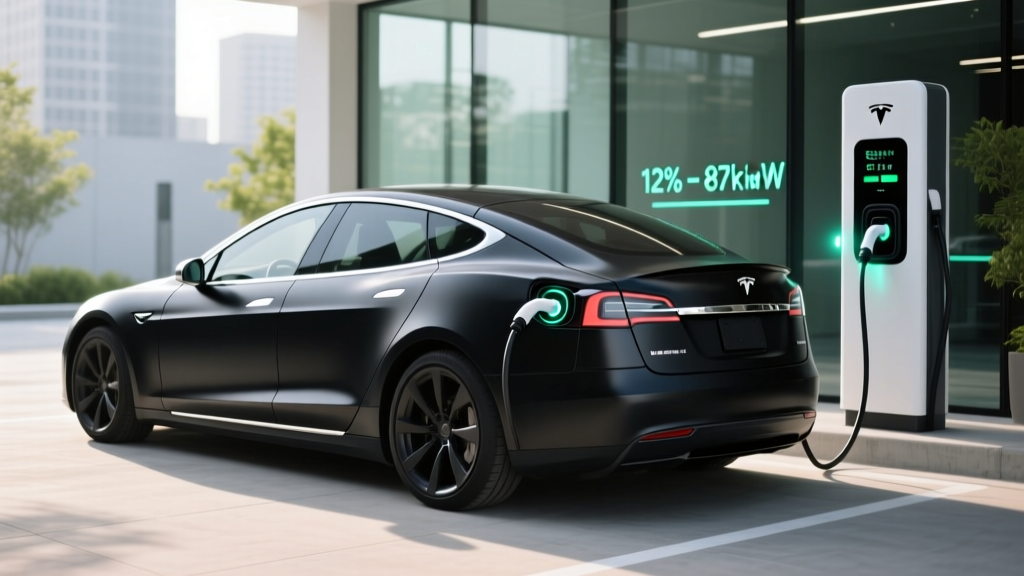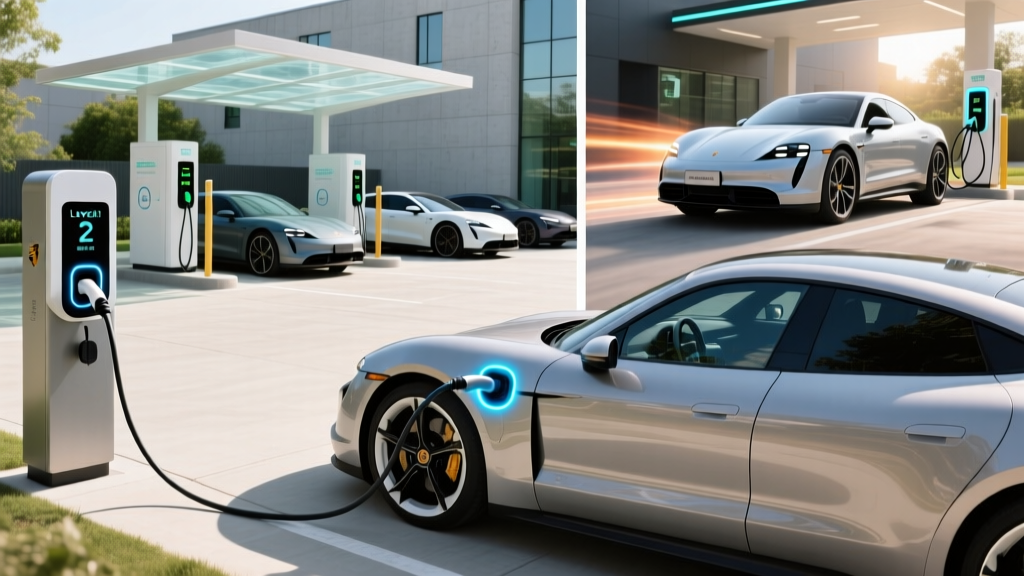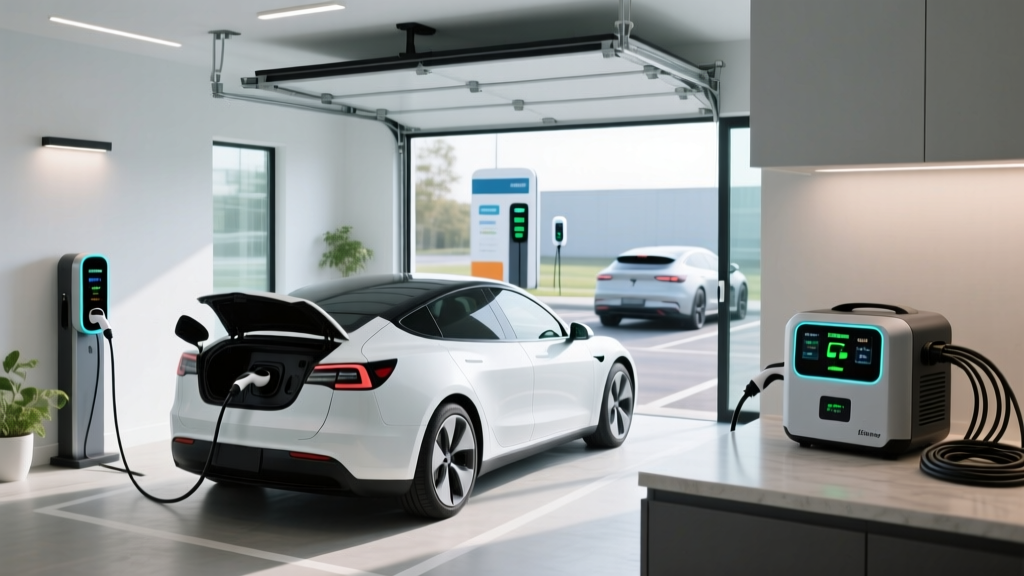
If you've been searching for a gravity charging center or exploring next-generation EV charging concepts, you've likely encountered a mix of legitimate hardware, startup concepts, and marketing buzz. This guide cuts through the noise with hard numbers: exactly how fast each charging level adds range, what a home installation actually costs (including the panel-upgrade scenarios nobody warns you about), and how per-mile charging costs stack up against gasoline in 2026.
Whether you're evaluating a Gravity-branded charging unit, planning a Level 2 home install, or mapping DC fast-charging road trips, the physics and economics below apply universally. Let's get specific.
Charging Levels Explained: kW, Miles Per Hour, and Real-World Times
The single most common confusion in EV ownership is the difference between kW (kilowatts) and kWh (kilowatt-hours). Think of it this way: kW is the speed of energy delivery — like the flow rate of a hose. kWh is the total amount of energy delivered — like gallons in a bucket. Your battery capacity is measured in kWh; your charger's output is measured in kW.
| Level | Voltage | Max Power (kW) | Miles of Range Added Per Hour | Typical Use Case |
|---|---|---|---|---|
| Level 1 | 120V AC | 1.2–1.9 kW | 3–5 miles | Overnight top-ups, PHEVs, low-mileage drivers |
| Level 2 | 240V AC | 7.2–19.2 kW | 20–60 miles | Home daily charging, workplace, hotels |
| DC Fast Charging (DCFC) | 400–800V DC | 50–350 kW | 150–1,200+ miles | Road trips, highway corridors, commercial fleets |
Real-world charging time examples (10–80% State of Charge):
- Tesla Model Y (75 kWh usable battery): ~30 minutes at a 250 kW V4 Supercharger; ~8–10 hours on a 7.2 kW Level 2 home charger
- Hyundai Ioniq 5 (77.4 kWh usable): ~18 minutes at a 350 kW Electrify America station (800V architecture); ~10 hours on Level 2
- Ford F-150 Lightning Extended Range (131 kWh usable): ~41 minutes at 150 kW DCFC; ~17 hours on a 7.2 kW Level 2
Important caveat: DC fast charging follows a charge curve. A charger rated for 250 kW peak will only sustain that rate between roughly 10–40% State of Charge. Above 80%, charging speed tapers dramatically to protect battery health. This is why 10–80% times are the industry standard metric — charging from 80–100% can take as long as 10–80%.
How Much Does It Cost to Install a Home EV Charger?
Home Level 2 charging is where most EV owners do 80–90% of their charging. But installation costs vary wildly depending on your electrical panel's age, capacity, and the distance from panel to charger location.
| Cost Component | Low End | High End | Notes |
|---|---|---|---|
| Level 2 Charger Hardware | $350 | $800 | Smart Wi-Fi chargers (Emporia, ChargePoint, Wallbox); dumb units from $200 |
| Electrician Labor (standard install) | $500 | $1,500 | Assumes panel is nearby, conduit run <30 ft |
| Permit & Inspection | $50 | $300 | Varies by municipality; some jurisdictions waive for EV circuits |
| Electrical Panel Upgrade (if needed) | $1,500 | $4,000 | Upgrading from 100A to 200A service; common in pre-1990 homes |
| Total (no panel upgrade) | $900 | $2,600 | Typical scenario for modern homes with 200A service |
| Total (with panel upgrade) | $2,400 | $6,600 | Older homes or those near panel capacity |
What Electrical Upgrades Might I Need?
A dedicated 240V / 40-amp or 50-amp circuit is standard for a Level 2 home charger delivering 7.2–11.5 kW. Here's what determines whether your home is ready:
- Panel capacity: A 200-amp panel with available breaker slots can usually accommodate a 40–50A EV circuit without upgrade. A 100-amp panel likely cannot, especially if you have electric HVAC, a dryer, and an electric range.
- Load calculation: Your electrician will perform a NEC Article 220 load calculation. If your existing loads plus the EV circuit exceed 80% of panel rating, an upgrade is required.
- Conduit run length: Longer runs from panel to charger location require thicker-gauge wire (e.g., 6 AWG for 50A at short runs; 4 AWG for longer runs), increasing material cost.
- Smart panel alternatives: Devices like the SPAN smart panel or dcbel home energy hub can manage circuit sharing without a full panel upgrade, though they add $1,500–$3,000 in equipment cost.
Federal incentive note: The IRS §30C Alternative Fuel Vehicle Refueling Property Credit offers up to 30% of home charger hardware and installation costs (capped at $1,000) — but eligibility depends on your census tract meeting specific low-income or rural criteria. Check the IRS tool before assuming you qualify.
Connector Compatibility: NACS, CCS, and CHAdeMO in 2026
The connector landscape has consolidated significantly since Ford, GM, Rivian, and most major automakers adopted the North American Charging Standard (NACS) — originally developed by Tesla. As of the 2025–2026 model years, here's where things stand:
| Connector | Brands Using It (2026 Models) | Max DCFC Power | Adapter Needed? |
|---|---|---|---|
| NACS (Tesla-style) | Tesla, Ford, GM, Rivian, Hyundai/Kia (2025+), Volvo, Polestar, Fisker | Up to 350 kW (vehicle-dependent) | CCS-to-NACS adapter for older CCS stations (~$150–$250) |
| CCS1 (Combo) | Legacy models: VW ID.4 (pre-2025), older BMW iX, some Stellantis EVs | Up to 350 kW | NACS-to-CCS adapter for Tesla Superchargers (included with some vehicles) |
| CHAdeMO | Nissan Leaf (discontinued 2025), Mitsubishi Outlander PHEV (legacy) | Up to 100 kW (typically 50 kW) | No adapter available for NACS/CCS; limited station availability |
Home charging connector note: Level 2 home chargers universally use the J1772 connector for non-Tesla EVs, or a NACS connector for Tesla and NACS-adopting vehicles. Many modern chargers (like the Tesla Wall Connector) include a J1772 adapter or dual-cable options. Before purchasing, confirm your vehicle's AC charging port type.
Which Home Charger Should You Buy? Equipment Picks for 2026
Not all Level 2 chargers are equal. The key specs: maximum kW output (must match your EV's onboard charger capacity — most EVs accept 7.2–11.5 kW AC), cable length (25 ft is standard; 18 ft is too short for most garages), and smart features (Wi-Fi scheduling, utility demand-response, energy monitoring).
Emporia Vue Level 2 Smart Charger
- Power output: 11.5 kW (48A) on a 60A circuit; configurable down to 32A
- Connector: J1772 (NACS version available for 2025+ models)
- Cable length: 24 ft
- Smart features: Wi-Fi, solar integration, time-of-use scheduling, energy monitoring via Emporia app
- Price: ~$400
- Best for: Solar-panel owners wanting to charge on excess production
ChargePoint Home Flex
- Power output: Up to 12 kW (50A) on a 60A circuit; adjustable 16–50A via DIP switches
- Connector: J1772 (NACS adapter included in 2025+ packaging)
- Cable length: 23 ft
- Smart features: Wi-Fi, Alexa integration, ChargePoint network account, flexible amperage
- Price: ~$550
- Best for: Flexible install scenarios where circuit amperage may change
Tesla Wall Connector (Gen 4)
- Power output: 11.5 kW (48A) on a 60A circuit
- Connector: NACS native; J1772 adapter included
- Cable length: 24 ft
- Smart features: Wi-Fi, power-sharing with up to 6 units, OTA updates, Tesla app integration
- Price: ~$475
- Best for: Tesla and NACS-vehicle owners; multi-EV households
Wallbox Pulsar Plus
- Power output: 11.5 kW (48A) on a 60A circuit
- Connector: J1772 (NACS version available)
- Cable length: 25 ft
- Smart features: Wi-Fi + Bluetooth, myWallbox app, Eco-Smart solar mode, Power Sharing
- Price: ~$500
- Best for: Compact form factor; tight garage spaces
Cost to Charge: Per-Mile Economics vs. Gasoline
The financial case for EVs hinges on fuel cost savings, but those savings depend heavily on where and when you charge. Here's a realistic breakdown using national averages for early 2026:
| Charging Scenario | Avg $/kWh | Cost for 75 kWh Fill | Cost Per Mile (at 3 mi/kWh) | vs. Gas at $3.40/gal, 28 MPG |
|---|---|---|---|---|
| Home Level 2 (off-peak / time-of-use rate) | $0.09–$0.14 | $6.75–$10.50 | $0.03–$0.047 | Saves $0.074–$0.091/mi |
| Home Level 2 (standard residential rate) | $0.15–$0.20 | $11.25–$15.00 | $0.05–$0.067 | Saves $0.054–$0.071/mi |
| Public Level 2 (workplace, shopping) | $0.20–$0.35 | $15.00–$26.25 | $0.067–$0.117 | Saves $0.004–$0.054/mi |
| DC Fast Charging (Electrify America, EVgo) | $0.35–$0.55 | $26.25–$41.25 | $0.117–$0.183 | Savings narrow or break even |
| Tesla Supercharger (member/non-member) | $0.25–$0.40 | $18.75–$30.00 | $0.083–$0.133 | Saves $0.01–$0.038/mi |
Annual savings calculation (12,000 miles/year): A gasoline car at 28 MPG and $3.40/gal costs ~$1,457/year in fuel. An EV charged primarily at home on off-peak rates ($0.12/kWh) at 3 mi/kWh efficiency costs ~$480/year — a savings of ~$977/year. Over 5 years, that's roughly $4,885, which substantially offsets the EV's higher purchase price.
However, if you rely exclusively on DC fast charging at $0.45/kWh, your annual fuel cost rises to ~$1,800 — actually exceeding gasoline. This is why home charging access is the single most important factor in EV economics.
Safety, Code, and the Gravity Charging Center Concept
Any Level 2 home charger installation must comply with the National Electrical Code (NEC) Article 625, which governs Electric Vehicle Supply Equipment (EVSE). Key requirements:
- Dedicated circuit: Your EV charger must have its own dedicated breaker — no sharing with other appliances. A 48A charger requires a 60A breaker (NEC requires 125% overhead for continuous loads).
- GFCI protection: NEC 2020 and later requires GFCI (Ground Fault Circuit Interrupter) protection for all EVSE outlets. Hardwired units have GFCI built in; receptacle-installed units require a GFCI breaker.
- Outdoor rating: If mounting outdoors, the unit must be rated NEMA 4 (weatherproof). All chargers recommended above carry NEMA 4 ratings.
- Cable management: NEC prohibits EV charging cables from crossing pedestrian walkways or being draped where vehicles can drive over them. Wall-mounted cable organizers solve this.
What About "Gravity Charging" Concepts?
The term gravity charging center has appeared in EV forums and startup pitches, sometimes referring to gravity-based energy storage systems (like Gravity's tower-based kinetic storage) that could theoretically supply EV charging stations. The concept uses winched composite blocks in decommissioned mine shafts or towers — storing energy by lifting blocks and generating electricity by lowering them through regenerative braking systems.
As of 2026, gravity-based storage remains a grid-scale technology in pilot phases — not a consumer-facing charging product you can install at home. For practical home and road charging, conventional Level 2 and DCFC infrastructure detailed above is what's available and proven. If gravity-storage-backed charging stations come online near you, they'd deliver power to your EV through the same NACS/CCS connectors at the same kW rates — the storage method behind the meter doesn't change your charging experience.
Frequently Asked Questions
How fast will each charging level add range to my EV?
Level 1 (120V) adds roughly 3–5 miles of range per hour — adequate for PHEVs with 30–40 miles of electric range or BEV owners who drive under 30 miles daily. Level 2 (240V) adds 20–60 miles per hour depending on amperage (a 48A/11.5 kW charger adds ~38 miles/hour for a vehicle rated at 3.3 mi/kWh). DC fast charging at 150+ kW adds 150–400 miles in 20–30 minutes, subject to the vehicle's charge curve taper above 80% SoC.
Which connector or charger is compatible with my EV?
Check your vehicle's charging port. For 2025–2026 model-year EVs: Tesla, Ford, GM, Rivian, and most Hyundai/Kia/Volvo models now use NACS. Older VW, BMW, and Stellantis EVs use CCS1. The discontinued Nissan Leaf used CHAdeMO. For home Level 2 charging, most non-Tesla EVs use J1772, though NACS home chargers are now widely available. Adapters (CCS-to-NACS, J1772-to-NACS) bridge compatibility gaps and cost $150–$250.
How much does charging cost per mile compared to gas?
At the U.S. average residential electricity rate of ~$0.16/kWh and a typical EV efficiency of 3 miles per kWh, home charging costs roughly $0.053 per mile. A comparable gasoline car at 28 MPG and $3.40/gal costs $0.121 per mile. That's a ~56% per-mile savings when charging at home. Public DC fast charging at $0.45/kWh narrows the gap to ~$0.15/mile — roughly equal to or slightly above gasoline.
How much does it cost to install a home EV charger?
A straightforward Level 2 installation in a home with a modern 200A electrical panel typically costs $900–$2,600 including hardware, electrician labor, and permits. If your home needs a panel upgrade from 100A to 200A service, add $1,500–$4,000, bringing the total to $2,400–$6,600. Always get a load calculation from a licensed electrician before committing.
What electrical upgrades might I need for a home charger?
The most common upgrade is a panel capacity increase (100A to 200A) for older homes. You may also need additional breaker slots, a conduit run from panel to garage or driveway, and potentially a service entrance cable upgrade if the wire from your utility meter to panel is undersized. Homes with solar panels and battery storage may benefit from a smart panel or energy management system to optimize charging during solar production hours.
Sources: U.S. Department of Energy / fueleconomy.gov for EV efficiency data; IRS §30C Refueling Property Credit for home charger incentive rules; NHTSA for vehicle safety and specification data.