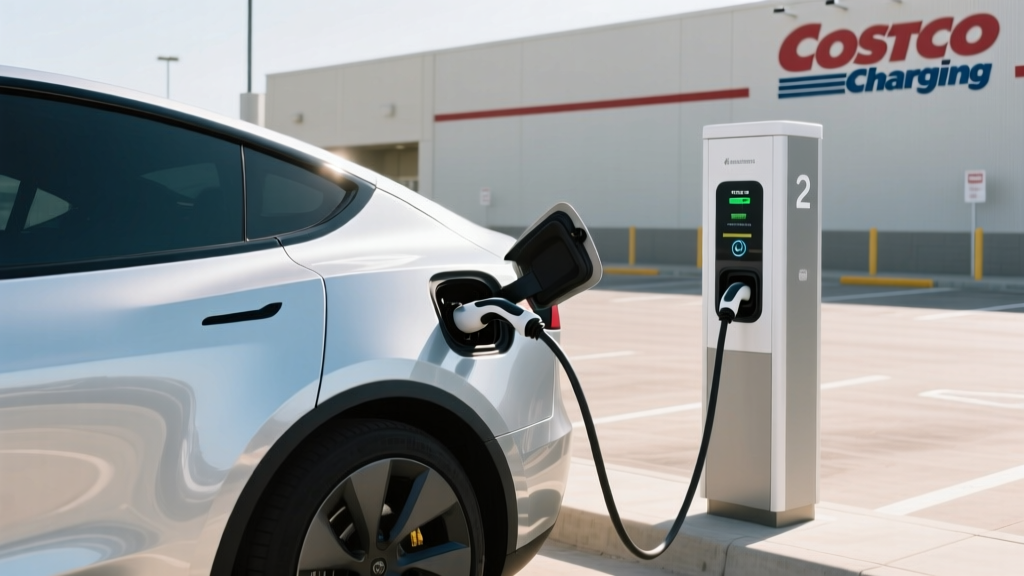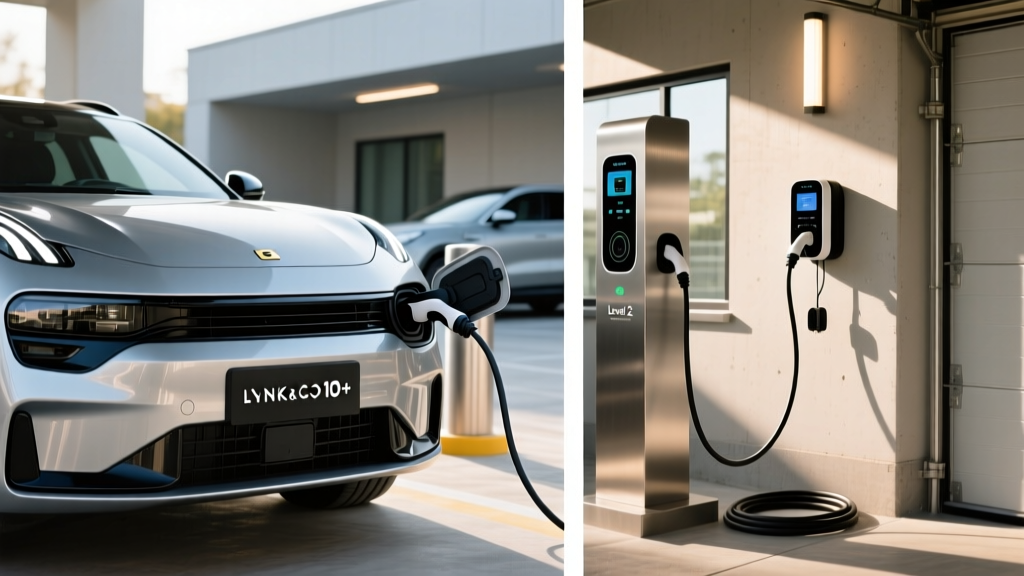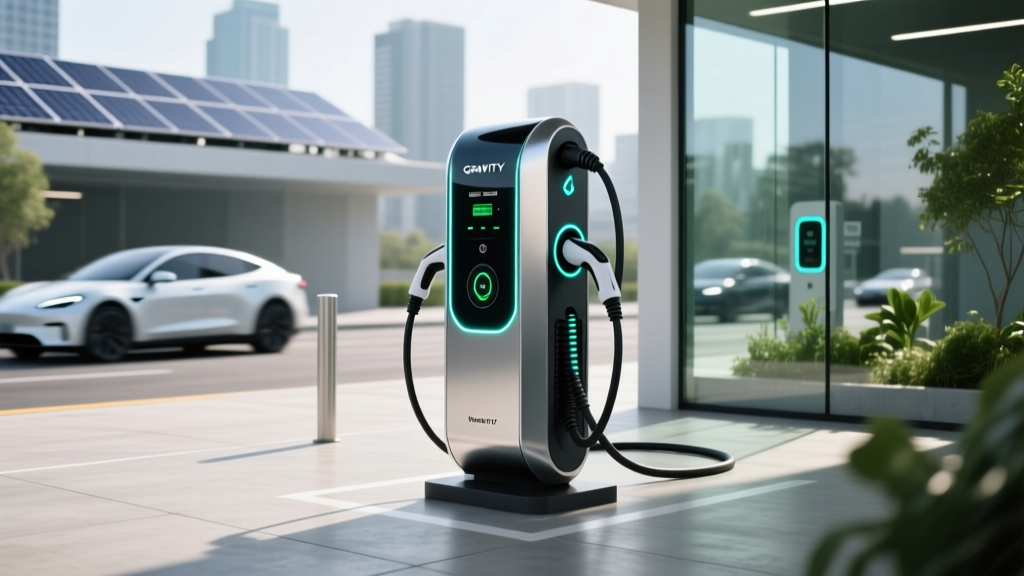
If you have been browsing EV forums or social media lately, you may have encountered the term gravity charger — a concept that sounds like science fiction: generating electricity from gravitational potential energy to charge an electric vehicle. Before you rearrange your garage plans around one, let's ground this in physics, clarify what actually exists in 2026, and build a practical charging strategy using the hardware you can buy and install today.
The Gravity Charger Concept vs. Real EV Charging Physics
A "gravity charger" typically refers to speculative systems that store energy by lifting a heavy mass and then generate electricity as it descends, driving a generator. Companies like Energy Vault have demonstrated gravity-based grid storage at the megawatt scale — multi-tower systems that raise and lower multi-ton blocks. However, these are utility-scale installations, not driveway equipment.
At the residential level, the physics is unforgiving. Lifting a 1,000 kg mass 10 meters stores roughly 98 kJ — about 0.027 kWh. A typical EV battery holds 60–100 kWh. You would need to lift that mass thousands of meters to store a meaningful charge. Gravity storage works at grid scale; it does not scale down to a wall-box form factor.
Charging Levels Explained: Speeds in kW and Miles Per Hour
EV charging is measured in kW (kilowatts) — a rate of power delivery. Your battery stores energy measured in kWh (kilowatt-hours). Think of kW as the flow rate of a hose and kWh as the bucket size. Here is what each level delivers in practice:
| Level | Voltage / Amps | Max Power (kW) | Miles of Range Per Hour | Best For |
|---|---|---|---|---|
| Level 1 | 120V / 12–16A | 1.4–1.9 kW | 3–5 mi/hr | Overnight top-off, PHEVs, low-mileage drivers |
| Level 2 | 240V / 16–80A | 3.8–19.2 kW | 12–70 mi/hr | Daily home charging, most EV owners |
| DC Fast Charge | 200–800V DC | 50–350 kW | 150–1,200+ mi/hr | Road trips, rapid top-ups |
Real-world context: A Tesla Model Y Long Range (75 kWh usable battery, EPA 320 mi) charging at a 48A Level 2 station (11.5 kW) adds roughly 44 miles of range per hour. A full 10–80% charge takes about 4.5 hours. On a 250 kW DC fast charger, that same 10–80% session takes approximately 20–25 minutes, though charging speed tapers significantly above 80% to protect the battery — expect the final 20% to take as long as the first 60%.
How Much Does It Cost to Install a Home EV Charger?
This is where budgets get real. The total cost depends on your electrical panel capacity, the distance from the panel to the charger location, and local permit requirements. Here is a realistic 2026 breakdown:
| Component | Budget Scenario | Typical Scenario | Complex Scenario |
|---|---|---|---|
| Level 2 Charger Equipment | $250–$400 | $400–$700 | $600–$1,000 |
| Electrician Labor | $300–$500 | $500–$1,200 | $1,200–$2,500 |
| Permit & Inspection | $50–$150 | $100–$300 | $200–$500 |
| Electrical Panel Upgrade (if needed) | $0 (existing capacity) | $0–$500 (sub-panel) | $1,500–$4,000 (200A service upgrade) |
| TOTAL | $600–$1,050 | $1,000–$2,700 | $3,500–$8,000 |
The panel upgrade gotcha: Homes built before 1990 often have 100A electrical service. A 48A EV charger draws continuously at 80% of a 60A circuit breaker — that is 57.6A of continuous load. On a 100A panel already serving an electric dryer, range, and HVAC, there may not be headroom. A licensed electrician will perform a load calculation per NEC Article 220. If you are over capacity, a service upgrade to 200A typically costs $1,500–$4,000 depending on your utility and local rates. Some homeowners opt for a lower-amperage charger (16A or 32A) to avoid the panel upgrade entirely — this is a legitimate strategy if your daily driving needs are under 60 miles.
Connector Compatibility: NACS, CCS1, and CHAdeMO in 2026
The connector landscape has consolidated significantly. As of 2026, the North American Charging Standard (NACS) — originally the Tesla proprietary connector — is the dominant standard, adopted by Ford, GM, Rivian, Hyundai, Kia, BMW, and most major automakers. CCS1 is still found on vehicles sold through 2024–2025, and CHAdeMO is effectively legacy (Nissan Leaf).
| Connector | Brands Using It (2026) | Adapter Needed? |
|---|---|---|
| NACS (J3400) | Tesla, Ford, GM, Rivian, Hyundai, Kia, BMW, Volvo, Polestar, Mercedes | CCS-to-NACS adapter for older CCS vehicles (~$150–$250) |
| CCS1 | VW ID.4 (pre-2026), older Bolt EV/EUV, some 2023–2025 models | NACS-to-CCS adapter for Tesla Superchargers |
| CHAdeMO | Nissan Leaf (legacy), Mitsubishi Outlander PHEV (older) | No viable NACS adapter; limited DC fast-charger access |
Home charger note: For Level 2 home charging, all EVs use the J1772 inlet (or NACS, which handles Level 2 AC natively). Most Level 2 home chargers now ship with a NACS connector or include a J1772-to-NACS adapter. If you drive a vehicle with a CCS1 inlet, verify that your chosen home charger includes the correct connector or budget for an adapter.
Cost to Charge: Per-Mile Economics vs. Gasoline
The economic advantage of electric charging depends heavily on where and when you charge. Here is a 2026 comparison using a vehicle efficiency of 3.0 miles/kWh (typical for a midsize crossover EV like the Ioniq 5 or Model Y) versus a 28 MPG gas vehicle on $3.40/gallon regular unleaded:
| Charging Scenario | Rate ($/kWh) | Cost Per Mile | Savings vs. Gas (per 1,000 mi) |
|---|---|---|---|
| Home off-peak (utility TOU rate) | $0.08–$0.12 | $0.027–$0.040 | $81–$94 |
| Home standard residential rate | $0.14–$0.18 | $0.047–$0.060 | $61–$74 |
| Public Level 2 (ChargePoint, etc.) | $0.20–$0.35 | $0.067–$0.117 | $4–$54 |
| DC Fast Charging (Electrify America, EVgo) | $0.35–$0.55 | $0.117–$0.183 | -$62 to -$22 (gas cheaper) |
| Gasoline (28 MPG, $3.40/gal) | — | $0.121 | Baseline |
The takeaway: Home charging on off-peak rates delivers massive savings — roughly $80–$95 per 1,000 miles compared to gas. But exclusive reliance on DC fast charging can actually cost more than gasoline. The economics favor home and workplace charging overwhelmingly. According to fueleconomy.gov, most EV owners who charge at home spend the equivalent of $1.00–$1.30 per gallon of gasoline.
2026 Equipment Picks: Level 2 Home Chargers Worth Installing
Here are proven, widely available Level 2 chargers that deliver reliable performance, smart features, and code compliance for 2026 installations:
Emporia Level 2 Smart Charger
Power: 48A (11.5 kW) on a 60A circuit, 240V
Connector: NACS (J3400), J1772 adapter included
Cable length: 24 ft
Smart features: Wi-Fi, app scheduling, energy monitoring, solar integration, load management
Price: ~$399
Verdict: Best value for smart scheduling and energy tracking. Ideal for homes with solar panels or time-of-use rates.
ChargePoint Home Flex
Power: Configurable 16A–50A (up to 12 kW) on a 20A–60A circuit
Connector: NACS or J1772 (configurable at purchase)
Cable length: 23 ft
Smart features: Wi-Fi, app-based scheduling, Alexa integration, flexible amperage to match panel capacity
Price: ~$599–$699
Verdict: The flexible amperage is the killer feature — set it to 32A on a 40A circuit if your panel is tight, or 50A if you have headroom. Future-proof.
Tesla Wall Connector
Power: 48A (11.5 kW) on a 60A circuit, 240V
Connector: NACS native (J1772 adapter available separately)
Cable length: 24 ft
Smart features: Wi-Fi, over-the-air updates, power sharing (link multiple units on one circuit), integrated cable management
Price: ~$475
Verdict: Best-in-class for Tesla and NACS-adopted vehicles. Power sharing lets you install two chargers on a single 60A circuit — ideal for two-EV households.
Grizzl-E Smart (United Chargers)
Power: 40A (9.6 kW) on a 50A circuit, 240V
Connector: NACS or J1772
Cable length: 24 ft
Smart features: Wi-Fi, OCPP compatibility, adjustable amperage, extreme cold rated (-40°F)
Price: ~$499
Verdict: Built in Canada, rated for brutal winters. If you are in Minnesota, Montana, or Alaska and need a charger that will not fail at -30°F, this is the pick.
Safety, Electrical Code, and Installation Requirements
A Level 2 EV charger is a continuous-load appliance under the National Electrical Code (NEC). This means specific requirements apply:
- Dedicated circuit: Your EV charger must have its own dedicated double-pole breaker — no sharing with other appliances. A 48A charger requires a 60A breaker (NEC requires the breaker to be rated at 125% of continuous load).
- GFCI protection: NEC 2020 and later require GFCI protection for all EV charging outlets. Hardwired chargers often have GFCI built into the unit; receptacle-plugged units need a GFCI breaker.
- Outdoor rating: If installing outside, the charger must carry a NEMA 4 (weatherproof) rating. Most major chargers meet this, but verify before purchasing — some are rated for indoor use only (NEMA 3R covers rain but not hose-directed water).
- Wire gauge: A 60A circuit typically requires 6 AWG copper wire (THHN in conduit) or 4 AWG aluminum. Longer wire runs may require upsizing to prevent voltage drop.
- Permit required: Virtually all jurisdictions require an electrical permit for a new 240V circuit. The inspection ensures the breaker sizing, wire gauge, and grounding meet code. Skipping the permit risks voiding your homeowner's insurance if an electrical fire occurs.
Real-world tip: Before calling an electrician, locate your electrical panel and note the main breaker amperage (100A, 150A, or 200A), count the available open slots, and measure the distance from the panel to your desired charger location. This information lets the electrician provide an accurate quote without a site visit.
Charging Time Examples: 10–80% for Common Battery Sizes
Here is how long a 10–80% charge takes across common battery sizes and charger types. Note that DC fast charging times assume the vehicle can accept the charger's peak rate — many EVs taper well before the charger's maximum:
| Battery Size (kWh usable) | Example Vehicle | Level 1 (1.4 kW) | Level 2 (11.5 kW / 48A) | DC Fast (peak rate, 10–80%) |
|---|---|---|---|---|
| 17 kWh | Toyota RAV4 Prime (PHEV) | ~8.5 hrs | ~1 hr | N/A (no DC fast) |
| 62 kWh | Chevrolet Equinox EV | ~31 hrs | ~3.8 hrs | ~22 min (150 kW peak) |
| 75 kWh | Tesla Model Y LR | ~37 hrs | ~4.6 hrs | ~20 min (250 kW peak) |
| 84 kWh | Hyundai Ioniq 5 (LR AWD) | ~42 hrs | ~5.1 hrs | ~18 min (350 kW peak, 800V) |
| 100 kWh | Ford F-150 Lightning (Extended) | ~50 hrs | ~6.1 hrs | ~30 min (150 kW peak) |
What About the Federal Tax Credit for Home Charging?
The IRS §30C Alternative Fuel Vehicle Refueling Property Credit offers up to $1,000 for home EV charger equipment and installation — 30% of total costs, capped at $1,000. However, there is a significant geographic restriction: the credit is only available for equipment installed in a census tract that qualifies as a "low-income community" or a "non-urban area" as defined by the IRS. Many suburban and urban addresses do not qualify. Check your eligibility using the IRS census tract lookup tool before counting on this credit. This is separate from the §30D vehicle purchase credit.
Frequently Asked Questions
Does a gravity charger actually exist for home use?
No. Gravity-based energy storage exists at the utility scale (megawatt-class installations by companies like Energy Vault), but the physics of gravitational potential energy cannot deliver meaningful kWh at a residential form factor. For home EV charging in 2026, Level 2 grid-connected chargers remain the practical and proven solution.
How much does it cost to install a home EV charger?
Expect $1,000–$2,700 for a typical installation (equipment + electrician + permit) if your electrical panel has sufficient capacity. If a 200A service upgrade is needed, total costs can reach $3,500–$8,000. Always get a load calculation from a licensed electrician before committing.
How fast will each charging level add range?
Level 1 adds 3–5 miles per hour. Level 2 at 48A adds roughly 40–50 miles per hour for a midsize EV. DC fast charging can add 150–300+ miles in 15–25 minutes, depending on the vehicle's peak charge rate and battery size.
Which connector is compatible with my EV?
If you bought a new EV in 2025 or 2026, it almost certainly uses NACS (J3400) — the former Tesla connector now adopted industry-wide. Older CCS1 vehicles can use adapters. CHAdeMO is limited to the Nissan Leaf and a few legacy models. Check your vehicle's charge port or owner's manual to confirm.
How much does charging cost per mile vs. gas?
Home off-peak charging costs approximately $0.03–$0.04 per mile — about one-third the cost of gasoline at $3.40/gallon and 28 MPG ($0.12/mile). Public DC fast charging at $0.40–$0.55/kWh can equal or exceed gasoline costs, which is why home charging access is the single biggest factor in EV economics.
What electrical upgrades might I need?
The most common upgrade is a panel service increase from 100A to 200A, costing $1,500–$4,000. If your panel has open slots and sufficient capacity, you may only need a new 60A double-pole breaker and a conduit run. Some homeowners avoid panel upgrades entirely by choosing a lower-amperage charger (16A–32A) that fits within existing capacity.