From the Grand Prix Supercharged Era to Electric: Why Your Charger Matters Now
If you grew up on the whine of the Pontiac Grand Prix supercharged 3.8L V6 (the GTP and later GT models pushed around 240 hp and 280 lb-ft of torque from that Eaton supercharger), you already understand forced induction, boost curves, and why airflow matters. When you transition to an EV, the mindset transfers — except now, instead of air and fuel, you're managing electrons, voltage, and thermal limits. And instead of a gas pump, your "fill-up" happens at home, overnight, on a dedicated 240V circuit you had to plan for.
This guide is the EV-charging equivalent of knowing your supercharger pulley ratio. We'll cover the three charging levels, what your home electrical panel can (and can't) handle, which connector your new EV actually uses, what a full installation costs in 2026, and how your per-mile cost stacks up against the premium-fuel bill the old Grand Prix GTP was running.
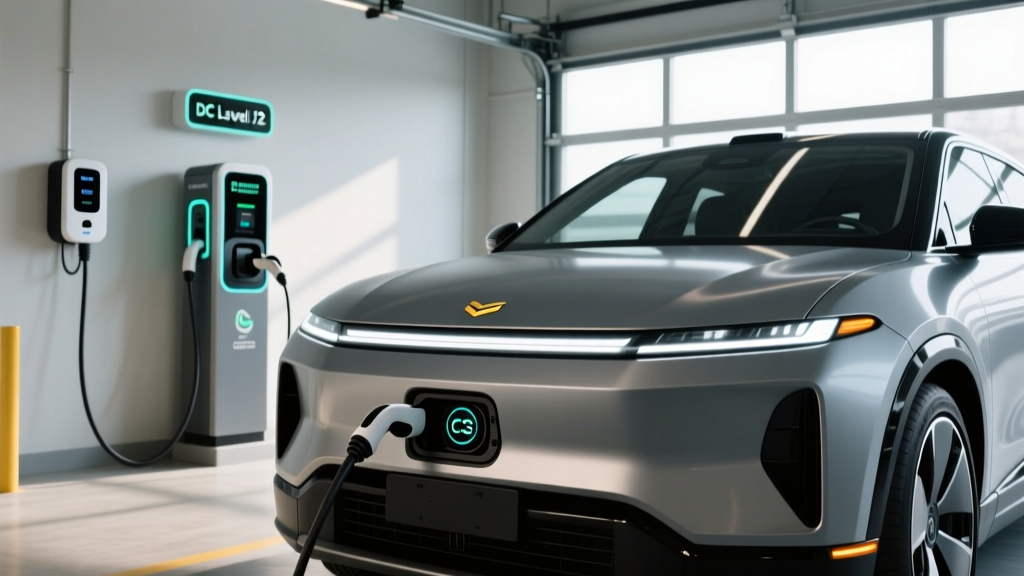
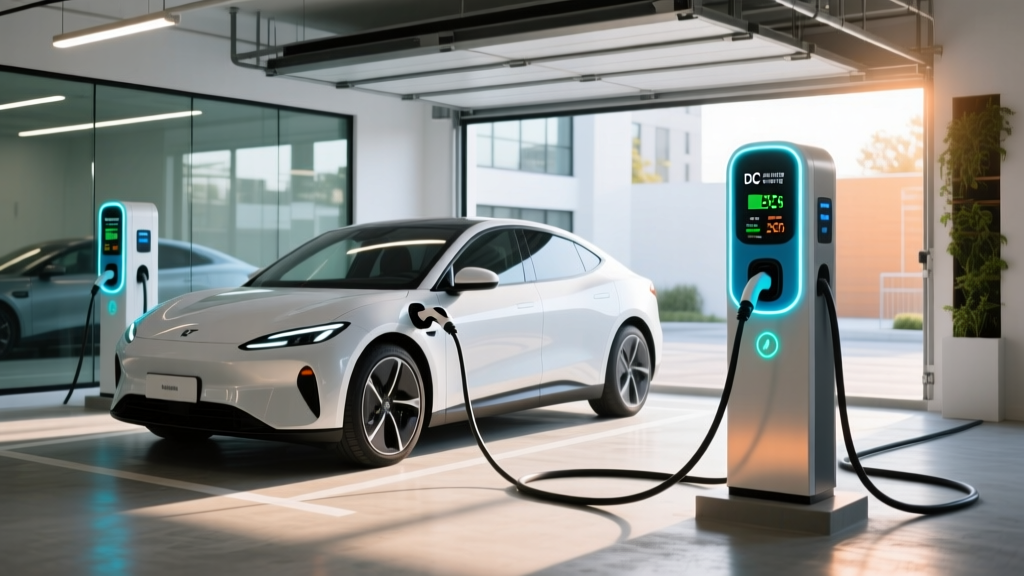
The Three Charging Levels — kW, Miles Per Hour, and Real-World Times
Before anything else, a critical distinction that trips up new EV owners: kW (kilowatts) is the rate of power flow — think of it like the diameter of the fuel hose. kWh (kilowatt-hours) is the total energy delivered — the size of the tank. A charger's kW rating tells you how fast it can push energy; your battery's kWh rating tells you how much it holds. Confusing the two is the most common EV literacy mistake.
| Level | Voltage / Phase | Typical Power (kW) | Miles of Range Added per Hour | Best Use |
|---|---|---|---|---|
| Level 1 | 120V, single-phase | 1.0–1.4 kW | 3–5 mi/hr | Overnight top-ups, PHEVs, emergencies |
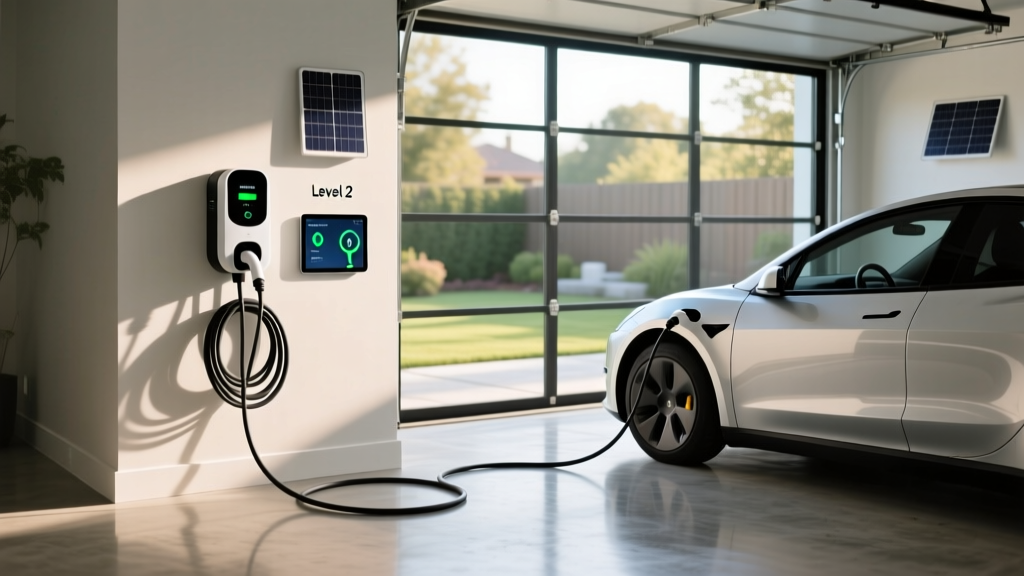
| Level 2 | 240V, single-phase | 3.3–19.2 kW | 12–70 mi/hr | Daily home charging, workplaces, hotels |
| DC Fast (Level 3) | 200–900V DC | 50–350+ kW | 150–1,000+ mi/hr (at peak) | Road trips, quick top-ups away from home |
Real-world charging times depend on battery size and the charge curve — EVs accept peak power only in the middle of the state-of-charge window and taper sharply above ~80% to protect the cells. For a typical 75–85 kWh battery (say, a Tesla Model Y Long Range or Hyundai Ioniq 5 with the 84 kWh pack):
- Level 1 (1.4 kW): ~55–65 hours from 10% to 80%. Impractical as primary charging for a BEV.
- Level 2 at 11.5 kW (48A): ~6–7 hours 10% to 80% — perfect overnight cycle.
- DC fast at 250 kW peak: 10–80% in roughly 18–25 minutes on an 800V architecture (Ioniq 5, Kia EV6, Porsche Taycan), or 25–35 minutes on a 400V pack (most others).
Home Installation: Electrical Requirements, Panel Upgrades, and Real Costs
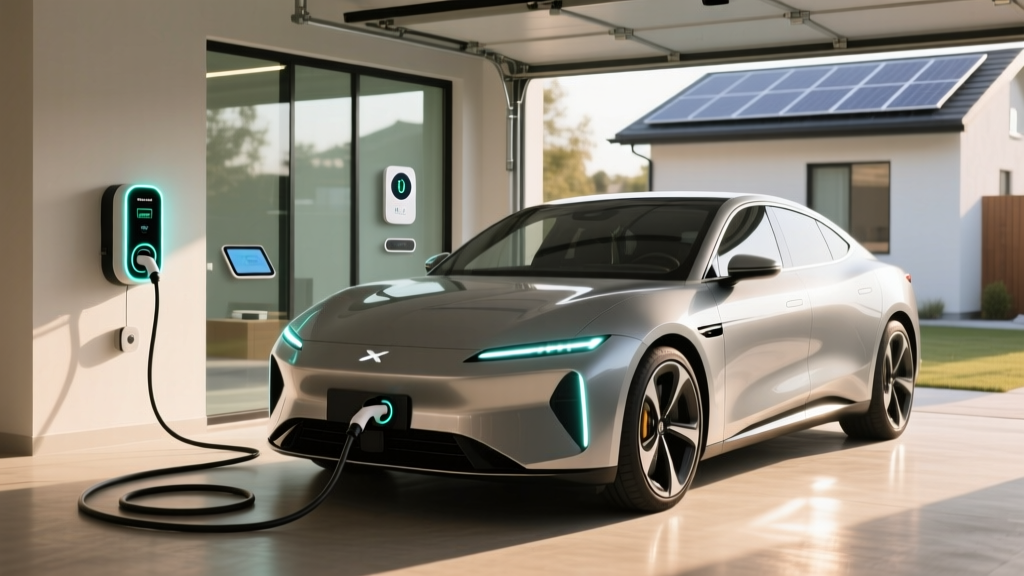
Most EV owners charge at home 80–90% of the time, and a properly installed Level 2 station is the single biggest quality-of-life upgrade in EV ownership. Here's what's actually involved.
The Baseline: 240V, 40A–60A Dedicated Circuit
A hardwired Level 2 charger rated for 48 amps continuous draw requires a 60-amp breaker (NEC Rule 80%: continuous loads can only use 80% of a breaker's rating). A plug-in NEMA 14-50 unit at 40 amps continuous needs a 50-amp breaker. You'll need:
- A dedicated double-pole breaker sized 125% of the charger's continuous draw.
- Appropriate-gauge copper wire (typically 6 AWG for 50A, 4 AWG for 60A) run in conduit where required.
- A GFCI breaker if the outlet is outdoors or in a garage, per NEC 2023/2026 updates.
- A permit and final inspection — non-negotiable for insurance and resale.
When Your Panel Can't Handle It
Older homes — the kind built when the Grand Prix supercharged was rolling off the line in the early 2000s — often have 100A or 150A main service. A load calculation (NEC Article 220) may show you don't have headroom for a 60A EV circuit alongside an electric dryer, range, and central AC. Options:
- Service upgrade to 200A: $2,000–$4,500 installed, depending on utility drop and meter-main location.
- Smart load-management charger (e.g., Enel X JuiceBox with CT clamps, or Emporia with grid integration): dynamically throttles charging when other loads spike, avoiding a panel upgrade entirely. ~$200–$400 premium over a basic unit.
- Downsize to a 32A (7.7 kW) charger on a 40A breaker — adequate for most daily driving of ~40 miles.
Installation Cost Breakdown (2026 National Averages)
| Line Item | Low End | High End | Notes |
|---|---|---|---|
| Level 2 charger hardware | $350 | $750 | 32A–48A, Wi-Fi smart unit |
| Electrician labor (2–6 hrs) | $400 | $1,500 | Varies by panel distance, conduit run |
| Materials (wire, conduit, breaker) | $150 | $500 | Long runs and attic crawls add cost |
| Permit and inspection | $75 | $300 | Required in most jurisdictions |
| Panel/service upgrade (if needed) | $2,000 | $4,500 | 100A → 200A service |
| Total (no panel upgrade) | $975 | $3,050 | Median ~$1,500–$1,800 |
| Total (with panel upgrade) | $2,975 | $7,550 | One-time home infrastructure cost |
The IRS §30C Alternative Fuel Vehicle Refueling Property Credit covers 30% of home charger hardware and installation costs, capped at $1,000 per year, subject to census-tract eligibility. Always confirm with a tax professional — rules have tightened on eligible locations since 2023.
Connectors: NACS, CCS, CHAdeMO — Which One Does Your EV Need?
As of 2026, the North American market has consolidated heavily around NACS (Tesla's connector, now SAE J3400). Ford, GM, Rivian, Volvo, Polestar, Mercedes, BMW, Hyundai/Kia, and others have adopted NACS on new vehicles. Legacy CCS1 vehicles remain on the road, and CHAdeMO is effectively a Nissan Leaf orphan standard.
| Connector | Brands Using It | Adapter Notes |
|---|---|---|
| NACS (J3400) | Tesla, Ford, GM, Rivian, Volvo, Polestar, Hyundai, Kia, BMW, Mercedes, Lucid (2025+) | Native access to Tesla Supercharger network (17,000+ stalls in North America) |
| CCS1 | Pre-2025 VW ID.4, older BMW i4/iX, legacy Hyundai/Kia, most 2020–2024 non-Tesla BEVs | Tesla Magic Dock adapter or OEM-supplied NACS-to-CCS adapter for Supercharger access |
| CHAdeMO | Nissan Leaf (discontinued 2025), Mitsubishi Outlander PHEV (older) | Declining network support; plan charging around Electrify America legacy stalls |
Home charger connector choice: Buy a NACS-terminated wall connector if your EV is NACS-native. If you own a CCS1 vehicle and plan to keep it, buy CCS1-terminated and use the OEM adapter at Superchargers. For mixed-EV households, the Tesla Universal Wall Connector ($599) includes an integrated J3400 plug that charges both NACS and CCS1 vehicles without a separate adapter — a clean two-car-garage solution.
Equipment Picks: Three Level 2 Chargers Worth Buying in 2026
Tesla Universal Wall Connector
- Power: 11.5 kW (48A) on 60A circuit
- Connector: Integrated NACS (J3400), charges CCS1 via built-in adapter
- Cable length: 24 ft
- Smart features: Wi-Fi, OTA updates, load sharing between two units, access control
- Price: $599
- Best for: Tesla owners, mixed-NACS/CCS households, cleanest install aesthetic
Emporia Vue EV Charger
- Power: 11.5 kW (48A) configurable down to 16A
- Connector: J3400 (NACS) or J1772 variants
- Cable length: 24 ft
- Smart features: Integrates with Emporia Vue home energy monitor, solar-aware scheduling, load management to avoid panel upgrades
- Price: $399–$449
- Best for: Solar homes, tight panels, budget-conscious buyers who still want smart features
ChargePoint Home Flex (2nd Gen)
- Power: Up to 12 kW (50A) on a 60A circuit, dip-switch configurable
- Connector: J3400 (NACS) or J1772
- Cable length: 23 ft
- Smart features: Alexa/Google Home, scheduling, detailed energy reporting, UL-listed for outdoor with optional weatherproof enclosure
- Price: $549–$599
- Best for: Outdoor installs, users who want robust app reporting and smart-home integration
Cost to Charge: $/kWh Scenarios and Cost Per Mile vs Gas
The old Grand Prix GTP wanted premium fuel, and at 18 mpg combined you were paying dearly per mile. EVs invert the economics — but only if you charge smart. Here's how $/kWh translates to cents per mile.
| Scenario | $/kWh | Vehicle Efficiency | Cost Per Mile | Notes |
|---|---|---|---|---|
| Home, off-peak utility rate | $0.12 | 3.0 mi/kWh (115 MPGe) | $0.040 | Time-of-use rate, overnight |
| Home, average U.S. residential | $0.17 | 3.0 mi/kWh | $0.057 | Standard flat rate |
| Public Level 2 (workplace, retail) | $0.25–$0.35 | 3.0 mi/kWh | $0.083–$0.117 | Often idle-fee risk |
| DC fast, Electrify America/Tesla | $0.40–$0.55 | 3.0 mi/kWh | $0.133–$0.183 | Road-trip pricing |
| Gas car, 25 mpg, $3.40/gal | — | 25 mpg | $0.136 | Average ICE sedan |
| Grand Prix GTP, 18 mpg, $3.80 premium | — | 18 mpg | $0.211 | What you left behind |
At 12,000 miles per year, a home-charged EV at $0.17/kWh costs ~$680 annually in electricity. The Grand Prix supercharged at 18 mpg on premium would cost ~$2,530. That's a roughly $1,850/year fuel savings — enough to pay back a home charger install in under two years, even with a panel upgrade.
Caveat: DC fast charging at $0.50/kWh is roughly as expensive per mile as a 28 mpg gas car. The economics only work when you charge at home. Public charging is a convenience, not a cost strategy.
Safety, Code, and the Details That Prevent Fires
EV chargers pull sustained, high-current loads for hours — a duty cycle far harsher than a dryer or range. Shortcuts here cause thermal failures.
- Dedicated circuit only. Never share an EV circuit with other outlets. Continuous loads heat conductors and terminations.
- Torque the terminals. Use a calibrated inch-pound torque screwdriver to spec. Loose lugs on a 14-50 receptacle are the #1 cause of melted outlets in EV charging incidents.
- Prefer hardwired over plug-in. A hardwired unit eliminates the receptacle as a failure point, qualifies for 60A/48A charging (most 14-50 outlets are capped at 40A/50A breaker), and often reduces permit scrutiny.
- GFCI where required. NEC 2023 and 2026 require GFCI protection on 14-50 receptacles in garages and outdoors. Hardwired units are exempt.
- Outdoor rating. If mounting outside, the unit must carry a NEMA 4 or IP65 rating, and the cable must be rated for UV and cold-flex. Most quality units (Tesla, ChargePoint, Emporia) are rated to -22°F / -30°C.
- UL listing. Avoid uncertified "Amazon deal" chargers. Look for the UL or ETL mark — insurers and AHJs require it.
For detailed code language, reference the NFPA 70 National Electrical Code, and always have the final spec signed off by a licensed electrician familiar with Article 625 (EV charging systems).
FAQ: The Questions EV Converters Actually Ask
How much does it cost to install a home EV charger?
Typical 2026 cost for a hardwired 48A Level 2 charger is $1,500–$2,200 all-in (hardware, electrician, permit, materials) when your panel has capacity. Add $2,000–$4,500 if a 200A service upgrade is required. The IRS §30C credit can rebate up to $1,000 (30%) in eligible census tracts.
How fast will each charging level add range?
Level 1 adds 3–5 miles per hour. Level 2 at 11.5 kW adds roughly 35–45 miles per hour on a typical midsize SUV. DC fast charging at 150–250 kW adds 150–400+ miles per hour at peak, but the curve tapers sharply above 80% SoC — so real-world 10–80% sessions take 18–35 minutes depending on pack architecture.
Which connector/charger is compatible with my EV?
2025-and-newer models from Tesla, Ford, GM, Rivian, Hyundai, Kia, BMW, Mercedes, Volvo, and Polestar use NACS (J3400). Pre-2025 non-Tesla BEVs mostly use CCS1 and require an OEM adapter for Supercharger access. CHAdeMO is limited to older Nissan Leafs. Buy a home charger terminated in your vehicle's native connector.
How much does charging cost per mile vs gas?
Home charging at the U.S. average $0.17/kWh costs about $0.057/mile in a 3.0 mi/kWh EV. A Grand Prix supercharged at 18 mpg on premium costs ~$0.21/mile. Road-trip DC fast charging at $0.50/kWh rises to ~$0.17/mile — still below the old GTP, but no longer a bargain versus a modern hybrid.
What electrical upgrades might I need?
If your home has 100A or 150A service, or if your panel is already near capacity from HVAC, dryer, range, and water heater, a load calculation may require either a 200A service upgrade ($2,000–$4,500) or a smart load-managing charger that throttles when other circuits draw heavily. A licensed electrician must perform the Article 220 calculation.
Should I charge to 100% every night?
No. For NMC/NCA batteries (most long-range EVs), daily charging to 80% dramatically extends cycle life. LFP batteries (Tesla Model 3 RWD, some base trims) tolerate and even prefer 100% weekly. Set the charge limit in the vehicle's app and leave it — the battery management system handles the rest.
Swapping a Grand Prix supercharged for an EV is less a change of transportation than a change of energy logistics. The horsepower is easier to find; the planning goes into the garage. Get the circuit right, pick a UL-listed charger sized to your panel, and the daily "fill-up" becomes a non-event — quieter, cheaper, and far less dramatic than the whine of an Eaton M90 spooling up at 4,000 RPM.