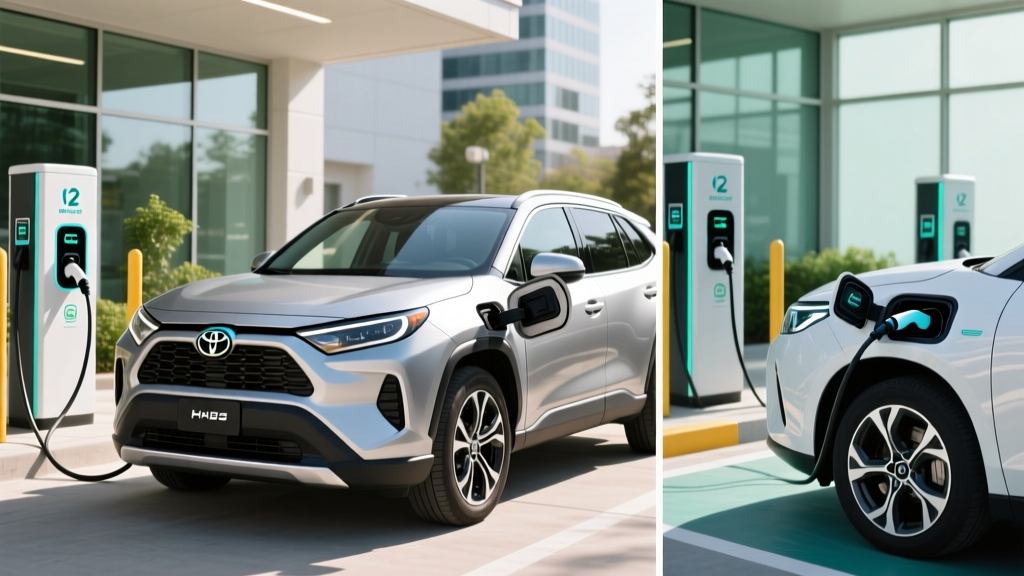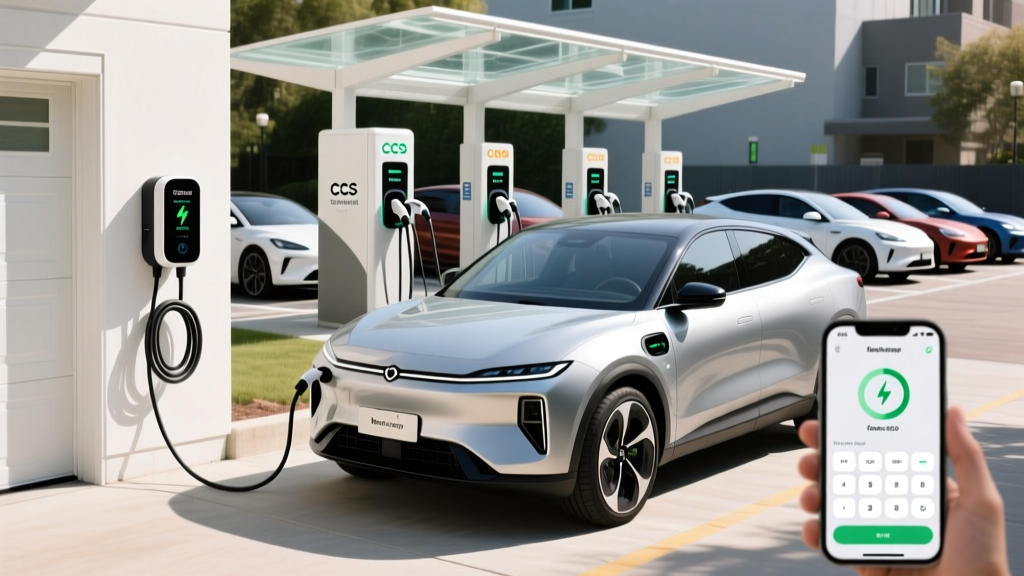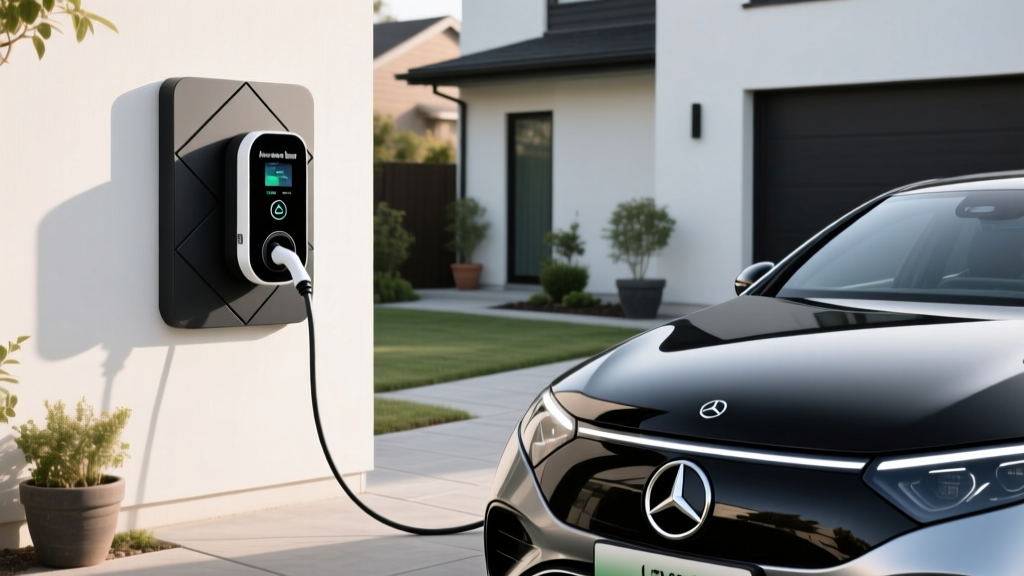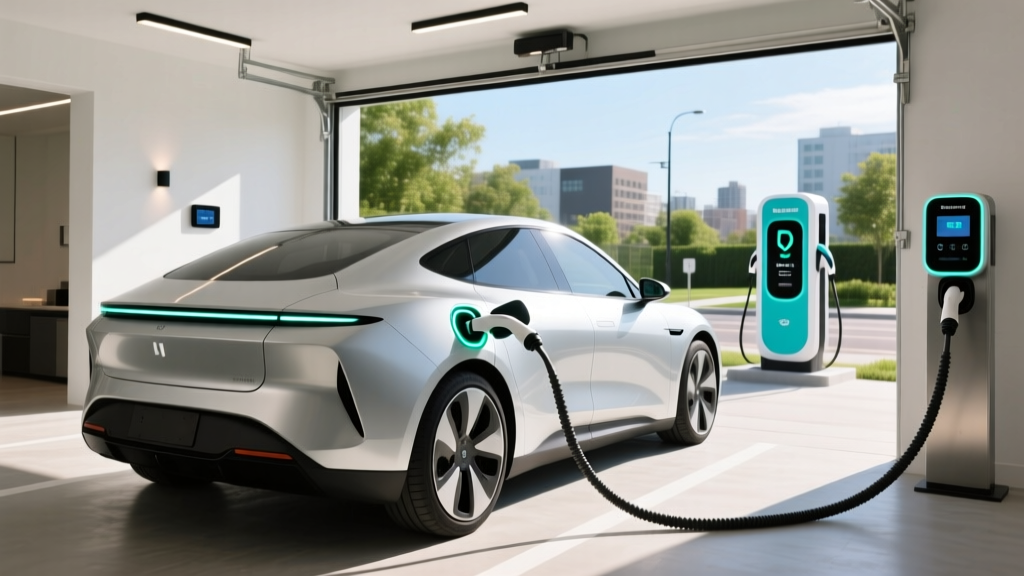
If you've spent years behind the wheel of a 2001 Pontiac Grand Prix GTP Supercharged — with its 240-hp 3.8L supercharged V6 and 20-odd MPG combined — the jump to an electric vehicle is both exciting and bewildering. The biggest shift isn't acceleration or styling; it's how you refuel. Instead of a 2-minute stop at a gas station, you'll navigate kilowatts, connectors, and charge curves. This guide translates everything a former GTP owner (or any gas-car veteran) needs to know about EV charging in 2026, from plugging in at home to deciphering public DC fast chargers.
kW (kilowatts) measures power — how fast electricity flows into your battery, like water pressure from a hose. kWh (kilowatt-hours) measures energy — the total capacity of your battery, like the size of the fuel tank. A 75 kWh battery charged at 11.5 kW (Level 2) takes roughly 6.5 hours from 0–100%. Never use these interchangeably.
Charging Levels Explained: Speeds, Range Added, and When to Use Each
There are three tiers of EV charging. Your daily routine determines which matters most. Here's the breakdown with real-world numbers for a typical midsize EV (think Tesla Model Y, Hyundai Ioniq 5, or Ford Mustang Mach-E with a ~75–84 kWh battery):
| Level | Voltage / Amps | Max Power (kW) | Miles of Range Added per Hour | Best For |
|---|---|---|---|---|
| Level 1 | 120V / 12–16A | 1.4–1.9 kW | 3–5 mi/hr | Overnight top-ups, PHEVs, emergencies |
| Level 2 | 240V / 32–48A | 7.7–11.5 kW | 25–44 mi/hr | Daily home charging, workplace, shopping centers |
| DC Fast Charge | 400–800V DC | 50–350 kW | 150–1,000+ mi/hr (peak) | Road trips, highway corridors, rapid top-ups |
Real-world context: A Level 2 home charger at 11.5 kW (48A) will refill a 75 kWh battery from 10–80% in about 4.5 hours — more than enough for overnight replenishment. DC fast charging from 10–80% varies enormously: a Hyundai Ioniq 5 on an 800V architecture peaks at ~240 kW and hits 80% in roughly 18 minutes, while an older 400V platform may taper to 50 kW and take 45+ minutes. Peak kW is never sustained — charge curves taper aggressively above 80% to protect battery chemistry.
Home EV Charger Installation: Electrical Requirements, Costs, and Panel Upgrades
Installing a Level 2 home charger is where most EV buyers hit their first real decision point. The Grand Prix GTP never needed a 240V circuit, but your EV effectively does. Here's what's involved:
Electrical Requirements
- Circuit: A dedicated 240V circuit — typically 40A or 50A breaker — is standard for Level 2. A 40A circuit delivers up to 32A continuous (9.6 kW); a 50A circuit delivers up to 40A continuous (9.6 kW) or a 60A breaker at 48A (11.5 kW). EVs draw continuous load, so the breaker must be rated at 125% of the charger's max amperage per NEC Article 625.
- Wire gauge: 6 AWG copper for 50A circuits; 4 AWG for 60A. Your electrician will pull this from the panel to the charger location.
- Panel capacity: Most modern homes have a 200A main panel. If you're already running central A/C, an electric dryer, an electric range, and a water heater, adding a 40–60A EV circuit may push you close to capacity.
Panel Upgrade Reality
If your home still has a 100A or 150A panel — common in homes built before the 1990s — a panel upgrade to 200A (or even 400A with a load-management system) may be required. This is the single biggest variable in installation cost.
Installation Cost Breakdown
| Component | Simple Install (panel nearby, no upgrade) | Complex Install (long wire run, panel upgrade) |
|---|---|---|
| Level 2 charger (hardware) | $350–$700 | $350–$700 |
| Electrician labor (2–6 hrs @ $85–$150/hr) | $170–$900 | $600–$2,500 |
| Electrical permit & inspection | $50–$200 | $50–$200 |
| Wire, conduit, materials (50–100 ft run) | $100–$300 | $400–$1,200 |
| Panel upgrade (if needed) | $0 | $2,000–$5,000 |
| Total estimated range | $670–$2,100 | $3,400–$9,600 |
The IRS §30D clean vehicle credit covers the vehicle itself, but the separate §30C Alternative Fuel Vehicle Refueling Property Credit can reimburse up to 30% of home charger hardware and installation costs (capped at $1,000) — subject to census-tract eligibility and income limits. Consult a tax professional for your specific situation.
Connector Compatibility: NACS, CCS1, CHAdeMO, and Adapter Needs
The connector landscape shifted dramatically between 2023 and 2026. Here's where things stand:
| Connector | Brands Using Natively | Notes |
|---|---|---|
| NACS (J3400) | Tesla, Ford, GM, Rivian, Volvo, Polestar, Mercedes-Benz, Fisker, BMW (2025+) | Now the dominant North American standard. Access to Tesla Supercharger network natively. |
| CCS1 | Hyundai, Kia, Volkswagen, Stellantis (some), Honda (Prologue) | Still common on 2024–2025 models. Many automakers switching to NACS for 2026+. |
| CHAdeMO | Nissan Leaf (legacy) | Effectively discontinued for new vehicles. Existing infrastructure still functional but shrinking. |
Adapter needs: If you own a CCS1-equipped EV (say, a 2024 Ioniq 5) and want to use Tesla Superchargers, you'll need a CCS-to-NACS adapter — Tesla sells one for ~$250, and third-party options from Lectron and A2Z run $150–$200. Conversely, NACS-native vehicles rarely need adapters for public charging, as most non-Tesla networks (Electrify America, EVgo, ChargePoint) have added NACS cables by 2026.
Cost to Charge: Home vs. Public vs. Gas — The Real Per-Mile Numbers
Here's where your old Grand Prix GTP supercharged starts to look expensive. The GTP averaged about 20 MPG combined on premium fuel. At $3.80/gallon (2026 national average for premium), that's $0.19/mile in fuel alone. Let's compare with EV charging scenarios:
| Scenario | $/kWh | Vehicle Efficiency (kWh/100mi) | Cost per Mile |
|---|---|---|---|
| Home Level 2 (off-peak utility rate) | $0.10–$0.14 | 28–32 | $0.03–$0.04 |
| Home Level 2 (standard rate, no TOU) | $0.16–$0.22 | 28–32 | $0.04–$0.07 |
| Public Level 2 (ChargePoint, workplace) | $0.20–$0.35 | 28–32 | $0.06–$0.11 |
| DC Fast Charge (Electrify America, EVgo) | $0.35–$0.55 | 30–35 (highway) | $0.11–$0.19 |
| 2001 Grand Prix GTP (20 MPG, premium) | $3.80/gal | — | $0.19 |
The takeaway: Home charging at off-peak rates costs roughly one-fifth of what the GTP's supercharged V6 demanded per mile. Even exclusive DC fast charging approaches gas-car costs but rarely exceeds them. If you can charge at home 80%+ of the time, your annual fuel savings on 12,000 miles could reach $1,500–$1,900 compared to the GTP.
Charging Time Examples for Common Battery Sizes
How long does a charge session actually take? Here are concrete 10–80% times for popular 2026 EVs across charging levels:
- Tesla Model Y Long Range (75 kWh usable, NMC): Level 2 @ 11.5 kW = ~4.5 hrs to full. DC fast charge (V4 Supercharger, 250 kW peak) = ~25 min 10–80%.
- Hyundai Ioniq 5 (77.4 kWh, NMC, 800V): Level 2 @ 10.9 kW = ~5 hrs. DC fast charge (350 kW station) = ~18 min 10–80% — one of the fastest in production.
- Ford F-150 Lightning Extended Range (131 kWh, NMC): Level 2 @ 11.5 kW = ~9 hrs. DC fast charge (150 kW peak sustained) = ~45 min 15–80%.
- Chevrolet Equinox EV (85 kWh, NMC): Level 2 @ 11.5 kW = ~5.5 hrs. DC fast charge (150 kW peak) = ~30 min 10–80%.
Charge curve reality: Peak kW numbers (e.g., "250 kW!") are marketing-friendly but misleading. Most EVs sustain peak rate only between 10–40% SoC, then taper progressively. A "250 kW" charger might average 130–160 kW over a full 10–80% session. Cold weather (below 32°F) can reduce charge speeds by 20–40% unless the battery is preconditioned — always use your EV's navigation to route to a charger, which triggers thermal preconditioning automatically.
Equipment Recommendations: Best Home Level 2 Chargers for 2026
Not all Level 2 chargers are equal. Here are proven picks with specific specs:
Tesla Universal Wall Connector
- Power: Up to 11.5 kW (48A)
- Connector: NACS with integrated J1772 adapter
- Cable: 24 ft
- Smart features: Wi-Fi, OTA updates, load sharing, access control via app
- Price: ~$599
- Best for: NACS-native owners, Tesla households with multiple EVs
ChargePoint Home Flex
- Power: Up to 12 kW (50A), configurable 16–50A
- Connector: J1772 (NACS adapter available)
- Cable: 23 ft
- Smart features: Wi-Fi, Alexa, scheduling, energy dashboard
- Price: ~$649
- Best for: CCS/J1772 owners wanting amperage flexibility
Emporia Level 2 EV Charger
- Power: Up to 11.5 kW (48A)
- Connector: J1772 (NACS version available)
- Cable: 24 ft
- Smart features: Wi-Fi, solar integration, energy monitoring, load management
- Price: ~$399
- Best for: Budget-conscious buyers, solar-panel households
All three are NEMA 4 rated (indoor/outdoor), UL-listed, and ENERGY STAR certified. Hardwired installation is recommended over plug-in (NEMA 14-50) for reliability — plug-in receptacles can loosen over time and are a known cause of thermal events at high continuous loads.
Safety, Code, and Installation Best Practices
The NEC (National Electrical Code) Article 625 governs EV charging installations. Key requirements your electrician should follow:
- Dedicated circuit: Your Level 2 charger must have its own breaker — no sharing with other appliances.
- GFCI protection: Required for outdoor receptacles (NEC 2020+). Hardwired units with integrated ground-fault protection satisfy this.
- Outdoor rating: If mounted outside, the charger must be NEMA 3R or NEMA 4 rated. All three recommendations above qualify.
- Cable management: NEC requires the charging cable not create a trip hazard. Wall-mounted cord organizers or retractors are strongly recommended.
- Permit and inspection: Most jurisdictions require an electrical permit ($50–$200) and a post-install inspection. Skipping this can void homeowner's insurance coverage for electrical fires.
- Load management: If your panel is near capacity, smart chargers like the Emporia or Tesla Wall Connector can integrate with home energy monitors to dynamically reduce charge rate when other loads spike — avoiding a costly panel upgrade.
For authoritative installation standards, reference the NFPA NEC guidelines and consult a licensed electrician for your specific home.
Charging FAQ: From GTP Supercharged to Electrons
How much does it cost to install a home EV charger?
A straightforward Level 2 installation (200A panel, short wire run, no upgrade) typically costs $670–$2,100 including hardware, labor, and permit. If a panel upgrade to 200A or 400A is needed, expect $3,400–$9,600 total. Always get a load calculation first.
How fast will each charging level add range?
Level 1 (120V) adds 3–5 miles per hour — adequate for PHEVs with small batteries. Level 2 (240V) adds 25–44 miles per hour, fully replenishing most EVs overnight. DC fast charging adds 150–1,000+ miles per hour at peak, delivering 10–80% in 18–45 minutes depending on the vehicle's architecture and battery size.
Which connector/charger is compatible with my EV?
Check your vehicle's charge port. 2026 model-year vehicles from Tesla, Ford, GM, Rivian, Volvo, and BMW use NACS. Hyundai, Kia, and VW mostly still use CCS1. CHAdeMO is limited to older Nissan Leafs. Adapters (CCS-to-NACS, ~$150–$250) bridge the gap. Your home charger should match your vehicle's native connector for the cleanest experience.
How much does charging cost per mile vs gas?
Home charging at off-peak rates costs $0.03–$0.04/mile for a typical EV — roughly one-fifth the $0.19/mile your Grand Prix GTP supercharged required on premium fuel. Even public DC fast charging ($0.11–$0.19/mile) rarely exceeds gasoline costs. Annual savings on 12,000 miles: $1,500–$1,900 with predominant home charging.
What electrical upgrades might I need?
The most common upgrade is a 200A panel replacement ($2,000–$3,500) if your home has a 100A or 150A service. Older homes may also need service-line upgrades from the utility (4–8 week lead time). Smart load-management systems ($200–$500 additional hardware) can sometimes avoid a panel upgrade entirely by throttling the charger when other circuits are active.
Do I need a smart charger, or is a dumb unit fine?
A non-connected ("dumb") charger works perfectly for basic charging, but smart features — scheduling for off-peak rates, load management, energy tracking, and remote diagnostics — typically pay for themselves within a year through utility time-of-use savings. The price gap is narrow ($399–$649 for quality smart units), making smart chargers the pragmatic choice.
Can I charge in the rain or snow?
Yes. All UL-listed EV chargers and connectors are designed for wet conditions. The connector seals against the vehicle's charge port when mated. Just avoid submerging the connector end in standing water and inspect the cable periodically for damage.
Switching from a supercharged V6 to electrons is a fundamentally different ownership experience — quieter, cheaper per mile, and centered around home infrastructure rather than gas stations. Get your Level 2 installation done before the EV arrives, understand your utility's time-of-use rates, and keep a DC fast-charging app (PlugShare, A Better Routeplanner) handy for road trips. The supercharger whine of the GTP will be a memory; the savings won't.