From Supercharged V6 to Silent Kilowatts: Why Charging Setup Matters for Your EV Conversion
The 1998 Pontiac Grand Prix GTP Supercharged was a 240-horsepower, 3.8L V6 muscle sedan that delivered 380 lb-ft of torque and 17 MPG combined. If you're pulling that engine and dropping in an electric drivetrain—say, a salvaged Tesla Large Drive Unit or a NetGain Hyper9 system paired with a 40-60 kWh battery pack—your charging infrastructure becomes the single most important ownership decision you'll make. A conversion EV doesn't come with a dealer network or a Supercharger map pre-loaded. You are your own charging strategist.
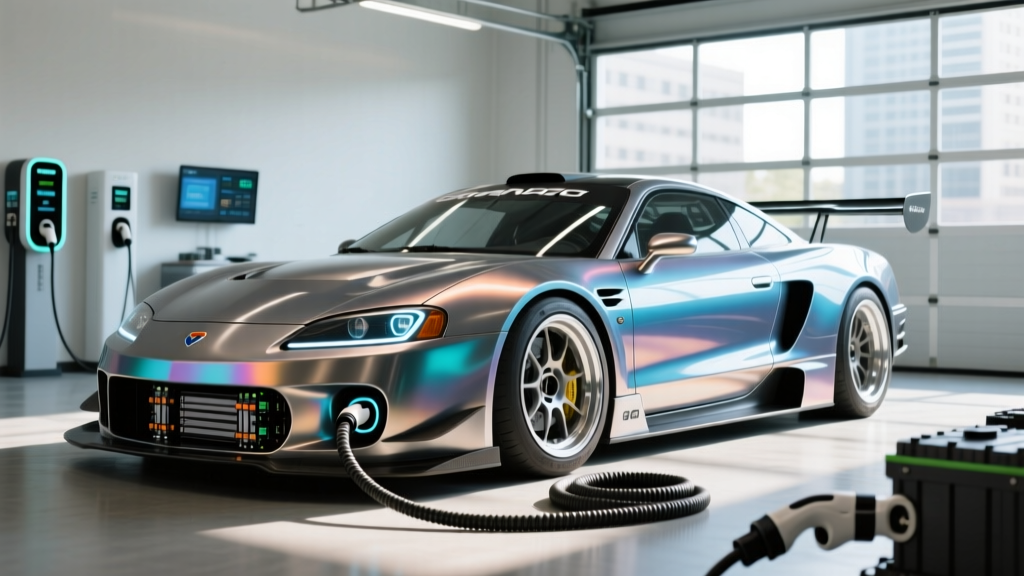
This guide covers every charging scenario a converted 1998 Grand Prix GTP will face: home Level 2 installation, DC fast-charging compatibility, connector selection, real costs per mile, and the electrical upgrades your garage might demand. Whether your conversion runs a 48 kWh LFP pack from a wrecked BYD or a 62 kWh NMC module array, the physics of getting electrons into that pack remain the same.
Understanding EV Charging Levels: kW, Speeds, and Real-World Range Gains
Before you wire a single outlet, you need to internalize one critical distinction: kW (kilowatts) measures power—the rate of energy delivery, like water pressure from a hose. kWh (kilowatt-hours) measures energy—the total capacity of your battery, like the size of the bucket. A 60 kWh battery charged at 7.2 kW takes roughly 8.3 hours from empty to full. That math drives every decision below.
| Charging Level | Voltage / Phase | Power Output (kW) | Miles of Range Added Per Hour | Typical Use Case |
|---|---|---|---|---|
| Level 1 (Standard Outlet) | 120V / Single | 1.2 – 1.9 kW | 3 – 5 miles/hr | Overnight trickle, emergency top-ups |
| Level 2 (Home/Public AC) | 240V / Single | 3.3 – 19.2 kW | 12 – 70 miles/hr | Daily home charging, workplace, destination |
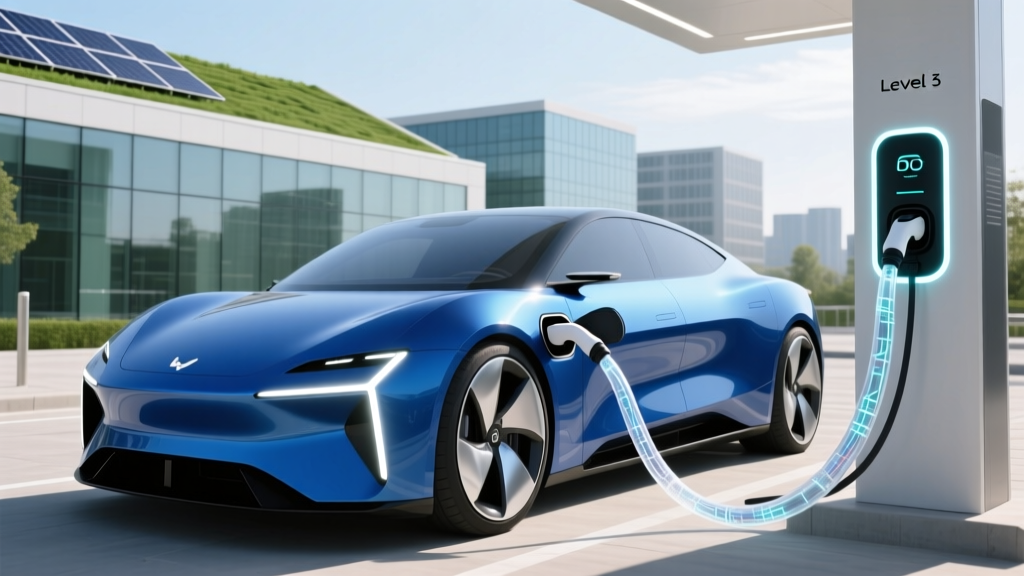
| DC Fast Charging | 400V–800V / DC | 50 – 350 kW | 150 – 1,000+ miles/hr (peak) | Road trips, rapid top-ups to 80% |
For a converted Grand Prix GTP with a ~55 kWh usable battery and roughly 3.5 miles per kWh efficiency (about 190 miles total range), here's what charging times look like in practice:
- Level 1 (1.4 kW): 0–100% in approximately 39 hours. Effectively useless as a primary strategy but viable for maintaining charge between drives.
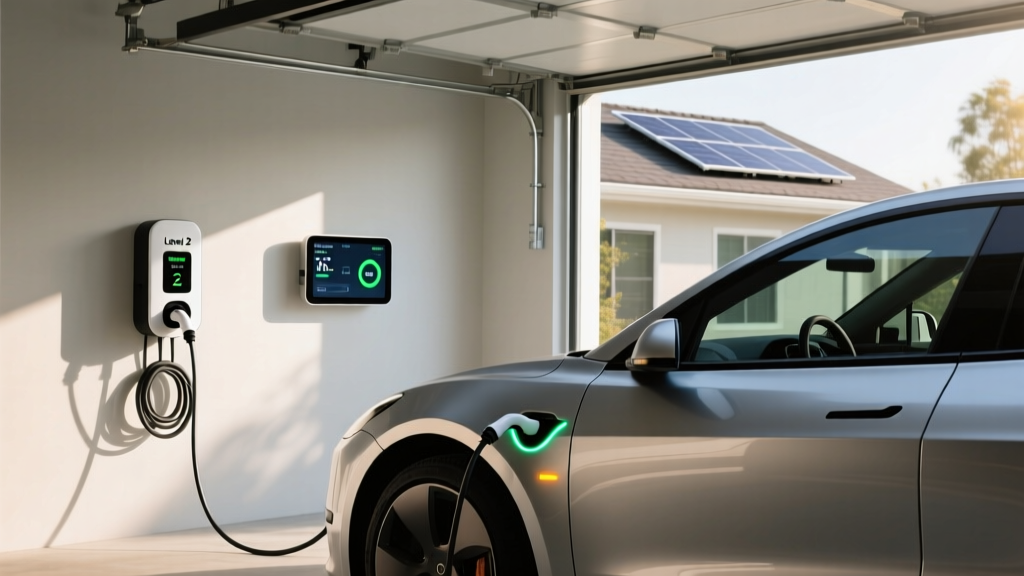
- Level 2 (7.2 kW / 32A): 0–100% in roughly 7.6 hours. This is the daily workhorse—plug in at 10 PM, full by 6 AM.
- Level 2 (11.5 kW / 48A): 0–100% in about 4.8 hours. Overkill for a 55 kWh pack unless you drive 150+ miles daily.
- DC Fast Charge (50 kW peak): 10–80% in approximately 45–55 minutes, depending on pack chemistry and thermal management. Expect tapering above 80% State of Charge (SoC).
Charge curve reality check: No EV sustains peak kW for the full session. A 50 kW DC charge might hold 45-48 kW from 10% to 50% SoC, then taper to 25-30 kW from 50-80%, and drop to under 10 kW above 90%. Your 10-80% time is always the useful benchmark—not the peak number on the charger's sticker.
Home Level 2 Installation: Electrical Requirements, Permits, and True Costs
Your 1998 Grand Prix GTP is likely parked in a garage built alongside a house wired in the 1970s or 1980s. That electrical panel is the first variable in your charging equation. Here's what a proper Level 2 home installation demands:
Circuit and Wiring Requirements
A 48-amp Level 2 charger (the most common residential choice) requires a dedicated 60-amp, 240-volt circuit using 6 AWG copper wire (or 4 AWG aluminum). The National Electrical Code (NEC) mandates that continuous loads—defined as running 3 hours or more—cannot exceed 80% of a circuit breaker's rating. Hence: 48A charger → 60A breaker. A 32A charger needs a 40A breaker with 8 AWG wire.
Key safety requirements per NEC Article 625 (Electric Vehicle Charging System Equipment):
- GFCI protection: Required for all receptacles used for EV charging (2020 NEC and later).
- Dedicated circuit: Your EV charger cannot share a circuit with a dryer, welder, or HVAC compressor.
- Outdoor rating: If the charger is mounted outside or in an exposed carport, it must carry a NEMA 4 or NEMA 4X weatherproof rating.
- Strain relief: Hardwired units need proper cable clamps; plug-in units need a secured receptacle with a locking bracket recommended.
Panel Upgrade Reality for Older Homes
Many homes from the Grand Prix GTP's era have 100-amp or 150-amp main service panels. Adding a 60A EV circuit to a panel already running central AC (30A), electric dryer (30A), range (40A), and water heater (30A) may exceed the panel's bus bar rating. A licensed electrician will perform a NEC Article 220 load calculation to determine if your existing panel can handle the additional draw. If not, a panel upgrade to 200A service typically costs $1,500–$3,000 before the charger circuit even begins.
| Installation Component | Low Estimate | High Estimate | Notes |
|---|---|---|---|
| Level 2 Charger Unit (Equipment) | $350 | $750 | 32A–48A smart chargers; see recommendations below |
| Electrical Permit | $50 | $250 | Varies by municipality; required for inspection |
| Electrician Labor + Materials (50-ft run, no panel upgrade) | $500 | $1,500 | Wire, conduit, breaker, junction box, mounting |
| Panel Upgrade (if needed: 100A → 200A) | $1,500 | $3,000 | Major variable; older homes frequently need this |
| Trenching (if charger is detached garage, 50+ ft) | $500 | $2,000 | Underground conduit for detached structures |
| Total (No Panel Upgrade) | $900 | $2,500 | Typical attached-garage scenario |
| Total (With Panel Upgrade) | $2,400 | $5,500 | Older home with insufficient service |
The IRS §30D tax credit applies to the vehicle, not the charger itself. However, the Alternative Fuel Vehicle Refueling Property Credit (§30C) can cover up to 30% of home charging equipment and installation costs (up to $1,000), subject to income caps and census-tract eligibility. Check irs.gov for current-year rules, as eligibility criteria shift annually.
Connector Compatibility: NACS, CCS, CHAdeMO, and Your Conversion EV
Production EVs ship with a standardized charge port. Your 1998 Grand Prix GTP conversion will not. You choose the connector during the build, and that choice determines which public networks you can access. As of 2026, the North American connector landscape has consolidated significantly:
| Connector Standard | AC Level 2 | DC Fast Charge | Network Access (2026) | Best For Conversions? |
|---|---|---|---|---|
| NACS (Tesla / SAE J3400) | Yes | Yes (Tesla Superchargers + NACS-equipped stations) | Tesla Supercharger (17,000+ stalls), Electrify America (new builds), Rivian Adventure Network | Yes — best network coverage, compact connector |
| CCS1 (Combined Charging System) | Yes (J1772 AC inlet) | Yes (CCS DC pins) | Electrify America, EVgo, ChargePoint, many legacy stations | Yes — widest non-Tesla DCFC access |
| CHAdeMO | Yes (J1772 AC inlet) | Yes (CHAdeMO DC connector) | Declining — mostly legacy Nissan Leaf infrastructure | No — network shrinking, avoid for new builds |
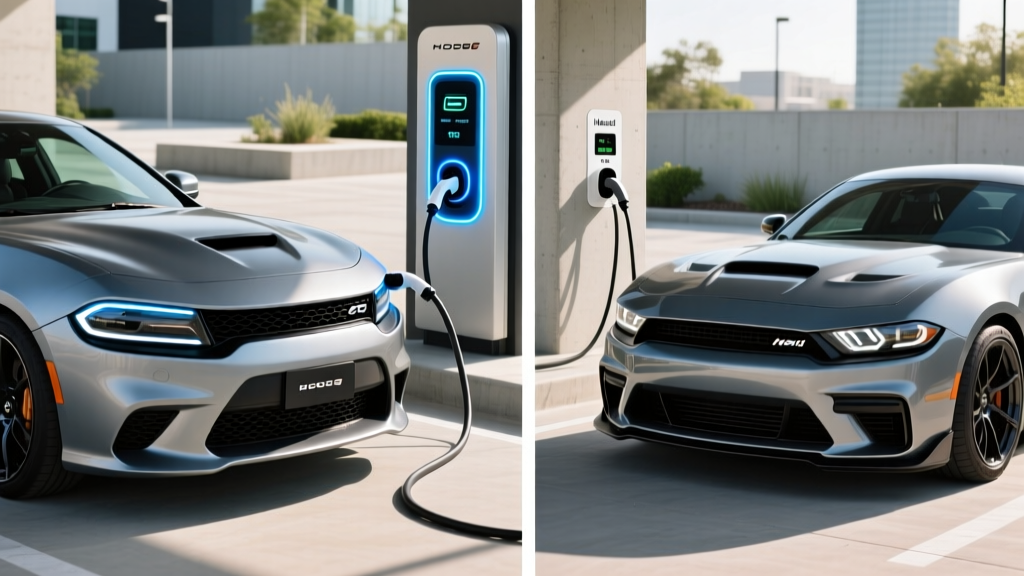
Conversion builder's recommendation: Install a J1772 inlet for AC Level 2 (universal across all public Level 2 stations) and pair it with either a CCS1 combo inlet or a NACS inlet for DC fast charging. If you choose CCS1, a NACS-to-CCS adapter (approximately $200-$300 from vendors like A2Z or Lectron) gives you Supercharger access on Tesla's open network. If you go native NACS, a CCS-to-NACS adapter covers legacy Electrify America stations.
For the AC side, every Level 2 home charger ships with a J1772 connector or NACS connector. If your conversion has a J1772 inlet and you buy a Tesla Wall Connector (NACS plug), you'll need a simple J1772-to-NACS adapter (~$50). This is a non-issue—adapters for AC Level 2 are cheap, small, and universally available.
Charging Cost Per Mile vs. the Original Supercharged 3.8L V6
The stock 1998 Grand Prix GTP Supercharged returned approximately 17 MPG combined per EPA records. At a national average of $3.40/gallon (early 2026), that's $0.20 per mile in fuel alone. Let's compare that to EV charging across realistic scenarios, assuming your conversion achieves 3.5 miles per kWh (a reasonable figure for a 3,500-lb sedan with a modern drivetrain):
| Charging Scenario | Cost Per kWh | Cost Per Mile (at 3.5 mi/kWh) | Annual Fuel Cost (12,000 mi) |
|---|---|---|---|
| Home Level 2 — Off-Peak Utility Rate | $0.09 – $0.13 | $0.026 – $0.037 | $312 – $444 |
| Home Level 2 — Standard Residential Rate | $0.14 – $0.18 | $0.040 – $0.051 | $480 – $612 |
| Public Level 2 (ChargePoint, EVgo) | $0.25 – $0.40 | $0.071 – $0.114 | $852 – $1,368 |
| DC Fast Charging (Electrify America, EVgo) | $0.35 – $0.55 | $0.100 – $0.157 | $1,200 – $1,884 |
| Original Gasoline (3.8L SC V6, 17 MPG) | $3.40/gal | $0.200 | $2,400 |
The bottom line: Home-charged, your converted Grand Prix GTP will cost 75-85% less per mile to "fuel" than it ever did with premium gasoline (the supercharged 3.8L required 91+ octane). Even exclusive public DC fast charging undercuts gasoline by 20-35%. Most conversion owners charge at home 90% of the time, making the annual energy cost roughly $400–$550 versus $2,400 in gas.
Cold-weather caveat: Battery efficiency drops 15-30% in freezing temperatures due to increased internal resistance and cabin heating demands. Expect your 3.5 mi/kWh to fall to 2.5–3.0 mi/kWh in sustained sub-30°F weather, which raises per-mile costs proportionally. A conversion with a heat-pump-based thermal system will mitigate this significantly compared to resistive PTC heating.
Level 2 Charger Equipment Recommendations for a Conversion Build
Your 1998 Grand Prix GTP conversion doesn't need a $1,200 charger. It needs a reliable, code-compliant unit with adequate cable length to reach the charge port location you've fabricated (most converters place the inlet behind the original fuel door or in the front grille area). Here are three proven options for 2026:
Budget Pick: Emporia Level 2 EV Charger
- Power Output: 48A / 11.5 kW (240V)
- Connector: J1772 (NACS version available)
- Cable Length: 24 feet
- Smart Features: Wi-Fi, app scheduling, energy monitoring, solar integration
- Price: ~$350–$400
- Best For: Budget-conscious converters who want smart scheduling for off-peak utility rates
Best Overall: ChargePoint Home Flex
- Power Output: Configurable 16A–50A / 3.8–12 kW (240V)
- Connector: J1772 (NACS adapter included in 2026 kit)
- Cable Length: 23 feet
- Smart Features: Wi-Fi, Alexa/Google Home, ChargePoint network integration, flexible amperage dial to match your circuit
- Price: ~$550–$650
- Best For: Converters who want configurable amperage to match a marginal panel (dial down to 32A on a 40A circuit if needed)
Premium Pick: Tesla Wall Connector
- Power Output: 48A / 11.5 kW (240V)
- Connector: NACS native (J1772 adapter available)
- Cable Length: 24 feet
- Smart Features: Wi-Fi, OTA updates, load sharing (two units on one circuit), Powerwall integration
- Price: ~$475
- Best For: NACS-inlet conversions; excellent value; cleanest industrial design
For a conversion EV, the ChargePoint Home Flex earns the top recommendation because its adjustable amperage lets you match the charger to whatever circuit your electrician can safely install. If your panel only supports a 40A breaker, you set the Flex to 32A (7.7 kW) instead of replacing hardware. That flexibility is invaluable in older homes where the Grand Prix GTP likely lives.
Safety, Code Compliance, and Inspection: What Your Electrician Will Require
EV charging is classified as a continuous load under NEC Article 625, and inspectors in most jurisdictions will check the following during your post-installation inspection:
- Dedicated breaker: Correct amperage, properly torqued to the panel bus bar. Loose connections cause arcing and fire.
- Wire gauge: 6 AWG copper for 60A circuits, 8 AWG for 40A circuits. Undersized wire on a long run causes voltage drop and overheating.
- GFCI breaker or outlet: Mandatory for all EV receptacles per 2020+ NEC. Hardwired units are exempt from GFCI in most jurisdictions but check local amendments.
- Conduit and protection: NM-B (Romex) is acceptable for interior garage walls in most areas; EMT conduit is required for exposed runs or outdoor sections.
- Grounding: Equipment grounding conductor must be present and bonded. A conversion EV's chassis ground connects through the charge cable's ground pin—any ground fault becomes a shock hazard without proper bonding.
- Permit and inspection: Skipping the permit saves $50–$250 but voids homeowner's insurance coverage for any electrical fire originating from the circuit. Not a gamble worth taking on a home-built EV.
For a conversion vehicle specifically, also ensure your onboard charger (the AC-to-DC converter inside the car) is properly fused and that the charge inlet is sealed against moisture. Many converters use Elcon or TC Charger onboard units rated for 3.3 kW or 6.6 kW AC input—meaning even a 48A / 11.5 kW home charger will only deliver what the car's onboard charger can accept. A 6.6 kW onboard charger caps your Level 2 speed at roughly 23 miles of range per hour regardless of how much power the wall unit offers.
Frequently Asked Questions
How much does it cost to install a home EV charger for a conversion vehicle?
Expect $900–$2,500 for a standard installation with adequate panel capacity. If your home needs a 200A service upgrade (common in 1980s–1990s construction), add $1,500–$3,000, bringing the total to $2,400–$5,500. The charger unit itself costs $350–$650 for quality Level 2 equipment.
How fast will each charging level add range to my converted Grand Prix GTP?
With a ~55 kWh battery and 3.5 mi/kWh efficiency: Level 1 (1.4 kW) adds 3–5 miles per hour. Level 2 at 7.2 kW adds ~25 miles per hour. Level 2 at 11.5 kW adds ~40 miles per hour—but only if your onboard charger supports that input. DC fast charging at 50 kW can add 100+ miles in 30 minutes, tapering significantly above 80% SoC.
Which connector and charger is compatible with my EV conversion?
You choose the connector during the build. For 2026, the strongest options are a J1772 inlet for universal AC Level 2 access paired with either a CCS1 combo inlet or NACS inlet for DC fast charging. CCS1 gives you Electrify America and EVgo access natively; NACS gives you Tesla Supercharger access. Adapters bridge the gap between standards for $50–$300.
How much does charging cost per mile compared to gasoline?
Home charging at typical residential rates ($0.12–$0.18/kWh) costs $0.03–$0.05 per mile—a 75–85% reduction versus the stock supercharged V6's $0.20/mile on premium gasoline. Even exclusive public DC fast charging ($0.35–$0.55/kWh) costs $0.10–$0.16 per mile, still well below gasoline.
What electrical upgrades might I need for a home charger?
The most common upgrade for homes built in the 1990s (contemporary with the Grand Prix GTP) is a main service panel upgrade from 100A or 150A to 200A, costing $1,500–$3,000. You may also need trenching for a detached garage ($500–$2,000), a sub-panel installation ($400–$800), or simply a new 60A breaker with a 50-foot wire run ($500–$1,500). A licensed electrician's load calculation will determine which scenario applies to your home.
Can I use a standard 120V outlet to charge my conversion EV?
Yes, but only as a supplemental or emergency option. A 120V/12A outlet delivers roughly 1.4 kW, adding 3–5 miles of range per hour. Fully recharging a 55 kWh battery from empty would take approximately 39 hours. For daily driving under 30 miles, Level 1 can work—but it's not a sustainable primary charging strategy for most drivers.