Whether you're planning a road trip or just trying to locate the nearest fast charger, searching for Google Maps Tesla Superchargers has become one of the most common EV owner queries. Google Maps now displays Tesla Supercharger locations alongside Electrify America, EVgo, and ChargePoint stations — but navigating the broader EV charging landscape requires more than a map pin. You need to understand charging speeds, connector compatibility, home installation requirements, and what you'll actually pay per mile.
This guide covers everything from finding Superchargers on Google Maps to installing a Level 2 charger in your garage, with exact numbers for costs, speeds, and equipment.
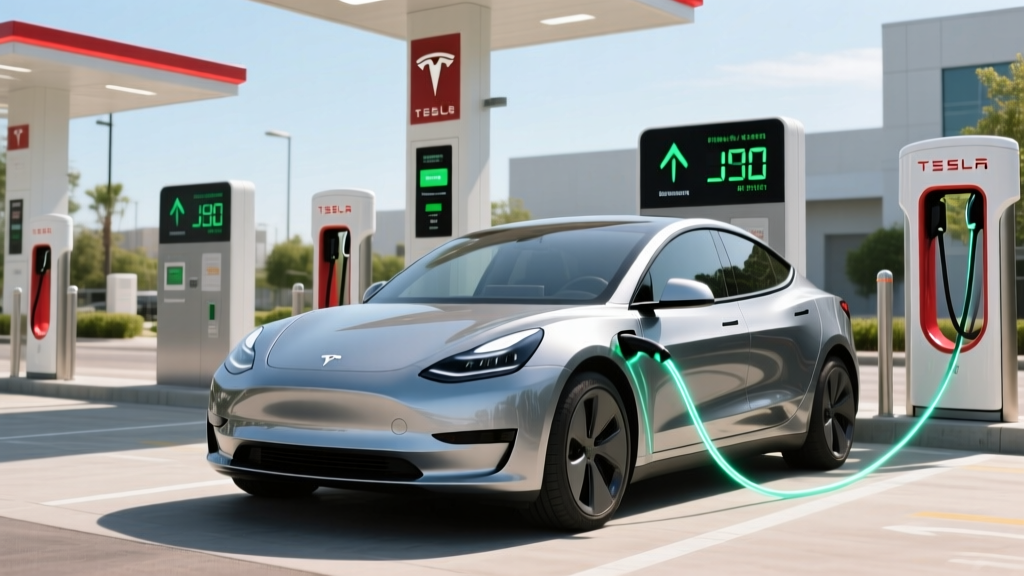
Finding Tesla Superchargers on Google Maps
In 2026, Google Maps integrates Tesla Supercharger locations directly into its search results. Type "Tesla Supercharger" or simply "EV charger" into the search bar, and you'll see nearby stations with real-time availability, stall counts, and maximum power output (typically 150 kW or 250 kW for V3/V4 Superchargers, with some newer V4 sites pushing 325 kW).
However, Google Maps has limitations. It doesn't always distinguish between NACS-only Superchargers (Tesla vehicles) and those equipped with the Magic Dock CCS adapter for non-Tesla EVs. Tesla's own in-app navigation and the built-in vehicle navigation remain more reliable for real-time stall status, preconditioning initiation, and routing that accounts for your battery's state of charge.
Charging Levels Explained: Speeds in kW and Miles Per Hour
Before you plug in anywhere, you need to understand the three charging levels and what they deliver. The critical distinction: kW (kilowatts) measures power — how fast energy flows into your battery. kWh (kilowatt-hours) measures energy — the total capacity of your battery. Think of kW as the width of a hose and kWh as the size of the bucket.
| Level | Voltage / Power | Miles of Range Per Hour | 10–80% Time (75 kWh battery) | Best For |
|---|---|---|---|---|
| Level 1 (120V) | 1.4–1.9 kW | 3–5 mi/hr | ~35+ hours | Overnight trickle, PHEVs, emergency |
| Level 2 (240V) | 7.2–19.2 kW | 20–60 mi/hr | 5–8 hours | Daily home charging, workplace |
| DC Fast Charging | 50–350 kW | 150–1,000+ mi/hr (peak) | 15–45 minutes | Road trips, rapid top-ups |
Real-world charging times depend heavily on your vehicle's maximum charge acceptance rate, battery chemistry, temperature, and state of charge. A Tesla Model Y Long Range (75 kWh usable, NMC battery) can accept up to 250 kW on a V3 Supercharger, achieving a 10–80% charge in roughly 25–28 minutes. But a Chevrolet Equinox EV with a smaller acceptance rate might take 35–40 minutes on the same station. And once you pass 80% state of charge, the charge curve tapers dramatically — that last 20% can take as long as the first 70%.
Home EV Charger Installation: Electrical Requirements and Costs
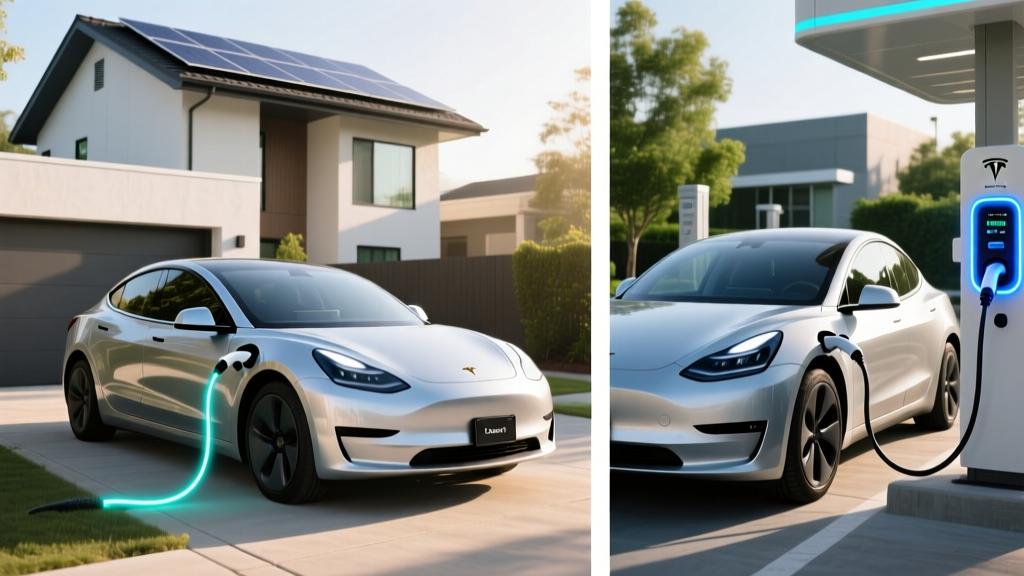
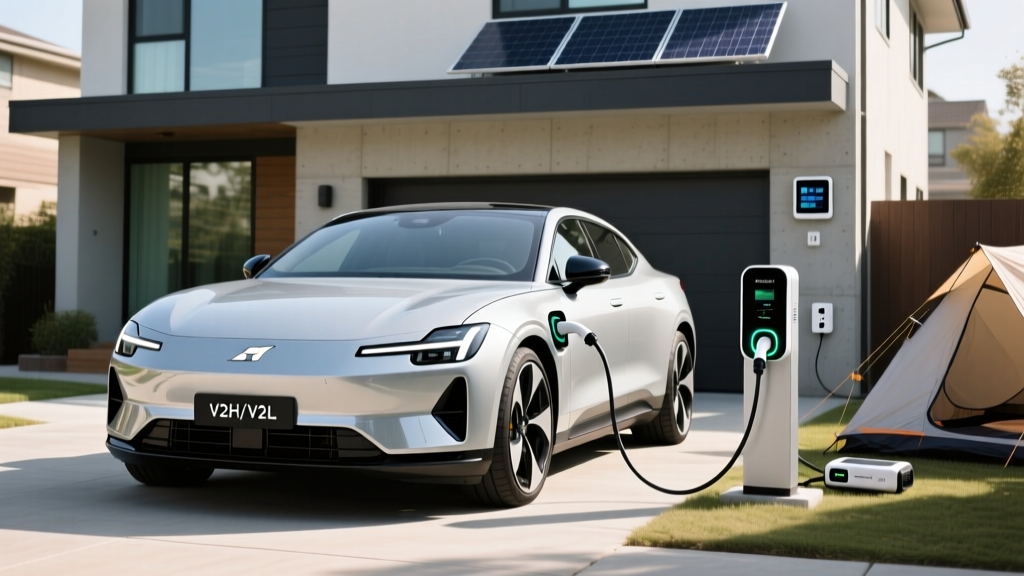
Installing a Level 2 home charger is the single most impactful upgrade for EV ownership. Most daily charging happens at home, and a properly installed 240V unit means you start every morning with a full battery.
Electrical Requirements
A typical Level 2 home charger requires a 240-volt dedicated circuit, similar to what powers an electric dryer or oven. The most common configurations:
- 40-amp circuit / 32-amp continuous output (7.7 kW) — sufficient for most EVs, adds ~25–30 miles of range per hour
- 50-amp circuit / 40-amp continuous output (9.6 kW) — faster charging, ideal for larger batteries like the Ford F-150 Lightning (131 kWh extended range)
- 60-amp circuit / 48-amp continuous output (11.5 kW) — maximum practical home speed, requires robust panel capacity
By National Electrical Code (NEC) rules, a charger drawing continuous load must be on a circuit rated at 125% of its amperage. A 32-amp charger needs a 40-amp breaker; a 48-amp charger needs a 60-amp breaker.
Panel Upgrade: The Cost Many Buyers Miss
Most modern homes have a 200-amp electrical panel. If your panel is already near capacity (common in homes with electric HVAC, electric water heaters, and electric dryers), adding a 40–60 amp EV circuit may require a panel upgrade to 200A or even 400A, or the installation of a secondary sub-panel. Older homes with 100-amp service almost certainly need an upgrade.
A panel upgrade adds $1,500–$4,000+ to your installation cost. Some homeowners opt for a smart load-management device (like the Emporia VUE with EV charger integration) that dynamically reduces charger amperage when other high-draw appliances are running, avoiding the need for a panel upgrade entirely.
| Component | Low Estimate | High Estimate | Notes |
|---|---|---|---|
| Level 2 Charger (Equipment) | $250 | $750 | Varies by brand, amperage, smart features |
| Electrician Labor | $400 | $1,500 | Depends on run length, conduit, wall type |
| Electrical Permit | $50 | $300 | Required in most jurisdictions |
| Panel Upgrade (if needed) | $1,500 | $4,000+ | 100A→200A or 200A→400A |
| Total (no panel upgrade) | $700 | $2,550 | Most common scenario |
| Total (with panel upgrade) | $2,200 | $6,550+ | Older homes, high-load homes |
Always hire a licensed electrician and pull a permit. Unpermitted electrical work can void your homeowner's insurance and create fire hazards. The National Electrical Code (NEC) Article 625 specifically governs EV charging installations.
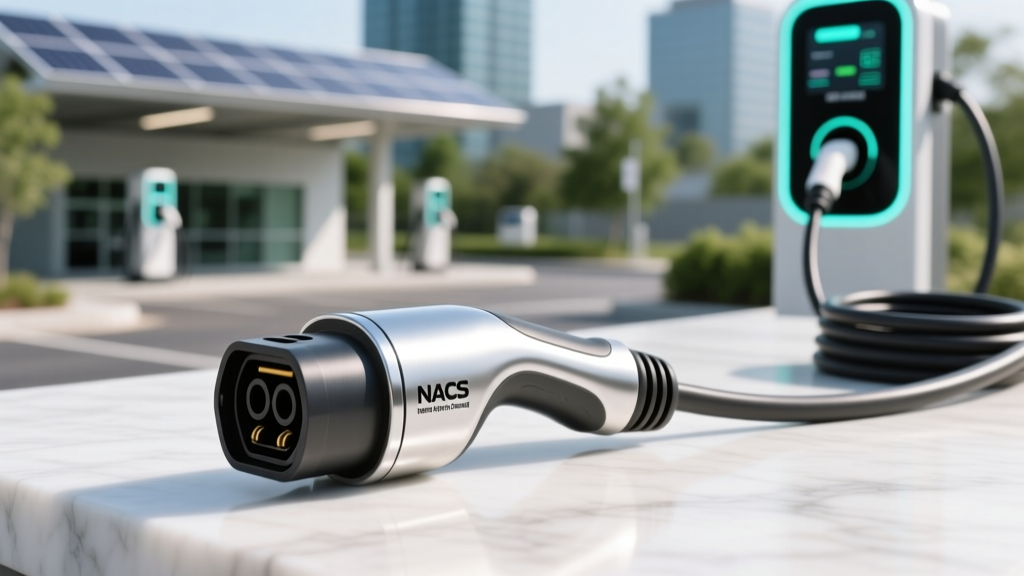
Connector Compatibility: NACS, CCS1, and CHAdeMO
The connector landscape in 2026 has largely consolidated around NACS (North American Charging Standard, originally Tesla's proprietary connector), but legacy connectors still exist. Here's what fits what:
| Connector | Brands Using It (2026 Models) | Adapter Needed? | Notes |
|---|---|---|---|
| NACS | Tesla (all), Ford, GM, Rivian, Volvo, Polestar, Mercedes, BMW, Hyundai/Kia (2025+) | No (native on most new EVs) | Now the dominant North American standard; access to Tesla Supercharger network |
| CCS1 | VW ID.4 (pre-2025), some older Hyundai/Kia, BMW i4 (pre-2025) | NACS-to-CCS adapter for Superchargers | Being phased out; adapters available from Tesla, Lectron, A2Z |
| CHAdeMO | Nissan Leaf (legacy), Mitsubishi Outlander PHEV | Limited adapters available | Effectively discontinued; new stations rarely include CHAdeMO |
For home Level 2 charging, all vehicles use the J1772 connector (or NACS, which handles Level 2 AC natively). Tesla vehicles come with a J1772-to-NACS adapter in the glovebox. Non-Tesla NACS vehicles charge at any J1772 station with the appropriate adapter.
Cost to Charge: Per-Mile Comparison vs. Gas
The economics of EV charging depend heavily on where and when you charge. Here are realistic 2026 scenarios for a vehicle averaging 3.5 miles per kWh (typical for a midsize crossover EV like the Tesla Model Y or Hyundai Ioniq 5):
| Charging Scenario | Rate ($/kWh) | Cost Per Mile | Annual Cost (12,000 mi) |
|---|---|---|---|
| Home (off-peak utility rate) | $0.08–$0.14 | $0.023–$0.040 | $275–$480 |
| Home (standard rate, no TOU) | $0.14–$0.20 | $0.040–$0.057 | $480–$685 |
| Public Level 2 (ChargePoint, etc.) | $0.20–$0.35 | $0.057–$0.100 | $685–$1,200 |
| DC Fast (Tesla Supercharger) | $0.25–$0.40 | $0.071–$0.114 | $857–$1,370 |
| DC Fast (Electrify America) | $0.35–$0.55 | $0.100–$0.157 | $1,200–$1,885 |
| Gas Vehicle (27 MPG, $3.40/gal) | — | $0.126 | $1,511 |
Home charging on an off-peak time-of-use (TOU) plan delivers the lowest cost per mile — often 3 to 5 times cheaper than gasoline. Even exclusive DC fast charging is competitive with or cheaper than gas in most markets. The key is maximizing home charging and using public DC fast charging primarily for road trips.
Recommended Home EV Chargers (2026)
Here are proven Level 2 chargers with specific specs. All support J1772 or NACS connectors and have been widely tested in real-world installations:
Tesla Wall Connector
- Power: Up to 11.5 kW (48A) on a 60A circuit
- Connector: NACS (native); J1772 adapter included
- Cable length: 24 feet
- Smart features: Wi-Fi, OTA updates, Power Share (load balancing between two units), access control
- Price: ~$475
- Best for: Tesla owners, NACS-equipped EVs, multi-EV households
ChargePoint Home Flex
- Power: Up to 12 kW (50A) on a 60A circuit; configurable down to 16A
- Connector: J1772 (NACS adapter available)
- Cable length: 23 feet
- Smart features: Wi-Fi, app scheduling, Alexa integration, amperage dip-switch configurable
- Price: ~$550–$700
- Best for: Non-Tesla EVs, flexible amperage for older panels
Emporia Level 2 EV Charger
- Power: Up to 11.5 kW (48A) on a 60A circuit
- Connector: J1772 (NACS version available)
- Cable length: 24 feet
- Smart features: Wi-Fi, solar integration (pairs with Emporia VUE energy monitor), load management, scheduling
- Price: ~$400
- Best for: Solar-equipped homes, budget-conscious buyers, energy monitoring
Safety, Code, and Installation Best Practices
EV charging installations must comply with NEC Article 625 and local building codes. Key safety requirements:
- Dedicated circuit: Your EV charger must be on its own dedicated breaker — not shared with other outlets or appliances.
- GFCI protection: NEC 2023 and later require GFCI (Ground Fault Circuit Interrupter) protection for all EV charging outlets rated 60A or less. Many modern chargers have built-in GFCI; hardwired installations may require a GFCI breaker.
- Outdoor rating: If installing outdoors (driveway, carport), the charger must carry a NEMA 3R or NEMA 4 rating for weather resistance. All recommended chargers above meet this standard.
- Cable management: Avoid running charging cables across walkways. Wall-mounted cable organizers or retractable reels prevent tripping hazards and cable damage.
- Grounding verification: Your electrician should verify proper grounding at the installation point — critical for outdoor installations and older homes.
Never use an extension cord with an EV charger. Never plug a Level 2 charger into a standard 120V outlet using an adapter — the wiring is not rated for sustained high-amperage draw and creates a fire risk.
Frequently Asked Questions
How much does it cost to install a home EV charger?
A typical Level 2 home charger installation costs $700–$2,550 when no panel upgrade is needed (equipment: $250–$750, electrician labor: $400–$1,500, permit: $50–$300). If your home requires an electrical panel upgrade from 100A to 200A, add $1,500–$4,000+. Always get at least three quotes from licensed electricians, and check whether your utility offers rebates — many utilities in 2026 offer $250–$1,000 toward charger installation or provide free Make-Ready infrastructure.
How fast will each charging level add range?
Level 1 (120V) adds 3–5 miles per hour — adequate for PHEVs with small batteries (e.g., Toyota RAV4 Prime's 42-mile EV range) but impractical for full BEVs. Level 2 (240V, 32–48A) adds 20–60 miles per hour, fully recharging most EVs overnight. DC fast charging at 150–250 kW can add 150–250 miles in 15–25 minutes, though actual speed depends on your vehicle's peak acceptance rate and the charging curve taper above 80% SoC.
Which connector/charger is compatible with my EV?
If you drive a 2025 or newer Tesla, Ford, GM, Rivian, Hyundai, Kia, or most other major-brand EVs, your vehicle uses the NACS connector and can charge at Tesla Superchargers natively. Older CCS1 vehicles (pre-2025 VW ID.4, older Ioniq 5) require a NACS-to-CCS adapter ($200–$300 from Tesla or Lectron) to access Superchargers. CHAdeMO vehicles (Nissan Leaf) are limited to the shrinking CHAdeMO public network. For home Level 2 charging, all EVs work with J1772 stations; Tesla includes a J1772-to-NACS adapter.
How much does charging cost per mile vs. gas?
Home charging on off-peak electricity ($0.08–$0.14/kWh) costs $0.02–$0.04 per mile — roughly 3 to 6 times cheaper than a 27 MPG gas vehicle at $3.40/gallon ($0.126/mile). Even exclusive DC fast charging ($0.25–$0.55/kWh) at $0.07–$0.16 per mile remains competitive with gas. The savings widen further if you have rooftop solar, where marginal charging cost can approach zero after system payback.
What electrical upgrades might I need?
Homes with 200-amp panels and moderate electrical loads typically need no upgrades for a 32–40A (7.7–9.6 kW) Level 2 charger. You may need a panel upgrade if your home has 100-amp service, already runs multiple high-draw electric appliances (HVAC, water heater, dryer, oven), or if you want a 48A+ charger. Alternatives to panel upgrades include: installing a lower-amperage charger (24–32A), using a smart load-management device that throttles the charger when other appliances draw heavily, or adding a dedicated sub-panel. Your electrician will perform a load calculation per NEC Article 220 to determine your panel's remaining capacity.