If you have ever watched your state of charge tick downward while scrolling through a map app looking for a working plug, you already know the gap between marketing and reality. Google Maps EV charging tools have improved dramatically, but the data they surface still requires an informed eye. A station listed as "available" might have a broken cable, a 50 kW legacy unit where you expected 150 kW, or a CCS1 plug when your car now uses NACS. This guide shows you how to read Google Maps EV charging results like an analyst, then pairs that skill with the hard numbers on charging speeds, home installation costs, and per-mile economics so your route planning actually matches what happens on the road.
How Google Maps EV Charging Filters Actually Work
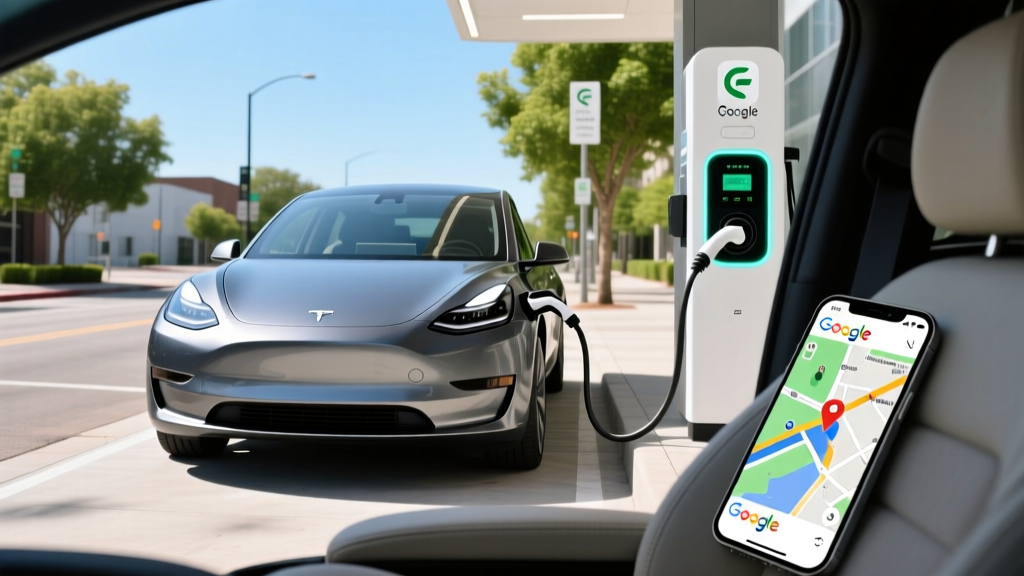
Google Maps sources its EV charging data from a mix of network APIs (ChargePoint, EVgo, Electrify America, Tesla Superchargers), third-party aggregators, and user submissions. When you tap the EV charging icon or search "EV charger near me," the results show station names, plug types, power ratings, and sometimes live occupancy. In 2026, the platform lets you filter by:
- Connector type: NACS (Tesla and now most OEMs), CCS1, CHAdeMO
- Charging speed: slow (Level 2), medium, fast (DC)
- Network: Tesla Supercharger, Electrify America, EVgo, ChargePoint, EVCS, etc.
- Availability: ports in use vs. idle (network-dependent)
- Payment: RFID, app, credit card, Plug & Charge
The limitation is data freshness. A station's peak kW rating on Google Maps reflects its design spec, not its current performance. A 350 kW Electrify America stall delivering 90 kW due to thermal throttling will still show "350 kW" in the listing. Cross-reference with the network's own app or PlugShare user check-ins before committing to a stop on a low-battery highway run.
Charging Levels Explained: kW, Miles Per Hour, and Real Charge Times
The single most important distinction in EV charging is between kW (kilowatts), which measures power — how fast energy flows — and kWh (kilowatt-hours), which measures energy — how much your battery holds. Confusing these is like confusing miles per hour with miles. Your battery capacity is measured in kWh (e.g., 77 kWh usable); your charger's output is measured in kW (e.g., 11.5 kW Level 2).
| Level | Voltage | Max Power (kW) | Miles of Range Per Hour | Typical Use |
|---|---|---|---|---|
| Level 1 | 120V AC | 1.4–1.9 kW | 3–5 mi/hr | Overnight top-up, PHEVs, emergencies |
| Level 2 | 240V AC | 7.2–19.2 kW | 20–60 mi/hr | Home daily charging, workplace, hotels |
| DC Fast (Level 3) | 400–800V DC | 50–350 kW | 150–1,000+ mi/hr (peak) | Highway road trips, rapid top-ups |
Real-World 10–80% Charge Time Examples
Peak kW numbers are marketing-friendly but misleading. Here is what average charge sessions actually look like for common 2025–2026 battery packs, accounting for charge-curve taper above 80% state of charge:
- Hyundai Ioniq 5 (77.4 kWh, NMC): Peak 240 kW on 800V architecture; 10–80% in ~18 minutes at a 350 kW station. Average sustained rate ~150 kW.
- Tesla Model Y Long Range (~75 kWh, NMC): Peak 250 kW at V3 Superchargers; 10–80% in ~25 minutes. Sustained average ~120 kW.
- Ford F-150 Lightning Extended Range (131 kWh, NMC): Peak 150 kW; 10–80% in ~45 minutes. Large batteries take longer even at decent rates.
- Chevrolet Equinox EV (85 kWh, NMC): Peak 150 kW; 10–80% in ~30 minutes.
Real-world caveat: Cold battery temperatures can double these times if the vehicle hasn't preconditioned. Always enable navigation-to-charger preconditioning when available.
Which Connector Fits Your EV? NACS, CCS1, and CHAdeMO in 2026
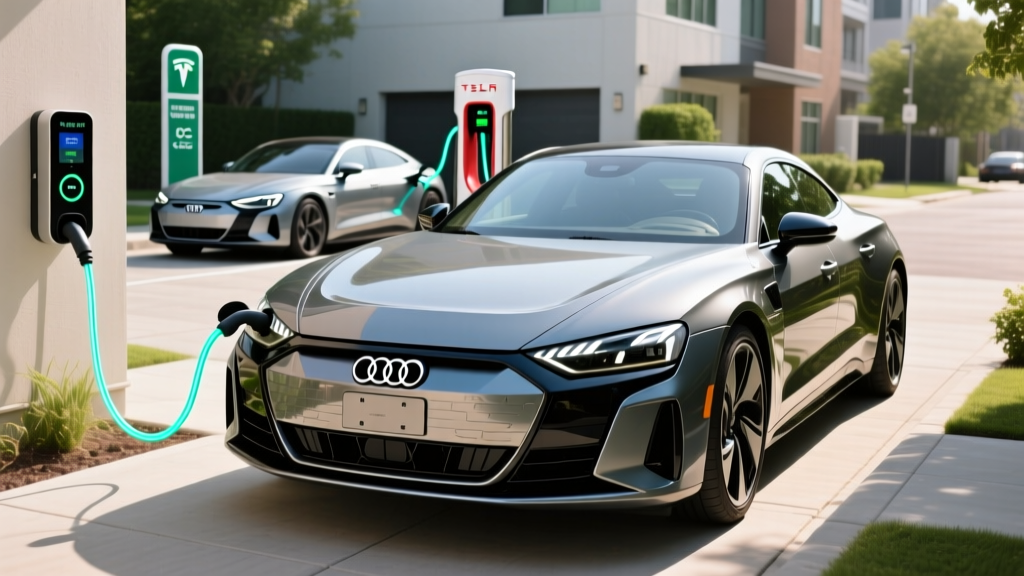
By 2026, the North American connector landscape has consolidated heavily toward NACS (North American Charging Standard, originally Tesla's proprietary plug). Most major OEMs — Ford, GM, Rivian, Volvo, Polestar, Hyundai, Kia — have transitioned new models to NACS. CCS1 remains on vehicles sold through 2024–2025 and on many existing public chargers. CHAdeMO is effectively legacy, limited to older Nissan Leafs and Mitsubishi Outlander PHEVs.
| Connector | Brands Using It (New Vehicles) | Adapter Needed? | Network Access |
|---|---|---|---|
| NACS (Tesla) | Tesla, Ford, GM, Rivian, Hyundai, Kia, Volvo, Polestar, BMW (2026+) | CCS1-to-NACS adapter for legacy CCS stations | Tesla Supercharger (native), growing NACS on EA, EVgo |
| CCS1 | VW ID.4 (carryover), some 2024–2025 models still on road | NACS-to-CCS1 adapter for Tesla Superchargers | Electrify America, EVgo, ChargePoint, most non-Tesla networks |
| CHAdeMO | Legacy only (Nissan Leaf pre-2026) | No practical adapter to NACS/CCS for DC fast | Declining availability; some EA and EVgo stations |
Practical tip: If you own a CCS1 vehicle, keep a NACS-to-CCS1 adapter (typically $150–$250 from your OEM or Tesla's approved adapter) in your trunk. Tesla has opened Supercharger access to CCS1 vehicles via adapter, vastly expanding your route options visible in Google Maps.
How Much Does It Cost to Install a Home EV Charger?
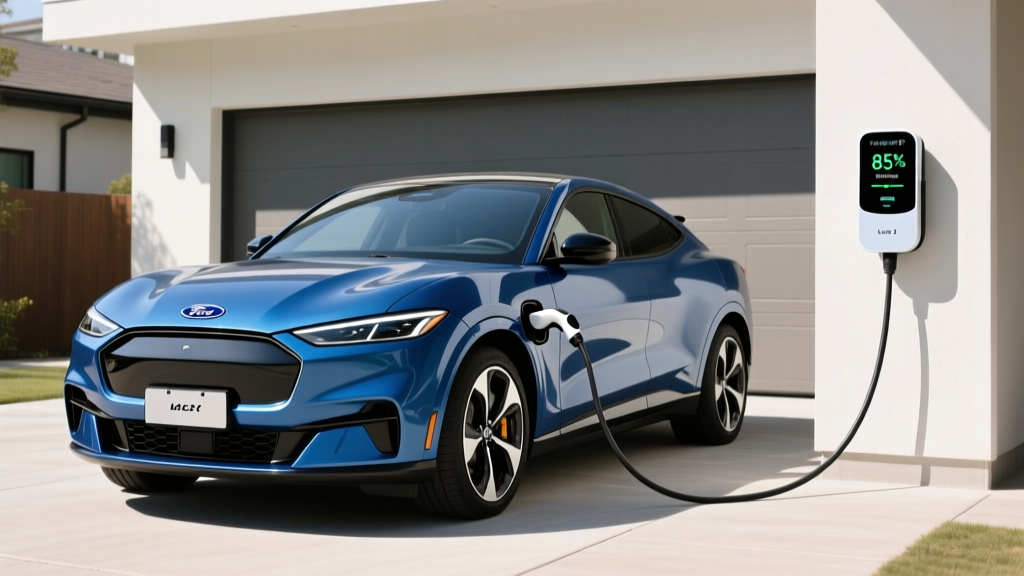
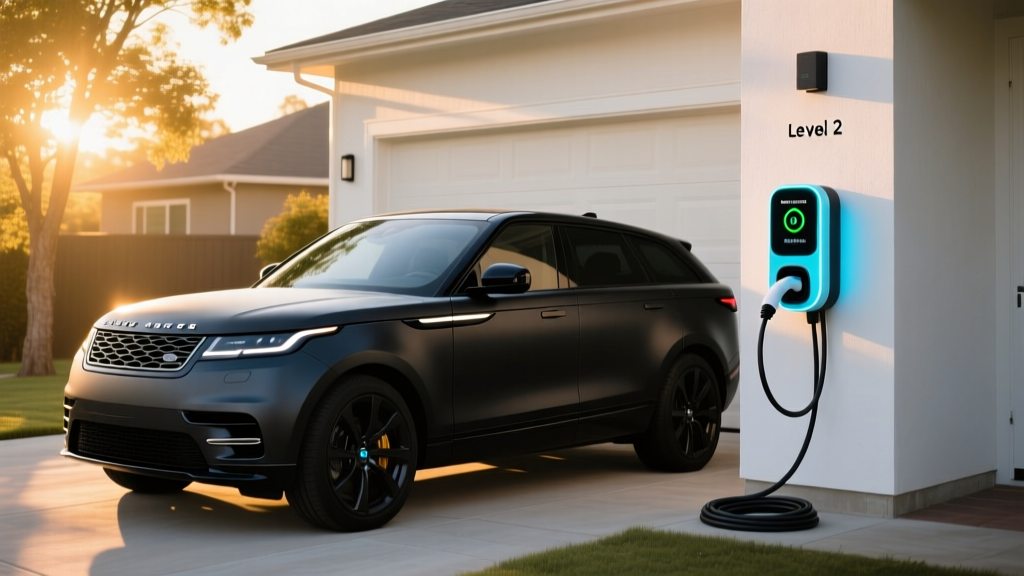
Home Level 2 charging is where most EV owners do 80–90% of their charging. The total installed cost depends on your electrical panel's capacity, the distance from panel to charger location, and local permit fees. Here is a realistic breakdown:
| Component | Typical Cost Range | Notes |
|---|---|---|
| Level 2 Charger (hardware) | $300–$700 | 32A–48A smart charger; Wi-Fi enabled |
| Electrician labor (standard install) | $500–$1,500 | Panel to garage/driveway, <50 ft run |
| Permit & inspection | $50–$300 | Varies by municipality |
| Electrical panel upgrade (if needed) | $1,500–$3,500 | 100A to 200A service; common in pre-1990 homes |
| Total (no panel upgrade) | $850–$2,500 | Most common scenario for modern homes |
| Total (with panel upgrade) | $2,350–$6,000 | Older homes or high-load panels |
Electrical Requirements for a 48A Level 2 Charger
A 48-amp Level 2 charger requires a dedicated 60-amp circuit (NEC code mandates circuits be rated at 125% of continuous load). This means 240V, 60A breaker, 6 AWG copper wire for runs under 50 feet. Your panel must have at least 60A of spare capacity. If your panel is already near its rated load — common with electric ranges, dryers, and HVAC on a 100A service — you will need a panel upgrade or a lower-amperage charger (e.g., 32A on a 40A circuit).
Safety and Code Considerations
- Dedicated circuit: Your EV charger must have its own breaker — never share with other outlets.
- GFCI protection: NEC 2023+ requires GFCI breakers for outdoor EV outlets; some jurisdictions extend this indoors.
- Outdoor rating: If mounting outside, ensure the charger carries a NEMA 4 or IP65 weather rating.
- Hardwired vs. plug: Hardwired units (no NEMA 14-50 plug) avoid the NEC GFCI nuisance-trip issue common with some breakers on receptacle circuits, and are generally more reliable for permanent installs.
- Permit required: Most jurisdictions require an electrical permit and inspection. Skipping this can void homeowner insurance claims related to electrical fire.
Level 2 Home Charger Recommendations for 2026
These are proven, widely available units with the specs that matter: power output, connector, cable length, smart features, and price.
ChargePoint Home Flex (NACS or CCS1)
- Power: Up to 12 kW (50A) on a 60A circuit; configurable down to 16A
- Connector: Available in NACS or CCS1 (J1772 with adapter)
- Cable: 23 feet
- Smart features: Wi-Fi, app scheduling, Alexa, utility demand-response integration
- Price: ~$550–$650
- Best for: Flexibility across amperage settings; utility rebate programs
Tesla Wall Connector (NACS)
- Power: Up to 11.5 kW (48A) on a 60A circuit
- Connector: NACS native
- Cable: 24 feet
- Smart features: Wi-Fi, OTA updates, power sharing (up to 6 units on one circuit), Tesla app integration
- Price: ~$420–$475
- Best for: Tesla and NACS-equipped owners; cleanest integration
Emporia Vue EV Charger (NACS or J1772)
- Power: Up to 11.5 kW (48A)
- Connector: NACS or J1772
- Cable: 24 feet
- Smart features: Wi-Fi, solar integration (pairs with Emporia Vue energy monitor), time-of-use scheduling, load management
- Price: ~$400–$500
- Best for: Solar homes; panel load management without upgrades
Grizzl-E Smart (J1772/NACS adapter)
- Power: Up to 10 kW (40A) on a 50A circuit
- Connector: J1772 (NACS adapter available)
- Cable: 24 feet
- Smart features: OCPP-compatible, app control, load balancing
- Price: ~$400–$450
- Best for: Cold-climate durability (rated to -40°F); budget smart option
Cost to Charge: Home vs. Public vs. Gas Per Mile
The economics of EV charging vary enormously depending on where and when you plug in. Below is a cost-per-mile comparison using a real-world average efficiency of 3.0 miles/kWh (typical for a midsize crossover EV like the Ioniq 5 or Model Y) versus a 28 MPG gas crossover on $3.50/gallon regular.
| Scenario | Rate ($/kWh) | Cost Per Mile | Annual Cost (12,000 mi) |
|---|---|---|---|
| Home off-peak (utility TOU rate) | $0.08–$0.12 | $0.027–$0.040 | $320–$480 |
| Home standard rate (no TOU) | $0.14–$0.18 | $0.047–$0.060 | $560–$720 |
| Public Level 2 (workplace, retail) | $0.20–$0.35 | $0.067–$0.117 | $800–$1,400 |
| DC Fast Charging (road trips) | $0.30–$0.55 | $0.100–$0.183 | $1,200–$2,200 |
| Gas vehicle (28 MPG, $3.50/gal) | — | $0.125 | $1,500 |
The takeaway: Home off-peak charging delivers fuel costs 70–80% below gasoline. Exclusive DC fast charging on road-trip-heavy schedules can approach or exceed gas costs. Most owners charge 85%+ at home and use DC fast charging only for trips, landing at a blended cost well below gas. The EPA's fueleconomy.gov site lets you compare specific models using your local electricity rates.
Using Google Maps EV Charging for Road Trip Planning
Google Maps now supports EV route planning that factors in your vehicle model and estimated energy consumption. When you enter a destination that exceeds your current range, the app suggests charging stops with estimated arrival state of charge and charging time. To get the most from this:
- Set your vehicle in Google Maps settings: Go to Settings → Navigation → Electric vehicle profile. Enter your make, model, and year so the algorithm uses the correct battery capacity and efficiency.
- Filter by your connector: If you drive a NACS vehicle, filter out CCS-only stations to avoid routing to incompatible chargers.
- Check the station details before committing: Tap the listing to see port count, power rating, and recent user reviews. A station with 8 ports and 4.5 stars is a safer bet than a 2-port site with no reviews.
- Plan for 10–80%, not 0–100%: Charging above 80% is dramatically slower due to the charge curve. Route planners that target 10–80% stops are more time-efficient.
- Build in a buffer: Google Maps range estimates assume moderate weather and terrain. In sub-40°F temperatures, expect 15–30% range loss. In mountainous terrain, consumption can spike 20%+. Add a 10–15% SoC buffer for these conditions.
For the most reliable route planning, supplement Google Maps with your vehicle's native navigation (which preconditions the battery for upcoming DC stops) or dedicated EV route planners like A Better Route Planner (ABRP), which allows granular inputs for temperature, wind, terrain, and payload.
Frequently Asked Questions
How much does it cost to install a home EV charger?
A typical Level 2 home charger installation costs $850–$2,500 when your electrical panel has sufficient capacity. This includes the charger hardware ($300–$700), electrician labor ($500–$1,500), and a local permit ($50–$300). If your home needs a panel upgrade from 100A to 200A service — common in homes built before 1990 — add $1,500–$3,500, bringing the total to $2,350–$6,000. Always get a licensed electrician's panel assessment before purchasing hardware.
How fast will each charging level add range?
Level 1 (120V) adds 3–5 miles of range per hour — adequate for plug-in hybrids with small batteries but impractical for full EVs. Level 2 (240V, 32A–48A) adds 20–60 miles per hour, fully replenishing most EV batteries overnight in 6–10 hours. DC fast charging (50–350 kW) adds 150–1,000+ miles per hour at peak, with typical 10–80% sessions taking 18–45 minutes depending on the vehicle's charge rate and battery size.
Which connector/charger is compatible with my EV?
For 2025–2026 models, most new EVs from Tesla, Ford, GM, Hyundai, Kia, Rivian, Volvo, and Polestar use the NACS connector. Older or carryover models (like the VW ID.4) may still have CCS1. CHAdeMO is limited to legacy Nissan Leafs. Check your vehicle's charge port or owner's manual. If you have a CCS1 vehicle, a NACS-to-CCS1 adapter ($150–$250) unlocks Tesla Superchargers. Google Maps lets you filter stations by connector type to avoid incompatible stops.
How much does charging cost per mile vs. gas?
Home charging at off-peak utility rates ($0.08–$0.12/kWh) costs roughly $0.03–$0.04 per mile in a typical EV — about 70–75% less than a 28 MPG gas car at $3.50/gallon ($0.125/mile). Public DC fast charging at $0.35–$0.55/kWh costs $0.10–$0.18 per mile, which is comparable to or slightly above gas. The economic advantage of EVs depends heavily on home charging access. Use the fueleconomy.gov calculator for model-specific comparisons with your local rates.
What electrical upgrades might I need?
A 48A Level 2 charger requires a dedicated 60A, 240V circuit. If your electrical panel is at or near capacity (common with 100A service in older homes), you may need a panel upgrade to 200A ($1,500–$3,500). Alternatives include installing a lower-amperage charger (32A on a 40A circuit) or using a smart load-management device that dynamically throttles charger draw when other appliances are active. Your electrician can perform a load calculation to determine what your panel can support. Check with your utility — some offer rebates covering part of the panel upgrade or charger cost.
Does Google Maps show real-time charger availability?
Google Maps displays real-time port availability for some networks (Tesla Superchargers, portions of EVgo and Electrify America), but coverage is incomplete. Availability data can lag by several minutes, and a "available" port may be non-functional. Always check the station's network app for live status and recent user reports before driving to a low-SoC stop.
Can I claim a tax credit for home charger installation?
The federal Alternative Fuel Vehicle Refueling Property Credit (IRS Form 8911) covers 30% of home EV charger hardware and installation costs, up to $1,000. However, eligibility is restricted to census tracts classified as low-income or non-urban. Check your census tract via the IRS eligibility tool before counting on this credit. State and utility rebates may stack on top — contact your local utility for current programs.
Google Maps EV charging tools are a strong starting point for finding stations and planning routes, but they work best when paired with your own understanding of charging speeds, connector compatibility, and real-world energy consumption. Bookmark the stations along your frequent routes, keep the right adapter in your trunk, and prioritize home Level 2 charging to keep your per-mile cost below $0.04. The map will get you there — the numbers will get you there efficiently.