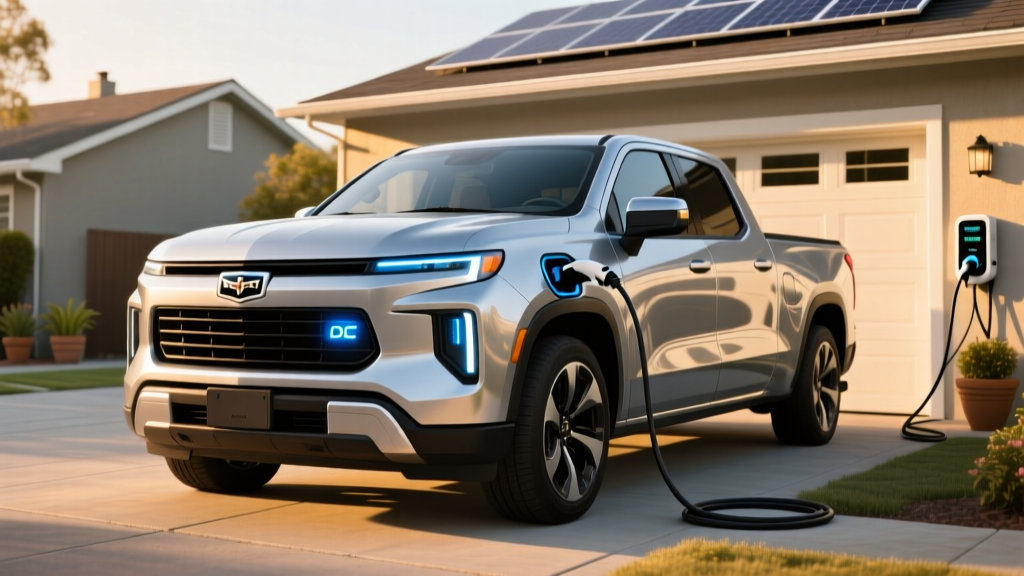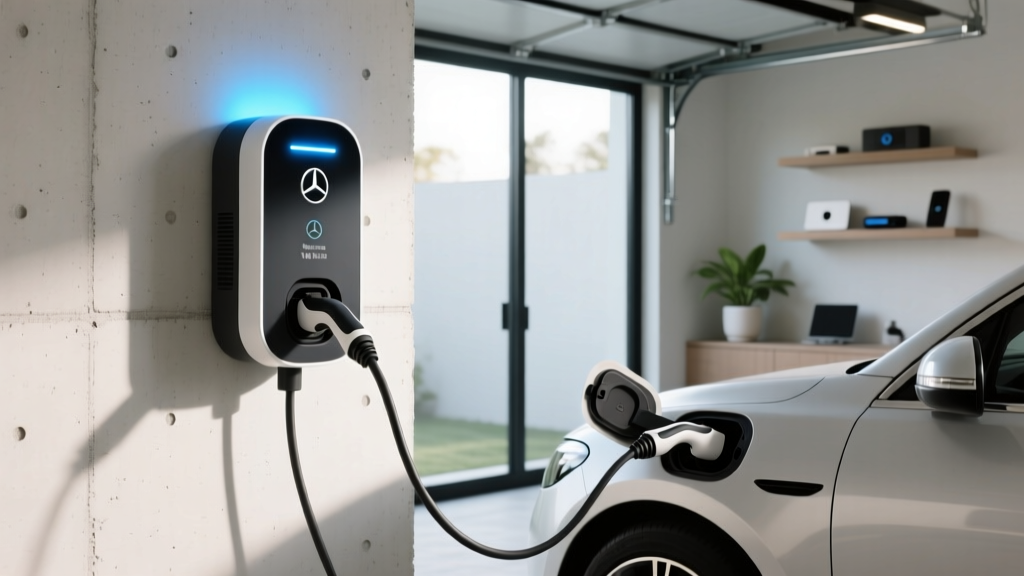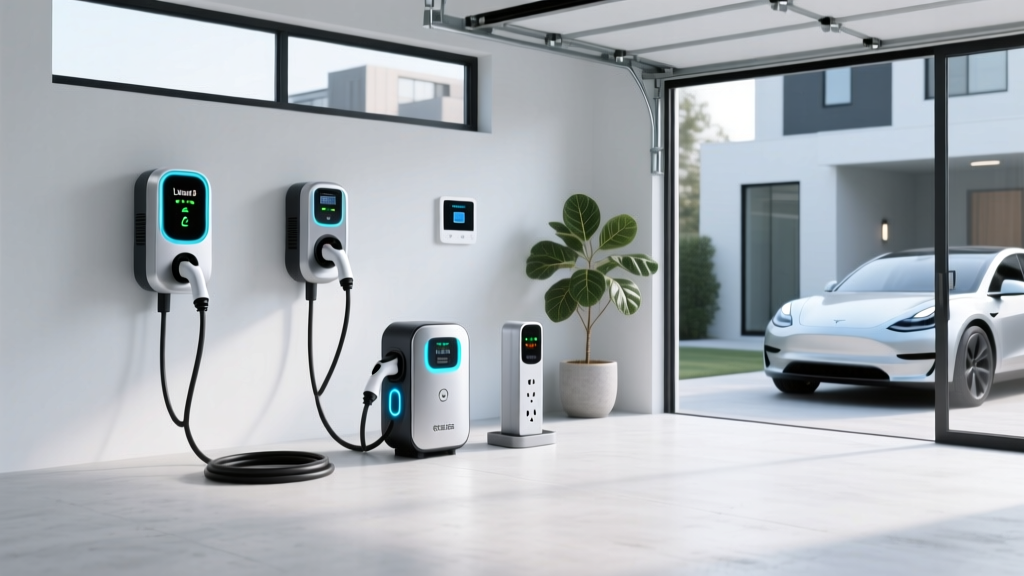
If you've just bought an electric vehicle — or are seriously considering one — the single most impactful ownership decision you'll make is setting up reliable home charging. A good car charger transforms the EV experience: you wake up every morning with a full battery, skip gas stations entirely, and pay a fraction of what gasoline costs per mile. But "good" means different things depending on your electrical panel, your car's connector, and your daily driving needs.
This guide cuts through the marketing noise with exact numbers: charging speeds in kilowatts (kW), battery capacity in kilowatt-hours (kWh), real installation costs, and specific equipment recommendations current for the 2026 model year. Whether you drive a Tesla Model Y with a NACS port or a Hyundai Ioniq 5 with CCS1, you'll know exactly what to buy, what it costs, and what your electrician needs to know.
The kW vs kWh Distinction Every EV Owner Must Know
Before comparing chargers, lock in this fundamental distinction — it's the single most common source of EV confusion:
- kW (kilowatts) = power, or the rate at which electricity flows. Think of it as the width of a hose. A 48-amp Level 2 charger delivers up to 11.5 kW of power.
- kWh (kilowatt-hours) = energy, or the total amount of electricity stored or consumed. Think of it as gallons in a tank. A Tesla Model Y Long Range has roughly 75 kWh of usable battery capacity.
A charger's kW rating tells you how fast it can push energy into your battery. Your car's kWh capacity tells you how much energy it takes to fill it. Charging time is simply kWh ÷ kW (adjusted for efficiency losses and charge-curve tapering above 80% state of charge).
Charging Levels Explained: Speeds, Times, and Real-World Expectations
EV charging falls into three categories. Here's what each delivers in practice:
| Level | Voltage | Power (kW) | Miles of Range Added per Hour | Best For |
|---|---|---|---|---|
| Level 1 | 120V AC | 1.0–1.4 kW | 3–5 miles | Overnight top-ups, PHEVs, low-mileage drivers |
| Level 2 | 240V AC | 3.3–19.2 kW | 12–75 miles | Daily home charging, most EV owners |
| DC Fast Charge | 400–800V DC | 50–350 kW | 150–1,200+ miles (equivalent) | Road trips, rapid top-ups on the go |
Charging Time Examples: 10–80% State of Charge
Most EV owners charge between 10% and 80% to preserve battery longevity and avoid the slow tapering phase above 80%. Here's what that looks like for common battery sizes:
- 60 kWh battery (e.g., base Tesla Model 3, Chevrolet Equinox EV): ~42 kWh needed for 10–80%. On an 11.5 kW Level 2 charger: roughly 3.5–4 hours. On a 150 kW DC fast charger: ~18–25 minutes (varies by charge curve).
- 80 kWh battery (e.g., Ford F-150 Lightning Extended Range): ~56 kWh needed. On 11.5 kW Level 2: ~5 hours. On a 150 kW DC fast charger: ~25–35 minutes.
- 100 kWh battery (e.g., GMC Hummer EV, Lucid Air Grand Touring): ~70 kWh needed. On 11.5 kW Level 2: ~6.5 hours. On a 350 kW DC fast charger (if supported): ~20–30 minutes.
DC fast charging speeds are never linear. A vehicle might peak at 250 kW from 10–30% SoC, then taper to 150 kW by 50%, and drop below 50 kW past 80%. Manufacturers advertise peak kW, but the sustained charge curve determines your actual wait time.
How Much Does It Cost to Install a Home EV Charger?
This is where many buyers get sticker shock. The charger itself is often the cheapest part of the equation. Here's a realistic breakdown based on 2026 electrician rates and equipment pricing:
| Component | Low End | High End | Notes |
|---|---|---|---|
| Level 2 Charger (Equipment) | $350 | $750 | 32A–48A smart chargers; hardwired or NEMA 14-50 plug |
| Electrician Labor | $400 | $1,500 | Depends on run length from panel to garage/carport |
| Electrical Permit | $50 | $250 | Required in most jurisdictions; varies by municipality |
| Panel Upgrade (if needed) | $1,500 | $4,000+ | Older 100A panels may need upgrade to 200A service |
| Total (no panel upgrade) | $800 | $2,500 | Typical scenario for homes with 200A service |
| Total (with panel upgrade) | $2,300 | $6,500+ | Common in pre-1990 homes or those with heavy existing loads |
What Electrical Upgrades Might I Need?
A 48-amp Level 2 charger requires a dedicated 60-amp circuit (the National Electrical Code requires circuits rated at 125% of continuous load: 48A × 1.25 = 60A). Here's what determines whether your home is ready:
- Panel capacity: A 200-amp service panel can typically accommodate a 60A EV circuit alongside existing loads. A 100A panel — common in homes built before the 1990s — often cannot, especially if you have electric heat, an electric dryer, and an electric range. An electrician will perform a load calculation to determine available headroom.
- Panel location and wire run: If your panel is in the basement and you park in a detached garage 80 feet away, the wire run alone can add $500–$1,000 in labor and materials (6 AWG copper for 60A circuits over distance).
- Subpanel option: If your main panel is full but has capacity, an electrician can add a subpanel near the garage for $500–$1,200, avoiding a full service upgrade.
- Smart load management: Devices like the Emporia Load Management Controller or Tesla Wall Connector's built-in load-sharing can allow two chargers on one circuit, or let you run a 48A charger on a panel that otherwise couldn't support it by dynamically reducing power when other appliances cycle on.
According to the U.S. Department of Energy, most homes with 200A service can add Level 2 charging without a panel upgrade. But get a licensed electrician's assessment before purchasing equipment.
Which Connector and Charger Is Compatible With My EV?
The connector landscape has shifted dramatically since 2023, when Ford and GM announced adoption of Tesla's North American Charging Standard (NACS). By the 2026 model year, NACS is the dominant light-duty EV connector in North America, but CCS1 vehicles remain on the road and in showrooms. Here's the current state:
| Connector | Brands Using It (2026) | Home Charger Availability | Adapter Needed? |
|---|---|---|---|
| NACS (Tesla plug) | Tesla, Ford, GM, Rivian, Volvo, Polestar, Nissan (Ariana), Fisker, Lucid | Tesla Wall Connector, ChargePoint Home Flex (NACS), Emporia V2 (NACS), Lectron Vortex | Not for NACS vehicles; CCS-to-NACS adapters available for legacy chargers |
| CCS1 | Hyundai, Kia, BMW, Volkswagen, Stellantis (some models), Honda (Prologue), Subaru (Solterra) | ChargePoint Home Flex, Emporia V2, JuiceBox, Grizzl-E | NACS-to-CCS1 adapters (e.g., Lectron, A2Z) for Tesla Supercharger access |
| CHAdeMO | Nissan Leaf (legacy, ending production) | Limited; most public CHAdeMO infrastructure being phased out | No practical adapter to NACS/CCS for DC fast charging |
Top Home EV Charger Picks for 2026
After testing and tracking reliability data across dozens of units, here are the chargers that consistently deliver for real EV owners. Every recommendation below includes its rated power output, connector, and key specs.
Tesla Wall Connector (Gen 4)
- Power Output: Up to 11.5 kW (48A on a 60A circuit)
- Connector: NACS (native); J1772 adapter included for non-Tesla EVs
- Cable Length: 24 feet
- Smart Features: Wi-Fi, OTA updates, power-sharing between two units on one circuit, integrated load management
- Price: ~$475
- Best For: Tesla owners and NACS-adopting Ford/GM/Rivian drivers who want a reliable, no-fuss charger
ChargePoint Home Flex (2nd Gen)
- Power Output: Configurable from 16A to 50A (up to 12 kW on a 60A circuit with hardwired install)
- Connector: Available in NACS or CCS1 (J1772) versions
- Cable Length: 23 feet
- Smart Features: Wi-Fi, ChargePoint app with scheduling, Alexa integration, energy tracking, amperage adjustment via app (no DIP switches)
- Price: ~$599–$649
- Best For: Multi-EV households needing connector flexibility and detailed energy monitoring
Emporia V2 EV Charger
- Power Output: Up to 11.5 kW (48A) on a 60A circuit
- Connector: Available in NACS or J1772
- Cable Length: 24 feet
- Smart Features: Wi-Fi, Emporia app with real-time energy monitoring, solar integration, scheduling, works with Emporia Vue whole-home energy monitor
- Price: ~$399 (one of the best value-to-feature ratios available)
- Best For: Budget-conscious buyers who still want smart features and solar-aware charging
Grizzl-E Smart (United Chargers)
- Power Output: Up to 10 kW (40A on a 50A circuit)
- Connector: J1772 (CCS1 compatible) or NACS
- Cable Length: 24 feet
- Smart Features: Wi-Fi, OCPP-compatible (future utility demand-response ready), adjustable amperage, built in Canada with -40°F cold-weather rating
- Price: ~$499
- Best For: Cold-climate owners and those prioritizing rugged build quality over app polish
How Much Does Charging Cost Per Mile vs. Gasoline?
The operating-cost advantage of electric vehicles is substantial, but the exact savings depend on your local electricity rate, whether you charge at home or publicly, and your vehicle's efficiency. Here's a realistic comparison using 2026 national averages:
| Scenario | Rate | Vehicle Efficiency | Cost Per Mile |
|---|---|---|---|
| Home Level 2 (national avg. residential) | $0.16/kWh | 3.5 mi/kWh (typical EV) | $0.046 |
| Home Level 2 (off-peak TOU rate) | $0.09/kWh | 3.5 mi/kWh | $0.026 |
| Public Level 2 (network pricing) | $0.30/kWh | 3.5 mi/kWh | $0.086 |
| DC Fast Charging (Electrify America, EVgo) | $0.48/kWh | 3.5 mi/kWh | $0.137 |
| Gasoline vehicle (30 MPG combined) | $3.30/gallon | 30 MPG | $0.110 |
| Gasoline vehicle (22 MPG combined) | $3.30/gallon | 22 MPG | $0.150 |
Key takeaways from the data:
- Home charging on a time-of-use (TOU) plan is the cheapest way to fuel any vehicle on the road — roughly 5× cheaper per mile than a 22-MPG gas car.
- DC fast charging exclusively can actually cost more per mile than a fuel-efficient gas car. DCFC is for road trips and occasional use, not daily fueling strategy.
- Public Level 2 chargers at $0.30/kWh are convenient but reduce your savings. A good home charger pays for itself within 6–12 months of regular use.
Check your utility's EV-specific TOU rates — many utilities in 2026 offer plans with super off-peak rates between midnight and 6 AM, which is when most home charging occurs. According to fueleconomy.gov, you can look up your specific EV's kWh/100mi efficiency rating to calculate precise costs.
Safety, Electrical Code, and Installation Best Practices
EV charging involves sustained high-current draw — often 8+ hours at 40–48 amps. This is fundamentally different from the short bursts a dryer or oven draws. Proper installation isn't optional; it's a fire-safety requirement.
Non-Negotiable Installation Requirements
- Dedicated circuit: Your Level 2 charger must be on its own dedicated circuit — not shared with any other appliance. A 48A charger requires a 60A breaker; a 40A charger requires a 50A breaker.
- GFCI protection: The 2023 National Electrical Code (NEC 625.54) requires GFCI protection for all receptacles used for EV charging. Hardwired installations may have different requirements depending on your local jurisdiction — confirm with your electrician and local inspector.
- Outdoor rating: If your charger is installed outdoors (carport, driveway pedestal), it must carry a NEMA 4 or NEMA 4X rating for weather resistance. All chargers recommended above meet this standard.
- Wire gauge: A 60A circuit requires 6 AWG copper wire (or 4 AWG aluminum). For runs over 50 feet, your electrician may upsized to 4 AWG copper to prevent voltage drop. Never undersize wire for an EV circuit.
- Hardwired vs. plug-in: Hardwired installations (no plug, direct wire connection) are generally preferred for 48A+ chargers — they eliminate the NEMA 14-50 receptacle as a potential failure point and may not require GFCI breakers in some jurisdictions. Plug-in (NEMA 14-50) offers portability if you plan to move.
Always pull a permit. Unpermitted electrical work can void your homeowner's insurance, fail a home inspection during sale, and create a genuine fire hazard. Permits typically cost $50–$250 and trigger an inspection that verifies safe installation.
Federal Tax Credit and Utility Rebates for Home Charging
The federal Alternative Fuel Vehicle Refueling Property Credit (IRS Form 8911) offers a tax credit of up to 30% of the cost of home EV charging equipment and installation, capped at $1,000. Key eligibility details for 2026:
- The credit covers both the charger hardware and installation labor
- Your home must be located in an eligible census tract (non-urban or low-income community areas, as defined by the IRS)
- The credit is non-refundable — it reduces your tax liability but won't generate a refund beyond what you owe
- Point-of-sale transfer is not available for this credit (unlike the §30D vehicle credit); you claim it on your annual tax return
Beyond the federal credit, many utilities and municipalities offer rebates of $250–$1,000 for Level 2 charger installation. Check your utility's EV programs page and the Alternative Fuels Data Center for state and local incentives specific to your ZIP code.
Frequently Asked Questions
Can I just plug my EV into a regular 120V outlet?
Yes, that's Level 1 charging — and it works, but slowly. You'll add roughly 3–5 miles of range per hour, which means a full charge for a 75 kWh battery could take 50+ hours. For plug-in hybrids with 20–40 miles of electric range, Level 1 is often sufficient overnight. For full battery EVs driven more than 30 miles daily, Level 2 is practically essential.
Do I need a smart charger, or is a "dumb" charger fine?
A smart charger (Wi-Fi connected with app control) offers scheduling to charge during off-peak electricity rates, energy monitoring to track costs, and firmware updates for safety improvements. A dumb charger works identically for pushing electrons into your car, but you lose the ability to optimize for TOU rates automatically. For most owners, the $50–$100 premium for a smart charger pays for itself through off-peak scheduling within months.
Will a Level 2 charger work with any EV I buy in the future?
If you buy a NACS-connector charger today, it will work natively with the rapidly growing NACS ecosystem (Tesla, Ford, GM, Rivian, and more). If you buy a CCS1/J1772 charger, it covers Hyundai, Kia, BMW, VW, and others. Adapters exist in both directions, but native compatibility is always preferable for reliability and peak charging speed.
How long does a home EV charger last?
Quality Level 2 chargers from reputable manufacturers (Tesla, ChargePoint, Emporia, Grizzl-E) typically last 8–15 years. Most carry 2–3 year warranties. The most common failure points are the cable (from repeated bending) and the control board (from power surges). A whole-home surge protector at your panel ($150–$300 installed) is cheap insurance.
Can I install two chargers for a two-EV household?
Yes, but your panel capacity determines the approach. Two 48A chargers would require 120A of combined circuit capacity — more than most panels can spare. Solutions include: (1) two lower-amperage chargers (32A each on separate 40A circuits), (2) load-sharing chargers like the Tesla Wall Connector that split a single 60A circuit between two vehicles, or (3) a smart load management system that dynamically allocates power based on real-time household demand.
Is it safe to charge my EV in the rain or snow?
Yes. All outdoor-rated chargers (NEMA 4/4X) are designed for wet conditions. The connector and vehicle inlet are engineered to be water-resistant when mated, and the charging protocol will not energize the pins until a secure, dry connection is confirmed. That said, avoid submerging any component, and inspect your cable periodically for cracking or damage in extreme cold.